When manufacturers and fabricators work with boilers, pressure vessels, and piping systems, quality and safety standards become non-negotiable. The asme welding certification meaning often gets misunderstood because it represents a qualification system rather than a traditional credential, and understanding this distinction is critical for industrial operations throughout the Western United States. For companies serving sectors like oil and gas, recycling, and aggregate processing, ASME welding qualifications ensure that fabrication and repair work meets the rigorous standards required for pressurized equipment.
What ASME Welding Certification Actually Means
The asme welding certification meaning refers to the qualification process defined by the American Society of Mechanical Engineers (ASME) Boiler and Pressure Vessel Code (BPVC) Section IX. Unlike standalone certifications issued by third-party organizations, ASME Section IX establishes the rules for qualifying welding procedures and welder performance that employers must follow when fabricating or repairing ASME-stamped equipment.
This code-based system means that welders don't receive a portable "ASME certification" card. Instead, they earn employer-specific qualifications by successfully completing test welds under documented procedures. The ASME Boiler & Pressure Vessel Code provides the framework that governs everything from base material selection to joint design, welding variables, and testing requirements.
The Employer-Based Qualification Model
ASME Section IX operates on an employer-based qualification model where the fabrication company or contractor holds responsibility for qualifying both the welding procedures and the individual welders. When a welder passes qualification tests at one company, that qualification remains valid only while employed there or when the new employer accepts the previous qualification records.
Key components of ASME qualifications include:
- Welding Procedure Specification (WPS) that documents how welds will be made
- Procedure Qualification Record (PQR) that proves the procedure produces sound welds
- Welder Performance Qualification (WPQ) that verifies individual welder skill
- Essential variables that define the limits of each qualification
This approach differs significantly from personal certifications like those offered through the AWS Certified Welder program, which remain with the individual regardless of employer.
Essential Variables and Qualification Scope
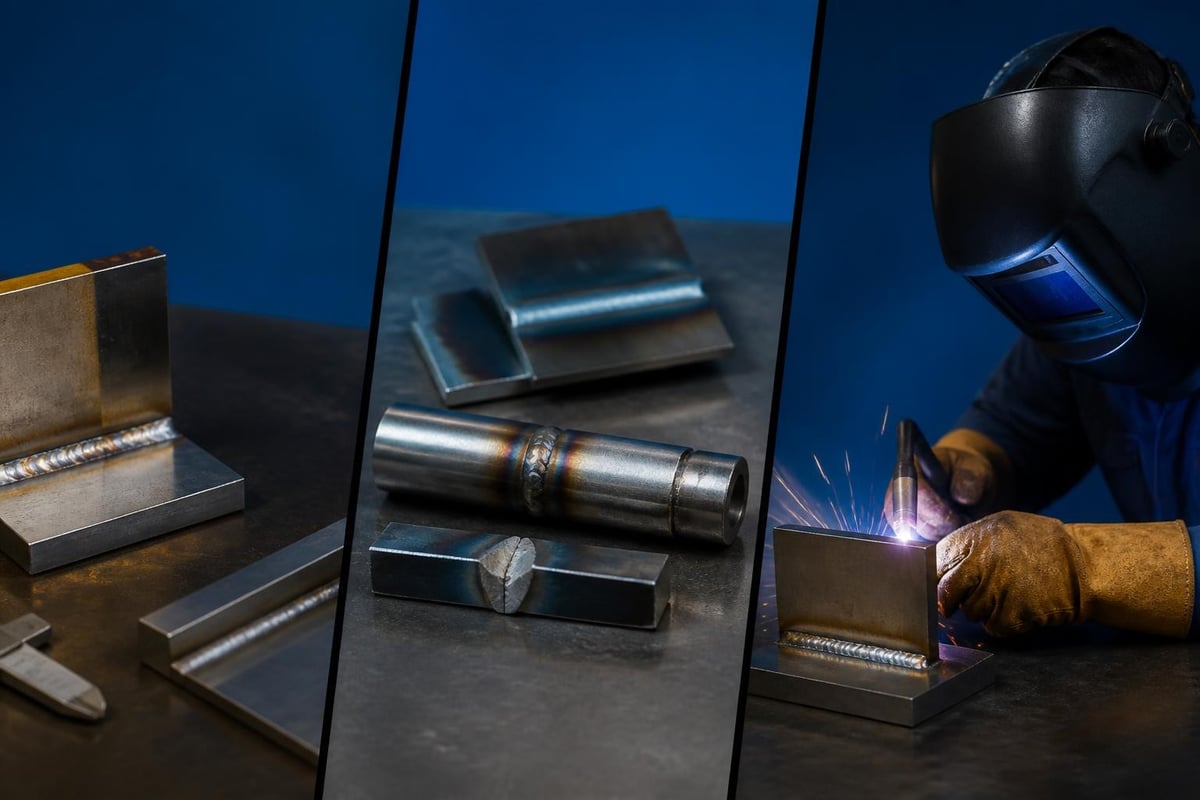
Understanding the asme welding certification meaning requires knowledge of essential variables, which are welding parameters that, when changed beyond specified limits, invalidate existing qualifications and require re-qualification. These variables directly impact weld quality and mechanical properties.
Essential variables fall into several categories that control the scope of what a single qualification covers. Changes to base metal type, filler metal classification, welding process, position, or heat treatment can all trigger the need for new qualification tests.
| Essential Variable Category | Examples | Impact on Qualification |
|---|---|---|
| Base Metals | Carbon steel to stainless steel | Requires new PQR and WPQ |
| Welding Process | SMAW to GTAW | Requires separate qualification |
| Filler Metals | F-number grouping changes | May require new PQR |
| Position | Flat to vertical or overhead | Requires position-specific WPQ |
| Thickness Range | Qualified range based on test coupon | Limits production work scope |
Process-Specific Requirements
Different welding processes carry unique essential variables under ASME Section IX. For example, shielded metal arc welding (SMAW) qualifications focus on electrode classification and amperage range, while gas tungsten arc welding (GTAW) includes variables for shielding gas composition and tungsten electrode type.
Many industrial fabrication operations serving the commercial and industrial manufacturing sectors require multiple process qualifications to handle diverse repair and fabrication needs. A facility performing both shop fabrication and field repairs might maintain welder qualifications in SMAW, FCAW, GTAW, and GMAW to cover various applications.
The thickness ranges qualified through test coupons determine production limits. A welder who qualifies on a 3/8-inch thick test plate typically qualifies for base metal thickness from 1/8 inch up to twice the test thickness, though specific ranges depend on the welding process and whether the test was groove or fillet welds.
Documentation and Record-Keeping Requirements
The paperwork behind ASME welding qualifications forms the legal foundation proving compliance with code requirements. When regulatory inspectors or authorized inspectors review fabrication work, they examine these records to verify that qualified procedures and welders produced the welds.
Critical documentation includes:
- Welding Procedure Specification (WPS) – The instruction document welders follow during production
- Procedure Qualification Record (PQR) – Test results proving the WPS produces acceptable welds
- Welder Performance Qualification (WPQ) – Records of each welder's qualification tests
- Continuity of qualification logs – Documentation showing welders maintain qualification through regular work
The official ASME Form QW-483 provides the standard format for PQRs, though companies can develop their own forms as long as they capture all required information. These forms document welding parameters, base metal specifications, filler metal details, preheat and interpass temperatures, post-weld heat treatment, and mechanical test results.
Retention and Transferability
ASME Section IX requires employers to maintain qualification records for each welder as long as they remain employed and their qualifications stay current. Qualifications expire if a welder doesn't work with a specific process for six months or longer, requiring re-qualification before resuming production work.
Record transferability depends on the receiving employer's acceptance policies. Some companies accept properly documented ASME qualifications from previous employers, while others require new qualification tests regardless of previous experience. This practice contrasts with some AWS D1.1 qualifications where standard prequalified WPS procedures allow more flexibility.
The Qualification Testing Process
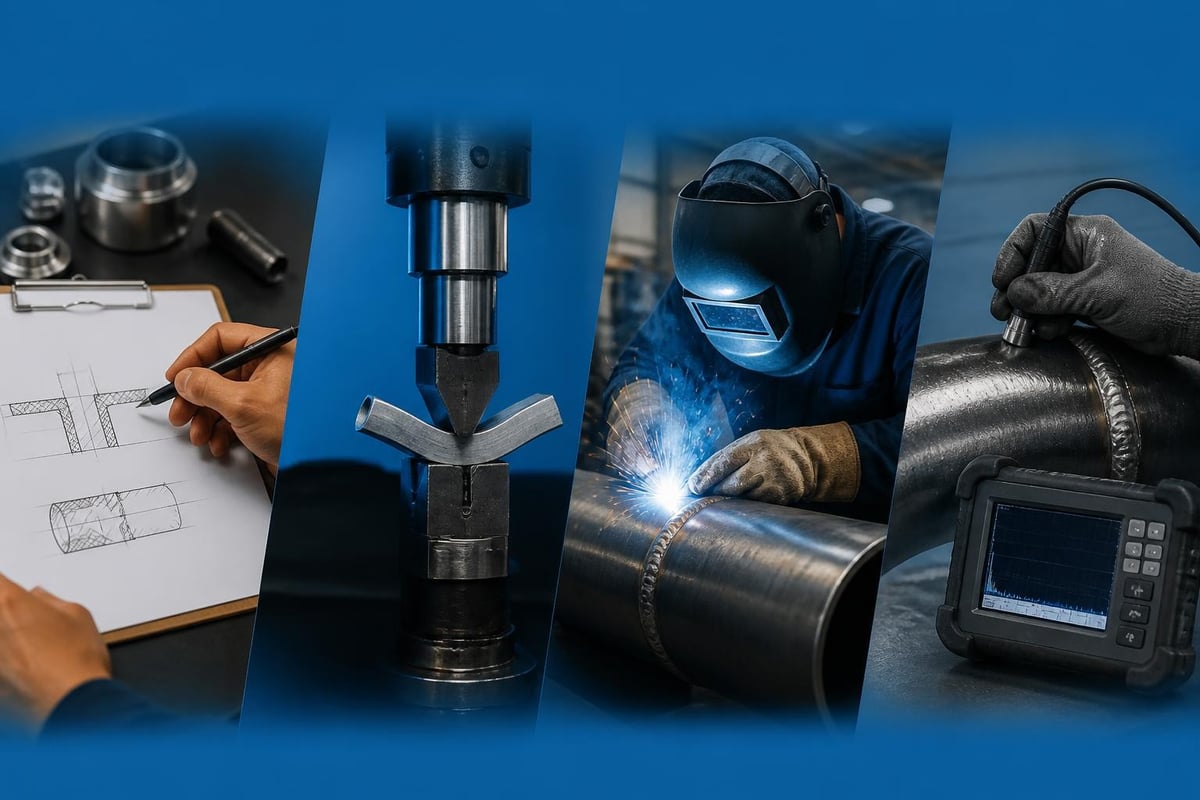
Earning ASME qualifications involves structured testing that evaluates both the welding procedure and welder skill. The process begins with developing or selecting a WPS, then qualifying that procedure through testing before individual welders demonstrate their ability to execute it.
Procedure qualification starts with creating test coupons using the proposed WPS parameters. A qualified welder produces these test welds, which then undergo destructive testing including guided bend tests, tensile tests, and sometimes impact tests or hardness surveys depending on the base metal and service conditions.
Welder Performance Testing
Once a WPS has a qualified supporting PQR, individual welders can test to that procedure. Performance tests typically involve producing a test weld (groove, fillet, or both) that meets visual inspection standards and passes radiographic or destructive examination.
The examination method depends on the type of qualification needed. Production welding requiring radiographic inspection demands that qualification test welds also undergo radiography. For positions where visual examination alone is specified, the test welds may only need visual inspection and destructive bend tests.
Standard welder performance test sequence:
- Welder reviews the WPS and sets up equipment according to specified parameters
- Test weld is produced under observation following WPS exactly
- Visual examination confirms acceptable weld appearance and dimensions
- Destructive or non-destructive testing verifies internal weld quality
- Results are documented on the WPQ form and signed by the examiner
- Qualification becomes effective for the specific variables tested
Many welding training programs structure their curricula around ASME Section IX requirements to prepare welders for industrial qualification testing. These programs teach the fundamental skills while emphasizing the importance of following written procedures exactly as specified.
Differences Between ASME and Other Welding Standards
The asme welding certification meaning becomes clearer when compared to other qualification systems used in fabrication and construction. Each code or standard serves specific applications and industries, with different qualification requirements and scope.
ASME Section IX focuses exclusively on boilers, pressure vessels, and nuclear components where internal pressure creates significant safety concerns. The code's emphasis on essential variables and strict procedure qualification reflects the critical nature of pressure-containing equipment.
| Standard | Primary Application | Qualification Approach | Transferability |
|---|---|---|---|
| ASME Section IX | Pressure vessels, boilers, piping | Employer-based, procedure-focused | Limited between employers |
| AWS D1.1 | Structural steel construction | Performance-based with prequalified WPS | Moderate transferability |
| API 1104 | Pipeline construction and repair | Performance tests for specific joints | Project/employer specific |
| ISO 9606 | General fabrication (international) | Individual welder certificates | High international portability |
Understanding these differences helps manufacturers select appropriate standards for their work. Companies performing custom metal fabrication often maintain qualifications under multiple codes to serve diverse customer requirements across industries.
When ASME Section IX is Mandatory
Federal and state regulations often mandate ASME Section IX compliance for specific equipment types. U.S. federal regulations incorporate ASME standards by reference for boilers and pressure vessels in various applications, making compliance a legal requirement rather than a best practice choice.
The National Board of Boiler and Pressure Vessel Inspectors provides additional oversight for ASME-stamped equipment, requiring qualified inspectors to verify that fabrication and repairs meet code requirements. This regulatory framework ensures consistent quality across jurisdictions.
Projects involving pressure equipment for oil and gas processing, power generation, chemical processing, and similar industries typically require ASME qualifications. Even for work that doesn't legally mandate ASME compliance, many industrial clients specify Section IX qualifications to ensure consistent quality standards.
Inspector Qualifications and the ASME Endorsement
While welder qualifications demonstrate production capability, qualified inspectors verify compliance with ASME requirements. The relationship between welding codes and inspector credentials adds another layer to understanding the asme welding certification meaning.
Certified Welding Inspectors (CWI) can obtain an ASME BPVC Section IX endorsement through the American Welding Society, demonstrating expertise in the specific requirements of the ASME code. This endorsement supplements the base CWI credential with focused knowledge of Section IX essential variables, qualification requirements, and documentation standards.
The Role of Authorized Inspectors
ASME Code construction also involves Authorized Inspectors employed by jurisdictional authorities or insurance companies holding National Board commissions. These inspectors have legal authority to witness qualification tests, review documentation, and ultimately approve ASME code symbol stamping on completed equipment.
Fabrication shops holding ASME code stamps must maintain qualified welding procedures and welders to satisfy Authorized Inspector requirements during periodic audits. This oversight ensures ongoing compliance and maintains the integrity of the ASME stamp.
For companies providing field welding services, coordination with inspectors becomes particularly important. Repair work on existing ASME-stamped equipment often requires inspector approval of repair procedures and qualification of welders before work begins.

Practical Implications for Industrial Fabricators
For fabrication and repair companies serving industrial sectors, maintaining proper ASME qualifications translates directly to competitive advantage and legal compliance. The investment in procedure development, welder qualification, and documentation systems pays dividends through expanded capability and customer confidence.
Companies offering heavy equipment repair and industrial equipment repair services frequently encounter pressure-containing components requiring ASME-compliant repairs. Having qualified procedures and welders ready eliminates delays and ensures repairs meet manufacturer warranties and insurance requirements.
Business benefits of maintaining ASME qualifications include:
- Ability to bid on projects requiring ASME compliance
- Reduced liability through documented code compliance
- Greater customer confidence in quality systems
- Faster project execution without qualification delays
- Enhanced welder skill development and retention
Managing Multiple Qualifications
Large fabrication operations might maintain dozens of welding procedures covering different base metal combinations, processes, and thicknesses. Tracking which welders hold which qualifications requires robust systems to prevent unqualified welders from performing production work outside their qualified scope.
Digital qualification management systems help companies track expiration dates, essential variables, and qualification scope for each welder. These systems generate reports showing which welders can work on specific projects and identify when re-qualification tests are approaching.
For businesses handling diverse work like recycling equipment repair or mining equipment fabrication, the variety of materials and thicknesses encountered demands flexible qualification portfolios that can adapt to changing project requirements.
Comparison with International Standards
As manufacturing becomes increasingly global, understanding how ASME Section IX relates to international welding standards helps companies working with multinational clients or exported equipment. The asme welding certification meaning has specific context within North American industrial practice that differs from European and other international approaches.
ISO 9606 represents the international standard for welder qualification, offering a more portable credential that follows the welder rather than remaining employer-specific. A detailed comparison of ASME IX, ISO 9606, and AWS D1.1 shows how these systems differ in philosophy and practical application.
Key differences in international approaches:
- ISO 9606 provides individual welder certificates valid across employers and countries
- European standards often emphasize welder credentials over procedure qualification
- ASME Section IX places greater emphasis on procedure documentation and control
- Testing requirements and acceptance criteria vary between systems
- Some international standards allow broader qualification ranges from single tests
Companies performing work for international clients sometimes maintain dual qualifications under both ASME Section IX and ISO standards. This flexibility ensures compliance regardless of client specification or project location.
Mutual Recognition Considerations
No automatic equivalency exists between ASME qualifications and international standards. A welder qualified to ASME Section IX doesn't automatically hold ISO 9606 credentials, and vice versa. However, the practical skills developed through one system often transfer well when testing to another standard.
For fabricators serving oil and gas industry clients who may have specifications requiring multiple standards, maintaining flexibility in qualification approaches becomes essential. Some projects specify ASME for pressure equipment while requiring API 1104 certifications for associated piping systems.
Training and Skill Development Under ASME Requirements
Developing welders who can consistently pass ASME qualification tests requires structured training that goes beyond basic welding technique. The precision and consistency demanded by Section IX testing separates adequate welders from those capable of code-quality work.
Code welding training programs focus on the essential variables, proper WPS interpretation, and the discipline needed to follow procedures exactly as written. Students learn that even minor deviations from specified parameters can result in failed qualification tests or rejected production welds.
Building Internal Capability
Companies can choose between sending welders to external training programs or developing internal qualification systems. Larger fabrication shops often maintain their own qualification testing capabilities with qualified welding supervisors who can administer performance tests and maintain documentation.
Internal programs offer advantages in training welders specifically for the procedures and materials the company commonly uses. A shop specializing in custom machining and fabrication might focus training on the specific alloys and thickness ranges relevant to their typical projects.
Smaller operations might partner with testing facilities or rely on certified welding inspectors to witness and document qualification tests. This approach reduces overhead while still maintaining compliant qualification systems.
Cost Considerations and ROI
Implementing and maintaining ASME qualification systems involves measurable costs that must be balanced against the business value they create. Understanding these investments helps companies make informed decisions about qualification strategy.
Direct costs include:
- Test materials and consumables for qualification coupons
- Testing laboratory fees for mechanical testing
- Inspector fees for witnessed testing
- Documentation system development and maintenance
- Training time for welders preparing for qualification tests
- Lost productivity during testing and potential re-tests
However, these costs must be weighed against the opportunities ASME qualifications enable. Projects requiring ASME compliance often command premium pricing due to the quality standards and documentation involved. The ability to accept such work expands revenue potential significantly.
Qualification as Competitive Advantage
In competitive bidding situations, having welders already qualified to relevant procedures eliminates schedule risk and demonstrates capability. Clients evaluating fabrication quotes often consider the fabricator's existing qualification portfolio when assessing responsiveness and capability.
For field service providers, maintaining current qualifications means responding immediately to emergency repair situations without delays for testing. This responsiveness proves particularly valuable in industries like aggregate processing or recycling where downtime carries significant cost.
Maintaining Qualification Continuity
ASME Section IX requires that welders maintain continuity of qualification through regular use of each qualified process. The six-month rule means a welder must perform production welding with a specific process at least once every six months or lose qualification for that process.
This requirement creates challenges for companies with seasonal work patterns or diverse capabilities that aren't all used constantly. Tracking continuity dates and scheduling maintenance work or practice sessions to preserve qualifications demands active management.
Strategies for maintaining continuity include:
- Scheduling internal projects to exercise less-frequently-used processes
- Rotating welders through different processes on multi-discipline projects
- Documenting all production work with process and date for continuity tracking
- Planning re-qualification tests in advance when continuity lapses are inevitable
Many fabricators serving multiple industries like manufacturing and industrial sectors benefit from work variety that naturally exercises different processes and keeps qualifications current through normal production schedules.
Understanding the asme welding certification meaning-as an employer-based qualification system for pressure equipment fabrication-clarifies what these credentials represent and why they matter for industrial operations. The combination of procedure qualification, welder performance testing, and rigorous documentation creates a quality framework that protects both public safety and business interests. Whether you need ASME-compliant fabrication, pressure vessel repairs, or comprehensive welding and machining services throughout the Western United States, LTJ Industrial Services maintains the qualified personnel and documented procedures to meet the most demanding code requirements for your commercial and industrial applications.