When industrial equipment fails or manufacturing projects require specialized metal fabrication, finding reliable welding services near me becomes a critical business decision. The right welding partner delivers more than repairs-they provide expertise, certified craftsmanship, and responsive support that keeps operations running smoothly. For businesses in the commercial manufacturing, oil and gas, aggregate, and recycling sectors, selecting a qualified welding service provider impacts production schedules, safety compliance, and long-term equipment performance.
Understanding Industrial Welding Service Categories
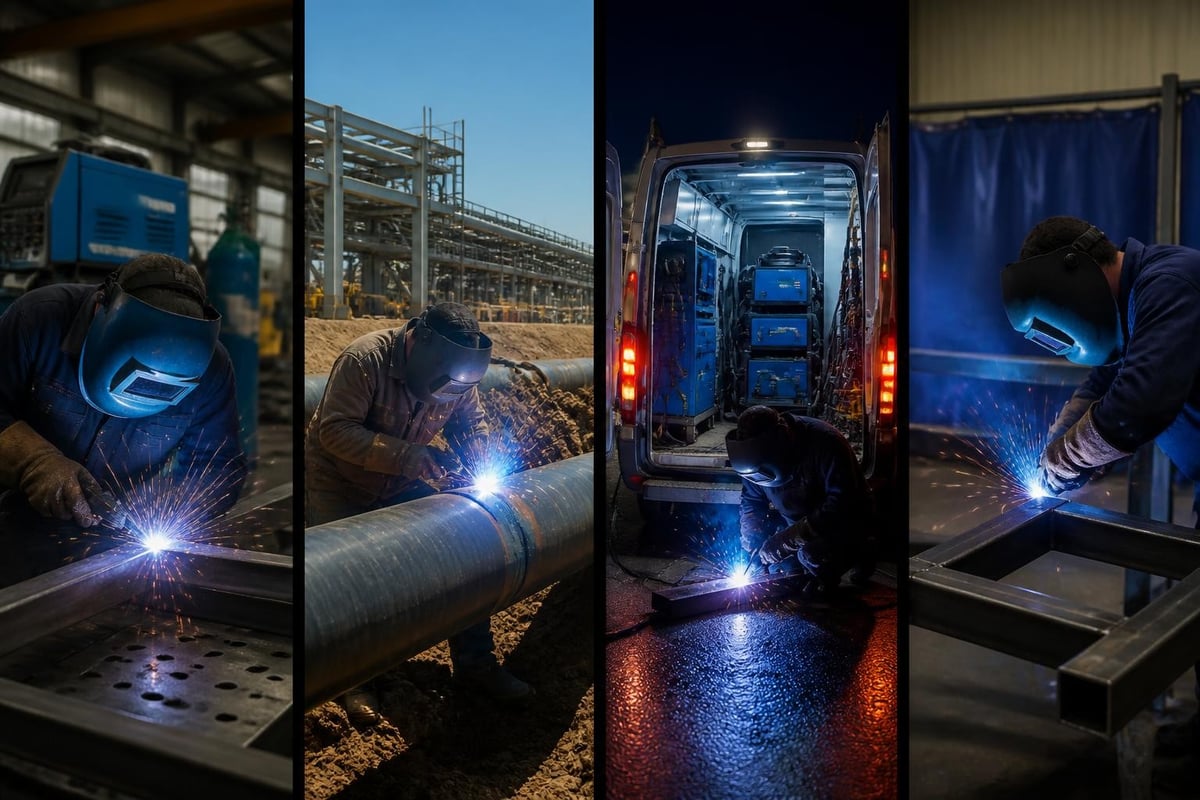
Professional welding operations encompass several distinct service categories, each addressing specific industrial needs. Shop welding takes place in controlled facility environments where fabricators work on components brought to their location. Field welding brings certified welders and equipment directly to your site, minimizing downtime by eliminating transportation delays.
Mobile welding services provide emergency response capabilities for unexpected equipment failures. These services prove invaluable when production lines stop due to structural damage or component failure. Many industrial operations also require custom fabrication work, where welding teams create specialized parts, assemblies, or entire systems from engineering specifications.
Service Scope Variations
Different providers offer varying levels of expertise and equipment. When searching for welding services near me, businesses should evaluate:
- Materials expertise: aluminum, stainless steel, carbon steel, exotic alloys
- Process capabilities: MIG, TIG, stick, flux-cored arc welding
- Thickness ranges: thin-gauge sheet metal to heavy structural components
- Position qualifications: flat, horizontal, vertical, overhead welding certifications
- Special processes: pipe welding, pressure vessel work, certified structural welding
Certification Standards and Quality Assurance
Reputable welding service providers maintain certifications that demonstrate competency and adherence to industry standards. The American Welding Society offers comprehensive standards covering welding procedures, welder qualifications, and inspection criteria. These standards ensure consistent quality across projects and industries.
Certified welders undergo rigorous testing to prove their skills in specific processes, positions, and materials. Certifications require periodic renewal, ensuring welders maintain current knowledge of techniques and safety practices. When evaluating welding services near me, request documentation of welder certifications relevant to your specific needs.
| Certification Type | Typical Applications | Renewal Period |
|---|---|---|
| AWS D1.1 Structural | Building frames, bridges, heavy equipment | 6 months to 3 years |
| ASME Section IX | Pressure vessels, boilers, piping systems | Variable by code |
| API 1104 | Pipeline welding, oil and gas infrastructure | 6 months |
| AWS D1.6 Stainless | Food processing, pharmaceutical equipment | Annual |
Quality assurance extends beyond individual welder certifications. Professional fabrication shops implement welding procedure specifications (WPS) that document exact parameters for each project type. These specifications ensure repeatability and compliance with engineering requirements.
Safety Protocols and Regulatory Compliance
Industrial welding operations involve significant hazards that require comprehensive safety programs. OSHA outlines critical welding hazards and solutions including metal fumes, UV radiation exposure, electrical shock risks, and fire hazards. Professional welding service providers maintain safety programs addressing these concerns through proper ventilation, personal protective equipment, and hazard mitigation procedures.
Businesses seeking welding services near me should verify that contractors carry appropriate insurance coverage, including general liability and workers' compensation. This protection shields your operation from liability if accidents occur on your premises during field welding operations.
Key Safety Considerations
Professional welding operations implement multiple safety layers:
- Pre-work hazard assessments identifying potential risks before welding begins
- Hot work permits documenting safety precautions and fire watch requirements
- Ventilation systems removing hazardous fumes from breathing zones
- PPE requirements including welding helmets, fire-resistant clothing, respiratory protection
- Emergency response protocols for burns, electrical shock, or fire incidents
Understanding welding safety best practices helps you evaluate whether potential service providers maintain professional standards. Look for companies that prioritize safety training and maintain excellent safety records.
Evaluating Technical Capabilities and Equipment
The equipment and facilities a welding service maintains directly impact their ability to handle your projects. Modern fabrication shops invest in advanced welding technology, precision cutting equipment, and quality control instruments. For businesses requiring custom metal fabrication, provider capabilities determine project feasibility and finished quality.
When assessing welding services near me, inquire about specific equipment capabilities:
- Welding power sources: capacity range, process versatility, inverter technology
- Material handling: overhead cranes, forklifts, positioning equipment
- Cutting systems: plasma cutters, oxy-fuel torches, water jet cutting
- Inspection tools: ultrasonic testing, radiography, dye penetrant examination
- Machining capabilities: lathes, mills, boring equipment for integrated fabrication
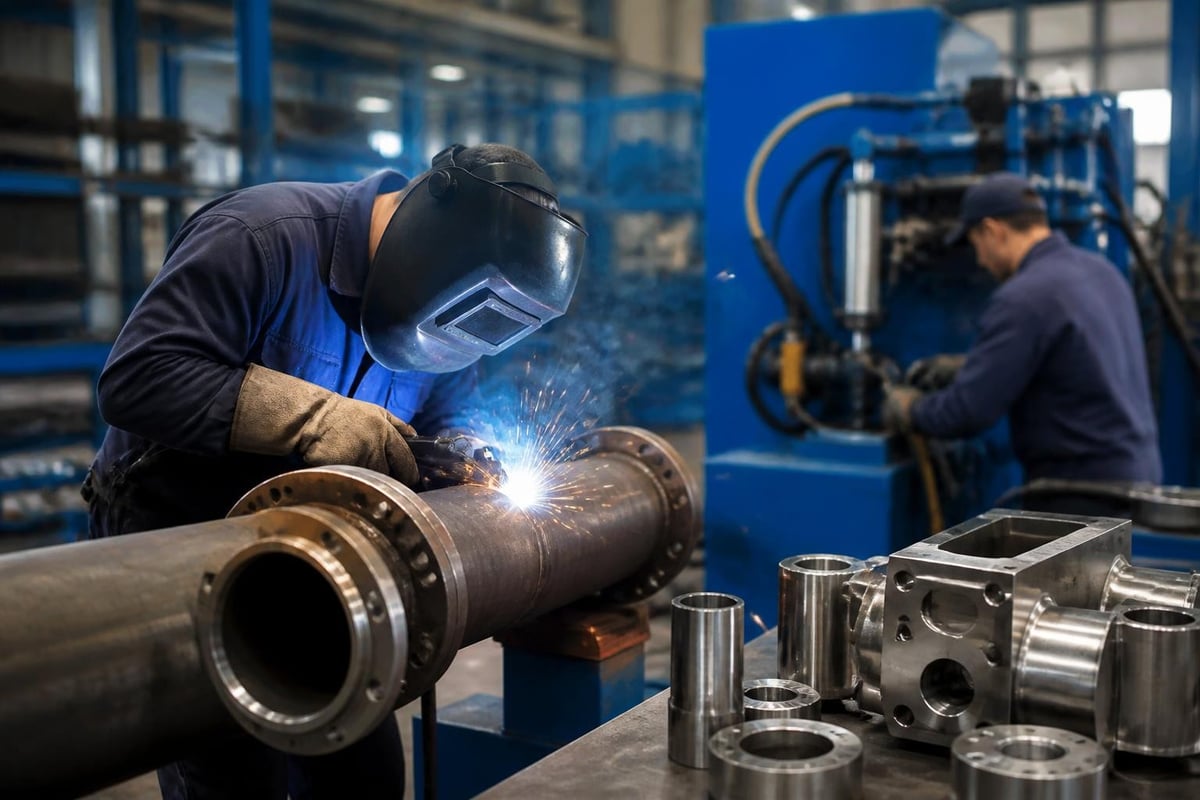
Integrated service providers offering metal processing alongside welding reduce coordination complexity. Single-source suppliers handle multiple manufacturing processes, improving project timelines and accountability.
Geographic Service Areas and Response Times
Location significantly impacts service delivery, particularly for emergency repairs and field welding. While searching for welding services near me prioritizes proximity, service area coverage determines whether providers can support multiple facility locations or remote operational sites.
Western United States industrial operations often span vast geographic areas. Companies serving sectors like oil and gas, mining, and aggregate processing require welding partners capable of deploying to remote locations. Response time commitments for emergency breakdowns separate competent providers from exceptional partners.
Service Delivery Models
Different geographic approaches suit various operational needs:
- Local shop services: ideal for component fabrication, repair work transported to facility
- Regional field services: covers multiple states, scheduled maintenance and planned projects
- Emergency mobile response: rapid deployment for unexpected equipment failures
- On-site resident services: dedicated personnel for large facilities or ongoing projects
Businesses operating throughout Colorado, Wyoming, Utah, and neighboring states benefit from welding providers with established regional presence. Custom welding services supporting multiple industries understand diverse operational requirements across manufacturing sectors.
Industry-Specific Experience and Applications
Different industries present unique welding challenges requiring specialized knowledge. Oil and gas operations demand compliance with API standards for pressure piping and process equipment. Aggregate and mining facilities need robust structural repairs withstanding harsh environmental conditions and heavy mechanical loads.
Recycling operations require welding services familiar with equipment modifications, wear component replacement, and material handling system fabrication. Food processing and pharmaceutical manufacturers need welders experienced with sanitary stainless steel construction meeting FDA requirements.
| Industry Sector | Common Welding Needs | Critical Requirements |
|---|---|---|
| Oil & Gas | Pipeline repair, pressure vessels, processing equipment | API certifications, code compliance |
| Aggregate/Mining | Crusher frames, conveyor systems, wear plate installation | Abrasion-resistant materials, structural strength |
| Recycling | Sorting equipment, baler modifications, hopper fabrication | High-cycle fatigue resistance, material compatibility |
| Manufacturing | Production equipment, tooling, process machinery | Precision tolerances, minimal distortion |
When researching welding services near me, prioritize providers with documented experience in your specific industry. Their familiarity with typical failure modes, appropriate materials, and applicable codes accelerates project completion while ensuring regulatory compliance.
Project Management and Communication
Effective welding service providers function as partners rather than simple contractors. They contribute engineering input, suggest cost-effective alternatives, and communicate proactively throughout project lifecycles. For complex industrial fabrication services, collaborative relationships produce superior outcomes compared to transactional vendor interactions.
Professional project management includes:
- Detailed estimates breaking down materials, labor, and timeline expectations
- Engineering review catching potential issues before fabrication begins
- Progress updates keeping stakeholders informed during longer projects
- Quality documentation providing test reports, material certifications, welding logs
- Post-completion support addressing any concerns after project delivery
Businesses benefit from welding partners who understand manufacturing pressures and work schedules. Providers offering flexible scheduling, including weekend or shutdown period work, minimize production disruptions.
Quality Control and Inspection Procedures
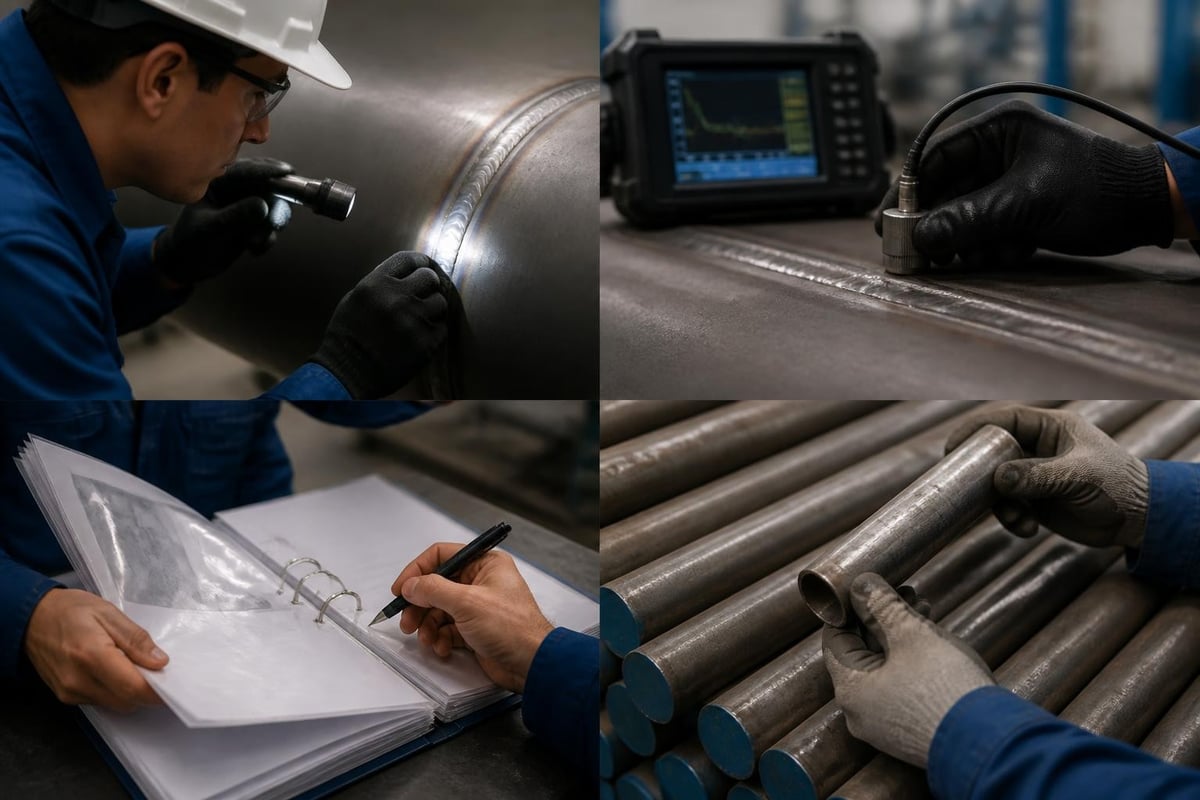
Consistent weld quality requires systematic inspection and testing. Professional welding services implement multi-stage quality control beginning with incoming material verification and continuing through final inspection. Non-destructive testing (NDT) methods verify weld integrity without damaging completed work.
Common NDT methods include:
- Visual inspection: trained inspectors examine weld appearance, profile, and surface conditions
- Liquid penetrant testing: reveals surface-breaking defects in non-magnetic materials
- Magnetic particle testing: detects surface and near-surface flaws in ferromagnetic metals
- Ultrasonic testing: uses sound waves to identify internal discontinuities
- Radiographic testing: X-ray or gamma ray imaging shows internal weld structure
Code-required inspections demand certified welding inspectors (CWI) who verify compliance with applicable standards. When selecting welding services near me, confirm that providers employ qualified inspectors or maintain relationships with independent inspection firms.
Cost Considerations and Value Assessment
Welding service pricing reflects multiple factors beyond simple hourly rates. Material costs, complexity, certification requirements, and urgency all influence project pricing. While competitive pricing matters, lowest cost rarely delivers best value in industrial applications where failures create expensive downtime.
Comprehensive cost assessment considers:
- Initial project cost including materials, labor, and consumables
- Long-term reliability reducing future repair frequency and emergency callouts
- Downtime impact minimizing production interruptions through efficient scheduling
- Code compliance avoiding regulatory issues and potential equipment condemnation
- Warranty coverage protecting against premature failure of completed work
Established welding service providers offer transparent pricing with detailed estimates. They explain cost drivers and suggest alternatives when budget constraints exist. Building relationships with reliable partners often yields better long-term value than constantly seeking lowest-bid contractors.
Emergency Response and Maintenance Support
Equipment failures rarely occur during convenient business hours. Industrial operations need welding partners offering emergency response capabilities for unexpected breakdowns. Mobile welding units equipped with generators, welding machines, and common consumables respond rapidly to minimize downtime.
Preventive maintenance programs identify potential failures before breakdowns occur. Regular inspections detect crack propagation, wear patterns, and corrosion damage requiring attention. Scheduled repairs during planned downtime cost significantly less than emergency responses during production runs.
Many industrial facilities benefit from maintenance agreements providing:
- Priority emergency response with guaranteed response times
- Scheduled preventive inspection and repair services
- Predictable maintenance budgets through fixed pricing
- Dedicated account management and technical support
- Inventory management for common replacement components
For operations across the Western United States, regional service providers with multiple service vehicles and technician teams deliver superior emergency response compared to single-location shops.
Documentation and Traceability Requirements
Critical applications require comprehensive documentation proving material quality, weld procedure compliance, and inspector qualifications. Pressure vessels, structural steel, and pipeline work demand detailed records for initial fabrication and future reference.
Professional welding services maintain documentation including:
- Material test reports (MTR) certifying chemical composition and mechanical properties
- Welding procedure specifications (WPS) detailing exact welding parameters
- Procedure qualification records (PQR) proving WPS validity through testing
- Welder qualification records documenting individual certifications
- Inspection reports and NDT results for completed work
This documentation proves critical during insurance claims, regulatory audits, or when modifications require understanding original construction methods. When evaluating welding services near me, request examples of typical project documentation to assess their record-keeping systems.
Specialized Processes and Advanced Techniques
Beyond standard welding capabilities, some projects require specialized processes. Orbital welding produces consistent, high-quality pipe welds in sanitary applications. Friction stir welding joins materials difficult to fusion weld. Laser welding delivers precision joining with minimal heat-affected zones.
Advanced techniques expand what's achievable:
- Hard surfacing and overlay: builds wear-resistant layers on component surfaces
- Cast iron repair: specialized processes for cracked castings
- Underwater welding: repairs submerged structures and equipment
- Explosion welding: bonds dissimilar metals for specialized applications
Understanding provider capabilities helps match complex requirements with qualified suppliers. While not every project needs advanced processes, knowing these options exist enables better problem-solving when standard approaches prove inadequate.
Building Long-Term Partnership Relationships
The most successful industrial operations develop ongoing relationships with welding service providers who understand their equipment, processes, and operational priorities. These partnerships deliver value beyond individual projects through institutional knowledge, responsive service, and collaborative problem-solving.
Strong partnerships develop through:
- Consistent communication keeping service providers informed about operational changes
- Fair business practices including prompt payment and reasonable lead times
- Performance feedback helping providers understand what works well and improvement opportunities
- Loyalty recognition through consistent work volume and referral opportunities
For businesses requiring industrial machinery refurbishment and maintenance, established relationships streamline service delivery. Providers familiar with your equipment anticipate needs and respond more effectively than contractors learning your systems for the first time.
Finding quality welding services near me requires evaluating certifications, capabilities, safety records, and industry experience beyond simple proximity. The right welding partner becomes an extension of your maintenance and manufacturing team, contributing expertise that keeps operations running efficiently. LTJ Industrial Services brings certified welding, comprehensive fabrication capabilities, and responsive field service throughout the Western United States, serving commercial and industrial manufacturing sectors with the expertise and reliability your operations demand. Contact LTJ Industrial Services to discuss how our welding and fabrication capabilities can support your manufacturing and maintenance objectives.