
Welding manufacturing represents the backbone of industrial production across commercial sectors, from oil and gas operations to aggregate processing facilities throughout the Western United States. This critical process combines metallurgical expertise, precision engineering, and stringent quality control to create durable joints that hold together everything from recycling equipment to large-scale construction components. As industries demand higher performance standards and greater efficiency in 2026, understanding the fundamentals of welding manufacturing becomes essential for businesses seeking reliable fabrication partners and optimized production outcomes.
Core Processes in Welding Manufacturing
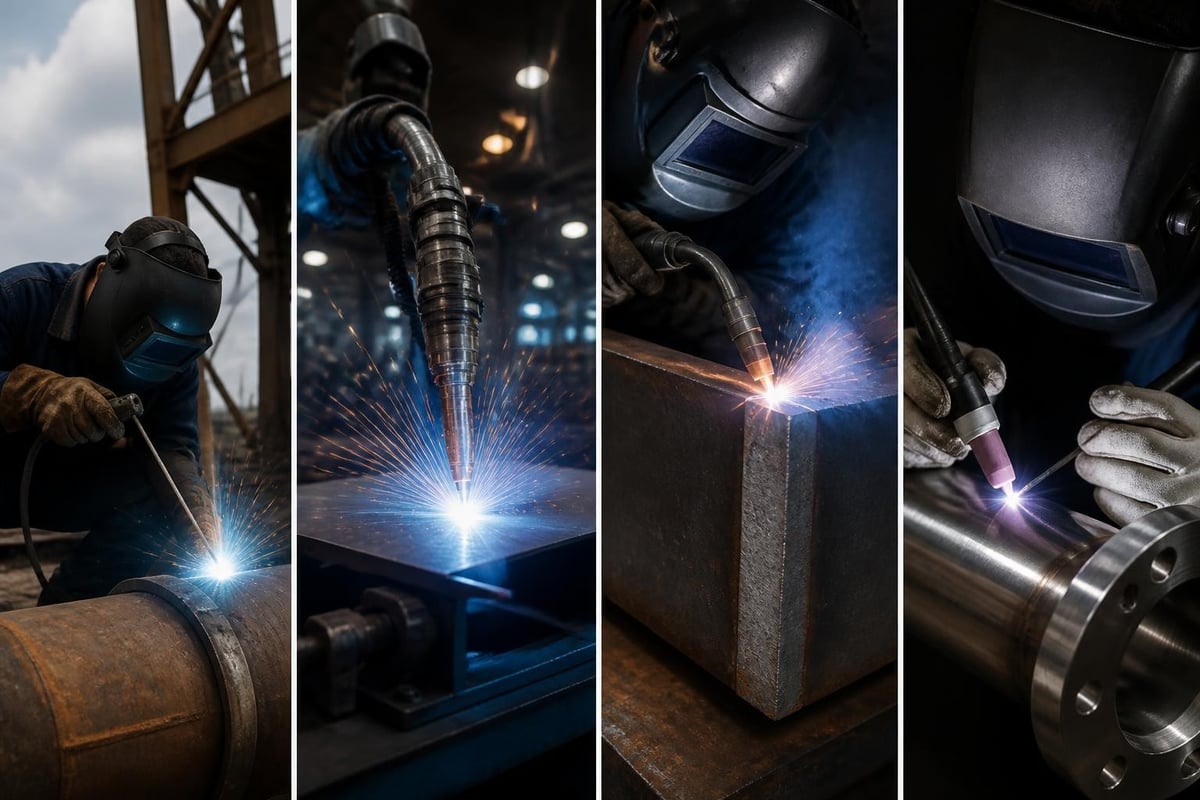
The foundation of welding manufacturing rests on several established techniques, each suited to specific materials, applications, and production requirements. Shielded Metal Arc Welding (SMAW), commonly known as stick welding, remains widely used for field applications and repair work due to its portability and versatility across various positions and environments.
Gas Metal Arc Welding (GMAW), or MIG welding, has become the preferred method for many manufacturing operations because of its high deposition rates and minimal post-weld cleanup requirements. This process excels in production environments where consistency and speed matter most.
Advanced Welding Techniques
Flux-Cored Arc Welding (FCAW) combines advantages from both SMAW and GMAW processes, offering exceptional penetration for thick materials commonly encountered in industrial manufacturing. This technique proves particularly valuable when working with structural steel components in aggregate processing equipment or oil field machinery.
Gas Tungsten Arc Welding (GTAW), also called TIG welding, delivers the highest quality welds with superior aesthetic results and minimal distortion. Industries requiring precision joints in stainless steel, aluminum, or exotic alloys rely heavily on this method.
Key advantages of modern welding manufacturing techniques include:
- Enhanced joint strength exceeding base metal properties
- Reduced production time through automated processes
- Improved quality consistency across large production runs
- Flexibility to accommodate complex geometries
- Cost-effective material utilization with minimal waste
Quality Standards and Certification Requirements
The American Welding Society offers comprehensive handbooks and technical guides covering welding practices, procedures, and standards that serve as essential references for professionals in the field. These standards ensure that welding manufacturing operations maintain consistency and reliability across different facilities and applications.
Welding procedure specifications (WPS) document the exact parameters required to produce acceptable welds for specific applications. These specifications detail base metal types, filler materials, shielding gases, amperage ranges, travel speeds, and preheat requirements.
| Standard Type | Purpose | Application |
|---|---|---|
| AWS D1.1 | Structural steel welding | Buildings, bridges, industrial structures |
| AWS D1.6 | Stainless steel structures | Food processing, chemical plants |
| ASME Section IX | Pressure vessel welding | Boilers, tanks, piping systems |
| API 1104 | Pipeline welding | Oil and gas transmission lines |
Welder Qualification and Certification
Welder performance qualifications validate that individual welders can consistently produce welds meeting specified standards. These qualifications specify approved positions, material thicknesses, and process limitations for each certified welder.
Testing protocols evaluate both visual inspection criteria and mechanical properties through destructive testing methods. Bend tests, tensile tests, and macro-examinations confirm that completed welds meet required strength and ductility standards.
Companies providing welding businesses with comprehensive services maintain rigorous certification programs to ensure workforce competency across all common welding processes and positions.
Safety Protocols and Workplace Requirements
The Occupational Safety and Health Administration outlines specific standards for welding, cutting, and brazing in various industries, ensuring workplace safety and compliance across manufacturing facilities. These regulations address hazards ranging from arc radiation to fume exposure and fire prevention.
Personal protective equipment forms the first line of defense in welding manufacturing environments. Proper helmets with appropriate shade ratings protect eyes from intense ultraviolet and infrared radiation. Flame-resistant clothing prevents burns from sparks and molten metal spatter.
Ventilation systems remove hazardous fumes from the breathing zone, particularly important when welding galvanized steel, stainless steel, or materials coated with paints or solvents. Local exhaust ventilation positioned near the welding arc provides the most effective fume control.
Critical safety considerations include:
- Proper electrode storage to prevent moisture contamination
- Regular inspection of welding cables and connections
- Fire watch protocols for hot work in confined spaces
- Adequate grounding to prevent electrical shock hazards
- Confined space entry procedures for tank and vessel work
Digital Integration and Data Management
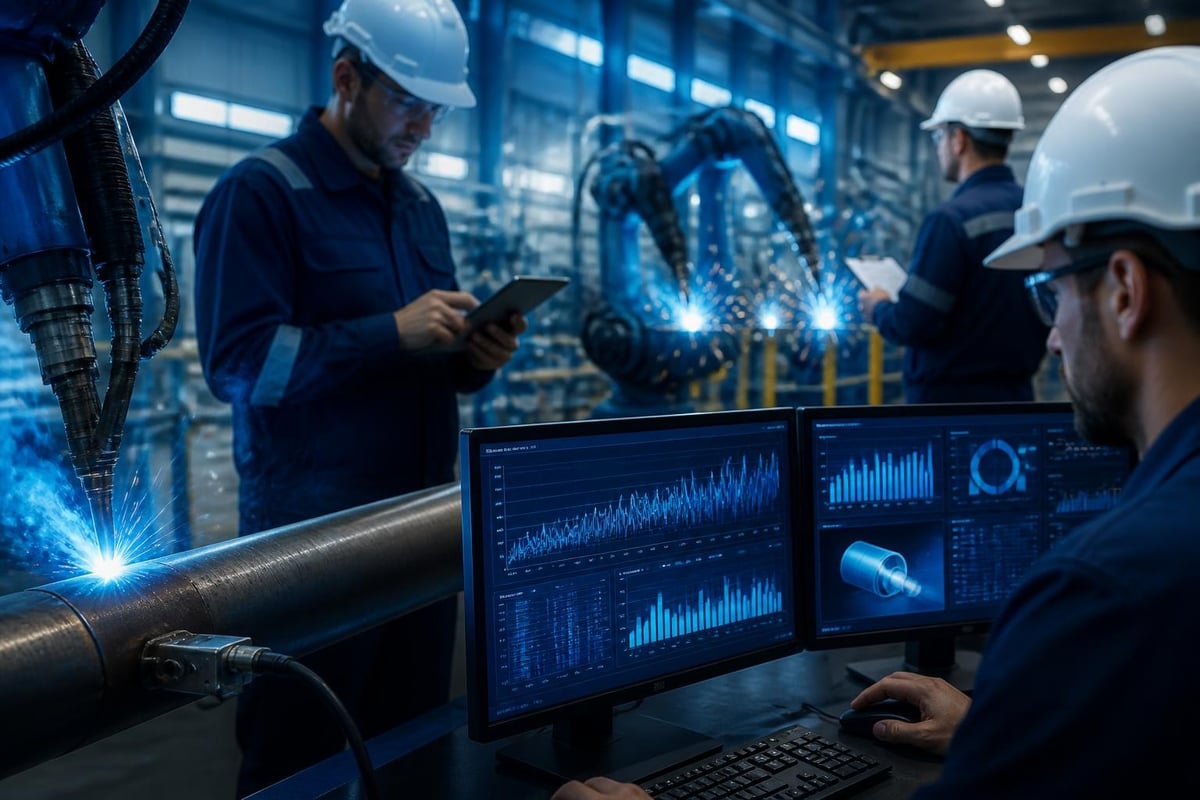
NIST publications discuss the necessity for improved information connections in welding manufacturing, emphasizing the importance of standardized data exchange and integration throughout the production lifecycle. Modern welding manufacturing operations increasingly leverage digital tools to track parameters, document procedures, and ensure traceability.
Welding management systems capture real-time data from power sources, recording actual parameters used during production. This information enables quality assurance teams to verify compliance with approved procedures and identify trends that might indicate equipment drift or operator inconsistency.
Traceability and Documentation Systems
Complete traceability tracks materials from mill certifications through fabrication and final inspection. Weld maps identify each joint location, associated WPS, qualified welder, inspection results, and any repair history.
Bar coding and RFID technologies automate data collection, reducing transcription errors and improving efficiency. These systems integrate with enterprise resource planning platforms to provide real-time visibility into production status and quality metrics.
| Data Category | Information Captured | Business Value |
|---|---|---|
| Weld Parameters | Voltage, amperage, travel speed, heat input | Quality verification, troubleshooting |
| Material Traceability | Heat numbers, mill certs, chemical composition | Compliance documentation, failure analysis |
| Welder Performance | Production rates, defect rates, qualification status | Training needs, productivity optimization |
| Inspection Results | Visual, radiographic, ultrasonic findings | Quality trends, customer reporting |
Industry Applications and Sector-Specific Requirements
Welding manufacturing serves diverse industrial sectors, each with unique requirements shaped by operating environments and performance demands. The oil and gas industry requires welds capable of withstanding high pressures, corrosive fluids, and extreme temperature variations.
Aggregate processing equipment faces constant abrasion from materials handling operations. Metal fabrication industries serving this sector prioritize wear-resistant materials and hard-facing techniques that extend component service life.
Recycling Industry Demands
Recycling operations expose equipment to highly variable materials, from automotive bodies to structural demolition debris. Welds must endure impact loading, thermal cycling from torch cutting operations, and contamination from oils, paints, and other residues.
Heavy-duty construction requires robust joints that maintain structural integrity under continuous vibration and mechanical stress. Proper joint design and appropriate filler metal selection ensure equipment reliability throughout demanding production schedules.
Commercial manufacturing facilities processing everything from food products to chemicals depend on sanitary welding techniques for stainless steel systems. These applications demand smooth internal surfaces free from crevices that could harbor bacteria or product residues.
Material Selection and Filler Metal Compatibility
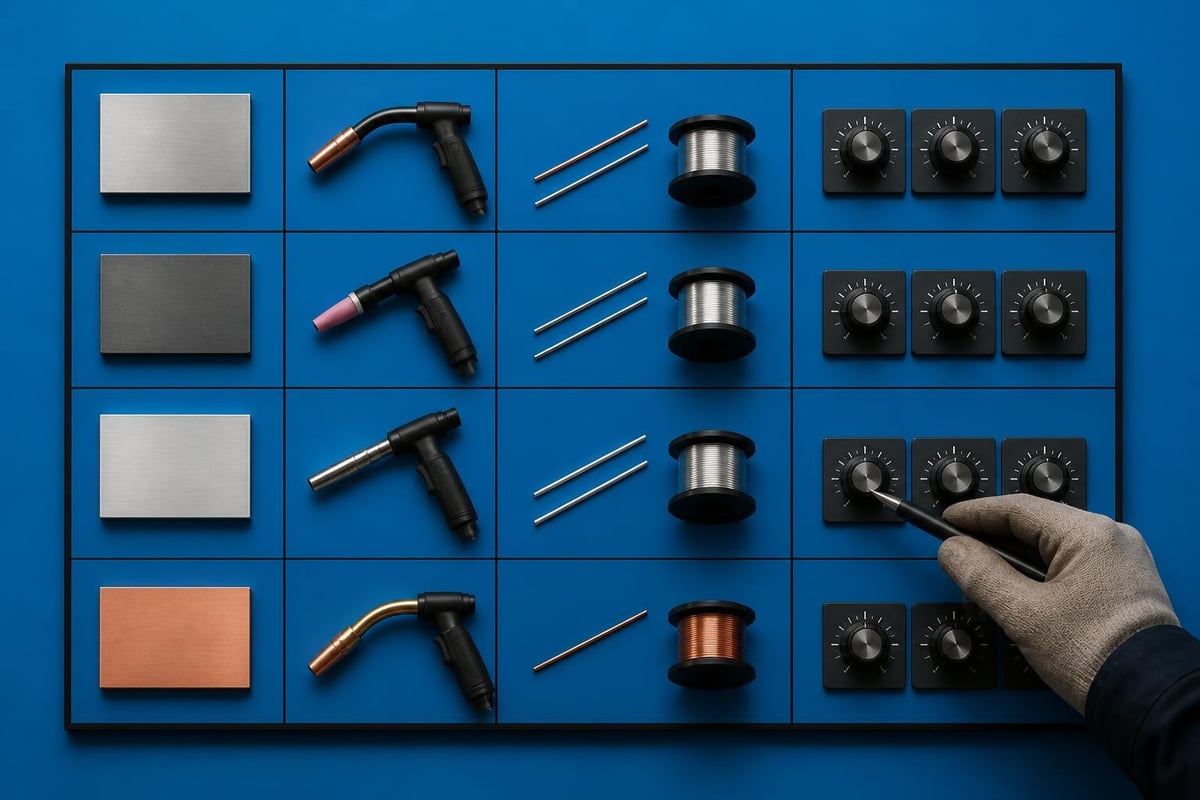
Base metal properties dictate appropriate welding processes and filler metal selections. Carbon steel grades vary in weldability based on carbon content, with low-carbon steels offering the easiest welding characteristics and minimal preheat requirements.
Medium-carbon and high-carbon steels require controlled heat input and often mandatory preheat to prevent cracking in the heat-affected zone. Proper procedure development addresses these challenges through qualified WPS documentation.
Stainless steel families present different welding considerations:
- Austenitic stainless (300 series) resists cracking but requires careful heat control to prevent carbide precipitation
- Ferritic stainless (400 series) demands low heat input to maintain corrosion resistance
- Duplex stainless combines austenitic and ferritic properties, requiring specific filler metals to balance phase composition
Aluminum and Exotic Alloys
Aluminum welding presents unique challenges due to oxide film formation and high thermal conductivity. AC GTAW processes effectively break up the oxide layer while maintaining arc stability. Proper joint cleaning and preparation prove critical for achieving sound welds in aluminum components.
Specialty alloys including Inconel, Hastelloy, and titanium serve extreme environments in chemical processing and aerospace applications. These materials demand precise control over welding parameters and strict contamination prevention during manufacturing and machining operations.
Automation and Robotic Integration
Automated welding manufacturing systems deliver unprecedented consistency while improving productivity and reducing operator fatigue. Robotic welding cells handle repetitive production runs with exact parameter replication across thousands of identical joints.
Research into improving welding robotization through operator skill identification demonstrates how human expertise can inform automated system programming, creating hybrid approaches that leverage both mechanical precision and human judgment.
Vision systems guide robotic torches along joint paths, automatically adjusting for part variations and maintaining optimal standoff distances. These adaptive systems compensate for fixture inconsistencies and thermal distortion during multi-pass welding sequences.
Semi-Automated Solutions
Mechanized travel systems move welding torches along linear or circular paths at controlled speeds, maintaining consistent travel rates while the operator monitors puddle formation and adjusts parameters as needed. These systems bridge the gap between fully manual and robotic welding.
Column and boom manipulators position welding heads for large diameter pipe or vessel fabrication, enabling precise positioning that would be impossible with manual techniques. Submerged arc welding on these systems achieves high deposition rates with excellent joint quality.
Benefits of automated welding manufacturing systems:
- Reduced labor costs through higher productivity per operator hour
- Improved weld quality consistency across production batches
- Enhanced safety by removing operators from hazardous environments
- Better material utilization through optimized parameter control
- Comprehensive data collection for quality documentation
Inspection Methods and Quality Assurance
Visual inspection forms the foundation of welding quality control, identifying surface discontinuities, dimensional compliance, and obvious defects before more expensive testing methods are employed. Qualified inspectors verify weld size, profile, surface finish, and freedom from cracks, porosity, or undercut.
Non-destructive testing (NDT) evaluates internal weld quality without damaging components. Radiographic testing exposes welds to X-rays or gamma radiation, revealing internal porosity, lack of fusion, or slag inclusions on film or digital detectors.
| Inspection Method | Capabilities | Typical Applications |
|---|---|---|
| Visual Testing (VT) | Surface defects, dimensions | All welds, first-line QC |
| Liquid Penetrant (PT) | Surface-breaking cracks | Non-magnetic materials |
| Magnetic Particle (MT) | Surface and near-surface defects | Ferromagnetic materials |
| Ultrasonic Testing (UT) | Internal defects, thickness measurement | Critical pressure boundaries |
| Radiographic Testing (RT) | Internal discontinuities, permanent record | Code-required applications |
Advanced Inspection Technologies
Phased array ultrasonic testing provides detailed imaging of weld cross-sections, enabling inspectors to precisely locate and size internal indications. This technology reduces inspection time while improving defect characterization compared to conventional ultrasonic methods.
Automated ultrasonic scanning systems mounted on pipe circumference track welders or longitudinal scanners examine plate welds with computer-controlled transducer positioning. These systems generate permanent digital records suitable for regulatory compliance documentation.
Research developing statistical methods to model quality inconsistencies in the welding process demonstrates how data analytics can enhance monitoring and control in manufacturing settings, predicting potential defects before they occur.
Workforce Development and Skills Training
The welding manufacturing industry faces ongoing workforce challenges as experienced professionals retire and new technologies demand updated skill sets. Structured training programs combine classroom instruction in metallurgy, blueprint reading, and welding theory with extensive hands-on practice.
Apprenticeship programs typically span three to four years, progressively building competency across multiple processes, positions, and material types. Trainees work under supervision of journey-level welders while attending related technical instruction.
Community colleges and technical schools offer certificate and associate degree programs covering:
- Welding process fundamentals and applications
- Metallurgy and material science principles
- Blueprint interpretation and geometric dimensioning
- Quality control and inspection methods
- Safety procedures and hazard recognition
Continuing Education Requirements
Maintaining qualification status requires periodic renewal testing to verify skills remain current. Most welding codes require requalification if welders haven't worked with a specific process for six months or longer.
Advanced certifications demonstrate expertise in specialized areas including underwater welding, pipeline welding, or pressure vessel fabrication. These credentials enhance career opportunities and enable companies to bid on projects requiring specifically certified personnel.
Professional development through organizations like Welding Digest keeps practitioners informed about industry trends, new technologies, and evolving best practices shaping the welding manufacturing landscape.
Cost Considerations and Process Optimization
Economic factors significantly influence welding manufacturing decisions, from process selection to joint design optimization. Understanding the total cost of welding extends beyond hourly labor rates to include consumables, power consumption, equipment depreciation, and quality-related expenses.
Deposition efficiency measures the percentage of filler metal that actually becomes part of the finished weld versus losses to spatter, slag, or stub ends. GMAW processes typically achieve 85-95% deposition efficiency, while SMAW ranges from 50-70% due to electrode stub waste.
Joint design directly impacts welding costs by determining required filler metal volume. Single-pass fillet welds complete faster than multi-pass groove welds, though structural requirements often dictate groove joint configurations for critical applications.
Production Planning Strategies
Work cell layout influences productivity by minimizing material handling and positioning time between operations. Manufacturing projects benefit from streamlined workflows that sequence cutting, fit-up, welding, and finishing operations efficiently.
Batch processing similar components reduces setup time and enables welders to develop rhythm and consistency on repetitive joints. This approach works particularly well for standardized products or replacement parts manufactured in quantity.
Preventive maintenance programs for welding equipment prevent costly downtime and ensure consistent parameter delivery. Regular calibration verifies power source outputs match dial settings, maintaining weld quality and procedure compliance.
Mastering welding manufacturing requires balancing technical expertise, quality standards, and operational efficiency to deliver reliable results across diverse industrial applications. As manufacturing operations throughout the Western United States seek partners capable of handling complex fabrication challenges, working with experienced providers becomes essential. LTJ Industrial Services brings comprehensive welding, fabrication, and machining capabilities to support commercial and industrial manufacturing needs across the aggregate, recycling, and oil and gas sectors, delivering the precision and reliability your operations demand.