Selecting the right welding machine company determines whether your manufacturing operation runs smoothly or faces costly downtime and quality issues. Industrial businesses throughout the Western United States rely on specialized providers to deliver the equipment, service, and expertise needed for critical welding applications in recycling, aggregate, oil and gas, and manufacturing sectors. Understanding what separates a reliable welding machine company from competitors helps you make informed decisions that impact your bottom line, production quality, and operational efficiency.
Understanding Welding Machine Company Capabilities
A comprehensive welding machine company offers far more than equipment sales. These specialized providers deliver integrated solutions that encompass equipment selection, operator training, maintenance services, and technical support tailored to specific industrial applications. The most valuable partnerships develop when companies understand your unique operational requirements and can recommend appropriate technologies.
Core Service Offerings
Professional welding machine companies typically provide these essential services:
- Equipment sales and leasing options for various welding processes
- Technical consultation for application-specific requirements
- Operator training and certification programs
- Preventive maintenance and repair services
- Emergency support and replacement equipment availability
- Consumable supplies and parts inventory management
The distinction between basic equipment suppliers and full-service providers becomes apparent during complex projects or emergency situations. Companies serving the oil and gas industry, for example, require 24/7 support capabilities and field service teams who can respond to remote locations throughout Colorado and surrounding states.
Equipment Portfolio Breadth
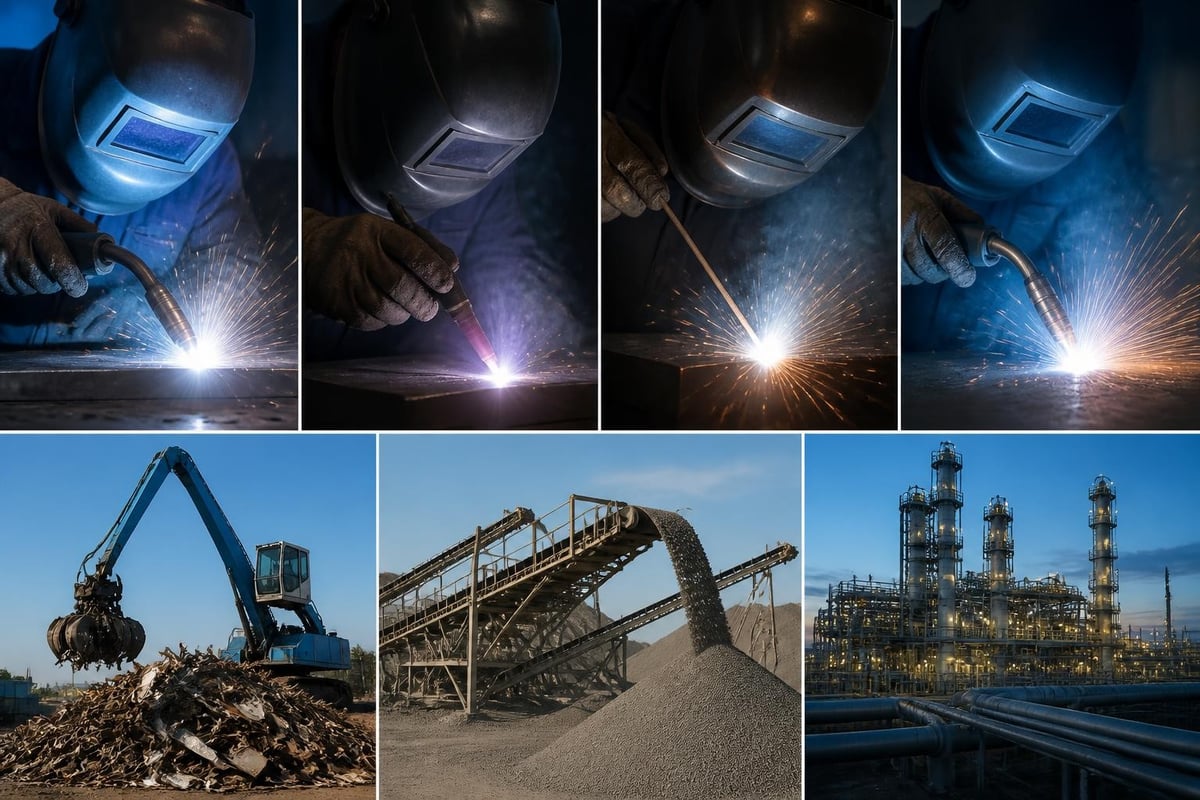
The range of equipment a welding machine company stocks reflects their capacity to serve diverse industrial needs. Modern fabrication facilities require access to multiple welding technologies, each suited to specific materials, thicknesses, and application requirements.
| Welding Process | Primary Applications | Material Compatibility | Portability |
|---|---|---|---|
| MIG/GMAW | Production welding, automation | Steel, aluminum, stainless | Moderate |
| TIG/GTAW | Precision work, exotic metals | All metals, including titanium | Low to moderate |
| Stick/SMAW | Field work, heavy construction | Carbon steel, cast iron | High |
| Flux-Cored | Heavy fabrication, outdoor work | Thick steel sections | Moderate to high |
Companies serving industrial manufacturing sectors benefit from relationships with welding machine companies that maintain inventory across all major processes. This breadth ensures access to appropriate equipment whether you're fabricating custom components or conducting field repairs on mining equipment.
Quality Standards and Compliance Requirements
Federal regulations and industry standards establish minimum requirements for welding equipment in commercial applications. The Electronic Code of Federal Regulations outlines specific standards that welding equipment must meet, particularly for operations in oil and gas sectors where safety is paramount.
Certification and Testing Protocols
Reputable welding machine companies ensure their equipment meets or exceeds applicable standards through rigorous testing protocols. This commitment to quality extends beyond initial purchase to ongoing maintenance and calibration services that keep machines operating within specification.
Key compliance areas include:
- Electrical safety certifications (UL, CSA)
- Duty cycle ratings verified under load conditions
- Output consistency testing across voltage ranges
- Environmental operating specifications
- Electromagnetic compatibility standards
Working with certified equipment reduces liability exposure and ensures project compliance when customers require documentation for regulatory submissions. The aggregate and recycling industries particularly benefit from this attention to standards, as equipment often operates in challenging environments with demanding safety requirements.
Quality Control Technologies
Advanced welding automation and digital quality control systems represent significant developments in manufacturing technology. Progressive welding machine companies incorporate these innovations into their equipment offerings, providing customers with tools to monitor and document weld quality in real-time.
Modern systems track parameters including:
- Voltage and amperage throughout each weld
- Travel speed and wire feed consistency
- Shielding gas flow rates and mixture accuracy
- Arc stability and transfer mode characteristics
- Thermal profiles and heat input calculations
This data integration allows manufacturers to identify process variations before they result in defective welds. Research into real-time welding condition monitoring demonstrates how advanced systems can predict equipment maintenance needs and prevent unexpected failures during critical production runs.
Selecting a Welding Machine Company Partner
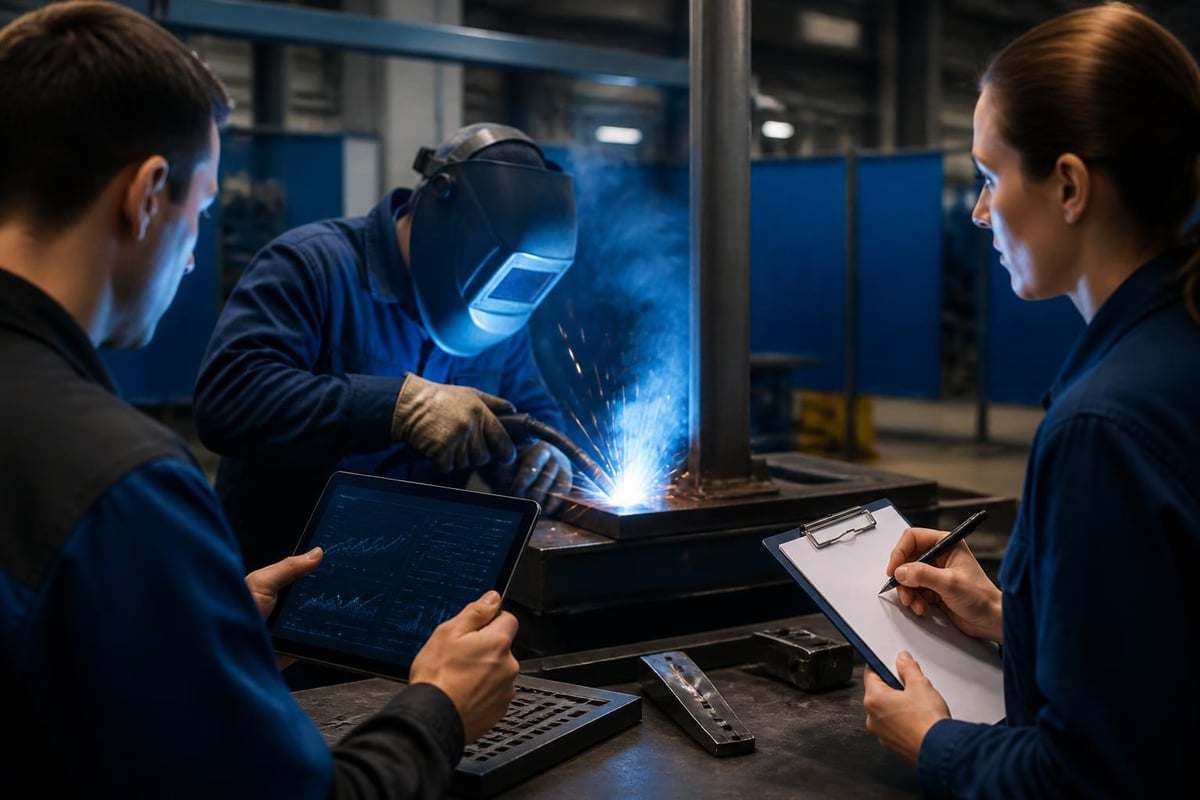
The decision process for choosing a welding machine company extends beyond comparing equipment specifications and prices. Strategic partnerships develop when providers demonstrate commitment to understanding your operational challenges and delivering solutions that improve productivity and quality outcomes.
Evaluation Criteria Framework
Smart purchasing decisions balance multiple factors that influence long-term satisfaction and total cost of ownership. Consider these dimensions when evaluating potential partners:
- Technical expertise: Does the company employ certified welding inspectors and engineers who can provide application guidance?
- Service infrastructure: Are field service technicians available throughout your operating region?
- Inventory depth: Can they supply equipment and consumables without extended lead times?
- Training capabilities: Do they offer operator training and certification programs?
- Financial flexibility: Are leasing or rental options available for specialized projects?
Companies serving multiple facilities across the Western United States particularly value partners with regional presence. A welding machine company with service capabilities in Colorado, Utah, Wyoming, and surrounding states can respond to emergencies and provide consistent support across distributed operations.
Service Level Expectations
Defining clear service expectations prevents misunderstandings and ensures alignment between your operational requirements and provider capabilities. Professional welding machine companies document their commitments through formal service agreements that specify response times, parts availability, and support coverage.
Standard service tiers typically include:
| Service Level | Response Time | Coverage Hours | Preventive Maintenance | Loaner Equipment |
|---|---|---|---|---|
| Basic | 2-3 business days | Business hours | Annual inspection | Limited availability |
| Standard | Next business day | Extended hours | Quarterly service | Available on request |
| Premium | 4-8 hours | 24/7/365 | Monthly monitoring | Guaranteed replacement |
Operations in critical industries like oil and gas extraction often require premium service levels to minimize production disruptions. The cost differential between service tiers should be evaluated against the financial impact of equipment downtime in your specific application.
Advanced Technologies and Automation Integration
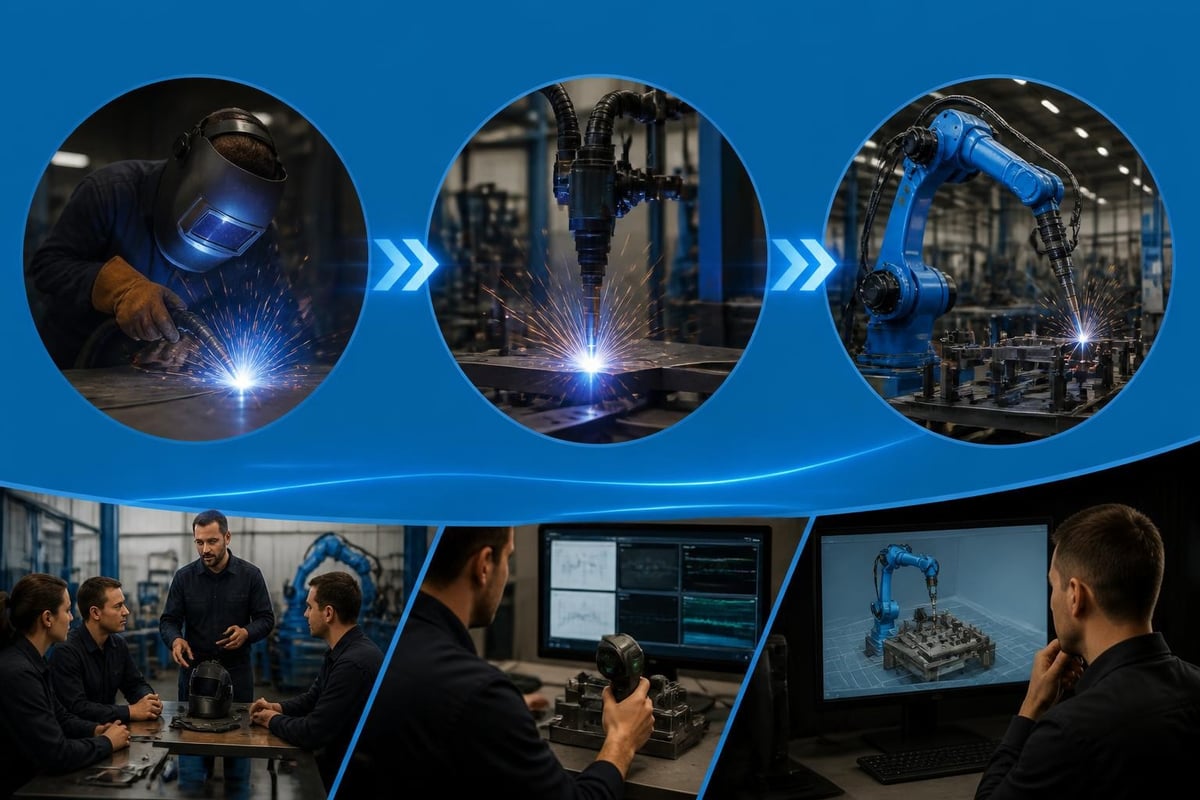
The landscape of industrial welding continues evolving as manufacturers adopt automation technologies to address skilled labor shortages and improve consistency. A forward-thinking welding machine company stays current with these developments and can guide customers through technology adoption processes.
Robotic Welding Systems
Automated welding solutions deliver remarkable consistency and productivity improvements in production environments. Research into improving welding robotization through operator skill identification demonstrates how modern systems can learn from experienced welders and replicate their techniques with precision.
Implementing robotic welding requires significant capital investment and process planning. The right welding machine company partner provides:
- Application analysis to determine automation feasibility
- System design and equipment specification
- Installation and commissioning services
- Operator and programmer training
- Ongoing optimization and troubleshooting support
Companies specializing in custom metal fabrication benefit from automation when production volumes justify the investment. The key is working with a welding machine company that understands both the technology and your business requirements.
Defect Detection and Quality Assurance
Quality control represents a critical concern in industries where weld failures can result in catastrophic consequences. Advanced defect detection frameworks for welding combine machine vision, artificial intelligence, and real-time monitoring to identify problems before they compromise structural integrity.
Sophisticated systems analyze weld characteristics including:
- Bead geometry and profile consistency
- Penetration depth and fusion quality
- Porosity and inclusion detection
- Heat-affected zone dimensions
- Surface finish and appearance standards
These technologies particularly benefit manufacturers in regulated industries where documentation and traceability are mandatory. A qualified welding machine company can integrate quality monitoring systems with existing production workflows and establish protocols that satisfy customer and regulatory requirements.
Industry-Specific Applications and Requirements
Different industrial sectors impose unique demands on welding equipment and processes. The most effective welding machine company relationships develop when providers demonstrate deep understanding of industry-specific challenges and regulatory environments.
Oil and Gas Sector Considerations
Pipeline construction, refinery maintenance, and drilling equipment repair require specialized welding capabilities. Equipment must perform reliably in remote locations, often under challenging environmental conditions. Welders need certifications for specific codes including API 1104 and ASME Section IX.
Critical requirements include:
- High-amperage machines capable of welding thick-wall pipe
- All-position welding capability for field applications
- Generators and engine-driven welders for remote sites
- Purge gas equipment for stainless and exotic alloys
- Documentation systems for weld procedure qualification
Companies serving oil and gas customers must maintain extensive parts inventories and provide rapid response to minimize costly downtime. Field service capabilities across Wyoming, Colorado, and Utah prove essential for distributed operations.
Aggregate and Recycling Equipment
Heavy equipment used in aggregate processing and recycling operations endures extreme wear and impact loading. Repairs often involve hard-facing applications, heavy-section welding, and field fabrication of replacement components.
Specialized processes for this sector include:
- Submerged arc welding for build-up applications
- Flux-cored arc welding for abrasion-resistant overlays
- Stud welding for attaching wear components
- Gouging equipment for removing damaged sections
A welding machine company serving this industry understands the economics of equipment repair versus replacement. They can recommend cost-effective solutions that extend asset life while minimizing production interruptions. Many operations benefit from comprehensive manufacturing services that combine welding with machining and hydraulic expertise.
Total Cost of Ownership Analysis
Purchase price represents only one component of equipment costs over its operational lifespan. Sophisticated buyers evaluate total cost of ownership when comparing welding machine company offerings. This comprehensive approach reveals the true economic impact of equipment decisions.
Direct and Indirect Cost Factors
Complete cost analysis incorporates multiple expense categories that influence profitability:
- Initial acquisition costs: Equipment purchase or lease payments, delivery, installation
- Consumable expenses: Electrodes, wire, shielding gas, contact tips, nozzles
- Utility costs: Electricity consumption, cooling water, compressed air
- Maintenance requirements: Scheduled service, repairs, replacement parts
- Downtime impact: Lost production during failures and maintenance
- Operator efficiency: Setup time, ease of use, process consistency
Energy-efficient equipment often justifies premium pricing through reduced operating costs. Modern inverter-based machines consume significantly less power than traditional transformer-based units while delivering superior arc characteristics and process control.
Lifecycle Service Planning
Proactive maintenance extends equipment life and prevents unexpected failures. Statistical methods for modeling quality inconsistencies in welding processes help predict when preventive interventions deliver maximum value.
| Maintenance Activity | Frequency | Typical Cost | Downtime Required |
|---|---|---|---|
| Consumable replacement | Weekly | Low | Minutes |
| Wire feed system cleaning | Monthly | Low | 1-2 hours |
| Contact tip inspection | Daily | Minimal | Minutes |
| Cooling system service | Quarterly | Moderate | 2-4 hours |
| Power source calibration | Annually | Moderate | 4-8 hours |
A reliable welding machine company provides clear maintenance schedules and can perform services during planned downtime to minimize production impact. Some providers offer predictive maintenance programs using remote monitoring to identify developing problems before equipment fails.
Building Strategic Supplier Relationships
The most valuable welding machine company partnerships extend beyond transactional interactions to become strategic relationships that support long-term business objectives. This depth of engagement requires commitment from both parties and delivers benefits that transcend individual purchase decisions.
Collaborative Problem Solving
Complex fabrication challenges often require creative solutions that combine multiple technologies and expertise areas. A welding machine company invested in your success brings resources to bear on difficult problems, potentially including:
- Engineering support for weld procedure development
- Material testing and qualification assistance
- Process optimization studies to improve productivity
- Custom equipment modifications for specialized applications
- Operator skill development and training programs
This collaborative approach proves particularly valuable when entering new markets or taking on projects outside your normal scope. The technical depth available through a knowledgeable partner can mean the difference between profitable project execution and costly learning experiences.
Technology Roadmap Planning
Manufacturing technology evolves continuously, creating both opportunities and challenges for industrial businesses. A strategic welding machine company partner helps you navigate this evolution by providing insights into emerging technologies and their practical applications.
Planning conversations should address:
- Anticipated changes in production requirements
- Workforce development and succession planning
- Equipment replacement and upgrade timelines
- Regulatory changes affecting welding processes
- Sustainability initiatives and energy efficiency goals
This forward-looking perspective allows you to make equipment investments that support both current operations and future capabilities. Companies planning expansion or diversification particularly benefit from partners who understand industry trends and can recommend scalable solutions.
Geographic Service Coverage and Local Support
For businesses operating across multiple states in the Western United States, a welding machine company with regional presence delivers substantial advantages. Local support infrastructure reduces response times, improves parts availability, and provides better understanding of regional industry characteristics.
Field Service Capabilities
Remote operations in Colorado, Wyoming, Utah, and surrounding areas demand welding machine companies with mobile service capabilities. Field technicians equipped to diagnose problems, perform repairs, and provide temporary equipment keep operations running when shop access isn't practical.
Comprehensive field service includes:
- Diagnostic equipment for troubleshooting complex issues
- Common replacement parts and consumables inventory
- Temporary welding machines and generators for emergencies
- Technical expertise across multiple equipment brands
- Safety equipment and compliance with site requirements
Companies in oil and gas extraction and aggregate processing particularly value these capabilities given the distributed nature of their operations. Quick response to equipment failures in remote locations prevents minor issues from escalating into major production disruptions.
Regional Industry Knowledge
Different geographic regions present unique challenges and opportunities for industrial welding operations. A welding machine company with deep roots in the Western United States understands local industry dynamics, environmental conditions, and regulatory requirements that affect equipment selection and operation.
This regional expertise proves valuable for:
- Understanding altitude effects on welding processes and shielding gas requirements
- Navigating local permitting and environmental regulations
- Connecting with qualified welding personnel and contractors
- Accessing regional supply chains for specialized materials
- Anticipating seasonal challenges and planning accordingly
Whether you need support for operations in Rifle, Colorado, or distributed facilities across multiple states, regional presence ensures your welding machine company understands the context in which your equipment operates.
Equipment Financing and Acquisition Strategies
Capital allocation decisions require careful analysis of acquisition alternatives. Progressive welding machine companies offer flexible financing options that align equipment costs with project revenues and cash flow patterns.
Purchase Versus Lease Analysis
Outright equipment purchase provides maximum long-term value when utilization rates remain consistently high. However, leasing arrangements offer advantages for businesses managing cash flow, testing new technologies, or addressing temporary capacity needs.
Comparative considerations:
| Factor | Purchase | Operating Lease | Capital Lease |
|---|---|---|---|
| Ownership | Immediate | Lessor retains | Transfers at term end |
| Tax treatment | Depreciation | Full expense | Depreciation |
| Balance sheet | Asset recorded | Off-balance | Liability recorded |
| Flexibility | Equipment specific | Easy upgrades | Fixed commitment |
| Total cost | Lowest long-term | Highest long-term | Moderate |
Project-based work often justifies leasing arrangements that match equipment costs to project duration. A welding machine company offering multiple acquisition pathways provides flexibility to structure transactions according to your financial objectives and accounting preferences.
Rental Programs for Specialized Needs
Short-term equipment rentals solve temporary capacity challenges without long-term commitments. This approach works well for seasonal peaks, special projects requiring unique capabilities, or emergency situations when primary equipment fails.
Quality rental programs feature:
- Well-maintained late-model equipment
- Delivery and pickup services
- Technical support and operator training
- Flexible rental terms from daily to monthly rates
- Option to apply rental payments toward purchase
Businesses can leverage rental relationships to evaluate equipment before making purchase decisions. This try-before-you-buy approach reduces risk when considering new technologies or unfamiliar welding processes.
Safety Programs and Compliance Support
Welding operations present significant safety hazards requiring comprehensive programs to protect personnel and ensure regulatory compliance. A responsible welding machine company supports customer safety initiatives through equipment design, training resources, and ongoing technical assistance.
Equipment Safety Features
Modern welding machines incorporate multiple safety systems that protect operators and surrounding personnel. Standard features address electrical hazards, arc radiation, fume exposure, and fire risks inherent in welding operations.
Essential safety elements include:
- Ground fault circuit protection and proper grounding systems
- Thermal overload protection to prevent equipment damage
- Ventilation requirements and fume extraction compatibility
- Personal protective equipment specifications
- Safe work practice guidelines for specific processes
Businesses operating in regulated industries must document equipment compliance with applicable standards. A knowledgeable welding machine company provides necessary certifications and technical documentation to satisfy regulatory requirements and customer audits.
Training and Skill Development
Operator competency directly influences both safety outcomes and weld quality. Comprehensive training programs address equipment operation, welding technique, safety procedures, and quality standards specific to your applications.
Effective training covers:
- Equipment setup and parameter selection
- Proper personal protective equipment use
- Hazard recognition and risk mitigation
- Weld quality evaluation techniques
- Troubleshooting common problems
Some welding machine companies maintain training facilities and certified instructors who can deliver customized programs aligned with your operational requirements. This investment in workforce development pays dividends through improved productivity, reduced rework, and fewer safety incidents.
Choosing the right welding machine company partner significantly impacts operational efficiency, product quality, and long-term competitiveness in industrial manufacturing. The most successful relationships combine technical expertise, responsive service, and strategic alignment with your business objectives. When you need comprehensive welding, fabrication, and machining support for operations throughout the Western United States, LTJ Industrial Services delivers the expertise and capabilities to keep your business running efficiently. Our team serves the commercial and industrial manufacturing sectors from our Rifle, Colorado facility with shop and field services designed to meet the demanding requirements of recycling, aggregate, oil and gas, and manufacturing operations.