
Welding for construction projects represents one of the most critical technical disciplines in modern building and infrastructure development. From towering commercial structures to expansive industrial facilities, the quality and precision of welded connections directly impact structural integrity, safety, and long-term performance. As construction demands evolve and projects become increasingly complex, understanding the nuances of construction welding-from process selection to quality assurance-becomes essential for contractors, fabricators, and project managers throughout the Western United States and beyond.
Understanding Welding Processes for Construction Applications
Construction welding encompasses multiple processes, each suited to specific applications, materials, and field conditions. The selection of appropriate welding techniques determines both the efficiency of fabrication and the structural performance of finished assemblies.
Shielded Metal Arc Welding (SMAW) remains the workhorse of construction sites due to its versatility and portability. This stick welding process excels in outdoor environments where wind and weather challenge other methods. Field welders appreciate SMAW's ability to handle rusty or contaminated base metals, making it ideal for repair work and retrofit projects.
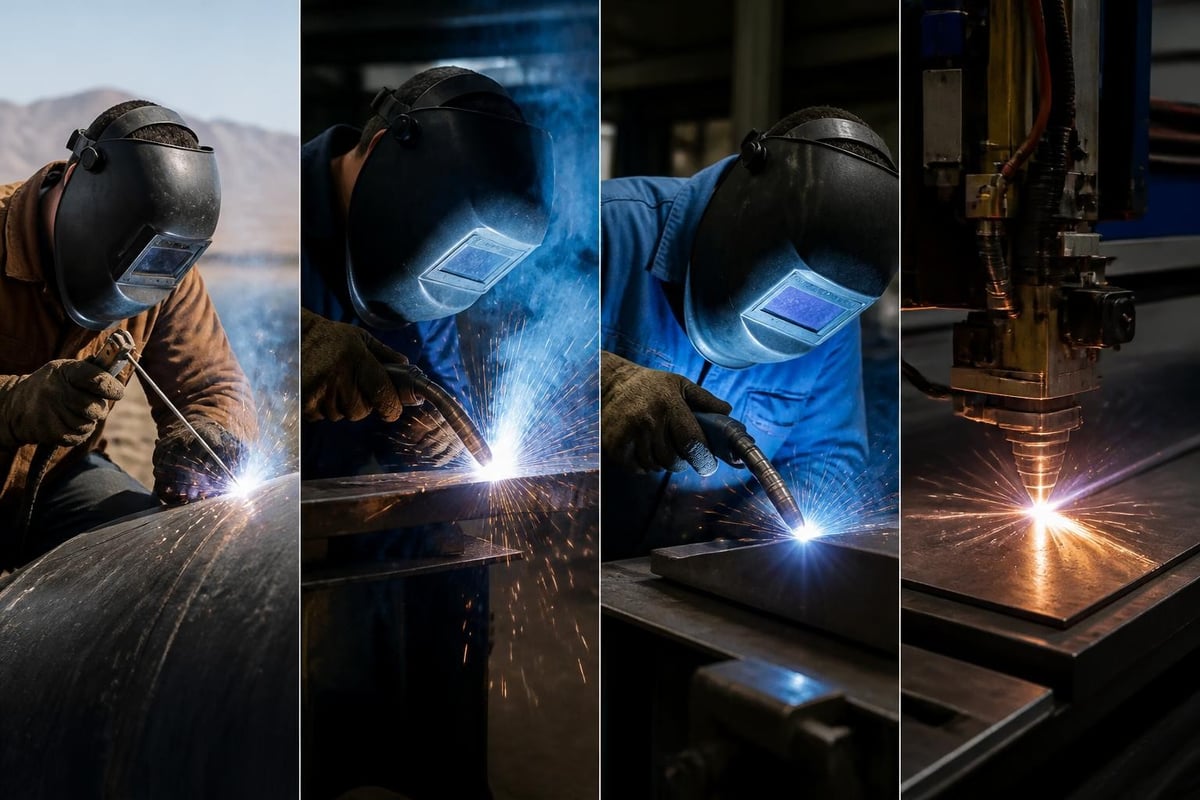
Gas Metal Arc Welding (GMAW) and Flux-Cored Arc Welding (FCAW) dominate high-production structural fabrication. These processes offer superior deposition rates compared to SMAW, reducing labor costs on large-scale projects. FCAW particularly shines in structural steel erection, where self-shielded variants eliminate the need for external gas cylinders during vertical and overhead welding.
Process Selection Criteria
When determining which welding process to deploy for construction projects, several factors demand consideration:
- Material thickness and type (carbon steel, stainless, high-strength low-alloy)
- Joint accessibility and position (flat, horizontal, vertical, overhead)
- Production volume and schedule constraints
- Environmental conditions (wind, temperature, precipitation)
- Power availability and portability requirements
- Welder skill levels and certification requirements
Submerged Arc Welding (SAW) deserves mention for shop fabrication of heavy structural components. This automated process produces high-quality welds on thick sections, particularly for beam flanges and girder assemblies that later arrive at construction sites for final assembly.
| Process | Best Applications | Typical Position | Production Rate |
|---|---|---|---|
| SMAW | Field repairs, all-position structural | All positions | Low to Medium |
| GMAW | Shop fabrication, thin-to-medium sections | Flat, horizontal | High |
| FCAW | Structural steel erection, heavy sections | All positions | Medium to High |
| SAW | Heavy fabrication, longitudinal seams | Flat, horizontal | Very High |
Understanding these fundamental distinctions enables better planning for welding for construction projects, ensuring that process capabilities align with project specifications and delivery timelines.
Structural Welding Codes and Standards Compliance
Construction welding operates under rigorous codes and standards that govern everything from procedure development to final inspection. Compliance with these requirements ensures structural safety while providing legal protection for all project stakeholders.
The American Welding Society's AWS D1.1 Structural Welding Code – Steel serves as the primary standard for building and bridge construction throughout North America. This comprehensive document specifies prequalified joint details, acceptable welding procedures, qualification requirements, and quality criteria. The AWS codes and standards library provides access to current editions and supporting technical documents essential for maintaining compliance.
Critical Compliance Elements
Welding Procedure Specifications (WPS) document the precise parameters that welders must follow. These specifications detail:
- Base metal specifications and thickness ranges
- Filler metal classifications and sizes
- Preheat and interpass temperature requirements
- Current ranges, voltage, and travel speed
- Shielding gas compositions (when applicable)
- Post-weld heat treatment requirements
Each WPS requires validation through Procedure Qualification Records (PQR) that demonstrate the procedure produces acceptable mechanical properties. Testing typically includes tensile strength, bend tests, and sometimes impact toughness evaluation depending on service conditions.
For projects involving highway infrastructure, the FHWA Bridge Welding Reference Manual provides detailed technical guidance that bridges AWS and AASHTO requirements, offering practical insights for fabricators working on transportation structures.
Welder qualification represents another non-negotiable compliance element. Individual welders must demonstrate proficiency through performance tests that simulate actual production conditions. Qualifications remain valid for specified periods and must be renewed if welders experience significant gaps in activity or if their work quality raises concerns. Understanding ASME welding certification meaning helps distinguish between different qualification standards applicable across industries.
International projects may require adherence to European execution standards. The BS EN 1090 framework establishes execution classes that define increasingly stringent requirements for traceability, inspection, and quality management systems.
Material Considerations and Metallurgical Challenges
The metallurgical aspects of welding for construction projects significantly influence joint performance and longevity. Different base metals present unique challenges that require specific approaches to achieve satisfactory results.
Carbon steel grades dominate structural construction, with ASTM A36, A572, and A992 representing the most common specifications. These materials weld readily with appropriate procedures, though higher-strength grades (A572 Grade 65 and above) may require preheat to prevent cracking in thicker sections.
Preheat and Heat Input Management
Thick sections and restrained joints create conditions conducive to hydrogen-induced cracking. Preheat mitigates this risk by slowing the cooling rate and allowing hydrogen to diffuse from the weld zone before the microstructure becomes susceptible to cracking.
Minimum preheat temperatures vary based on:
- Material thickness (thicker sections require higher preheat)
- Carbon equivalent (higher alloy content increases requirements)
- Ambient temperature (cold weather necessitates additional preheat)
- Joint restraint (highly restrained assemblies need more preheat)
- Hydrogen content of consumables (low-hydrogen electrodes reduce risk)
Conversely, excessive heat input can degrade mechanical properties, particularly in quenched-and-tempered steels or those with controlled rolling. Balanced thermal management preserves base metal properties while ensuring sound weld metal.
Weathering steels like ASTM A588 require special attention to filler metal matching. These steels develop protective oxide layers in atmospheric exposure, but only if welded with compatible consumables that match the copper, chromium, and nickel content of the base metal.
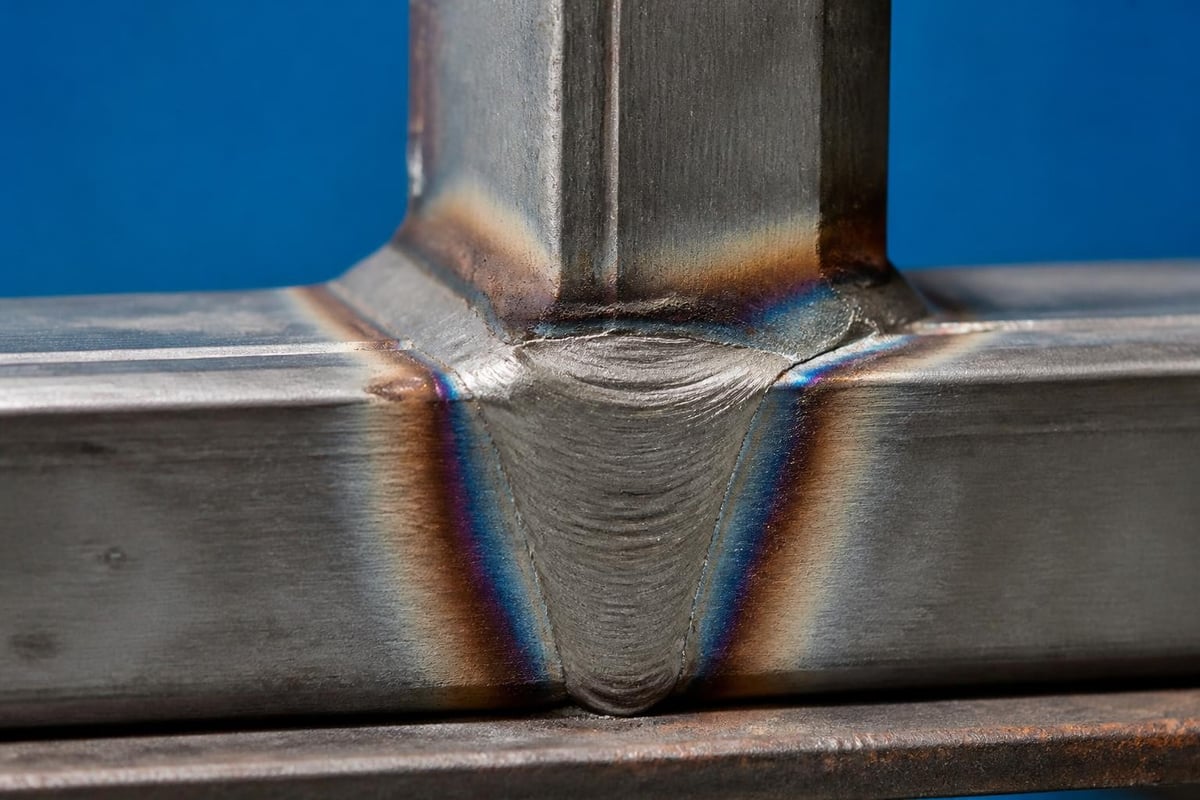
High-strength low-alloy steels present additional considerations. Their higher yield strengths tempt engineers to reduce member sizes, but this practice increases thickness-to-cross-section ratios that concentrate stress at weld toes. Proper joint design and weld profile control become even more critical in these applications.
Field Welding Techniques and Site Management
Field conditions present challenges absent from controlled shop environments. Successful execution of welding for construction projects requires systematic approaches that account for weather, accessibility, and logistical constraints.
Wind protection ranks among the most critical site considerations. Gas-shielded processes (GMAW, GTAW) require wind speeds below 5 mph to maintain stable arc characteristics and prevent atmospheric contamination. Portable windscreens or welding tents provide necessary protection, though self-shielded FCAW offers greater weather resistance when properly selected.
Temperature extremes demand adaptive strategies. Cold weather below 32°F requires additional preheat beyond code minimums and necessitates protection of completed welds until they cool sufficiently to avoid rapid quenching. Moisture from rain, snow, or condensation must be removed before welding through thorough drying, as hydrogen introduced by moisture represents a primary cracking mechanism.
Vertical and Overhead Position Challenges
Gravity works against welders when joints deviate from the comfortable flat position. Vertical and overhead welding requires modified technique parameters:
- Reduced current settings to control puddle fluidity
- Faster travel speeds to prevent sagging or excessive buildup
- Smaller diameter electrodes for better control
- Strategic weaving patterns to ensure fusion and profile
These position-specific adaptations reduce productivity compared to downhand welding, making joint orientation planning crucial during design and erection sequencing. Rotating positioners or manipulators can reorient assemblies, converting difficult positions into easier flat or horizontal orientations that improve quality and efficiency.
Power supply logistics often constrain field operations. Engine-driven welding machines provide independence from electrical infrastructure but introduce noise and exhaust considerations. Multiple welders working simultaneously may exceed available power capacity, requiring coordination or supplementary generators. For companies providing comprehensive services, the integration of industrial gearbox repair and machining services alongside welding capabilities creates operational synergies when supporting complex industrial construction.
Quality Control and Inspection Protocols
Rigorous quality assurance separates reliable structural welding from potential failures. Construction projects demand systematic inspection regimes that verify compliance with specifications and identify defects before they compromise structural integrity.
Visual inspection represents the first and most frequent quality checkpoint. Trained inspectors examine welds for surface defects including:
- Cracks (longitudinal, transverse, crater, toe, or root)
- Porosity and wormholes
- Undercutting that removes base metal
- Incomplete fusion or lack of penetration
- Excessive or insufficient weld size
- Poor weld profiles (excessive convexity or concavity)
The TWI technical knowledge center on weld defects provides detailed guidance on identifying, understanding, and preventing common imperfections that visual inspectors encounter.
Non-Destructive Testing Methods
Non-destructive testing (NDT) reveals internal conditions without compromising the weld. Different NDT methods detect specific defect types:
| NDT Method | Detects | Typical Applications | Limitations |
|---|---|---|---|
| Ultrasonic Testing (UT) | Internal discontinuities, lack of fusion | Critical joints, thick sections | Requires skilled operators |
| Radiographic Testing (RT) | Porosity, inclusions, cracks | Pressure vessels, code-critical welds | Radiation safety protocols required |
| Magnetic Particle Testing (MT) | Surface and near-surface cracks | Ferromagnetic materials only | Limited depth penetration |
| Liquid Penetrant Testing (PT) | Surface-breaking defects | All materials, complex geometries | Surface defects only |
Contract specifications determine which NDT methods apply and the extent of examination. Typical construction projects specify visual inspection of all welds plus UT or RT examination of a percentage of joints based on criticality and load conditions.
Acceptance criteria define the boundary between acceptable and rejectable indications. AWS D1.1 provides comprehensive acceptance standards for different defect types, generally prohibiting cracks entirely while allowing limited porosity and slag inclusions that don't compromise structural performance. For broader industrial applications, API RP 577 offers welding inspection and metallurgy guidance applicable to pressure-retaining and heavy fabrication work.
When defects exceed acceptance limits, repair procedures must follow code requirements. Repairs typically involve removing the defective weld metal, preparing the excavation properly, and re-welding using qualified procedures. Extensive repairs may require engineering evaluation to verify that repeated thermal cycles haven't degraded base metal properties.
Corrosion Protection and Long-Term Durability
Welded connections in construction projects face environmental exposure that can initiate corrosion, particularly at heat-affected zones where thermal cycles may alter protective mill scale or coatings. Comprehensive corrosion protection strategies extend structural service life and reduce maintenance costs.
Surface preparation before coating application determines adhesion and long-term performance. Welded areas require removal of weld spatter, flux residue, and oxides through abrasive blasting or mechanical cleaning. Sharp edges at weld toes should be ground smooth to prevent coating damage and stress concentration.
Zinc-rich primers provide galvanic protection but present welding challenges when applied to base metal before fabrication. High zinc vapor levels can cause porosity and cracking, requiring either complete removal in weld zones or use of specialized welding procedures compatible with zinc-coated surfaces. Post-weld coating application avoids these complications while providing equivalent protection.
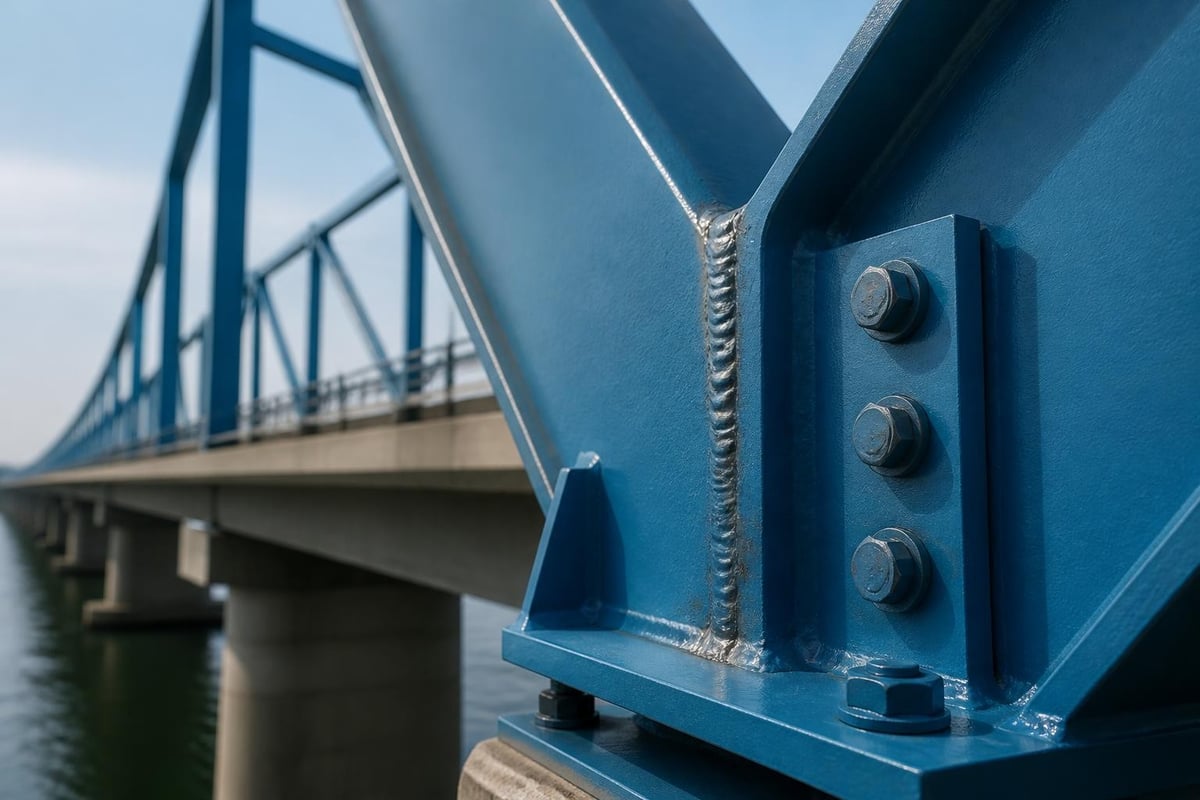
The AMPP protective coatings guidance addresses field-applied coatings for welded joints in construction and pipeline applications, covering selection criteria and application practices that prevent weld-related corrosion.
Atmospheric corrosion progresses faster in coastal, industrial, or chemical environments. Material selection should account for exposure conditions, with weathering steels or stainless alloys providing enhanced resistance in severe environments. When carbon steel remains the economic choice, coating system selection and maintenance intervals must reflect the corrosive potential of the specific site.
Galvanic corrosion occurs when dissimilar metals contact in the presence of an electrolyte. Welding introduces local composition variations that can create galvanic cells within a single structure. Proper filler metal selection that matches base metal composition minimizes this risk, while isolation or barrier coatings prevent contact between intentionally dissimilar materials.
Project Planning and Cost Management
Effective planning for welding for construction projects balances quality requirements against schedule and budget constraints. Strategic decisions during design and procurement phases substantially influence field execution efficiency.
Weld accessibility during design significantly impacts installation costs. Joints positioned for downhand welding reduce time and improve quality compared to vertical or overhead orientations. Providing adequate clearance for welder positioning and equipment access prevents costly delays during construction.
Design complexity directly affects fabrication hours. Minimizing the number of unique connection types reduces the variety of welding procedures and welder qualifications required. Standardized details also simplify inspection and improve consistency across the project.
Fabrication vs. Field Welding Economics
The strategic split between shop fabrication and field welding influences project economics and schedule. Shop environments offer advantages including:
- Controlled weather protection
- Optimal joint positioning through fixtures and positioners
- Centralized quality control and inspection
- Higher productivity from specialized equipment
- Reduced skilled labor shortages in remote locations
However, shipping costs, size limitations, and crane capacity may favor field assembly of larger components. Hybrid approaches that maximize shop prefabrication while accommodating site assembly constraints typically optimize overall project efficiency.
Understanding custom metal fabrication cost drivers helps project managers make informed decisions about fabrication strategies and resource allocation. Even seemingly unrelated services like hydraulic equipment repair can integrate into broader industrial construction projects when comprehensive service providers bring multiple capabilities to complex sites.
Welder qualification logistics represent hidden costs that planning must address. Maintaining adequate qualified welders requires anticipating turnover, scheduling qualification tests, and potentially paying premiums for certified personnel. Projects in remote locations may require travel and lodging allowances that inflate effective labor rates.
Material procurement lead times affect project schedules, particularly for specialty alloys or imported products. Early identification of required materials prevents expensive expediting fees or schedule disruptions. Coordinating material delivery with erection sequences minimizes double handling and site storage requirements.
Specialized Applications in Commercial and Industrial Construction
Different construction sectors present unique welding challenges that demand specialized expertise and equipment. Understanding these sector-specific requirements ensures appropriate resource deployment.
Oil and gas facilities involve pressure piping systems requiring ASME B31.3 compliance in addition to structural codes. These projects demand procedure qualifications that include impact testing, radiographic examination, and strict heat treatment controls. Welders must maintain both structural and piping qualifications, with the latter requiring more stringent performance standards.
Recycling and aggregate plants subject structures to heavy vibration, abrasion, and impact loading. Welds in these environments require conservative design factors and fatigue-resistant details that minimize stress concentrations. Material handling equipment particularly demands robust connections that withstand continuous duty cycles and occasional shock loads.
Bridge construction represents one of the most scrutinized applications of structural welding. Fatigue from traffic loading, environmental exposure, and inspection accessibility drive design requirements. Fracture-critical members-those whose failure would cause collapse-require the highest levels of quality assurance including 100% nondestructive examination and enhanced fabricator certification.
Seismic design in western states demands ductile connections that can absorb energy during earthquake events without brittle failure. Moment frame connections require Complete Joint Penetration (CJP) welds with weld metal toughness verified through Charpy V-notch testing. Backing bars, if used, must be removed and back-gouged to ensure continuous weld metal without crack-prone interfaces.
Commercial buildings with architectural exposed structural steel (AESS) require aesthetic weld finishes beyond typical structural standards. Smooth, uniform weld profiles become visible design elements requiring grinding, blending, and careful inspection for appearance in addition to structural adequacy. These finishing operations add cost that architects and owners must budget appropriately. Even industries with different primary focuses, such as a roofing company serving coastal North Carolina, rely on properly welded structural steel frameworks that support their building envelope systems, demonstrating how interconnected construction trades depend on quality welding work.
Advanced Techniques and Emerging Technologies
Innovation continues advancing welding for construction projects through improved processes, materials, and quality assurance methods. Staying current with technological developments provides competitive advantages and expands capabilities.
Robotic and automated welding systems increase productivity on repetitive joints. Column-to-beam connections, for example, can be programmed for automated welding that ensures consistency while freeing skilled welders for complex field work. Initial programming requires significant expertise, but production runs justify the investment on large projects with standardized details.
Laser-arc hybrid welding combines laser beam precision with arc welding's gap-bridging tolerance. This process achieves deep penetration with minimal distortion, particularly valuable for thick sections or tight-tolerance assemblies. While equipment costs currently limit adoption, the technology shows promise for specialized applications requiring superior quality.
Real-Time Weld Monitoring
Digital sensing systems now monitor arc characteristics during welding, detecting deviations from qualified parameters in real time. These systems create permanent electronic records that supplement traditional inspection, potentially reducing the extent of NDT required while improving overall quality confidence.
Acoustic emission monitoring during welding can identify cracking as it occurs, allowing immediate correction before defects propagate. While still emerging from research into practical application, this technology may eventually provide continuous quality assurance that catches problems at the earliest possible stage.
Friction stir welding eliminates melting entirely, using mechanical action to create solid-state joints. Currently limited primarily to aluminum and specialized applications, ongoing research extends the process to steels. Future construction projects may employ this technology for applications where distortion control or dissimilar metal joining presents challenges for conventional fusion welding.
Advanced filler metals incorporate alloying elements that improve toughness, reduce hydrogen susceptibility, or enhance corrosion resistance. Metal-cored electrodes combine the productivity of flux-cored wire with reduced fume generation and smoother arc characteristics. These consumable improvements incrementally enhance quality and operator satisfaction across construction applications.
Successful welding for construction projects demands technical expertise, rigorous quality management, and strategic planning that integrates fabrication and field capabilities. From process selection through final inspection, each decision impacts structural integrity, project economics, and long-term performance. Whether you're developing recycling facilities, oil and gas infrastructure, or commercial structures throughout the Western United States, LTJ Industrial Services delivers comprehensive welding, fabrication, and machining expertise that ensures your construction projects meet the highest standards of quality and reliability.