
Selecting the right cutting technology for your industrial fabrication project directly impacts quality, efficiency, and overall project costs. When evaluating waterjet cutting vs plasma cutting, manufacturers across the Western United States face a critical decision that affects everything from material compatibility to edge finish quality. Both technologies offer distinct advantages for metal fabrication operations, yet each excels in different applications and material types. Understanding these differences helps businesses in the commercial manufacturing, oil and gas, recycling, and aggregate industries make informed decisions that align with their operational requirements and budget constraints.
Understanding Waterjet Cutting Technology
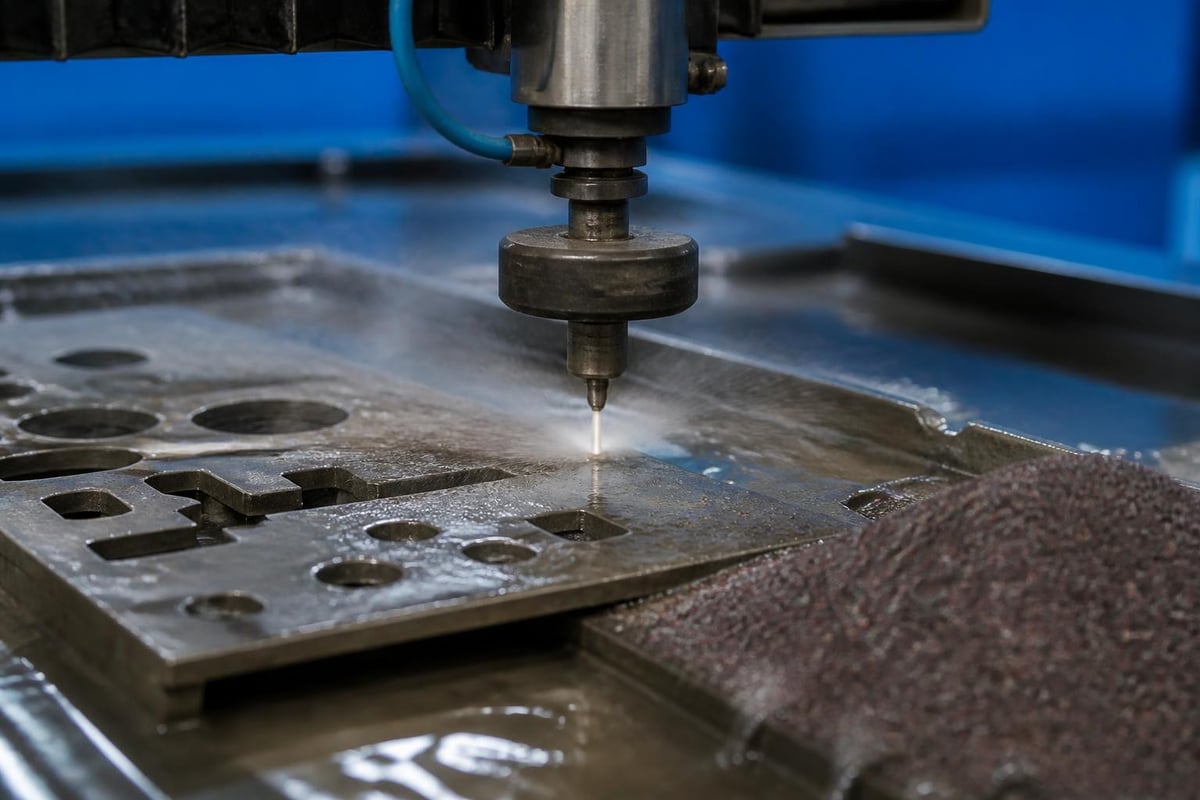
Waterjet cutting uses high-pressure water streams, often mixed with abrasive particles, to cut through various materials with exceptional precision. The process forces water through a small nozzle at pressures reaching 60,000 to 90,000 PSI, creating a focused cutting stream capable of slicing through metals, composites, stone, and other materials.
How Waterjet Systems Operate
Pure waterjet systems use only pressurized water and work best for softer materials like rubber, foam, and textiles. For industrial metal fabrication applications, abrasive waterjet processing incorporates garnet or other abrasive media into the water stream. This combination cuts through hardened steel, titanium, aluminum, and virtually any conductive or non-conductive material.
The cutting mechanism relies on erosion rather than heat. Water and abrasive particles strike the material surface at supersonic speeds, progressively wearing away material along the programmed cut path. This cold-cutting process eliminates heat-affected zones (HAZ) and thermal distortion, preserving material properties throughout the workpiece.
Material Compatibility and Thickness Ranges
Waterjet cutting handles an impressive range of materials and thicknesses. Common applications include:
- Stainless steel: up to 6 inches thick
- Aluminum: up to 8 inches thick
- Tool steel: up to 4 inches thick
- Titanium: up to 3 inches thick
- Composites and laminates: virtually unlimited thickness
- Glass, stone, ceramics: specialized applications
The versatility of waterjet technology extends beyond metals. Manufacturers working with mixed materials, layered composites, or heat-sensitive alloys benefit from waterjet's material-agnostic approach. According to a comprehensive NIST white paper, waterjet technology continues advancing through strategic R&D focused on increasing cutting speeds and improving edge quality across diverse materials.
Understanding Plasma Cutting Technology
Plasma cutting uses an electrically conductive gas channel to transfer energy from a power source to the material being cut. The process creates a plasma arc between an electrode and the workpiece, reaching temperatures up to 45,000°F that melt the metal while high-velocity gas blows away molten material.
Plasma Arc Cutting Mechanics
The plasma cutting process begins when compressed gas flows through a focused nozzle while an electrical arc ionizes the gas, transforming it into plasma. This superheated, electrically conductive gas carries sufficient energy to melt metal and sufficient velocity to remove molten material from the kerf.
Modern plasma systems offer different configurations:
- Conventional plasma: standard air-plasma systems for general cutting
- High-definition plasma: tighter arc constriction for improved precision
- Precision plasma: optimized consumables and gas flow for fine tolerances
Plasma cutting requires electrically conductive materials, limiting applications compared to waterjet technology. However, for conductive metals within specific thickness ranges, plasma delivers exceptional speed and cost efficiency.
Optimal Materials and Applications
Plasma cutting performs best on electrically conductive metals within specific thickness ranges:
| Material Type | Optimal Thickness | Maximum Thickness |
|---|---|---|
| Mild Steel | 1/4" to 1" | 2 inches |
| Stainless Steel | 1/4" to 3/4" | 1.5 inches |
| Aluminum | 1/4" to 1/2" | 1 inch |
| Copper Alloys | 1/8" to 3/8" | 3/4 inch |
For metal fabrication processes involving structural steel, plate cutting, and general shop work, plasma offers significant advantages in cutting speed and operational costs. The technology excels in high-volume production environments where materials fall within optimal thickness ranges.
Precision and Edge Quality Comparison
Edge quality and dimensional accuracy vary significantly between waterjet cutting vs plasma cutting, influencing which technology suits specific fabrication requirements.
Kerf Width and Tolerances
Waterjet cutting produces kerfs as narrow as 0.020 to 0.040 inches, depending on nozzle size and cutting parameters. Achievable tolerances typically range from ±0.003 to ±0.010 inches, making waterjet ideal for precision components requiring tight dimensional control.
Plasma cutting generates wider kerfs, typically 0.060 to 0.250 inches depending on amperage and material thickness. Standard tolerances range from ±0.030 to ±0.050 inches, with high-definition plasma systems achieving ±0.015 inches under optimal conditions.
Heat-Affected Zones and Material Distortion
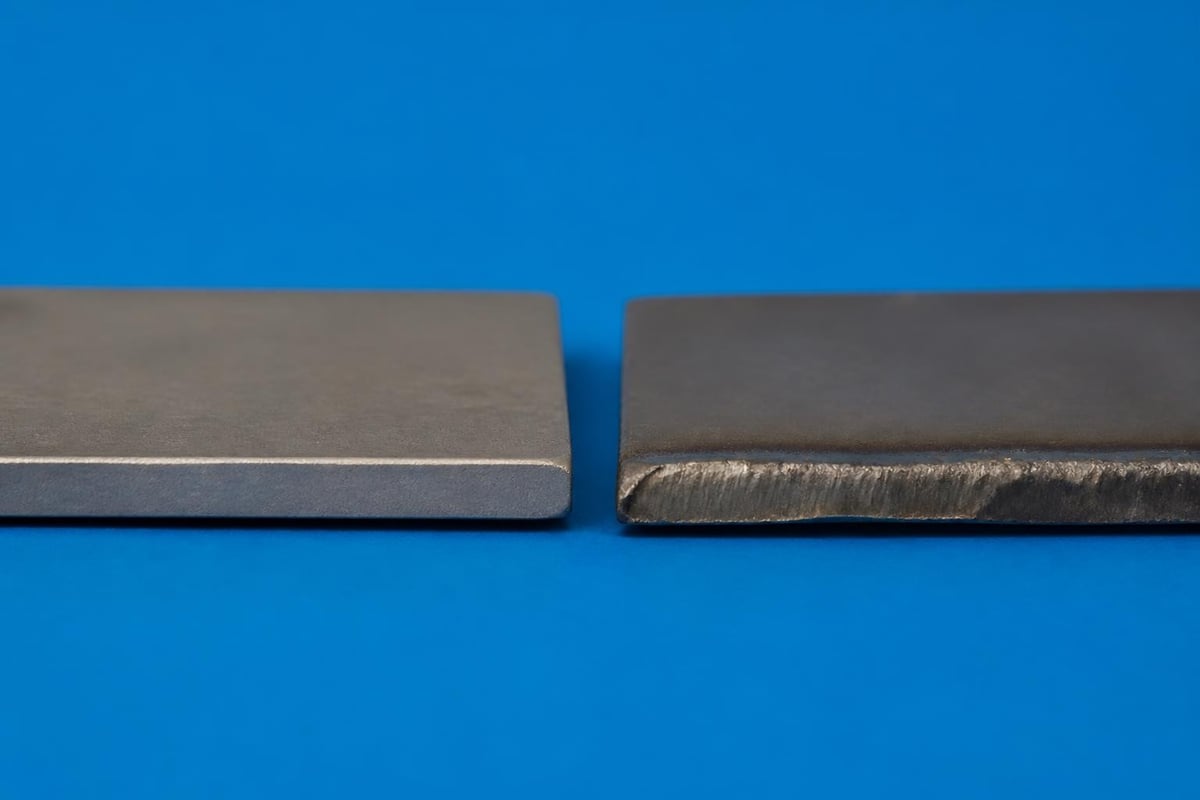
The fundamental difference between these cutting methods centers on thermal impact. Waterjet cutting generates no heat-affected zone, preserving material hardness, temper, and mechanical properties throughout the workpiece. This cold-cutting advantage proves critical for:
- Heat-treated alloys requiring preserved hardness
- Thin materials prone to warping
- Precision assemblies demanding dimensional stability
- Multi-material stacks with varying thermal properties
Plasma cutting creates significant heat input, producing a heat-affected zone extending 0.010 to 0.050 inches from the cut edge. This thermal impact may alter material properties, require secondary finishing operations, or cause warping in thin materials. However, for structural fabrication and applications tolerating some HAZ, plasma's thermal cutting offers acceptable results at higher speeds.
Secondary Operations Requirements
Waterjet cutting typically produces finished edges requiring minimal secondary processing. The smooth, square cut edge often eliminates grinding, deburring, or additional machining operations, reducing overall production time and labor costs.
Plasma-cut edges frequently exhibit:
- Dross formation on the bottom edge requiring removal
- Bevel angle from arc angularity requiring correction
- Surface oxidation requiring cleaning before welding
- HAZ hardening potentially complicating subsequent forming operations
Understanding these finishing requirements helps calculate true production costs beyond raw cutting speed. Projects requiring welding may appreciate plasma's edge preparation effects, while precision assemblies benefit from waterjet's ready-to-assemble edges.
Speed and Productivity Analysis
Cutting speed directly impacts production throughput, making speed comparison essential when evaluating waterjet cutting vs plasma cutting for specific applications.
Material Removal Rates
Plasma cutting significantly outpaces waterjet cutting on conductive metals within optimal thickness ranges. Typical cutting speeds illustrate this advantage:
| Material & Thickness | Plasma Speed (IPM) | Waterjet Speed (IPM) |
|---|---|---|
| 1/4" Mild Steel | 150-200 | 8-12 |
| 1/2" Mild Steel | 75-100 | 4-6 |
| 1" Mild Steel | 30-45 | 2-3 |
| 1/4" Stainless | 100-150 | 6-10 |
| 1/2" Stainless | 50-75 | 3-5 |
For high-volume production cutting structural steel plate or repetitive shapes in conductive metals, plasma's speed advantage translates directly to higher throughput and lower per-part costs.
Waterjet technology offers more consistent cutting speeds across different materials and thicknesses. While slower on thin metals compared to plasma, waterjet maintains steady productivity on thick materials, non-metals, and exotic alloys where plasma cannot compete.
Setup Time and Programming Efficiency
Both technologies benefit from modern CNC controls and CAD/CAM integration, but setup considerations differ. Plasma systems generally offer faster setup for simple cutting operations, with minimal consumable preparation and straightforward pierce point programming.
Waterjet systems require abrasive loading, nozzle inspection, and sometimes longer pierce times on thick materials. However, waterjet's ability to handle mixed materials and complex stacking operations often eliminates multiple setups, improving overall efficiency for diverse job shops serving industries like recycling and aggregate processing.
Operating Cost Breakdown
Understanding the complete cost picture when comparing waterjet cutting vs plasma cutting requires examining consumables, maintenance, utilities, and labor factors.
Consumable Costs Per Hour
Plasma cutting consumes electrodes, nozzles, shields, and cutting gases. Typical hourly consumable costs range from $8 to $25 depending on amperage, material type, and cut quality requirements. High-definition plasma systems increase consumable costs but deliver improved edge quality justifying the expense for precision work.
Waterjet cutting consumes garnet abrasive, focusing tubes, and nozzles. Hourly abrasive consumption varies with cutting speed and material hardness, typically costing $15 to $40 per hour. Focusing tube life ranges from 40 to 120 hours depending on abrasive type and operating pressure, adding $10 to $20 per hour in orifice and tube replacement costs.
Energy and Utility Requirements
Plasma systems require electrical power and compressed air or specialized cutting gases. Electrical consumption ranges from 20 to 200 kW depending on system capacity. Cost modeling research comparing machining costs demonstrates that energy represents a significant portion of plasma operating expenses, particularly for thick materials requiring high amperages.
Waterjet systems consume significant electrical power for intensifier pumps, typically 50 to 100 kW for industrial systems. Water consumption remains modest at 0.5 to 1.0 gallons per minute, with many facilities recycling cutting water to minimize consumption and disposal costs.
Maintenance and Downtime Considerations
Plasma torch consumables require frequent replacement, with electrode and nozzle life ranging from 1 to 8 hours depending on amperage and duty cycle. High-production facilities may change consumables multiple times daily, creating regular maintenance intervals that briefly interrupt production.
Waterjet systems experience longer intervals between major maintenance events. Intensifier components require service every 500 to 2,000 hours depending on pump design and operating pressure. However, the high pressures and abrasive environment demand rigorous maintenance protocols to prevent unexpected failures and costly downtime.
Application-Specific Recommendations
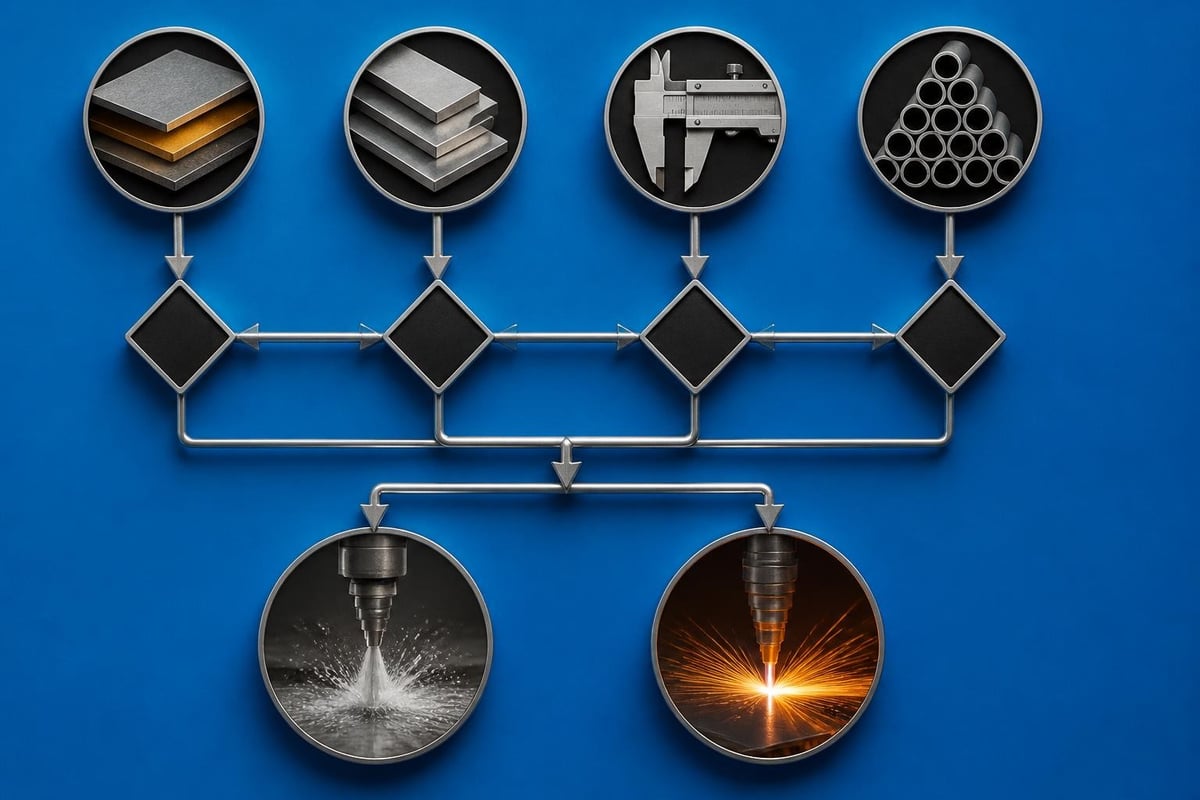
Choosing between waterjet cutting vs plasma cutting depends heavily on specific project requirements, material characteristics, and production volume.
When Waterjet Cutting Excels
Waterjet technology delivers superior results for applications requiring:
- Exotic materials: titanium, Inconel, tool steels, composites
- Heat-sensitive materials: hardened alloys, pre-tempered components
- Thick materials: anything exceeding 2 inches where plasma becomes impractical
- Non-conductive materials: glass, stone, ceramics, plastics
- Tight tolerances: precision parts requiring ±0.005" or better
- Minimal finishing: applications where secondary operations must be avoided
- Stacked cutting: multiple sheets or mixed materials cut simultaneously
Industries like aerospace, precision manufacturing, and custom machining services benefit significantly from waterjet's versatility and precision capabilities.
When Plasma Cutting Is Optimal
Plasma technology proves most cost-effective for:
- High-volume production: repetitive parts in conductive metals
- Structural steel fabrication: plate cutting for construction and equipment manufacturing
- Thin to medium thickness: materials between 1/4" and 1" thick
- Standard tolerances: applications accepting ±0.030" to ±0.050" tolerance
- Conductive metals only: mild steel, stainless steel, aluminum
- Speed-critical operations: projects where throughput drives profitability
- Preparation for welding: applications where some HAZ provides beneficial edge preparation
Facilities serving oil and gas infrastructure, aggregate equipment manufacturing, and general welding and fabrication work often find plasma cutting delivers optimal balance between quality and productivity.
Safety and Environmental Factors
Both cutting technologies present unique safety considerations and environmental impacts affecting facility operations and regulatory compliance.
Operator Safety Requirements
Plasma cutting generates intense UV radiation, requiring appropriate eye protection, welding screens, and protective clothing for operators and nearby personnel. The process also produces metal fumes and particulates requiring effective ventilation or fume extraction systems to maintain safe air quality.
Waterjet cutting poses risks from high-pressure water streams capable of severe injury. Proper machine guarding, lockout/tagout procedures, and operator training minimize these hazards. The wet cutting environment also requires slip-resistant flooring and proper drainage to prevent workplace accidents.
Noise, Emissions, and Waste Management
Plasma cutting produces significant noise levels, often requiring hearing protection and acoustic barriers in production environments. Fume generation necessitates air quality management, with some materials producing hazardous emissions requiring specialized filtration.
Waterjet cutting operates relatively quietly but generates slurry containing water, abrasive particles, and metal fines. This waste stream requires settling tanks, filtration systems, and proper disposal of contaminated abrasive media according to environmental regulations.
Businesses expanding their manufacturing capabilities must account for these environmental systems in facility planning and operating budgets.
Integration With Fabrication Workflows
The decision between waterjet cutting vs plasma cutting also depends on how each technology integrates with existing fabrication processes and equipment.
Compatibility With Welding Operations
Plasma-cut edges often benefit welding operations through the slight HAZ preheating effect and oxidized surface that can improve certain welding processes. However, dross removal and edge preparation remain necessary for quality welds.
Waterjet-cut edges require no thermal stress relief but may need light deburring before welding. The clean, oxide-free edge and lack of HAZ prevent complications from metallurgical changes or residual stresses that sometimes affect plasma-cut components during subsequent welding.
Workflow Efficiency in Job Shops
High-mix, low-volume job shops benefit from waterjet's material versatility, reducing equipment investment and simplifying workflow planning. A single waterjet system handles steel fabrication, stainless work, aluminum projects, and specialized materials without process changeovers.
High-volume shops focused on specific materials within plasma's optimal range achieve better economics through dedicated plasma tables. The speed advantage compounds in repetitive production, justifying the technology's limitations for these specialized operations.
Comprehensive industrial fabrication services often maintain both technologies, selecting the optimal process for each project's unique requirements.
Technology Selection Matrix
Decision-makers evaluating waterjet cutting vs plasma cutting benefit from structured comparison across multiple factors:
| Selection Factor | Waterjet Advantage | Plasma Advantage | Neutral |
|---|---|---|---|
| Material versatility | ✓ | ||
| Cutting speed (thin metals) | ✓ | ||
| Cutting speed (thick metals) | ✓ | ||
| Edge quality | ✓ | ||
| Initial equipment cost | ✓ | ||
| Operating cost (conductive metals) | ✓ | ||
| Precision/tolerance | ✓ | ||
| Thick material capability | ✓ | ||
| Non-conductive materials | ✓ | ||
| Setup simplicity | ✓ |
This framework helps operations managers align technology selection with strategic priorities, whether maximizing versatility, optimizing production costs, or achieving specific quality requirements.
Understanding the distinct capabilities of waterjet and plasma cutting enables manufacturers to select the optimal technology for each application, balancing quality requirements, production speed, and total operating costs. Whether your operation demands the versatility and precision of waterjet cutting or the speed and efficiency of plasma cutting for conductive metals, partnering with experienced fabrication specialists ensures successful project outcomes. LTJ Industrial Services brings comprehensive cutting, welding, and fabrication expertise to industrial clients throughout the Western United States, helping businesses across oil and gas, recycling, aggregate, and manufacturing sectors achieve their production goals with the right technology for every application.