
The us manufacturing industry stands at a critical juncture in 2026, navigating a complex landscape of technological advancement, workforce challenges, and global competition. For companies in the fabrication and machining sectors, understanding current trends and positioning themselves strategically can mean the difference between thriving and merely surviving. The industry continues to evolve, driven by automation, reshoring initiatives, and increasing demand for precision manufacturing across commercial and industrial applications.
Current State of the US Manufacturing Industry
The us manufacturing industry has experienced significant transformation over the past decade, with 2026 marking a pivotal year for companies across all subsectors. According to the annual review of U.S. manufacturing statistics, the sector continues to face headwinds despite government support through subsidies and targeted policy initiatives.
Manufacturing employment has stabilized after years of volatility, though growth remains modest compared to historical peaks. Production levels have plateaued in certain traditional sectors, while advanced manufacturing segments show promising expansion. This dichotomy creates both challenges and opportunities for businesses positioned to capitalize on emerging trends.
The Western United States, where companies like those serving industrial and manufacturing sectors operate, has seen particular growth in oil and gas support industries, aggregate processing, and recycling operations. These sectors require specialized fabrication, welding, and machining capabilities that remain difficult to automate completely.
Economic Impact and Output Trends
Manufacturing output represents a substantial portion of the American economy, with specific subsectors showing remarkable resilience:
- Electronics manufacturing supports 5.2 million jobs and contributes $1.8 trillion to economic output
- Metal fabrication and machining services remain essential to infrastructure development
- Custom manufacturing solutions drive innovation across multiple industries
- Precision welding capabilities support critical energy sector operations
The us manufacturing industry continues to demonstrate its importance to national security, technological advancement, and economic stability. However, manufacturers face persistent challenges including skilled labor shortages, supply chain disruptions, and competitive pressure from international markets.
Technology Investment and Manufacturing Orders
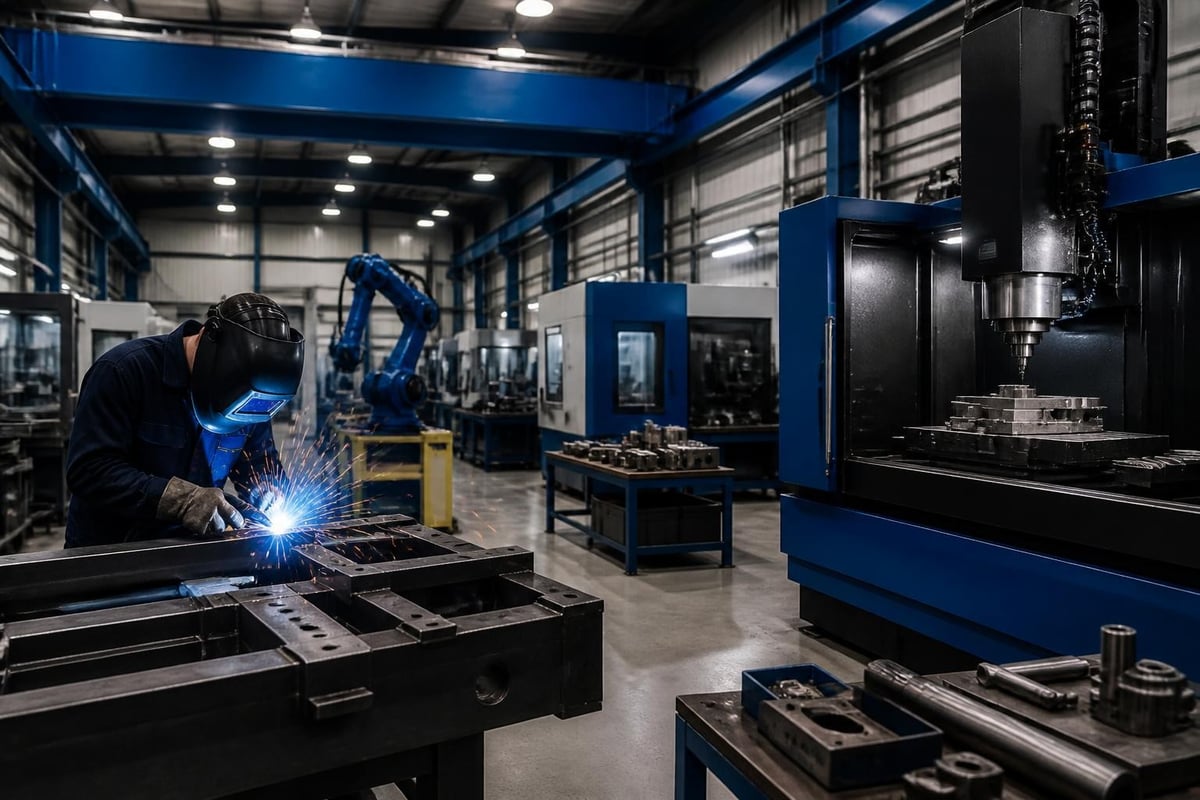
Understanding demand trends through manufacturing technology orders data provides critical insights for businesses planning capital investments and capacity expansion. The US Manufacturing Technology Orders (USMTO) reports reveal important patterns affecting fabrication shops, machining operations, and industrial service providers.
Investment in manufacturing technology reflects broader confidence in the us manufacturing industry's future. Companies allocating resources toward advanced equipment signal their commitment to maintaining competitive advantages through precision, efficiency, and capability expansion.
Equipment and Capability Trends
| Technology Category | Investment Trend | Application Focus |
|---|---|---|
| CNC Machining Centers | Steady Growth | Precision parts production |
| Welding Automation | Moderate Increase | High-volume fabrication |
| Hydraulic Systems | Stable Demand | Heavy industrial applications |
| Water Jetting Equipment | Growing Interest | Precision cutting and surface prep |
Regional variations in technology adoption reveal that Western states, particularly those with strong energy and resource extraction sectors, maintain robust demand for specialized manufacturing capabilities. Companies serving Colorado industries, for instance, must balance traditional metalworking skills with modern technological capabilities.
The investment landscape shows that successful manufacturers are those who can integrate new technologies while maintaining the flexibility to handle custom, one-off projects that resist full automation. This hybrid approach characterizes many thriving operations in the welding and fabrication sector.
Workforce Challenges and Skills Gap
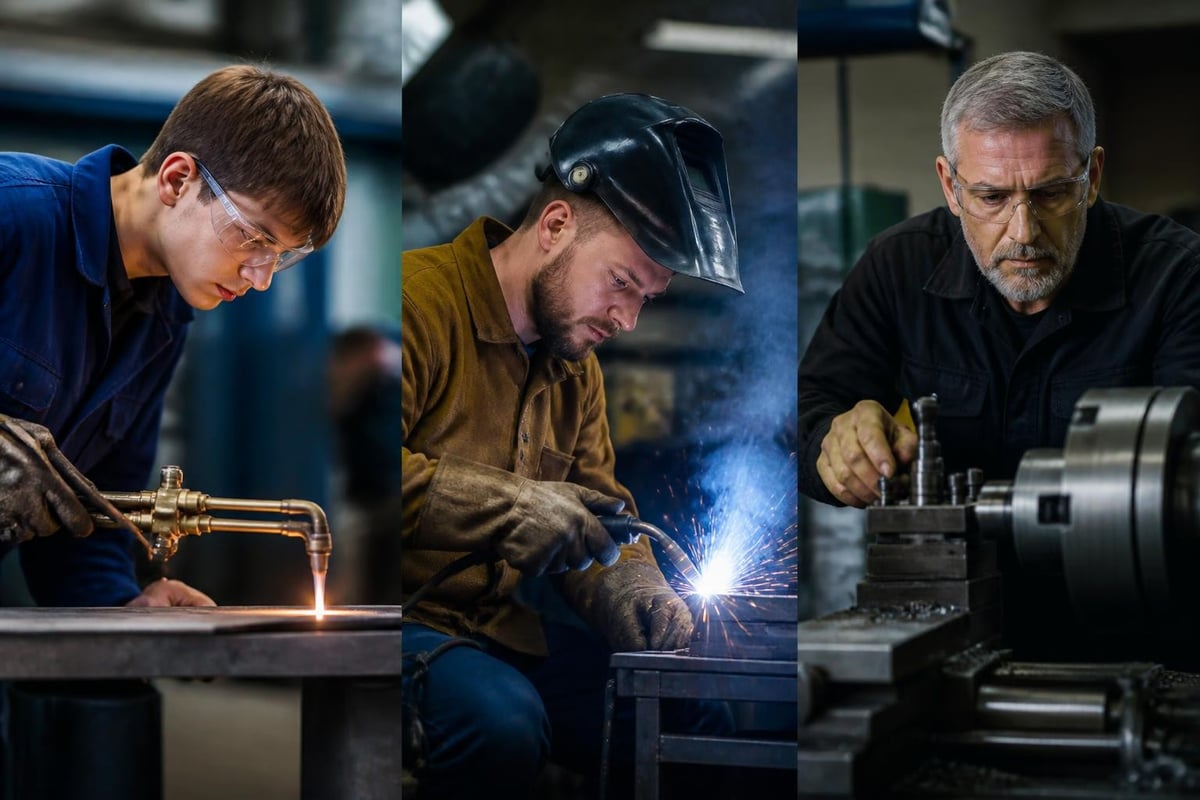
The us manufacturing industry faces perhaps its most significant challenge in securing and developing qualified personnel. Skilled welders, machinists, and fabricators represent critical bottlenecks for companies seeking to expand capacity or maintain service levels.
Demographic shifts compound these challenges:
- Experienced tradespeople approach retirement age without sufficient replacement
- Educational systems have de-emphasized vocational training for decades
- Perception issues discourage younger workers from considering manufacturing careers
- Geographic mismatches exist between available talent and industry needs
Despite challenges noted in recent analyses, forward-thinking companies are developing innovative approaches to workforce development. Apprenticeship programs, partnerships with technical schools, and competitive compensation packages help attract new talent to the industry.
For specialized service providers working across multiple industries like recycling, aggregate processing, and oil and gas, workforce flexibility becomes even more critical. Technicians must possess diverse skill sets, from precision machining to field welding under challenging conditions.
Building a Resilient Workforce
The most successful operations in the us manufacturing industry invest heavily in their people. Training programs, safety protocols, and career development paths create environments where skilled workers want to build long-term careers.
Companies that demonstrate expertise through case studies often find it easier to attract talent, as prospective employees can see the quality and variety of work they'll perform. Transparency about capabilities and project diversity helps differentiate employers in competitive labor markets.
Reshoring and Domestic Manufacturing Revival
One of the most significant trends affecting the us manufacturing industry involves the return of production capacity from overseas locations. Reshoring initiatives, driven by supply chain vulnerabilities exposed during recent global disruptions, create opportunities for domestic manufacturers with the right capabilities.
Key drivers of reshoring include:
- Supply chain resilience and risk mitigation
- Transportation cost considerations
- Quality control and intellectual property protection
- Lead time reduction for critical components
- Political and economic incentives for domestic production
For fabrication and machining operations, reshoring represents both opportunity and competition. While increased domestic production demands more manufacturing capacity, it also raises competitive intensity as companies vie for contracts and market share.
The domestic industrial base research highlights how specialized manufacturing capabilities, particularly for complex or custom applications, remain essential to supporting advanced technology development. Companies providing precision machining, custom fabrication, and specialized welding services find themselves increasingly valued as strategic partners rather than commodity suppliers.
Strategic Positioning for Reshoring Opportunities
Manufacturers positioned to benefit from reshoring typically possess several characteristics:
- Rapid turnaround capabilities for prototyping and short-run production
- Technical expertise that enables collaborative design and engineering
- Quality certifications that meet or exceed international standards
- Flexible production systems that accommodate varying order sizes
- Proximity to end users reducing logistics complexity
The us manufacturing industry's competitive landscape rewards companies that can demonstrate reliability, quality, and responsiveness. Building reputation through consistent performance on complex projects helps manufacturers secure the high-value work that reshoring creates.
Industry-Specific Manufacturing Demands
Different sectors within the us manufacturing industry present unique requirements that specialized fabricators, welders, and machinists must understand and accommodate. The commercial and industrial manufacturing landscape encompasses diverse applications, each with specific technical and regulatory requirements.
Oil and Gas Sector Requirements
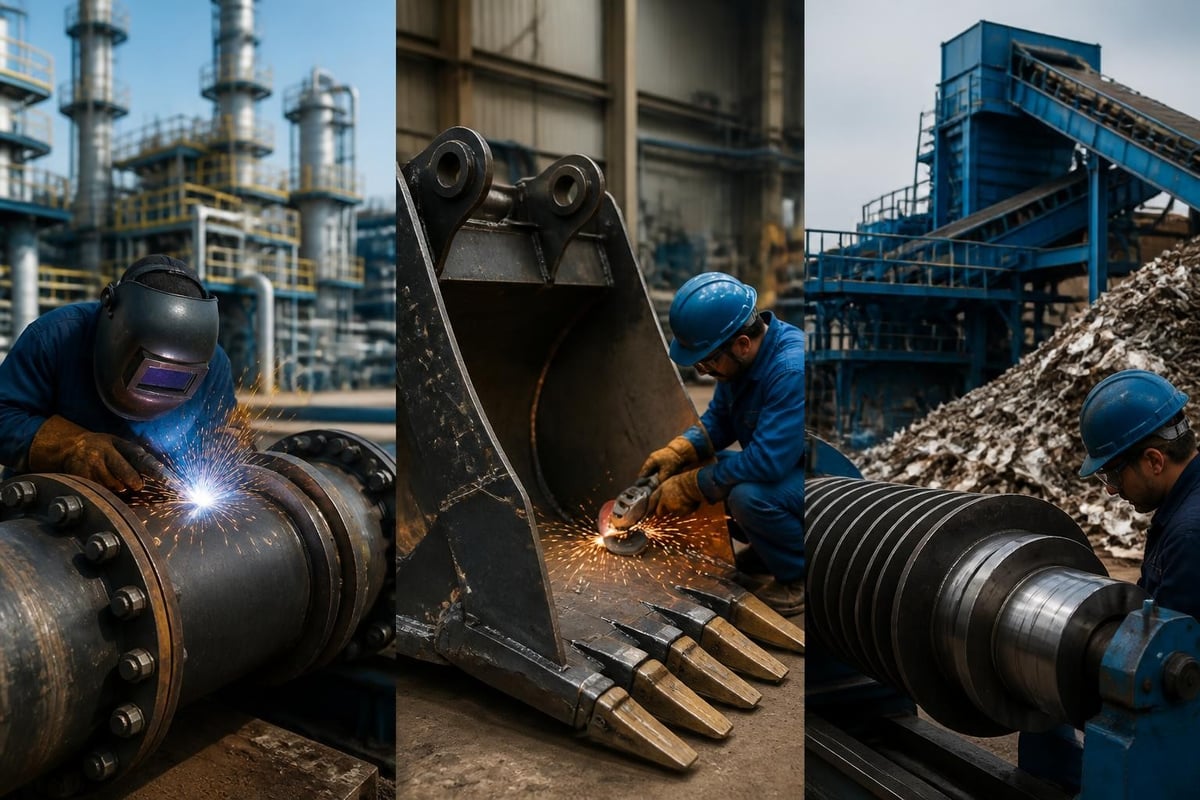
Oil and gas operations throughout the Western United States require manufacturing support that combines durability, precision, and safety compliance. Equipment operating in challenging environments demands:
- Corrosion-resistant materials and coatings
- High-pressure rated welding and fabrication
- Compliance with industry-specific codes and standards
- Field service capabilities for on-site repairs and modifications
- Hydraulic system expertise for heavy equipment
Companies serving this sector must maintain flexibility to handle emergency repairs while also supporting planned maintenance and upgrade projects. The cyclical nature of energy markets makes versatility across multiple industries essential for sustainable operations.
Aggregate and Recycling Industries
Aggregate processing and recycling operations present distinct manufacturing challenges centered on durability and wear resistance. Equipment in these industries faces continuous abrasion, impact, and stress cycles that test material properties and fabrication quality.
| Application | Manufacturing Challenge | Solution Approach |
|---|---|---|
| Crusher Components | Extreme wear and impact | Hardened steel, wear plates, precision fit |
| Conveyor Systems | Alignment and durability | Custom fabrication, bearing systems |
| Screening Equipment | Vibration resistance | Engineered welding, stress analysis |
| Recycling Machinery | Material versatility | Adaptable design, modular construction |
The us manufacturing industry's ability to support these resource-intensive sectors directly impacts infrastructure development, construction activity, and environmental sustainability initiatives. Manufacturers providing reliable, cost-effective solutions help their customers maintain operational efficiency in highly competitive markets.
Advanced Manufacturing Technologies and Innovation
Innovation within the us manufacturing industry extends beyond product development to encompass process improvement, efficiency gains, and capability expansion. Artificial intelligence and machine learning applications in smart manufacturing systems offer promising avenues for competitive advantage, though implementation challenges remain significant for smaller operations.
Technology adoption patterns reveal that successful manufacturers take pragmatic approaches, implementing solutions that deliver measurable returns rather than chasing technology for its own sake. For fabrication and machining businesses, this often means:
- Investing in CNC capabilities that improve precision and repeatability
- Implementing quality management systems that prevent errors and rework
- Adopting project management tools that enhance customer communication
- Utilizing CAD/CAM software that streamlines design-to-production workflows
- Deploying equipment monitoring that predicts maintenance needs
The balance between traditional craftsmanship and modern technology defines competitive positioning in today's market. Welding businesses that master this balance can offer both the artistry required for custom work and the consistency demanded by production runs.
Integration Challenges and Opportunities
While large manufacturers may deploy comprehensive Industry 4.0 solutions, smaller and mid-sized operations in the us manufacturing industry often benefit more from targeted technology investments that address specific bottlenecks or capability gaps. The key lies in understanding which technologies deliver genuine value versus those that create complexity without commensurate benefits.
Water jetting technology, for example, expands cutting capabilities beyond traditional thermal processes, enabling work with materials that might warp or experience heat-affected zone issues with conventional methods. Similarly, hydraulic expertise allows manufacturers to service and maintain critical systems that keep customer operations running.
Quality, Compliance, and Competitive Differentiation
As the us manufacturing industry becomes increasingly sophisticated, quality assurance and regulatory compliance have evolved from basic requirements to competitive differentiators. Customers increasingly demand documented processes, traceability, and certification that their suppliers meet relevant standards.
Quality management encompasses multiple dimensions:
- Material certification and traceability
- Welding procedure specifications and welder qualifications
- Dimensional inspection and verification protocols
- Non-destructive testing for critical applications
- Documentation systems that support auditability
For companies serving regulated industries like oil and gas, compliance isn't optional; it's foundational to market access. However, even in less regulated sectors, customers appreciate suppliers who approach quality systematically rather than reactively.
Building quality into processes rather than inspecting it into products represents a fundamental shift that separates leading manufacturers from commodity providers. This philosophy requires investment in training, equipment, and systems, but pays dividends through reduced rework, enhanced reputation, and customer loyalty.
The Service Model Advantage
The distinction between manufacturers who merely produce parts and those who solve problems defines competitive positioning in 2026. The us manufacturing industry increasingly values partners who bring engineering insight, application expertise, and responsive service to customer relationships.
Companies offering both shop-based production and field service capabilities provide unique value by understanding how manufactured components perform in actual operating conditions. This knowledge loop, from field experience back to shop fabrication, enables continuous improvement and innovation that purely shop-based manufacturers cannot easily replicate.
Regional Manufacturing Ecosystems
Geographic considerations significantly influence success within the us manufacturing industry. Proximity to customers, access to skilled labor, transportation infrastructure, and regional economic conditions all shape competitive dynamics and business opportunities.
The Western United States presents particular characteristics that manufacturers must understand:
- Energy sector concentration creates demand for specialized industrial services
- Geographic dispersion requires field service capabilities and logistics coordination
- Resource extraction industries need durable equipment and responsive maintenance support
- Environmental regulations drive demand for recycling and aggregate processing innovation
- Infrastructure age generates ongoing maintenance and upgrade requirements
Companies positioned in strategic locations, such as Colorado's energy corridor, can serve multiple industries efficiently while maintaining reasonable response times for emergency service needs. Understanding regional economic drivers helps manufacturers anticipate demand cycles and diversify customer bases to mitigate industry-specific downturns.
Building Local Partnerships and Reputation
Success in regional markets depends heavily on reputation, relationships, and demonstrated capability. The us manufacturing industry, despite its scale, operates through networks of trusted suppliers and service providers who consistently deliver quality work on schedule and within budget.
Manufacturers who invest in their communities, develop strong teams, and maintain visible standards of excellence tend to capture disproportionate market share within their service areas. Word-of-mouth referrals, repeat business, and long-term customer relationships provide stability that purely transactional businesses struggle to achieve.
Strategic Planning for Manufacturing Businesses
Looking forward in the us manufacturing industry requires balancing immediate operational demands with longer-term strategic positioning. Successful manufacturers develop clear visions for their businesses while remaining adaptable to changing market conditions and customer needs.
Strategic considerations for 2026 and beyond include:
- Capacity planning that anticipates market growth without overextending resources
- Technology roadmaps that prioritize investments based on capability gaps and ROI
- Workforce development strategies that ensure adequate skilled labor availability
- Market diversification that reduces dependence on single industries or customers
- Financial management that supports growth while maintaining operational stability
For fabrication, welding, and machining businesses, strategic planning must account for both opportunities and challenges inherent in serving industrial and commercial markets. Economic cycles, commodity prices, regulatory changes, and technological disruption all influence long-term prospects and require thoughtful scenario planning.
The most resilient companies within the us manufacturing industry are those that maintain financial discipline during prosperous periods, allowing them to weather downturns and even capitalize on opportunities when competitors struggle. Building cash reserves, investing in productivity improvements, and maintaining equipment enable companies to serve customers consistently regardless of economic conditions.
The us manufacturing industry continues to evolve, presenting both challenges and opportunities for fabrication, welding, and machining businesses throughout 2026 and beyond. Success requires combining traditional craftsmanship with modern capabilities, strategic planning with operational excellence, and customer focus with continuous improvement. Whether you need precision machining, custom fabrication, field welding services, or comprehensive industrial support, LTJ Industrial Services delivers the expertise, quality, and responsiveness that keep your operations running efficiently across the Western United States.