
Steelwork fabrication remains a cornerstone of modern industrial infrastructure, serving as the backbone for everything from commercial buildings to oil and gas facilities across the Western United States. As industries continue to evolve in 2026, the demand for precision-engineered steel components has reached unprecedented levels, driven by infrastructure modernization projects and expanding industrial operations. Understanding the complexities of steelwork fabrication processes, quality standards, and technological advancements is essential for businesses seeking reliable, high-quality structural solutions that meet both current regulations and future operational demands.
Understanding Modern Steelwork Fabrication Processes
Steelwork fabrication encompasses a comprehensive range of manufacturing processes that transform raw steel materials into finished structural components. The journey begins with detailed engineering drawings and specifications, followed by material selection, cutting, forming, welding, and finishing operations.
Primary Fabrication Methods
The foundation of quality steelwork fabrication rests on selecting appropriate manufacturing techniques for each project requirement. Modern facilities employ multiple methods to achieve precise specifications:
- Plasma cutting for thick steel plates and complex geometries
- Laser cutting for precision work requiring tight tolerances
- Water jet cutting for materials sensitive to heat-affected zones
- Oxy-fuel cutting for heavy structural sections and field modifications
- CNC machining for critical dimensions and threaded connections
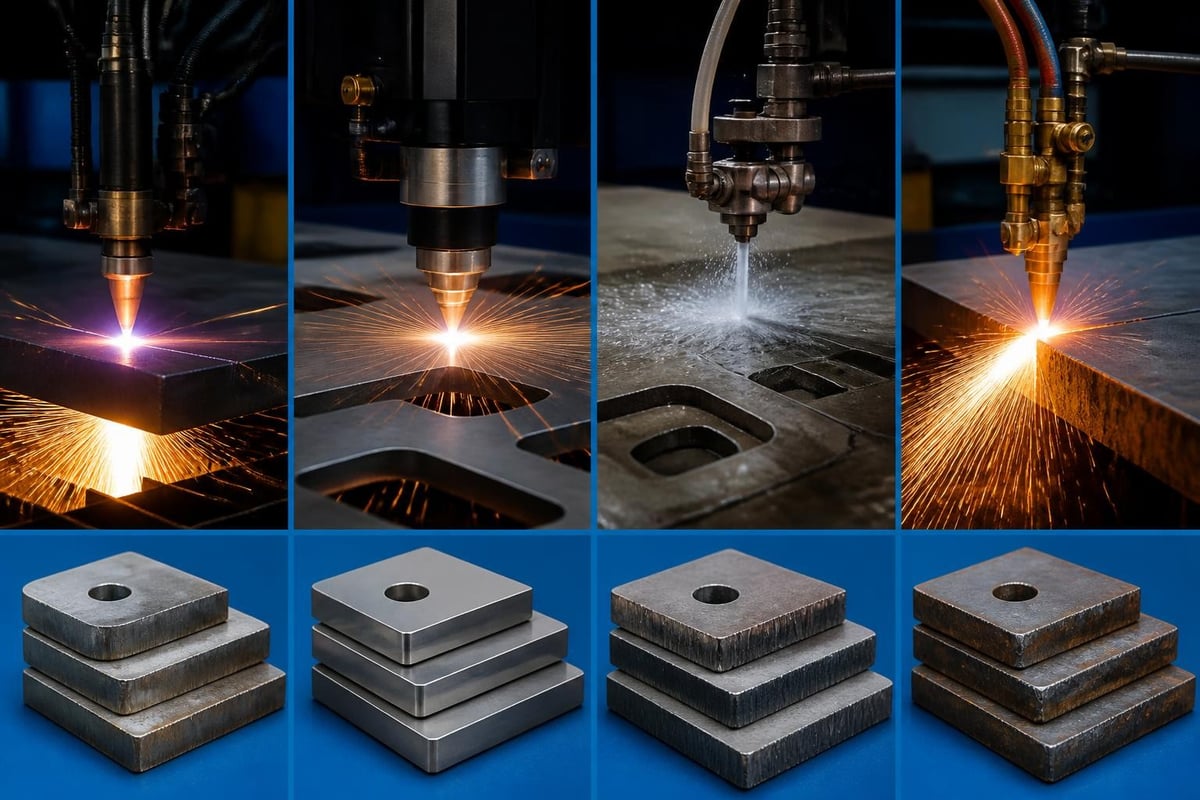
Material preparation represents a critical phase where steel sections receive initial processing. This includes surface cleaning, rust removal, and edge preparation for welding. The metal processing phase ensures optimal conditions for subsequent fabrication steps, directly impacting final product quality.
Welding in Structural Steel Fabrication
Welding serves as the primary joining method in steelwork fabrication, creating permanent connections that meet or exceed base material strength. Different welding processes offer distinct advantages depending on material thickness, position, and project requirements.
| Welding Process | Best Applications | Typical Materials | Productivity Level |
|---|---|---|---|
| SMAW (Stick) | Field work, heavy sections | Carbon steel, low alloy | Moderate |
| GMAW (MIG) | Shop fabrication, automation | Carbon steel, stainless | High |
| FCAW (Flux-Core) | All-position, outdoor work | Structural steel | High |
| GTAW (TIG) | Precision work, thin materials | Stainless, aluminum | Lower |
Recent developments in High-Frequency Mechanical Impact (HFMI) treatment have revolutionized fatigue strength improvement for welded joints, offering extended service life for cyclically loaded structures.
Professional metal fabrication services integrate multiple welding processes to accommodate diverse project specifications, ensuring structural integrity across all applications.
Quality Standards and Specifications
Adherence to established standards distinguishes professional steelwork fabrication from substandard alternatives. Industry specifications provide frameworks for material selection, fabrication tolerances, welding procedures, and inspection requirements.
Certification and Compliance Requirements
The American Institute of Steel Construction (AISC) maintains rigorous certification programs that validate fabricator capabilities. Their updated certification standard elevates quality benchmarks across the steel fabrication industry, ensuring adherence to best practices in 2026.
Comprehensive steelwork specifications detail materials, products, and fabrication processes necessary to ensure structural integrity and compliance with design standards. These documents serve as contractual requirements between engineers, fabricators, and end users.
Key certification categories include:
- Building structures (standard and sophisticated)
- Bridge fabrication (conventional and major)
- Hydraulic structures for marine and dam applications
- Metal building systems for pre-engineered facilities
Material Traceability and Documentation
Modern steelwork fabrication demands complete material traceability from mill test reports through final assembly. Documentation packages typically include:
- Certified mill test reports verifying chemical composition and mechanical properties
- Welding procedure specifications (WPS) qualified through testing
- Welder performance qualifications (WPQ) documenting individual competencies
- Non-destructive testing reports confirming weld quality
- Dimensional inspection records validating geometric tolerances
- Surface preparation certificates for coating applications
This documentation framework ensures accountability throughout the fabrication process and provides essential information for future maintenance operations.
Advanced Technologies in Steel Fabrication
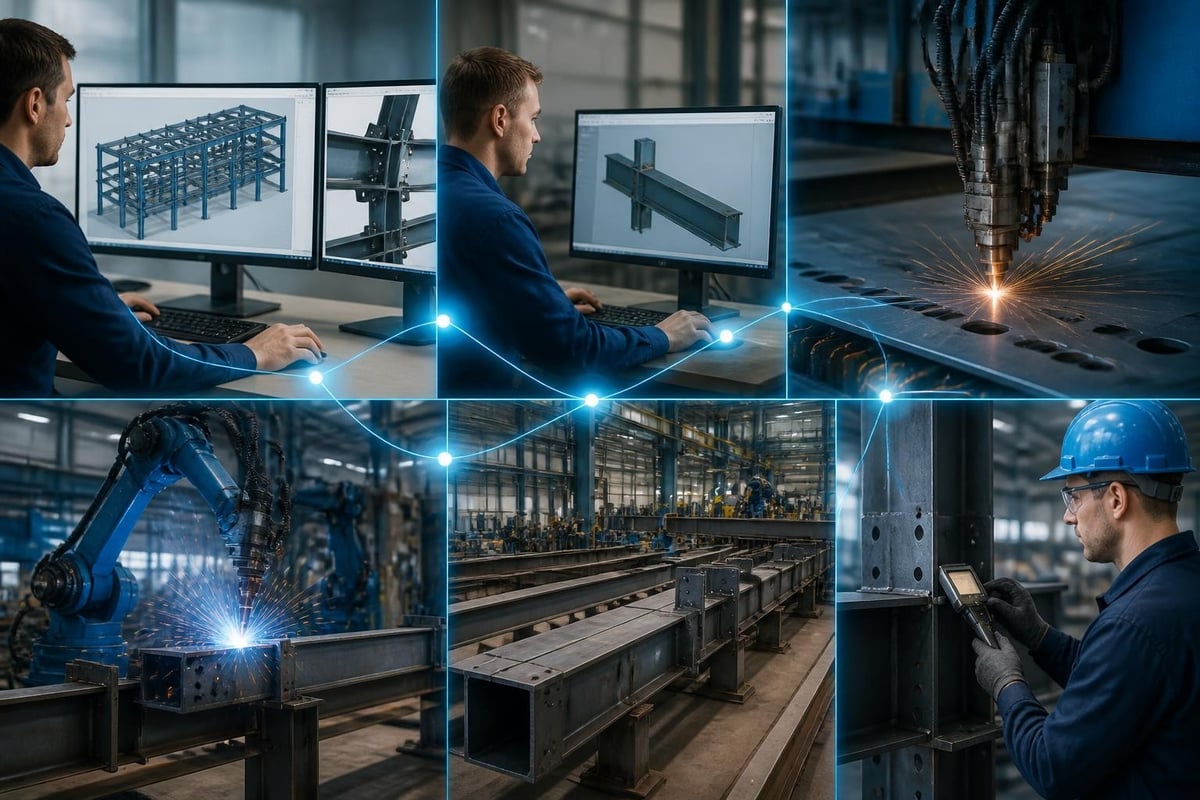
Technological integration has transformed steelwork fabrication from traditional manual processes to sophisticated manufacturing operations. Computer-aided design and manufacturing systems now control most aspects of production, delivering unprecedented accuracy and efficiency.
Digital Integration and Automation
Building Information Modeling (BIM) revolutionizes how fabricators approach complex projects. Three-dimensional models enable clash detection, material optimization, and fabrication sequencing before physical work begins. The CIMsteel Integration Standards facilitate seamless data exchange between design software and fabrication equipment.
Automation extends beyond cutting and drilling operations:
- Robotic welding cells provide consistent quality for repetitive components
- Automated material handling reduces labor requirements and safety risks
- Integrated tracking systems monitor work-in-progress throughout facilities
- Real-time quality monitoring identifies deviations before completion
These technological advancements complement the expertise that skilled welders bring to complex fabrication challenges requiring human judgment and adaptability.
Industry 4.0 and Smart Manufacturing
Smart factory concepts increasingly influence steelwork fabrication operations. Sensor networks collect real-time data on equipment performance, environmental conditions, and production rates. This information feeds analytics platforms that optimize scheduling, predict maintenance needs, and identify process improvements.
Research into Industry 4.0 standards and interoperability addresses challenges in integrating diverse systems, ensuring that smart factory investments deliver measurable returns through improved coordination and reduced downtime.
Material Selection and Properties
Steel grade selection fundamentally impacts fabrication processes and final performance characteristics. Different applications demand specific material properties, requiring fabricators to maintain broad material inventories and processing capabilities.
Common Structural Steel Grades
| Grade Designation | Yield Strength (ksi) | Applications | Weldability |
|---|---|---|---|
| A36 | 36 | General construction, light structures | Excellent |
| A572 Grade 50 | 50 | Buildings, bridges, heavy equipment | Excellent |
| A992 | 50 | Wide-flange beams, columns | Excellent |
| A514 | 100 | High-stress applications, mining | Good (preheating required) |
Material properties extend beyond strength considerations. Toughness, corrosion resistance, and formability influence fabrication approaches and final performance. Advanced materials like Fe-based shape memory alloys represent emerging options for specialized applications requiring unique behavioral characteristics.
Heat Treatment and Material Modification
Certain steelwork fabrication projects require heat treatment to achieve desired properties. Common thermal processes include:
Stress relieving reduces residual stresses from welding and forming operations, minimizing distortion risks during service. Heavy weldments particularly benefit from this treatment when dimensional stability proves critical.
Normalizing refines grain structure after hot working, improving mechanical properties and machinability. This process supports subsequent machining services by creating more consistent material conditions.
Quenching and tempering develop high strength levels while maintaining adequate toughness, essential for components experiencing impact loads or extreme temperatures.
Fabrication Planning and Project Management
Successful steelwork fabrication depends heavily on thorough planning before physical work commences. Project management encompasses material procurement, production scheduling, quality planning, and delivery coordination.
Engineering and Detailing Phase
Shop drawings translate design intent into fabrication instructions. Detailers create precise representations showing:
- Individual component dimensions and geometries
- Connection details with bolt patterns and weld specifications
- Assembly sequences and fit-up requirements
- Marking systems for field identification
- Shipping piece designations for transportation efficiency
This phase identifies potential fabrication challenges, allowing resolution during planning rather than production. Collaboration between engineers, detailers, and shop personnel ensures manufacturability while maintaining design compliance.
Production Scheduling Optimization
Efficient steelwork fabrication requires careful sequencing of operations across multiple workstations. Schedulers balance competing priorities:
- Material availability from suppliers and internal inventory
- Equipment capacity across cutting, forming, welding, and finishing areas
- Labor allocation matching craftsperson skills to task requirements
- Quality hold points for inspection and testing activities
- Delivery commitments coordinating with construction schedules
Advanced scheduling software models these variables, identifying optimal production sequences that maximize throughput while meeting deadlines. However, experienced project managers remain essential for addressing unforeseen challenges and making real-time adjustments.
Surface Preparation and Coating Systems
Protecting fabricated steel from corrosion extends service life and reduces lifecycle costs. Surface preparation quality directly determines coating system performance, making this phase critical for long-term success.
Cleaning and Profile Development
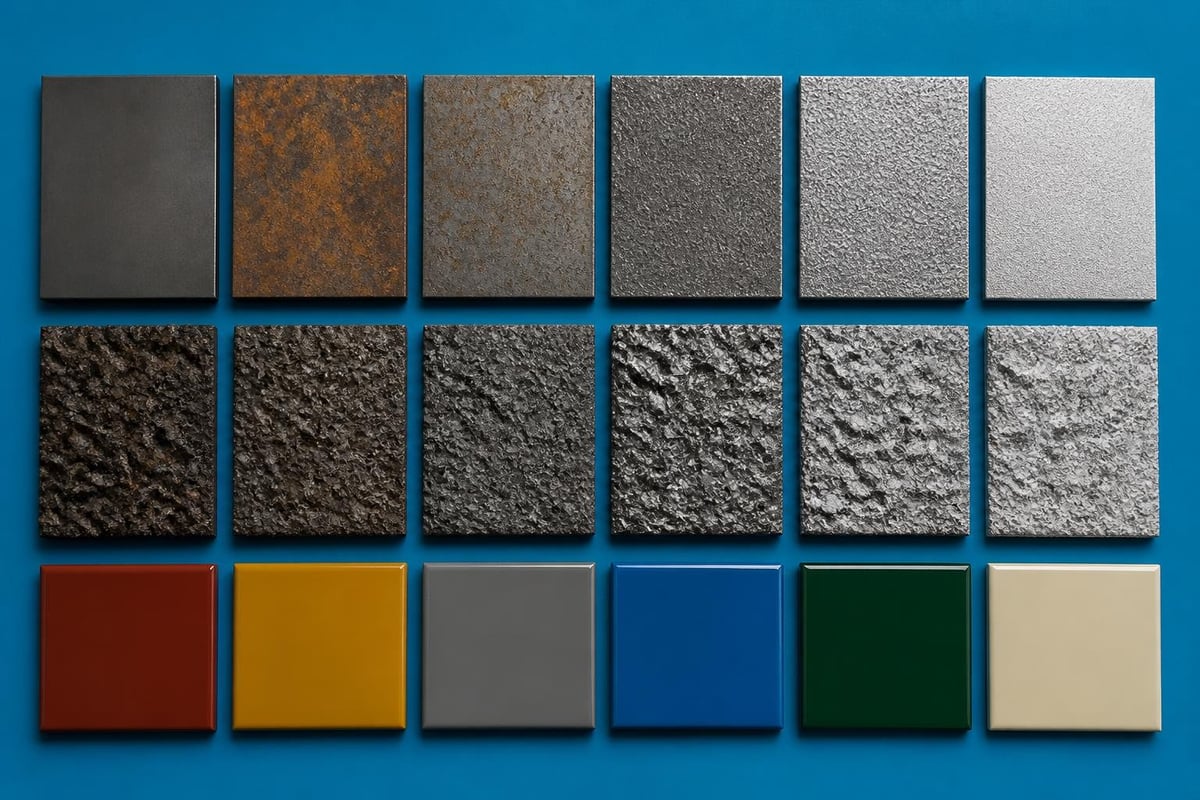
Proper surface preparation removes mill scale, rust, oils, and contaminants that compromise coating adhesion. Methods vary based on component size, geometry, and specification requirements:
- Abrasive blasting achieves specified cleanliness and surface profile standards
- Power tool cleaning provides economical preparation for maintenance coatings
- Chemical treatments prepare surfaces for specialized coating systems
- Ultrahigh-pressure water jetting removes coatings without abrasive media
The painting and sandblasting services phase establishes foundation for protective coatings, with surface profile depth matching coating manufacturer requirements.
Protective Coating Application
Coating selection depends on environmental exposure, expected service life, and maintenance accessibility. Common systems include:
| Coating System | Typical Environment | Expected Life | Application Method |
|---|---|---|---|
| Alkyd enamels | Interior, mild conditions | 5-10 years | Spray, brush |
| Epoxy systems | Chemical exposure, immersion | 10-20 years | Plural-component spray |
| Polyurethane topcoats | UV exposure, weathering | 15-25 years | HVLP spray |
| Galvanizing | Outdoor, corrosive | 25+ years | Hot-dip immersion |
| Powder coating | Architectural, moderate | 15-20 years | Electrostatic application |
Professional powder coating services deliver durable finishes for components requiring both corrosion protection and aesthetic appearance.
Field Installation Considerations
While steelwork fabrication occurs primarily in controlled shop environments, successful projects require consideration of field conditions during the fabrication phase. Components must arrive at job sites ready for efficient erection with minimal field modifications.
Erection-Friendly Design Features
Fabricators incorporate features facilitating safe, efficient installation:
Lifting points positioned for balanced loads during crane operations prevent damage and improve safety. Calculations verify adequacy for component weights plus dynamic factors.
Connection accessibility ensures ironworkers can install bolts and perform field welding without extraordinary measures. Mock-ups verify clearances before production proceeds.
Fit-up tolerances account for accumulation across multiple pieces, with adjustability built into connections where thermal expansion or construction tolerances require accommodation.
Standards like ISO 17607-4:2023 define general requirements for steel erection, complementing fabrication standards with comprehensive execution guidelines.
Transportation and Handling Requirements
Component dimensions often reflect transportation constraints rather than purely structural optimization. Maximum lengths, widths, and heights consider:
- Highway clearances on anticipated delivery routes
- Weight restrictions for bridges and roads
- Shipping costs balancing piece count against transportation efficiency
- Crane capacity at destination sites
- Laydown area availability for staging materials
Strategic division of large assemblies into shippable pieces requires careful planning to maintain structural integrity while facilitating economical delivery.
Sustainability in Steel Fabrication
Environmental responsibility increasingly influences steelwork fabrication practices. Steel's inherent recyclability provides environmental advantages, but fabrication processes still generate impacts requiring mitigation.
Material Efficiency and Waste Reduction
Optimized nesting algorithms minimize scrap generation during cutting operations. Computer-controlled equipment arranges parts to maximize material utilization, with remnants segregated for recycling rather than disposal.
Careful material ordering reduces excess inventory and associated waste. Just-in-time delivery systems balance availability requirements against storage costs and potential obsolescence.
The Building Sustainable Metals Infrastructure report identifies strategies for developing more efficient, sustainable, and resilient metals processing infrastructure, relevant to responsible steelwork fabrication practices in 2026.
Energy Management and Emissions Control
Welding, cutting, and coating operations consume significant energy. Modern facilities implement conservation measures:
- High-efficiency equipment reducing power consumption per operation
- Heat recovery systems capturing waste heat for facility heating
- LED lighting throughout production and office areas
- Demand management scheduling energy-intensive operations during off-peak periods
- Renewable energy integration where economically viable
Emissions control extends beyond regulatory compliance to community stewardship. Fume extraction systems protect worker health while minimizing environmental releases. Coating operations employ low-VOC formulations and capture systems reducing atmospheric emissions.
Quality Assurance and Inspection Protocols
Rigorous quality control distinguishes professional steelwork fabrication from inadequate alternatives. Multi-layered inspection programs verify conformance at each production stage, preventing defects from advancing through subsequent operations.
Non-Destructive Testing Methods
Non-destructive examination (NDE) validates weld quality without damaging components. Method selection depends on material thickness, joint geometry, and specification requirements:
Visual testing (VT) serves as the primary inspection method, with qualified inspectors examining all welds for surface discontinuities, dimensional compliance, and workmanship quality.
Ultrasonic testing (UT) detects internal discontinuities through sound wave reflection, particularly effective for thick materials where volumetric examination proves essential.
Magnetic particle testing (MT) reveals surface and near-surface defects in ferromagnetic materials, commonly specified for groove welds and areas of high stress concentration.
Radiographic testing (RT) provides permanent records of internal weld quality, though radiation safety requirements limit its use compared to alternative methods.
Dimensional Verification and Tolerance Management
Precision measurement confirms components meet geometric specifications. Inspection frequencies balance quality assurance needs against production efficiency:
- First-piece inspection validates setups before production runs
- In-process checks monitor stability during extended operations
- Final inspection confirms all dimensions before shipping
- Assembly verification ensures fit-up before permanent joining
Modern fabrication shops employ laser tracking systems and coordinate measuring machines (CMMs) for components requiring tight tolerances. These technologies provide rapid, accurate measurements with digital documentation supporting traceability requirements.
Specialized Applications and Custom Solutions
While standard structural components represent significant steelwork fabrication volume, specialized applications demand unique capabilities and expertise. Custom projects often combine multiple disciplines within single assemblies.
Heavy Industrial Equipment Components
Oil and gas, mining, and aggregate industries require massive fabrications operating under extreme conditions. These projects challenge fabricators with:
Extreme dimensional requirements where components exceed standard equipment capacities, requiring creative fixturing and specialized handling equipment.
Exotic materials including high-strength alloys, corrosion-resistant grades, and wear-resistant steels demanding modified welding procedures and heat treatment protocols.
Precision machining integration combining fabricated structures with tight-tolerance machined surfaces, requiring coordination between industrial machining services and welding operations.
Comprehensive custom metal fabrication capabilities enable single-source solutions for complex assemblies, reducing coordination challenges and schedule risks.
Hydraulic System Integration
Many fabricated structures incorporate hydraulic components requiring pressure-containing connections and precise alignment. Successful integration demands:
- Tube and pipe bending to exact dimensions without wall thinning
- Precision drilling for manifold mounting and port locations
- Thread cutting to hydraulic fitting standards
- Pressure testing validating system integrity before installation
These capabilities complement structural fabrication, delivering complete assemblies ready for immediate service upon installation.
Industry-Specific Considerations
Different sectors impose unique requirements on steelwork fabrication, reflecting varied operational environments and regulatory frameworks.
Aggregate and Recycling Industries
Equipment serving aggregate processing and recycling operations experiences severe abrasive wear and impact loading. Fabrication approaches include:
- Wear-resistant plate installation in high-abrasion zones
- Heavy-section construction accommodating impact forces
- Replaceable components facilitating economical maintenance
- Access provisions enabling inspection and wear monitoring
Understanding operational demands allows fabricators to optimize designs for extended service life and reduced maintenance costs.
Oil and Gas Sector Requirements
Hydrocarbon service imposes stringent material and fabrication requirements. Considerations include:
Material selection based on sour gas resistance, temperature extremes, and pressure ratings, with documentation tracing each component to certified test reports.
Welding procedures qualified specifically for service conditions, including impact testing at anticipated minimum temperatures.
Non-destructive examination at elevated inspection levels, often including 100% radiography or ultrasonic testing of pressure-containing welds.
Regulatory compliance with ASME codes, API standards, and jurisdictional requirements varying by location and application.
These demanding requirements necessitate experienced personnel and comprehensive quality systems ensuring consistent compliance.
Workforce Development and Technical Expertise
The steelwork fabrication industry faces ongoing challenges recruiting and developing skilled craftspeople. Technical expertise accumulated over decades of practice cannot be quickly replaced, making workforce development critical for industry sustainability.
Essential Skill Sets
Successful fabrication operations require diverse competencies:
Welders must demonstrate proficiency across multiple processes and positions, maintaining certifications through regular testing and continuous skill development.
Fitters translate drawings into physical assemblies, ensuring proper fit-up before welding and verifying dimensional compliance throughout fabrication.
Machinists operate conventional and CNC equipment, producing components to tight tolerances while maintaining surface finish requirements.
Quality inspectors verify compliance with specifications, performing visual examination, dimensional verification, and coordinating non-destructive testing activities.
Fabrication engineers solve technical challenges, develop procedures, and optimize processes balancing quality requirements against production efficiency.
Investing in workforce development through apprenticeships, continuing education, and certification programs ensures capability sustainability as experienced personnel retire.
Modern steelwork fabrication combines traditional craftsmanship with advanced technology, delivering precision-engineered components that form the backbone of industrial infrastructure. Success requires comprehensive capabilities spanning engineering, fabrication, quality assurance, and project management. Whether your project demands standard structural components or complex custom assemblies, partnering with an experienced fabricator ensures quality results that meet specifications and support long-term operational success. LTJ Industrial Services brings comprehensive shop and field capabilities to steelwork fabrication projects throughout the Western United States, combining skilled craftspeople with modern equipment to deliver solutions tailored to your specific requirements. Contact our team to discuss how our metal fabrication, welding, and machining expertise can support your next project.