
Selecting the right material for industrial fabrication projects directly impacts performance, longevity, and total project costs. The steel vs aluminum debate remains one of the most critical decisions for manufacturers, welders, and engineers across commercial and industrial sectors. Each material offers distinct advantages depending on application requirements, environmental conditions, and budget constraints. Understanding the fundamental differences between these metals enables better specification decisions for projects ranging from structural components to precision machining applications throughout the Western United States manufacturing landscape.
Fundamental Properties and Composition
Steel and aluminum represent fundamentally different metallurgical families with unique characteristics that determine their suitability for specific applications. Steel is an iron-carbon alloy typically containing 0.2-2% carbon by weight, often with additional alloying elements such as chromium, nickel, or molybdenum to enhance specific properties. Aluminum, on the other hand, is a pure element often alloyed with copper, magnesium, manganese, or silicon to improve strength and workability.
The density difference between these materials significantly influences design decisions. Steel weighs approximately 490 pounds per cubic foot, while aluminum weighs roughly 170 pounds per cubic foot. This three-to-one weight ratio makes aluminum attractive for applications where weight reduction delivers measurable benefits.
Key compositional differences include:
- Steel's crystalline structure provides superior strength through carbon interstitial strengthening
- Aluminum forms a protective oxide layer naturally, providing inherent corrosion resistance
- Steel alloys can be heat-treated to achieve a wider range of hardness values
- Aluminum alloys typically achieve strength through work hardening or precipitation hardening
Temperature performance varies considerably between materials. Steel maintains structural integrity at temperatures exceeding 1,000°F, while aluminum loses approximately 50% of its strength at 400°F. This thermal characteristic makes steel the preferred choice for high-temperature applications in oil and gas operations where certified welding services must withstand extreme conditions.
Strength and Structural Performance
When evaluating steel vs aluminum for load-bearing applications, strength-to-weight ratios and absolute strength capabilities become critical factors. Mild structural steel typically exhibits a tensile strength of 60,000-80,000 psi, while common aluminum alloys like 6061-T6 provide approximately 45,000 psi. However, high-strength steel alloys can exceed 200,000 psi, far surpassing any aluminum alloy currently available.
Stiffness and Deflection Considerations
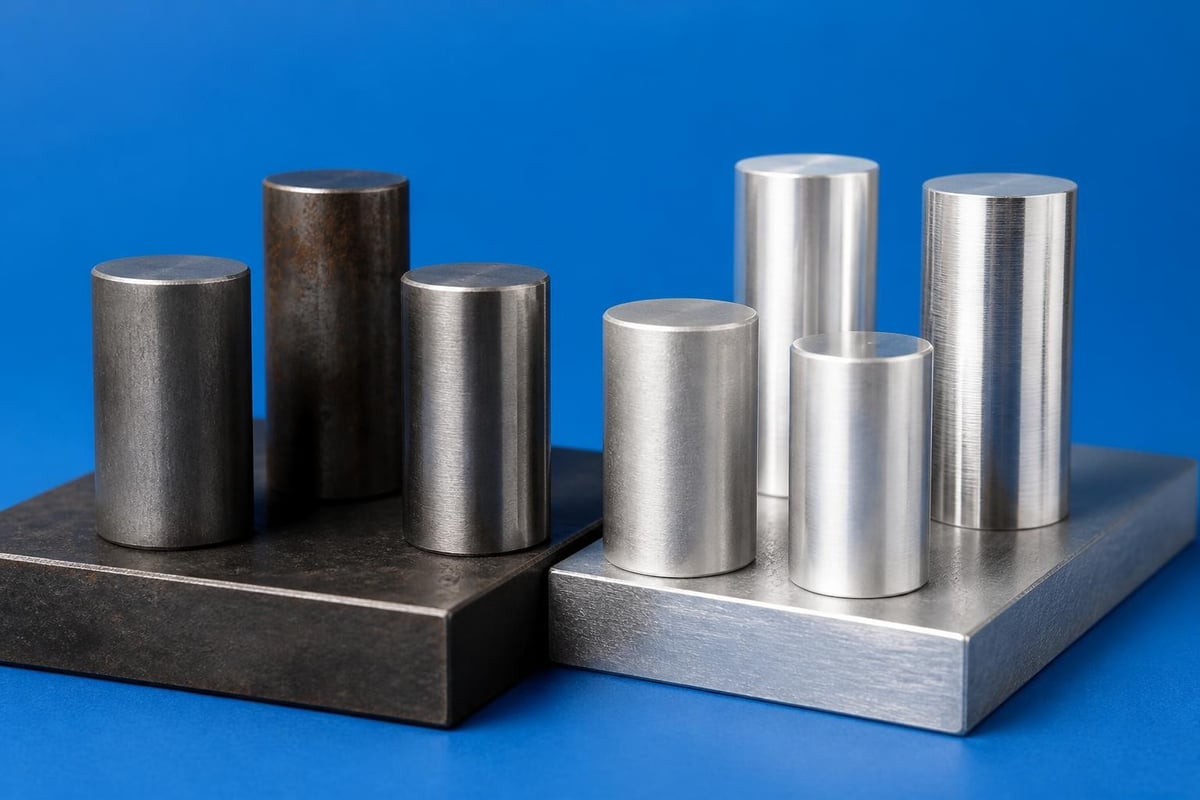
The modulus of elasticity-a measure of material stiffness-differs dramatically between these metals. Steel's modulus of approximately 29 million psi compares to aluminum's 10 million psi, meaning steel deflects roughly one-third as much under identical loading conditions. For structural steel fabrication requiring minimal deflection, this stiffness advantage proves invaluable.
| Property | Mild Steel (A36) | Stainless 304 | Aluminum 6061-T6 | Aluminum 7075-T6 |
|---|---|---|---|---|
| Tensile Strength (psi) | 58,000-80,000 | 90,000 | 45,000 | 83,000 |
| Yield Strength (psi) | 36,000 | 42,000 | 40,000 | 73,000 |
| Modulus of Elasticity (psi) | 29,000,000 | 28,000,000 | 10,000,000 | 10,400,000 |
| Density (lb/ft³) | 490 | 500 | 169 | 175 |
Application-specific requirements drive material selection. The recycling and aggregate industries often require steel's superior wear resistance for equipment subjected to abrasive materials, while aluminum's weight savings benefit mobile equipment and overhead structures.
Corrosion Resistance and Environmental Durability
Environmental conditions significantly influence the steel vs aluminum decision, particularly for outdoor installations or corrosive atmospheres. Aluminum naturally forms a protective aluminum oxide layer within hours of exposure to air, providing excellent resistance to atmospheric corrosion without additional treatment. This passive layer self-heals when scratched, maintaining protection throughout the component's service life.
Steel requires protective measures to prevent oxidation and rust formation. Carbon steel exposed to moisture will corrode rapidly without coatings or treatments. Stainless steel alloys incorporate chromium (minimum 10.5%) to form a passive chromium oxide layer similar to aluminum's natural protection, though at significantly higher material costs.
Corrosion protection strategies for steel include:
- Hot-dip galvanizing providing sacrificial zinc coating
- Powder coating or paint systems creating barrier protection
- Stainless steel alloys for inherent corrosion resistance
- Weathering steels (COR-TEN) forming protective rust patina
The Western United States presents diverse environmental challenges from high-altitude UV exposure to oil field chemical atmospheres. Projects requiring welding for construction applications must account for long-term environmental exposure when specifying materials. According to the World Steel Association’s life cycle assessment methodologies, protective coatings and maintenance significantly influence total environmental impact.
Salt exposure, particularly in industrial processes, accelerates steel corrosion while having minimal effect on most aluminum alloys. However, certain aluminum alloys prove susceptible to stress corrosion cracking in chloride environments, requiring careful alloy selection for specific applications.
Machinability and Fabrication Characteristics
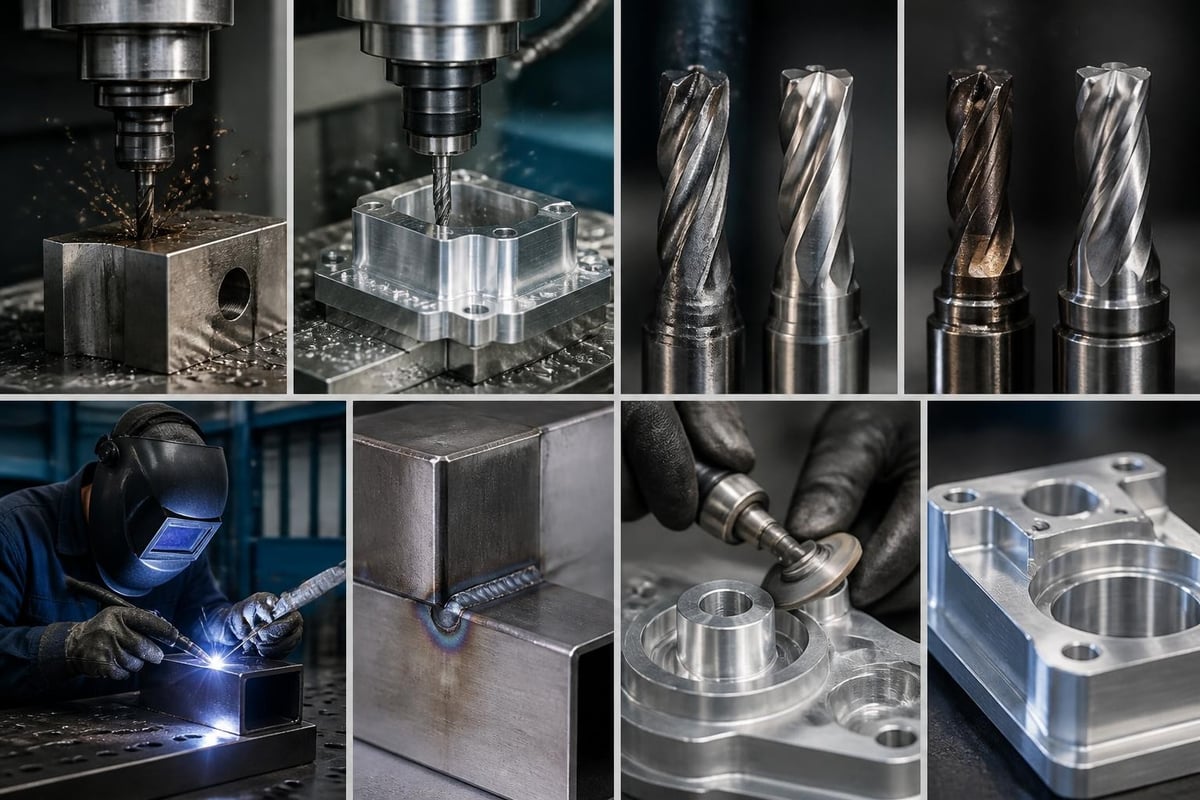
The steel vs aluminum comparison extends beyond raw material properties to fabrication efficiency and tooling requirements. Aluminum generally machines faster with lower cutting forces, enabling higher feed rates and extended tool life. The material's lower melting point and thermal conductivity facilitate easier chip formation and evacuation during machining operations.
Machining Speed and Tool Life
Steel machining requires more robust equipment and carbide or coated tooling to withstand higher cutting temperatures and forces. Tight tolerance machining of steel components demands slower spindle speeds and careful heat management to maintain dimensional accuracy. Aluminum permits cutting speeds two to three times faster than steel, reducing cycle times and labor costs per component.
Typical cutting speeds (surface feet per minute):
- Aluminum alloys: 600-1,200 SFM
- Mild carbon steel: 200-400 SFM
- Stainless steel: 150-250 SFM
- Tool steel (hardened): 50-150 SFM
Surface finish considerations also differ between materials. Aluminum achieves excellent surface finishes directly from machining operations, often eliminating secondary finishing requirements. Steel typically requires additional grinding or polishing to achieve comparable surface quality for critical applications.
Forming and bending operations reveal additional distinctions. Aluminum's lower yield strength enables tighter bend radii without cracking, beneficial for complex geometries. Steel's higher strength requires larger bend radii or annealing processes to prevent work hardening and cracking during custom metal fabrication operations.
Welding Requirements and Considerations
Welding represents a critical fabrication process where steel vs aluminum differences demand distinct approaches, techniques, and equipment. Steel welding enjoys widespread familiarity across the welding industry, with processes like SMAW (stick), GMAW (MIG), and FCAW readily accessible to most welders. The material's higher melting point provides a larger process window and greater tolerance for technique variations.
Aluminum welding presents unique challenges requiring specialized knowledge and equipment. The material's oxide layer melts at 3,700°F while the base metal melts at 1,220°F, requiring AC current to break through the oxide during GTAW (TIG) welding. Aluminum's high thermal conductivity demands greater heat input and preheating for thicker sections compared to equivalent steel thicknesses.
Weld Quality and Inspection
Porosity represents a primary concern in aluminum welding due to hydrogen absorption from moisture or hydrocarbon contamination. Rigorous cleaning procedures and proper shielding gas selection prove essential for producing sound welds. The American Welding Society standards provide comprehensive guidance for both steel and aluminum welding procedures, qualification, and inspection criteria.
| Welding Aspect | Steel | Aluminum |
|---|---|---|
| Primary Processes | SMAW, GMAW, FCAW, SAW | GTAW, GMAW (spool gun) |
| Current Type | DC typically | AC for GTAW, DC for GMAW |
| Shielding Gas | CO2, Ar/CO2 mix | Pure Argon or Ar/He mix |
| Cleaning Requirements | Moderate | Stringent |
| Distortion Risk | Moderate | Higher due to thermal expansion |
| Filler Metal Cost | Lower | Higher |
Joint design requirements differ substantially between materials. Aluminum's higher coefficient of thermal expansion (nearly twice that of steel) generates greater distortion during welding, requiring careful fixturing and sequencing. Research from the International Council on Clean Transportation examining automotive applications demonstrates how material selection influences manufacturing complexity and lifecycle emissions.
Dissimilar metal joining-welding steel to aluminum-presents significant metallurgical challenges. Direct fusion welding creates brittle intermetallic compounds, requiring specialized techniques like explosion welding, friction stir welding, or mechanical fastening with isolation layers.
Cost Analysis and Economic Considerations
Material costs represent only one component of total project economics when comparing steel vs aluminum. While raw aluminum typically costs two to three times more per pound than carbon steel, the complete cost picture encompasses material yield, fabrication labor, finishing requirements, and lifecycle maintenance.
Steel's lower material cost provides immediate budget advantages for large structural projects where weight remains secondary to strength and cost efficiency. The material's widespread availability and established supply chains throughout the Western United States ensure competitive pricing and reliable delivery schedules.
Total cost factors include:
- Raw material price per pound or ton
- Material utilization and scrap value
- Fabrication labor hours and complexity
- Tooling wear and replacement costs
- Surface preparation and coating expenses
- Transportation and installation labor
- Long-term maintenance and lifecycle costs
Weight-sensitive applications may justify aluminum's higher material cost through reduced structural support requirements, lower transportation costs, and decreased installation labor. The Aluminum Association’s recycling resources highlight how aluminum's infinite recyclability and high scrap value offset initial cost premiums over multiple product lifecycles.
Project-Specific Economic Optimization
Understanding metal fabrication cost drivers enables more accurate material selection for specific applications. High-volume production benefits from aluminum's faster machining speeds and reduced tool wear, potentially offsetting higher material costs through improved throughput. Conversely, low-volume structural projects favor steel's lower material and welding costs.

Energy costs during production also influence material selection. Primary aluminum production requires approximately 45 kWh per kilogram compared to steel's 20-30 kWh per kilogram for integrated mill production. However, recycled aluminum requires only 5% of primary production energy, while recycled steel uses roughly 40% of primary production energy, as detailed in The Aluminum Association resource library.
Market volatility affects pricing stability. Aluminum prices demonstrate greater fluctuation tied to energy costs and global commodity markets, while steel pricing remains more stable regionally. Projects with extended timelines should account for potential material cost variations when selecting between steel vs aluminum.
Application-Specific Selection Criteria
Successful material selection requires aligning steel vs aluminum properties with specific application requirements, operating conditions, and performance expectations. Structural applications in commercial and industrial settings demand careful evaluation of load paths, environmental exposure, and maintenance accessibility.
Industrial Manufacturing Equipment
Manufacturing equipment specifications must balance strength requirements against weight constraints and corrosion exposure. Steel dominates heavy-duty applications like crushers, conveyors, and processing equipment where impact resistance and wear resistance prove critical. Oil and gas welding services frequently specify high-strength steel alloys for pressure vessels, piping systems, and structural supports operating under extreme conditions.
Aluminum serves effectively in:
- Access platforms and walkways reducing dead load on supporting structures
- Electrical enclosures and housings benefiting from natural corrosion resistance
- Rotating or reciprocating components where reduced inertia improves efficiency
- Food processing equipment requiring non-corrosive, easily cleaned surfaces
Transportation and Mobile Equipment
The automotive and transportation sectors demonstrate ongoing evolution in the steel vs aluminum debate. Research analyzing automotive steel demand and green steel strategies reveals complex tradeoffs between lightweighting benefits and manufacturing emissions. Mobile equipment manufacturers increasingly specify aluminum for components where weight reduction directly improves fuel efficiency or payload capacity.
Material selection guidelines by component type:
- Chassis and frames: High-strength steel for durability and cost efficiency
- Body panels and enclosures: Aluminum for weight reduction and corrosion resistance
- Engine components: Aluminum for thermal management and weight savings
- Exhaust systems: Stainless steel for high-temperature corrosion resistance
- Hydraulic components: Steel for pressure containment and wear resistance
Understanding these application-specific requirements guides specification decisions when working with experienced fabricators who can evaluate project-specific needs comprehensively.
Lifecycle Considerations and Sustainability
Environmental impact and sustainability increasingly influence material selection decisions across industrial sectors. The steel vs aluminum comparison extends beyond immediate fabrication requirements to encompass embodied energy, recyclability, and end-of-life disposal considerations.
Both materials offer exceptional recycling potential. Steel maintains its properties through infinite recycling loops, with approximately 88% of structural steel recycled in North America. Aluminum similarly retains properties through repeated recycling, with 75% of all aluminum ever produced still in use today. The World Steel Association’s LCA eco-profile for engineering steel provides comprehensive data for comparing lifecycle impacts across different applications.
Energy and Carbon Footprint
Primary production energy requirements favor steel, though recycling dramatically alters the equation. Recycled steel requires 60% less energy than primary production, while recycled aluminum uses 95% less energy than primary smelting. Projects prioritizing sustainability should evaluate material sourcing, particularly the percentage of recycled content in supplied materials.
| Lifecycle Aspect | Steel | Aluminum |
|---|---|---|
| Primary Production Energy | Moderate | Very High |
| Recycled Content Energy | Low | Very Low |
| Typical Recycled Content | 25-100% | 30-50% (varies by product) |
| Recycling Rate (North America) | 88% | 67% |
| Service Life (properly maintained) | 50-100+ years | 50-80+ years |
Long-term maintenance requirements significantly impact total environmental footprint. Aluminum's natural corrosion resistance eliminates coating applications and reapplication cycles required for carbon steel protection. However, stainless steel offers comparable corrosion resistance with steel's superior strength characteristics, though at premium material costs.
Transportation emissions also factor into lifecycle calculations. Aluminum's weight advantage reduces fuel consumption during shipping and installation, particularly for projects requiring long-distance material transportation across the Western United States.
Design Flexibility and Engineering Optimization
Material selection influences design possibilities and engineering optimization strategies throughout product development. The steel vs aluminum decision affects everything from initial concept sketches to final detail drawings and manufacturing specifications.
Engineers leverage steel's high modulus of elasticity to minimize structural member sizes while maintaining deflection limits. Smaller cross-sections reduce material volume and weight, partially offsetting aluminum's inherent density advantage in certain applications. Advanced high-strength steels enable further optimization through reduced section thickness while maintaining required strength.
Aluminum's lower density and strength characteristics often require larger cross-sections to achieve equivalent stiffness, potentially negating weight advantages in stiffness-critical applications. However, aluminum extrusion capabilities enable complex cross-sectional shapes difficult or impossible to achieve with steel forming processes, allowing design optimization through geometry rather than material properties alone.
Manufacturing Process Integration
Production volume and manufacturing capabilities available influence practical material selection beyond pure engineering calculations. High-volume production may justify investment in aluminum-specific equipment and training, while low-volume projects benefit from steel's compatibility with existing equipment and workforce skills.
Questions to consider when choosing a metal fabrication shop include:
- Available equipment capacity for material thickness and size requirements
- Workforce certification and experience with specified materials
- Quality control procedures appropriate for material and application
- Secondary process capabilities like heat treating, coating, or finishing
- Supply chain relationships ensuring material availability and pricing stability
Prototype and small-batch production often favors steel due to lower material costs and reduced setup requirements. Large production runs may justify aluminum selection through cumulative labor savings from faster machining speeds and reduced tool replacement costs.
Material Selection Decision Framework
Developing a systematic approach to the steel vs aluminum decision ensures comprehensive evaluation of all relevant factors. Successful material selection requires balancing competing priorities across technical performance, economic constraints, and practical manufacturing considerations.
Prioritization Matrix
Establishing clear priorities among competing requirements enables rational material selection when no single option provides universal advantages. Weight-critical applications justify premium aluminum costs, while cost-sensitive projects favor steel unless corrosion or other factors mandate otherwise.
Decision framework steps:
- Define absolute requirements (strength, corrosion resistance, temperature limits)
- Establish performance priorities (weight, cost, maintenance, lifecycle)
- Evaluate material capabilities against requirements
- Calculate total project costs including fabrication and lifecycle factors
- Assess manufacturing feasibility and supply chain reliability
- Select material providing optimal balance of requirements and constraints
Engaging experienced fabrication professionals early in the design process provides valuable insights into manufacturability, cost optimization, and potential design modifications improving performance or reducing costs. Developing detailed RFQs communicating all project requirements enables accurate quotations and material recommendations from qualified fabricators.
Projects involving custom metal fabrication benefit from collaborative engineering approaches where fabricator expertise complements design team knowledge, resulting in optimized specifications balancing all project objectives effectively.
The steel vs aluminum material selection decision fundamentally impacts project success across technical performance, economic efficiency, and long-term reliability dimensions. Each material offers distinct advantages depending on application-specific requirements, environmental conditions, and manufacturing considerations. For comprehensive metal fabrication, welding, and machining services throughout the Western United States, LTJ Industrial Services delivers the expertise and capabilities to execute your projects successfully, regardless of material specification. Our experienced team can guide material selection decisions and provide the precision fabrication your application demands.