Process industries represent the backbone of modern manufacturing, transforming raw materials into valuable products through chemical, physical, or biological processes. From petroleum refineries to pharmaceutical production facilities, these sectors operate with continuous or batch processing methods that require precision engineering, robust safety protocols, and specialized maintenance services. Understanding the unique characteristics and requirements of process industries is essential for companies providing industrial services, fabrication, and maintenance support throughout the Western United States.
Understanding Process Industries and Their Core Characteristics
Process industries differ fundamentally from discrete manufacturing operations. The Institute of Industrial and Systems Engineers identifies these sectors as operations where materials flow continuously through various processing stages rather than being assembled piece by piece. This continuous nature demands specialized equipment, stringent quality control, and advanced automation systems.
Key sectors within process industries include:
- Oil and gas refining and petrochemicals
- Chemical manufacturing and pharmaceuticals
- Food and beverage processing
- Pulp and paper production
- Mining and mineral processing
- Cement and aggregate production
Recent research from ScienceDirect redefines process industries through critical attributes including monolithic continuity, equivocality, and continuous operation requirements. These characteristics create unique challenges for maintenance teams and equipment suppliers.
Material Flow and Transformation Methods
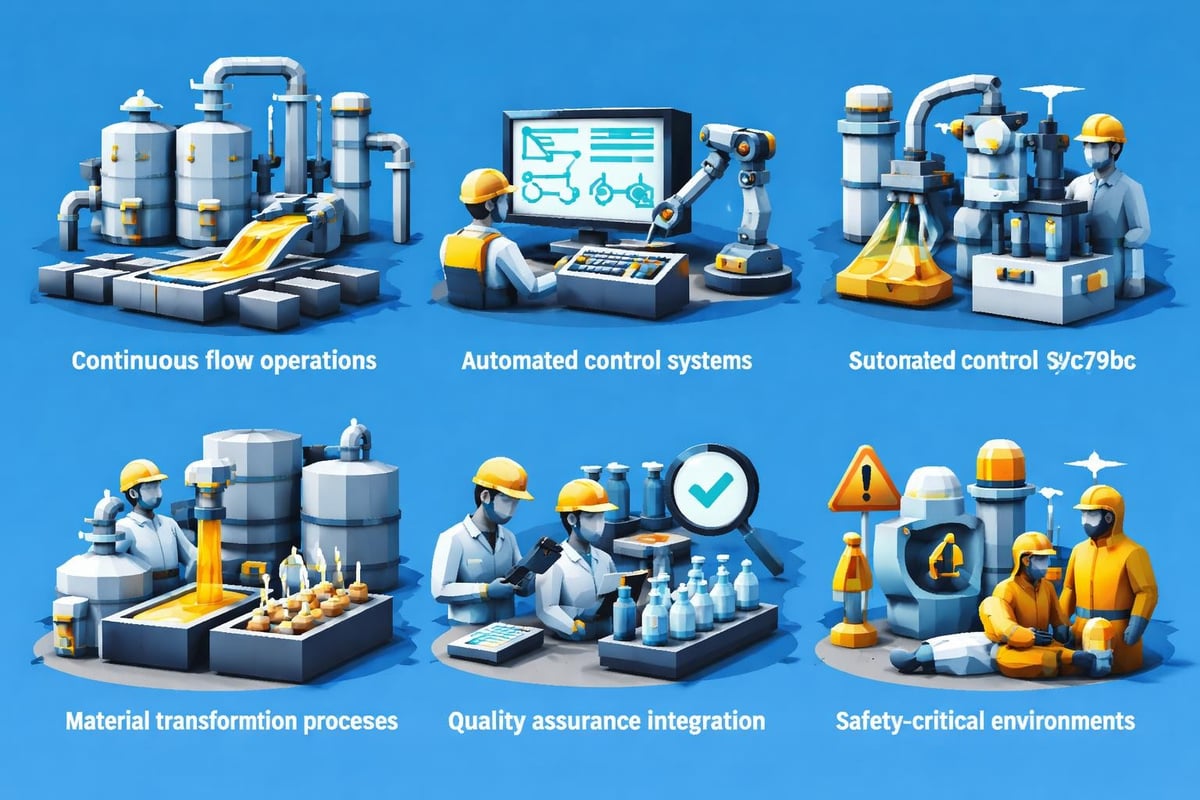
Process industries transform raw materials through carefully controlled chemical reactions, physical changes, or biological processes. Unlike discrete manufacturing where individual parts become assemblies, these operations involve state changes, molecular transformations, and continuous quality monitoring throughout production cycles.
The distinction creates specific requirements for equipment durability and maintenance expertise. Components must withstand corrosive substances, extreme temperatures, high pressures, and continuous operation cycles that discrete manufacturing rarely encounters.
Critical Infrastructure Requirements in Process Industries
Equipment infrastructure in process industries demands exceptional reliability and precision. Production cannot stop for minor adjustments, making preventive maintenance and rapid repair capabilities essential for operational continuity.
Pressure Vessels and Piping Systems
Pressure vessels, heat exchangers, and extensive piping networks form the circulatory system of most process facilities. These components require specialized fabrication techniques, certified welding procedures, and regular inspection protocols to ensure safe operation under demanding conditions.
ASME code welding services become critical when maintaining or modifying pressure piping systems. Compliance with industry standards protects both personnel and product quality while maintaining operational certification.
| Component Type | Typical Materials | Common Maintenance Needs |
|---|---|---|
| Pressure Vessels | Carbon Steel, Stainless Steel, Exotic Alloys | NDE Testing, Welding Repairs, Re-certification |
| Heat Exchangers | Copper Alloys, Titanium, Stainless Steel | Tube Replacement, Cleaning, Leak Repair |
| Piping Systems | Carbon Steel, Stainless Steel, Plastics | Welding Repairs, Support Modification, Expansion Joints |
| Reactors | Specialized Alloys, Glass-lined Steel | Lining Repair, Agitator Maintenance, Seal Replacement |
Rotating Equipment and Mechanical Systems
Pumps, compressors, turbines, and motors drive material movement throughout process facilities. These machines operate continuously under significant loads, requiring precision machining capabilities and expert mechanical services for maintenance and repair.
Field machining services prove invaluable when equipment cannot be removed from service locations. On-site machining minimizes downtime while maintaining tight tolerances required for rotating equipment reliability.
Safety Standards and Human Factors in Process Industries
Safety represents the paramount concern across all process industries operations. The human factors approach to safety emphasizes that reliable equipment, proper training, and clear procedures create safer working environments than reactive safety measures alone.
Process facilities handle hazardous materials, operate under extreme conditions, and maintain continuous production schedules. This combination creates inherent risks that comprehensive safety programs must address through engineering controls, administrative procedures, and personal protective equipment.
Regulatory Compliance and Industry Standards
Multiple regulatory bodies govern process industries operations, including OSHA, EPA, and industry-specific organizations. Compliance requires documented maintenance programs, certified inspection procedures, and traceable repair records for critical equipment.
Essential compliance areas include:
- Process Safety Management (PSM) programs
- Mechanical integrity documentation
- Hazardous material handling protocols
- Emergency response planning
- Environmental protection measures
Companies providing industrial machinery refurbishment and maintenance must understand these regulatory frameworks to deliver compliant services that maintain facility certifications.

Maintenance Strategies for Process Industries Equipment
Effective maintenance strategies balance production demands with equipment reliability requirements. Process industries cannot afford unexpected failures that halt production, making proactive maintenance essential for operational success.
Predictive and Preventive Maintenance Programs
Modern process facilities implement comprehensive maintenance programs combining scheduled preventive tasks with condition-based predictive monitoring. Vibration analysis, thermography, oil analysis, and ultrasonic testing identify developing problems before equipment failures occur.
These programs require partnerships with service providers offering diverse capabilities. A facility might need custom welding and fabrication for one project while requiring precision machining services for another, making versatile industrial service providers valuable maintenance partners.
| Maintenance Type | Typical Frequency | Key Benefits | Common Applications |
|---|---|---|---|
| Predictive | Continuous/Monthly | Early problem detection, optimized scheduling | Rotating equipment, electrical systems |
| Preventive | Weekly/Monthly/Quarterly | Planned downtime, extended equipment life | All equipment types |
| Corrective | As needed | Addresses immediate failures | Emergency repairs |
| Reliability-Centered | Risk-based intervals | Resource optimization, critical focus | High-value assets |
Turnaround Planning and Execution
Major maintenance turnarounds represent critical events in process industries operations. These planned shutdowns allow comprehensive equipment inspection, repair, and modification that cannot occur during normal production periods.
Successful turnarounds demand meticulous planning, coordinated execution, and skilled contractors capable of delivering quality work under compressed timelines. Metal fabrication and welding services often play central roles during turnarounds, fabricating replacement components and performing structural repairs identified during inspections.
Material Selection and Fabrication Considerations
Process industries equipment faces aggressive operating environments requiring careful material selection and specialized fabrication techniques. Corrosive chemicals, extreme temperatures, and high pressures demand materials and fabrication methods that discrete manufacturing rarely encounters.
Specialty Alloys and Exotic Materials
Stainless steels, nickel alloys, titanium, and specialized polymers find extensive application where carbon steel cannot provide adequate corrosion resistance or mechanical properties. These materials require specific welding procedures, qualified welders, and appropriate fabrication equipment.
Understanding material compatibility with process fluids, temperature ranges, and operating pressures becomes critical when designing replacements or modifications. Incorrect material selection can lead to premature failure, contamination, or safety incidents.
Fabrication Quality and Documentation Requirements
Process industries fabrication work demands rigorous quality control and complete documentation. Welding procedure specifications, welder qualifications, non-destructive examination results, and material certifications create traceable records proving compliance with design specifications and regulatory requirements.
Manufacturing and machining operations supporting process industries must maintain quality management systems documenting every aspect of fabrication work. This documentation protects facility operators during regulatory inspections and provides confidence in equipment reliability.
Technology Integration and Digital Transformation
Process industries increasingly embrace digital technologies transforming operations, maintenance, and safety management. According to recent industry statistics, the process control market continues expanding as facilities adopt advanced automation, data analytics, and integrated management systems.
Automation and Control Systems
Distributed control systems (DCS), programmable logic controllers (PLC), and supervisory control and data acquisition (SCADA) systems manage complex process operations with minimal human intervention. These technologies improve consistency, reduce errors, and enable optimization impossible with manual control methods.
Modern automation delivers:
- Real-time process monitoring and control
- Automated safety system responses
- Production optimization algorithms
- Integrated quality management
- Predictive maintenance alerts
Maintenance service providers must understand these systems' mechanical interfaces and physical components even when process engineers manage control programming and optimization.
Data Analytics and Performance Optimization
Advanced analytics transform raw operational data into actionable insights improving equipment reliability, process efficiency, and product quality. Machine learning algorithms identify patterns human operators might miss, predicting failures and optimizing maintenance scheduling.
These capabilities create opportunities for maintenance contractors offering data-driven services. Understanding equipment performance trends helps target interventions more effectively than traditional time-based maintenance approaches.
Supporting Process Industries Across the Western United States
Process industries throughout the Western United States face unique challenges including remote facility locations, harsh environmental conditions, and distance from major industrial centers. These factors make responsive, capable maintenance partners essential for operational success.
Facilities in oil and gas, mining, aggregate production, and manufacturing sectors require service providers delivering comprehensive capabilities without necessitating multiple contractors for different work scopes. The ability to handle welding, fabrication, and machining requirements through a single point of contact streamlines project management while ensuring consistent quality standards.
Field Service Capabilities and Rapid Response
Remote facilities cannot always transport equipment to shop environments for repair or modification. Field service capabilities bringing fabrication and machining expertise directly to facility locations minimize downtime while maintaining quality standards.
Mobile equipment enables on-site welding repairs, precision machining of large components, and equipment modifications without disassembly and transportation. This flexibility proves particularly valuable during turnarounds when time constraints demand efficient work execution.
Regional Expertise and Industry Knowledge
Understanding regional process industries helps service providers anticipate common challenges, maintain appropriate material inventories, and deploy personnel with relevant experience. A contractor serving Western United States facilities develops familiarity with prevalent equipment types, common failure modes, and effective repair strategies.
Industry-specific knowledge differentiates capable maintenance partners from general contractors. Experience with aggregate processing equipment differs significantly from oil and gas facility requirements, though fundamental fabrication and machining skills apply across sectors.
Emerging Trends Shaping Process Industries in 2026
Process industries continue evolving through technological advancement, sustainability initiatives, and changing regulatory requirements. Service providers supporting these sectors must adapt alongside their customers to deliver relevant capabilities meeting emerging needs.
Sustainability and Environmental Responsibility
Environmental performance increasingly influences process industries operations. Facilities invest in emissions reduction, waste minimization, water conservation, and energy efficiency improvements both for regulatory compliance and corporate responsibility commitments.
These initiatives create opportunities for equipment modifications, process improvements, and technology upgrades requiring fabrication and mechanical services. Retrofit projects might involve installing scrubbers, heat recovery systems, or advanced monitoring equipment demanding precision fabrication work.
Workforce Development and Skills Evolution
Process industries face ongoing workforce challenges as experienced personnel retire while technology evolution demands new skill combinations. The Process Industry Informer regularly addresses workforce topics alongside operational and technical content relevant to industry professionals.
Maintenance contractors must similarly invest in workforce development, ensuring personnel maintain current certifications while developing expertise with emerging technologies and materials. Multi-skilled technicians comfortable with welding, machining, and mechanical work provide flexibility that specialized-only workers cannot match.
Equipment Lifecycle Management Best Practices
Strategic equipment lifecycle management optimizes total cost of ownership while maintaining reliability and safety standards. Process industries operators increasingly view equipment decisions through lifecycle lenses rather than focusing solely on initial acquisition costs.
Refurbishment versus Replacement Decisions
Major equipment refurbishment often provides superior return on investment compared to new equipment purchases, particularly when frame structures, foundations, and supporting systems remain serviceable. Comprehensive refurbishment programs can extend equipment life decades while incorporating modern control systems and efficiency improvements.
Evaluation criteria for refurbishment decisions include:
- Structural condition assessment and remaining useful life
- Availability and cost of replacement components
- Potential performance improvements through modernization
- Production capacity requirements and future demand
- Total project cost versus new equipment alternatives
Structural steel fabrication capabilities support equipment refurbishment by replacing deteriorated support structures, reinforcing frames for increased capacity, and modifying installations for improved access and maintenance.
Documentation and Knowledge Management
Comprehensive equipment documentation preserves institutional knowledge facilitating effective maintenance throughout extended service lives. Drawings, specifications, maintenance histories, and modification records enable informed decision-making when planning repairs or evaluating replacement options.
Process facilities benefit from maintaining detailed records including original equipment specifications, as-built drawings incorporating modifications, material certifications for critical components, and maintenance history documenting repairs and replacements. This documentation proves invaluable during troubleshooting, regulatory inspections, and lifecycle planning exercises.
Process industries require specialized expertise, quality workmanship, and responsive service to maintain the reliable operations essential for production continuity and safety. Whether your facility needs emergency repairs, planned turnaround support, or custom fabrication capabilities, partnering with experienced industrial service providers ensures access to the comprehensive skills these demanding environments require. LTJ Industrial Services delivers expert welding, fabrication, and machining services throughout the Western United States, supporting process industries with the quality and responsiveness that keeps your operations running efficiently.