
Manufacturing excellence depends on the ability to create components that meet exact specifications consistently. In industries ranging from oil and gas to aggregate processing, the difference between operational success and costly downtime often comes down to the quality of machined parts. Understanding the fundamentals, capabilities, and considerations of precision machining enables organizations to make informed decisions about their manufacturing partnerships and internal capabilities.
Understanding Precision Machining Fundamentals
Precision machining refers to the controlled removal of material from a workpiece to create parts with exceptionally tight tolerances, superior surface finishes, and exact dimensional accuracy. Unlike conventional machining, which may accept tolerances of ±0.005 inches or greater, precision work routinely achieves tolerances of ±0.0001 inches or tighter.
The process relies on advanced machine tools, skilled machinists, and rigorous quality control protocols. Modern CNC (Computer Numerical Control) equipment enables repeatable accuracy that manual operations cannot match, while experienced operators ensure that programming, tooling, and setup decisions optimize both quality and efficiency.
Key Characteristics of Precision Work
Several factors distinguish precision machining from standard manufacturing operations:
- Dimensional accuracy measured in tenths or hundredths of thousandths of an inch
- Surface finish specifications often below 32 Ra (roughness average)
- Geometric tolerancing following ASME Y14.5 standards for position, flatness, and perpendicularity
- Material traceability and certification for critical applications
- Process documentation including inspection reports and quality records
Industries such as aerospace, medical devices, and energy production depend on these capabilities. When a hydraulic component in aggregate processing equipment must maintain precise clearances under extreme pressure, or when oil field equipment requires parts that withstand corrosive environments while maintaining exact fits, precision machining becomes non-negotiable.
Critical Technologies and Equipment
The foundation of precision machining rests on sophisticated equipment designed to minimize variation and maximize control. Multi-axis CNC machining centers represent the current standard, offering capabilities that include simultaneous 4-axis and 5-axis movement for complex geometries.
Turning centers create cylindrical parts with precision bores, threads, and contours. These machines excel at producing shafts, bushings, and rotating components where concentricity and roundness are critical. Modern lathes incorporate live tooling, allowing milling operations without transferring the workpiece to a second machine.
Milling centers remove material using rotating cutters to create features such as pockets, slots, and profiled surfaces. Vertical and horizontal configurations serve different applications, with horizontal machines offering advantages for heavy cutting and automated pallet systems.
| Machine Type | Primary Applications | Typical Tolerance Range | Key Advantages |
|---|---|---|---|
| CNC Lathe | Cylindrical parts, bores | ±0.0002″ – ±0.0005″ | High production rates, excellent roundness |
| Vertical Mill | Slots, pockets, profiles | ±0.0005″ – ±0.001″ | Versatility, tool accessibility |
| Horizontal Mill | Heavy parts, automated runs | ±0.0003″ – ±0.0008″ | Rigidity, chip evacuation |
| Swiss-Type Lathe | Small diameter, long parts | ±0.0001″ – ±0.0003″ | Extreme precision, complex features |
Measurement and Inspection Systems
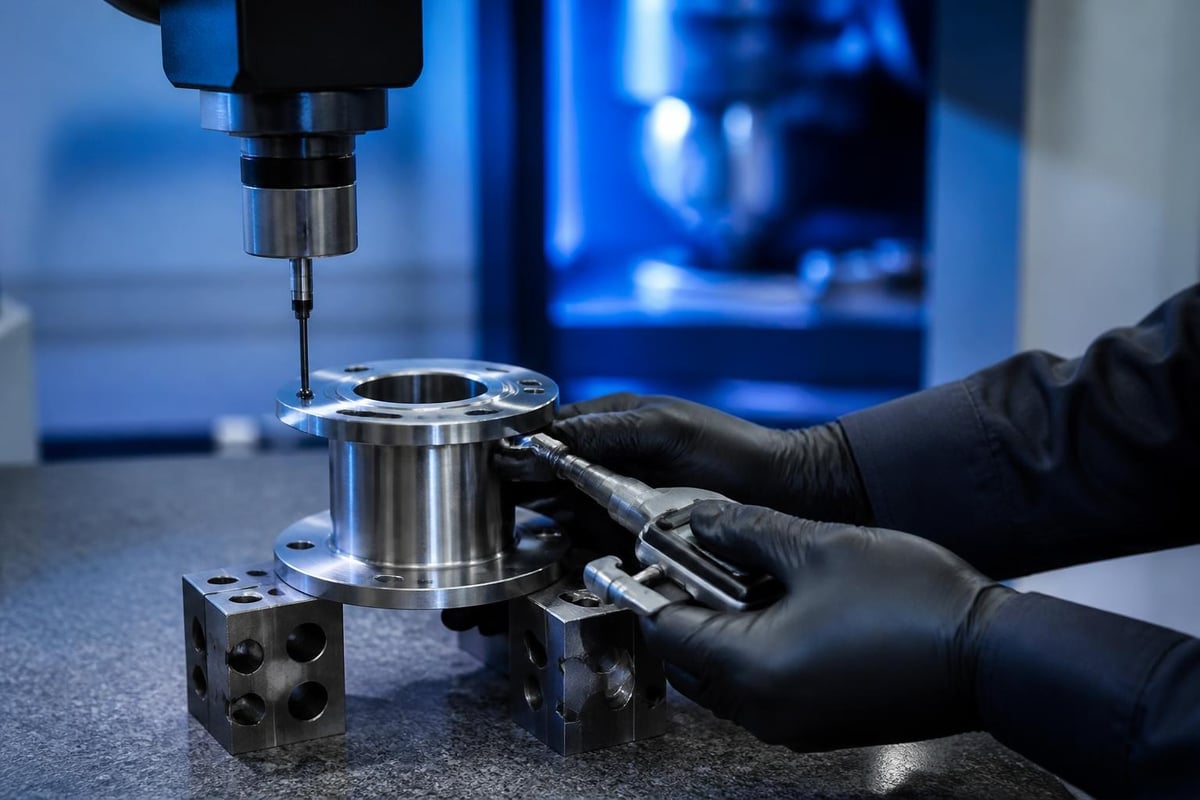
Creating precise parts requires equally precise measurement. Coordinate measuring machines (CMMs) use touch probes or laser scanners to verify dimensions in three-dimensional space. Research comparing dimensional accuracy across measurement methods demonstrates the importance of selecting appropriate metrology tools for specific tolerance requirements.
Optical comparators project magnified part silhouettes for visual inspection against master drawings. Surface finish testers quantify roughness according to standardized parameters. The NIST surface metrology program establishes reference standards that enable consistent measurement across facilities and organizations.
Materials and Machinability Considerations
Material selection profoundly impacts both the machining process and the finished part’s performance. Metals commonly processed through precision machining include various grades of steel, stainless steel, aluminum, brass, and specialty alloys.
Carbon and alloy steels offer excellent strength and wear resistance. Grades such as 4140 and 4340 respond well to heat treatment after machining, enabling hardness values that extend service life in demanding applications. These materials machine efficiently with appropriate cutting speeds and tool geometries.
Stainless steels provide corrosion resistance essential for chemical processing and food industry applications. However, austenitic grades like 304 and 316 work-harden during cutting, requiring sharp tools and proper feed rates to prevent excessive tool wear.
Exotic materials present unique challenges. Titanium alloys, increasingly common in aerospace and medical applications, exhibit poor thermal conductivity and chemical reactivity with cutting tools. Recent research on titanium alloy machinability provides detailed strategies for optimizing tool life and surface quality when working with these difficult-to-machine materials.
Tool Selection and Cutting Parameters
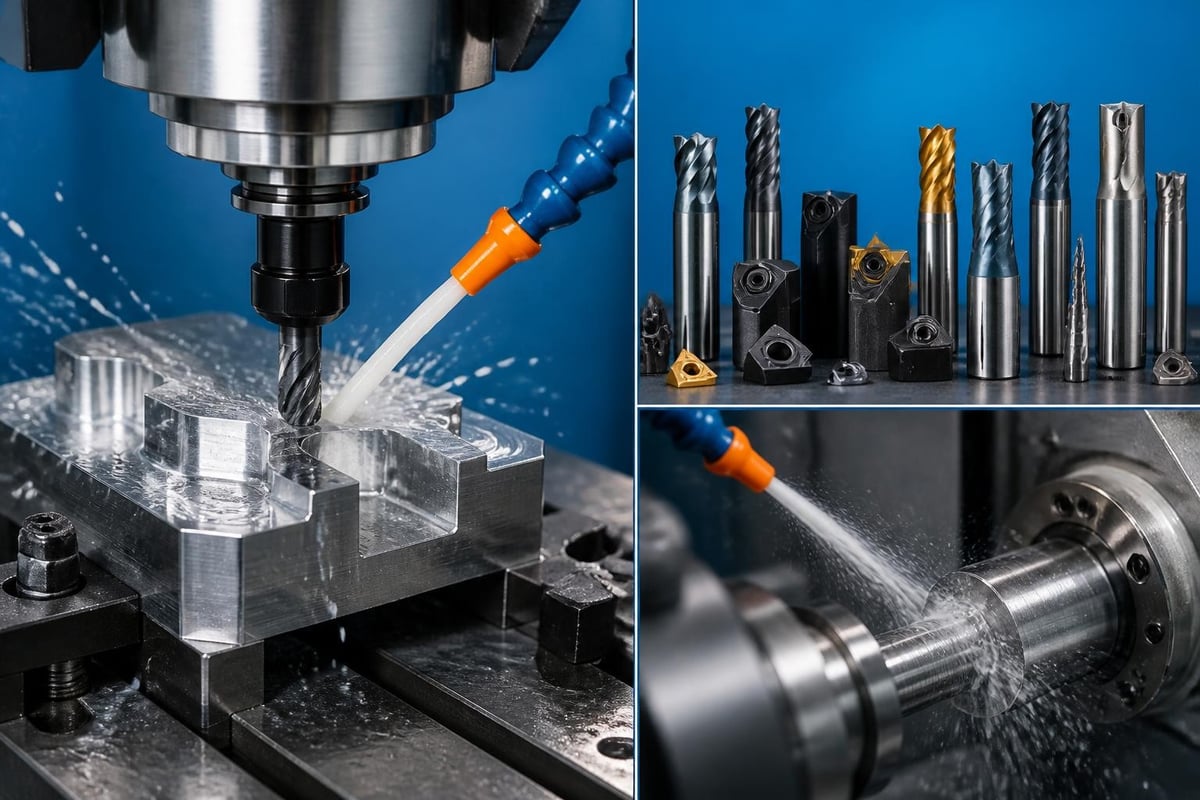
Precision work demands careful attention to cutting tool selection. Carbide inserts dominate production machining due to their hardness and wear resistance. Coatings such as titanium nitride (TiN) or aluminum titanium nitride (AlTiN) extend tool life by reducing friction and heat generation.
For finishing operations where surface quality is paramount, polycrystalline diamond (PCD) or cubic boron nitride (CBN) tools deliver superior results. These superhard materials maintain sharp cutting edges through extended production runs.
The CIRP Journal’s review of machining performance emphasizes systematic approaches to optimizing cutting parameters. Feed rate, spindle speed, and depth of cut must balance productivity against tool life and part quality. When working with tight tolerance specifications, conservative parameters often prove more economical than aggressive cuts that require extensive rework.
Quality Assurance and Process Control
Consistent quality requires systematic process control beyond final inspection. Statistical process control (SPC) monitors key dimensions throughout production runs, identifying trends before parts drift out of specification. Control charts track variation, enabling operators to make adjustments that maintain process capability.
First article inspection validates that setup and programming produce conforming parts before full production begins. This critical step prevents costly batches of scrap parts. Documentation typically includes:
- Complete dimensional inspection report
- Material certifications and traceability
- Surface finish measurements
- Photographic evidence of critical features
- Operator and inspector signatures with timestamps
In-process verification catches problems early. Experienced machinists perform checks at logical intervals, particularly after tool changes or when machining critical features. This practice aligns with the broader quality philosophy underlying services across welding and fabrication operations.
Environmental and Equipment Factors
Temperature variations affect dimensional accuracy. A steel part measuring precisely at 68°F (the standard inspection temperature) may be out of tolerance if measured immediately after machining while still warm. Climate-controlled shops maintain consistent temperatures, while thermal compensation systems in advanced CNC machines adjust for predictable expansion and contraction.
Machine tool maintenance directly impacts precision capabilities. Regular calibration, backlash adjustment, and spindle run-out checks preserve equipment accuracy. The NIST machining program provides resources on measurement techniques and compensation strategies that extend machine tool precision.
Coolant systems serve multiple functions beyond temperature control. Proper coolant delivery removes chips from the cutting zone, reduces friction, and extends tool life. Selecting appropriate coolant types and concentrations for specific materials optimizes both process efficiency and part quality.
Applications Across Industrial Sectors
Precision machining enables critical functions across diverse industries. In oil and gas operations, downhole tools, valve components, and pump parts must withstand extreme pressures and corrosive fluids while maintaining precise clearances. Companies offering specialized oil and gas welding services often integrate machining capabilities to provide complete component solutions.
Aggregate and mining equipment subjects components to abrasive materials, shock loading, and continuous operation. Crusher parts, conveyor components, and screening equipment require precision-machined surfaces that mate correctly despite harsh operating conditions. Services encompassing mining equipment fabrication benefit from integrated machining to ensure proper fit and function.
Recycling operations depend on hydraulic systems with precisely machined cylinders, rods, and fittings. Contamination from recycled materials places additional demands on component quality and surface finish.
| Industry Sector | Common Applications | Critical Requirements | Typical Materials |
|---|---|---|---|
| Oil & Gas | Valve bodies, pump housings | Pressure rating, corrosion resistance | Stainless, nickel alloys |
| Aggregate | Crusher components, wear parts | Impact resistance, dimensional stability | High-carbon steel, manganese |
| Recycling | Hydraulic components, shafts | Contamination resistance, surface finish | Chrome-plated steel, stainless |
| Manufacturing | Tooling, fixtures, dies | Precision geometry, repeatability | Tool steel, aluminum |
Field Service Integration
Mobile machining capabilities extend precision work beyond the shop floor. On-site line boring services repair worn bearing bores in heavy equipment without requiring complete disassembly and transport. Portable mills and lathes enable emergency repairs that minimize downtime.
This integration of shop and field capabilities proves particularly valuable in remote locations common throughout the Western United States. When equipment fails at a mine site or processing facility, combining welding repair with precision machining restores components to original specifications.
Planning and Partnership Considerations
Organizations evaluating machining partnerships should consider several factors beyond quoted pricing. Understanding what questions to ask a machine shop helps identify providers with appropriate capabilities, quality systems, and experience.
Capability verification should include equipment lists, tolerance capabilities, and material experience. A shop equipped primarily for high-volume production may lack the flexibility needed for custom work in varying materials and quantities.
Quality certifications indicate systematic approaches to process control and documentation. While not every application requires formal certifications, their presence demonstrates commitment to consistent quality practices.
Lead times and scheduling vary significantly among providers. Shops with balanced workloads typically provide more reliable delivery than facilities operating at capacity or with excessive idle time.
Cost Factors and Value Assessment
Multiple variables influence machining costs beyond simple hourly rates. Material costs fluctuate with commodity markets. Complex geometries require specialized tooling and extended setup time. Tight tolerances demand slower cutting speeds and additional inspection.
Understanding custom metal fabrication cost factors helps set realistic budgets. The lowest per-hour rate rarely yields the lowest total project cost. Efficient shops with modern equipment often complete work faster and with fewer rejects than lower-priced alternatives.
Prototypes and short-run production carry different economics than high-volume manufacturing. Setup time represents a larger portion of total cost for small quantities. Shops experienced in project work typically structure pricing more favorably for one-off parts and small batches.
Integration with Complementary Services
Maximum efficiency often comes from integrating machining with welding and fabrication services. When a project requires both welded assemblies and precision-machined mounting surfaces, single-source solutions eliminate coordination challenges and reduce lead times.
Companies providing comprehensive capabilities can machine weldments after stress relief, ensuring critical dimensions remain true despite welding distortion. This integration proves particularly valuable for large fabrications where construction project welding must combine with precise alignment features.
Hydraulic system work exemplifies beneficial integration. Custom fabricated manifolds require both welded construction and precision-machined ports with specific thread forms, surface finishes, and port orientations. Coordinating these operations under one roof maintains quality and accelerates delivery.
Process documentation benefits from integrated services as well. When a single provider handles fabrication, welding, and machining, quality records, material certifications, and inspection reports flow through unified systems. This streamlined documentation satisfies customer requirements more efficiently than assembling records from multiple subcontractors.
Advanced Techniques and Future Directions
Five-axis simultaneous machining enables complex contours and compound angles impossible with conventional three-axis equipment. Aerospace components, medical implants, and turbine components increasingly specify geometries that demand these advanced capabilities.
High-speed machining uses elevated spindle speeds and feed rates to improve productivity while maintaining precision. Lightweight aluminum components benefit particularly from these techniques, which generate lower cutting forces that reduce workpiece deflection.
Hard turning machines hardened steels directly, often eliminating grinding operations. Modern insert geometries and machine rigidity enable finishing cuts on materials exceeding 60 HRC hardness. This capability streamlines production of wear-resistant components while maintaining tight tolerances.
Additive manufacturing integration represents an emerging trend. Some facilities combine metal 3D printing for complex base forms with precision machining of critical surfaces. This hybrid approach balances the geometric freedom of additive processes with the dimensional accuracy and surface quality of precision machining.
Automation continues advancing beyond simple lights-out operation. Robotic loading systems, automated inspection, and artificial intelligence-driven process optimization increase throughput while reducing labor content. However, skilled machinists remain essential for complex setups, process troubleshooting, and quality decision-making.
Selecting the Right Machining Partner
Successful partnerships begin with clear communication of requirements. Complete drawings following established standards, material specifications with acceptable alternatives, and realistic delivery expectations enable accurate quotations and successful outcomes.
Site visits provide valuable insights into capabilities and quality culture. Well-organized shops with clean equipment, organized tooling, and documented procedures typically deliver superior results. Observing how teams interact and solve problems reveals operational maturity that quotes and certifications cannot fully capture.
References from similar industries validate experience with comparable materials, tolerances, and application requirements. A shop excelling at medical device components may lack familiarity with heavy industrial materials and the robust practices they demand.
Building relationships with capable providers creates long-term value beyond individual projects. Established partnerships enable faster turnaround through familiarity with requirements, better pricing through consistent workload, and collaborative problem-solving when challenges arise.
Precision machining capabilities form the foundation for reliable industrial equipment across manufacturing sectors. From understanding tolerance requirements to selecting appropriate materials and processes, informed decisions about machining partnerships directly impact operational success. LTJ Industrial Services combines comprehensive machining capabilities with welding and fabrication expertise, delivering integrated solutions throughout Colorado and the Western United States. Whether your project demands tight-tolerance components, custom fabrication, or field service support, our experienced team provides the quality and responsiveness your operations require.