
Powder coating is a dry finishing process in which fine, pigmented resin powder is applied to a metal part with an electrostatic charge and then baked until it melts into a continuous, hard film. It produces a durable surface that resists corrosion, abrasion and chemicals, which is why it is widely specified for industrial equipment, structural steel, machined components and fabricated assemblies.
Unlike liquid paint, powder contains no solvent carrier. The coating is made of resin, curing agents, pigments and additives that bond during heat exposure. For operations and maintenance managers, the practical result is a finish that holds up to abrasive material, weather and repeated handling better than many conventional coatings.
How Does Powder Coating Work?
Powder coating works in three stages: the metal is cleaned and pretreated, the powder is sprayed on with an electrostatic charge, and the part is baked so the powder flows out and cross-links into a solid film. The U.S. EPA describes a typical powder-coating operation in similar terms: pretreat the substrate, apply the powder, and bake the part to cure the coating.
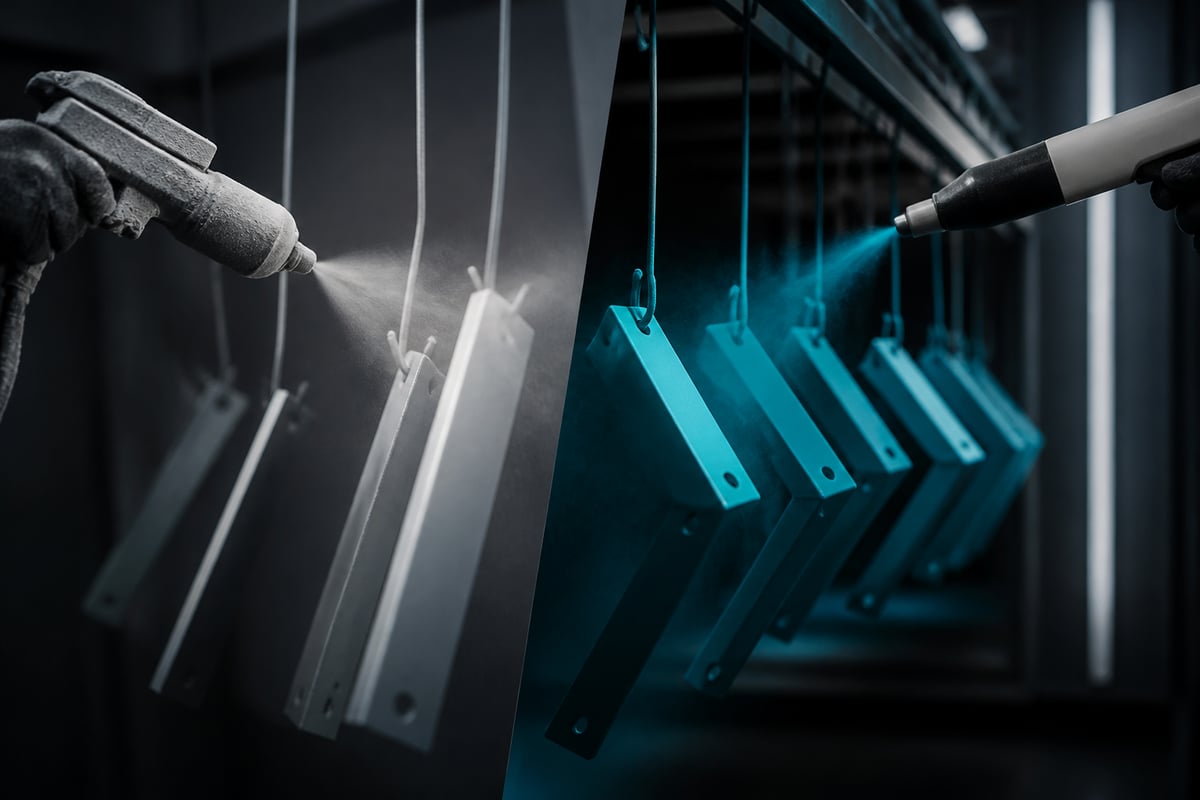
The electrostatic step explains why the process is efficient. A spray gun gives each powder particle a charge, and the grounded metal part attracts those particles. They cling to the surface before the oven, which lets the coating wrap around edges and cover a part evenly. Powder that does not stick can often be collected and reused, so material waste is lower than with many liquid systems.
The oven step does the real work. As the part heats, the powder melts, flows into a smooth film and chemically cross-links. Once it cools, the finish is fully cured and ready for handling, with no long air-dry period.
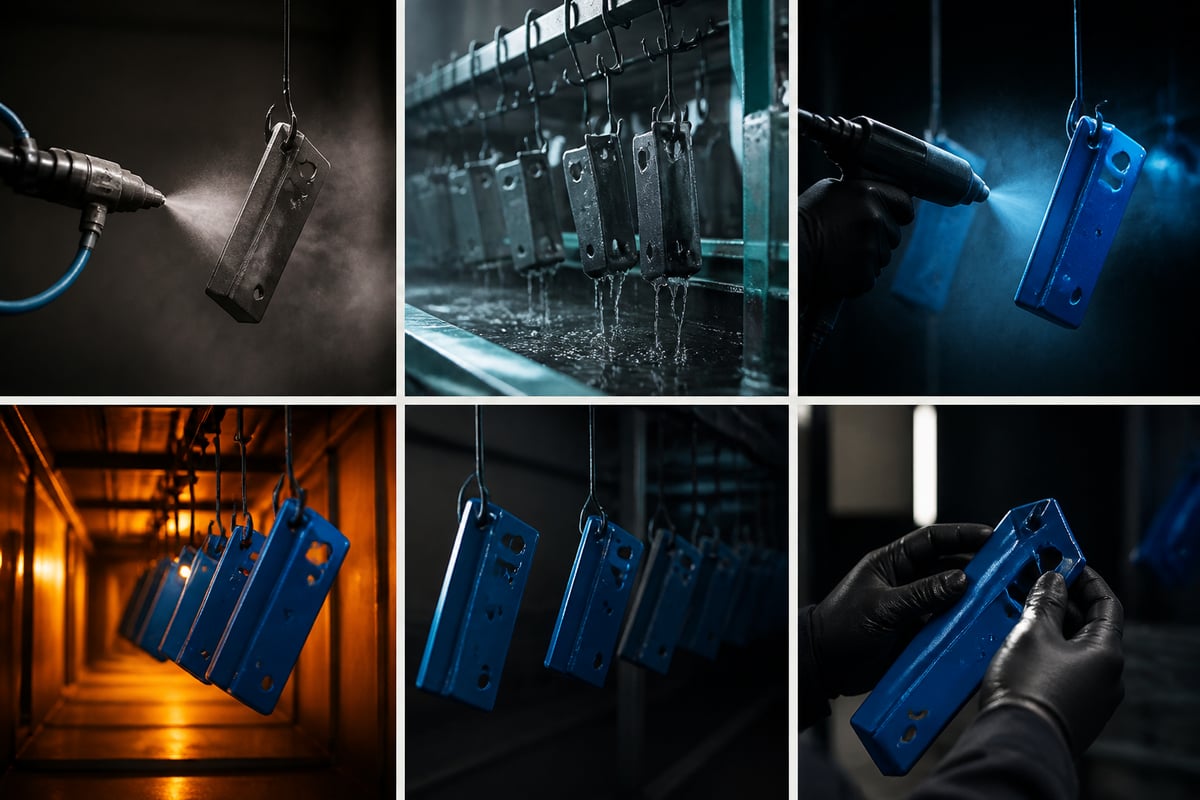
The Powder Coating Process Step by Step
The powder coating process follows a fixed sequence, and each step affects how long the finish lasts.
- Inspection and masking. The part is checked for weld spatter, sharp edges and porosity. Threads, bores, bearing seats and other precision surfaces are masked with plugs and high-temperature tape so they stay dimensionally correct.
- Surface preparation. Oil, scale, rust and old coatings are removed by chemical cleaning, abrasive blasting or both. Blasting also creates a surface profile that improves adhesion.
- Pretreatment. Depending on the metal and the service environment, a conversion coating may be applied to improve corrosion resistance and adhesion.
- Powder application. The operator or an automated system sprays charged powder onto the grounded part in a booth.
- Curing. The part goes into an oven and is held at the temperature the powder manufacturer specifies for a set time after the metal reaches temperature. Exact schedules depend on the powder chemistry and part mass.
- Cooling and inspection. The finish is checked for coverage, appearance and film thickness before the part is released.
Of these, preparation matters most. Many early coating failures trace back to contamination or poor profile, not to the powder itself. Shops that handle blasting and coating together can control that handoff, which is one reason surface prep before powder coating deserves as much attention as the coating selection.
Types of Powder Coating
The main types of powder are defined by their resin chemistry, and each suits a different service condition. The table below compares the four most common.
| Powder type | Typical strengths | Common uses |
|---|---|---|
| Epoxy | Excellent chemical resistance and adhesion; chalks under UV | Pipe, valves, interior equipment, primers |
| Polyester | Good UV and weather resistance; strong exterior color retention | Outdoor equipment, enclosures, structural steel |
| Epoxy-polyester hybrid | Balanced cost and performance; limited outdoor durability | Indoor frames, guards, shelving |
| Polyurethane | Tough, smooth, good chemical and abrasion resistance | Equipment housings, high-wear surfaces |
Some specialty powders add features such as high-temperature tolerance, zinc-rich primers for added corrosion protection, or textured and metallic effects. Matching the resin to the environment is the most reliable way to avoid premature fading, chalking or chemical attack.
Application Methods Used in Industry
Three application methods account for most industrial work, and the right one depends on part size, geometry and volume.
- Electrostatic spray. The standard method for fabricated parts, frames, panels and machined components. It handles a wide range of sizes and allows quick color changes.
- Fluidized bed dipping. A preheated part is dipped into a bed of aerated powder, which melts onto the surface and builds a thick film. It suits wire goods, rods and parts that need a heavy, uniform coat.
- Electrostatic fluidized bed. A hybrid in which charged powder is suspended in the bed, allowing thinner, more controlled films on flat or simple parts.
For heavy industrial parts, batch systems with manual spray guns remain common because they accommodate varied sizes. Higher-volume production tends to use conveyorized lines with automatic guns.
Film Thickness and Why It Matters
A typical powder coating film is thicker than a liquid paint film, and thickness control is a measurable quality factor. Too thin, and the part loses corrosion and abrasion protection. Too thick, and the finish can show orange peel, sagging at edges or reduced flexibility.
Measurement is standardized. ASTM D7378-16(2024) describes three procedures for measuring uncured powder thickness: notched comb gauges, magnetic or eddy-current gauges, and non-contact ultrasonic instruments. ASTM also notes that powder thickness generally decreases during curing, so some procedures apply a reduction factor to estimate the final cured thickness.
In practice, shops verify cured film with a magnetic gauge on steel and an eddy-current gauge on aluminum, then compare readings to the powder manufacturer's recommended range. Target film thickness varies by product and project, so always confirm the range on the powder data sheet or drawing.
What Metals Can Be Powder Coated?
Steel, aluminum and stainless steel are the most common substrates, and most other conductive metals can be coated if they withstand the cure temperature. Carbon steel is the workhorse for industrial equipment. Aluminum is frequently coated for enclosures and architectural parts, and galvanized steel can be coated with the right pretreatment to prevent outgassing defects.
Parts that cannot take oven heat, or assemblies containing rubber seals, plastics or bonded components, are poor candidates unless disassembled first. Cast metals and welded fabrications with trapped seams need extra care, because moisture and contaminants hidden in joints can bubble out during cure. A closer look at what metals can be powder coated helps when a project involves mixed materials.
Powder Coating vs. Liquid Paint
Powder coating generally gives a harder, thicker and more chip-resistant finish than liquid paint, while liquid paint offers more flexibility for very large or heat-sensitive assemblies. Powder cures in an oven, which limits the size of parts to what the oven can hold. Liquid systems can be applied in the field to structures that cannot be moved.
Environmental factors also differ. The U.S. EPA identifies powder coatings as an example of a low- or no-VOC/HAP coating, though compliance still depends on the applicable emissions requirements and documentation. That can simplify permitting compared with solvent-borne systems.
A side-by-side look at powder coating vs. paint can help when choosing between shop-applied and field-applied options for a specific asset.
How Long Does Powder Coating Last?
A properly prepared and cured powder coating can last many years indoors and often a decade or more outdoors, depending on the resin, film thickness and exposure. Durability drops with constant abrasion, chemical splash, extreme heat or heavy UV exposure on a poorly chosen resin.
For equipment in aggregate, recycling and oil and gas settings, abrasion, salt, chemicals and sun are all in play. Choosing a polyester or polyurethane powder over a basic epoxy for outdoor parts, and ensuring adequate film build on edges, extends service life. Our guide on how long powder coating lasts covers the factors that shorten or extend it.
How Much Does Powder Coating Cost?
Powder coating cost depends on part size, geometry, surface condition, powder type, masking needs and volume, so pricing is quoted per project rather than at a flat rate. The largest cost drivers are labor for prep and masking, and the amount of blasting needed to remove rust or old coatings.
Other factors that move the price:
- Part condition. Heavily rusted or previously painted parts need more prep time.
- Powder selection. Specialty chemistries, metallics and certain colors cost more than standard blacks and grays.
- Complexity. Parts with deep recesses, many threads or intricate masking take longer.
- Quantity. Larger batches spread setup cost across more pieces.
A tool such as a powder coating estimator can give a rough starting point before a formal quote.
Designing Parts for Powder Coating
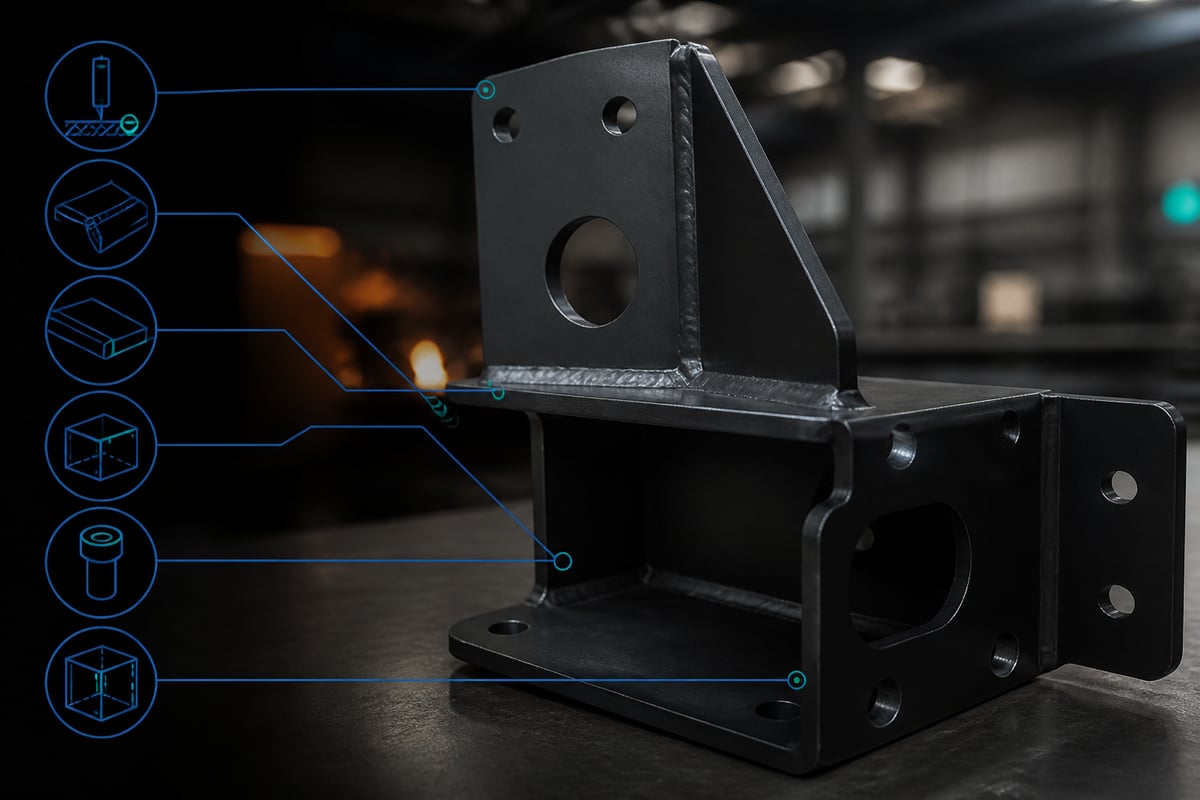
Designing parts with the finish in mind reduces rework and improves coating quality, and this is the area where fabricators have the most control. A few principles apply to nearly every project:
- Provide grounding points. Parts need a reliable electrical path during spraying, so plan an unfinished contact spot or hanger hole in a hidden location.
- Seal or continuously weld seams. Lap joints and skip welds trap cleaning chemicals and moisture, which can bleed out in the oven and ruin the finish.
- Break sharp edges. Powder pulls thin on sharp corners, so a small radius on edges improves coverage and edge durability.
- Avoid deep, narrow recesses. The electrostatic field has trouble reaching inside tight cavities, a limit known as the Faraday cage effect.
- Specify masking early. Identify threads, bores, bearing surfaces and mating faces on the drawing.
- Account for oven size and weight. Confirm that the largest assembly fits the oven and that hangers can carry its mass.
Coordinating welding, machining and finishing is easier under one roof. A shop that welds the frame, machines the precision surfaces and then masks and coats the finished assembly avoids handoff errors between vendors. That coordination is part of what industrial powder coating services are built to deliver.
Finishes, Colors and Gloss Options
Powder is available in a broad range of colors, gloss levels and textures, so appearance can be matched to function. Gloss ranges from flat to high gloss, with satin and semi-gloss in between. Textured finishes such as wrinkle, sand and hammer tone hide surface imperfections and weld marks, which makes them practical for equipment frames and guards.
Safety yellow, equipment orange and standard black are common in industrial settings for visibility and brand consistency. Metallic and specialty colors usually cost more, and some depend on special pigments. When asked about the priciest options, the answer is typically specialty effects such as candy, chrome-look and certain metallic or high-performance chemistries, because the raw materials and application controls cost more than standard colors.
Where Powder Coating Is Used in Industrial Settings
Powder coating protects a wide range of industrial assets exposed to abrasion, weather and chemicals. Typical applications include:
- Structural frames, skids and equipment bases for oil and gas operations
- Conveyor components, chutes and guards in aggregate and recycling plants
- Machined housings, brackets and fixtures
- Steel enclosures, racks and tool storage
- Ride components, railings and support structures at attractions and facilities
Equipment that sees constant handling or outdoor exposure benefits most, since a hard, bonded finish resists the chipping that exposes bare steel to corrosion.
Related Terms to Know
Several terms appear alongside powder coating in specifications and quotes:
- Pretreatment: chemical conversion coatings applied before powder to improve adhesion and corrosion resistance.
- Cure schedule: the time and temperature combination required to fully cross-link a powder.
- Mil: one thousandth of an inch, the standard unit for film thickness.
- Outgassing: gas released from porous metal or welds during curing, which can cause pinholes.
- Faraday cage effect: the tendency of powder to avoid deep corners and recesses.
- Sandblasting: abrasive surface preparation that removes rust and scale and creates adhesion profile.
- Wet paint or liquid coating: solvent- or water-borne finishes applied by spray, brush or roller.
FAQ
Can you paint over powder coated metal?
Yes, but the surface must be cleaned, scuffed to remove gloss, and primed with a product designed to bond to cured powder. Without that preparation, liquid paint tends to peel. For large industrial assets, recoating with new powder after stripping or blasting usually gives the longest-lasting result.
Is powder coating environmentally friendly?
Powder coating contains no liquid solvents, and the EPA lists powder coatings as an example of a low- or no-VOC/HAP coating. Overspray can often be reclaimed and reused, which reduces waste. Facilities still need to meet applicable emissions rules and keep proper documentation.
Can powder coating be repaired if it chips?
Small chips can be touched up with a compatible liquid touch-up product, though the match will not be identical. Larger damaged areas are best repaired by sanding or blasting back to a sound edge and recoating. A shop can advise whether spot repair or full recoating makes sense for the part.
Start by listing the parts you plan to finish, along with their material, size, service environment and any threads or precision surfaces that need masking. With that information, LTJ Industrial Services can advise on prep, coating selection and how finishing fits with welding and machining on the same project. Our welders are certified across multiple codes, including ASME, National Board, AWS D1.1 and API 1104, and we support customers in the shop and on site to minimize downtime. To get pricing and a recommended coating approach for your equipment, use the contact options on our site to Request a Quote from LTJ Industrial Services.