
Choosing the right finishing method for industrial metal components can significantly impact performance, longevity, and total cost of ownership. When comparing powder coating vs paint, manufacturers and fabricators must evaluate multiple factors including environmental conditions, application requirements, budget constraints, and regulatory compliance. Both finishing methods offer distinct advantages for protecting metal surfaces in demanding industrial environments across the oil and gas, aggregate, recycling, and manufacturing sectors. Understanding the technical differences, performance characteristics, and practical considerations helps businesses make informed decisions that align with operational goals and industry standards.
Understanding the Fundamental Differences
Powder coating and traditional liquid paint represent two distinct approaches to metal finishing, each utilizing different materials, application methods, and curing processes. These fundamental differences drive the performance characteristics and suitability for specific industrial applications.
Application Process and Materials
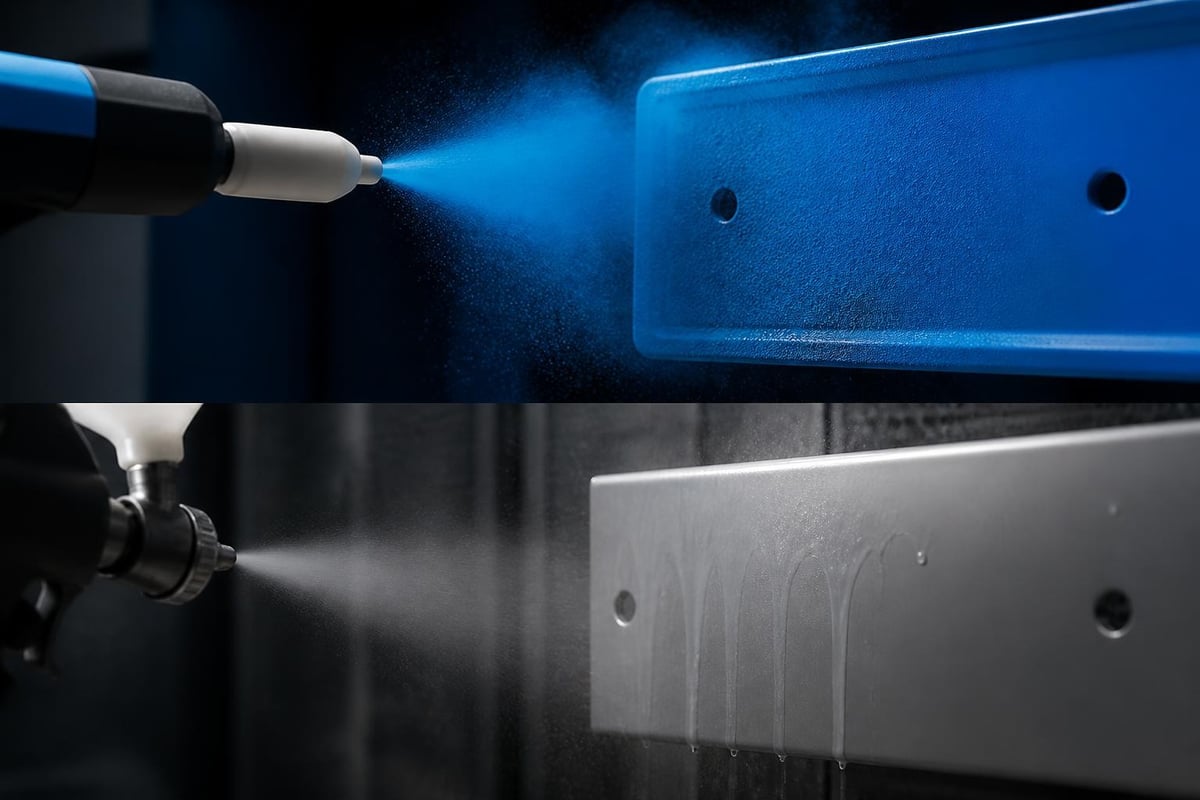
Powder coating applies dry thermoplastic or thermoset powder particles electrostatically to metal surfaces. The charged powder particles adhere to grounded metal substrates before entering a curing oven where heat causes the powder to melt, flow, and form a uniform coating. This process creates a chemical bond with the metal surface.
Traditional liquid paint consists of pigments suspended in a solvent-based or water-based carrier. Application occurs through spraying, brushing, or rolling, followed by air drying or low-temperature curing. The AMPP Protective Coatings Learning Center provides authoritative guidance on selecting between liquid and non-liquid coating types for corrosion protection.
Chemical Composition Comparison
| Property | Powder Coating | Liquid Paint |
|---|---|---|
| Primary Binder | Thermoplastic or thermoset resin | Alkyd, epoxy, polyurethane, acrylic |
| Solvent Content | Zero VOCs | 30-80% volatile organic compounds |
| Pigment Load | 30-50% by weight | 15-35% by weight |
| Curing Mechanism | Heat-induced cross-linking | Solvent evaporation or oxidation |
The composition differences directly influence environmental compliance, workplace safety, and final coating performance characteristics.
Performance and Durability Analysis
When evaluating powder coating vs paint durability, industrial applications demand coatings that withstand harsh environmental conditions, chemical exposure, mechanical stress, and temperature extremes. Performance metrics include adhesion strength, impact resistance, corrosion protection, and longevity.
Coating Thickness and Uniformity
Powder coating typically achieves uniform film thickness between 2-6 mils in a single application cycle. The electrostatic process naturally distributes material evenly across complex geometries, minimizing thin spots and holidays. Liquid paint often requires multiple coats to achieve comparable thickness, with greater variability in film build.
Key performance advantages of powder coating:
- Superior edge coverage without runs or sags
- Consistent film thickness across entire surface
- Reduced risk of coating defects
- Single-coat capability for most applications
Liquid paint excels in applications requiring extremely thin films (less than 1 mil) or specialized visual effects impossible with powder technology.
Corrosion Resistance and Environmental Protection
Industrial components in aggregate processing, oil and gas operations, and outdoor manufacturing environments face continuous exposure to moisture, chemicals, abrasion, and UV radiation. Powder coating provides superior corrosion protection due to its dense, uniform film structure and complete coverage.
Proper surface preparation before powder coating remains critical for maximizing corrosion resistance. Both finishing methods require thorough cleaning, degreasing, and often abrasive blasting to ensure optimal adhesion and long-term performance.
The EPA’s technical update on powder coating documents environmental and economic advantages, including significantly reduced volatile organic compound emissions compared to solvent-based liquid coatings.
Impact and Abrasion Resistance
| Test Parameter | Powder Coating | Liquid Paint |
|---|---|---|
| Impact Resistance | 80-160 in-lbs | 40-80 in-lbs |
| Pencil Hardness | 2H-4H | H-2H |
| Abrasion (Taber) | 15-30 mg loss | 30-60 mg loss |
| Flexibility (Conical Mandrel) | Pass at 1/8" | Pass at 1/4" |
These mechanical properties make powder coating particularly suitable for components subjected to handling damage, vibration, and contact with abrasive materials common in industrial manufacturing and field applications.
Cost Analysis and Economic Considerations
Total cost comparison between powder coating vs paint extends beyond material prices to include application equipment, labor efficiency, waste disposal, energy consumption, and lifecycle costs. Industrial decision-makers must evaluate both initial investment and long-term operational expenses.
Initial Material and Equipment Costs
Powder coating systems require higher capital investment for electrostatic spray equipment, curing ovens, and powder recovery systems. Entry-level industrial powder coating operations typically invest $50,000-150,000 for functional systems capable of production volumes.
Liquid paint application requires less specialized equipment, with basic spray systems available for $5,000-25,000. However, ventilation, environmental controls, and VOC compliance equipment increase total investment.
Material cost comparison per square foot:
- Powder coating: $0.15-0.40
- Liquid paint (single coat): $0.12-0.30
- Liquid paint (multi-coat system): $0.35-0.85

Labor Efficiency and Application Speed
Powder coating systems achieve higher transfer efficiency (60-95%) compared to liquid paint (40-65%), reducing material waste and application time. The single-coat capability eliminates drying time between coats, accelerating production throughput.
Industrial powder coating services can process multiple parts simultaneously, maximizing oven capacity and reducing per-unit finishing costs for batch production.
Maintenance and Refinishing Requirements
Understanding how long powder coating lasts in industrial applications helps evaluate true lifecycle economics. Properly applied powder coatings routinely provide 15-20 years of service in moderate environments, compared to 5-10 years for conventional liquid paint systems.
Reduced maintenance frequency translates to lower long-term costs despite higher initial investment. Critical infrastructure components in oil and gas operations benefit from extended service intervals that minimize production downtime.
Environmental Impact and Regulatory Compliance
Environmental regulations increasingly influence coating selection decisions across industrial sectors. The powder coating vs paint debate often centers on VOC emissions, hazardous waste generation, and workplace safety considerations.
Volatile Organic Compound Emissions
Powder coating generates virtually zero VOC emissions during application and curing, eliminating permitting requirements, air monitoring, and emission control equipment mandatory for solvent-based liquid coatings. This advantage significantly reduces regulatory compliance burden and operational complexity.
Water-based liquid paints reduce but don't eliminate VOC emissions, while high-solids formulations still contain 20-40% volatile content. Regional air quality regulations in Western states increasingly favor low-emission finishing technologies.
Waste Stream Management
Powder coating waste characteristics:
- Overspray collected and recycled (90-95% recovery)
- Minimal hazardous waste generation
- No solvent contamination
- Recyclable packaging materials
Liquid paint waste streams:
- Contaminated spray booth filters
- Solvent-laden cleaning materials
- Unusable mixed paint
- Regulated hazardous waste disposal required
Organizations serving recycling and aggregate industries find powder coating aligns with corporate sustainability initiatives and waste reduction goals.
Worker Safety and Exposure Control
Powder coating eliminates worker exposure to harmful solvents, reducing respiratory hazards, fire risk, and long-term health concerns. Proper dust collection and ventilation controls powder particulate exposure to safe levels.
Liquid paint operations require comprehensive respiratory protection, explosion-proof electrical systems, and extensive training on hazardous material handling. Insurance, training costs, and liability exposure increase operational expenses.
Application Suitability and Limitations
While powder coating offers numerous advantages, certain applications still require liquid paint due to technical limitations or specific performance requirements. Understanding these boundaries helps optimize coating selection for industrial fabrication projects.
Substrate and Size Constraints
Powder coating requires electrically conductive substrates capable of withstanding 350-450°F curing temperatures. This limits application to metals and excludes plastics, composites, and heat-sensitive assemblies. Very large structures exceeding oven capacity require field-applied liquid coatings.
Industrial painting services remain essential for on-site application to erected structures, existing equipment, and components incompatible with powder coating processes.
Color Matching and Specialty Finishes
Liquid paint systems offer broader color selection, custom color matching, and specialty effects including metallics, candies, and textures difficult to achieve with powder technology. Small-batch custom colors prove more economical with liquid paint due to powder formulation minimums.
Multi-color applications and intricate masking requirements often favor liquid paint's ability to apply precise patterns without cross-contamination concerns inherent in powder reclaim systems.
Film Thickness Requirements
Applications requiring extremely thin films (less than 1 mil) or very thick single-coat applications (greater than 10 mils) may exceed powder coating's optimal range. Specialized high-build liquid coatings achieve film thickness impossible with conventional powder formulations.
Integration with Metal Fabrication Workflows
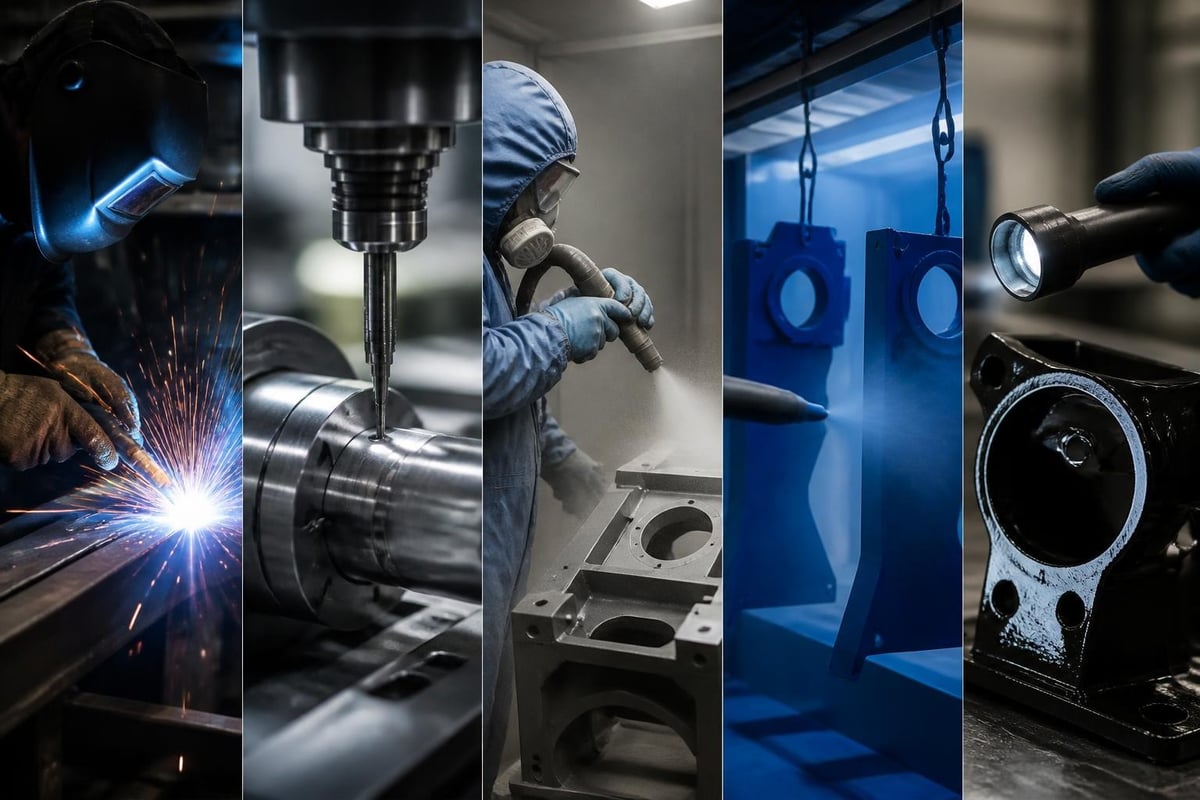
Successful finishing integration requires coordination between custom metal fabrication processes, surface preparation, and coating application. Understanding workflow implications helps optimize production efficiency and quality outcomes.
Surface Preparation Requirements
Both powder coating and paint demand thorough surface preparation for optimal adhesion and performance. Industrial sandblasting removes mill scale, rust, and contamination while creating surface profile that mechanically anchors coating systems.
Standard surface preparation sequence:
- Degreasing and solvent cleaning
- Abrasive blasting to specified profile
- Dust removal and final cleaning
- Coating application within specified timeframe
- Quality inspection and touch-up
Powder coating's electrostatic application proves less forgiving of surface contamination, demanding stricter cleanliness standards than some liquid paint systems.
Design Considerations for Optimal Coating
Component design significantly influences coating quality and efficiency. Sharp edges, deep recesses, blind holes, and complex geometries challenge both finishing methods but affect each differently.
Design guidelines for powder coating success:
- Avoid sharp external edges (use minimum 1/32" radius)
- Provide drainage holes for internal cavities
- Design for uniform part grounding
- Consider racking and oven orientation
- Minimize blind recesses and pockets
Collaboration between designers, fabricators, and finishing specialists during the project planning phase prevents costly rework and quality issues.
Industry-Specific Applications and Recommendations
Different industrial sectors prioritize coating characteristics based on operational demands, environmental exposure, and performance expectations. Understanding industry-specific requirements guides optimal finishing method selection.
Oil and Gas Sector Requirements
Components serving oil and gas operations face extreme conditions including hydrocarbon exposure, temperature cycling, abrasion, and corrosive environments. Powder coating's superior chemical resistance and durability make it preferred for wellhead equipment, pipeline components, and production infrastructure.
Field-installed equipment and large structural elements still require liquid coating systems applied on-site by qualified applicators following strict quality standards.
Aggregate and Recycling Equipment
Crushing, screening, and material handling equipment endures continuous abrasion, impact, and exposure to diverse materials. Powder coating's exceptional impact resistance and abrasion properties extend equipment life while reducing maintenance frequency.
Critical wear components may combine powder coating with specialized wear-resistant topcoats or hardfacing to maximize service life in the most demanding applications.
Manufacturing and Processing Equipment
Production machinery, conveyor systems, and processing equipment benefit from powder coating's durability, chemical resistance, and ease of cleaning. The uniform, smooth finish resists material buildup and simplifies sanitation in food-grade and pharmaceutical applications.
Custom color coding using powder coating helps identify equipment functions, hazard zones, and maintenance requirements within complex manufacturing facilities.
Quality Control and Testing Standards
Coating system performance depends on rigorous quality control throughout application and curing processes. Industry standards provide objective criteria for evaluating powder coating vs paint quality and long-term durability.
Inspection and Testing Protocols
Comprehensive quality programs include both process monitoring and finished coating evaluation. Industry standards from organizations like BSI/ISO establish testing vocabulary and methods for coating powders that ensure consistent quality across suppliers and applications.
Critical quality control measurements:
- Film thickness verification using magnetic or eddy current gauges
- Adhesion testing via cross-hatch or pull-off methods
- Impact resistance evaluation
- Salt spray testing for corrosion protection
- Gloss and color measurement
- Surface contamination detection
Third-party certification provides independent verification that coating systems meet specified performance requirements for critical applications.
Common Defects and Prevention
Understanding potential coating defects enables proactive prevention through proper technique and process control. Powder coating and liquid paint exhibit different characteristic defects requiring specific preventive measures.
| Defect Type | Powder Coating | Liquid Paint |
|---|---|---|
| Coverage Issues | Faraday cage effect | Runs and sags |
| Appearance | Orange peel, pinholes | Brush marks, fisheyes |
| Adhesion | Poor substrate prep | Inadequate surface profile |
| Cure-Related | Under/over-bake | Improper flash time |
Continuous operator training, equipment maintenance, and process documentation minimize defect rates and ensure consistent quality outcomes.
Making the Right Choice for Your Application
Selecting between powder coating vs paint requires evaluating project-specific requirements against each method's strengths and limitations. A systematic decision framework ensures optimal results for industrial fabrication projects.
Decision Criteria Checklist
Consider powder coating when:
- Parts fit within available oven dimensions
- Substrate withstands 350-450°F curing temperatures
- Maximum durability and corrosion protection are priorities
- Environmental compliance and VOC reduction are important
- Production volume justifies equipment investment
- Substrate is electrically conductive metal
Choose liquid paint when:
- Field application to existing structures is required
- Heat-sensitive materials or assemblies are involved
- Component size exceeds powder coating capability
- Specialty visual effects are specified
- Very thin or thick film requirements exist
- Small batch custom color matching is needed
Recent industry analysis in Paint & Coatings Industry magazine examines market trends and application considerations driving powder coating adoption across industrial sectors.
Hybrid Approaches and System Selection
Some applications benefit from combining both technologies in multi-coat systems or applying different methods to various components within an assembly. Powder coating primers under liquid topcoats combine superior corrosion protection with specialized visual properties.
Consulting with experienced finishing professionals helps identify optimal solutions that balance performance requirements, budget constraints, and operational capabilities. Comprehensive industrial services providers can evaluate fabrication projects holistically and recommend appropriate finishing strategies.
Choosing between powder coating vs paint significantly impacts equipment performance, lifecycle costs, and environmental compliance in industrial manufacturing applications. Understanding the technical differences, performance characteristics, and application requirements enables informed decisions that optimize durability, efficiency, and value. Whether you need powder coating for superior corrosion protection or liquid paint for specialized applications, proper finishing protects your investment and extends equipment service life. For expert guidance on finishing your custom fabrication projects, contact LTJ Industrial Services to discuss how our comprehensive welding, machining, and coating capabilities can meet your specific industrial requirements.