The industrial landscape continues to evolve rapidly, and the role of a metal manufacturing company has become increasingly critical to supporting commercial operations across diverse sectors. From oil and gas infrastructure to recycling facilities and aggregate production, metal fabrication services form the backbone of modern industrial capabilities. Understanding what distinguishes exceptional metal manufacturing operations from standard providers helps businesses make informed decisions about their fabrication, welding, and machining partners.
Core Capabilities of a Modern Metal Manufacturing Company
A comprehensive metal manufacturing company delivers far more than basic fabrication services. Today's industrial clients require partners who can handle complex projects from initial design through final installation, often across multiple locations and under demanding timelines.
Essential Service Offerings
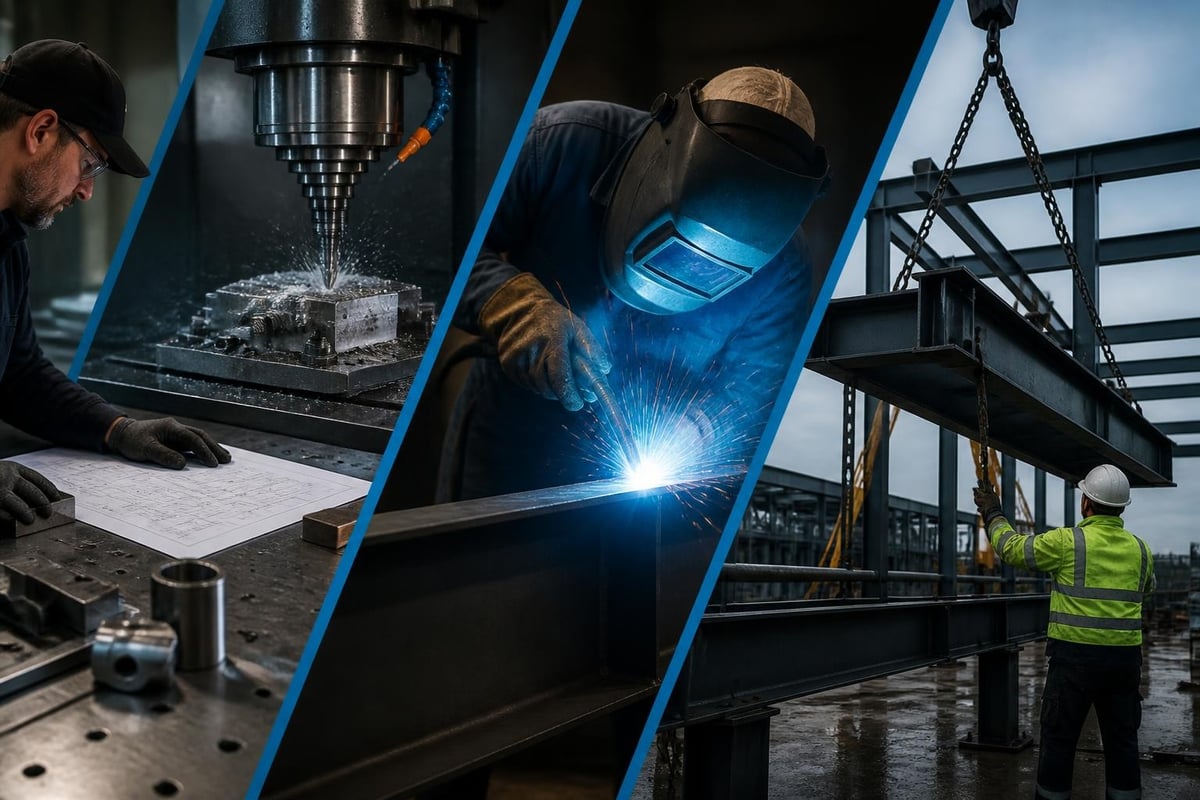
The foundation of any reputable metal fabrication and welding operation includes several critical capabilities:
- Custom metal fabrication for unique project specifications
- Precision machining services for tight tolerance work
- Certified welding across multiple processes and materials
- Hydraulic system design, installation, and repair
- Field services for on-site installations and emergency repairs
These capabilities must work seamlessly together. When a metal manufacturing company integrates these services effectively, clients benefit from streamlined project management, consistent quality standards, and reduced coordination complexity.
Specialized Processes That Define Quality
Modern manufacturing processes for metal have advanced significantly in recent years. Beyond traditional cutting and welding, today's operations incorporate sophisticated techniques that enable greater precision and durability.
| Process Type | Primary Applications | Key Benefits |
|---|---|---|
| CNC Machining | Custom parts, precision components | Tight tolerances, repeatability |
| TIG Welding | Critical joints, exotic metals | Superior quality, clean welds |
| Water Jetting | Cutting without heat distortion | No material hardening, versatility |
| Hydraulic Fabrication | Cylinders, systems, repairs | Custom solutions, rapid turnaround |
The choice of processes depends heavily on project requirements, material specifications, and operating environments. A metal manufacturing company serving industrial sectors must maintain expertise across multiple methodologies to address diverse client needs.
Industry Sectors Driving Demand
Different industries place unique demands on their metal fabrication partners. Understanding these sector-specific requirements helps companies position themselves as specialized solutions providers rather than generic vendors.
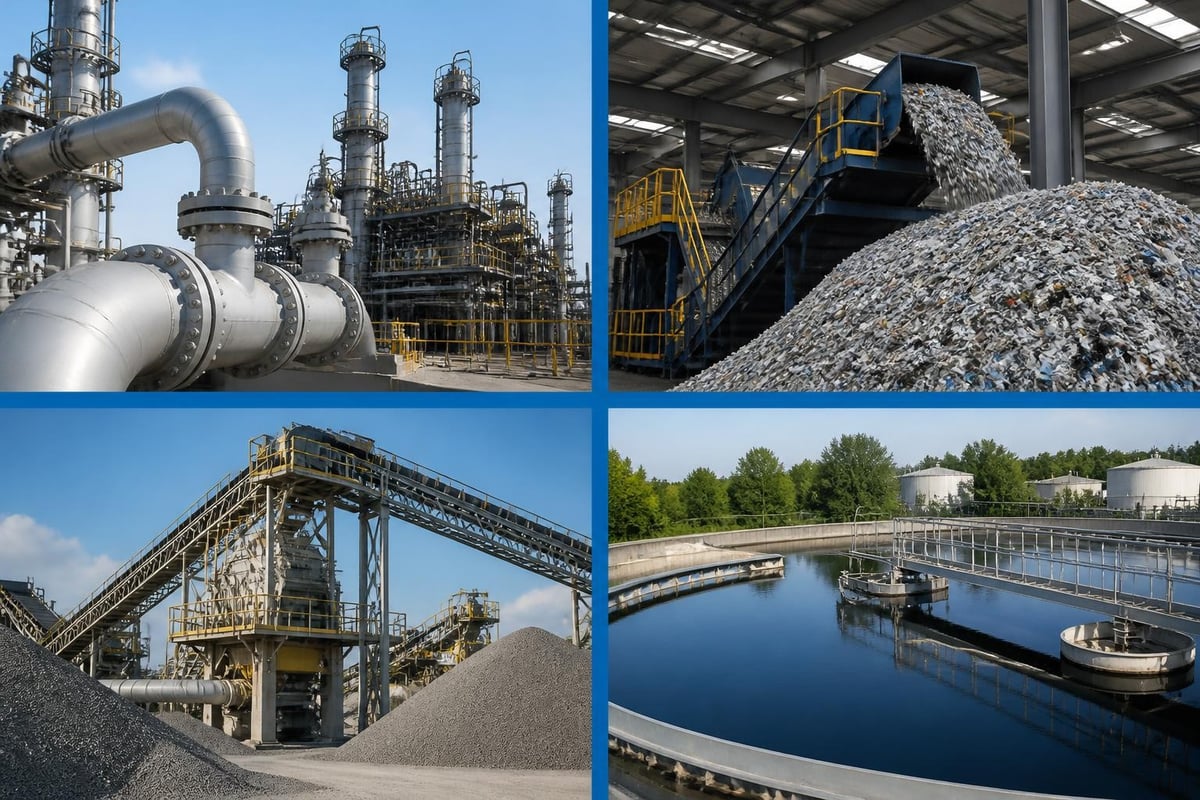
Oil and Gas Infrastructure
The energy sector remains a significant driver of metal fabrication demand across the Western United States. Oil and gas pipeline fabrication contractors must navigate strict regulatory requirements, challenging field conditions, and zero-tolerance safety standards.
Projects in this sector often require:
- Pressure vessel fabrication and repair for processing equipment
- Pipeline support structures built to specification
- On-site welding services for remote installations
- Emergency repair capabilities to minimize downtime
- Compliance documentation for regulatory audits
The complexity of energy infrastructure projects means clients seek partners with proven track records in these demanding applications.
Recycling and Aggregate Operations
Recycling facilities and aggregate production sites operate some of the most demanding equipment in industrial settings. Constant wear from abrasive materials, high-impact operations, and continuous production schedules create ongoing needs for fabrication and repair services.
A metal manufacturing company serving these sectors must excel at:
- Wear-resistant fabrication using appropriate materials and design
- Rapid turnaround repairs to minimize production interruptions
- Custom conveyor and screening systems tailored to specific materials
- Structural reinforcement for high-stress applications
These operations can't afford extended downtime, making responsiveness and reliability critical selection criteria for fabrication partners.
Commercial and Industrial Manufacturing
Broader manufacturing sectors require versatile custom metal fabrication capabilities that adapt to changing production needs. Whether supporting existing equipment or developing new production systems, manufacturers need partners who understand their operational realities.
Water treatment facilities represent another specialized niche where water treatment plant metal fabrication services must account for corrosive environments and strict quality standards.
Market Dynamics Shaping the Industry
The metals manufacturing landscape continues to experience significant shifts driven by economic factors, supply chain dynamics, and evolving customer expectations.
Current Market Conditions
According to KPMG’s Q4 2025 Metals Industry Update, manufacturing indicators and financial conditions continue to influence the sector significantly. Understanding these macroeconomic factors helps metal manufacturing companies make strategic decisions about capacity, pricing, and service expansion.
Recent analyses show interesting disconnects in the market. The Q1 2026 metals manufacturing industry report highlights how improving demand hasn't necessarily translated to improved profitability across all segments, creating strategic challenges for both manufacturers and their clients.
Several factors contribute to this complex environment:
- Material cost volatility affecting project budgeting
- Labor availability challenges in skilled trades
- Supply chain disruptions for specialty materials
- Increasing quality expectations from end users
- Regulatory compliance costs across multiple jurisdictions
Strategic Responses to Market Pressures
Forward-thinking metal fabrication operations are adapting through several strategies. Strategic M&A trends in U.S. metal fabrication reflect how companies are positioning themselves for infrastructure growth and defense sector opportunities.
| Strategy | Implementation Approach | Expected Benefits |
|---|---|---|
| Service Diversification | Add complementary capabilities | Broader client base, revenue stability |
| Geographic Expansion | Field service capabilities | Reduced client transportation costs |
| Technology Investment | Advanced equipment, software | Improved efficiency, quality |
| Workforce Development | Training programs, certifications | Enhanced capabilities, retention |
These strategic investments position a metal manufacturing company to weather market fluctuations while delivering consistent value to clients.
Quality Standards and Certifications
In industrial applications, quality isn't negotiable. The consequences of fabrication failures range from production delays to catastrophic safety incidents, making certification and quality control fundamental to operations.
Critical Quality Systems
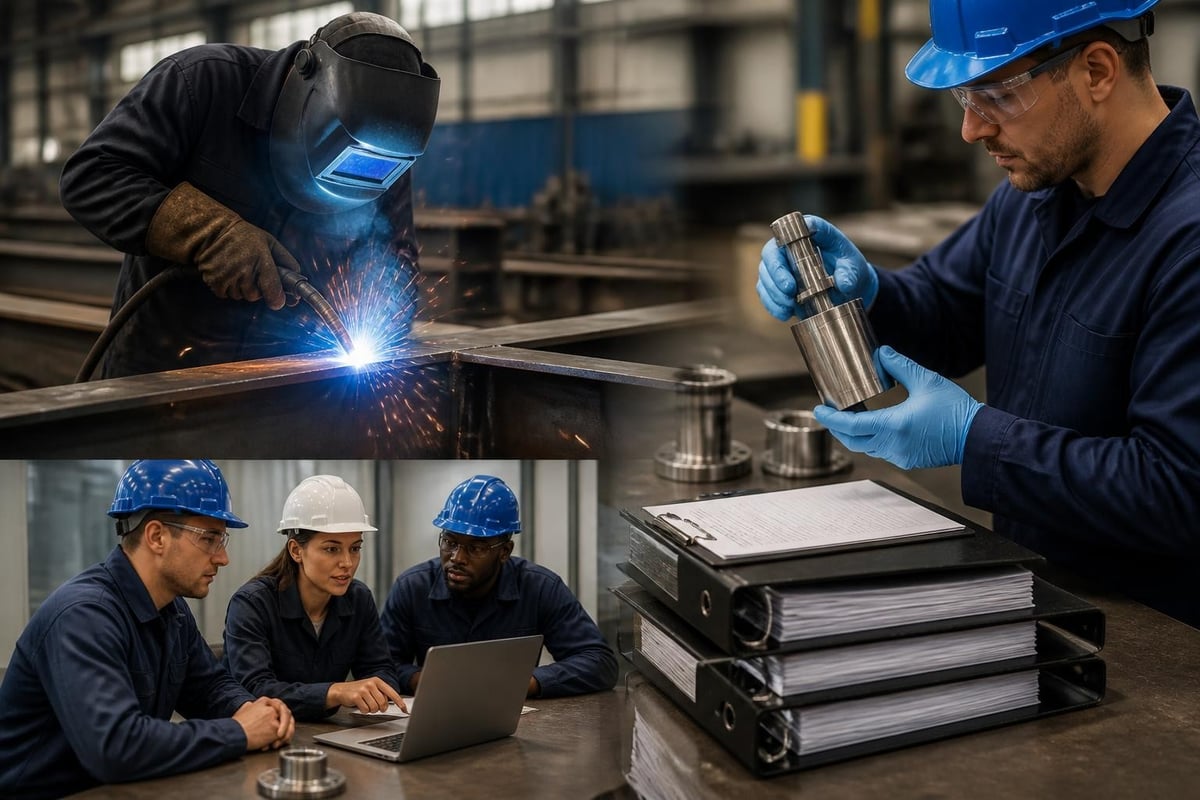
Professional industrial welding companies maintain rigorous quality management systems that ensure consistent results across all projects. These systems typically include:
- Welder certification programs maintaining current qualifications
- Inspection protocols for materials, processes, and finished work
- Documentation systems providing full traceability
- Non-destructive testing for critical applications
- Continuous improvement processes based on performance data
The investment in quality systems pays dividends through reduced rework, enhanced client confidence, and access to projects with stringent requirements.
Industry-Specific Standards
Different sectors impose unique certification requirements. A metal manufacturing company serving multiple industries must navigate various standards frameworks simultaneously.
For oil and gas work, API standards govern many fabrication requirements. Manufacturing sectors may require ISO certifications. Government projects often mandate additional compliance layers.
Maintaining multiple certifications requires organizational commitment, but this capability differentiates professional operations from basic fabrication shops.
Field Services and Mobile Capabilities
The ability to deliver services beyond shop environments dramatically expands a metal manufacturing company's value proposition. Many industrial clients face situations where bringing equipment to a shop proves impractical or impossible.
Advantages of Field Service Capabilities
Field mechanic services address urgent needs directly at client sites, minimizing production interruptions and transportation costs. This capability becomes particularly valuable for:
- Emergency repairs requiring immediate response
- Large assemblies impractical to transport
- Remote locations where shop access is limited
- Installation services for fabricated components
- On-site modifications to accommodate field conditions
The logistical complexity of field services requires specialized equipment, experienced personnel, and robust safety programs. Not all metal fabrication companies invest in these capabilities, creating opportunities for those that do.
Equipment and Resource Requirements
Supporting comprehensive field services demands significant infrastructure investment. Mobile welding equipment, transport vehicles, specialty tools, and safety systems all represent substantial capital commitments.
However, these investments enable service delivery that competitors without field capabilities cannot match. When a recycling facility experiences equipment failure during peak season, the ability to dispatch qualified technicians with appropriate equipment within hours creates immense value.
Technology Integration and Modern Capabilities
The metal manufacturing landscape has been transformed by technological advancement. While traditional skills remain fundamental, modern shops integrate sophisticated tools that enhance precision, efficiency, and capabilities.
CNC Machining and Automation
Computer-controlled machining has revolutionized precision metal work. Custom machine services now achieve tolerances previously impossible through manual methods, opening new application possibilities.
Benefits of modern machining capabilities include:
- Repeatability across production runs
- Complex geometries difficult with conventional tools
- Reduced setup times for multi-part projects
- Digital documentation for future reproductions
- Material optimization minimizing waste
These capabilities complement traditional fabrication skills, creating hybrid operations that leverage both technological precision and craftsman expertise.
Water Jetting Applications
High-pressure water jetting technology has emerged as a versatile tool for metal manufacturing applications. This cold-cutting process avoids heat-affected zones that can compromise material properties, particularly valuable when working with hardened steels or exotic alloys.
Water jetting excels in applications requiring intricate patterns, minimal material distortion, or cuts through particularly thick materials. The absence of heat also eliminates concerns about material property changes near cut edges.
Building Strategic Client Relationships
Success in metal manufacturing extends beyond technical capabilities. The most valued partners understand client operations, anticipate needs, and contribute to operational success rather than simply fulfilling orders.
Consultative Approach to Client Engagement
Rather than waiting for detailed specifications, proactive metal fabrication companies engage early in project planning. This consultative approach often yields better outcomes through:
- Design optimization for manufacturability and cost
- Material selection guidance based on application requirements
- Alternative solutions when standard approaches prove problematic
- Timeline coordination aligned with client production schedules
- Value engineering to reduce costs without compromising quality
This partnership mentality transforms vendor relationships into strategic collaborations where both parties invest in successful outcomes.
Communication and Project Management
Clear communication throughout project lifecycles prevents misunderstandings, manages expectations, and builds confidence. A metal manufacturing company should maintain transparent processes for:
| Communication Element | Best Practices |
|---|---|
| Initial Consultations | Detailed requirement gathering, site assessments |
| Project Planning | Timeline development, material procurement updates |
| Production Updates | Progress reports, quality checkpoints |
| Delivery Coordination | Scheduling alignment, logistics planning |
| Post-Completion | Documentation delivery, feedback collection |
These structured communication practices demonstrate professionalism while ensuring all stakeholders remain informed throughout project execution.
Safety Culture and Regulatory Compliance
Industrial metal fabrication involves inherent risks that demand unwavering commitment to safety. Beyond moral obligations to protect workers, safety performance directly impacts client confidence, insurance costs, and regulatory standing.
Comprehensive Safety Programs
Leading metal manufacturing operations maintain safety cultures where protective practices are ingrained in daily operations rather than treated as compliance exercises. Effective programs typically include:
- Regular safety training for all personnel
- Equipment maintenance schedules ensuring reliable operation
- Hazard identification protocols for new projects
- Incident investigation processes promoting continuous improvement
- Personal protective equipment standards appropriate to tasks
Clients increasingly scrutinize contractor safety records before awarding projects, particularly in sectors like oil and gas where safety performance carries significant weight.
Environmental Compliance
Beyond worker safety, environmental regulations govern many aspects of metal fabrication operations. Proper handling of cutting fluids, welding fumes, waste materials, and surface treatments requires established procedures and documentation.
A metal manufacturing company operating across multiple states must navigate varying regulatory frameworks while maintaining consistent standards. This complexity requires dedicated compliance resources and ongoing training.
Specialized Coating and Finishing Services
Fabrication quality extends beyond dimensional accuracy and weld integrity. Surface preparation and protective coatings dramatically impact long-term performance, particularly in corrosive or abrasive environments.
Protective Coating Systems
Industrial equipment painting and coating services provide critical protection against environmental degradation. Different applications demand specific coating systems:
- Epoxy coatings for chemical resistance
- Zinc-rich primers for corrosion protection
- High-temperature coatings for heat-exposed equipment
- Abrasion-resistant systems for wear environments
- UV-stable topcoats for outdoor applications
Proper surface preparation proves as critical as coating selection. Inadequate cleaning or profiling compromises coating adhesion regardless of material quality, leading to premature failures.
Integration with Fabrication Processes
Efficient operations integrate coating services within fabrication workflows, ensuring components receive appropriate protection before installation. This integration requires coordination between fabrication schedules and coating cure times.
Some projects demand field-applied coatings after installation, requiring mobile coating capabilities similar to field welding services. This versatility enables comprehensive project support from initial fabrication through final finishing.
The evolving demands of industrial sectors require metal manufacturing companies to deliver comprehensive capabilities, consistent quality, and responsive service across diverse applications. From precision machining to field welding, from custom fabrication to protective coatings, successful operations integrate multiple disciplines within quality-focused frameworks. Whether your operation needs emergency repairs, custom fabrication projects, or ongoing maintenance support across the Western United States, LTJ Industrial Services brings decades of experience serving the oil and gas, recycling, aggregate, and manufacturing sectors with shop and field capabilities designed to keep your operations running efficiently.