Metal cutting shops serve as the backbone of modern industrial manufacturing, providing essential fabrication, machining, and welding services that keep commercial operations running smoothly. From the oil and gas fields of the Western United States to aggregate processing facilities and recycling operations, these specialized facilities combine advanced cutting technologies with skilled craftsmanship to deliver precise metalwork solutions. Whether fabricating custom components, performing maintenance repairs, or executing complex machining projects, metal cutting shops play a critical role in helping businesses maintain productivity and achieve their operational objectives.
Understanding Metal Cutting Shop Capabilities
Modern metal cutting shops offer a comprehensive range of services that extend far beyond basic cutting operations. These facilities integrate multiple technologies and skilled trades to provide complete solutions for industrial clients.
Core Services and Processes
Metal cutting shops typically provide several fundamental services that form the foundation of their operations:
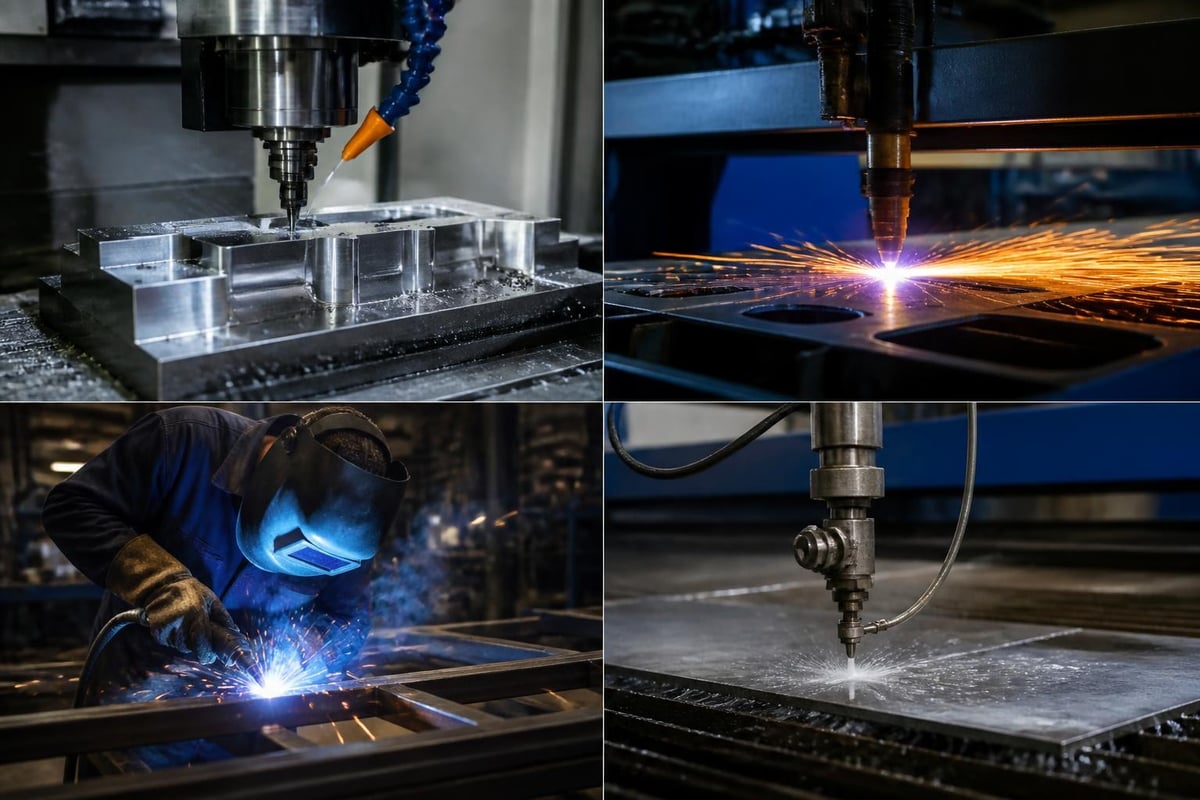
- Precision machining using CNC equipment, lathes, and mills for tight-tolerance work
- Plasma and laser cutting for sheet metal fabrication and complex geometries
- Welding and fabrication services including MIG, TIG, and stick welding processes
- Water jetting for materials sensitive to heat or requiring intricate cuts
- Custom metalwork designed to client specifications and engineering drawings
The integration of these capabilities allows metal fabrication industries to tackle diverse projects ranging from small component repairs to large-scale structural assemblies. Many shops maintain both stationary equipment and mobile capabilities to serve clients in the field when necessary.
Specialized Equipment and Technology
The equipment portfolio within metal cutting shops continues to evolve with technological advancements. According to emerging trends in plasma cutting for 2025, high-power systems are delivering unprecedented efficiency and precision in metal fabrication operations.
| Equipment Type | Primary Function | Typical Materials |
|---|---|---|
| CNC Plasma Tables | High-speed cutting of sheet metal | Steel, aluminum, stainless steel |
| Water Jet Systems | Precision cutting without heat | All metals, composites, stone |
| Vertical Mills | Surface finishing and detailed work | Hardened steel, aluminum, brass |
| Horizontal Lathes | Cylindrical components and threading | All machinable metals |
| Hydraulic Press Brakes | Bending and forming operations | Sheet metal up to 1/2" thick |
The selection and maintenance of this equipment requires significant capital investment and technical expertise. Shops that maintain cutting-edge technology can offer faster turnaround times and superior precision compared to facilities operating older equipment.
Safety Standards and Compliance Requirements
Metal cutting shops operate in an environment with inherent hazards that require strict adherence to safety protocols and regulatory standards. Establishing and maintaining a comprehensive safety program protects workers while ensuring compliance with federal and state regulations.
OSHA Standards and Regulations
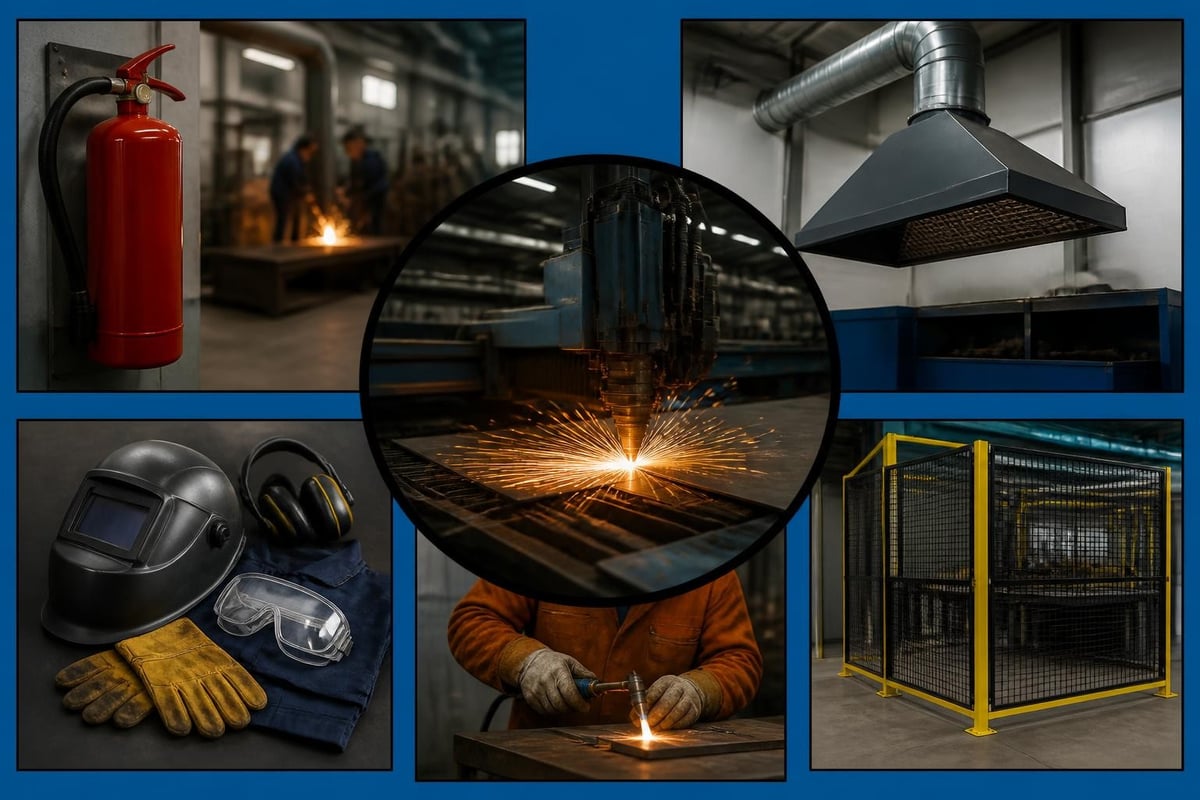
The Occupational Safety and Health Administration sets forth detailed requirements for metalworking operations. The 29 CFR 1910.252 welding, cutting, and brazing requirements establish mandatory fire prevention measures, ventilation standards, and personal protective equipment protocols that all metal cutting shops must follow.
Essential compliance areas include:
- Fire prevention and suppression systems installation
- Proper ventilation to control fumes and airborne particulates
- Hot work permit procedures for cutting and welding operations
- Electrical safety protocols for powered equipment
- Machine guarding requirements for rotating and cutting equipment
- Hazard communication programs for chemical exposures
Implementing safety practices for operating precision metal cutting machines requires ongoing training, regular equipment inspections, and a culture of safety awareness throughout the organization.
Personal Protective Equipment and Training
Every employee in metal cutting shops must have access to appropriate PPE and understand its proper use. The specific equipment required varies based on the tasks performed and materials processed.
Mandatory PPE typically includes:
- Eye protection: Safety glasses with side shields, face shields for grinding operations
- Respiratory protection: Dust masks, respirators for welding fumes and chemical exposures
- Hand protection: Cut-resistant gloves, welding gloves, heat-resistant options
- Body protection: Flame-resistant clothing, leather aprons, steel-toed boots
- Hearing protection: Earplugs or earmuffs in high-noise areas
Training programs should address both the proper use of PPE and the specific hazards associated with different machines and processes. Cornell’s tool and machine safety guidelines provide an excellent framework for developing comprehensive safety training programs.
Industry Applications and Market Sectors
Metal cutting shops serve diverse industrial sectors, each with unique requirements and specifications. Understanding these markets helps facilities position their services effectively and develop specialized expertise.
Oil and Gas Industry Support
The oil and gas sector requires precision metalwork for drilling operations, pipeline infrastructure, and processing facilities. Metal cutting shops supporting this industry must maintain certifications for pressure vessel work and understand material specifications for high-stress applications.
Projects in this sector frequently include fabricating wellhead components, repairing hydraulic systems, and manufacturing custom brackets and mounting hardware for field installations. The ability to provide both shop-based fabrication and field welding services adds significant value for oil and gas operators.
Aggregate and Mining Operations
Aggregate processing facilities and mining operations generate constant demand for metalwork services. The abrasive nature of these industries creates ongoing needs for equipment repair, wear component replacement, and structural reinforcement.
Common projects include:
- Conveyor system components and chute liners
- Screen deck frames and support structures
- Crusher wear parts and hammers
- Loader bucket repairs and hardface welding
- Custom fabrication for material handling equipment
Metal cutting shops serving these clients must work with abrasion-resistant materials and understand the demanding conditions under which their fabrications will operate.
Recycling and Processing Facilities
The recycling industry presents unique challenges that require specialized knowledge and capabilities. Equipment in these facilities processes diverse materials under harsh conditions, leading to frequent repairs and modifications.
| Application | Typical Services | Material Challenges |
|---|---|---|
| Scrap Processing | Shear repairs, blade replacement | High-impact, abrasive environment |
| Sorting Equipment | Frame fabrication, conveyor work | Mixed material contamination |
| Baling Machines | Hydraulic repairs, structural welding | High-pressure systems |
| Material Handlers | Grapple fabrication, boom repairs | Fatigue and stress fractures |
Understanding the operational demands of recycling facilities allows metal cutting shops to recommend appropriate materials and design solutions that extend equipment life and reduce downtime.
Quality Control and Precision Standards
Maintaining consistent quality across all projects requires systematic approaches to inspection, measurement, and process control. Metal cutting shops must establish quality standards that meet or exceed client expectations while maintaining efficient production schedules.
Measurement and Inspection Methods
Precision metalwork demands accurate measurement tools and skilled personnel who understand proper inspection techniques. Manufacturing and machining operations rely on various measurement instruments to verify dimensional accuracy.
Common inspection tools include:
- Calipers and micrometers for dimensional measurements
- Dial indicators for runout and concentricity checks
- Coordinate measuring machines (CMM) for complex geometries
- Ultrasonic testing for weld integrity verification
- Dye penetrant inspection for surface crack detection
- Hardness testers for material property verification
Developing written inspection procedures and maintaining calibration records for all measurement equipment ensures consistent quality and provides documentation for client audits or certification requirements.
Material Traceability and Documentation
Industrial clients increasingly require complete material traceability and documentation for fabricated components. This requirement stems from safety regulations, liability concerns, and quality management systems.
Metal cutting shops should maintain records including:
- Material certifications and mill test reports
- Heat numbers and traceability codes
- Welding procedure specifications (WPS) and welder qualifications
- Non-destructive testing reports
- Final inspection documentation and dimensional reports
- Deviation approvals and engineering change notices
Implementing a robust document management system streamlines compliance and provides clients with the assurance that all work meets specified requirements.
Workforce Development and Skilled Trades
The success of metal cutting shops depends entirely on the knowledge, skill, and experience of their workforce. As experienced tradespeople retire, the industry faces ongoing challenges in recruiting and developing the next generation of skilled workers.
Essential Skills and Certifications
Metal cutting shop employees need diverse technical skills developed through formal education, apprenticeships, and on-the-job training. US welders must obtain certifications specific to the processes and materials they work with regularly.
Critical competencies include:
- Blueprint reading and geometric dimensioning and tolerancing (GD&T)
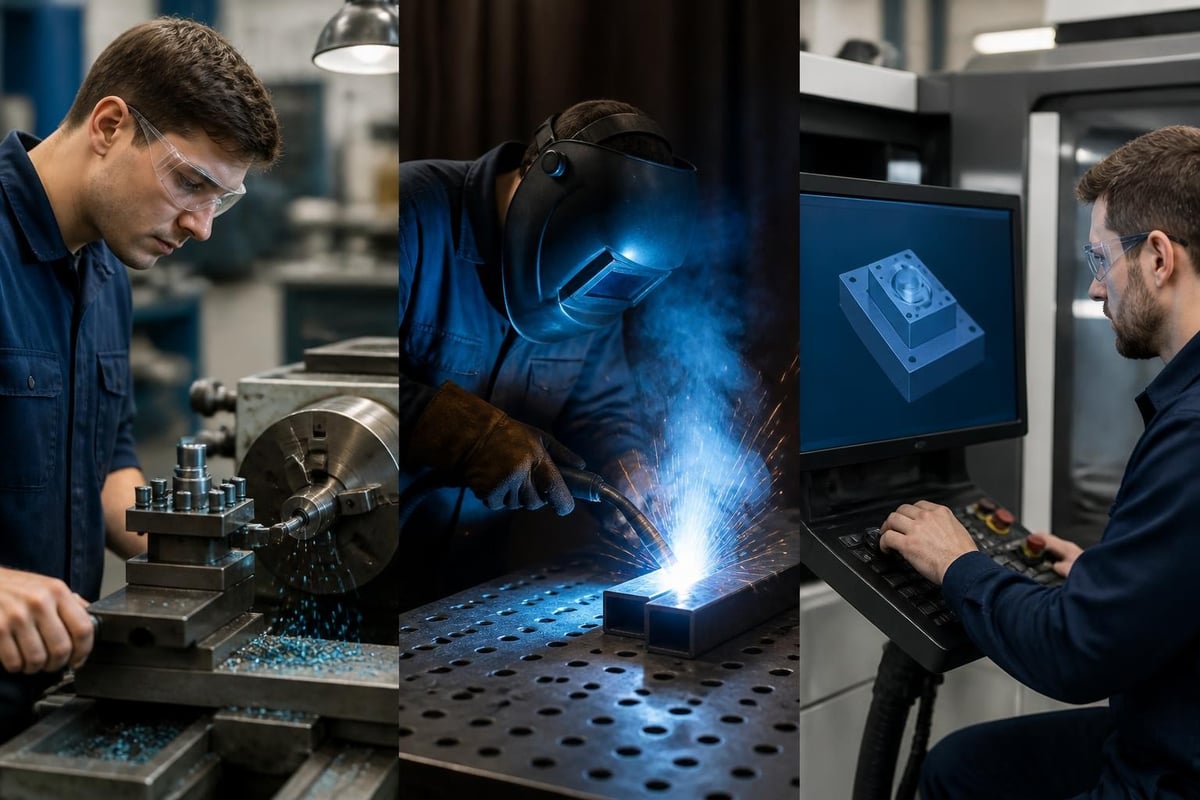
- CNC programming and operation for machining centers
- Welding certifications (AWS D1.1, ASME Section IX, API 1104)
- Fabrication techniques including layout, fitting, and assembly
- Hydraulic and pneumatic system knowledge
- Basic metallurgy and heat treatment principles
Many shops invest in continuing education programs to keep their workforce current with evolving technologies and industry standards.
Training Programs and Career Pathways
Developing internal training programs helps metal cutting shops build the specific capabilities their business requires while creating career advancement opportunities for employees.
Effective training approaches include:
- Structured apprenticeship programs combining classroom and hands-on learning
- Mentorship pairing experienced tradespeople with newer employees
- External certification courses for specialized processes or equipment
- Cross-training to develop versatile employees who understand multiple disciplines
- Safety training refreshers and new equipment orientation
Investing in workforce development improves retention, increases productivity, and enhances the shop's ability to tackle complex projects requiring advanced skills.
Business Operations and Customer Service
Beyond technical capabilities, successful metal cutting shops must excel at business operations, project management, and customer service. Understanding client needs and delivering projects on time and within budget builds long-term relationships and generates repeat business.
Project Estimation and Quoting
Accurate estimating requires understanding material costs, labor hours, equipment time, and overhead allocation. Underestimating projects erodes profitability while overestimating makes shops uncompetitive in the marketplace.
| Cost Component | Estimation Factors | Common Pitfalls |
|---|---|---|
| Materials | Current pricing, waste factors, delivery fees | Not accounting for price volatility |
| Labor | Skill level required, setup time, complexity | Underestimating fitting and rework time |
| Equipment | Machine rates, tooling costs, maintenance | Forgetting specialized tooling needs |
- Overhead | Facility costs, utilities, administrative support | Inconsistent allocation methods |
| Margin | Market conditions, client relationship, risk | Eroding margins to win every bid |
Developing standardized estimating procedures and maintaining historical project data improves accuracy over time and helps identify profitable project types.
Communication and Project Management
Clear communication throughout the project lifecycle prevents misunderstandings and ensures client satisfaction. This begins with the initial consultation and continues through delivery and follow-up.
Effective shops establish protocols for:
- Initial project meetings to clarify requirements and specifications
- Regular progress updates for longer-term projects
- Proactive notification of any issues or delays
- Change order procedures when scope modifications occur
- Final walkthrough and acceptance documentation
- Post-project follow-up to address any concerns
Industrial metal fabrication projects often involve multiple stakeholders, making organized project management essential for coordinating deliverables and meeting deadlines.
Industry Trends and Market Outlook
The metal fabrication industry continues to evolve driven by technological innovation, changing workforce demographics, and shifting market demands. Understanding these trends helps metal cutting shops position themselves for future success.
Technology Integration and Automation
Advanced manufacturing technologies are transforming how metal cutting shops operate. CNC equipment with automatic tool changers, robotic welding cells, and integrated CAD/CAM systems increase productivity while improving consistency.
The adoption of Industry 4.0 concepts brings:
- Real-time equipment monitoring and predictive maintenance capabilities
- Digital workflow management replacing paper-based systems
- Advanced nesting software reducing material waste
- Remote equipment diagnostics and technical support
- Integration between estimating, scheduling, and production systems
While automation requires significant investment, it enables shops to remain competitive and offset labor shortages in skilled trades.
Market Opportunities and Growth Sectors
According to recent industry analysis, metal fabricators maintain an optimistic outlook regarding business opportunities in 2026. Several factors contribute to this positive perspective.
Growth drivers include:
- Infrastructure investment in roads, bridges, and utilities
- Renewable energy projects requiring structural steel and mounting systems
- Manufacturing reshoring bringing production back to North America
- Agricultural equipment demand for replacement parts and modifications
- Continued oil and gas activity in established production regions
Metal cutting shops that develop expertise in growing market segments position themselves to capture new business opportunities as these sectors expand.
Maintenance and Equipment Reliability
The productivity of metal cutting shops depends on maintaining equipment in optimal operating condition. Downtime from equipment failures disrupts schedules, delays customer projects, and erodes profitability.
Preventive Maintenance Programs
Systematic preventive maintenance extends equipment life and reduces unexpected breakdowns. Each machine requires a tailored maintenance schedule based on manufacturer recommendations and actual usage patterns.
Comprehensive programs address:
- Daily operator inspections and cleaning procedures
- Weekly lubrication and adjustment schedules
- Monthly detailed inspections and calibration checks
- Quarterly major service intervals for critical components
- Annual equipment audits and predictive maintenance assessments
Documenting all maintenance activities creates historical records that help identify recurring issues and justify equipment replacement decisions when repairs become economically unfeasible.
Tooling Management and Inventory Control
Cutting tools, welding consumables, and machine accessories represent significant ongoing expenses. Efficient inventory management ensures necessary items are available while minimizing capital tied up in excess stock.
Best practices include:
- Establishing minimum and maximum inventory levels for consumables
- Implementing vendor-managed inventory for high-volume items
- Tracking tool life and performance to optimize replacement intervals
- Standardizing tooling across similar machines when possible
- Negotiating volume pricing with suppliers for frequently used items
Industrial machinery refurbishment and maintenance extends the productive life of capital equipment while ensuring reliable performance for critical customer projects.
Shop Layout and Workflow Optimization
Physical organization and workflow design significantly impact productivity in metal cutting shops. Thoughtful facility layout reduces material handling, minimizes bottlenecks, and improves overall efficiency.
Facility Design Considerations
Effective shop layouts balance several competing priorities including workflow efficiency, safety requirements, equipment access, and future expansion capability.
Key planning elements:
- Receiving and raw material storage near entry points
- Logical process flow from cutting to fabrication to finishing
- Adequate space around equipment for material handling and maintenance
- Dedicated quality control and inspection areas
- Organized tooling and consumable storage
- Separate welding areas with proper ventilation
- Finishing and painting zones isolated from machining areas
Analyzing material flow patterns and identifying congestion points helps prioritize layout improvements that deliver the greatest productivity gains.
Safety Integration and Hazard Mitigation
Following fab shop safety tips during facility design prevents accidents and creates a more efficient work environment. Safety considerations should drive layout decisions rather than being added as afterthoughts.
Important safety-related design features include:
- Clear traffic lanes with marked pedestrian walkways
- Adequate lighting throughout work areas
- Proper ventilation and fume extraction systems
- Fire suppression equipment strategically located
- Emergency exits clearly marked and unobstructed
- Eye wash stations and first aid supplies readily accessible
- Organized material storage preventing tip-over hazards
Understanding how metal fabrication shops operate safely requires commitment from management and buy-in from the entire workforce.
Environmental Compliance and Sustainability
Metal cutting shops must address environmental regulations and increasingly consider sustainability in their operations. Proper waste management, emissions control, and resource conservation benefit both the environment and the bottom line.
Waste Management and Recycling
Metalworking operations generate various waste streams requiring proper handling and disposal. Many materials have value and can be recycled, turning waste into a revenue source rather than a disposal cost.
| Waste Type | Handling Method | Potential Value |
|---|---|---|
| Steel scrap | Segregate by grade, sell to recyclers | $200-$400 per ton |
| Aluminum scrap | Keep separate from other metals | $800-$1,200 per ton |
| Cutting fluids | Filter and recycle, proper disposal of spent fluid | Reduced purchasing costs |
| Welding slag | Dispose as non-hazardous solid waste | None |
| Packaging materials | Recycle cardboard and wood pallets | Minimal |
Implementing source segregation and working with reputable recyclers ensures compliance with environmental regulations while maximizing recovery value.
Energy Efficiency and Resource Conservation
Operating costs in metal cutting shops include significant energy expenses for equipment, lighting, and climate control. Efficiency improvements reduce expenses while supporting environmental goals.
Practical conservation measures include:
- LED lighting retrofits reducing electrical consumption
- Variable frequency drives on motors for energy management
- High-efficiency compressed air systems with leak detection
- Heat recovery from compressors and welding equipment
- Optimized equipment scheduling to reduce idle time
- Building insulation and climate zone control
These investments often provide attractive payback periods through reduced utility costs while demonstrating environmental stewardship to clients and the community.
Metal cutting shops deliver essential services that keep industrial operations functioning efficiently across diverse sectors throughout the Western United States. Success in this industry requires combining technical expertise, safety commitment, quality focus, and strong customer relationships. Whether your business needs precision machining, custom fabrication, welding services, or field support for equipment repairs, partnering with an experienced provider ensures your projects meet specifications and deadlines. LTJ Industrial Services offers comprehensive metal cutting, fabrication, and machining capabilities backed by skilled craftspeople and modern equipment to support your manufacturing, oil and gas, aggregate, and recycling operations throughout the region.