
A manufacturing corporation represents the backbone of industrial productivity, combining specialized capabilities, skilled labor, and strategic operations to deliver essential products and services across diverse sectors. In 2026, these entities face unprecedented challenges and opportunities as they navigate supply chain complexities, workforce development needs, and technological transformation. Understanding how manufacturing corporations operate, scale, and serve their markets provides critical insights for businesses seeking reliable industrial partners and service providers.
Core Structure of a Manufacturing Corporation
The organizational framework of a manufacturing corporation determines its capacity to deliver consistent quality and respond to market demands. Modern manufacturing entities integrate multiple divisions, each specializing in distinct capabilities while maintaining cohesive operational standards.
Operational Divisions and Specializations
A well-structured manufacturing corporation typically organizes around core competencies that create synergies across projects. Metal fabrication divisions handle custom designs and structural components, while machining departments provide precision work for exacting specifications. Welding teams deliver both shop-based and field services, addressing diverse client needs across locations.
Key operational components include:
- Production facilities equipped with specialized equipment and safety systems
- Quality control departments ensuring adherence to industry standards
- Field service teams capable of on-site installation and maintenance
- Engineering support for custom solutions and problem-solving
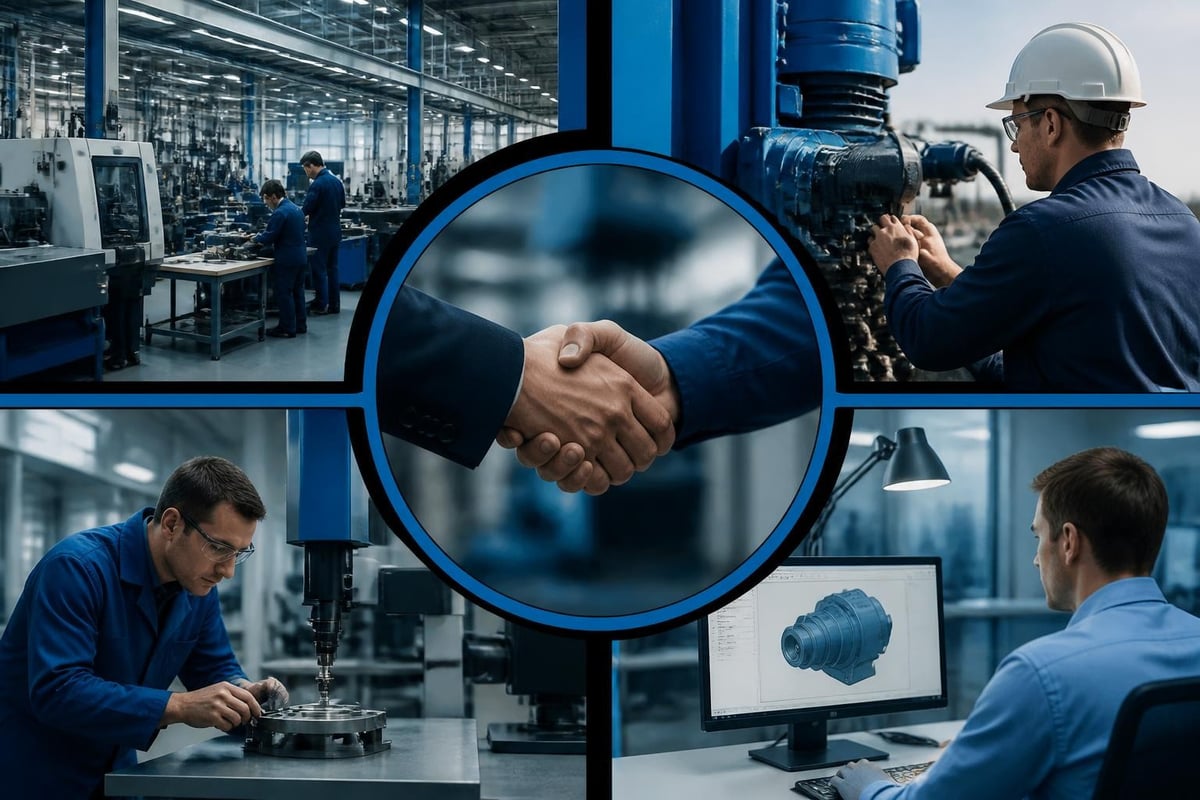
The integration of shop and field capabilities distinguishes advanced manufacturing corporations from single-focus operations. This dual approach allows companies to manage complete project lifecycles, from initial fabrication through installation and ongoing maintenance.
Geographic Reach and Market Coverage
Regional manufacturing corporations serving areas like the Western United States must balance centralized expertise with distributed service capabilities. This geographic strategy enables rapid response times while maintaining specialized equipment and skilled personnel at primary facilities.
| Service Type | Shop-Based | Field-Based | Hybrid Approach |
|---|---|---|---|
| Custom Fabrication | Primary | Limited | Design in shop, install on-site |
| Precision Machining | Primary | Rare | Complex work in facility |
| Welding Services | Common | Common | Project-dependent location |
| Hydraulic Systems | Moderate | Frequent | Repairs often require field work |
| Water Jetting | Limited | Common | Equipment mobility essential |
Industry Sectors Served by Manufacturing Corporations
Manufacturing corporations typically focus on specific industrial verticals where their capabilities align with client requirements. This sector specialization enables deeper expertise and more efficient service delivery.
Oil and Gas Industry Applications
The oil and gas sector demands robust manufacturing solutions capable of withstanding extreme conditions and meeting stringent safety standards. Industrial and manufacturing services for this sector include pressure vessel fabrication, pipeline component manufacturing, and specialized welding for corrosive environments.
Equipment maintenance and emergency repairs represent critical service areas where manufacturing corporations provide value. Field mechanics and welders must respond quickly to minimize production downtime, often working in remote locations under challenging conditions.
Aggregate and Recycling Operations
Aggregate processing and recycling facilities require durable equipment designed for continuous operation and heavy material handling. Manufacturing corporations support these operations through:
- Conveyor system fabrication and repair
- Crusher component replacement and modification
- Screen deck manufacturing and installation
- Structural reinforcement for processing equipment
These industries face unique wear patterns requiring regular maintenance and component replacement. A manufacturing corporation with machining capabilities can reverse-engineer obsolete parts, ensuring operations continue without extended downtime waiting for original equipment manufacturer components.
Commercial and Industrial Manufacturing Support
Manufacturing corporations often serve other manufacturers, creating a layered industrial ecosystem. This business-to-business relationship involves producing components, providing maintenance services, and offering capacity augmentation during peak production periods.
According to Deloitte’s 2026 manufacturing industry outlook, strategic technology investments and operational resilience remain top priorities for manufacturers navigating current market conditions.
Technology Integration and Modernization
Modern manufacturing corporations must balance traditional craftsmanship with advanced technology adoption. This integration enhances precision, efficiency, and documentation while preserving the skilled labor foundation essential for quality work.
Computer-Aided Design and Manufacturing
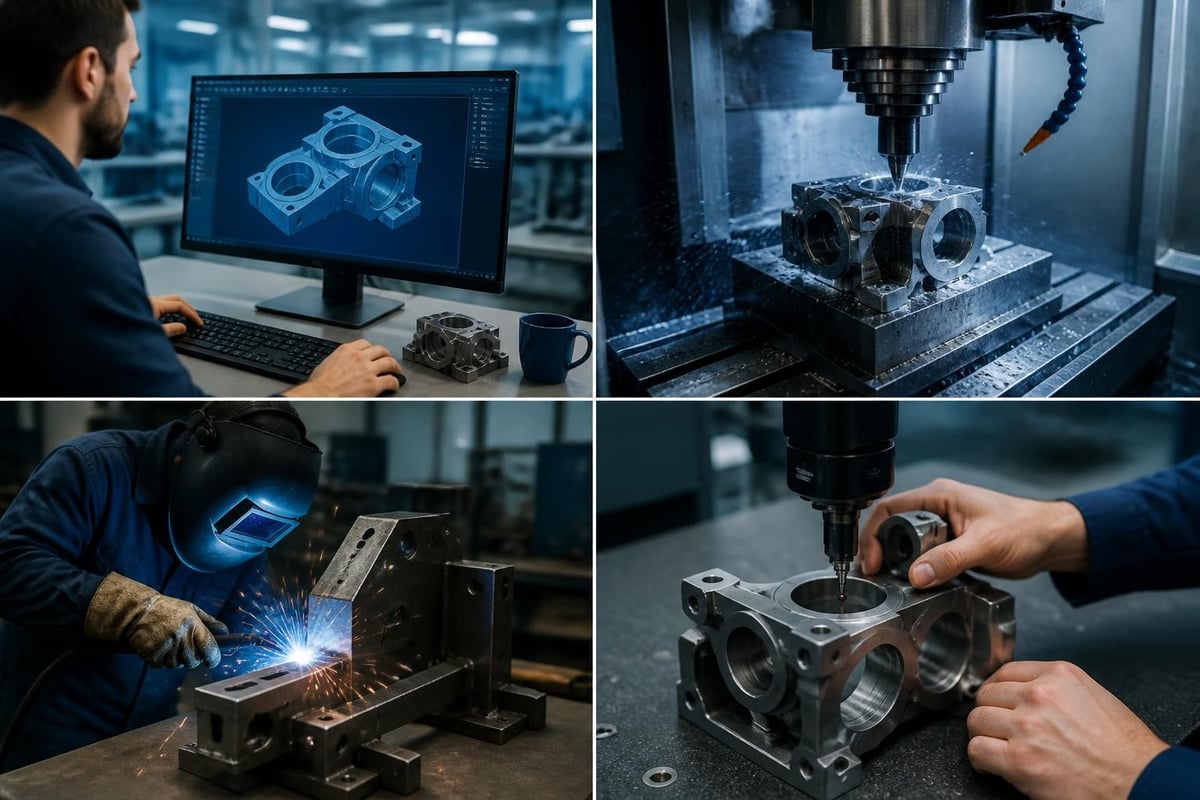
CAD/CAM systems enable manufacturing corporations to translate client concepts into precise specifications and production instructions. These tools facilitate:
- Rapid prototyping and design iteration
- Accurate material estimation for cost control
- Quality verification through dimensional analysis
- Production efficiency via optimized tool paths
The combination of experienced fabricators and advanced design tools creates superior outcomes compared to either approach alone. Skilled professionals identify potential issues during design review, preventing costly errors during production.
Industrial Internet of Things Applications
Research on IIoT intelligence in smart manufacturing demonstrates how connected equipment and sensors transform production monitoring and predictive maintenance. Manufacturing corporations implementing these technologies gain real-time visibility into equipment performance and potential failures.
For service-focused manufacturing corporations, IIoT enables proactive client support. Monitoring systems installed on fabricated equipment can alert both the client and manufacturer to developing issues before catastrophic failures occur.
Workforce Development and Skilled Labor
The success of any manufacturing corporation depends fundamentally on its workforce capabilities. Skilled welders, machinists, and fabricators represent irreplaceable assets requiring ongoing investment and development.
Training Programs and Certifications
Professional certifications validate workforce capabilities and ensure compliance with industry standards. Welding certifications from organizations like the American Welding Society demonstrate proficiency in specific processes and materials. Machinist credentials verify precision work capabilities and measurement expertise.
Critical workforce competencies include:
- Multi-process welding (MIG, TIG, stick, flux-core)
- Blueprint reading and geometric dimensioning
- CNC programming and manual machining
- Hydraulic system troubleshooting and repair
- Safety protocols and hazard recognition
According to research on manufacturing capabilities over the past decade, the evolution of required skills continues accelerating, demanding continuous learning and adaptation from manufacturing workforces.
Retention and Knowledge Transfer
Experienced personnel carry institutional knowledge about processes, client preferences, and problem-solving approaches. Manufacturing corporations must implement knowledge transfer systems ensuring this expertise survives workforce transitions.
Mentorship programs pairing senior craftspeople with newer employees create learning opportunities beyond formal training. Documentation systems capturing lessons learned and best practices preserve organizational knowledge for future reference.
Quality Management and Standards Compliance
Manufacturing corporations serving regulated industries must maintain rigorous quality systems ensuring consistent outcomes and regulatory compliance. These frameworks protect both the manufacturer and their clients from defects and failures.
Inspection and Testing Protocols
Quality verification occurs at multiple production stages, from raw material receipt through final product delivery. Non-destructive testing methods like ultrasonic inspection, magnetic particle testing, and dye penetrant examination identify internal and surface defects without damaging components.
| Testing Method | Application | Detectable Defects | Industries Using |
|---|---|---|---|
| Ultrasonic Testing | Welds, castings, forgings | Internal voids, cracks | Oil & gas, pressure vessels |
| Magnetic Particle | Ferromagnetic materials | Surface and near-surface cracks | Structural steel, machinery |
| Dye Penetrant | Non-porous materials | Surface-breaking defects | Aerospace, food processing |
| Radiographic Testing | Critical welds, castings | Internal discontinuities | Nuclear, petrochemical |
Documentation and Traceability
Complete project documentation provides accountability and supports warranty claims, insurance requirements, and regulatory audits. Manufacturing corporations maintain records including material certifications, weld procedures, inspection reports, and as-built drawings.
Digital documentation systems improve accessibility and preserve records against physical damage or loss. Cloud-based platforms enable remote access for clients reviewing project status or retrieving historical information.
Supply Chain Management and Material Sourcing
Effective supply chain management differentiates successful manufacturing corporations from competitors struggling with delays and cost overruns. Current supply chain challenges affecting the manufacturing sector include material availability constraints and transportation disruptions.
Strategic Supplier Relationships
Manufacturing corporations develop networks of material suppliers, component vendors, and specialty service providers. These relationships provide:
- Preferential pricing through volume commitments
- Priority allocation during shortage periods
- Quality consistency from known sources
- Technical support for material selection
Diversified supply chains reduce vulnerability to single-source disruptions. Manufacturing corporations serving critical industries maintain multiple suppliers for essential materials, accepting modest cost increases for supply security.
Inventory Optimization Strategies
Balancing inventory investment against material availability requires sophisticated forecasting and demand planning. Manufacturing corporations analyze historical patterns, current project pipelines, and market trends to determine optimal stock levels.
Common materials used across multiple projects justify higher inventory levels, while specialized items are purchased project-specifically. This approach minimizes capital tied up in inventory while ensuring production capabilities remain uninterrupted.
Strategic Partnerships and Client Relationships
Long-term success for manufacturing corporations depends on building trusted relationships with clients who provide recurring business and referrals. These partnerships transcend transactional interactions, evolving into collaborative problem-solving relationships.
Value-Added Services and Consulting
Beyond core manufacturing capabilities, successful corporations offer expertise helping clients optimize designs, reduce costs, and improve performance. Engineering consultation during project planning prevents issues during fabrication and installation.
Field assessment services identify equipment problems before they cause failures, allowing scheduled maintenance rather than emergency repairs. This proactive approach reduces client downtime costs while creating ongoing service revenue for the manufacturing corporation.

Performance Metrics and Continuous Improvement
Manufacturing corporations track key performance indicators measuring quality, delivery, safety, and cost efficiency. These metrics inform process improvements and demonstrate value to clients.
Critical performance indicators include:
- On-time delivery rates for scheduled project completion
- First-pass quality percentages measuring rework frequency
- Safety incident rates tracking workplace injuries
- Customer satisfaction scores from post-project surveys
- Capacity utilization optimizing equipment and labor deployment
Transparency around performance builds client confidence and identifies improvement opportunities. Manufacturing corporations sharing metrics with clients demonstrate accountability and commitment to excellence.
Financial Management and Investment Strategies
Maintaining financial health enables manufacturing corporations to invest in capabilities, weather economic downturns, and capitalize on growth opportunities. Strategic financial planning balances operational needs against expansion goals.
Equipment Acquisition and Modernization
Manufacturing equipment represents significant capital investment requiring careful evaluation and planning. Recommendations for increasing manufacturing competitiveness emphasize technology adoption and operational efficiency improvements.
Lease versus purchase decisions depend on equipment utilization rates, technological obsolescence risks, and tax considerations. High-utilization equipment justified by multiple client contracts warrants ownership, while specialized tools used occasionally may be leased or outsourced.
Project Cost Management
Accurate estimating and cost tracking ensure profitability while maintaining competitive pricing. Manufacturing corporations develop sophisticated costing models incorporating:
- Direct material costs with waste factors and market volatility
- Labor hour requirements based on historical performance data
- Equipment operating costs including depreciation and maintenance
- Overhead allocation covering facilities, administration, and utilities
- Contingency reserves for unforeseen complications
Regular comparison between estimated and actual costs identifies estimation accuracy issues and process inefficiencies requiring attention.
Regulatory Compliance and Safety Management
Manufacturing corporations operate within extensive regulatory frameworks governing workplace safety, environmental protection, and product quality. Compliance requires dedicated resources and management commitment.
OSHA Standards and Safety Programs
Occupational Safety and Health Administration regulations establish minimum safety requirements for manufacturing operations. Leading corporations exceed these minimums through comprehensive safety cultures emphasizing hazard identification and risk mitigation.
Safety training programs familiarize workers with equipment hazards, personal protective equipment requirements, and emergency procedures. Regular safety meetings reinforce protocols and discuss near-miss incidents providing learning opportunities.
Environmental Regulations and Waste Management
Manufacturing processes generate waste streams requiring proper handling, treatment, and disposal. Welding fumes, grinding dust, cutting fluids, and chemical cleaners all demand compliance with environmental regulations.
Investment in waste reduction technologies and recycling programs minimizes disposal costs while demonstrating environmental responsibility. Water jetting systems that capture and filter wastewater enable fluid reuse, reducing both consumption and disposal requirements.
Market Trends Affecting Manufacturing Corporations
Understanding broader industry trends helps manufacturing corporations anticipate changes and adapt strategies accordingly. Economic conditions, technological developments, and policy changes all influence operational environments.
Reshoring and Domestic Manufacturing
Analysis of U.S. manufacturing trends reveals complex dynamics around domestic production despite government incentives. Some manufacturing corporations benefit from reshoring trends as companies prioritize supply chain reliability over absolute cost minimization.
Regional manufacturing corporations with quick response capabilities and established reputations gain advantages as clients value proximity and reliability. Field service capabilities become differentiators when remote manufacturing sources cannot provide on-site support.
Sustainability and Green Manufacturing
Environmental considerations increasingly influence client purchasing decisions and regulatory requirements. Manufacturing corporations implementing sustainable practices attract environmentally conscious clients and reduce operating costs through efficiency improvements.
Energy-efficient equipment, renewable power sources, and material recycling programs demonstrate sustainability commitments. Documentation of environmental impacts enables clients to include supplier performance in their own sustainability reporting.
Competitive Differentiation Strategies
Manufacturing corporations compete based on capabilities, quality, responsiveness, and value rather than price alone. Successful differentiation requires clearly articulated value propositions and consistent delivery.
Specialized Expertise and Niche Focus
Developing recognized expertise in specific applications creates competitive advantages. Manufacturing corporations known for particular capabilities attract clients with those specific needs, often commanding premium pricing for specialized knowledge.
Focus areas might include exotic materials, extreme service conditions, or unique industry requirements. This specialization depth exceeds what generalist competitors can match without significant investment.
Customer Service and Responsiveness
Accessibility and responsiveness differentiate service-oriented manufacturing corporations from transaction-focused competitors. Rapid quote turnaround, flexible scheduling, and emergency service availability create value beyond the physical products delivered.
24/7 availability for critical industries like oil and gas positions manufacturing corporations as essential partners rather than interchangeable vendors. This relationship depth generates loyalty and recurring business.
Manufacturing corporations succeed through integrated capabilities, skilled workforces, and strategic client partnerships that deliver consistent value across project lifecycles. Whether you need custom fabrication, precision machining, specialized welding, or field service support for your industrial operations, working with an experienced regional partner ensures quality results and responsive service. LTJ Industrial Services provides comprehensive manufacturing solutions throughout the Western United States, combining shop expertise with field capabilities to keep your operations running efficiently and reliably.