Industrial welders form the backbone of modern manufacturing operations across the United States. These skilled professionals combine technical expertise with precision craftsmanship to fabricate, repair, and maintain the critical infrastructure that powers our economy. From oil and gas facilities to recycling operations and aggregate processing plants, industrial welders ensure that metal structures remain safe, functional, and built to specification. Understanding the role these specialists play, along with the equipment and standards that govern their work, helps businesses make informed decisions when selecting welding partners for their operations.
Understanding the Role of Industrial Welders in Manufacturing
Industrial welders specialize in joining metal components using various welding processes suited to demanding commercial and industrial applications. Unlike general welders who may work on smaller residential projects, industrial welders tackle large-scale fabrication tasks that require advanced certifications and extensive experience with heavy equipment.
The scope of work for industrial welders encompasses several critical functions:
- Fabricating structural steel components for buildings and industrial facilities
- Repairing damaged machinery and equipment in field settings
- Constructing pressure vessels and piping systems
- Building custom metal assemblies for specialized applications
- Performing routine maintenance welding to extend equipment lifespan
Field vs Shop Welding Operations
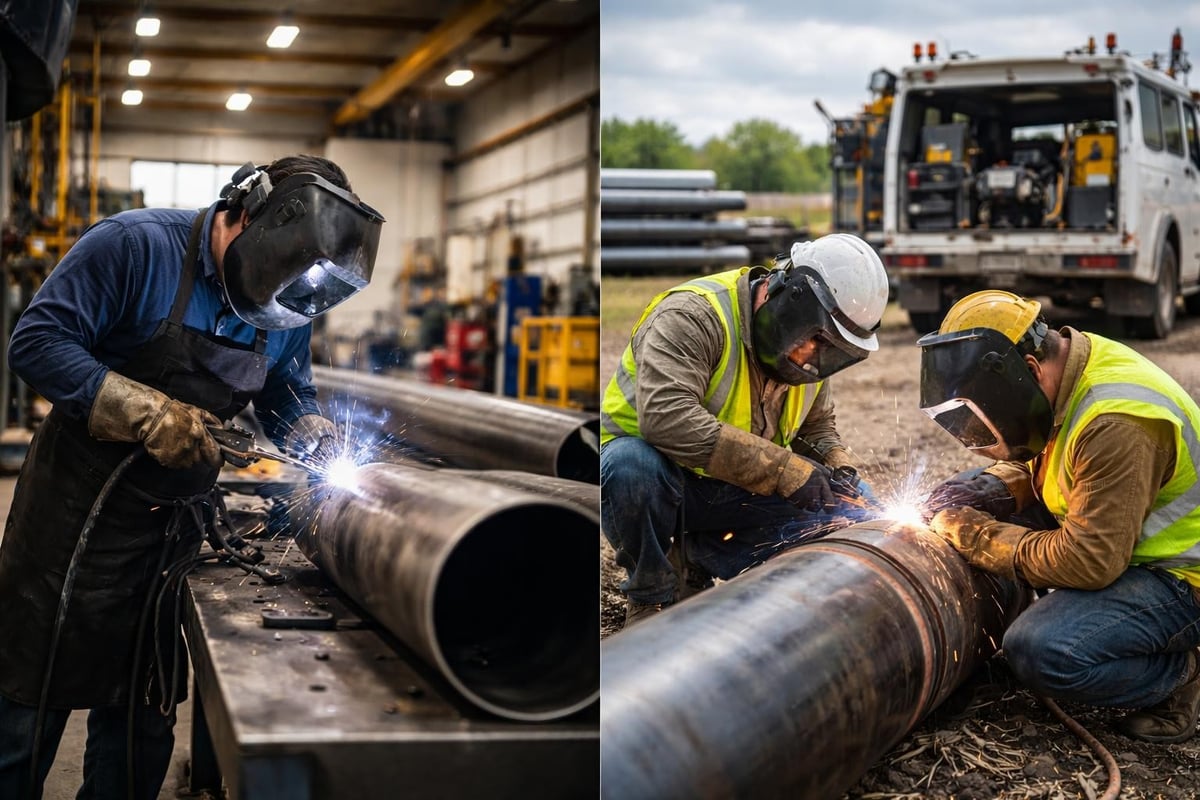
Industrial welding occurs in two primary environments, each presenting unique challenges and requirements. Shop welding takes place in controlled facilities where welders have access to full equipment suites, optimal lighting, and stable working positions. This environment allows for higher precision work and better quality control.
Field welding involves traveling to client sites to perform repairs, installations, or modifications on existing equipment. Companies like LTJ Industrial Services provide both shop and field welding services, offering flexibility to meet diverse client needs across the Western United States.
| Environment | Advantages | Common Applications |
|---|---|---|
| Shop Welding | Controlled conditions, full equipment access, better quality control | Custom fabrication, pressure vessels, structural components |
| Field Welding | On-site repairs, minimal downtime, immediate solutions | Equipment repairs, pipeline work, emergency fixes |
| Mobile Units | Combines shop capabilities with field flexibility | Remote locations, large assemblies, temporary projects |
Essential Welding Processes Used by Industrial Welders
Modern industrial welders must master multiple welding techniques to address various materials, joint configurations, and application requirements. Each process offers distinct advantages depending on the project specifications and working conditions.
Common Welding Methods
Shielded Metal Arc Welding (SMAW) remains one of the most versatile processes for industrial applications. Also known as stick welding, this method uses a consumable electrode coated in flux to create strong welds in various positions. Industrial welders favor SMAW for field repairs because it works well in windy conditions and doesn't require external shielding gas.
Gas Metal Arc Welding (GMAW) or MIG welding delivers high productivity for shop fabrication work. This process feeds a continuous wire electrode through a welding gun while shielding gas protects the weld pool from contamination. GMAW excels at welding thin to medium thickness materials quickly and efficiently.
Gas Tungsten Arc Welding (GTAW) provides the precision required for critical applications like pressure vessel fabrication. TIG welding, as it's commonly called, uses a non-consumable tungsten electrode and separate filler material to produce clean, high-quality welds on stainless steel, aluminum, and exotic alloys.
Flux-Cored Arc Welding (FCAW) combines elements of SMAW and GMAW to offer versatility in industrial settings. This process works well for heavy fabrication and can be used with or without external shielding gas, making it suitable for both shop and field applications.
Selecting the Right Process
The choice of welding process depends on several factors that industrial welders evaluate before starting each project:
- Base metal composition and thickness
- Joint design and accessibility
- Required weld quality and appearance
- Available equipment and resources
- Environmental conditions
- Production speed requirements
- Post-weld treatment needs
Understanding these considerations helps businesses appreciate the skill level required for industrial welding and the importance of working with experienced professionals who can adapt their techniques to project demands.
Safety Standards and Certifications for Industrial Welders
Safety compliance represents a non-negotiable aspect of industrial welding operations. Professional industrial welders adhere to strict safety standards established by organizations like OSHA and the American Welding Society to protect themselves, coworkers, and client facilities.
The OSHA welding, cutting, and brazing standards provide comprehensive guidelines covering everything from personal protective equipment to fire prevention and ventilation requirements. Industrial welders must understand and implement these regulations on every job site.
Critical Safety Components
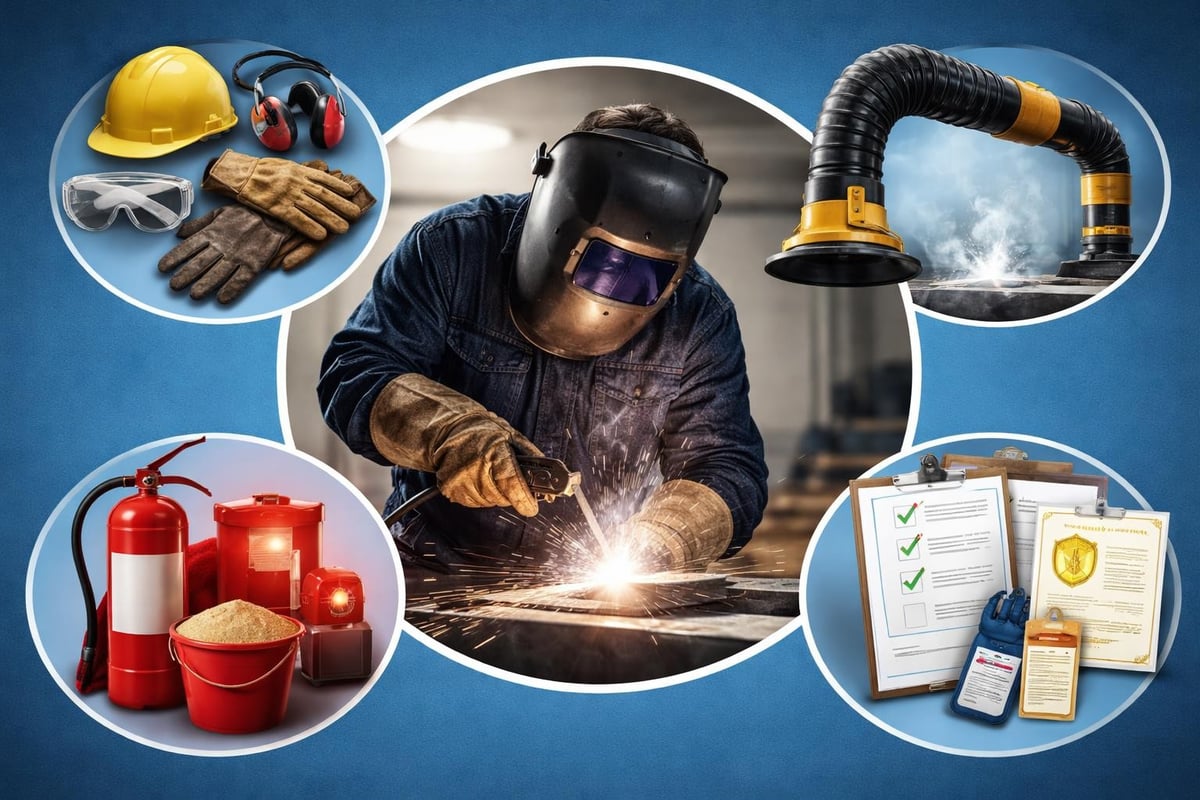
Proper safety protocols encompass multiple layers of protection:
- Personal Protective Equipment: Auto-darkening helmets, flame-resistant clothing, welding gloves, and safety boots
- Ventilation Systems: Fume extraction equipment and adequate airflow to prevent exposure to harmful gases
-
- Fire Prevention: Fire-resistant barriers, extinguishers, and hot work permits
- Electrical Safety: Properly grounded equipment and insulated work areas
- Confined Space Procedures: Atmospheric testing and emergency rescue plans
The ANSI Z49.1-2021 safety standard offers additional guidance specifically tailored to welding operations, complementing OSHA requirements with industry best practices. Professional welding companies integrate these standards into their daily operations to maintain safe working environments.
Welder Certification and Qualifications
Industrial welders earn certifications through rigorous testing that validates their ability to produce quality welds meeting specific code requirements. The American Welding Society administers certification programs covering various welding processes, positions, and material types.
Common certifications include:
| Certification | Scope | Typical Applications |
|---|---|---|
| AWS D1.1 | Structural Steel Welding | Buildings, bridges, industrial structures |
| ASME Section IX | Pressure Vessel and Piping | Boilers, pressure vessels, process piping |
| API 1104 | Pipeline Welding | Oil and gas pipelines, distribution systems |
| AWS D1.6 | Stainless Steel Welding | Food processing, pharmaceutical equipment |
Businesses should verify that their welding contractors employ certified industrial welders with qualifications matching project specifications. This due diligence ensures work meets code requirements and passes inspection on the first attempt.
Applications Across Industrial Sectors
Industrial welders serve diverse sectors throughout the Western United States, each with unique requirements and challenges. Understanding these applications helps businesses recognize the versatility and expertise required for different industrial welding projects.
Oil and Gas Industry
The oil and gas sector demands exceptionally skilled industrial welders capable of working with high-pressure systems and corrosive environments. Oil and gas fabrication projects require adherence to strict API standards and often involve specialized materials like duplex stainless steel and high-strength alloys.
Typical applications include pipeline construction and repair, drilling equipment fabrication, processing facility maintenance, and storage tank construction. Many projects occur in remote locations requiring mobile welding capabilities and self-sufficient field teams.
Recycling and Aggregate Operations
Recycling facilities and aggregate processing plants subject equipment to extreme wear from abrasive materials and continuous operation. Industrial welders in this sector focus on building durable components and performing frequent repairs to minimize downtime.
Common projects include:
- Fabricating wear-resistant chutes and hoppers
- Repairing conveyor systems and screens
- Building custom sorting equipment
- Reinforcing heavy machinery components
- Installing structural modifications for capacity expansion
Commercial Manufacturing
General manufacturing facilities require versatile industrial welders who can handle everything from routine maintenance to custom fabrication projects. Metal fabrication projects in this sector often involve creating specialized tooling, fixtures, and production equipment tailored to specific manufacturing processes.
Industrial welders support manufacturing operations through equipment repairs, facility modifications, prototype development, and integration of new production lines. The ability to work efficiently within tight production schedules while maintaining quality standards separates exceptional industrial welders from average technicians.
Selecting Industrial Welding Services for Your Operation
Choosing the right welding partner significantly impacts project outcomes, equipment longevity, and operational efficiency. Businesses should evaluate potential welding contractors based on several key criteria beyond simple cost comparisons.
Experience and Specialization
Look for industrial welders with proven experience in your specific industry. A welding company that regularly services recycling operations understands the unique challenges of high-abrasion environments, while one specializing in pressure vessel welding brings critical expertise to code-compliance projects.
Review completed projects, ask for client references, and verify that the company maintains current certifications. Companies offering comprehensive welding and fabrication services can often provide more integrated solutions than those with limited capabilities.
Quality Control Processes
Professional industrial welders implement formal quality control procedures to ensure consistent results. These processes should include:
- Pre-weld inspection of materials and joint preparation
- Welding procedure specifications documented for each project type
- In-process monitoring using qualified welding inspectors
- Non-destructive testing when required by code or specification
- Final documentation including weld maps and test results
Understanding welding standards helps businesses appreciate why quality control matters and how it protects their investment in fabrication and repair work.
Response Time and Flexibility
Industrial operations can't always wait for scheduled maintenance windows when equipment failures occur. Evaluate potential welding partners on their ability to respond to emergency situations and accommodate your operational constraints.
Consider factors like geographic coverage area, mobile welding capabilities, after-hours availability, and capacity to scale resources for large projects. Companies serving the Western United States from strategically located facilities can often provide faster response times than distant contractors.
Equipment and Technology in Modern Industrial Welding
Advanced welding equipment and technology enable industrial welders to work more efficiently, produce higher quality results, and tackle increasingly complex projects. Understanding these technological capabilities helps businesses recognize the value that modern welding services provide.
Power Source Advancements
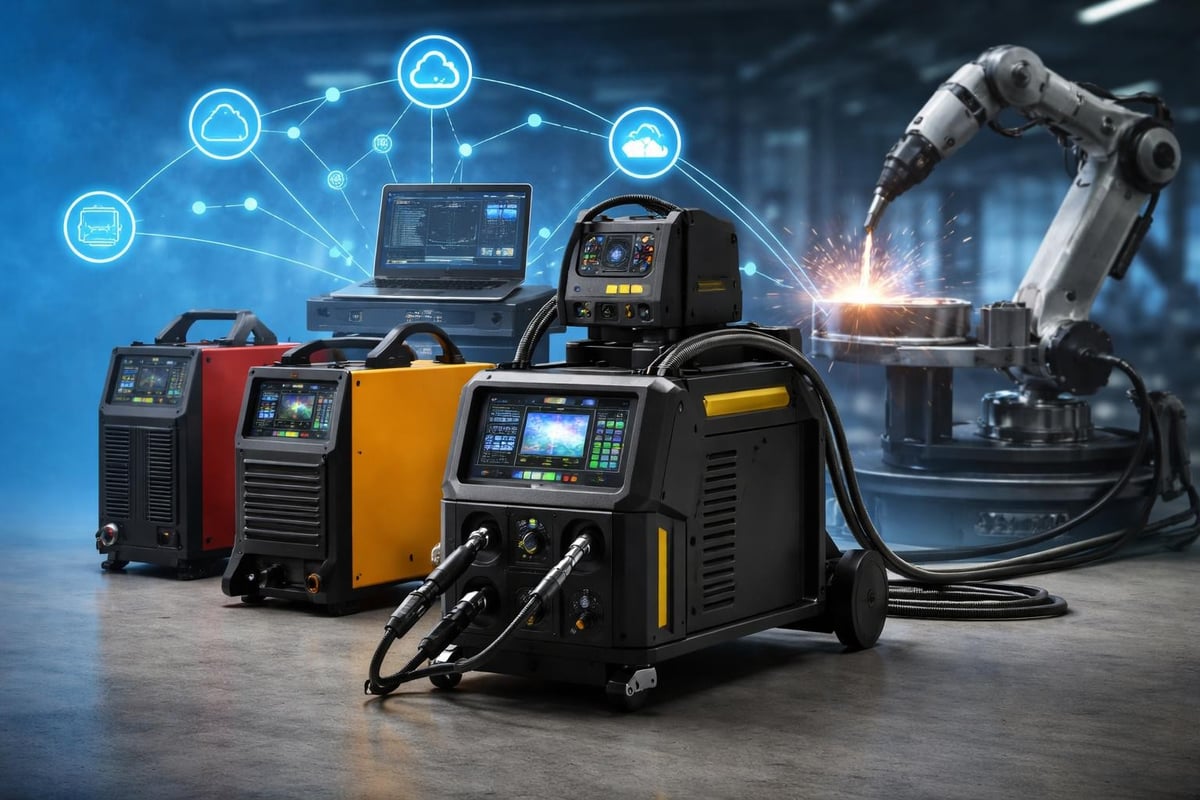
Modern welding power sources offer sophisticated controls that allow industrial welders to fine-tune arc characteristics for optimal performance. Inverter-based machines deliver precise power control in compact, energy-efficient packages suitable for both shop and field applications.
Multi-process machines enable welders to switch between GMAW, GTAW, and SMAW using a single power source, reducing equipment investment and increasing operational flexibility. Advanced features like pulsed welding modes improve control when working with thin materials or heat-sensitive components.
Automation and Mechanization
While skilled hand welding remains essential for many industrial applications, automation increasingly supplements manual work for repetitive tasks. Welding manipulators, turning rolls, and column-and-boom systems position work pieces for optimal welding positions, reducing welder fatigue and improving consistency.
Orbital welding systems automate pipe welding for critical applications requiring exceptional repeatability. These systems prove particularly valuable for custom fabrication projects involving multiple identical welds where consistency directly impacts quality and productivity.
| Technology | Benefits | Typical Applications |
|---|---|---|
| Inverter Power Sources | Precise control, portability, efficiency | All welding processes, field and shop work |
| Welding Manipulators | Consistent positioning, reduced fatigue | Large vessels, structural beams, heavy plate |
| Orbital Welding | Repeatable quality, reduced variables | Pipe systems, tube fabrication, critical welds |
| Welding Management Software | Documentation, traceability, quality control | Code-compliant projects, quality assurance |
Inspection and Testing Technologies
Modern industrial welders utilize advanced inspection technologies to verify weld quality without destructive testing. Ultrasonic testing detects internal defects, radiographic inspection reveals discontinuities, and magnetic particle testing identifies surface cracks.
Digital documentation systems capture inspection results, welding parameters, and material certifications to provide complete traceability. This documentation proves essential for code-compliance projects and helps maintain quality records for future reference.
Training and Workforce Development for Industrial Welders
The industrial welding profession faces an ongoing need for skilled workers as experienced welders retire and industry demands increase. Understanding training pathways and continuing education requirements helps businesses appreciate the investment professional welders make in their craft.
Educational Pathways
Most industrial welders begin their careers through technical schools, community colleges, or apprenticeship programs that combine classroom instruction with hands-on practice. These programs typically cover welding theory, blueprint reading, metallurgy, and safety practices alongside practical welding skill development.
Entry-level welders spend months or years developing proficiency before attempting certification tests. The learning curve varies depending on the welding process, with GTAW generally requiring more practice time than SMAW to master.
Ongoing Skill Development
Professional industrial welders continuously update their skills to stay current with evolving technologies, materials, and standards. This commitment to learning includes:
- Maintaining certifications through periodic renewal testing
- Learning new welding processes to expand capabilities
- Studying updated codes and standards as they're published
- Training on new equipment and technologies
- Developing specialized skills for emerging applications
Companies that invest in workforce development attract and retain top talent, resulting in higher quality work and better customer service. When evaluating welding contractors, consider their approach to training and professional development as an indicator of their commitment to excellence.
Safety Training Requirements
Beyond welding skill development, industrial welders complete extensive safety training covering hazard recognition, emergency procedures, and industry-specific risks. The comprehensive welding safety guidelines provided by organizations like SafetyCulture help establish baseline safety knowledge.
Regular safety refresher training keeps welders current on best practices and reinforces the importance of consistent safe work habits. Companies with strong safety cultures typically demonstrate lower incident rates and higher productivity than those treating safety as an afterthought.
Material Considerations for Industrial Welding Projects
The metals and alloys used in industrial applications significantly influence welding process selection, techniques, and quality requirements. Industrial welders must understand material properties and how they affect weldability to produce successful joints.
Common Industrial Metals
Carbon steel represents the most frequently welded material in industrial settings due to its availability, cost-effectiveness, and good weldability. Low-carbon steels weld easily with most processes, while higher carbon content requires preheating and post-weld heat treatment to prevent cracking.
Stainless steel offers corrosion resistance essential for food processing, chemical handling, and marine applications. Different stainless steel grades require specific filler materials and techniques to maintain corrosion resistance and mechanical properties.
Aluminum provides an excellent strength-to-weight ratio for applications where weight reduction matters. Welding aluminum presents challenges including high thermal conductivity, oxide formation, and susceptibility to porosity, requiring skilled industrial welders with specialized training.
Alloy steels engineered for specific properties like high temperature strength, wear resistance, or toughness demand careful welding procedures to preserve their designed characteristics. Many alloy steels require controlled cooling rates and post-weld heat treatment.
Weld Joint Design
Proper joint design ensures that welds can carry required loads and remain accessible for welding and inspection. Industrial welders work with several basic joint configurations:
- Butt joints for plate-to-plate connections in tanks and vessels
- Fillet welds joining perpendicular members in structural assemblies
- Corner joints for box sections and fabricated components
- Lap joints in sheet metal and overlay applications
- Edge joints for sealing seams and attaching flanges
The joint design must consider factors like material thickness, loading conditions, inspection requirements, and production constraints. Experienced industrial welders can recommend design modifications that improve weldability without compromising structural integrity.
Economic Impact of Quality Industrial Welding
Investing in skilled industrial welders and quality welding services generates measurable economic benefits that extend far beyond the immediate project cost. Understanding these broader impacts helps businesses make informed decisions about welding service selection.
Minimizing Downtime
Equipment failures in industrial operations cascade into production losses, missed deadlines, and frustrated customers. Quality welding work from experienced industrial welders reduces the likelihood of premature failures and extends intervals between repairs.
Professional welding contractors like those offering field machining and welding services can often complete repairs during planned maintenance windows, eliminating unscheduled downtime. Their ability to correctly diagnose problems and implement lasting solutions prevents recurring failures that drain productivity.
Lifecycle Cost Optimization
The lowest initial price rarely represents the best value in industrial welding services. Consider total lifecycle costs including:
- Initial fabrication or repair expense
- Expected service life before replacement
- Maintenance requirements during operation
- Energy efficiency impacts
- Safety and compliance costs
Quality welds produced by certified industrial welders following proper procedures typically outlast cheaper alternatives, delivering superior return on investment over time. The gas safety practices implemented by professional welders also reduce risks of costly accidents.
Regulatory Compliance
Many industrial welding projects must comply with local, state, or federal regulations governing structural integrity, pressure vessel safety, or environmental protection. Non-compliant work can result in enforcement actions, operational shutdowns, or liability exposure far exceeding the cost of proper initial execution.
Working with industrial welders who understand applicable codes and maintain current certifications ensures compliance throughout the project lifecycle. Their documentation practices provide the evidence needed to satisfy regulatory inspections and audits.
Future Trends in Industrial Welding
The industrial welding profession continues evolving as new technologies, materials, and market demands shape industry practices. Staying informed about emerging trends helps businesses prepare for future requirements and opportunities.
Advanced Materials Integration
Manufacturing increasingly incorporates high-performance materials engineered for specific applications. Industrial welders must adapt techniques to join advanced high-strength steels, exotic alloys, and dissimilar material combinations while maintaining joint integrity.
Research into welding processes for additive manufacturing materials creates opportunities for repair and modification of 3D-printed metal components. As these technologies mature, industrial welders with specialized training will command premium value.
Digital Integration and Industry 4.0
Smart welding systems incorporating sensors, data analytics, and cloud connectivity enable real-time quality monitoring and predictive maintenance. These technologies help industrial welders optimize parameters, document compliance, and identify potential issues before they cause failures.
Digital twin technology allows virtual testing of welding procedures before committing to physical work, reducing development time for complex fabrication projects. Integration with broader manufacturing execution systems improves scheduling, resource allocation, and project management.
Sustainability Initiatives
Environmental concerns drive demand for welding processes that reduce energy consumption, minimize waste, and lower emissions. Industrial welders increasingly adopt techniques like friction stir welding and laser welding that offer improved energy efficiency compared to traditional arc processes.
Recycling and remanufacturing operations rely on skilled welders to restore components to service rather than scrapping them. This circular economy approach reduces raw material demand while creating opportunities for specialized welding services.
Industrial welders provide essential services that keep manufacturing operations running efficiently while ensuring safety, quality, and regulatory compliance. The combination of technical expertise, proper equipment, and adherence to industry standards separates exceptional welding contractors from those offering basic services. When your operation requires reliable welding solutions backed by decades of experience serving the commercial and industrial sectors throughout the Western United States, LTJ Industrial Services delivers the comprehensive fabrication, machining, and welding capabilities you need to keep your business moving forward.