The demand for precision and power in advanced manufacturing has never been higher. As industries push the limits of design and durability, cutting thick metal efficiently becomes a significant challenge. Industrial waterjet cutting services for thick metal have emerged as the trusted solution, offering unmatched accuracy without compromising material integrity.
This guide will explore the essentials of industrial waterjet cutting services for thick metal. Readers will discover how the technology works, its key benefits, a step-by-step process, tips for choosing a provider, real-world applications, industry challenges, and future trends shaping the field.
If you are seeking reliable, efficient methods to handle demanding metal fabrication, keep reading. The insights shared here will empower you to make informed decisions that drive success in 2026.
Understanding Industrial Waterjet Cutting Technology
Industrial waterjet cutting services for thick metal have transformed manufacturing by delivering unmatched precision, especially for challenging materials. This technology relies on a high-pressure stream of water, often combined with abrasive particles, to slice through even the thickest metals. The process uses robust pumps, specialized nozzles, and garnet abrasive to erode material without introducing heat. Compared to laser, plasma, or oxy-fuel methods, waterjet cutting excels for thick sections because it produces no heat-affected zone. For example, a 6-inch steel plate can be cut with minimal edge taper, preserving structural integrity. For further technical insights, see Cutting and Shaping of Thick Materials with AWJ.
Fundamentals of Waterjet Cutting
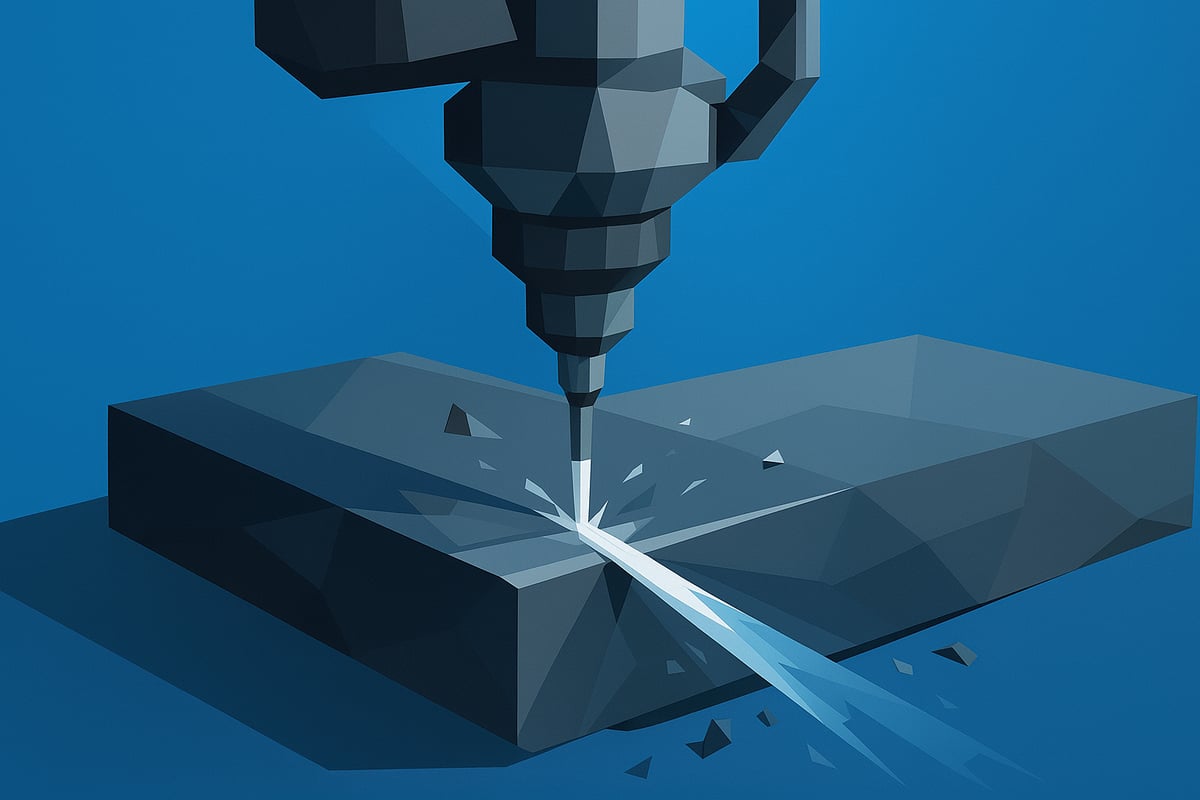
Industrial waterjet cutting services for thick metal operate by directing water at pressures up to 90,000 psi, sometimes mixed with abrasive materials, through a precision nozzle. This cold-cutting process avoids thermal effects entirely, making it ideal for metals sensitive to heat. Key components include high-pressure pumps, mixing tubes, and garnet abrasive, which collectively enable accurate, clean cuts.
| Cutting Method | Max Thickness | HAZ | Edge Quality | Typical Use |
|---|---|---|---|---|
| Waterjet | 12" | None | Excellent | Thick metals, sensitive alloys |
| Laser | 1.5" | Present | Good | Thin/medium steel, aluminum |
| Plasma | 2" | Present | Fair | Structural steel |
| Oxy-fuel | 24"+ | Present | Rough | Carbon steel |
Unlike laser or plasma, waterjet cutting leaves no heat-affected zone, preserving metallurgical properties and minimizing edge taper, even on 6-inch or thicker steel. For more on advanced applications, see Cutting and Shaping of Thick Materials with AWJ.
Types of Waterjet Systems
When evaluating industrial waterjet cutting services for thick metal, understanding system variations is essential. Pure waterjet systems use only water, ideal for softer materials, while abrasive waterjets incorporate garnet for hard metals.
Configurations range from large gantry systems for oversized plates to robotic and portable units for field work. Integration with CNC controls enables intricate geometries and repeatability. Pressure ratings up to 90,000 psi allow for precise, clean cuts in ultra-thick metals, setting benchmarks for the industry in 2026.
Materials and Thickness Capabilities
Industrial waterjet cutting services for thick metal are compatible with a wide range of metals. Steel, stainless steel, aluminum, titanium, and specialty alloys are commonly processed, with maximum thicknesses reaching 12 inches for steel using 2026-grade equipment.
Tolerances are impressive, often within ±0.005 inches, and edge finishes meet strict industry standards. For example, aerospace-grade titanium parts benefit from waterjet’s cold-cutting precision. However, some composites or layered materials present challenges due to delamination risks, making waterjet less suitable in those cases.
Safety and Environmental Benefits
Safety and sustainability are core advantages of industrial waterjet cutting services for thick metal. The cold process eliminates fire risk and produces no hazardous fumes or heat distortion.
Key safety and environmental benefits include:
- Minimal material waste and high material yield
- Water recycling systems that reduce consumption
- Abrasive reclamation practices to limit disposal
- Full compliance with OSHA and EPA standards
These features make waterjet cutting a responsible choice for modern manufacturing environments.
Innovations in 2026
By 2026, industrial waterjet cutting services for thick metal have embraced significant technological advancements. Smart sensors enable real-time cut monitoring, while automated abrasive delivery systems enhance consistency.
AI-driven nesting software optimizes material usage, reducing scrap rates by up to 15 percent. The adoption of these innovations is accelerating across U.S. manufacturing, driven by the demand for greater efficiency and precision. These trends ensure that waterjet cutting remains at the forefront of industrial fabrication for the foreseeable future.
Step-by-Step Guide to Waterjet Cutting for Thick Metal
Precision and efficiency are the hallmarks of industrial waterjet cutting services for thick metal. Understanding the process, from initial assessment to final inspection, ensures your project meets demanding industry standards. Here is a detailed, stepwise guide for navigating each phase and achieving optimal results.
Step 1: Project Assessment and Material Selection
Every successful project using industrial waterjet cutting services for thick metal begins with a thorough assessment. Start by evaluating the part geometry, checking for intricate contours or tight tolerances. Determine the exact type, thickness, and grade of metal required.
Consult digital design files such as DXF or DWG to confirm dimensions and specifications. For unfamiliar materials, request a sample cut to validate edge quality and tolerance before full production. For example, switching from mild steel to Inconel may require adjustments in cutting parameters. Careful upfront evaluation sets the stage for precise, cost-effective results.
Step 2: Programming and Nesting
Once materials are confirmed, the next phase in industrial waterjet cutting services for thick metal involves programming and nesting. Use advanced CAD/CAM software to generate optimized cutting paths.
Strategic nesting maximizes material usage, reducing waste and cost. Set appropriate cut speeds and pressure based on thickness and material type. Run simulations to check for possible collisions or errors in the toolpath. Industry data shows that with modern nesting software, you can achieve up to 20 percent material savings, making this step crucial for budget-conscious projects.
Step 3: Machine Setup and Calibration
Machine setup is a critical part of industrial waterjet cutting services for thick metal. Select the correct nozzle based on material thickness, and adjust abrasive flow rates accordingly.
Calibrate the machine to ensure zero-point accuracy for repeatable results. Conduct safety checks and verify that all operators are trained on proper procedures. For instance, setting up a 4 inch steel plate project may require additional time to align fixtures and ensure cutting tolerances. Proper calibration prevents costly rework and ensures consistent part quality throughout the job.
Step 4: Cutting Operations
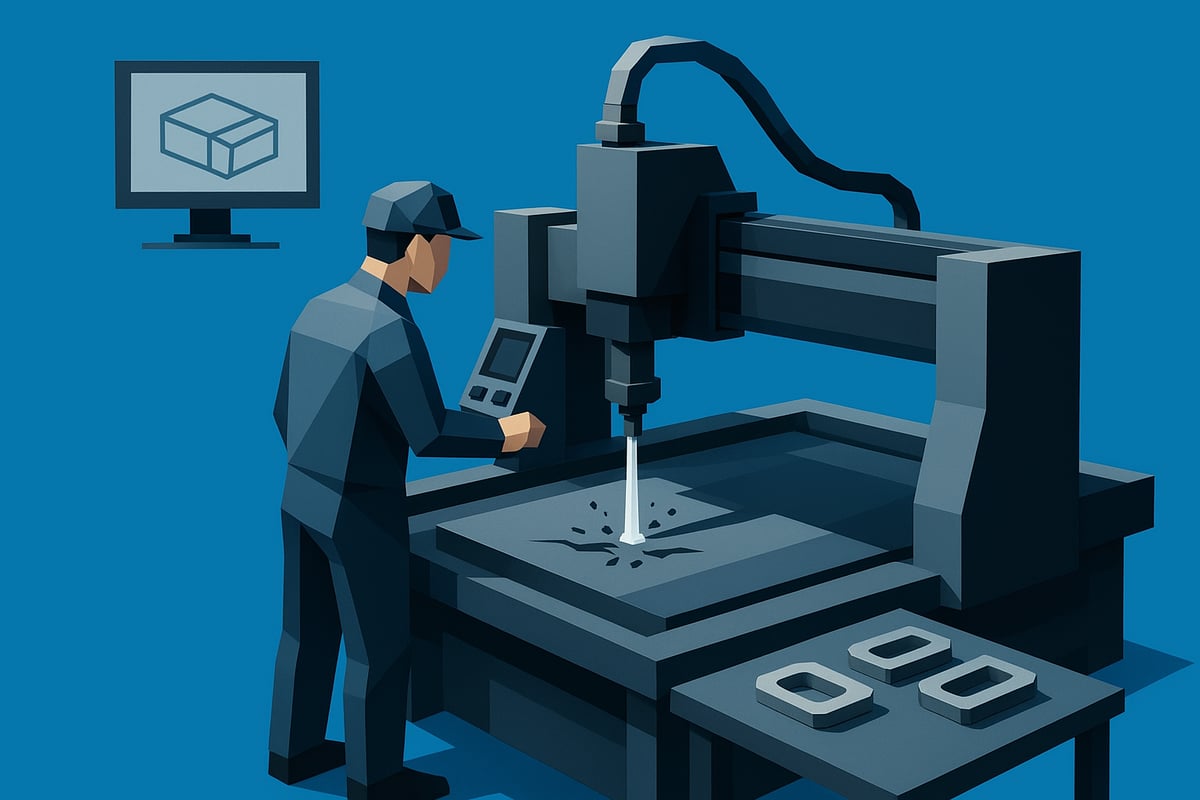
Cutting is the heart of industrial waterjet cutting services for thick metal. Begin by initiating the high-pressure stream and monitoring kerf width and edge quality in real-time.
Manage abrasive feed and water pressure to maintain optimal performance. For critical components, conduct in-process inspections to verify compliance with specifications. Depending on the material, such as heat-sensitive alloys, choose between continuous or intermittent cutting to avoid microstructural changes. This attention to detail helps maintain surface integrity and dimensional accuracy.
Step 5: Post-Cut Processing and Quality Assurance
After cutting, post-processing is essential to the success of industrial waterjet cutting services for thick metal. Remove burrs and clean the cut edges to achieve the required finish.
Perform dimensional inspections and document measurements to ensure they meet project specifications. Evaluate surface finishes using Ra value benchmarks. For heavy or high-value components, package carefully for delivery and adhere to certification requirements, especially for aerospace or oil and gas. For a comprehensive overview of related processes, explore Manufacturing and Machining Expertise to understand additional steps in achieving top-tier quality assurance.
Key Benefits of Industrial Waterjet Cutting for Thick Metal
Industrial waterjet cutting services for thick metal deliver a unique combination of precision, versatility, and cost efficiency that sets them apart from traditional cutting methods. As industries demand cleaner cuts and faster turnarounds, the advantages of waterjet technology become impossible to ignore.
Superior Edge Quality Without Heat Distortion
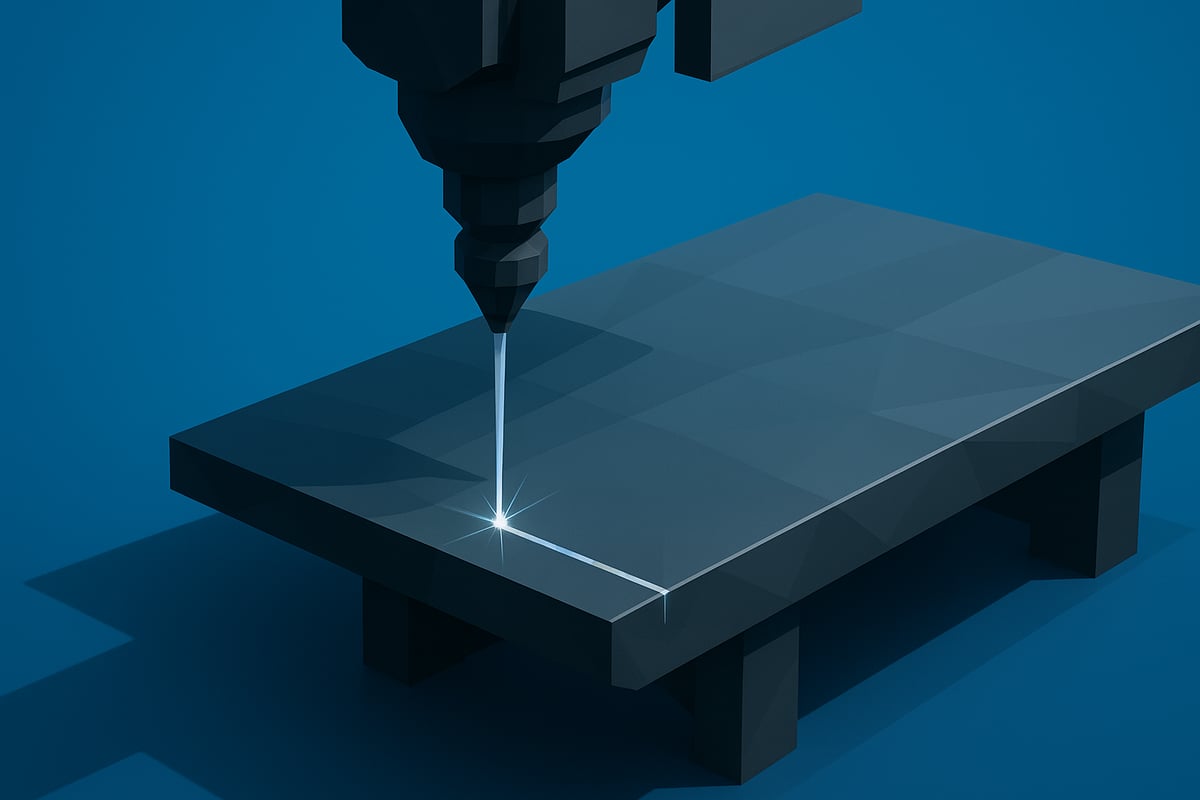
One of the most valuable benefits of industrial waterjet cutting services for thick metal is achieving a flawless edge finish. Unlike laser or plasma cutting, waterjet technology uses a cold cutting process, which means there is no heat-affected zone. This preserves the material’s structural integrity and prevents warping or micro-cracking, even in ultra-thick plates. According to recent findings on advanced waterjet technology for machining beveled structures, waterjet cutting offers a significant edge over thermal methods, especially for high-strength steel.
Unmatched Versatility and Complexity for Thick Metals
Industrial waterjet cutting services for thick metal can handle a wide variety of materials, including steel, stainless steel, aluminum, and titanium, at thicknesses up to 12 inches. The process allows for intricate shapes, tight internal radii, and sharp corners that would be challenging or impossible with other methods. This flexibility makes waterjet cutting ideal for both prototyping and full-scale production runs.
High Precision and Tight Tolerances
Waterjet systems routinely achieve tolerances as tight as ±0.005 inches, even on thick sections. This high level of accuracy reduces the need for secondary machining and ensures components fit precisely in demanding applications. The ability to maintain consistent kerf width and minimize edge taper is a critical advantage for industries like aerospace and energy.
Minimal Material Waste and Cost Savings
Because waterjet cutting is a non-thermal, contactless process, it produces minimal material loss. The narrow kerf and efficient nesting strategies maximize sheet utilization, directly reducing scrap and lowering overall project costs. In many cases, companies report up to 30% faster lead times compared to traditional machining, thanks to streamlined workflows and reduced finishing requirements.
Environmental Sustainability
Industrial waterjet cutting services for thick metal are recognized for their eco-friendly approach. The process recycles water, significantly reduces waste, and eliminates hazardous fumes. Abrasive materials can often be reclaimed or responsibly disposed of, helping companies meet environmental regulations and sustainability targets.
Real-World Impact
Consider infrastructure projects that require precisely cut steel beams for bridges or wind turbine bases. Waterjet technology not only delivers the necessary strength and accuracy but also ensures compliance with tight deadlines and strict quality standards. This makes it the preferred solution for mission-critical applications across heavy manufacturing, energy, and construction.
In summary, the advantages of industrial waterjet cutting services for thick metal—superior edge quality, high accuracy, versatility, material savings, and sustainability—empower businesses to achieve results that were previously unattainable with conventional methods. These benefits are essential for companies looking to stay competitive and responsive in the evolving landscape of advanced manufacturing.
Choosing the Right Waterjet Cutting Service Provider
Selecting a provider for industrial waterjet cutting services for thick metal is a critical decision that impacts both project quality and delivery timelines. The right partner can help you achieve precise results on schedule, while the wrong choice may lead to costly delays or rework.
When evaluating candidates, prioritize providers with extensive experience handling thick metal projects. Review their portfolio for similar work, and verify the type and age of their cutting equipment. Modern machines, especially those with advanced CNC control and high-pressure ratings, deliver superior accuracy and efficiency for demanding jobs.
Certifications are a key marker of professionalism. Look for ISO 9001 certification, as well as industry-specific credentials relevant to your sector. These standards confirm that the provider follows rigorous quality management systems, ensuring consistency and traceability for every project involving industrial waterjet cutting services for thick metal.
| Evaluation Criteria | Why It Matters |
|---|---|
| Experience with thick metal | Ensures capability for complex jobs |
| Equipment & Technology | Impacts precision and turnaround |
| Certifications | Confirms quality standards |
| In-house finishing | Reduces delays and improves consistency |
| Customer support | Eases communication and project changes |
Consider the provider’s capacity to handle large-scale or rush orders. Ask whether finishing tasks, such as deburring or machining, are performed in-house or outsourced. This affects both lead times and quality control. Providers offering comprehensive solutions, like those found at Industrial Manufacturing Solutions, often streamline the process and reduce coordination challenges.
Customer support is another vital factor. Responsive communication, proactive consultation, and transparent quoting processes set top providers apart. Request sample cuts and compare quotes from several vendors to assess value and consistency. According to industry research, 85% of manufacturers cite quality and reliability as their top priorities when choosing industrial waterjet cutting services for thick metal.
Finally, weigh all factors, from technical expertise to service reliability, before making your decision. A trusted provider will not only deliver precise industrial waterjet cutting services for thick metal but also support your project goals from start to finish.
Industrial Applications and Use Cases in 2026
Industrial waterjet cutting services for thick metal are transforming how manufacturers tackle complex, high-stakes projects. In 2026, these services are integral to sectors that demand accuracy, durability, and adaptability for thick metal processing.
Heavy Manufacturing and Fabrication
Heavy manufacturing relies on industrial waterjet cutting services for thick metal to create structural steel for bridges, construction, and mining equipment. These services deliver the precision needed for components like wind turbine bases and pipeline flanges.
For example, waterjet systems can cut 8-inch steel plates with minimal edge taper, ensuring parts fit seamlessly into large assemblies. Manufacturers report up to a 25% boost in productivity thanks to these advanced methods.
If you need further insight into fabrication for heavy industry, Fabrication Services for Heavy Industry provides an in-depth look at thick metal cutting and finishing solutions.
Aerospace and Defense
Aerospace and defense sectors depend on industrial waterjet cutting services for thick metal to handle titanium, Inconel, and other alloys. The technology supports production of aircraft bulkheads, rocket components, and armored plating, where dimensional stability is critical.
Traceability and documentation are standard. Waterjet processes avoid heat distortion, which is vital for safety and compliance. By 2026, 40% of aerospace suppliers use waterjet cutting for thick metals, citing superior edge quality and tight tolerances.
Energy and Power Generation
Industrial waterjet cutting services for thick metal are pivotal in the energy sector. Turbine housings, generator frames, and nuclear facility infrastructure all require thick, high-integrity metals cut without micro-cracking.
Waterjet’s cold-cutting process maintains material properties, crucial for stainless containment vessels and power plant components. Compliance with ASME and nuclear standards is easier to achieve, while eliminating heat-related weaknesses or failures.
Recycling and Sustainable Manufacturing
Recycling operations increasingly utilize industrial waterjet cutting services for thick metal to dismantle and repurpose heavy metal scrap. Rail tracks, structural beams, and obsolete machinery are processed into reusable sections.
This approach reduces landfill waste and supports circular manufacturing. Waterjet systems enable up to a 10% increase in recycled metal utilization, making sustainability goals more attainable for modern industry.
Custom and Niche Applications
Industrial waterjet cutting services for thick metal extend to creative and specialized projects. Architectural metalwork, marine hull reinforcements, and R&D prototypes benefit from the process’s flexibility.
Custom signage from 5-inch aluminum or low-volume, high-complexity parts for shipbuilding are common. The ability to cut intricate shapes in ultra-thick materials gives designers and engineers unparalleled freedom to innovate.
Challenges and Considerations When Cutting Thick Metal
Modern industrial waterjet cutting services for thick metal provide unmatched versatility, but even the most advanced systems face specific challenges when working with ultra-thick materials. Understanding these hurdles ensures realistic expectations and better project outcomes.
Physical and Technical Limitations
Industrial waterjet cutting services for thick metal are constrained by maximum thickness and part size. While leading-edge machines can handle steel up to 12 inches, cutting speeds slow significantly as thickness increases. Larger parts may require repositioning or modular setups, introducing complexity and potential alignment errors. Edge taper and kerf width become more pronounced in ultra-thick sections, demanding careful process control.
A comparison of cutting technologies highlights these constraints:
| Cutting Method | Max Thickness (Steel) | Heat Affected Zone | Edge Quality | Speed (Thick Sections) |
|---|---|---|---|---|
| Waterjet | 12 inches | None | Excellent | Slow |
| Plasma | 2-3 inches | Significant | Moderate | Moderate |
| Oxy-Fuel | 6 inches+ | High | Rough | Fast |
Operational and Environmental Considerations
Abrasive consumption rises sharply with thicker metals, making logistics and disposal a key concern. Managing used garnet and ensuring proper waste handling is essential for compliance and sustainability. Water and energy usage also increase, affecting operational costs. Many providers now implement recycling systems and water reclamation to offset environmental impact.
For projects in sectors like oil and gas, Oil and Gas Pipeline Fabrication Contractors face unique operational demands due to the scale and material grades involved. Selecting a provider experienced in these environments is crucial for efficiency and regulatory compliance.
Quality Management and Process Optimization
Maintaining high cut quality in industrial waterjet cutting services for thick metal requires advanced process strategies. Multi-pass cutting, precise nozzle calibration, and real-time monitoring help control edge taper and minimize kerf width deviation. Implementing pierce techniques and optimizing cut paths can reduce start-up defects, especially for intricate geometries.
Technical developments, such as those discussed in Processes and Apparatus Developments in Industrial Waterjet Applications, have introduced new methods for managing surface roughness and depth of cut. Providers must stay current with these advancements to deliver consistent results.
Cost, Maintenance, and Real-World Trade-Offs
Industrial waterjet cutting services for thick metal require regular maintenance, especially when handling high volumes and abrasive loads. Downtime for nozzle replacement and pump servicing can impact schedules. Additionally, balancing cost and precision is vital for large infrastructure projects. While waterjet offers superior quality, slower speeds and higher abrasive use may affect overall budgets.
Clients should weigh these considerations against project requirements. For example, a wind turbine base with tight tolerances may justify higher costs for flawless edges, while bulk structural components might allow for slight trade-offs. Open communication with service providers ensures the chosen process aligns with both technical and economic goals.
Future Trends and Technological Advancements in Waterjet Cutting
Industrial waterjet cutting services for thick metal are set to transform manufacturing in 2026 and beyond, driven by rapid technological innovation. As industries demand greater precision, efficiency, and sustainability, new advancements are shaping the future of waterjet processes.
AI and Machine Learning for Optimization
Artificial intelligence is revolutionizing industrial waterjet cutting services for thick metal. Machine learning algorithms now analyze cutting parameters in real time, automatically adjusting speed, pressure, and abrasive flow. This results in more consistent edge quality and tighter tolerances across a range of materials.
Facilities are leveraging predictive analytics to minimize downtime. By monitoring equipment health and usage patterns, AI-driven maintenance schedules reduce unexpected failures and extend machine life. Manufacturers can expect improved productivity and lower operational costs.
Industry 4.0 and Smart Factory Integration
The integration of industrial waterjet cutting services for thick metal into smart factories is rapidly gaining traction. Machines are now connected to centralized networks, enabling remote monitoring, diagnostics, and process control. Operators receive instant alerts about deviations in cut quality or equipment status, allowing for swift interventions.
Digital twins and cloud-based dashboards provide a virtual overview of production lines. This facilitates better planning, resource allocation, and traceability, especially for sectors like aerospace and energy where compliance and documentation are critical.
Advanced Abrasives and Robotic Automation
Material science breakthroughs are delivering new abrasive materials that cut faster and leave cleaner edges. These advances mean industrial waterjet cutting services for thick metal can handle ultra-thick alloys with less wear on equipment.
Robotic automation is also on the rise. Multi-axis robotic arms now perform complex cuts on large workpieces, reducing manual intervention. Automated abrasive delivery and tool-changing systems minimize downtime between jobs, ensuring higher throughput and consistent results.
Table: Key Technological Advancements
| Technology | Benefit | Impact on Thick Metal Cutting |
|---|---|---|
| AI/ML Optimization | Adaptive parameter control | Improved accuracy, reduced scrap |
| Smart Factory | Real-time monitoring, remote ops | Faster response to issues |
| Advanced Abrasives | Faster, cleaner cuts | Enhanced edge quality, lower costs |
| Robotic Automation | Multi-axis, automated tool changes | Complex geometries, higher productivity |
| Sustainable Systems | Water recycling, green abrasives | Lower environmental footprint |
Sustainability and Closed-Loop Water Systems
Sustainability is a central focus for industrial waterjet cutting services for thick metal. Modern systems employ closed-loop water recycling, dramatically reducing water consumption. Green abrasives, derived from recycled materials, are minimizing the environmental impact of cutting operations.
New filtration and reclamation technologies allow facilities to reuse both water and abrasive, supporting compliance with environmental regulations and helping companies meet their sustainability goals.
Market Growth and Emerging Applications
The market for industrial waterjet cutting services for thick metal is expanding rapidly. According to recent forecasts, the global waterjet cutting machine market is expected to see robust growth, fueled by demand for precision manufacturing and investments in advanced technology. For more details, see the Waterjet Cutting Machine Market Size to Hit US$ 74.01 Billion by 2034.
Emerging applications are driving this trend. In renewable energy, automated waterjet cells are used for mass production of battery enclosures and wind turbine components. Electric vehicle manufacturing and recycling industries are also adopting waterjet solutions for their ability to process thick, high-value metals with precision and minimal waste.
The Road Ahead
In summary, the future of industrial waterjet cutting services for thick metal is defined by smart automation, sustainability, and adaptability to new market demands. Companies that embrace these advancements will achieve greater efficiency, meet stricter quality standards, and remain competitive in a rapidly evolving manufacturing landscape.
As you’ve seen throughout this guide, precision, efficiency, and adaptability are crucial when tackling thick metal projects in today’s manufacturing landscape. Choosing the right partner can make all the difference, whether you’re looking for top-notch waterjet cutting, custom welding, or expert machining. If you’re ready to streamline your operations and ensure exceptional results for your next project, let’s connect and discuss your needs. You can easily Request a Quote to get started with a team that understands the demands of your industry and is committed to delivering quality you can trust.