
Manufacturing facilities across the Western United States rely on precision machining to transform raw materials into critical components that keep operations running smoothly. Industrial machining services encompass a broad spectrum of capabilities, from CNC milling and turning to custom fabrication and component refurbishment. These services have become increasingly vital as industries like oil and gas, aggregate processing, and recycling demand tighter tolerances, faster turnaround times, and more complex geometries. For businesses seeking reliable machining fabrication partners, understanding the scope, capabilities, and strategic value of professional machining operations is essential for maintaining competitive advantage and operational efficiency.
Core Capabilities of Modern Machining Operations
Industrial machining services extend far beyond simple cutting and drilling operations. Modern facilities offer comprehensive solutions that integrate multiple manufacturing disciplines to deliver complete component solutions.
Precision CNC Machining
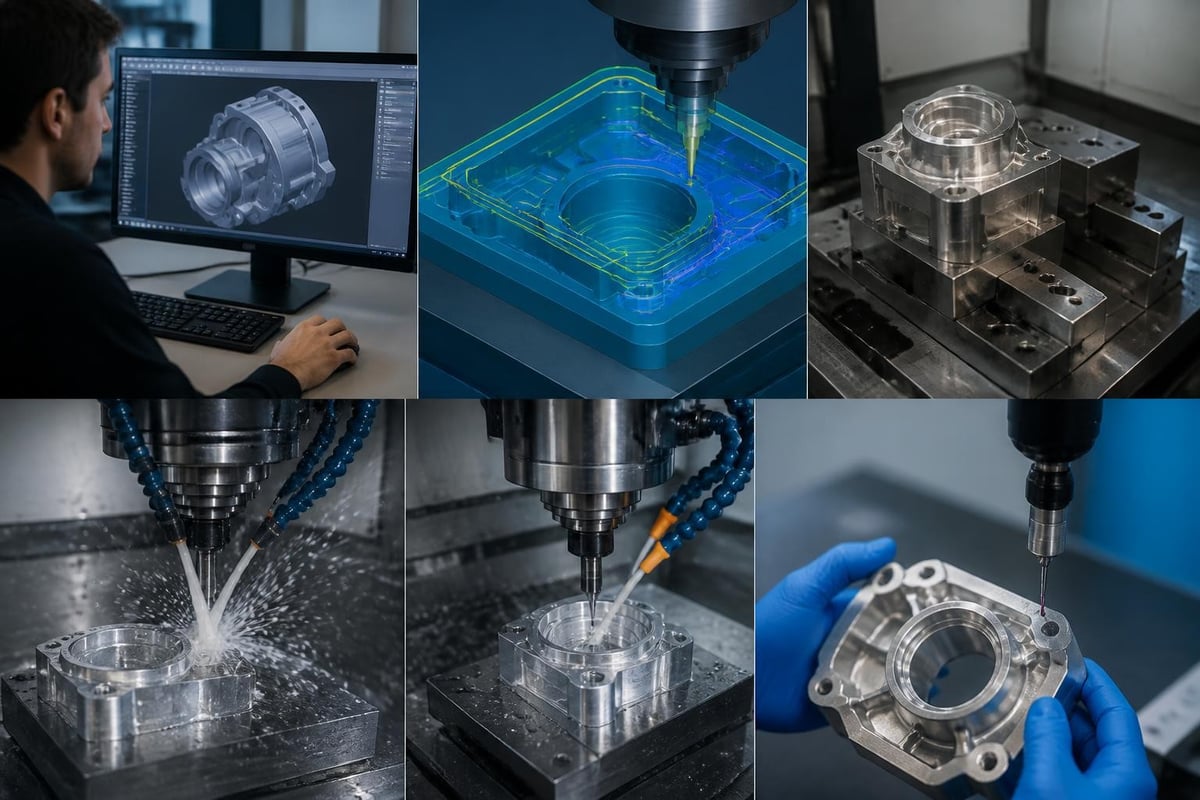
Computer Numerical Control (CNC) technology has revolutionized the machining industry by enabling repeatable precision at micron-level tolerances. CNC milling operations remove material from workpieces using rotating cutting tools, creating complex three-dimensional shapes with exceptional accuracy. CNC turning rotates the workpiece while a stationary cutting tool shapes cylindrical components like shafts, bushings, and custom fittings.
The capabilities of CNC machining services include:
- Multi-axis machining for complex geometries
- Tight tolerance work (±0.0005" or better)
- High-volume production runs
- Prototype development and low-volume specialty parts
- Hard-to-machine materials including stainless steel, titanium, and specialty alloys
Custom Fabrication and Modification
Beyond standard machining operations, industrial facilities provide custom fabrication services that address unique operational challenges. This includes modifying existing components, creating one-off replacement parts for obsolete equipment, and engineering solutions for specialized applications.
| Service Type | Application | Typical Turnaround |
|---|---|---|
| Emergency Repairs | Critical equipment failures | 24-48 hours |
| Custom Component Fabrication | Unique operational requirements | 1-2 weeks |
| Prototype Development | New product testing | 3-5 days |
| Volume Production | Ongoing supply needs | Scheduled delivery |
Companies like Metzger Machine Co. have demonstrated how longevity in the industry builds expertise across diverse manufacturing challenges, while precision-focused operations like CARR Machine & Tool showcase the critical role of machining in high-stakes aerospace and defense applications.
Material Expertise and Processing Capabilities
The versatility of industrial machining services depends heavily on material expertise. Different industries require different material properties, and skilled machinists must understand how each material responds to cutting forces, heat, and finishing processes.
Ferrous Metals
Carbon steel, stainless steel, and tool steel represent the most common materials in industrial machining. Carbon steel offers excellent machinability and cost-effectiveness for structural components, while stainless steel provides corrosion resistance essential for food processing, chemical handling, and outdoor applications. Tool steel delivers the hardness and wear resistance needed for dies, punches, and cutting tools.
Non-Ferrous Metals and Specialty Alloys
Aluminum machining dominates aerospace and lightweight applications due to its strength-to-weight ratio and excellent machinability. Brass and bronze components serve critical roles in hydraulic systems, electrical applications, and marine environments. For specialized applications, machinists work with titanium, Inconel, and other exotic alloys that demand specialized tooling and processing knowledge.
The metal processing services offered by comprehensive facilities integrate machining with complementary operations like heat treating, surface finishing, and protective coating application to deliver complete, ready-to-install components.
Material Selection Considerations
Choosing the right material involves balancing multiple factors:
- Operating environment (temperature, corrosion exposure, wear conditions)
- Mechanical requirements (strength, hardness, fatigue resistance)
- Machinability (production efficiency, tool life, surface finish)
- Cost constraints (material price, processing time, waste reduction)
- Availability (lead times, minimum order quantities, supplier reliability)
Integration with Welding and Fabrication
Industrial machining services rarely operate in isolation. Most complex manufacturing projects require integration between machining, welding, and structural fabrication to deliver complete assemblies.
Weld Preparation and Post-Weld Machining
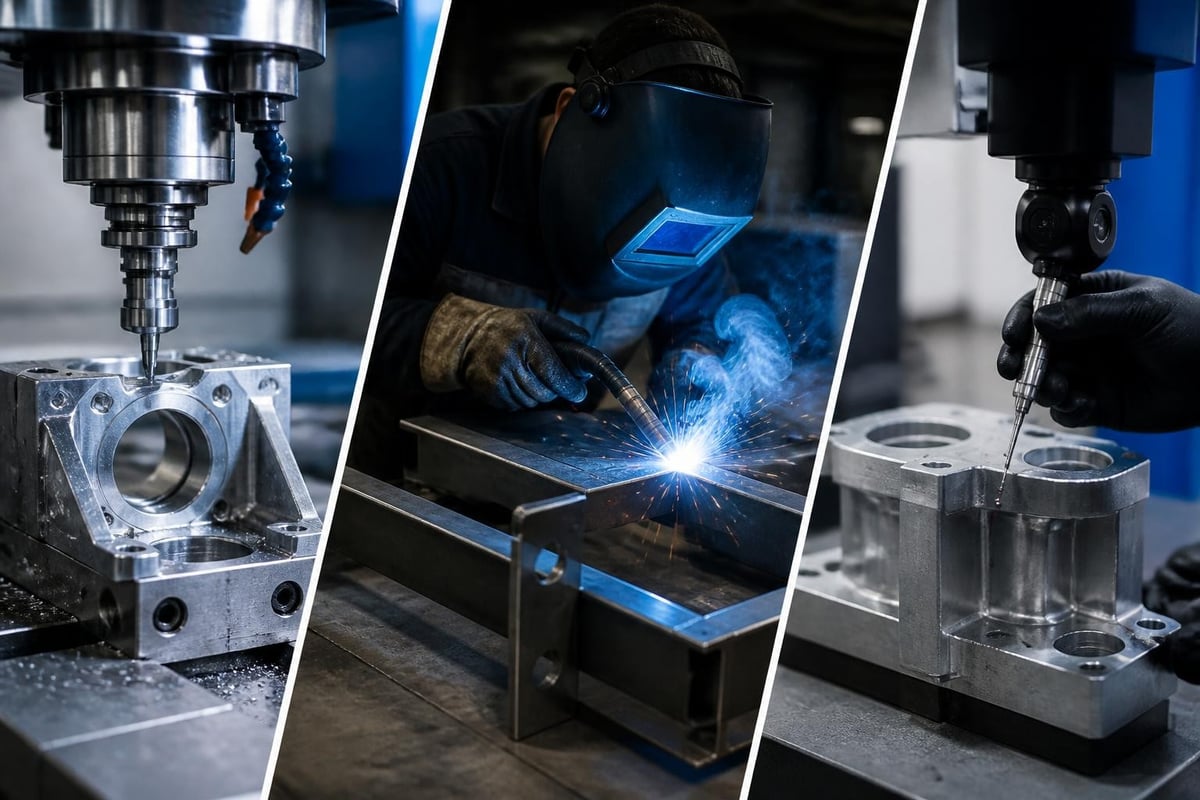
Precision machining creates the exact fitups necessary for quality welding. Beveling operations prepare edges for full-penetration welds, while facing operations ensure parallel mating surfaces. After welding, machining removes distortion, brings assemblies back to dimensional specifications, and creates precision mounting surfaces.
The connection between welding and fabrication services and machining capabilities allows manufacturers to manage complex projects under one roof, reducing transportation costs, minimizing scheduling conflicts, and maintaining quality control throughout the entire production process.
Hydraulic Component Manufacturing
Hydraulic systems demand exceptional precision. Cylinder bores must maintain precise tolerances to prevent leakage and ensure smooth operation. Valve bodies require accurate port placement and surface finishes to control fluid flow. Rod ends need precise threading and alignment to handle operational loads.
Facilities specializing in hydraulics in manufacturing combine machining expertise with hydraulic system knowledge to deliver components that meet demanding performance specifications.
Quality Control and Precision Measurement
Quality assurance separates amateur operations from professional industrial machining services. Modern facilities employ multiple inspection methods to verify dimensional accuracy, surface finish, and material properties.
Dimensional Inspection Methods
Coordinate Measuring Machines (CMM) provide three-dimensional verification of complex geometries with exceptional accuracy. Optical comparators project magnified part profiles for visual inspection against engineering drawings. Micrometers, calipers, and precision gauges offer versatile measurement capabilities for shop-floor verification.
The National Tooling & Machining Association establishes industry standards for precision manufacturing, providing resources on quality systems, workforce development, and best practices that professional machining operations follow to maintain consistent quality.
Advanced Inspection Technologies
Recent technological advances have introduced new quality control capabilities:
- Laser scanning for complex surface verification
- In-process monitoring using sensors and data analytics
- Statistical process control (SPC) for long-run quality management
- Non-destructive testing (NDT) for internal defect detection
Research into deep learning-based AI systems for machining error prediction demonstrates how advanced technologies are reshaping quality control, enabling predictive maintenance and real-time process optimization.
Industry-Specific Applications
Different industries place unique demands on industrial machining services. Understanding these sector-specific requirements helps manufacturers select appropriate service providers.
Oil and Gas Sector Requirements
The oil and gas industry requires components that withstand extreme pressures, corrosive environments, and temperature fluctuations. Valve components, pump parts, drilling equipment, and pipeline fittings all demand precision machining with materials specifically chosen for harsh operating conditions.
Specialists in oil and gas pipeline fabrication understand the critical nature of these components and the consequences of failure, implementing rigorous quality systems and material traceability.
Aggregate and Mining Applications
Aggregate processing and mining operations subject equipment to continuous abrasive wear. Crusher components, screen decks, conveyor parts, and processing equipment require hard-wearing materials and precision manufacturing to maximize operational life.
| Component Type | Material Requirement | Critical Feature |
|---|---|---|
| Crusher Jaws | Manganese steel | Impact resistance |
| Conveyor Shafts | Hardened alloy steel | Bearing surfaces |
| Screen Frames | Structural steel | Dimensional stability |
| Wear Plates | AR400/500 plate | Abrasion resistance |
Recycling Industry Demands
Recycling facilities process diverse materials under demanding conditions. Shredder components, sorting equipment, baler parts, and material handling systems require robust construction and readily available replacement parts to minimize downtime.
The metal fabrication industries served by comprehensive machining providers often include recycling operations that benefit from rapid turnaround on critical repairs and custom component development.
Shop Services Versus Field Machining
Industrial machining services encompass both traditional shop-based operations and mobile field machining capabilities. Each approach offers distinct advantages depending on project requirements.
Shop-Based Precision Manufacturing
Shop environments provide controlled conditions, heavy-duty equipment, and comprehensive tooling that deliver optimal precision and efficiency. Large CNC machining centers handle substantial workpieces with complex programming. Precision lathes produce cylindrical components at tight tolerances. Surface grinders achieve exceptional flatness and finish quality.
Shop-based operations excel at:
- High-volume production runs
- Components requiring multiple operations
- Projects demanding specialized equipment
- Work requiring complex fixturing and setup
Field Machining Advantages
When equipment cannot be transported to a shop, field machining brings precision capabilities to the worksite. Portable line boring equipment machines bearing housings on installed frames. Mobile milling systems repair damaged mounting surfaces. On-site cylinder repair restores hydraulic components without disassembly.
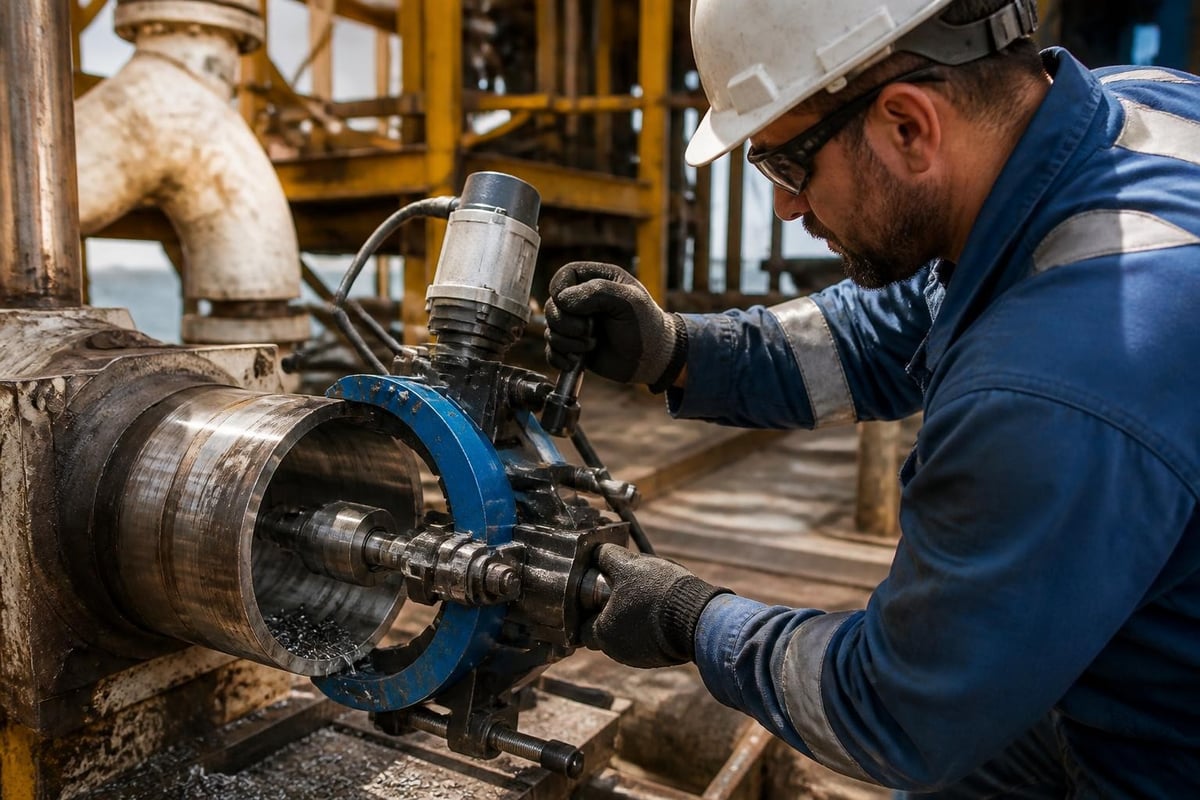
Field capabilities provided through industrial services minimize downtime by eliminating transportation delays and allowing repairs during scheduled maintenance windows.
Equipment Refurbishment and Maintenance
Industrial machining services play a critical role in extending equipment life through systematic refurbishment and preventive maintenance programs.
Component Restoration Processes
Worn shafts receive precision grinding or hard chrome plating followed by finish machining to restore original dimensions. Damaged bearing housings undergo boring operations to accept oversized bearings or sleeved repairs. Cracked castings receive precision machining to remove damaged material before welding repairs and final machining.
The industrial machinery refurbishment and maintenance approach combines machining expertise with metallurgical knowledge to develop cost-effective alternatives to component replacement.
Predictive Maintenance Integration
Modern maintenance strategies rely on condition monitoring data to schedule interventions before failures occur. Vibration analysis identifies bearing wear, thermal imaging detects lubrication issues, and ultrasonic testing reveals developing cracks.
When monitoring identifies developing problems, machining services provide timely interventions:
- Scheduled component replacement during planned shutdowns
- Precision repairs that restore critical clearances
- Upgraded materials that extend component life
- Improved designs that address chronic failure modes
Research into security risks in machining process monitoring highlights the importance of protecting operational data while leveraging advanced monitoring capabilities.
Selecting the Right Machining Partner
Choosing appropriate industrial machining services requires evaluating multiple factors beyond basic capability listings. The right partner becomes an extension of your maintenance and engineering team.
Technical Capability Assessment
Review equipment lists, but more importantly, examine completed projects similar to your requirements. Machine tool age and condition indicate commitment to quality and capacity for precision work. Software capabilities demonstrate ability to work from various file formats and engineering specifications. Material certifications verify capacity to provide required documentation for critical applications.
Resources like Machinist.com provide searchable directories of machine shops with verified capabilities, certifications, and specializations, helping manufacturers identify qualified candidates.
Geographic Considerations
Location impacts response time, shipping costs, and ability to provide field services. Regional providers understand local industry requirements and can respond quickly to emergency situations. However, specialized capabilities may justify working with distant suppliers for unique requirements.
For operations throughout the Western United States, regional providers offer advantages in responsiveness and understanding of local industry conditions affecting sectors like energy extraction, mineral processing, and agricultural manufacturing.
Capacity and Scheduling Reliability
Evaluate not just whether a shop can perform your work, but whether they can deliver on your required timeline. Lead time commitments should be realistic and consistently met. Emergency response capabilities matter when unplanned failures threaten production. Communication systems should provide regular updates on project status.
The MacRAE’S Blue Book offers comprehensive industrial directory listings that help identify potential partners with specific capabilities and capacity information.
Technology Trends Shaping Modern Machining
Industrial machining services continue evolving through technological advancement and digital integration. Understanding these trends helps manufacturers anticipate future capabilities.
Industry 4.0 Integration
Connected manufacturing technologies transform traditional job shops into smart factories. Sensor-equipped machine tools provide real-time performance data. Automated tool management optimizes cutting parameters and extends tool life. Digital work instructions eliminate paper systems and reduce setup errors.
Studies on Industrial Augmented Reality (IAR) systems demonstrate how emerging technologies enhance precision manufacturing processes, providing visual guidance and quality verification throughout production.
Distributed Manufacturing Networks
Research into Aggregate Programming for Industrial IoT services explores how networked machining facilities could collaborate on complex projects, sharing capacity and specialized capabilities across geographic regions.
This distributed approach allows:
- Load balancing across multiple facilities during peak demand
- Specialized capability access without capital investment
- Risk mitigation through diversified supplier networks
- Reduced lead times by utilizing geographically closer resources
Additive-Subtractive Hybrid Manufacturing
While additive manufacturing (3D printing) generates significant attention, hybrid approaches combining additive deposition with precision machining deliver practical advantages. Near-net-shape deposition reduces material waste, while precision machining achieves final tolerances and surface finishes. This combination particularly benefits low-volume complex components and rapid prototyping applications.
Cost Factors and Value Optimization
Understanding cost structures helps manufacturers optimize their investment in industrial machining services while maintaining quality and delivery requirements.
Pricing Components
Machining costs reflect multiple factors beyond simple hourly rates:
| Cost Element | Impact Factor | Optimization Opportunity |
|---|---|---|
| Material | 25-40% | Material selection, minimize waste |
| Labor | 30-45% | Batch sizing, design for manufacturability |
| Tooling | 10-20% | Standard features, appropriate tolerances |
| Setup | 5-15% | Volume production, repeat orders |
| Overhead | 15-25% | Long-term partnerships, volume commitments |
Design for Manufacturability
Engineering decisions significantly impact machining costs. Standard hole sizes use readily available tooling. Generous corner radii reduce tool wear and cycle time. Appropriate tolerances avoid unnecessary precision that increases costs without functional benefit.
Working with metal machine shop professionals during the design phase identifies cost-saving opportunities before production begins.
Total Cost of Ownership
Initial piece price represents only part of the economic equation. Evaluate:
- Quality consistency reducing scrap and rework
- Delivery reliability preventing production interruptions
- Technical support solving application challenges
- Warranty and replacement policies managing long-term costs
- Value engineering input continuously improving designs
Regulatory Compliance and Documentation
Many industries require comprehensive documentation and regulatory compliance from their machining suppliers. Professional industrial machining services maintain systems to meet these requirements.
Material Certification and Traceability
Critical applications demand certified material test reports (CMTR) verifying chemical composition and mechanical properties. Heat lot traceability tracks material from mill certification through finished components. Non-conforming material procedures prevent use of out-of-specification materials.
Quality System Certifications
ISO 9001 certification demonstrates commitment to consistent quality management. AS9100 serves aerospace applications. API certifications apply to oil and gas equipment. Industry-specific certifications verify capability to meet sector requirements.
Facilities providing manufacturing projects across multiple industries maintain documentation systems and quality certifications appropriate to diverse customer requirements.
Environmental and Safety Compliance
Modern machining operations manage coolant disposal, chip recycling, and air quality according to environmental regulations. Safety programs protect workers and visitors. OSHA compliance demonstrates commitment to workplace safety standards.
Industrial machining services deliver the precision manufacturing capabilities that keep commercial and industrial operations running efficiently across diverse sectors. From emergency repairs to complex custom fabrication projects, the right machining partner provides technical expertise, quality systems, and responsive service that directly impact your operational success. Whether you need precision CNC machining, field services, or integrated fabrication and machining solutions, LTJ Industrial Services offers comprehensive capabilities throughout the Western United States, combining advanced equipment with experienced craftsmen to deliver the quality and reliability your operations demand.