Industrial gearboxes are the workhorses of modern manufacturing, driving critical systems in aggregate processing, oil and gas extraction, recycling operations, and heavy equipment across the Western United States. When these vital components fail, production stops and costs escalate. Understanding the full scope of industrial gearbox repair and machining services helps operations managers make informed decisions about maintenance strategies, minimize downtime, and extend equipment lifespan. Whether you operate in Rifle, Colorado, or manage facilities across the region, accessing qualified repair capabilities can mean the difference between a minor interruption and a major operational crisis.
Understanding Gearbox Failures and Diagnostic Requirements
Gearbox failures rarely happen without warning. Vibration analysis, thermal monitoring, and oil sampling provide early indicators of developing problems. Advanced facilities now employ real-time condition monitoring systems that use sensor data to detect anomalies before catastrophic failure occurs.
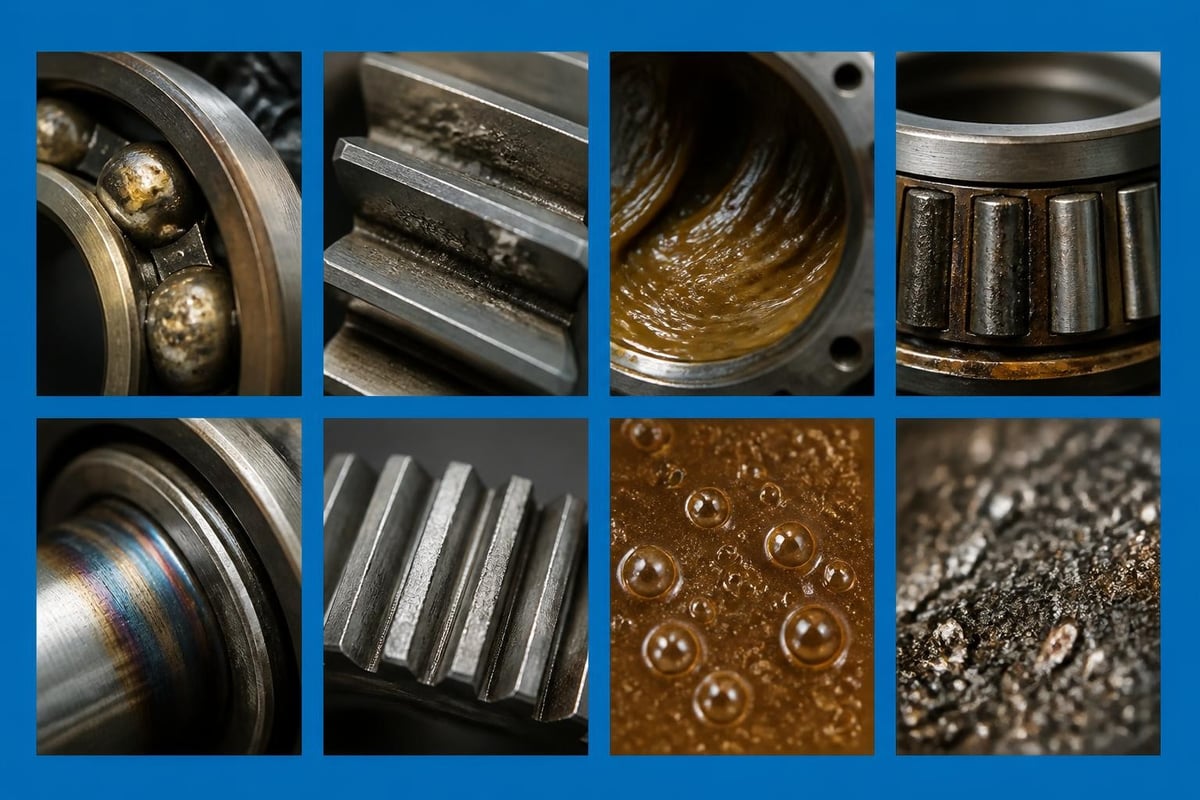
Common Failure Modes in Industrial Applications
The most frequent gearbox problems stem from bearing degradation, gear tooth wear, and lubrication breakdown. Research into premature bearing failures in planetary gearboxes reveals that metallurgical defects and improper installation account for significant failure rates in wind turbines and similar industrial applications.
Manufacturing and recycling operations face unique challenges:
- Contamination ingress from dust, water, or process materials
- Shock loading from sudden starts, stops, or material jams
- Thermal cycling in outdoor or high-temperature environments
- Misalignment between drive and driven components
- Inadequate lubrication due to extended service intervals
Standard classifications for bearing and gear damage follow ISO 15243 terminology, enabling technicians to communicate findings consistently across repair facilities and OEM representatives.
Precision Machining Capabilities for Gearbox Components
Rebuilding industrial gearboxes demands specialized machining equipment and expertise. Standard machine shops cannot achieve the tolerances required for reliable gear operation. Gear tooth geometry, surface finish, and heat treatment all influence long-term performance.
Critical Machining Operations
Professional custom metal machining services for gearbox repair include multiple precision processes. Shaft repair or replacement requires CNC turning to maintain concentricity within 0.0005 inches. Housing bore reconditioning uses line boring to restore bearing seat alignment.
| Machining Process | Application | Typical Tolerance |
|---|---|---|
| CNC turning | Shaft repair, bearing journals | ±0.0002" |
| Line boring | Housing alignment, bearing bores | ±0.001" TIR |
| Gear hobbing | Replacement gear manufacturing | AGMA Class 10-12 |
| Surface grinding | Mating surfaces, thrust faces | 16 Ra or better |
| Keyway milling | Power transmission fits | ±0.001" |
Gear finishing operations like grinding and honing significantly reduce noise and increase load capacity. Modern gear grinding and honing techniques achieve surface finishes previously impossible, extending service life in high-speed applications common to compressors and turbines.
Material Selection and Heat Treatment
Replacement gears and shafts must match or exceed original specifications. Carburized steel provides hard wear surfaces with tough cores. Through-hardened alloys suit high-shock applications. Proper heat treatment prevents premature failure and ensures dimensional stability.
Experienced metal fabrication services providers maintain relationships with certified heat treating facilities, ensuring components receive proper processing between machining operations.
Field Service Versus Shop-Based Repair Solutions
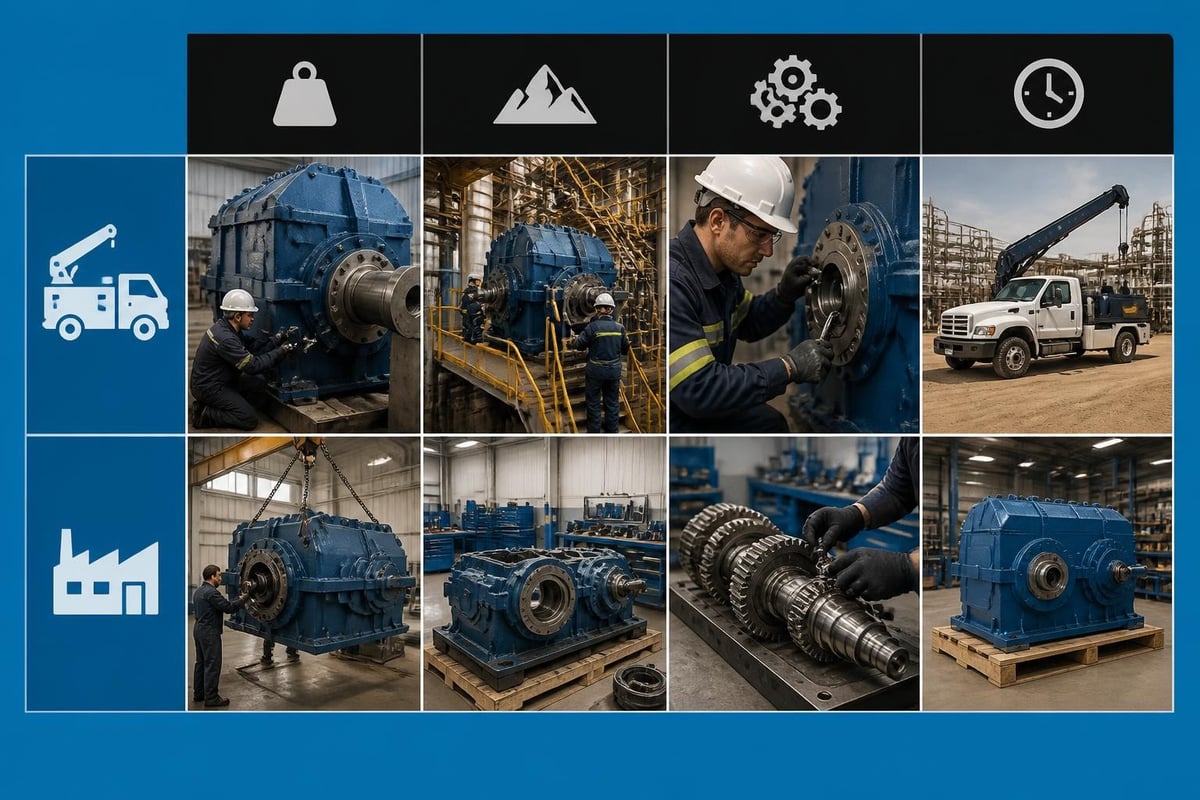
The decision between on-site repair and shop rebuilding depends on gearbox size, accessibility, and operational constraints. Field services minimize rigging costs and maintain production schedules, while shop repairs access complete tooling and controlled environments.
When Field Service Makes Sense
Large planetary gearboxes in aggregate crushers or mining equipment often exceed practical transportation limits. Field mechanics perform in-place bearing replacement, seal installation, and alignment correction. Mobile machining equipment enables on-site shaft repair and housing modifications.
Remote oil and gas installations benefit from field capabilities that reduce mobilization time. Experienced industrial and manufacturing service providers dispatch equipped trucks with welding, machining, and hydraulic tools to address emergencies throughout the Western region.
Advantages of Shop-Based Rebuilds
Complete teardown inspection reveals hidden damage invisible during field assessment. Crack detection, dimensional verification, and gear tooth inspection require specialized equipment. Climate-controlled environments ensure proper assembly cleanliness and accurate measurements.
Shop facilities offer:
- Overhead cranes for safe component handling
- Precision alignment tools and laser measurement systems
- Parts cleaning and inspection capabilities
- Inventory access for bearings, seals, and hardware
- Quality documentation with traceable processes
Rebuilding Versus Replacement Economics
Financial analysis drives repair-or-replace decisions. Capital budget constraints, lead times, and expected service life all influence the optimal path forward. A systematic approach prevents costly mistakes.
Cost Components in Gearbox Repair
Industrial gearbox repair and machining services involve multiple expense categories. Labor typically represents 40-60% of total costs. Material purchases include bearings, seals, gaskets, and lubricants. Machining services for shaft repair, housing modifications, or gear manufacturing add significant expense.
Transportation, rigging, and downtime costs often exceed direct repair expenses. Rush charges for expedited bearing procurement or overtime labor can double baseline estimates. Accurate scope definition during initial inspection prevents budget overruns.
When Replacement Makes Better Sense
Obsolete designs with unavailable parts may force replacement. Gearboxes with extensive housing damage from catastrophic failure often cost more to repair than replace. Modern efficiency improvements sometimes justify capital investment over repair.
Remanufacturing programs offer middle-ground solutions. European initiatives like the RemaNet project demonstrate how systematic remanufacturing achieves near-new performance at 50-70% of replacement cost while supporting circular economy principles.
Specialized Equipment and Tooling Requirements
Professional gearbox repair demands investment in specialized equipment. Bearing pullers, induction heaters, and hydraulic presses enable safe disassembly and assembly. Gear inspection tools verify tooth contact patterns and profile accuracy.
Essential Workshop Equipment
Facilities offering comprehensive industrial gearbox repair and machining services maintain extensive tool inventories. Dial indicators, micrometers, and bore gauges measure critical dimensions. Alignment lasers ensure proper shaft positioning during assembly.
Advanced shops utilize:
- Gear tooth verifiers for profile and lead inspection
- Vibration analyzers for pre-delivery testing
- Paint pattern testing to verify gear mesh geometry
- Runout tables for large component inspection
- Load test stands simulating operational conditions
Industry resources like Gear Technology’s machining guides provide technical reference for hobbing, shaping, and grinding operations required in gear manufacturing and repair.
Quality Assurance Protocols
Documented inspection procedures prevent quality escapes. First article inspection validates machined components against specifications. Final assembly checklists ensure proper torque sequences and clearance verification. Test run procedures confirm noise and vibration levels before release.
| Quality Check | Measurement Method | Acceptance Criteria |
|---|---|---|
| Bearing fit | Diameter measurement | Per bearing manufacturer spec |
| Gear backlash | Dial indicator | 0.004-0.012" typical |
| Shaft runout | Dial indicator on V-blocks | <0.002" TIR |
| Housing face flatness | Straight edge and feeler gauge | <0.003" across span |
| Oil seal concentricity | Dial indicator | <0.005" TIR |
Industry-Specific Repair Considerations
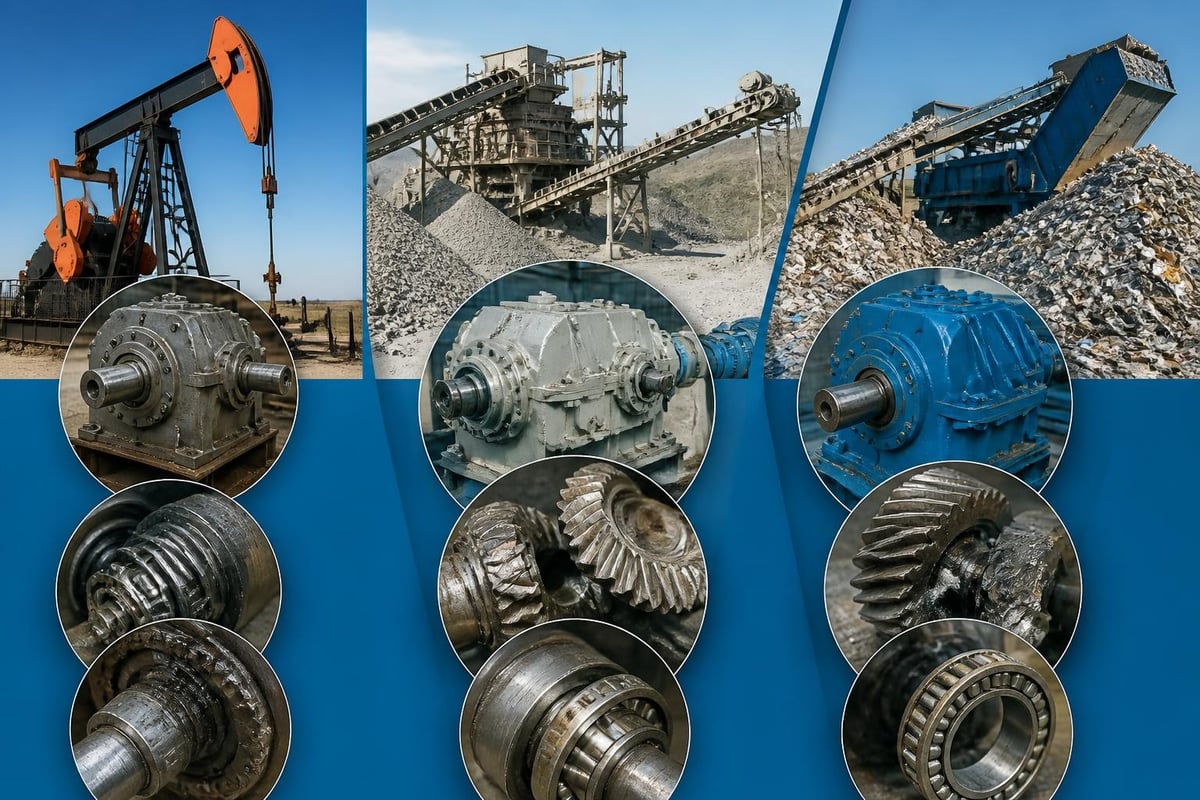
Different industrial sectors impose unique demands on gearbox repair strategies. Oil and gas operations require rapid response and hazardous area certifications. Aggregate processing faces extreme contamination and impact loading. Recycling facilities need flexible solutions for diverse equipment populations.
Oil and Gas Applications
Drilling, pumping, and compression equipment depends on gearbox reliability. Oilfield maintenance providers must respond to remote locations with limited infrastructure. Explosion-proof equipment and confined space protocols add complexity to field repairs.
Severe service conditions accelerate wear. High ambient temperatures, corrosive atmospheres, and continuous operation demand premium lubricants and robust seal designs. Preventive replacement of high-wear items during scheduled outages prevents unplanned failures.
Aggregate and Mining Equipment
Crushers, conveyors, and screens operate in abrasive environments. Gearboxes face constant contamination from dust and moisture. Heavy-duty sealing, frequent oil changes, and filtration upgrades extend service intervals between major repairs.
Material handling equipment often uses standardized gearbox designs. Maintaining exchange units allows rapid equipment return to service while damaged units undergo thorough rebuilding. This strategy minimizes production losses in continuous operations.
Recycling and Waste Processing
Material recovery facilities handle unpredictable loads and foreign object ingestion. Shredder gearboxes experience shock loading that defeats standard designs. Repair programs emphasize robust construction, oversize bearings, and enhanced lubrication capacity.
Preventive Maintenance and Monitoring Programs
Proactive maintenance extends gearbox life and prevents catastrophic failures. Oil analysis, vibration trending, and thermal imaging identify developing problems before production impact occurs. Structured programs balance inspection costs against failure risks.
Oil Analysis Programs
Regular sampling detects wear metal accumulation, contamination ingress, and lubricant degradation. Ferrous density indicates gear and bearing wear rates. Particle counting reveals seal or filtration failures. Viscosity changes signal thermal stress or dilution.
Trending data over time provides early warning:
- Iron levels climbing above 100 ppm suggest accelerated wear
- Water content exceeding 500 ppm indicates seal compromise
- Silicon particles point to dust ingress and filtration bypass
- Nitration or oxidation shows thermal or chemical breakdown
Vibration Analysis Techniques
Baseline measurements during commissioning establish normal operating signatures. Spectrum analysis separates individual component frequencies. Envelope detection highlights bearing defects. Time-waveform analysis captures intermittent events.
Professional manufacturing and industrial company service providers integrate condition monitoring with planned maintenance schedules, optimizing inspection frequency based on equipment criticality and operating severity.
Welding and Fabrication in Gearbox Repair
Housing cracks, mounting lug damage, and oil pan failures require expert welding repair. Preheating, controlled cooling, and stress relief prevent cracking in cast iron and steel housings. Weld quality directly impacts long-term reliability.
Cast Iron Housing Repair
Cast iron requires specialized techniques to avoid cold cracking. Nickel-based electrodes, buttering layers, and peening manage residual stresses. Experienced welders assess crack extent and design repairs that restore structural integrity without introducing new failure points.
Large housings may require custom fixturing to maintain alignment during welding. Temperature control prevents distortion that would require extensive machining correction. Post-weld inspection using magnetic particle or penetrant testing verifies crack removal.
Custom Fabrication Solutions
Obsolete gearbox models sometimes require fabricated replacement components. Bearing caps, access covers, and mounting brackets can be manufactured when OEM parts are unavailable. Metal fabrication industries expertise ensures proper material selection and dimensional accuracy.
Skid-mounted equipment benefits from integrated fabrication and machining capabilities. Modifications for improved accessibility, enhanced cooling, or upgraded lubrication systems extend service life and simplify future maintenance.
Supply Chain and Parts Procurement Strategies
Bearing availability often determines repair timelines. Standardized sizes ship quickly, while custom bearings require weeks or months. Maintaining relationships with multiple suppliers provides options during critical failures.
Critical Spare Parts Inventory
High-value equipment justifies spare parts investment. Complete bearing sets, seal kits, and hardware packages enable rapid turnaround during planned outages. Proper storage in climate-controlled conditions prevents deterioration.
Inventory management balances carrying costs against downtime risks:
- Critical spares for equipment with no backup capability
- Insurance spares for long-lead or obsolete components
- Common wear items shared across multiple machines
- Consumables including lubricants, sealants, and cleaning supplies
- Emergency kits pre-positioned at remote facilities
Reverse Engineering Capabilities
Undocumented or modified gearboxes require dimensional analysis to source replacement parts. 3D scanning, CAD modeling, and material analysis enable accurate reproduction. Experienced machinists extract critical specifications from worn components, designing improved replacements that address original failure causes.
Training and Workforce Development
Skilled technicians separate competent repair facilities from marginal providers. Precision measurement, geometric tolerancing, and mechanical assembly skills require years to develop. Investment in training ensures consistent quality and efficient operations.
Technical Competencies Required
Gearbox repair technicians need diverse capabilities. Machining knowledge guides appropriate repair versus replacement decisions. Mechanical aptitude ensures proper assembly sequences and torque procedures. Diagnostic skills connect symptoms to root causes.
Advanced practitioners understand:
- Gear geometry and tooth contact principles
- Bearing selection for load and speed conditions
- Lubrication theory and oil selection criteria
- Metallurgy fundamentals for material evaluation
- Metrology and precision measurement techniques
Certification and Quality Standards
Formal training programs through technical colleges build foundational skills. Manufacturer certifications for specific gearbox lines add specialized knowledge. Quality management systems like ISO 9001 provide structured approaches to process control and continuous improvement.
Emergency Response and Rapid Turnaround Services
Unplanned failures demand immediate response. 24/7 availability, expedited procurement, and overtime capability minimize production losses. Established relationships with repair providers enable fast mobilization during emergencies.
Critical Failure Response Protocols
When production stops, every hour counts. Initial phone consultation determines failure severity and response requirements. Field assessment within hours guides repair strategy and parts ordering. Temporary repairs may restore partial operation while permanent solutions are prepared.
Emergency services include:
- Same-day mobilization to failure sites across the Western United States
- Temporary repairs to resume limited production
- Expedited bearing procurement through global supply networks
- Overtime machining for critical component replacement
- Alternative equipment sourcing when repair timelines are excessive
Long-Term Partnership Benefits
Ongoing relationships with industrial gearbox repair and machining services providers deliver advantages beyond individual repairs. Equipment history tracking, predictive maintenance, and continuous improvement programs optimize total cost of ownership.
Performance Documentation and Trending
Detailed repair records reveal failure patterns and opportunities for design improvements. Bearing life trends identify lubrication or alignment issues. Component failure analysis guides preventive replacement schedules.
Comprehensive documentation supports:
- Warranty claims with OEM manufacturers
- Insurance submissions for catastrophic failures
- Regulatory compliance in audited industries
- Asset management decisions on repair versus replacement
- Budget forecasting based on historical costs and intervals
Continuous Improvement Initiatives
Partnership approaches identify systemic issues affecting multiple gearboxes. Lubrication upgrades, filtration enhancements, or operating procedure changes prevent recurring failures. Collaborative problem-solving leverages both operator knowledge and technical expertise.
Industrial gearbox failures impact production, budgets, and safety across manufacturing, aggregate, oil and gas, and recycling operations throughout the Western United States. Strategic partnerships with qualified repair providers ensure rapid response, quality workmanship, and cost-effective solutions. LTJ Industrial Services delivers comprehensive industrial gearbox repair and machining services from their Rifle, Colorado facility, combining precision machining, expert welding, and field service capabilities to keep your critical equipment running. Contact our team today to discuss your gearbox maintenance and emergency repair needs.