
Hydraulics manufacturing represents a critical sector within industrial production, combining precision engineering with robust fabrication techniques to create systems that power everything from heavy machinery to sophisticated automation equipment. This specialized field demands expertise in machining, welding, and assembly processes that transform raw materials into components capable of withstanding extreme pressures and operating conditions. For businesses across the Western United States, particularly in the oil and gas, recycling, and aggregate industries, understanding the intricacies of hydraulics manufacturing helps ensure reliable equipment performance and operational efficiency.
The Foundation of Hydraulics Manufacturing Processes
Hydraulics manufacturing begins with careful material selection and preparation. Manufacturers must choose metals and alloys that can withstand high-pressure applications while maintaining dimensional stability over extended service life. Steel alloys, particularly those with enhanced strength characteristics, form the backbone of most hydraulic components.
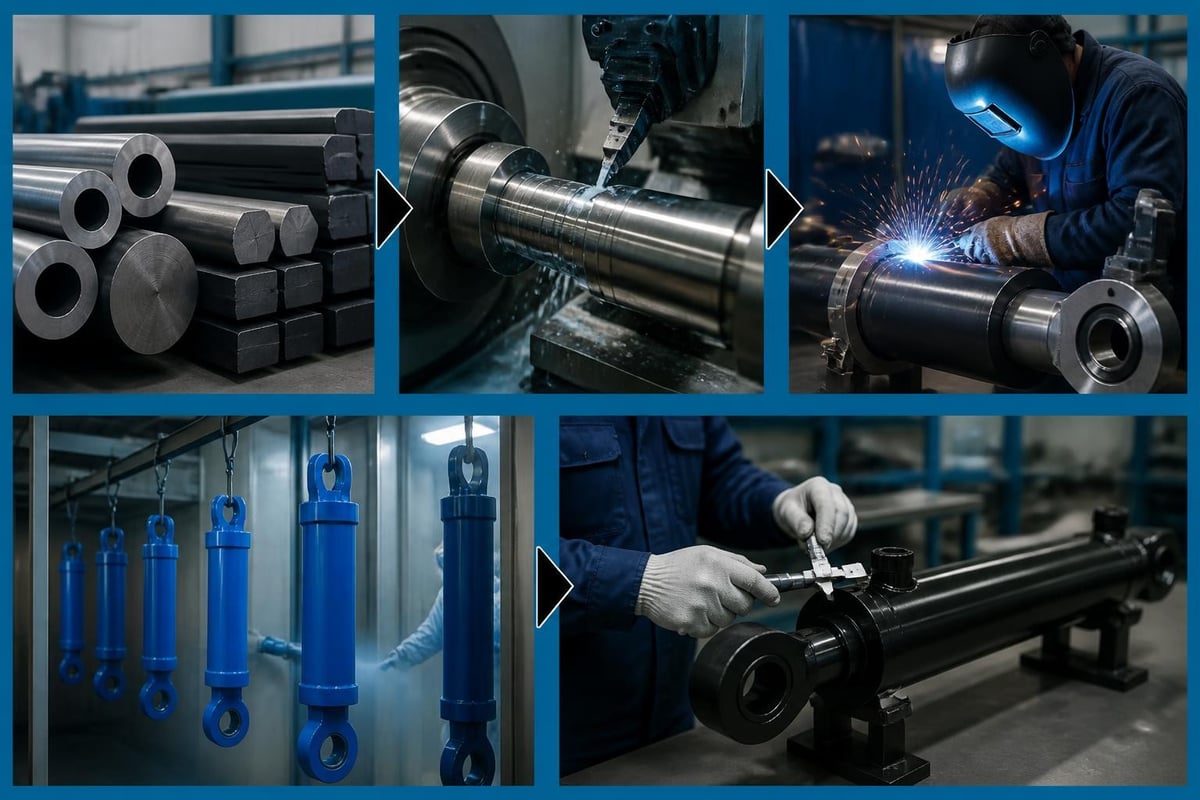
The manufacturing workflow typically involves multiple specialized processes:
- Precision machining for cylinder bores, piston rods, and valve bodies
- CNC operations that ensure tight tolerances and surface finish requirements
- Heat treatment to enhance material properties and durability
- Welding and fabrication for assembling housings and structural components
- Surface finishing including honing, grinding, and chrome plating
Quality control permeates every stage of hydraulics manufacturing. Dimensional accuracy, surface finish specifications, and material integrity checks ensure components meet stringent industry standards. A single deviation can compromise system performance or create safety hazards in field applications.
Machining Excellence in Hydraulic Component Production
Precision machining stands as the cornerstone of hydraulics manufacturing. Modern CNC equipment enables manufacturers to achieve tolerances measured in thousandths of an inch, critical for components like cylinder barrels and piston rods that must maintain seal integrity under pressure.
The machining process for hydraulic cylinders requires specialized techniques. Internal honing operations create the smooth, precisely dimensioned bores necessary for piston movement. External grinding operations on piston rods ensure uniform diameter and surface finish that prevents seal damage. These operations demand both advanced equipment and skilled operators who understand hydraulic system requirements.
Thread cutting for port connections, end caps, and mounting hardware represents another critical machining operation. Hydraulic fittings operate under extreme pressure, making thread accuracy essential for preventing leaks and ensuring safe operation. Many industrial fabrication companies maintain specialized equipment dedicated to hydraulic fitting production.
Welding and Fabrication in Hydraulic System Manufacturing
Welding plays an integral role in hydraulics manufacturing, particularly for fabricating cylinder bodies, manifolds, and mounting brackets. The welding processes used must produce joints capable of containing high-pressure fluids without failure. TIG welding, MIG welding, and specialized procedures ensure proper penetration and strength in critical joints.
Hydraulic manifold fabrication demonstrates the complexity of welding in this field. These components integrate multiple flow paths, pressure ports, and valve mounting surfaces within a single body. Custom metal fabrication techniques allow manufacturers to create manifolds tailored to specific system requirements.
Critical Welding Considerations
| Welding Aspect | Requirement | Purpose |
|---|---|---|
| Joint Penetration | 100% through-thickness | Prevents pressure leaks |
| Heat-Affected Zone | Minimal distortion | Maintains dimensional accuracy |
| Porosity | Zero tolerance | Ensures pressure containment |
| Surface Finish | Smooth, defect-free | Enables proper sealing |
Quality welding in hydraulics manufacturing extends beyond basic joint strength. Welders must understand how thermal expansion affects component dimensions and implement techniques that minimize warping. Post-weld stress relieving and dimensional verification ensure completed assemblies meet specifications.
The integration of welding with machining operations requires careful planning. Many hydraulic components undergo initial welding, followed by finish machining to achieve final dimensions. This sequence allows manufacturers to correct any distortion from welding while maintaining critical tolerances.
Advanced Technologies Reshaping Hydraulics Manufacturing
The hydraulics industry continues evolving with technological advancement. According to recent analysis of hydraulic market trends for 2026, smart systems and electro-hydraulic integration are transforming traditional manufacturing approaches. These innovations require manufacturers to expand capabilities beyond conventional mechanical production.
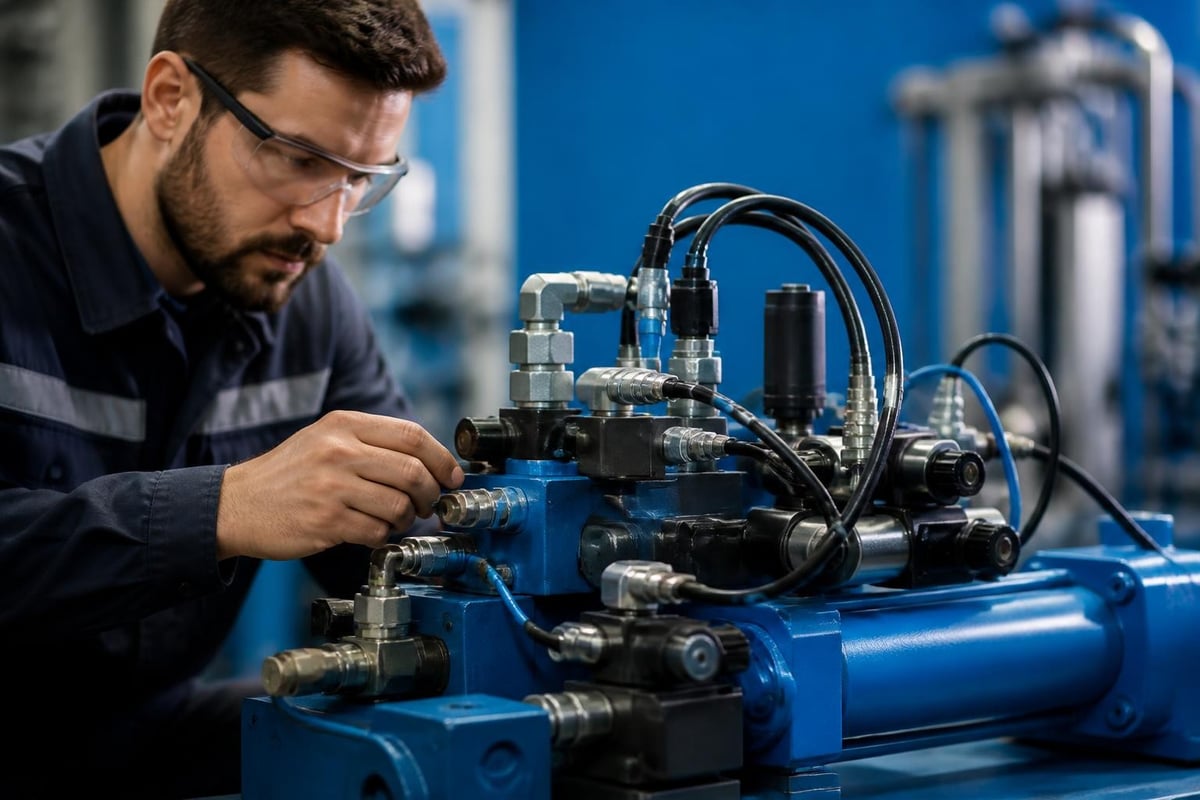
Sensor integration represents a significant shift in hydraulics manufacturing. Components now incorporate pressure transducers, position sensors, and temperature monitoring devices. Manufacturers must develop expertise in electronics assembly, calibration, and testing alongside traditional hydraulic skills.
Additive manufacturing technologies are beginning to influence hydraulics production, particularly for prototyping and low-volume specialty components. While traditional methods remain dominant for high-volume production, 3D printing enables rapid design iteration and customization. Research into novel fabrication methods demonstrates potential future applications in hydraulic component production.
Industry 4.0 and Digital Manufacturing
Digital transformation impacts hydraulics manufacturing through several channels. Computer-aided design systems enable engineers to simulate hydraulic circuit performance before committing to production. This virtual testing reduces development costs and accelerates time-to-market for new products.
Manufacturing execution systems track production progress, material usage, and quality metrics in real-time. This data visibility helps manufacturers optimize processes, reduce waste, and maintain consistent quality. The application of holonic manufacturing control architectures provides flexibility in adapting to changing production requirements.
Predictive maintenance capabilities rely on data collected from manufacturing equipment. By monitoring tool wear, vibration patterns, and energy consumption, manufacturers can schedule maintenance proactively, minimizing unplanned downtime. This approach proves particularly valuable in high-volume hydraulics production where equipment availability directly impacts delivery schedules.
Material Science and Component Reliability
Material selection profoundly influences hydraulic component performance and longevity. Manufacturers must balance strength requirements, corrosion resistance, machinability, and cost considerations when specifying materials for different applications.
Chrome-plated piston rods represent a standard in hydraulics manufacturing due to their wear resistance and corrosion protection. The plating process requires precise control to achieve uniform coating thickness and hardness. Alternative coating technologies, including ceramic and polymer composites, offer enhanced performance in specific applications.
Seal materials constitute another critical area of materials engineering. Modern hydraulic systems operate across wide temperature ranges and with various fluid types. Seal manufacturers develop compounds that maintain elasticity and sealing capability under these diverse conditions. Hydraulics manufacturers must understand seal compatibility when designing grooves and surface finishes.
Performance-Critical Material Properties
Successful hydraulics manufacturing requires attention to several key material characteristics:
- Tensile strength sufficient to withstand operating pressures with safety margins
- Fatigue resistance for components experiencing cyclical loading
- Corrosion resistance appropriate for the operating environment
- Thermal stability to maintain properties across temperature extremes
- Machinability enabling efficient, precise manufacturing operations
The relationship between material properties and manufacturing processes requires careful coordination. Heat treatment cycles that enhance strength may introduce distortion requiring additional machining. Surface hardening treatments improve wear resistance but complicate subsequent operations.
Quality Assurance in Hydraulics Manufacturing
Quality systems in hydraulics manufacturing extend beyond final product inspection. Process controls at each manufacturing stage prevent defects rather than detecting them after occurrence. This proactive approach reduces scrap, minimizes rework, and ensures consistent product quality.
Non-destructive testing methods play essential roles in quality verification. Ultrasonic inspection detects internal flaws in welded joints and cast components. Magnetic particle inspection reveals surface cracks invisible to visual examination. Pressure testing validates component integrity under operating conditions.
Dimensional inspection utilizing coordinate measuring machines provides precise verification of critical features. These systems measure complex geometries with micron-level accuracy, ensuring components meet stringent tolerance requirements. Statistical process control analyzes measurement data to identify trends before they produce non-conforming parts.
Documentation requirements in hydraulics manufacturing support traceability throughout component lifecycles. Material certifications, process records, and inspection results create comprehensive quality histories. This documentation proves valuable for warranty claims, failure analysis, and continuous improvement initiatives.
Customization and Application-Specific Manufacturing
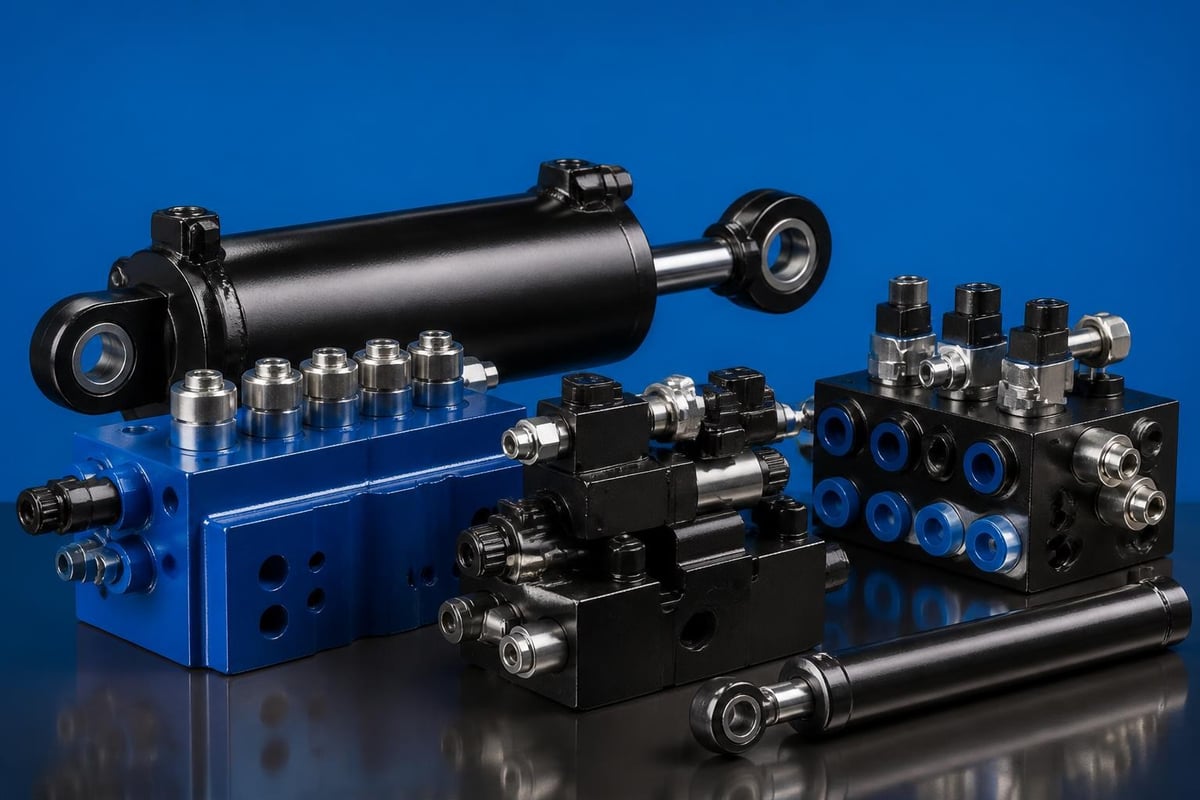
The diversity of hydraulic applications demands flexible manufacturing capabilities. Standard catalog components serve many needs, but specialized equipment often requires custom solutions. Custom welding shops provide the adaptability necessary for application-specific hydraulics manufacturing.
Custom hydraulic cylinder production illustrates this flexibility. Manufacturers work with engineers to design cylinders matching specific stroke lengths, bore sizes, mounting configurations, and pressure ratings. This collaboration ensures optimal performance for particular applications while maintaining manufacturability.
Hydraulic power units demonstrate similar customization requirements. Tank size, pump selection, valve configurations, and control systems vary based on machine requirements. Manufacturers skilled in both hydraulic design and fabrication can deliver integrated solutions tailored to customer specifications.
Prototyping and Small-Batch Production
Not all hydraulics manufacturing involves high-volume production. Many applications require prototype development or limited production runs. Manufacturers equipped for this work maintain flexible processes accommodating design iterations and specification changes.
Rapid prototyping techniques enable faster development cycles. CNC machining from solid stock produces functional prototypes without tooling investment. This approach allows engineers to test designs under actual operating conditions before committing to production tooling.
Small-batch manufacturing balances efficiency with flexibility. Setup optimization, modular tooling, and efficient changeover procedures enable economical production of limited quantities. This capability supports specialty equipment manufacturers and companies requiring replacement components for legacy systems.
Supply Chain Considerations in Hydraulics Manufacturing
Hydraulics manufacturing depends on reliable supply chains for raw materials, components, and services. Steel availability, pricing fluctuations, and lead times impact production planning and cost structures. Manufacturers must develop relationships with multiple suppliers to ensure material continuity.
Component sourcing represents another supply chain dimension. Seals, fittings, and control valves often come from specialized suppliers. Quality and delivery consistency from these sources directly affect final product reliability and manufacturing efficiency.
According to insights on new OEM design cycles and reduced lead times, the industry is working to compress development timelines while maintaining quality standards. This trend requires closer collaboration between manufacturers and suppliers throughout the development process.
Recent data from the National Fluid Power Association indicates positive momentum in fluid power shipments, reflecting industry recovery and growth. This market expansion creates opportunities for manufacturers capable of scaling production while maintaining quality.
Environmental and Sustainability Factors
Environmental considerations increasingly influence hydraulics manufacturing practices. Fluid disposal, coating processes, and energy consumption face growing regulatory scrutiny. Manufacturers must implement sustainable practices while maintaining product quality and cost competitiveness.
Hydraulic fluid selection impacts both performance and environmental responsibility. Biodegradable fluids reduce environmental risk in applications where leakage might occur. Manufacturers must ensure component materials and seals remain compatible with these alternative fluids.
Energy efficiency in manufacturing operations reduces costs and environmental impact. Modern machine tools consume less energy while delivering improved performance. LED lighting, efficient HVAC systems, and waste heat recovery contribute to overall sustainability goals.
Workforce Development and Technical Expertise
Hydraulics manufacturing requires skilled workers across multiple disciplines. Machinists, welders, assemblers, and quality inspectors each need specialized knowledge specific to hydraulic applications. The aging workforce in manufacturing trades creates challenges for maintaining this expertise.
Training programs must address both fundamental skills and hydraulic-specific knowledge. Understanding pressure principles, seal technology, and contamination control separates competent hydraulic technicians from general manufacturing workers. Welding businesses investing in employee development maintain competitive advantages through superior workmanship.
Certification programs from industry organizations provide standardized training benchmarks. These credentials verify individual competency and help employers identify qualified candidates. Continuing education keeps workers current with evolving technologies and manufacturing methods.
Apprenticeship programs offer structured pathways for developing skilled hydraulics manufacturing workers. These programs combine classroom instruction with supervised hands-on experience, producing well-rounded technicians prepared for complex manufacturing environments.
Industry Trends and Future Directions
The hydraulics manufacturing sector continues adapting to technological advancement and market demands. Analysis of critical trends shaping the hydraulic industry in 2026 reveals several strategic priorities for manufacturers.
Electrification of mobile equipment influences hydraulic system design and manufacturing. Hybrid systems combining electric and hydraulic power require new component configurations and integration approaches. Manufacturers must develop capabilities supporting these emerging technologies.
The movement toward smart fluid power systems driving next-generation industry creates opportunities for value-added manufacturing. Components incorporating sensing, communication, and control capabilities command premium pricing while differentiating manufacturers from competitors focused solely on commodity production.
Reshoring manufacturing to North America affects the hydraulics industry. Companies seeking domestic suppliers to reduce supply chain risk create opportunities for capable manufacturers. However, this trend demands competitive pricing alongside quality and delivery performance.
Automation within manufacturing facilities improves consistency while addressing workforce challenges. Robotic welding, automated material handling, and lights-out machining extend production capacity without proportional workforce increases. The role of hydraulic systems in manufacturing itself demonstrates how hydraulic technology enables automation across diverse industries.
Hydraulics manufacturing combines traditional fabrication skills with advanced engineering to create systems powering modern industry. Success in this field requires expertise across machining, welding, material science, and quality assurance. For businesses throughout the Western United States requiring hydraulic components, cylinders, or complete systems, partnering with experienced manufacturers ensures reliable performance and lasting value. LTJ Industrial Services delivers comprehensive hydraulics manufacturing, machining, and welding capabilities backed by deep expertise serving the commercial and industrial sectors across the region.