When industrial equipment experiences hydraulic system failures, production grinds to a halt and costs escalate rapidly. Finding qualified hydraulic repair near me becomes a critical priority for operations managers, maintenance supervisors, and plant engineers throughout the Western United States. Whether you're managing aggregate processing facilities, oil and gas operations, or recycling centers, understanding what separates professional hydraulic repair services from quick fixes can mean the difference between weeks of downtime and a same-day solution. The complexity of modern hydraulic systems requires specialized knowledge, precision tools, and field-proven experience that goes far beyond basic mechanical work.
Understanding Hydraulic System Failures
Hydraulic systems operate under extreme pressures, often exceeding 3,000 PSI in industrial applications. These forces, combined with contamination, heat, and continuous operation, create conditions where even minor issues cascade into major failures.
Common hydraulic failures include:
- Seal degradation causing pressure loss and fluid leaks
- Contaminated fluid damaging pumps and valves
- Worn cylinders reducing operational efficiency
- Failed pressure relief valves creating dangerous conditions
- Cavitation damage from air entrainment
The manufacturing sector experiences particularly challenging hydraulic demands. Equipment in metal processing facilities and aggregate operations runs continuously, magnifying wear patterns that might develop slowly in less demanding applications.
Critical Warning Signs
Before complete hydraulic failure occurs, systems typically display warning signs that trained technicians can identify during routine inspections. Temperature increases above normal operating ranges often indicate internal leakage or excessive friction. Unusual noise patterns, including whining, knocking, or grinding sounds, signal component wear or cavitation issues that require immediate attention.
Slow or erratic cylinder movement suggests internal seal failure or contaminated control valves. These symptoms rarely improve on their own and almost always worsen under continued operation, potentially causing secondary damage to connected components.
What Professional Hydraulic Repair Services Include
When searching for hydraulic repair near me, understanding the scope of professional services helps set appropriate expectations. Comprehensive hydraulic repair extends well beyond simple component replacement.
| Service Category | Typical Components | Expected Turnaround |
|---|---|---|
| Emergency Field Repair | Hose replacement, seal kits, quick couplers | 2-8 hours |
| Cylinder Rebuild | Seals, rods, tubes, bearings | 1-3 days |
| Pump Overhaul | Gears, bearings, seals, housings | 3-5 days |
| System Diagnostics | Full pressure testing, fluid analysis | 4-8 hours |
| Preventative Maintenance | Filter service, fluid exchange, inspections | 2-4 hours |
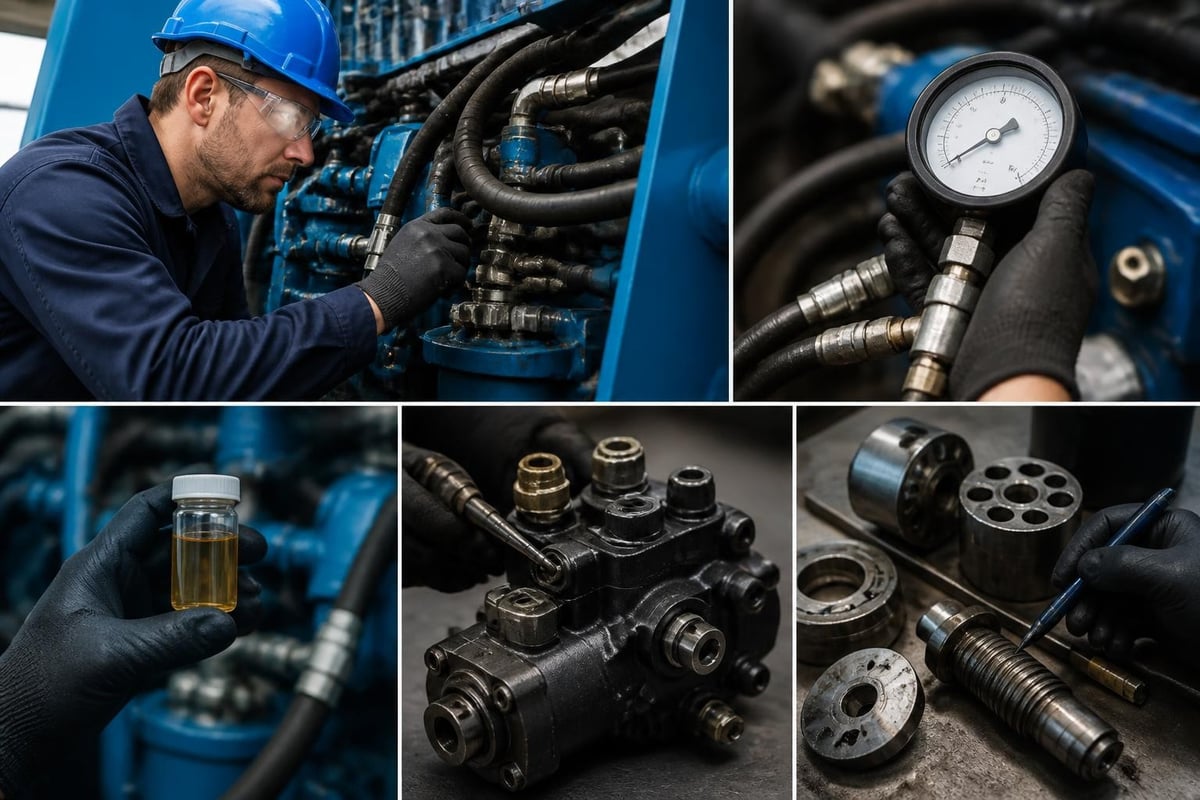
Professional hydraulic repair technicians perform systematic diagnostics before disassembly. This approach, emphasized in proactive maintenance schedules for hydraulic systems, identifies root causes rather than just addressing symptoms.
Field Repair Capabilities
Industrial operations cannot always afford the downtime required to transport equipment to repair facilities. Field-capable hydraulic repair services bring specialized tools, replacement parts, and technical expertise directly to your location. This approach proves particularly valuable for large-scale equipment installations, remote operations, and situations where equipment removal creates logistical challenges.
Field technicians equipped with portable test stands can diagnose pressure losses, flow restrictions, and component failures on-site. They carry common replacement parts including seals, hoses, fittings, and filters, enabling same-day repairs for many common failures. For complex rebuilds requiring shop equipment, field technicians can safely isolate affected circuits and implement temporary solutions that maintain partial operation while permanent repairs are scheduled.
Selecting Qualified Hydraulic Repair Providers
Not all hydraulic repair services offer equivalent capabilities. The technical complexity of modern hydraulic systems, particularly in industrial applications, demands specific qualifications and experience levels.
Essential qualifications include:
- Certified technicians with manufacturer-specific training
- Pressure testing equipment capable of simulating actual operating conditions
- Clean room facilities for precision component assembly
- Extensive parts inventory reducing wait times
- Field service capabilities with equipped mobile units
Companies specializing in industrial machinery refurbishment and maintenance typically maintain broader capabilities than general repair shops. They understand the interconnected nature of industrial systems and how hydraulic performance affects overall equipment operation.
Experience in Your Industry
Hydraulic systems in aggregate processing differ significantly from those in manufacturing or oil and gas applications. Each industry presents unique challenges regarding contamination types, operating pressures, duty cycles, and environmental conditions.
Repair providers with industry-specific experience recognize these differences immediately. They anticipate common failure modes, stock appropriate replacement parts, and understand acceptable tolerances for your application. A technician familiar with recycling equipment hydraulics, for instance, knows to inspect for metal contamination that might not concern someone primarily servicing construction equipment.
Preventative Maintenance Reduces Emergency Repairs
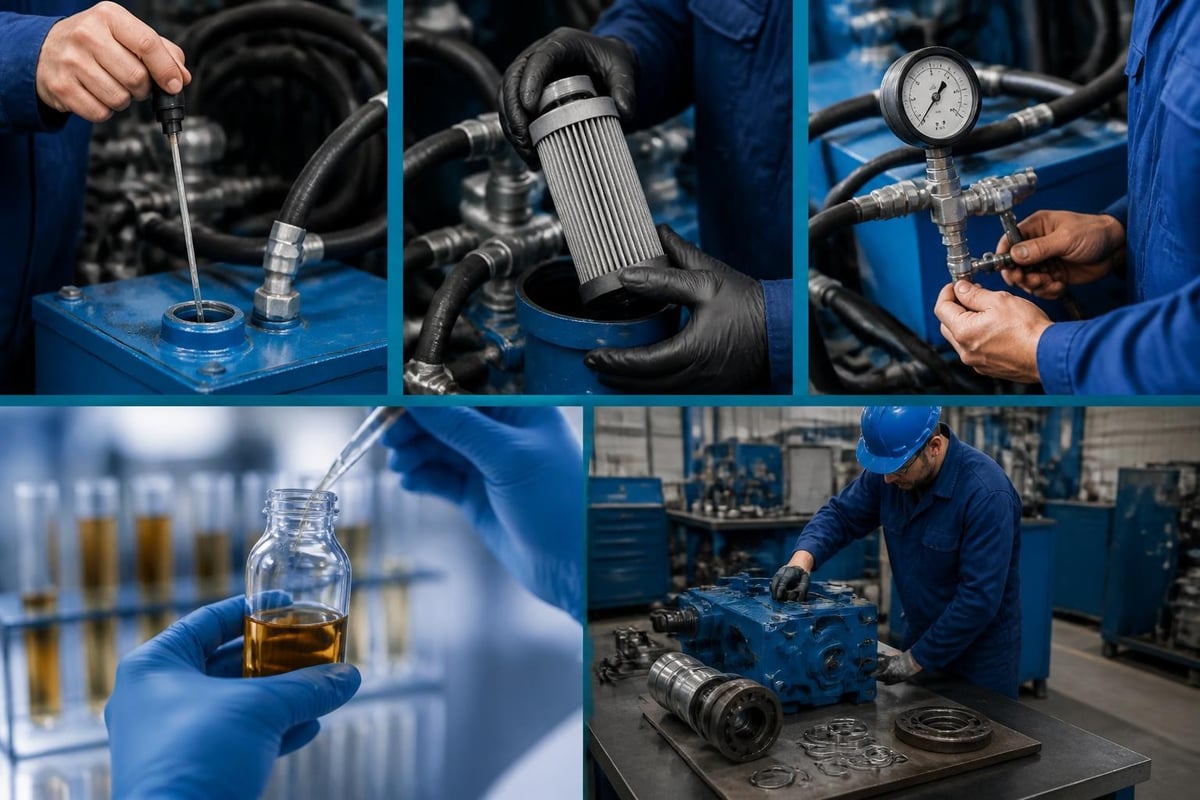
The most effective approach to hydraulic repair near me involves preventing failures before they occur. Implementing structured preventative maintenance programs dramatically reduces emergency repair frequency while extending component life.
Research into hydraulic system maintenance best practices demonstrates that proactive service schedules reduce total maintenance costs by 30-40% compared to reactive repair strategies.
Daily Inspection Protocols
Operators should perform basic visual inspections at the start of each shift. Check fluid levels in reservoirs, looking for unexpected decreases that indicate leakage. Inspect visible hoses and fittings for seepage, particularly at connection points where vibration causes loosening. Monitor operating temperatures through built-in gauges or thermal imaging if available.
Listen for changes in pump noise during startup and operation. Hydraulic pumps develop characteristic sound patterns under normal operation. Any deviation, especially whining or grinding, warrants immediate investigation before continuing operation.
Fluid Analysis Programs
Hydraulic fluid serves as both a power transmission medium and a lubricant. Its condition directly affects system performance and component longevity. Professional fluid analysis programs test samples at regular intervals, typically quarterly for critical systems.
Analysis identifies contamination sources including water intrusion, particulate matter, and chemical breakdown products. Trending analysis reveals developing problems, often months before they cause failures. This early warning allows planned maintenance during scheduled downtime rather than forcing emergency shutdowns.
The six essential steps to maintain healthy hydraulic systems emphasize fluid cleanliness as the single most important factor in preventing premature component wear.
Common Hydraulic Components Requiring Repair
Understanding which components fail most frequently helps operations managers budget appropriately and stock critical spares. Failure patterns vary by industry and application, but certain components consistently require attention.
| Component | Average Service Life | Primary Failure Modes | Repair vs Replace |
|---|---|---|---|
| Hydraulic Hoses | 4-6 years | Abrasion, age hardening, burst | Replace |
| Cylinder Seals | 2-4 years | Wear, contamination, extrusion | Rebuild |
| Pump Assemblies | 5-8 years | Bearing failure, cavitation damage | Rebuild or replace |
| Control Valves | 6-10 years | Contamination, spring fatigue | Rebuild |
| Filters | 3-12 months | Saturation, bypass failure | Replace |
Hydraulic cylinders rank among the most frequently repaired components. Their constant extension and retraction, combined with exposure to environmental contamination, causes seal wear and rod damage. Professional cylinder rebuilding restores original performance specifications at roughly 40% of replacement cost.
Pump Repair Economics
Hydraulic pumps represent significant capital investments, often ranging from $2,000 to $20,000 depending on flow capacity and pressure ratings. When pumps fail, the repair-versus-replace decision depends on several factors including damage extent, parts availability, and remaining service life expectations.
Many pump failures result from preventable causes including contaminated fluid, cavitation, or operation beyond design parameters. Following best practices for hydraulic filter maintenance significantly extends pump life by preventing abrasive contamination from reaching precision surfaces.
Pump rebuilding typically costs 50-70% less than replacement while restoring performance to original specifications. However, severely damaged housings or those with extensive bearing wear may require replacement.
Mobile Hydraulic Repair Solutions
Industrial operations increasingly require on-site repair capabilities. Transporting large equipment to repair facilities creates logistical challenges, extends downtime, and increases costs through rigging, transportation, and reinstallation.
Mobile repair units provide:
- Immediate response to emergency failures
- On-site pressure testing and diagnostics
- Hose fabrication and replacement
- Cylinder removal and reinstallation
- Temporary circuit modifications
Companies offering comprehensive fabrication and machining services often maintain mobile capabilities that extend beyond simple hose replacement. Fully equipped service trucks carry welding equipment, portable machining tools, and hydraulic test stands enabling complex repairs in the field.
Emergency Response Protocols
When hydraulic failures halt production, response time directly impacts financial losses. Professional hydraulic repair services maintain emergency dispatch protocols ensuring technicians arrive within hours, not days.
Emergency response typically follows a structured approach: immediate phone consultation to gather failure symptoms and operating history, dispatch of field technician with common replacement parts, on-site diagnostics to confirm failure mode, temporary repairs to restore partial operation if possible, and coordination of permanent repair scheduling.
This systematic approach minimizes total downtime while ensuring repairs address root causes rather than just restoring operation temporarily.
Hydraulic System Upgrades and Modernization
Searching for hydraulic repair near me sometimes reveals opportunities for system improvements beyond simple restoration. Aging hydraulic systems, particularly those installed before 2015, often lack efficiency features and monitoring capabilities available in modern components.
Performance Enhancement Options
Modern proportional valves offer precise flow control replacing older on-off designs. Variable displacement pumps adjust output to match demand, reducing energy consumption by 20-40% compared to fixed displacement units. Integrated pressure and temperature sensors enable condition monitoring that predicts failures before they occur.
Upgrading during planned repairs often costs only marginally more than direct replacement while delivering ongoing operational benefits. A cylinder rebuild, for example, might incorporate improved seal designs that double service life. Pump replacement presents opportunities to install more efficient units that reduce operating costs.
The return on investment for hydraulic modernization typically ranges from 18-36 months depending on system size and operating hours. Energy savings alone justify many upgrades, with additional benefits from reduced maintenance frequency and improved reliability.

Regional Considerations for Western US Operations
Hydraulic systems in the Western United States face unique environmental challenges affecting repair requirements and maintenance schedules. High altitude operations, extreme temperature variations, and dust exposure create conditions rarely encountered in other regions.
Altitude affects hydraulic performance through reduced atmospheric pressure, which increases cavitation risk and affects cooling efficiency. Systems operating above 5,000 feet require modified reservoir designs and potentially different fluid specifications. Temperature extremes, particularly in Colorado, Wyoming, and Utah, demand multi-viscosity fluids and temperature-compensated components.
Dust infiltration represents a persistent challenge in aggregate, mining, and oil and gas applications throughout the region. Even small quantities of abrasive particles cause disproportionate wear in precision hydraulic components. Regional repair providers familiar with these challenges implement enhanced filtration and sealing strategies during repairs.
Integration with Overall Equipment Maintenance
Hydraulic repair rarely exists in isolation from other mechanical systems. Professional maintenance programs integrate hydraulic service with related systems including electrical controls, mechanical power transmission, and structural components.
Equipment operating in manufacturing facilities throughout Colorado demonstrates how interconnected systems require coordinated maintenance approaches. Hydraulic failures often result from electrical control issues, mechanical misalignment, or structural problems creating abnormal loading.
Comprehensive service providers offer integrated maintenance covering all equipment systems. This approach identifies indirect causes of hydraulic problems while ensuring repairs consider overall equipment condition. A cylinder experiencing premature seal failure, for instance, might actually suffer from mounting bracket wear causing side loading, a problem pure hydraulic repair wouldn't address.
Documentation and Service History
Professional hydraulic repair services maintain detailed records of all work performed. This documentation proves invaluable for identifying recurring problems, planning preventative maintenance, and making informed repair-versus-replace decisions.
Service records should include failure symptoms, diagnostic findings, parts replaced, test results, and recommendations for future maintenance. Trending this information reveals patterns that help predict future failures and optimize maintenance schedules.
Similar to how precision machining services require detailed documentation of tolerances and specifications, hydraulic repairs benefit from comprehensive record keeping that informs future service decisions.
Cost Factors in Hydraulic Repair
Understanding hydraulic repair pricing helps operations managers budget appropriately and evaluate service proposals. Several factors influence total repair costs beyond simple parts and labor.
Primary cost components include:
- Diagnostic time for systematic troubleshooting
- Parts costs varying by component quality and availability
- Labor rates reflecting technician skill and certification
- Travel charges for field service calls
- Expediting fees for rush repairs and overnight parts
Emergency repairs typically cost 50-100% more than planned maintenance addressing the same components. This premium reflects after-hours labor, expedited parts procurement, and disruption to scheduled work. Implementing preventative maintenance programs significantly reduces total annual hydraulic repair expenditures by avoiding emergency service premiums.
Regional variations affect pricing, particularly in remote areas of the Western United States where travel distances increase service call costs. However, local providers familiar with regional conditions often deliver better value through faster response and appropriate parts stocking despite potentially higher hourly rates.
Quality Assurance and Testing
Professional hydraulic repair includes comprehensive testing before returning equipment to service. This quality assurance step verifies repairs restored proper function and identifies any remaining issues.
| Test Type | Purpose | Typical Duration |
|---|---|---|
| Pressure Testing | Verify seal integrity, check relief valve settings | 30-60 minutes |
| Flow Testing | Confirm pump output, check valve operation | 45-90 minutes |
| Temperature Monitoring | Detect excessive friction, verify cooling | 60-120 minutes |
| Leak Detection | Identify remaining seal issues | 30-45 minutes |
| Cycle Testing | Verify actuator performance under load | 60-90 minutes |
Testing equipment calibration significantly impacts result reliability. Professional repair facilities maintain traceable calibration records for all test equipment, ensuring measurements accurately reflect system performance.
Post-repair testing sometimes reveals additional issues not apparent during initial diagnostics. Professional repair services communicate these findings clearly, explaining whether immediate attention is required or if monitoring during operation is acceptable. This transparency helps operations managers make informed decisions about repair scope and budget allocation.
Hydraulic Hose Assembly and Replacement
Hydraulic hoses represent the most frequently replaced components in industrial systems. Their flexibility, essential for accommodating equipment movement, makes them vulnerable to abrasion, kinking, and age-related degradation.
Professional hose replacement involves more than simply matching lengths and fittings. Technicians evaluate routing to eliminate abrasion points, select appropriate hose grades for pressure and temperature conditions, and ensure proper bend radius throughout the hose path. Incorrect hose selection or poor routing causes premature failures, creating false economy despite lower initial costs.
Modern hydraulic systems increasingly utilize higher pressures, often exceeding capabilities of hoses installed during original equipment manufacture. Hose replacement presents opportunities to upgrade to higher-rated assemblies providing improved safety margins. This proves particularly important in applications where hose failure creates safety hazards or environmental contamination risks.
Long-Term Partnership Approach
The most successful hydraulic maintenance programs develop from ongoing relationships between operations and repair service providers. These partnerships enable providers to understand equipment history, anticipate seasonal demands, and stock commonly required parts.
Regular service relationships also build institutional knowledge that benefits both parties. Technicians become familiar with specific equipment quirks, optimal repair approaches, and operator preferences. Operations managers gain trusted advisors who can provide objective assessments of repair-versus-replace decisions and equipment upgrade timing.
Companies providing diverse capabilities including welding services alongside hydraulic repair offer particular advantages for industrial operations. This breadth allows coordinated maintenance addressing multiple systems during single service visits, minimizing total downtime and reducing mobilization costs.
Finding qualified hydraulic repair near me requires evaluating technical capabilities, industry experience, and service responsiveness beyond simple proximity. Professional hydraulic repair prevents minor issues from becoming catastrophic failures while extending equipment service life through proper maintenance practices. Whether you need emergency field repairs, comprehensive system overhauls, or preventative maintenance programs for industrial equipment throughout the Western United States, LTJ Industrial Services delivers the expertise and responsiveness your operations demand. Contact our team today to discuss your hydraulic repair needs and discover how our comprehensive approach to industrial equipment service keeps your operations running efficiently.