
Gasoline welders represent a critical solution for industrial operations requiring portable, self-contained welding power in remote locations. These engine-driven machines combine a gasoline motor with a welding generator, delivering the electrical output necessary for arc welding without dependence on external power sources. For industries like oil and gas, aggregate operations, and field maintenance services across the Western United States, gasoline welders provide the flexibility to complete high-quality welding work wherever projects demand. Understanding the capabilities, selection criteria, and proper maintenance of these machines ensures maximum productivity and safety in challenging field environments.
Understanding Gasoline Welder Technology
Gasoline welders function through an integrated system where a gasoline-powered engine drives an alternator or generator that produces welding current. This self-contained design eliminates the need for grid power, making these units indispensable for pipeline work, remote construction sites, and emergency repairs in locations without electrical infrastructure.
The typical gasoline welder consists of several key components working in harmony. The engine, usually a four-stroke gasoline motor ranging from 10 to 23 horsepower, provides mechanical energy to rotate the generator assembly. This generator converts mechanical rotation into electrical current suitable for various welding processes, including stick (SMAW), MIG (GMAW), and TIG (GTAW) welding.
Power Output and Capacity Ranges
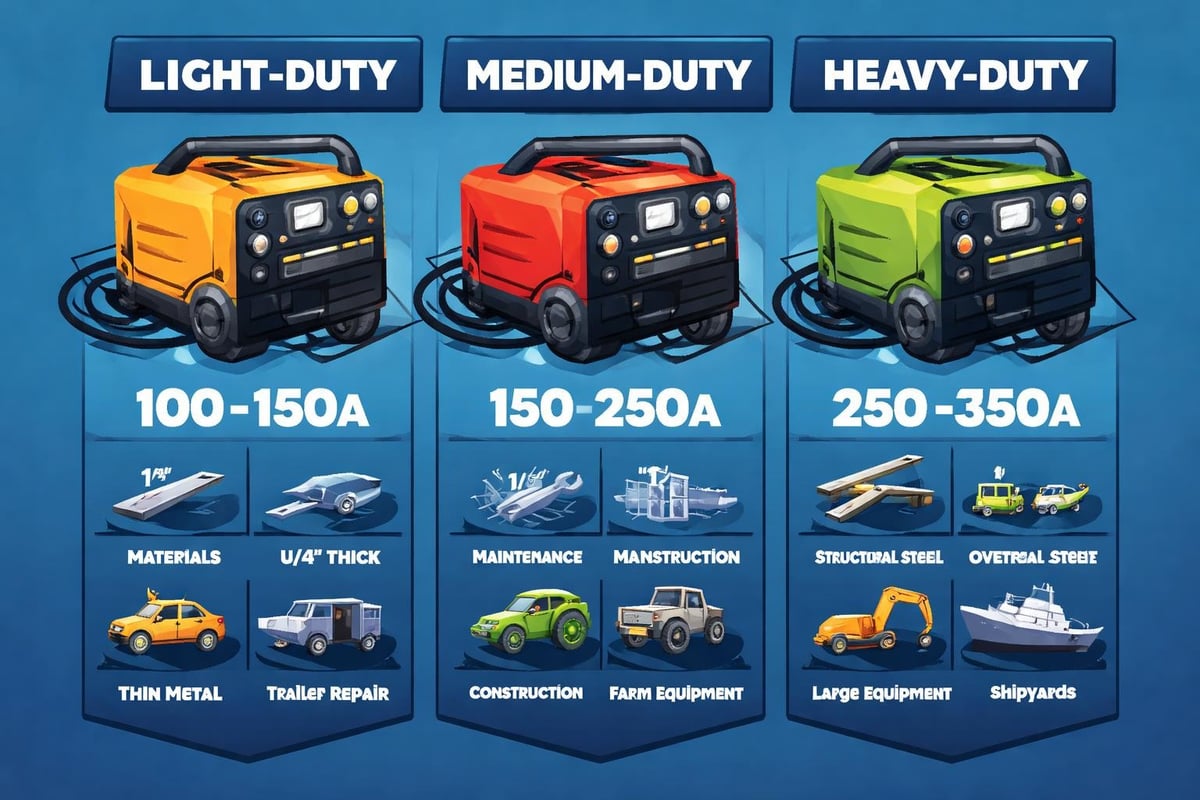
Modern gasoline welders offer varying output capacities to match different application requirements:
- Light-duty models: 150-180 amps for basic maintenance and repair work
- Medium-duty units: 200-250 amps for general fabrication and field construction
- Heavy-duty machines: 300-400 amps for industrial applications and thick material welding
- Multi-operator systems: 500+ amps supporting multiple welding stations simultaneously
The amperage output determines which materials and thicknesses the welder can effectively join. Higher amperage ratings enable welding thicker steel sections and provide better arc stability across diverse conditions.
Selection Criteria for Industrial Applications
Choosing the appropriate gasoline welder requires careful assessment of operational demands, duty cycle requirements, and environmental factors. Commercial and industrial operations benefit from evaluating several critical specifications before investment.
Duty cycle represents the percentage of a ten-minute period that a machine can weld at its rated output without overheating. A 60% duty cycle at 200 amps means the welder can operate continuously for six minutes, then must cool for four minutes. Heavy industrial work demands machines with higher duty cycles to minimize downtime.
| Specification | Light Industrial | Heavy Industrial | Pipeline/Remote |
|---|---|---|---|
| Amperage Range | 150-200A | 250-350A | 300-500A |
| Duty Cycle | 20-40% | 60-80% | 60-100% |
| Fuel Capacity | 3-5 gallons | 8-12 gallons | 12-20 gallons |
| Run Time | 4-6 hours | 8-12 hours | 10-16 hours |
Engine Performance and Fuel Efficiency
Engine quality directly impacts reliability and operational costs. Professional-grade gasoline welders feature commercial-duty engines from manufacturers like Honda, Kohler, and Briggs & Stratton. These engines offer superior fuel efficiency, extended service intervals, and proven durability under continuous operation.
Fuel consumption varies based on load conditions. Modern machines incorporate idle control technology that automatically reduces engine speed when welding ceases, significantly reducing fuel consumption and noise levels during intermittent work. This feature can cut fuel usage by 40-60% compared to constant-speed operation.
Field Deployment Advantages
Gasoline welders excel in environments where traditional electric welders prove impractical or impossible to deploy. The Western United States presents unique challenges including remote work sites, extreme weather conditions, and infrastructure limitations that make portable power generation essential.
Industries served by companies like LTJ Industrial Services regularly encounter scenarios demanding portable welding capability. Aggregate operations require equipment repairs in active quarries miles from electrical service. Oil and gas facilities need emergency repairs on wellheads and pipeline infrastructure across vast, undeveloped territories. Recycling operations often work in temporary locations processing scrap metal without permanent power installations.
Mobility and Transportation Considerations
Weight and portability significantly impact field deployment efficiency. Gasoline welders range from 200-pound compact units suitable for pickup truck transport to 800-pound industrial machines requiring trailer mounting or specialized lifting equipment.
Modern designs incorporate features enhancing field mobility:
- Integrated wheel kits for rough terrain navigation
- Lifting eyes positioned for balanced crane hoisting
- Vibration-isolated mounting systems preventing transport damage
- Weather-resistant enclosures protecting components from dust and moisture
- Quick-disconnect fuel systems facilitating safe transport
Professional welding operations benefit from machines designed for frequent relocation. Ruggedized construction, protected control panels, and corrosion-resistant components extend service life under demanding transportation and storage conditions.
Safety Standards and Operational Protocols
Operating gasoline welders requires strict adherence to safety protocols addressing both welding hazards and gasoline engine risks. OSHA regulations for gas welding and cutting establish baseline safety requirements, while additional precautions specific to engine-driven equipment protect workers and facilities.
Fuel Handling and Storage Protocols
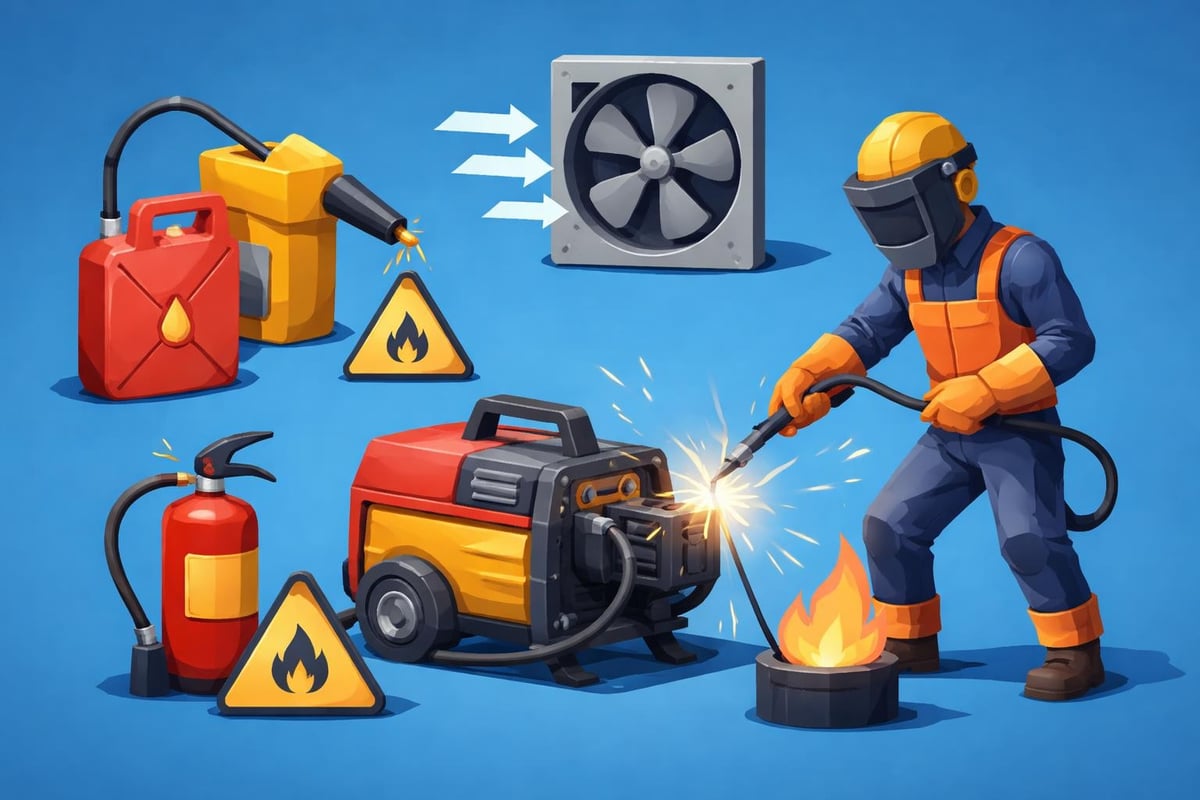
Gasoline presents fire and explosion hazards requiring careful management. Safe operation demands:
- Store fuel in approved containers clearly marked and properly sealed
- Refuel only when the engine has cooled completely
- Maintain minimum 35-foot distance from welding operations to fuel storage
- Keep fire extinguishers rated for both electrical and fuel fires immediately accessible
- Ensure adequate ventilation to prevent gasoline vapor accumulation
- Never refuel in enclosed spaces or near ignition sources
Welding safety guidelines emphasize the importance of integrated safety programs addressing all hazards present in field welding environments. Training programs should cover gasoline handling, engine operation, welding techniques, and emergency response procedures.
Ventilation and Emission Management
Gasoline engines produce carbon monoxide, an odorless, colorless gas that can cause serious injury or death in confined spaces. Never operate gasoline welders indoors without adequate ventilation systems that continuously exchange air and maintain carbon monoxide levels below hazardous thresholds.
Outdoor operation requires positioning equipment downwind from enclosed work areas and monitoring for exhaust accumulation in trenches, pits, or partially enclosed structures. Carbon monoxide detectors provide an additional safety layer, alerting workers to dangerous concentrations before symptoms appear.
Maintenance Requirements for Peak Performance
Regular maintenance extends gasoline welder service life and ensures reliable performance when equipment cannot fail. Comprehensive maintenance programs address both the engine and welding components through scheduled inspections and preventive service.
Engine Maintenance Intervals
Following manufacturer-specified maintenance schedules prevents premature failure and maintains warranty coverage. Standard service intervals include:
| Service Item | Interval | Critical Points |
|---|---|---|
| Oil Change | 50-100 hours | Use manufacturer-specified grade |
| Air Filter | 100-200 hours | More frequent in dusty environments |
| Spark Plug | 100-300 hours | Gap per specifications |
| Fuel Filter | 200-400 hours | Inspect fuel system for contamination |
| Valve Clearance | 500-1000 hours | Professional adjustment recommended |
Extreme operating conditions demand more frequent service. High-temperature environments, dusty conditions common in aggregate and recycling operations, and continuous heavy-load operation all accelerate wear and contamination. Operations in Colorado’s varied climate must account for altitude effects on carburetion and seasonal temperature extremes affecting engine performance.
Welding System Inspection and Care
The generator and welding circuitry require attention beyond basic engine maintenance. Regular inspection of brushes, slip rings, and electrical connections prevents unexpected failures during critical work. Professional welding services recognize that a comprehensive maintenance program addresses:
- Carbon brush wear and proper seating
- Electrical connection tightness and corrosion prevention
- Generator bearing lubrication and wear assessment
- Control panel function verification
- Cable and connector condition evaluation
- Ground system continuity testing
Documenting maintenance activities creates a service history valuable for troubleshooting, warranty claims, and resale value. Digital maintenance tracking systems enable proactive scheduling and prevent overlooked service intervals.
Multi-Process Capability and Auxiliary Power
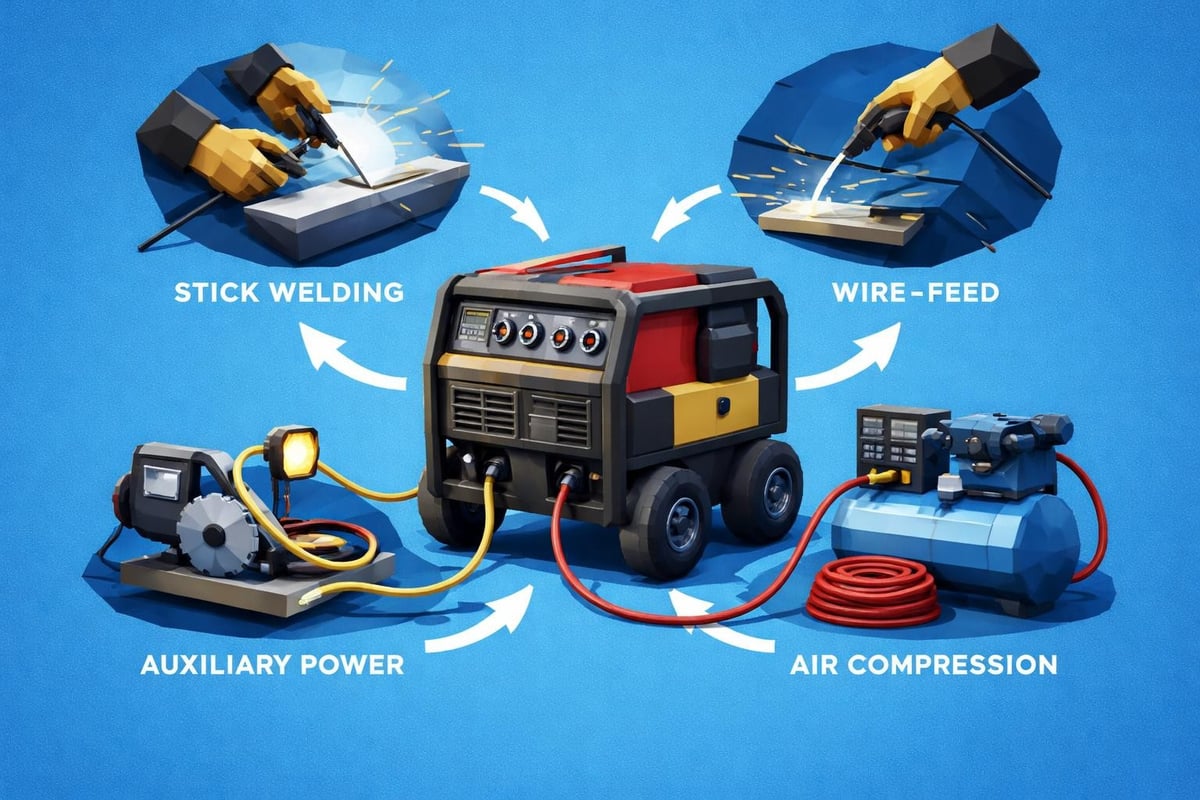
Advanced gasoline welders offer capabilities beyond basic stick welding, functioning as comprehensive power solutions for remote work sites. Multi-process machines support wire-feed welding, auxiliary power generation, and air compression in a single integrated unit.
Auxiliary Power Generation Features
Many industrial-grade gasoline welders include 120V and 240V auxiliary power outlets supporting angle grinders, drill motors, lighting equipment, and other power tools. This eliminates the need for separate generators, reducing equipment costs, fuel consumption, and transportation requirements.
Continuous auxiliary power ratings typically range from 3,000 to 12,000 watts, sufficient for operating multiple tools simultaneously while maintaining welding capacity. Advanced load management systems automatically allocate power between welding and auxiliary circuits, preventing overload conditions.
The integration of auxiliary power proves particularly valuable for metal fabrication projects requiring cutting, grinding, and finishing operations alongside welding. A single machine powers the entire workflow, simplifying logistics and reducing site footprint.
Environmental Considerations and Emission Standards
Modern gasoline welders must balance performance requirements with environmental responsibility. Engine manufacturers have developed technologies reducing emissions while maintaining power output and fuel efficiency.
Current emission regulations vary by state and application. California’s stringent standards drive innovation in small engine technology, with compliant engines incorporating catalytic converters, electronic fuel injection, and optimized combustion chamber designs. These technologies reduce harmful emissions while often improving fuel economy and starting reliability.
Cold Weather Performance
Operations in Colorado and throughout the Western United States face challenging cold-weather conditions affecting gasoline welder performance. Low temperatures impact engine starting, fuel vaporization, and battery capacity.
Winterization strategies include:
- Using appropriate fuel stabilizers preventing phase separation
- Installing battery maintainers during storage periods
- Selecting synthetic oils maintaining viscosity at low temperatures
- Protecting equipment with insulated enclosures or heated storage
- Pre-warming engines before heavy loads
- Maintaining fuel quality through regular turnover
Professional operations maintain backup equipment and implement cold-weather protocols ensuring project continuity regardless of environmental conditions.
Cost Analysis and Return on Investment
Gasoline welders represent significant capital investments requiring careful financial analysis. Purchase prices range from $2,000 for basic portable units to $15,000 or more for industrial multi-process machines with advanced features.
Total cost of ownership extends beyond purchase price, encompassing fuel consumption, maintenance expenses, repair costs, and operational lifespan. Professional operations evaluate these factors against productivity gains, reduced rental expenses, and competitive advantages gained through enhanced field capabilities.
| Cost Category | Annual Estimate | Optimization Strategies |
|---|---|---|
| Fuel | $800-$3,000 | Idle control, proper sizing, fuel management |
| Scheduled Maintenance | $400-$1,200 | In-house service, bulk supplies, preventive focus |
| Repairs | $200-$1,500 | Quality equipment, proper operation, documentation |
| Consumables | $300-$800 | Bulk purchasing, quality products, proper storage |
Organizations like LTJ Industrial Services serving multiple industries benefit from versatile machines capable of diverse applications. The ability to respond to emergency service calls, perform on-site repairs, and complete projects without site power substantially increases billable hours and customer satisfaction.
Training and Operator Competency
Effective gasoline welder operation requires comprehensive training addressing both welding technique and equipment operation. Operators must understand proper starting procedures, load management, fuel handling, basic troubleshooting, and safety protocols specific to engine-driven welding equipment.
Formal training programs should cover:
- Pre-operation inspection procedures and checklists
- Safe starting and shutdown sequences
- Load capacity understanding and management
- Fuel handling and refueling safety
- Basic maintenance tasks and intervals
- Troubleshooting common issues
- Emergency procedures for fires or equipment failure
- Documentation and service record maintenance
Certification programs offered through welding associations and equipment manufacturers provide standardized competency verification. Investing in operator training reduces equipment damage, improves safety outcomes, and enhances productivity through proper technique and equipment utilization.
Integration with Modern Welding Technology
Contemporary gasoline welders incorporate digital controls, automated processes, and diagnostic capabilities that enhance usability and performance. Advanced machines feature microprocessor-controlled output regulation, digital displays showing operating parameters, and fault codes simplifying troubleshooting.
Digital control systems enable precise output adjustment, waveform customization for specific processes, and automatic arc length control. These features improve weld quality, reduce operator fatigue, and enable less-experienced welders to achieve professional results.
Remote monitoring capabilities now available on premium models allow supervisors to track runtime, fuel consumption, maintenance needs, and operating parameters through wireless connectivity. This data supports fleet management, preventive maintenance scheduling, and operational efficiency analysis.
The evolution toward cleaner, quieter, more efficient gasoline welders continues as manufacturers respond to regulatory requirements and customer demands. Future developments will likely include hybrid systems combining gasoline engines with battery storage, advanced emission controls approaching zero-emission operation, and increased integration with digital workflow management systems.
Compliance and Regulatory Considerations
Operating gasoline welders in commercial and industrial settings requires compliance with multiple regulatory frameworks. OSHA ventilation and protection standards establish requirements for air quality and worker protection during welding operations, while arc welding guidelines address electrical safety and equipment specifications.
State and local regulations may impose additional requirements regarding emission standards, noise levels, and fire prevention measures. Operations in sensitive environmental areas, near residential zones, or within specific industrial facilities must verify compliance with all applicable regulations before deploying gasoline welders.
Insurance considerations also factor into equipment selection and operation. Comprehensive safety programs, documented training, regular maintenance records, and compliance with manufacturer recommendations may reduce liability exposure and insurance costs while protecting workers and facilities.
Gasoline welders deliver essential portable power for field welding operations across industries requiring flexible, reliable equipment independent of electrical infrastructure. Understanding selection criteria, maintenance requirements, and safety protocols ensures these machines provide years of productive service while protecting workers and meeting regulatory obligations. Whether supporting pipeline construction, emergency repairs, or remote fabrication projects, LTJ Industrial Services brings comprehensive welding, machining, and fabrication expertise to commercial and industrial clients throughout the Western United States, combining skilled craftsmen with professional-grade equipment to deliver quality results on schedule and budget.