The backbone of modern manufacturing relies heavily on fabrication industrial processes that transform raw materials into functional components, equipment, and structures. From oil and gas facilities to recycling operations, fabrication industrial services encompass a broad spectrum of capabilities including metal cutting, forming, welding, and assembly. These processes are essential for businesses across the Western United States that require precision-engineered components, custom equipment modifications, and repair services. Understanding the scope and applications of these services helps commercial and industrial operations make informed decisions about their manufacturing needs.
Understanding Fabrication Industrial Processes
Fabrication industrial work involves converting raw materials, primarily metals, into finished products through various mechanical and thermal processes. Unlike mass manufacturing that produces identical items at scale, fabrication differs from manufacturing in its focus on creating custom or semi-custom components according to specific design requirements.
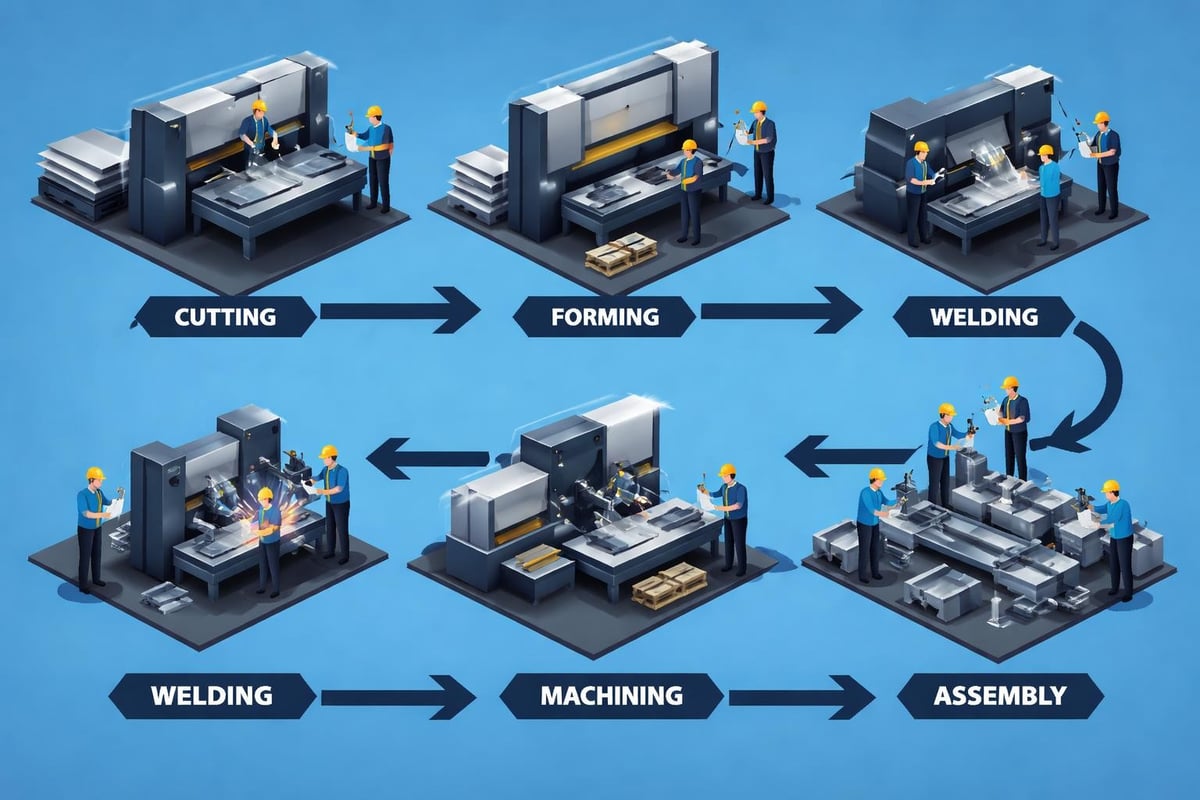
The term fabrication industrial encompasses several core competencies that work together to deliver complete solutions. Metal cutting represents the first step, where raw stock materials are sized to specifications using plasma cutters, water jets, lasers, or traditional sawing equipment. Forming techniques then shape these materials through bending, rolling, stamping, or forging operations.
Primary Fabrication Techniques
Different projects require different approaches, and understanding these techniques helps businesses select the right fabrication industrial partner for their needs.
- Cutting operations: Plasma, oxy-fuel, water jet, and laser cutting for precise material separation
- Forming processes: Press brake bending, rolling, stamping, and hydroforming for shape creation
- Joining methods: MIG, TIG, stick welding, and specialized techniques for permanent connections
- Machining services: Milling, turning, drilling, and grinding for precision tolerances
- Assembly operations: Component integration, hardware installation, and final product completion
The aggregate industry particularly benefits from heavy-duty fabrication work that withstands constant abrasion and impact. Conveyor systems, chutes, hoppers, and screening equipment all require robust industrial fabrication service capabilities to ensure longevity in demanding environments.
Metal Fabrication Capabilities
Metal fabrication forms the cornerstone of fabrication industrial services, with steel, stainless steel, aluminum, and specialty alloys each presenting unique characteristics and challenges. Carbon steel remains the most common material due to its strength, availability, and cost-effectiveness for structural applications.
Material selection directly impacts project success. Stainless steel offers superior corrosion resistance for food processing and chemical applications, while aluminum provides lightweight strength for aerospace and transportation uses. Specialty materials like Inconel or Hastelloy serve extreme temperature and corrosive environments in oil and gas operations.
| Material Type | Common Applications | Key Benefits | Typical Thickness Range |
|---|---|---|---|
| Carbon Steel | Structural frames, tanks, equipment bases | High strength, weldable, economical | 1/8" to 2" |
| Stainless Steel | Food processing, pharmaceutical, chemical | Corrosion resistant, hygienic, durable | 16 gauge to 1" |
| Aluminum | Transportation, aerospace, architectural | Lightweight, corrosion resistant | 1/16" to 1/2" |
| Plate Steel | Heavy equipment, pressure vessels | High strength, thick sections | 1/2" to 6" |
Structural Steel Fabrication
Structural steel fabrication supports commercial construction, industrial facilities, and infrastructure projects throughout the Western United States. This specialized work requires precise cutting, fitting, and welding to meet engineering specifications and building codes.
Beam and column fabrication creates the skeleton of industrial buildings and equipment platforms. Fabricators interpret structural drawings, cut members to length, prepare connection details, and weld or bolt assemblies according to American Institute of Steel Construction (AISC) standards. Quality control throughout this process ensures structural integrity and safety compliance.
Truss fabrication for roof systems and bridge components demands exceptional precision. Even minor measurement errors compound across multiple joints, potentially compromising structural performance. Professional welding and fabrication services employ experienced fitters and certified welders who understand these critical tolerances.
Welding in Fabrication Industrial Applications
Welding represents perhaps the most critical skill in fabrication industrial work, permanently joining metal components through fusion or pressure processes. The quality of welds directly determines product strength, durability, and safety across all applications.
Common Welding Processes
Different welding methods suit specific materials, thicknesses, and operating conditions. Selection depends on factors including base metal type, joint configuration, position, and desired mechanical properties.
Gas Metal Arc Welding (MIG) provides high deposition rates and works well for thicker materials in production environments. This semi-automatic process feeds wire continuously through the welding gun, making it efficient for repetitive fabrication tasks. The recycling industry relies heavily on MIG welding for equipment repairs and modifications due to its speed and versatility.
Gas Tungsten Arc Welding (TIG) offers superior control and quality for critical applications requiring exceptional cleanliness and precision. Stainless steel, aluminum, and exotic alloys benefit from TIG welding's lower heat input and reduced distortion. Pressure vessels, food processing equipment, and pharmaceutical components frequently specify TIG welds.
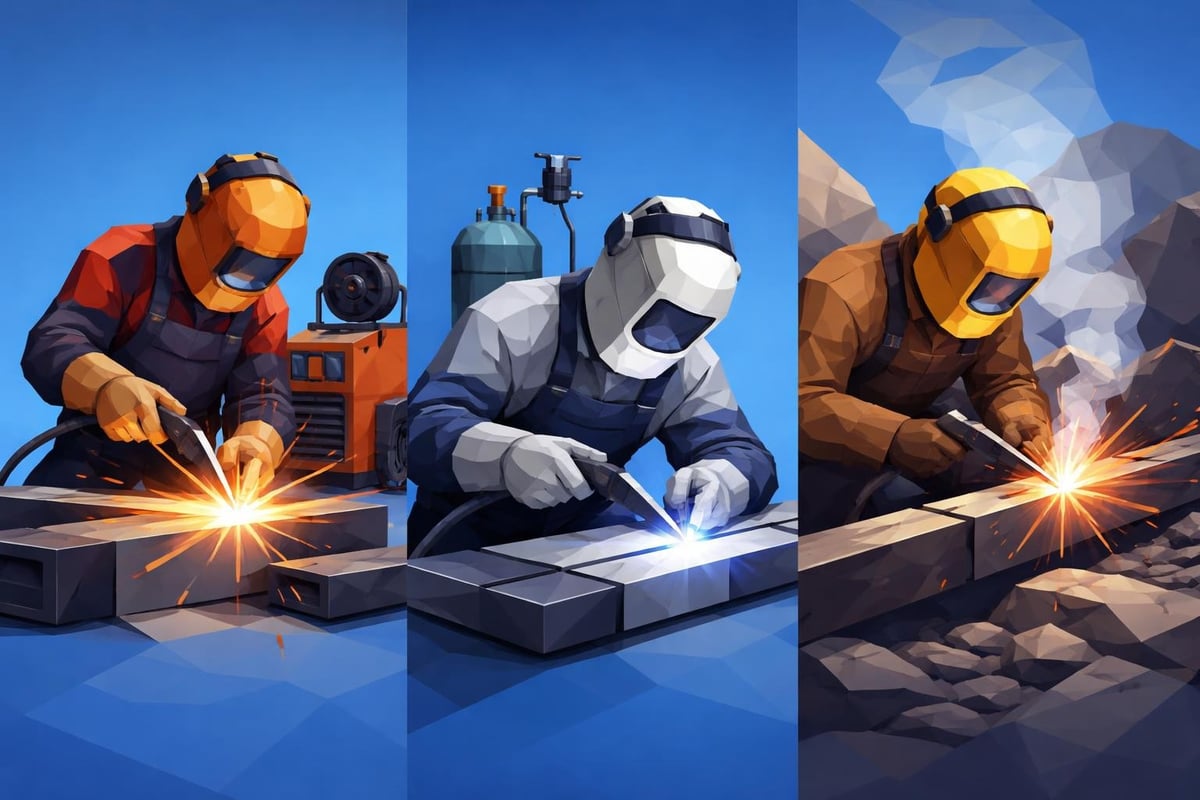
Shielded Metal Arc Welding (stick) remains invaluable for field work and outdoor applications where portability and wind resistance matter. Oil and gas facilities across Colorado and the Western United States depend on stick welding for pipeline repairs, equipment modifications, and structural work in remote locations.
Welding Certifications and Quality
Professional fabrication industrial operations employ certified welders who have demonstrated competency through standardized testing. The American Welding Society (AWS) certification program verifies welder skill across different processes, positions, and materials.
- D1.1 Structural Welding Code: Covers steel structures including buildings and bridges
- D1.6 Structural Welding Code: Addresses stainless steel structural applications
- ASME Section IX: Qualifies welders for pressure vessel and boiler fabrication
- API 1104: Specifically designed for pipeline welding in oil and gas operations
Quality assurance extends beyond welder certification to include inspection procedures. Visual inspection catches surface defects, while non-destructive testing methods like radiography, ultrasonic examination, and magnetic particle inspection verify internal weld quality without damaging components.
Machining and Precision Work
Manufacturing and machining capabilities complement fabrication industrial services by providing precise dimensional control and surface finishes impossible to achieve through welding and forming alone. CNC equipment and manual machine tools both play important roles in modern fabrication shops.
Computer Numerical Control (CNC) machining delivers repeatability and accuracy for complex geometries. Milling operations create pockets, slots, and contoured surfaces in fabricated components, while turning operations produce cylindrical features like shafts, bushings, and flanges. Programming expertise ensures efficient material removal and optimal tool life.
Manual machining retains value for prototype work, repairs, and low-quantity production where CNC setup time exceeds actual machining time. Skilled machinists interpret blueprints, select appropriate cutting tools, and maintain tight tolerances through careful measurement and adjustment.
Tolerance and Surface Finish Requirements
Understanding fabrication industrial tolerance capabilities helps engineers design parts that balance functionality with manufacturability. Standard tolerances of ±1/16 inch suit general fabrication work, while precision machining achieves tolerances down to ±0.001 inch or tighter when specified.
| Process Type | Typical Tolerance | Surface Finish (Ra) | Best Applications |
|---|---|---|---|
| Plasma Cutting | ±1/16" | 500-1000 µin | General component cutting, plate work |
| CNC Milling | ±0.005" | 32-125 µin | Precision components, mounting surfaces |
| CNC Turning | ±0.003" | 32-63 µin | Shafts, bushings, cylindrical parts |
| Grinding | ±0.0005" | 8-32 µin | Bearing surfaces, sealing faces |
Surface finish specifications influence machining strategy and equipment selection. Components with sliding contact or sealing surfaces require finer finishes than structural elements. The Wikipedia article on fabrication provides additional context on how different processes affect final product characteristics.
Field Services and On-Site Fabrication
Not all fabrication industrial work happens in controlled shop environments. Many commercial and industrial operations require on-site services for equipment that cannot be transported, emergency repairs, or modifications to existing installations.
Mobile welding capabilities bring certified welders and equipment directly to customer facilities. Aggregate plants, recycling centers, and oil and gas operations throughout the Western United States benefit from reduced downtime when repairs happen on-site rather than waiting for component removal and shop work.
Portable machining equipment enables precision work at customer locations. Line boring restores bearing housings and mounting surfaces without disassembly, while portable milling machines create mounting pads and perform facing operations on large equipment frames.
Equipment and Capabilities
Professional field service providers invest in specialized equipment designed for portability without sacrificing capability. This includes welding machines rated for various processes, generators providing sufficient power in remote locations, and safety equipment meeting OSHA requirements.
- Diesel-powered welding generators for locations without electrical service
- Portable plasma cutting systems for on-site material preparation
- Hydraulic torque tools for large fastener installation and removal
- Alignment lasers and precision measurement instruments
- Fall protection and confined space entry equipment
The oil and gas sector particularly values field fabrication capabilities for pipeline modifications, tank repairs, and equipment installation in remote locations. Quick response times minimize production losses and keep critical operations running.
Custom Fabrication Solutions
Custom fabrication services address unique challenges that off-the-shelf components cannot solve. Engineering teams work directly with customers to develop solutions tailored to specific operational requirements, space constraints, and performance expectations.
Design collaboration begins with understanding the application, operating environment, and performance criteria. Fabricators with extensive industry experience offer valuable input on material selection, design optimization, and manufacturing feasibility. This partnership approach often yields better solutions than rigid adherence to initial concepts.
Prototyping validates design concepts before committing to full production. Single-piece fabrication allows testing under actual operating conditions, identifying necessary modifications before producing multiple units. This iterative process reduces risk and ensures final products meet expectations.
Applications Across Industries
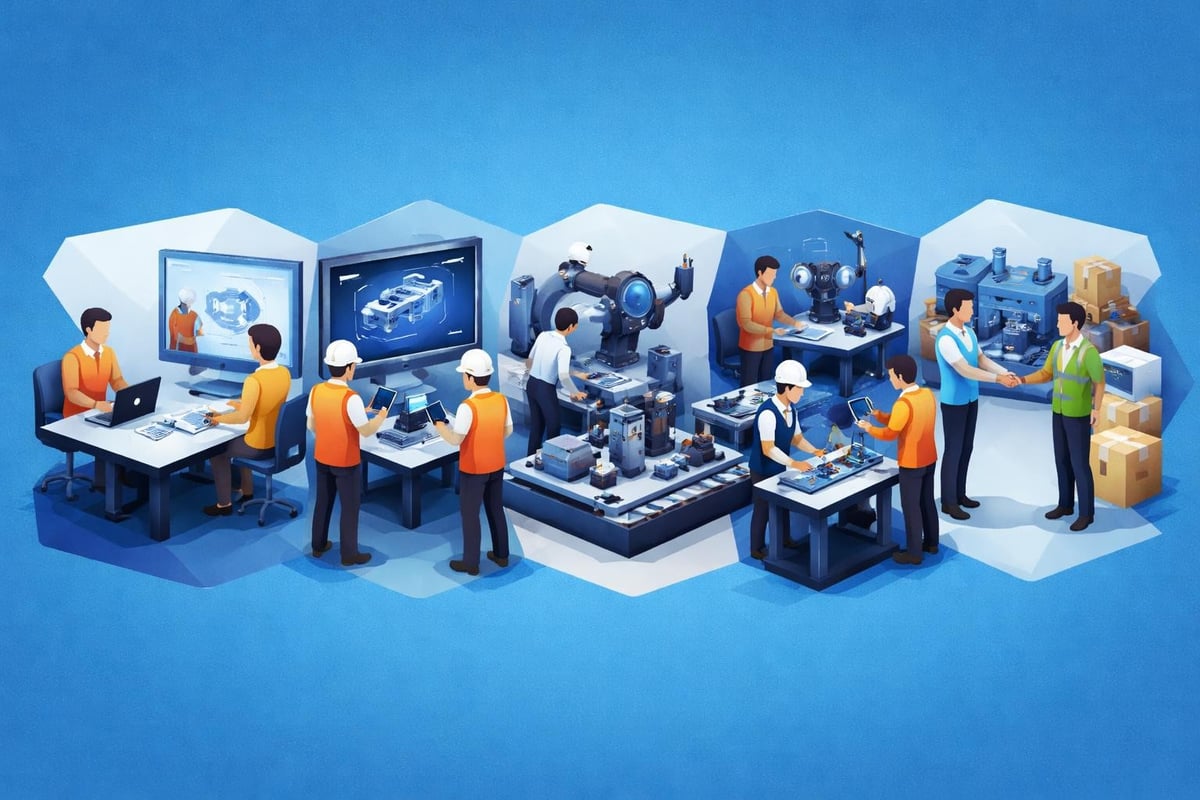
Different industries present distinct fabrication challenges requiring specialized knowledge and capabilities. Understanding these sector-specific needs helps fabrication industrial providers deliver appropriate solutions.
The recycling industry demands heavy-duty construction to withstand continuous abrasion from metal scrap, glass, and aggregate materials. Conveyor systems, sorting equipment, and material handling devices require thick wear plates, hardened surfaces, and robust structural design. Regular maintenance and modification services keep aging equipment productive.
Aggregate operations expose equipment to similar conditions with rock, sand, and gravel causing constant wear. Crusher components, screening decks, and conveyor structures benefit from hard-facing techniques that extend service life. Quick turnaround on repairs minimizes costly production downtime.
Oil and gas facilities require fabrication work meeting stringent pressure vessel codes and corrosive environment resistance. Skid-mounted equipment packages, pipeline supports, and process equipment fabrication must comply with industry standards while delivering reliable long-term performance.
Quality Control and Testing
Professional fabrication industrial operations implement comprehensive quality management systems ensuring consistent results across all projects. Documentation, inspection procedures, and testing protocols verify compliance with specifications and industry standards.
Dimensional inspection confirms fabricated components match engineering drawings. Precision measuring tools including calipers, micrometers, coordinate measuring machines (CMM), and laser trackers verify critical dimensions throughout fabrication processes. Early detection of dimensional issues prevents costly rework.
Non-destructive testing (NDT) examines weld integrity and material condition without damaging components. Methods include:
- Visual inspection: Surface defect detection by certified inspectors
- Radiographic testing: X-ray or gamma ray examination of internal weld quality
- Ultrasonic testing: Sound wave reflection identifies subsurface discontinuities
- Magnetic particle inspection: Detects surface and near-surface cracks in ferromagnetic materials
- Dye penetrant inspection: Reveals surface-breaking defects through capillary action
Material test reports (MTRs) provide chemical composition and mechanical property verification for critical applications. Pressure vessels, structural steel, and high-stress components often require certified material documentation tracing back to mill test certificates.
Maintenance and Repair Services
Preventive maintenance and repair services extend equipment life and maintain operational efficiency. Many fabrication industrial providers offer ongoing support beyond initial fabrication, creating long-term partnerships with commercial and industrial customers.
Hydraulic cylinder repair represents a specialized service area combining machining, welding, and hydraulics knowledge. Rebuilding cylinders restores functionality at a fraction of replacement cost, particularly valuable for large mobile equipment and industrial machinery. Hydraulic cylinder repair capabilities include rod reconditioning, tube honing, seal replacement, and testing.
Equipment modifications adapt existing machinery to changing operational requirements. Adding features, reinforcing structures, or converting equipment for different applications maximizes capital investment value. Experienced fabricators evaluate modification feasibility and engineer solutions maintaining structural integrity.
Emergency Response Capabilities
Unexpected equipment failures demand rapid response to minimize downtime costs. Fabrication industrial service providers offering 24/7 emergency support help customers avoid extended production interruptions.
Quick assessment identifies failure root causes and determines appropriate repair strategies. Temporary repairs may restore partial functionality while permanent solutions are engineered and implemented. This phased approach balances immediate production needs with long-term reliability.
Mobile equipment and on-site capabilities prove essential for emergency situations where equipment cannot be moved. Bringing welding, machining, and fabrication capabilities to the customer location accelerates repairs and reduces transportation challenges.
Technology and Modern Fabrication
Advanced technology continues transforming fabrication industrial operations, improving precision, efficiency, and capability. Investment in modern equipment and training ensures competitive service delivery and superior quality outcomes.
Computer-aided design (CAD) software enables detailed 3D modeling before cutting any metal. Engineers visualize assemblies, identify interference issues, and optimize designs for manufacturability. Customers review accurate representations ensuring alignment with expectations before fabrication begins.
Computer-aided manufacturing (CAM) translates CAD models into machine tool instructions. CNC equipment executes programmed operations with exceptional consistency, reducing human error and improving efficiency. Complex geometries impossible or impractical with manual methods become routine production items.
Laser scanning and reverse engineering capture existing equipment dimensions when documentation is unavailable. This technology proves invaluable for obsolete equipment requiring replacement parts or modifications to legacy systems lacking original drawings.
| Technology | Primary Benefits | Typical Applications | Implementation Considerations |
|---|---|---|---|
| CNC Plasma Cutting | Fast cutting, minimal distortion | Plate cutting, shapes, brackets | Initial programming time, material limitations |
| Waterjet Cutting | No heat-affected zone, versatile | Heat-sensitive materials, tight tolerances | Operating costs, thicker material limitations |
| 3D Scanning | Accurate reverse engineering | Replacement parts, documentation | Equipment investment, operator training |
| Welding Automation | Consistent quality, high production | Repetitive parts, large quantities | Setup complexity, programming expertise |
Selecting Fabrication Industrial Partners
Choosing the right fabrication industrial service provider significantly impacts project success, cost-effectiveness, and long-term satisfaction. Several key factors deserve consideration during the selection process.
Experience and expertise in relevant industries ensures understanding of specific challenges and requirements. Fabricators serving recycling, aggregate, and oil and gas sectors bring valuable knowledge to project planning and execution. This background helps anticipate potential issues and implement proven solutions.
Facility capabilities directly determine what projects a fabricator can undertake. Shop size limits component dimensions, while equipment capacity affects material thickness and complexity. Companies like H&S Industrial showcase comprehensive capabilities that support diverse project requirements.
Certification and compliance verify adherence to industry standards. ASME pressure vessel certification, AWS welding certification, and quality management system registration (ISO 9001) demonstrate commitment to excellence and regulatory compliance.
Geographic Considerations
Location influences transportation costs, response times, and service availability. Western United States businesses benefit from regional fabrication industrial providers who understand local market conditions and can quickly respond to urgent needs.
Colorado-based operations serve industries throughout the Rocky Mountain region with both shop and field services. Proximity to major aggregate deposits, oil and gas production areas, and recycling centers positions these providers to deliver timely support when and where customers need it.
Understanding the difference between manufacturing and fabrication helps customers communicate requirements effectively. Manufacturing typically involves mass production of identical items, while fabrication creates custom or semi-custom components according to specific designs.
Safety Standards and Compliance
Safety excellence protects workers, customers, and communities while demonstrating professional commitment to responsible operations. Fabrication industrial work involves numerous hazards requiring comprehensive safety programs and rigorous training.
OSHA regulations establish minimum safety requirements for metalworking operations. Compliance includes machine guarding, respiratory protection, fall protection, confined space procedures, and hazardous energy control (lockout/tagout). Regular audits and continuous improvement maintain safe working environments.
Personal protective equipment (PPE) requirements vary by task but typically include safety glasses, steel-toed boots, welding helmets, gloves, and hearing protection. Specific operations may require additional PPE such as respirators for confined space welding or fall arrest systems for elevated work.
Training programs ensure workers understand hazards and safe work practices. Welding safety covers fume exposure, arc flash, fire prevention, and proper equipment operation. Machine shop safety addresses rotating equipment hazards, chip guards, and proper material handling techniques.
Mastering fabrication industrial processes requires combining technical expertise, quality equipment, and deep industry knowledge to deliver solutions that meet exacting standards. Whether you need structural steel fabrication, precision machining, hydraulic repairs, or emergency field services, partnering with experienced professionals ensures projects succeed on time and within budget. LTJ Industrial Services brings decades of fabrication, welding, and machining expertise to commercial and industrial operations throughout the Western United States, delivering comprehensive shop and field solutions that keep your business running efficiently.