The landscape of a manufacturing company USA represents more than just production facilities and assembly lines. It embodies a complex ecosystem of specialized services, skilled tradespeople, and technological innovation that drives the American industrial economy forward. From the oil and gas fields of the Western United States to the recycling operations supporting sustainability initiatives, manufacturing companies provide critical support services that keep industrial operations running efficiently. Understanding the full scope of manufacturing capabilities, particularly in specialized fields like welding fabrication and machining, helps businesses make informed decisions about their operational needs and partnership opportunities.
The Current State of Manufacturing in the United States
The American manufacturing sector continues to evolve as a cornerstone of economic stability and innovation. According to the National Institute of Standards and Technology’s manufacturing economics data, the industry contributes significantly to GDP while driving research and development investments that fuel technological advancement. A manufacturing company USA today operates in a dramatically different environment than even a decade ago, with automation, precision machining, and advanced welding techniques transforming traditional industrial processes.
The manufacturing sector encompasses diverse capabilities and specializations. Companies serving industrial clients must deliver expertise across multiple domains while maintaining flexibility to address unique project requirements. This versatility becomes particularly important in regions where industries like aggregate processing, commercial construction, and energy production create demanding operational environments.
Regional Manufacturing Capabilities
Western states present unique opportunities and challenges for industrial service providers. The geography, industry mix, and infrastructure requirements create specific demands that a manufacturing company USA must address through specialized capabilities. Mining operations require heavy-duty fabrication and repair services, while oil and gas facilities need precision machining and hydraulic system expertise.
Manufacturing services in these regions extend beyond traditional shop work. Field services become essential when equipment failures occur at remote job sites or when large-scale installations require on-site fabrication. The ability to mobilize skilled technicians, welding equipment, and machining tools to customer locations distinguishes comprehensive service providers from basic fabrication shops.
Essential Services Offered by Modern Manufacturing Companies
A competitive manufacturing company USA must deliver multiple complementary capabilities to meet diverse industrial needs. The integration of various services under one operational umbrella creates efficiency advantages and simplifies vendor management for clients operating complex facilities.
Metal Fabrication and Welding Solutions
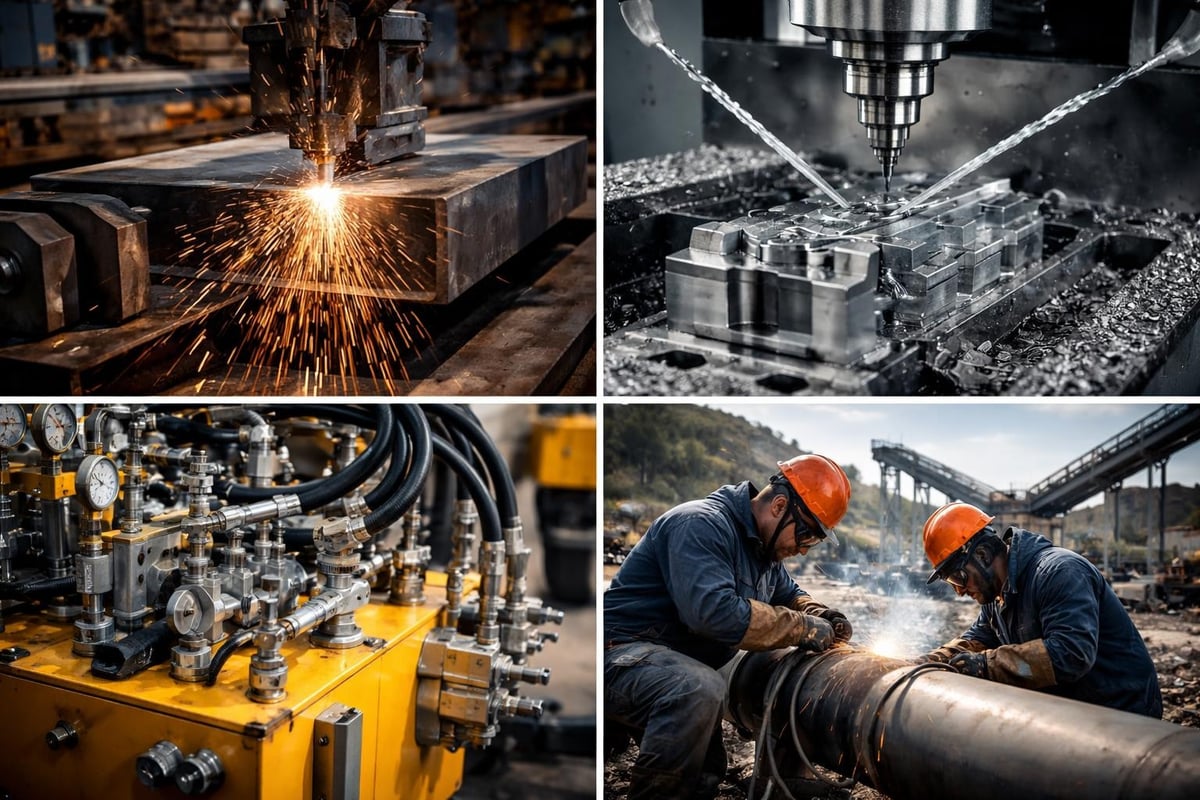
Metal fabrication represents a fundamental capability that supports countless industrial applications. Custom fabrication services transform raw materials into functional components, structural elements, and specialized equipment. The process requires expertise in material selection, cutting techniques, forming operations, and finishing procedures.
Professional welding services complement fabrication capabilities by joining components with precision and durability. Different industries demand different welding approaches:
- Structural welding for construction and infrastructure projects requiring high-strength joints
- Pipe welding for industrial piping systems in processing facilities and energy operations
- Maintenance welding for equipment repairs that restore functionality to damaged components
- Custom welding for unique applications requiring specialized techniques or materials
The custom metal fabrication services offered by specialized providers combine these capabilities to deliver complete solutions. Whether producing new equipment or repairing existing machinery, the welding and fabrication partnership creates value through reduced downtime and extended equipment life.
Precision Machining Operations
Machining capabilities separate basic metal shops from comprehensive manufacturing service providers. CNC machining enables production of complex parts with tight tolerances that manual operations cannot achieve. Industrial equipment relies on precisely machined components for proper function, making machining expertise essential for maintenance and repair operations.
Manufacturing companies serving industrial clients must maintain diverse machining capabilities:
- Turning operations for cylindrical parts like shafts, bushings, and sleeves
- Milling processes for creating complex geometries and surface features
- Drilling and boring for accurate hole placement and sizing
- Surface grinding for achieving precise dimensional tolerances and surface finishes
These capabilities support both new equipment production and replacement part manufacturing. When a critical component fails at an industrial facility, the ability to reverse-engineer and machine a replacement part minimizes costly downtime. Manufacturing and machining services that combine these capabilities provide operational flexibility that single-purpose shops cannot match.
Industry Sectors Served by American Manufacturing Companies
The diversity of industries relying on manufacturing support services reflects the breadth of the American industrial economy. A manufacturing company USA positioned for long-term success develops expertise across multiple sectors while building deep knowledge of industry-specific requirements.
Energy and Natural Resources
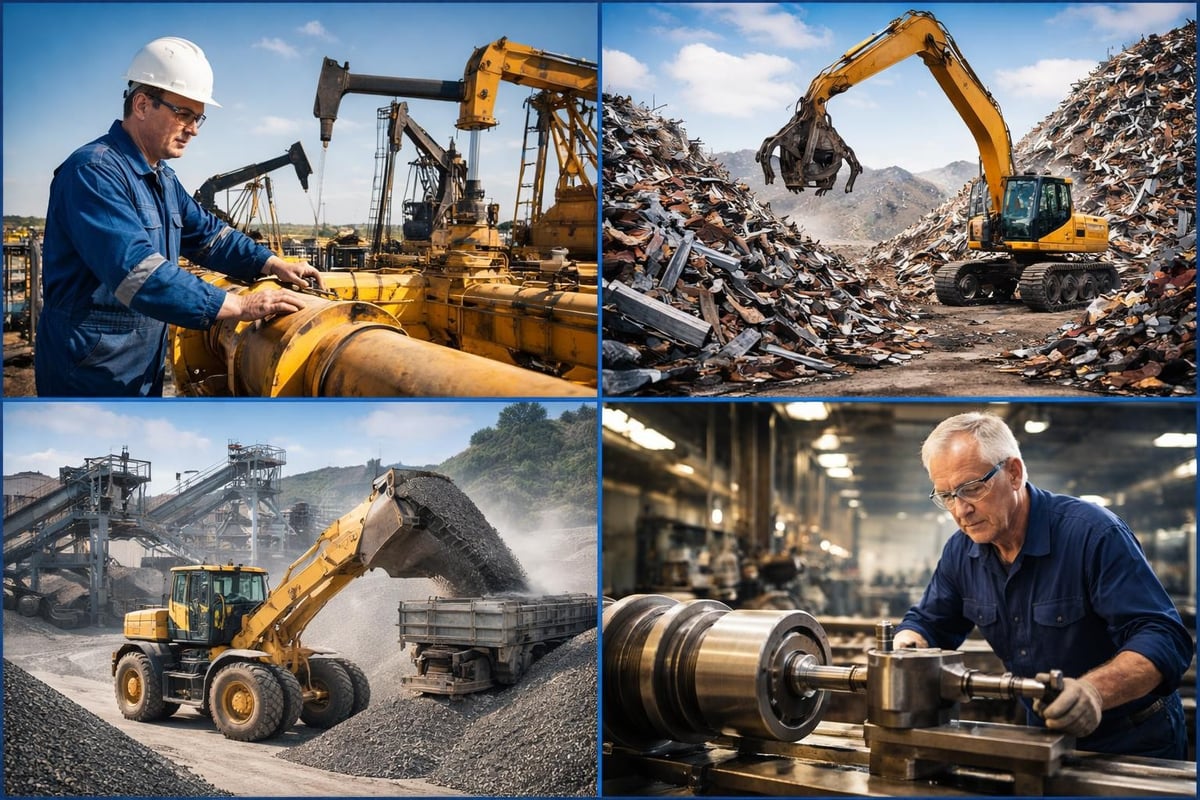
Oil and gas operations create substantial demand for fabrication, machining, and welding services. Equipment operating in extraction and processing environments faces harsh conditions that accelerate wear and necessitate frequent repairs. Manufacturing companies supporting this sector must understand:
- Material requirements for high-pressure and corrosive environments
- Safety standards governing equipment modifications and repairs
- Rapid response capabilities for emergency repair situations
- Field service logistics for remote operational locations
The energy transition also creates new manufacturing opportunities as companies diversify into alternative energy infrastructure while maintaining traditional operations.
Recycling and Material Processing
The recycling industry represents a growing sector requiring specialized manufacturing support. Processing equipment handles abrasive materials that cause rapid component wear, creating ongoing maintenance and fabrication demands. Conveyors, screens, crushers, and sorting equipment all require regular attention from skilled fabricators and machinists.
Manufacturing recycling sector expertise includes understanding material flow systems, wear-resistant materials, and the operational constraints of processing facilities. Companies serving this industry must deliver solutions that maximize uptime while managing maintenance costs.
Aggregate and Construction Materials
Aggregate operations share similar equipment challenges with recycling facilities. Crushers, screens, and material handling systems require robust fabrication and frequent component replacement. A manufacturing company USA serving this sector must produce durable parts that withstand constant impact and abrasion.
The construction connection extends manufacturing service requirements into large-scale metal fabrication for construction projects. Structural steel fabrication, equipment platforms, and specialized construction equipment all fall within the scope of comprehensive manufacturing capabilities.
Key Capabilities That Define Manufacturing Excellence
Distinguishing characteristics separate adequate service providers from exceptional manufacturing partners. Industrial clients evaluating potential vendors should assess capabilities across multiple dimensions to ensure their manufacturing company USA partner can deliver consistent quality and responsive service.
Technical Expertise and Certification
Professional certifications validate the competency of welders, machinists, and fabricators. Industry standards establish minimum qualification requirements, but leading manufacturing companies pursue higher certification levels that demonstrate advanced capabilities. AWS (American Welding Society) certifications for welders and NIMS (National Institute for Metalworking Skills) credentials for machinists provide third-party validation of technical proficiency.
Beyond individual certifications, companies may pursue quality management system certifications that govern operational processes. These systems ensure consistent execution and documentation across all projects, regardless of size or complexity.
Equipment and Technology Investment
Modern manufacturing requires substantial capital investment in equipment and technology. The difference between outdated machinery and current-generation equipment directly impacts the precision, efficiency, and capabilities available to clients.
| Equipment Category | Capability Impact | Client Benefit |
|---|---|---|
| CNC Machining Centers | Precision and repeatability | Consistent part quality, reduced waste |
| Automated Welding Systems | Process control and documentation | Stronger joints, verifiable quality |
| Hydraulic Equipment | Force capacity for heavy components | Ability to work on large industrial parts |
| Mobile Service Units | Field deployment capability | Reduced downtime, on-site solutions |
Investment in water jetting equipment, plasma cutting tables, and other specialized tools expands the range of services a manufacturing company USA can deliver. These capabilities allow providers to handle diverse projects without outsourcing critical operations.
Shop and Field Service Integration
The ability to perform work in controlled shop environments and deploy capabilities to customer sites creates valuable flexibility. Some repairs and fabrication projects require the precision and resources available in a fully equipped shop, while others demand on-site execution due to component size, location constraints, or operational urgency.
Shop services provide optimal conditions for complex machining, precision welding, and quality control processes. Field services deliver solutions directly to industrial facilities, minimizing transportation costs and equipment downtime. Companies offering both capabilities give clients options that optimize project execution based on specific requirements.
Manufacturing USA Initiatives and Industry Innovation
The manufacturing landscape benefits from collaborative initiatives designed to advance technological capabilities and workforce development. Manufacturing USA operates as a network connecting industry, academia, and government to drive innovation across advanced manufacturing technologies. These public-private partnerships create opportunities for companies to access emerging technologies and contribute to industry advancement.
The Manufacturing USA highlights report from NIST demonstrates how these collaborations accelerate technology adoption and skill development. For a manufacturing company USA operating in specialized niches like welding fabrication and machining, staying connected to industry innovations ensures competitive capabilities and access to best practices.
Technology Adoption Trends
Several technological trends are reshaping manufacturing operations and service delivery:
- Automation integration reducing labor requirements for repetitive tasks while improving consistency
- Additive manufacturing supplementing traditional subtractive processes for complex geometries
- Digital inspection tools enhancing quality control and dimensional verification
- Remote monitoring systems enabling predictive maintenance and performance optimization
Companies that strategically adopt relevant technologies position themselves as forward-thinking partners rather than traditional service providers simply executing work orders.
Quality Assurance and Project Management
Consistent quality delivery separates manufacturing companies that build long-term client relationships from those that simply complete individual projects. Quality assurance encompasses both the technical execution of work and the management processes that ensure projects meet specifications, timelines, and budget requirements.
Inspection and Testing Protocols
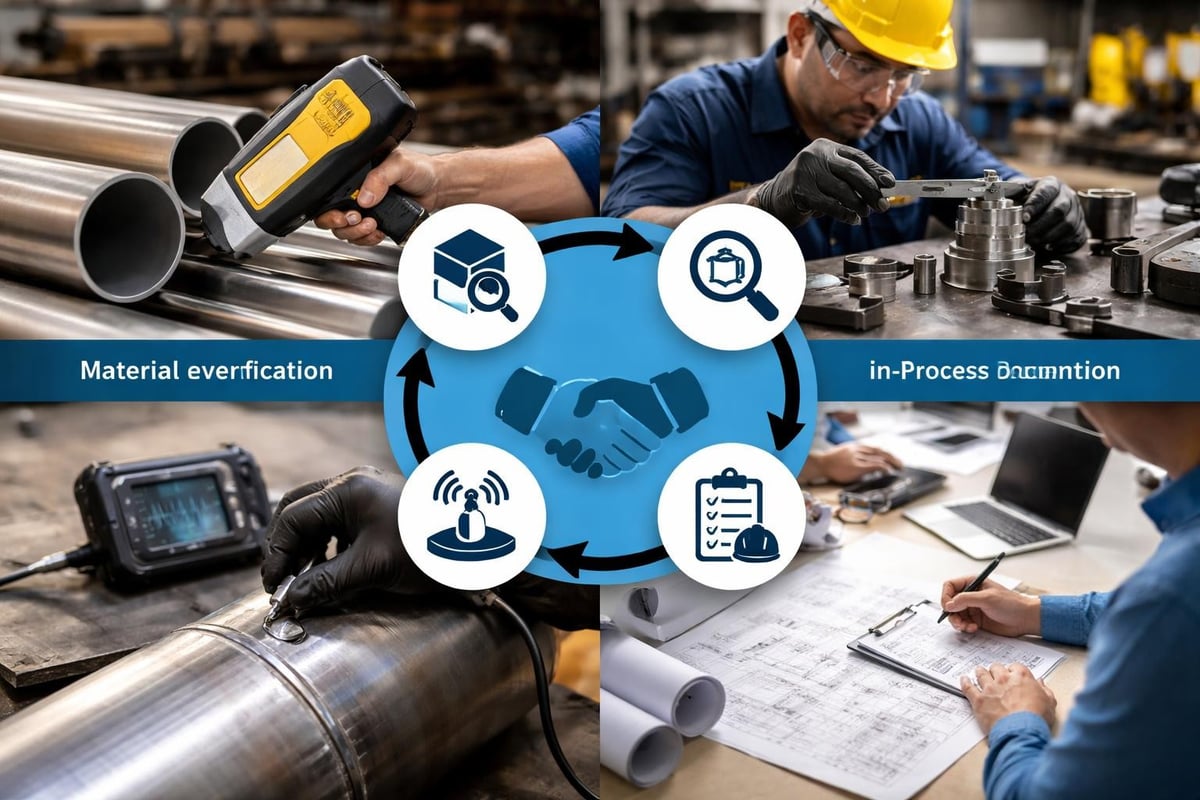
Comprehensive quality assurance begins with clear specification understanding and continues through multiple inspection stages. Initial material verification ensures incoming materials meet project requirements. In-process inspections catch potential issues before they compound, and final inspections validate that completed work satisfies all specifications.
Non-destructive testing (NDT) methods verify weld quality, material integrity, and component dimensions without damaging finished work. Common NDT techniques include:
- Visual inspection for surface defects and dimensional verification
- Ultrasonic testing for internal weld quality assessment
- Magnetic particle inspection for detecting surface and near-surface discontinuities
- Dye penetrant testing for identifying surface-breaking defects
Documentation of inspection results creates verifiable records that support quality claims and provide traceability for critical applications.
Communication and Responsiveness
Project success depends on effective communication between manufacturing providers and clients. From initial consultation through project completion, clear communication about capabilities, timelines, costs, and progress builds trust and prevents misunderstandings.
Responsive service addresses both routine projects and emergency situations. When equipment failures threaten production schedules, the ability to mobilize quickly and execute repairs efficiently minimizes financial impacts. A manufacturing company USA that prioritizes responsiveness becomes a valued partner rather than just another vendor.
Selecting the Right Manufacturing Partner
Industrial companies seeking manufacturing support services face important decisions that impact operational efficiency, maintenance costs, and equipment reliability. Evaluating potential partners requires assessing multiple factors beyond simple price comparisons.
Capability Assessment
The first evaluation criterion focuses on technical capabilities. Does the manufacturing company USA under consideration possess the equipment, certifications, and experience required for your specific applications? Commercial metal fabrication requirements differ from industrial applications, and providers specialize in different market segments.
Request detailed information about:
- Equipment specifications and capacity limitations
- Welding certifications and qualified welding procedures
- Machining tolerances achievable with available equipment
- Material expertise relevant to your industry applications
Companies should provide clear answers and supporting documentation rather than vague assurances about their capabilities.
Geographic and Logistic Considerations
Location matters for manufacturing partnerships. While some projects can be completed remotely with shipped components, many industrial applications benefit from local or regional providers who can deliver field services or respond quickly to urgent needs.
For operations across the Western United States, working with providers positioned to serve multi-state territories ensures consistent service access. Transportation costs, response times, and familiarity with regional industry characteristics all factor into partnership value.
Financial Stability and Business Practices
Manufacturing partnerships often extend over many years as ongoing maintenance and project needs develop. Selecting financially stable providers with professional business practices reduces risks associated with vendor failures or quality issues.
Evaluate potential partners based on:
- Years of operation and client references
- Insurance coverage and bonding capacity
- Payment terms and billing transparency
- Warranty provisions and issue resolution procedures
Professional industrial manufacturing companies operate with clear business processes that protect both their interests and client needs.
Cost Considerations and Value Optimization
Manufacturing service costs reflect multiple factors including materials, labor, equipment utilization, and overhead expenses. Understanding cost drivers helps industrial clients make informed decisions and optimize value from manufacturing partnerships.
Pricing Structures and Estimation
Manufacturing companies typically price work using several approaches depending on project characteristics. Fixed-price quotes work well for clearly defined projects with stable scopes, while time-and-materials pricing suits projects with uncertain requirements or exploratory repair work.
Obtaining accurate estimates requires providing detailed information about project requirements. Fabrication quote requests should include:
- Detailed drawings or specifications
- Material preferences or requirements
- Quantity requirements and delivery timelines
- Quality standards and inspection requirements
More complete information enables more accurate estimates and reduces the likelihood of change orders or unexpected costs.
Total Cost of Ownership Perspective
The lowest initial price rarely delivers the best value over the life of equipment or through the duration of a manufacturing relationship. Higher-quality work typically costs more initially but delivers better performance, longer service life, and reduced maintenance requirements.
| Cost Factor | Lower-Price Provider | Premium-Quality Provider |
|---|---|---|
| Initial Cost | Lower upfront investment | Higher initial expense |
| Longevity | Earlier replacement needs | Extended service life |
| Downtime Risk | Higher failure probability | Greater reliability |
| Warranty Coverage | Limited or no warranty | Comprehensive warranty protection |
| Total Long-Term Cost | Often higher over equipment life | Lower total cost of ownership |
Evaluating manufacturing partners based on total value rather than simple price comparisons leads to better long-term outcomes and more productive relationships.
Workforce Development and Skilled Labor
The manufacturing sector faces ongoing workforce challenges as experienced tradespeople retire and younger workers enter the field. A manufacturing company USA committed to long-term success invests in workforce development through apprenticeship programs, continuing education, and certification advancement.
Skilled welders, machinists, and fabricators require years of training and experience to develop proficiency with complex processes and equipment. Companies that prioritize workforce development maintain higher skill levels and can deliver more consistent quality than those relying on transient labor pools.
Industry resources like SBDCNet’s manufacturing industry links connect companies with workforce development programs, training resources, and industry associations supporting skill advancement.
Emerging Opportunities in Industrial Manufacturing
The manufacturing landscape continues evolving as industries adapt to changing economic conditions, technological capabilities, and market demands. Several trends create opportunities for growth and service expansion within the manufacturing sector.
Sustainability and Circular Economy
Growing emphasis on sustainability drives demand for recycling infrastructure, material recovery systems, and energy-efficient manufacturing processes. Companies supporting these initiatives through fabrication, machining, and maintenance services position themselves for long-term growth as sustainability becomes increasingly central to industrial operations.
The circular economy concept emphasizes keeping materials in productive use through recycling, remanufacturing, and repair rather than disposal. This approach creates ongoing demand for welding custom fabrication services that restore, modify, and extend equipment life.
Domestic Manufacturing Resurgence
Recent years have seen renewed focus on domestic manufacturing capabilities as supply chain vulnerabilities become apparent. Federal initiatives detailed in manufacturing industry reports encourage reshoring production and strengthening American manufacturing infrastructure.
This trend benefits manufacturing companies USA with established capabilities and track records of quality delivery. As companies bring production back to American facilities, demand increases for the support services that keep manufacturing operations running efficiently.
Advanced Materials and Processes
New materials and manufacturing processes create both opportunities and challenges for industrial service providers. Specialized alloys, composite materials, and advanced coatings require updated equipment capabilities and process knowledge. Companies investing in these areas expand their service offerings and differentiate themselves from competitors relying on traditional approaches alone.
The American manufacturing sector continues demonstrating resilience and adaptability as companies embrace new technologies while maintaining core competencies in fabrication, machining, and welding. Success in this competitive landscape requires combining technical expertise with responsive service and a commitment to quality that builds lasting client relationships. Whether you operate in aggregate processing, recycling, energy production, or commercial manufacturing, partnering with experienced providers ensures access to the specialized capabilities your operations demand. LTJ Industrial Services delivers comprehensive shop and field mechanic, welding, and machining services throughout the Western United States, supporting commercial and industrial clients with the expertise and responsiveness that complex operations require.