
Manufacturing facilities across the Western United States depend on hydraulic systems to deliver the power, precision, and reliability necessary for modern production operations. From metal forming presses that shape raw materials to robotic systems that assemble components, hydraulics in manufacturing has become an indispensable technology that enables businesses to meet demanding production schedules while maintaining exceptional quality standards. Understanding how these systems work and their applications can help facility managers and engineers optimize their operations, reduce downtime, and improve overall productivity.
The Fundamental Role of Hydraulic Power in Industrial Operations
Hydraulic systems convert fluid pressure into mechanical force, creating a power transmission method that offers unmatched advantages for manufacturing environments. Unlike pneumatic or electric systems, hydraulic applications in manufacturing deliver exceptional force-to-weight ratios, making them ideal for heavy-duty operations.
The basic principle behind hydraulics involves Pascal's Law, which states that pressure applied to a confined fluid transmits equally in all directions. This fundamental concept allows manufacturers to multiply force through cylinder design, creating massive pressing power from relatively compact systems. When a small piston applies pressure to hydraulic fluid, that pressure transfers through the system to a larger piston, amplifying the force proportionally to the difference in piston areas.
Core Components That Drive Manufacturing Performance
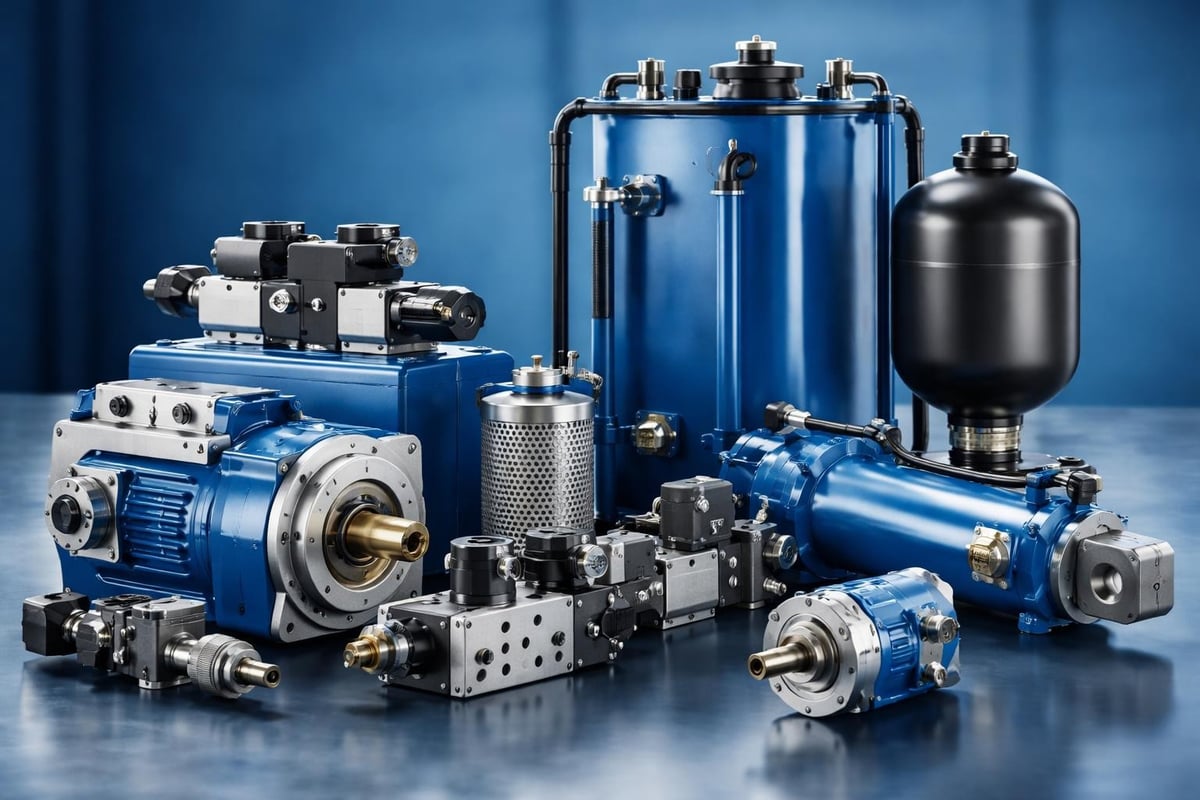
Every hydraulic system in a manufacturing environment consists of several critical components working in harmony:
- Hydraulic pumps that generate flow and pressure
- Control valves that direct fluid and regulate system operation
- Actuators (cylinders or motors) that convert fluid power to mechanical motion
- Reservoirs that store hydraulic fluid and allow heat dissipation
- Filters that maintain fluid cleanliness and system longevity
- Accumulators that store pressurized fluid for surge demand
- Hoses and fittings that create leak-free connections throughout the system
Each component requires proper specification, installation, and maintenance to ensure reliable operation. Manufacturing and machining operations particularly benefit from well-designed hydraulic systems that integrate seamlessly with existing production equipment.
Applications Across Manufacturing Sectors
The versatility of hydraulics in manufacturing extends across virtually every industrial sector. In metal fabrication shops, hydraulic presses form, bend, and shape materials with forces ranging from a few tons to thousands of tons. These hydraulic press systems can perform operations including deep drawing, stamping, forging, and compression molding.
Metal Forming and Fabrication
Metal forming operations represent one of the most common applications for hydraulic power. Press brakes use hydraulic cylinders to bend sheet metal with precise angle control, while shears cut through thick plate steel cleanly and accurately. The ability to control force and speed independently makes hydraulic systems particularly valuable for complex forming operations.
| Application | Typical Force Range | Primary Advantage |
|---|---|---|
| Press Brake Bending | 50-500 tons | Precision angle control |
| Plate Shearing | 100-1,000 tons | Clean edge quality |
| Deep Drawing | 200-2,000 tons | Uniform material flow |
| Forging Operations | 500-10,000 tons | Extreme force capability |
Industries like oil and gas, aggregate processing, and recycling rely on custom hydraulic equipment designed for specific applications. Large-scale metal fabrication projects often incorporate hydraulic systems for material handling, positioning, and assembly operations.
Material Handling and Processing Equipment
Hydraulic cylinders power lift tables, scissor lifts, and positioning equipment that move heavy materials through production facilities. These systems provide smooth, controlled motion even when handling loads weighing several tons. The self-locking characteristic of hydraulic cylinders under load creates inherent safety advantages compared to other power transmission methods.
Recycling operations depend heavily on hydraulic compactors and balers that compress materials for efficient transport and processing. Aggregate plants use hydraulic-powered crushers and screens to process raw materials. In each application, the ability to generate high force in confined spaces makes hydraulics the preferred solution.
Precision Control and Modern Manufacturing Requirements
Modern manufacturing demands increasingly precise control over production processes. Hydraulics contribute significantly to modern manufacturing through advanced valve technology and electronic controls that enable position accuracy measured in thousandths of an inch.
Servo-Hydraulic Systems for Exacting Applications
Servo-hydraulic systems combine the force capabilities of hydraulics with the precision of electronic control. These systems use closed-loop feedback to continuously monitor and adjust cylinder position, velocity, and force. Applications requiring this level of control include:
- Material testing equipment that applies precisely controlled loads
- Injection molding machines with exact fill rate control
- Assembly presses with programmable force profiles
- Robotic systems performing complex manipulation tasks
The integration of proportional and servo valves with programmable logic controllers (PLCs) allows manufacturers to create sophisticated motion profiles that optimize cycle times while maintaining quality. This technology enables CNC machining operations to incorporate hydraulic workholding and tool changers with micron-level repeatability.
Force Monitoring and Quality Assurance
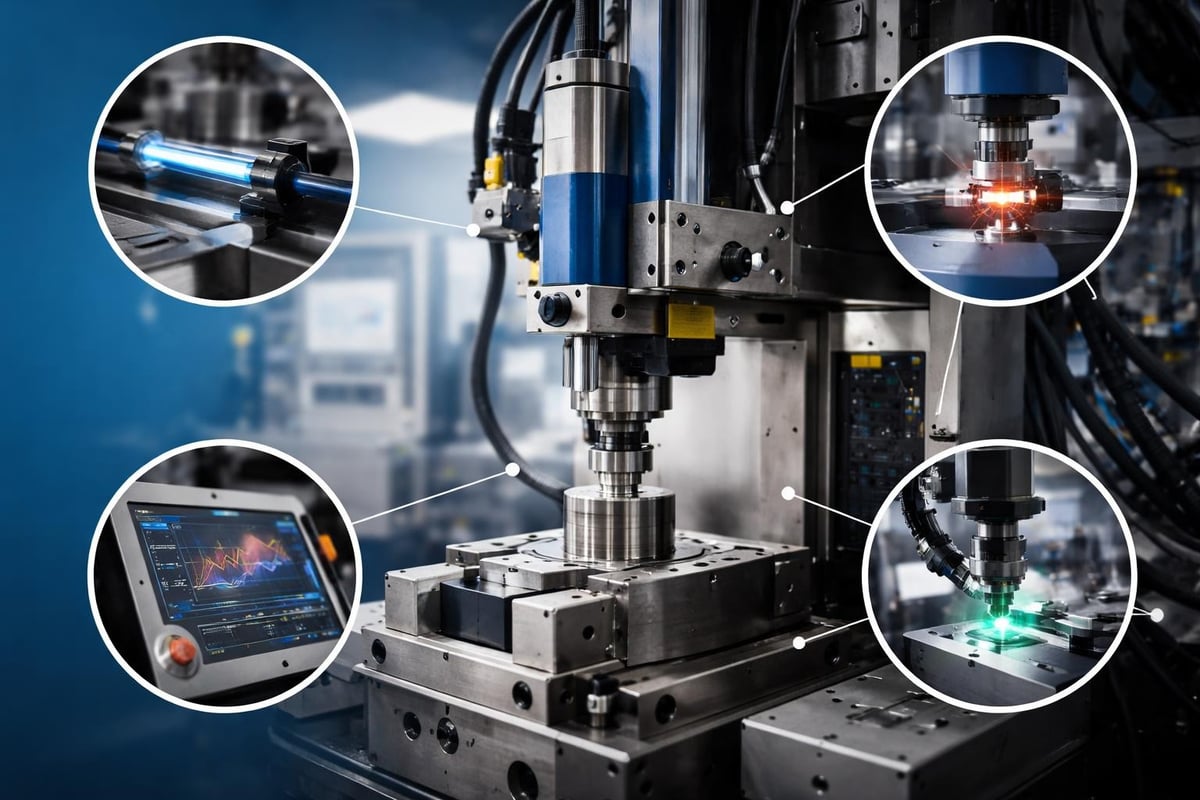
Hydraulics in manufacturing also serves quality control functions through integrated force monitoring. Pressure transducers provide real-time feedback about the forces applied during pressing, forming, or assembly operations. This data allows manufacturers to verify that each part receives the correct processing parameters and can trigger automatic rejection of out-of-specification components.
Statistical process control systems log hydraulic pressure data alongside other production metrics, creating comprehensive records for quality documentation and continuous improvement initiatives. This capability proves particularly valuable in industries with strict regulatory requirements or customer quality specifications.
Maintenance and Reliability in Production Environments
System reliability directly impacts manufacturing productivity, making proper hydraulic maintenance essential. Hydraulic and pneumatic systems in manufacturing require systematic attention to fluid condition, component wear, and system performance to minimize unplanned downtime.
Preventive Maintenance Programs
Effective hydraulic maintenance programs address several critical areas:
- Fluid analysis and conditioning to detect contamination and degradation
- Filter replacement on scheduled intervals based on pressure differential
- Seal inspection and replacement before catastrophic failure occurs
- Pressure testing to verify system performance parameters
- Temperature monitoring to identify cooling system problems
- Visual inspection for leaks, loose connections, and physical damage
Many manufacturing facilities have adopted predictive analytics for hydraulic systems that use sensors and data analysis to forecast component failures before they occur. These systems monitor parameters including fluid temperature, pressure fluctuations, vibration signatures, and flow rates to identify developing problems.
Common Failure Modes and Prevention Strategies
Understanding typical hydraulic failures helps maintenance teams focus preventive efforts where they deliver maximum value. Seal failures account for a significant percentage of hydraulic problems, often resulting from contamination, improper fluid selection, or excessive temperature. Regular fluid analysis detects particle contamination before it damages precision components like pumps and valves.
| Failure Mode | Primary Cause | Prevention Strategy |
|---|---|---|
| Seal Leakage | Contamination/Wear | Maintain fluid cleanliness, monitor temperature |
| Pump Failure | Cavitation/Contamination | Ensure adequate inlet pressure, filter maintenance |
| Valve Malfunction | Particle Contamination | High-efficiency filtration, regular fluid analysis |
| Cylinder Scoring | Hard Particle Contamination | Maintain proper filtration, inspect seals regularly |
Field service capabilities become critical when hydraulic equipment requires repair or modification. Companies serving the commercial and industrial sectors throughout the Western United States need access to skilled technicians who can diagnose problems, source replacement components, and restore systems to full operation quickly.
System Design Considerations for Manufacturing Applications
Designing hydraulic systems for manufacturing applications requires careful consideration of performance requirements, environmental conditions, and operational constraints. Understanding hydraulic principles helps engineers specify components that deliver reliable performance while minimizing operational costs.
Sizing Components for Optimal Performance
Proper component sizing ensures hydraulic systems operate efficiently within their design parameters. Undersized pumps struggle to maintain pressure, leading to slow cycle times and excessive heat generation. Oversized components waste energy and increase initial system costs without delivering proportional benefits.
Cylinder sizing requires analysis of load requirements, speed specifications, and available pressure. The fundamental formula relates these parameters:
Force = Pressure × Effective Area
This relationship allows engineers to calculate the cylinder bore diameter needed to generate required force at available system pressure. Speed calculations incorporate pump flow rate and cylinder area to determine extension and retraction times.
Fluid Selection and System Efficiency
Hydraulic fluid selection significantly impacts system performance and longevity. Petroleum-based fluids remain the most common choice for general manufacturing applications, offering good lubrication properties and moderate cost. Synthetic fluids provide superior performance in extreme temperature environments or applications requiring fire resistance.
Fluid viscosity affects both efficiency and component life. Thick fluids increase internal friction, raising system temperature and reducing efficiency. Thin fluids may not provide adequate lubrication for pumps and motors. Multi-grade hydraulic oils maintain more consistent viscosity across temperature ranges, improving performance in facilities with varying ambient conditions.
Energy Efficiency and Sustainability Initiatives
Modern manufacturing facilities increasingly focus on energy consumption and environmental impact. Hydraulics in manufacturing has evolved to address these concerns through improved component efficiency and system design strategies.
Variable Speed Drive Technology
Traditional hydraulic systems run pumps at constant speed, using relief valves to bypass excess flow when actuators don't require full pump capacity. This approach wastes significant energy as heat. Variable frequency drives (VFDs) adjust pump motor speed to match actual system demand, reducing energy consumption by 30-60% in many applications.
- Lower operating temperatures from reduced heat generation
- Extended component life from reduced stress
- Quieter operation from elimination of relief valve noise
- Faster return on investment through energy savings
Accumulator Applications for Peak Demand
Hydraulic accumulators store pressurized fluid to supplement pump flow during peak demand cycles. This approach allows system designers to size pumps for average rather than peak flow requirements, reducing energy consumption and installed power requirements. Accumulators also provide emergency power for safety functions if primary power fails.
Integration with Automated Manufacturing Systems
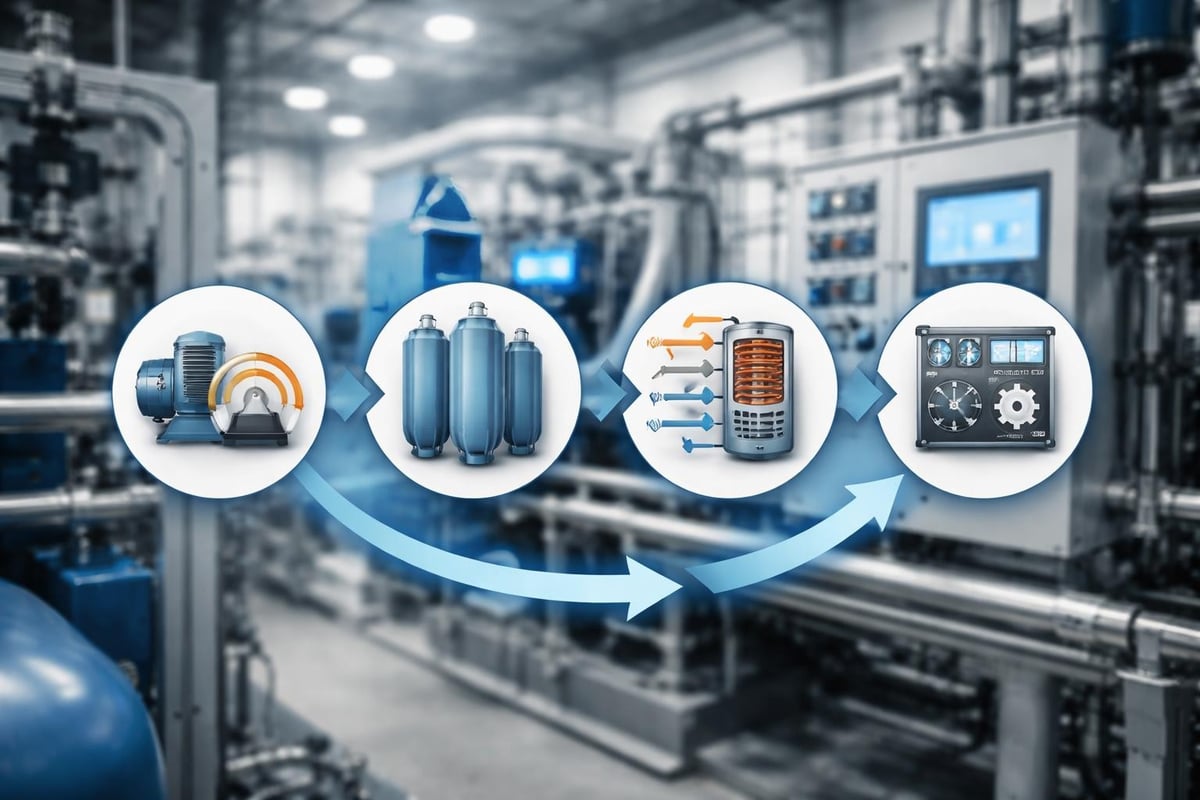
Hydraulics in manufacturing increasingly integrates with automated production systems, robotics, and Industry 4.0 initiatives. This integration requires careful attention to control interfaces, data communication protocols, and system responsiveness.
Hydraulic Actuators in Robotic Applications
Industrial robots and machinery increasingly incorporate hydraulic actuation where high force requirements exceed electric motor capabilities. Robotic welding positioners, material handling grippers, and assembly tools benefit from the power density that hydraulic systems provide.
Modern electrohydraulic actuators combine compact hydraulic power units with integrated control electronics, creating self-contained systems that simplify integration with robotic controllers. These units accept standard control signals and provide position feedback, allowing seamless coordination with other automation components.
Data Integration and Smart Manufacturing
Connected hydraulic systems contribute valuable data to manufacturing execution systems (MES) and enterprise resource planning (ERP) platforms. Pressure sensors, flow meters, and temperature probes generate operational data that supports production optimization and predictive maintenance programs.
Real-time monitoring of hydraulic parameters enables automatic process adjustments that maintain quality despite variations in material properties or environmental conditions. Advanced systems use machine learning algorithms to optimize hydraulic parameters for minimum cycle time or maximum energy efficiency.
Safety Standards and Compliance Requirements
Operating hydraulic systems safely requires adherence to established standards and implementation of appropriate safeguards. Manufacturing facilities must address both personnel safety and equipment protection through proper system design and operational procedures.
Pressure Relief and System Protection
Every hydraulic system requires pressure relief protection to prevent catastrophic failures from pressure spikes or valve malfunctions. Relief valves must be sized adequately for pump flow and set below the maximum rated pressure of system components. Regular testing verifies that relief valves function correctly and haven't drifted from their set points.
Burst hoses represent a significant safety hazard, potentially injuring personnel or damaging equipment. High-pressure hose assemblies require proper selection for pressure rating, chemical compatibility, and temperature range. Routing hoses away from hot surfaces and sharp edges prevents premature failure. Regular inspection programs identify wear, cracking, or damage before catastrophic failure occurs.
Lockout/Tagout Procedures
Maintenance activities on hydraulic equipment require comprehensive lockout/tagout procedures that address stored energy in accumulators and elevated loads. Even after shutting off pumps, accumulators may retain pressure for extended periods. Proper procedures require bleeding accumulators and verifying zero pressure before opening hydraulic connections or removing components.
Training programs ensure maintenance personnel understand hydraulic principles, recognize hazards, and follow established safety procedures. This knowledge proves particularly important for companies providing Colorado industrial services across multiple facilities with varying equipment configurations.
Specialized Applications in Heavy Industry
Certain manufacturing sectors demand specialized hydraulic solutions that address unique operational requirements. Understanding these applications helps facilities specify equipment that delivers optimal performance in challenging environments.
Oil and Gas Industry Requirements
Oil and gas operations expose hydraulic equipment to extreme temperatures, corrosive environments, and continuous duty cycles. Hydraulic cylinder manufacturing for these applications requires special materials, sealing systems, and surface treatments that withstand harsh conditions. Custom-designed cylinders may incorporate chrome-plated rods for corrosion resistance, high-temperature seals, and reinforced mounting hardware.
Wellhead control systems depend on hydraulic power for valve actuation and equipment positioning. These critical applications demand redundant systems, fail-safe designs, and regular testing to ensure reliability when needed. Maintenance programs for oil and gas hydraulics emphasize contamination control and component inspection to prevent failures in remote locations.
Aggregate and Mining Equipment
Rock crushers, screens, and material handlers in aggregate operations generate severe shock loads and vibration that challenge hydraulic components. Systems designed for these applications incorporate cushioned cylinders, high-capacity filtration, and robust mounting arrangements. Accumulator circuits absorb shock loads that would otherwise damage pumps and valves.
Mobile equipment operating in quarries and mines requires self-contained hydraulic systems that function reliably despite dust, temperature extremes, and limited maintenance access. Component selection emphasizes durability and ease of service, with quick-disconnect couplings and modular valve blocks that simplify field repairs.
Recycling Industry Innovations
Recycling facilities process diverse materials ranging from paper and cardboard to metal and plastics. Hydraulic balers and compactors create dense bundles that optimize transportation and processing efficiency. These systems cycle continuously throughout shifts, demanding reliable components and effective heat dissipation.
Shredders and granulators use hydraulic motors and cylinders to process materials too large or tough for initial handling equipment. Variable-speed hydraulic drives allow operators to adjust processing speed based on material characteristics, maximizing throughput while preventing jams or equipment damage.
Custom Fabrication and Hydraulic System Integration
Many manufacturing operations require custom-designed hydraulic systems that integrate with specialized production equipment. Industrial hydraulic and pneumatic expertise becomes essential when off-the-shelf solutions don't meet specific operational requirements.
Design Collaboration Process
Successful custom hydraulic projects begin with thorough requirements definition. Engineers work with production personnel to document force requirements, cycle times, space constraints, and integration points with existing equipment. This collaborative process ensures the final system delivers required performance while fitting within facility limitations.
Computer-aided design (CAD) tools allow visualization of proposed systems before fabrication begins. Three-dimensional models identify interference issues, optimize component placement, and facilitate stakeholder review. Hydraulic simulation software predicts system performance, enabling optimization of component selection and circuit design.
Fabrication and Testing Standards
Quality hydraulic fabrication requires skilled welders, machinists, and assemblers working to precise specifications. Manifold blocks demand accurate drilling and tapping to ensure proper flow paths and seal integrity. Structural components supporting cylinders and pumps must withstand operational loads with adequate safety margins.
Comprehensive testing verifies that completed systems meet design specifications before installation. Pressure testing identifies leaks and confirms structural integrity. Performance testing under simulated load conditions validates that force, speed, and positioning requirements are achieved. Documentation of test results provides baseline data for future troubleshooting and maintenance activities.
Facilities seeking custom fabrication quotes benefit from working with experienced fabricators who understand both hydraulic principles and manufacturing requirements. This expertise ensures systems integrate smoothly with production operations and deliver reliable long-term performance.
Future Trends Shaping Manufacturing Hydraulics
The evolution of hydraulics in manufacturing continues as new technologies emerge and operational requirements change. Several trends are reshaping how facilities approach hydraulic system design, operation, and maintenance in 2026 and beyond.
Electrification and Hybrid Systems
While hydraulics remains essential for high-force applications, some manufacturers are exploring hybrid systems that combine electric and hydraulic actuation. Electric actuators handle positioning and low-force operations, while hydraulic cylinders engage for forming and pressing operations. This approach optimizes energy efficiency while maintaining capability for demanding applications.
Digital Twin Technology
Digital twins create virtual representations of physical hydraulic systems, allowing engineers to simulate performance, predict maintenance needs, and optimize operational parameters. These models incorporate real-time data from installed sensors, continuously updating to reflect actual system condition. Predictive algorithms analyze trends to forecast component failures and recommend optimal maintenance timing.
Biodegradable and Environmentally Friendly Fluids
Environmental regulations and sustainability initiatives drive adoption of biodegradable hydraulic fluids in sensitive applications. These fluids break down naturally if spilled, reducing environmental impact compared to petroleum-based alternatives. Performance improvements in synthetic esters and vegetable-based fluids are expanding their applicability to demanding manufacturing operations.
Hydraulics in manufacturing delivers the power, precision, and reliability essential for modern industrial operations across diverse sectors. From metal forming and material handling to automated assembly and custom equipment, hydraulic systems enable manufacturers to meet demanding production requirements while maintaining quality and safety standards. When your facility needs expert hydraulic system design, fabrication, maintenance, or repair services, LTJ Industrial Services brings decades of experience serving commercial and industrial clients throughout the Western United States, delivering comprehensive solutions that keep your operations running at peak performance.