The industrial landscape across the Western United States continues to evolve rapidly, driven by technological advances, regulatory changes, and shifting market demands. Manufacturing facilities, aggregate operations, and energy sector businesses increasingly rely on specialized partners to maintain operations, improve efficiency, and tackle complex projects. An industrial services co that offers comprehensive capabilities in welding, fabrication, and machining becomes a strategic asset, delivering the technical expertise and responsive service that keeps production lines running and projects moving forward. Understanding what sets exceptional service providers apart helps decision-makers choose partners who align with their operational goals and quality standards.
Core Capabilities That Define an Industrial Services Co
Modern industrial operations demand more than basic repair work. A comprehensive industrial services co must deliver integrated solutions across multiple technical disciplines to meet the diverse challenges facing manufacturers and industrial operators.
Welding Expertise Across Materials and Applications
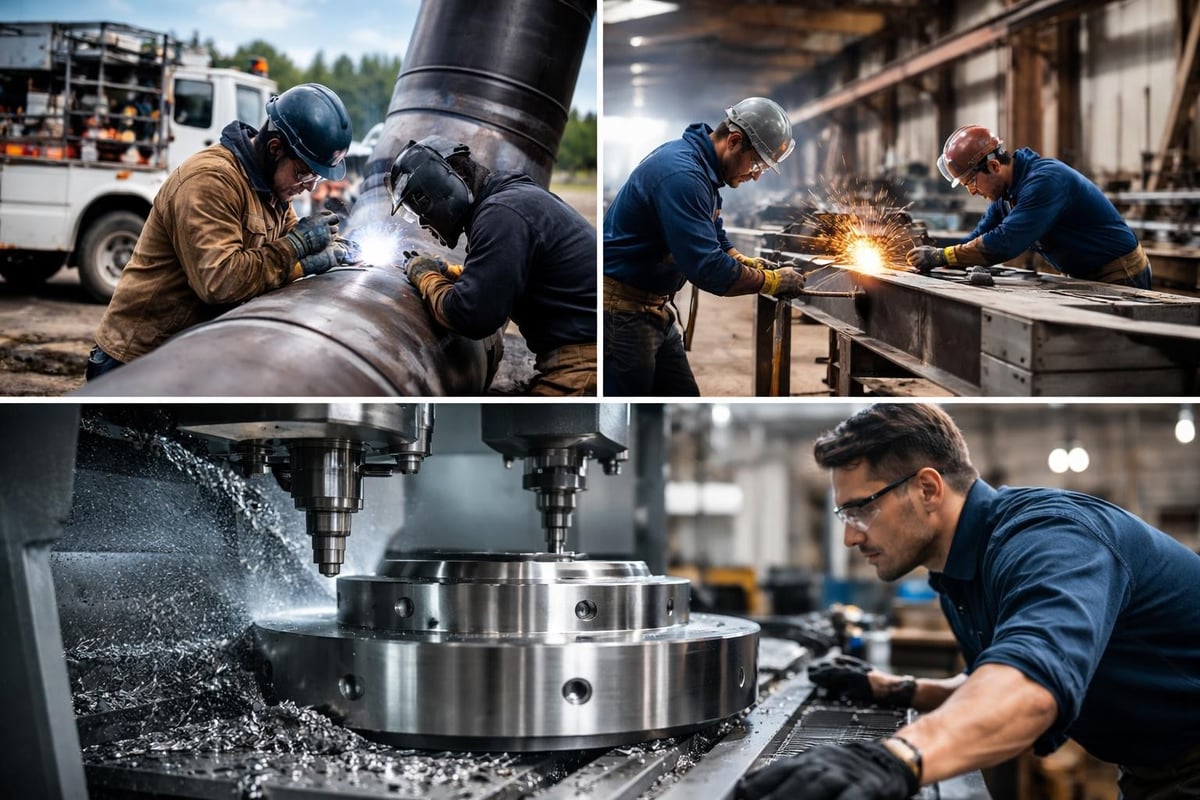
Professional welding and fabrication services form the foundation of industrial maintenance and construction. Certified welders work with various materials including carbon steel, stainless steel, aluminum, and exotic alloys. The ability to perform both shop-based and field welding distinguishes full-service providers from limited operations.
Field welding capabilities prove particularly valuable for:
- Emergency repairs that prevent costly downtime
- On-site modifications to existing structures
- Installation of new equipment and systems
- Maintenance of remote facilities in oil & gas operations
Shop welding allows for controlled environments where complex assemblies receive precision attention. Temperature control, proper material preparation, and quality testing ensure that fabricated components meet exact specifications before installation.
Fabrication Services for Custom Industrial Solutions
Metal fabrication projects require sophisticated equipment and experienced craftsmen who understand material properties, stress calculations, and design principles. An industrial services co with comprehensive fabrication capabilities can transform raw materials into finished components that solve specific operational challenges.
| Service Type | Applications | Benefits |
|---|---|---|
| Structural Steel | Building frameworks, support systems | High strength-to-weight ratio, cost efficiency |
| Custom Fabrication | Specialized equipment, unique components | Tailored solutions, proprietary designs |
| Production Runs | Replacement parts, standardized assemblies | Consistency, inventory management |
The fabrication process encompasses cutting, forming, welding, and finishing operations. Water jet cutting, plasma cutting, and laser cutting technologies each offer distinct advantages depending on material type, thickness, and precision requirements. Manufacturing and machining integration ensures that fabricated components receive necessary secondary operations without delays.
Precision Machining for Critical Components
Machine shops equipped with CNC mills, lathes, and specialized tooling produce components meeting tight tolerances essential for rotating equipment, hydraulic systems, and precision assemblies. An industrial services co offering machining capabilities can manufacture replacement parts, prototype designs, and production quantities with consistent quality.
Field machining services extend these capabilities directly to customer facilities. Large components that cannot be easily transported receive precision machining on-site, minimizing downtime and transportation costs. This approach proves particularly valuable in aggregate operations and manufacturing plants where equipment removal disrupts production schedules.
Industry Applications and Market Sectors
Different industrial sectors present unique service requirements and operational challenges. Understanding these distinctions helps an industrial services co deliver appropriate solutions and build expertise in specialized applications.
Manufacturing Sector Support
Commercial and industrial manufacturing facilities operate under intense pressure to maintain efficiency, meet production quotas, and control costs. Equipment failures, worn components, and production line modifications all require rapid, skilled intervention. Industrial manufacturing partners who understand production environments can minimize disruption while delivering quality repairs and upgrades.
Preventive maintenance programs identify potential failures before they cause shutdowns. Regular inspections, component replacement schedules, and systematic upgrades extend equipment life and improve reliability. An industrial services co becomes an extension of the maintenance team, providing specialized skills that complement in-house capabilities.
Recent industrial markets analysis highlights how manufacturers increasingly outsource specialized technical services to focus internal resources on core production activities.
Aggregate and Materials Processing
Quarries, crushing operations, and materials processing facilities subject equipment to extreme wear. Conveyor systems, crushers, screens, and processing equipment require robust construction and regular maintenance to withstand abrasive materials and heavy loads.
Custom fabrication creates wear-resistant components designed for specific applications:
- Chute liners engineered for material flow and durability
- Screen decks optimized for particle size and throughput
- Crusher components manufactured from high-strength alloys
- Structural supports designed for vibration and load stress
Field service capabilities ensure that maintenance and repairs occur on-site, avoiding the logistical challenges of moving heavy equipment. Custom welding and fabrication teams familiar with aggregate operations understand the urgency of minimizing downtime during peak production seasons.
Energy Sector Services
Oil and gas operations, both upstream and downstream, require service providers who meet stringent safety standards and deliver reliable performance in challenging environments. An industrial services co serving this sector must maintain appropriate certifications, follow industry protocols, and demonstrate consistent quality.
Oil and gas fabrication encompasses pipe fabrication, pressure vessel repair, and structural modifications for production facilities. Field welding in remote locations demands self-sufficient teams equipped to work independently while maintaining communication with project managers.
The energy sector increasingly focuses on efficiency improvements. According to recent industrial energy efficiency services trends, companies invest in upgrades that reduce energy consumption and improve operational performance.
Quality Standards and Industry Certifications
Professional credentials and proven quality systems differentiate exceptional service providers from basic contractors. An industrial services co committed to excellence maintains certifications, invests in training, and implements quality control processes.
Welder Certification and Qualification
American Welding Society (AWS) certifications verify that welders possess the skills necessary for specific welding processes and positions. Certifications cover:
- Shielded Metal Arc Welding (SMAW)
- Gas Metal Arc Welding (GMAW)
- Flux-Cored Arc Welding (FCAW)
- Gas Tungsten Arc Welding (GTAW)
Position qualifications ensure welders can perform vertical, overhead, and other challenging welds required in field conditions. Regular recertification maintains skills and verifies continued proficiency.
| Certification | Process | Applications |
|---|---|---|
| AWS D1.1 | Structural Welding | Building frames, support structures |
| AWS D1.6 | Stainless Steel | Food processing, chemical plants |
| ASME Section IX | Pressure Vessels | Boilers, tanks, piping systems |
Quality Control Procedures
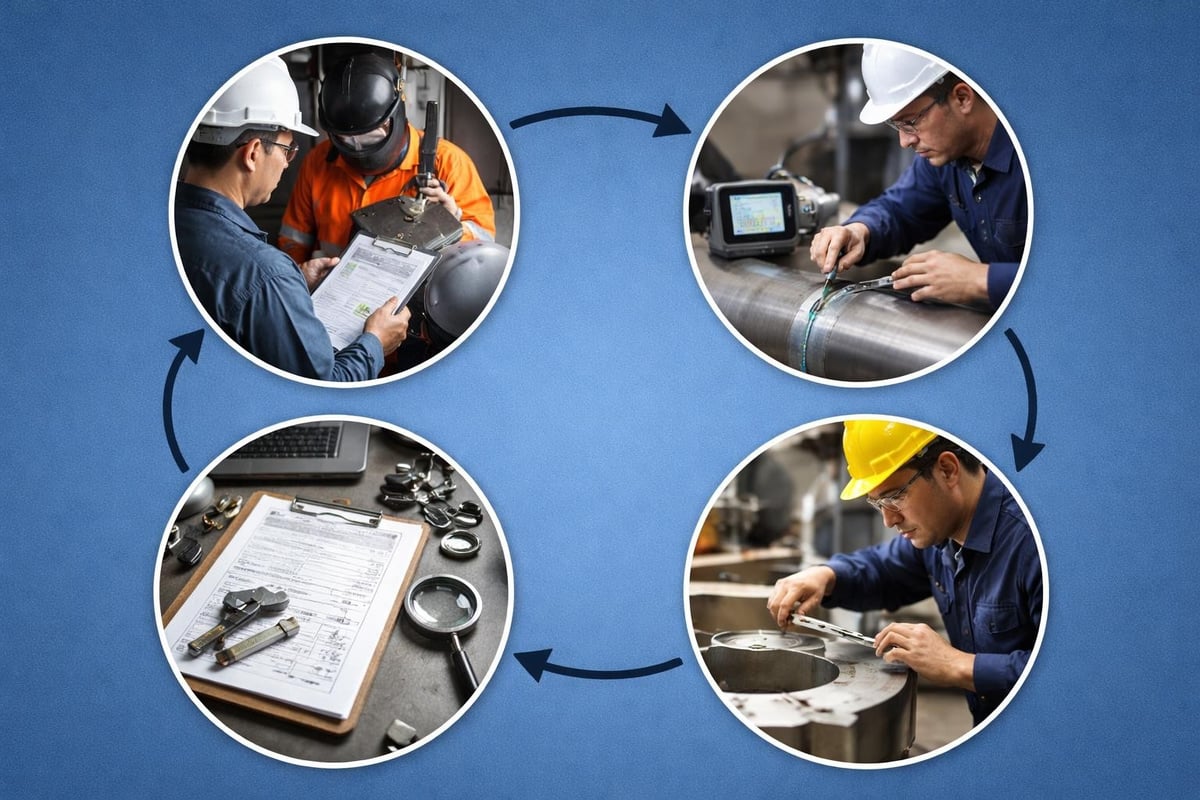
Systematic quality assurance prevents defects and ensures that completed work meets specifications. Visual inspection, non-destructive testing (NDT), and dimensional verification all play roles in comprehensive quality programs.
Non-destructive testing methods include:
- Radiographic Testing (RT) – X-ray or gamma ray imaging reveals internal defects
- Ultrasonic Testing (UT) – Sound waves detect discontinuities and measure thickness
- Magnetic Particle Testing (MT) – Magnetic fields and iron particles identify surface cracks
- Dye Penetrant Testing (PT) – Liquid penetrants highlight surface-breaking defects
Third-party inspection services provide independent verification for critical applications. An industrial services co working with certified inspectors demonstrates commitment to quality and builds client confidence.
Service Delivery Models and Response Capabilities
How an industrial services co structures service delivery significantly impacts customer satisfaction and operational outcomes. Flexibility, responsiveness, and clear communication distinguish exceptional providers.
Shop Services Versus Field Services
Shop-based work offers controlled environments with full equipment access, overhead cranes, and comprehensive tooling. Complex assemblies, precision machining, and detailed fabrication benefit from shop conditions. Customers deliver materials or components to the service provider's facility and receive completed work according to agreed schedules.
Field services bring expertise directly to customer locations. This approach proves essential for:
- Equipment that cannot be economically transported
- Emergency repairs requiring immediate attention
- On-site modifications to existing installations
- Projects where shop fabrication precedes field installation
Many projects combine both approaches. An industrial services co fabricates major assemblies in the shop where quality control is optimized, then deploys field teams for final installation and integration with existing systems.
Emergency Response and Planned Maintenance
Equipment failures rarely occur at convenient times. Emergency service capabilities separate providers who truly support industrial operations from those offering only scheduled work. Round-the-clock availability, rapid mobilization, and skilled troubleshooting minimize costly downtime.
Planned maintenance programs provide systematic equipment care that prevents emergencies. Regular inspections identify wear patterns, predictive maintenance forecasts component life, and scheduled replacements occur during planned shutdowns rather than forced outages.
Project Management and Communication
Complex projects involving multiple disciplines require coordinated management. Effective project managers maintain schedules, coordinate resources, communicate progress, and resolve issues proactively. Clear documentation, regular updates, and responsive communication build trust and ensure alignment between service provider and client expectations.
Modern industrial company websites facilitate communication through online project tracking, quote requests, and technical resource libraries that support informed decision-making.
Geographic Considerations for Western U.S. Operations
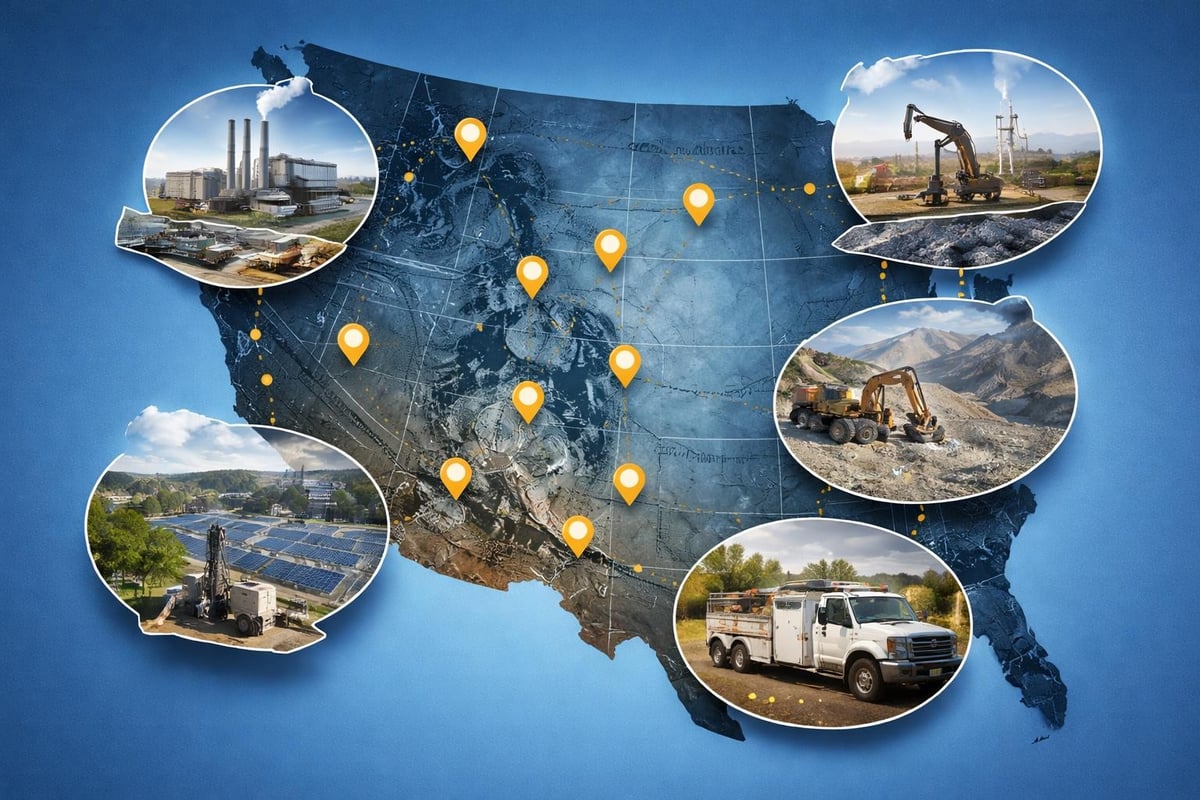
The Western United States presents unique operational challenges and opportunities for industrial services. Distance, terrain, climate, and regional industrial concentrations all influence service delivery.
Regional Industrial Clusters
Manufacturing, energy production, and materials processing concentrate in specific regions. Understanding these patterns helps an industrial services co position resources effectively:
- Energy production in Colorado, Wyoming, and New Mexico
- Manufacturing corridors along major transportation routes
- Aggregate operations near urban growth areas
- Food processing in agricultural regions
Strategic positioning allows rapid response to customer needs while controlling travel costs and mobilization time. Service providers based centrally within industrial regions offer advantages in both emergency response and routine service delivery.
Remote Site Logistics
Many Western industrial facilities operate in remote locations far from urban centers. An industrial services co serving these sites must plan carefully for:
- Equipment and material transport to locations with limited access
- Self-sufficient field crews capable of working independently
- Communication systems that function in areas with limited connectivity
- Weather considerations that affect travel and outdoor work
Experienced field supervisors familiar with remote operations anticipate challenges and implement contingency plans that keep projects on schedule despite logistical complications.
Climate and Environmental Factors
Western climates range from desert heat to mountain cold, creating diverse environmental challenges. Welding procedures must account for temperature extremes, wind conditions, and humidity variations. Material selection considers thermal expansion, corrosion resistance, and weathering appropriate to installation locations.
Environmental regulations governing emissions, waste disposal, and water use vary by state and locality. An industrial services co operating across multiple jurisdictions maintains current knowledge of applicable regulations and implements compliant practices.
Technology Integration and Modern Capabilities
Industrial service providers who embrace technology deliver improved efficiency, enhanced quality, and better customer communication. Investment in modern equipment and digital systems creates competitive advantages.
Advanced Fabrication Equipment
Computer-controlled cutting systems produce components with precision impossible through manual methods. Water jet cutting handles virtually any material without heat-affected zones. Plasma systems cut thick steel quickly and economically. Laser cutting delivers extremely precise edges on thinner materials.
CNC machining centers automate complex operations, ensuring consistency across production runs. Multi-axis capabilities machine intricate geometries in single setups, reducing handling time and improving accuracy. Programming software translates engineering designs directly into machine instructions, minimizing interpretation errors.
Digital Documentation and Quality Records
Electronic records systems maintain comprehensive project documentation including material certifications, weld procedures, inspection reports, and test results. Digital photographs document work progress and completed installations. These records support quality verification, warranty claims, and future maintenance planning.
Cloud-based systems enable real-time information sharing between field crews, shop personnel, and project managers. Customers access project status, view documentation, and communicate requirements through secure portals.
Predictive Maintenance Technologies
Thermal imaging identifies hot spots indicating electrical issues or bearing failures. Vibration analysis detects imbalance, misalignment, and wear in rotating equipment. Ultrasonic testing measures wall thickness to predict corrosion-related failures.
An industrial services co incorporating these diagnostic technologies provides customers with data-driven maintenance recommendations that optimize equipment life and prevent unexpected failures.
Building Strategic Partnerships
The relationship between an industrial services co and its clients extends beyond transactional service delivery. Strategic partnerships create mutual benefits and long-term value.
Understanding Customer Operations
Service providers who invest time learning customer processes, equipment, and operational priorities deliver more effective solutions. Facility tours, process discussions, and collaborative planning sessions build shared understanding that improves service quality and responsiveness.
Welding fabrication shops that maintain detailed records of customer equipment, preferred specifications, and historical service requirements can respond more quickly to new requests and provide consistent results.
Proactive Solution Development
Rather than simply responding to service requests, strategic partners identify opportunities for improvement. Equipment modifications that enhance efficiency, material upgrades that extend component life, and process changes that reduce maintenance requirements all demonstrate value beyond basic service execution.
Collaborative engineering between customer operations teams and service provider technical staff produces optimized solutions that neither party might develop independently. This partnership approach strengthens relationships and creates competitive advantages for both organizations.
Performance Metrics and Continuous Improvement
Measuring service performance through objective metrics maintains accountability and drives improvement. Key performance indicators might include:
| Metric | Target | Benefit |
|---|---|---|
| Emergency Response Time | Under 4 hours | Minimizes downtime costs |
| Project Schedule Adherence | 95% on-time completion | Supports production planning |
| First-Time Quality Rate | 98% defect-free | Reduces rework and delays |
| Safety Incident Rate | Zero recordable incidents | Protects workforce, reduces liability |
Regular performance reviews identify trends, celebrate successes, and address areas needing improvement. This disciplined approach to service excellence builds confidence and justifies continued partnership.
Future Trends Shaping Industrial Services
The industrial services sector continues evolving in response to technological advances, market pressures, and changing customer expectations. Forward-thinking providers prepare for these trends rather than reacting after changes occur.
Automation and Robotics Integration
Automated welding systems deliver consistent quality and high productivity for repetitive tasks. Robotic material handling reduces manual labor requirements and improves safety. These technologies complement rather than replace skilled craftsmen, who focus on complex work requiring judgment and adaptability.
Collaborative robots (cobots) work alongside human technicians, combining automation efficiency with human problem-solving capabilities. An industrial services co investing in these technologies positions itself for evolving market demands.
Sustainability and Environmental Responsibility
Industrial customers increasingly prioritize environmental performance. Energy-efficient processes, waste reduction, and sustainable material choices align with corporate sustainability goals. Service providers who demonstrate environmental responsibility through their own operations appeal to environmentally conscious clients.
Recycling programs for scrap metal, proper disposal of consumables, and energy-efficient shop operations all contribute to reduced environmental impact. Documentation of environmental practices supports customer reporting requirements for corporate sustainability programs.
Skills Development and Workforce Training
The skilled trades face workforce challenges as experienced professionals retire and fewer young people enter industrial careers. An industrial services co committed to workforce development invests in apprenticeship programs, continuing education, and career advancement opportunities.
Partnerships with technical schools and community colleges create pipelines of qualified candidates. Internal training programs develop specialized skills specific to customer industries and applications. This investment in human capital ensures consistent service quality and builds organizational capacity for growth.
According to industrial services market analysis, the sector continues expanding through 2026, creating opportunities for well-positioned service providers.
Industrial operations throughout the Western United States depend on skilled partners who deliver comprehensive welding, fabrication, and machining services that keep equipment running and projects moving forward. The right industrial services co combines technical expertise, quality commitment, and responsive service to become a strategic asset rather than just a vendor. LTJ Industrial Services provides exactly this combination, offering shop and field capabilities across Colorado and the broader Western region with the experience and equipment to handle projects ranging from emergency repairs to complex custom fabrication. When your operation needs dependable technical partners who understand manufacturing, aggregate, and energy sector demands, consider reaching out to explore how comprehensive industrial services can support your operational goals.