
Machining and manufacturing are evolving at an unprecedented pace as we move closer to 2026. Industry reports show rapid growth, with digital transformation, automation, and new materials reshaping production worldwide.
This guide equips manufacturers, engineers, and decision-makers with the latest insights, strategies, and technology trends driving machining and manufacturing forward. You will discover the most important industry trends, breakthroughs in automation, emerging best practices, and proven methods for quality control and sustainability.
Stay ahead of the curve, boost your competitiveness, and make informed decisions with expert guidance designed to help you succeed in the future of machining and manufacturing.
The State of Machining and Manufacturing in 2026
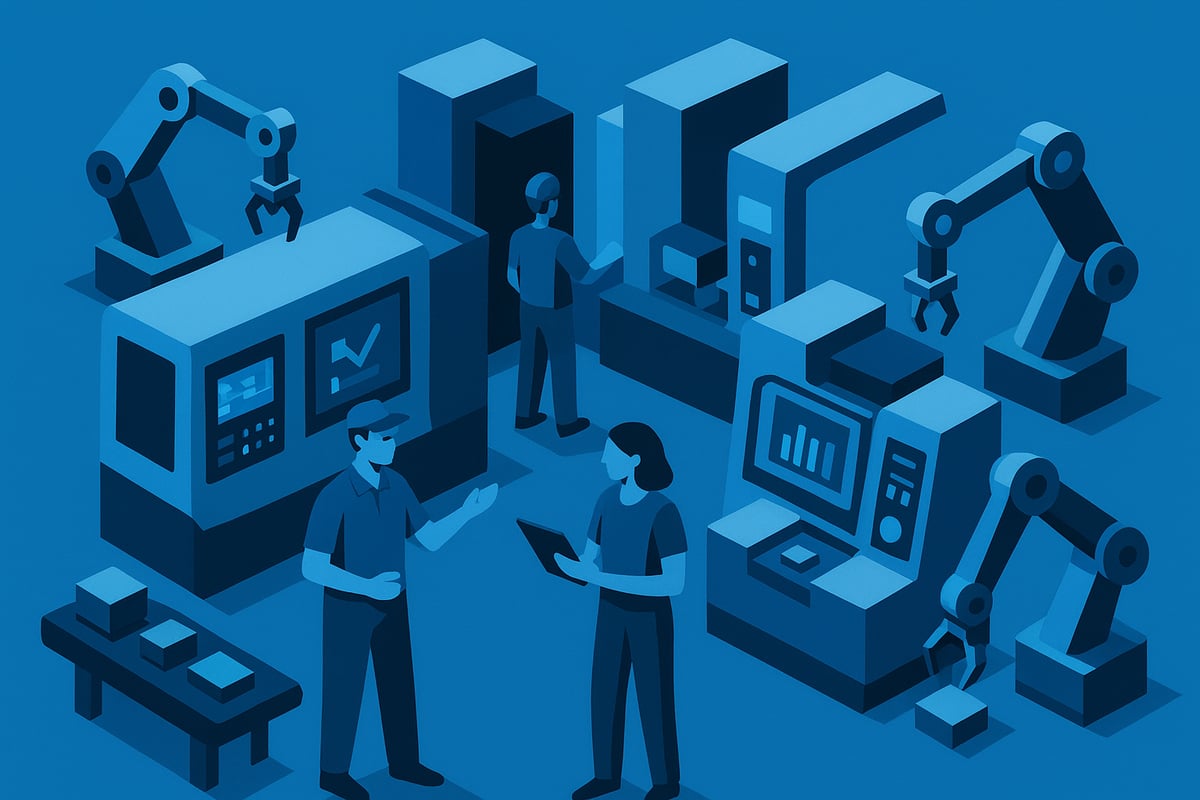
As we approach 2026, machining and manufacturing are undergoing dramatic shifts, reshaping every aspect of production and supply chains. The industry is experiencing rapid growth, fueled by innovation, digital transformation, and changing customer demands. To remain competitive, businesses must understand the landscape, emerging trends, and sector-specific opportunities that define the current era of machining and manufacturing.
Key Industry Trends and Statistics
The global machining and manufacturing market is projected to surpass $12 trillion by 2026, reflecting steady year-over-year growth. This expansion is underpinned by the widespread adoption of digital transformation and Industry 4.0 solutions, which are revolutionizing operations and boosting competitiveness.
Manufacturers are accelerating investments in automation, with over 65% of facilities integrating robotics and smart systems. The resurgence of domestic manufacturing is particularly notable in North America and Europe, as companies prioritize resilient supply chains and local production. U.S. reshoring initiatives continue to gain traction, bolstered by government incentives and a renewed focus on national self-sufficiency.
The workforce landscape presents both challenges and opportunities. A persistent skills gap has prompted manufacturers to invest in upskilling, technical training, and innovative recruitment strategies. Demand for customization, rapid prototyping, and small-batch production is rising, driving the proliferation of micro-factories and agile production models.
According to Defining Manufacturing Trends of 2026, the integration of artificial intelligence, advanced analytics, and sustainable practices is setting new industry benchmarks. Automation adoption rates are expected to climb further, and the CNC machine market alone is forecasted to experience robust double-digit growth. These trends highlight the urgency for organizations to stay ahead in machining and manufacturing.
Core Sectors and Applications
Several key sectors are driving the evolution of machining and manufacturing. Aerospace manufacturers require high-performance alloys and exceptional precision, while the automotive industry focuses on lightweight materials, complex geometries, and electric vehicle components. In the energy sector, machining supports both traditional oil and gas projects and the rapid expansion of green energy infrastructure.
Medical device manufacturers depend on ultra-tight tolerances and biocompatible materials, pushing the limits of current machining technologies. Electronics production demands miniaturization and high-speed prototyping, spurring innovation in both equipment and processes.
Case studies across recycling, aggregate, and oil & gas industries reveal how advanced machining is solving real-world challenges. For instance, recycling plants employ custom machining solutions to optimize equipment longevity and throughput. Precision machining is also pivotal in supporting the shift toward electric vehicles and renewable energy systems, ensuring components meet stringent safety and efficiency standards.
As machining and manufacturing continue to diversify, collaboration between sectors is fostering new applications and driving the industry toward a more sustainable, digitally connected future.
Essential Machining Processes and Technologies
Machining and manufacturing processes in 2026 are more advanced, precise, and flexible than ever before. Manufacturers today rely on a spectrum of cutting-edge technologies to meet rising demands for quality, customization, and efficiency. Understanding these essential processes is crucial for any business aiming to stay competitive in a rapidly evolving industry. For a deeper dive on these topics, see Manufacturing and Machining Insights.
Subtractive Manufacturing: CNC Machining, Turning, Milling, and Drilling
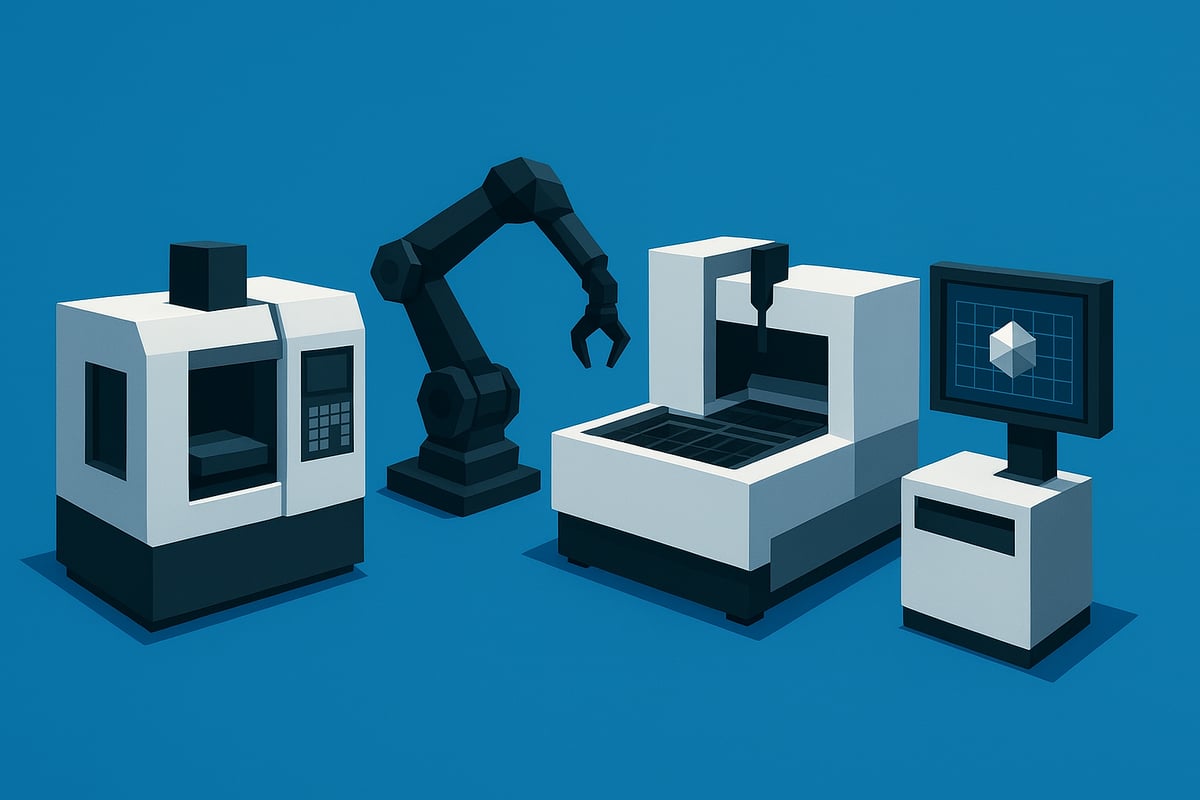
Subtractive manufacturing remains the backbone of precision engineering. CNC machining dominates the landscape, offering unmatched accuracy and repeatability. Recent years have seen a surge in multi-axis machines, such as 5-axis and 6-axis systems, enabling manufacturers to create complex geometries previously considered impossible.
Turning and milling are essential for producing both high-volume and high-tolerance components, with modern equipment supporting rapid tool changes and automated loading. Advances in cutting tools, including carbide, ceramic, and diamond inserts, have led to longer tool life and faster cycle times. For example, six-axis boring machines now reduce certain operations from days to minutes, revolutionizing project timelines.
These developments in machining and manufacturing empower sectors like aerospace, automotive, and medical to meet strict tolerances and deliver consistent quality. Precision, speed, and adaptability define the modern subtractive process.
Additive Manufacturing and Hybrid Processes
Additive manufacturing, especially 3D printing with metals and polymers, is transforming the way prototypes and end-use parts are produced. Its ability to create intricate shapes and internal structures is unmatched by traditional methods. Hybrid machines that combine additive and subtractive processes are gaining popularity, providing both design freedom and surface finish quality.
Key applications include aerospace blisks, medical implants, and custom tooling inserts. Hybrid systems allow manufacturers to repair or modify existing parts, reducing waste and enhancing sustainability. When comparing costs, additive manufacturing excels in low-volume, complex parts, while subtractive remains more economical for larger batches.
The integration of additive techniques into machining and manufacturing workflows is opening new possibilities for rapid prototyping, customization, and reduced lead times, helping businesses stay agile in a changing market.
EDM, Laser, and Waterjet Cutting
Electrical Discharge Machining (EDM) is vital for working with hard metals and producing intricate shapes unachievable by conventional cutting. EDM technology has advanced with closed-loop automation and improved electrode design, enabling longer unattended run times and higher productivity.
Laser and waterjet cutting systems offer exceptional material versatility and precision. Modern laser cutters achieve micron-level accuracy, while waterjets handle a wide range of materials without thermal distortion. Automation in EDM, such as robotic loading and in-process monitoring, has further enhanced efficiency and reduced operator intervention.
These cutting-edge processes are now integral to machining and manufacturing, supporting industries that require tight tolerances, specialized materials, and reliable throughput.
Measurement and Inspection Technologies
Quality assurance is the cornerstone of reliable machining and manufacturing. Coordinate Measuring Machines (CMMs), optical scanners, and in-process measurement systems ensure components meet exacting standards. The trend toward tighter tolerances and real-time feedback is driving the adoption of advanced metrology tools.
For example, 3-point bore gages and digital readouts provide immediate, accurate measurements, reducing the risk of costly rework. In-process inspection enables manufacturers to catch errors early, maintaining consistency throughout production runs.
By integrating measurement technologies into their workflows, companies can achieve higher quality, greater traceability, and compliance with industry certifications. This ensures that every part delivered meets both customer expectations and regulatory requirements.
Advanced Tooling and Workholding Solutions
The rapid progress in machining and manufacturing relies on advanced tooling and workholding solutions that drive productivity, precision, and flexibility. As manufacturing needs become more complex in 2026, the right combination of cutting tools, toolholders, and fixturing systems is essential for maintaining a competitive edge. Let us explore the latest developments shaping the future of machining and manufacturing.
Innovations in Cutting Tools and Toolholders
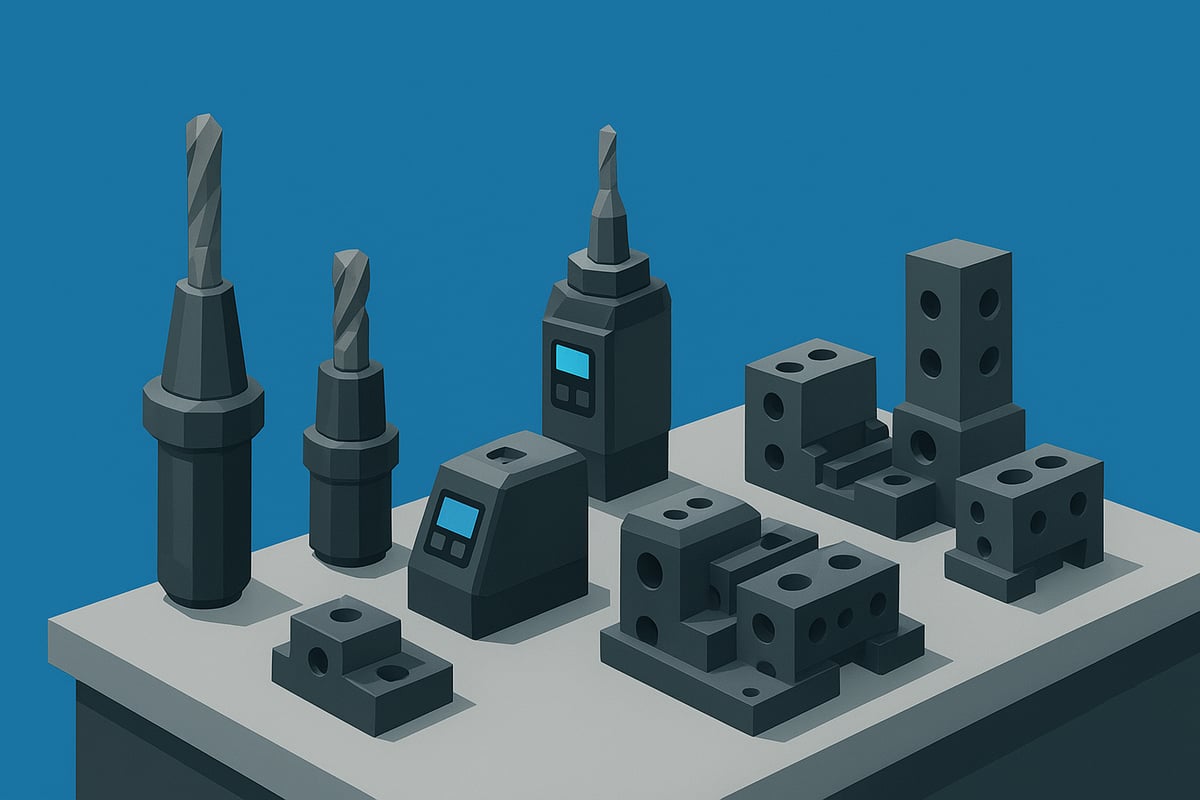
Cutting tool technology is advancing rapidly to meet the demands of today's machining and manufacturing landscape. Modern tool materials, such as ultra-fine carbide, ceramics, and synthetic diamonds, now offer greater wear resistance and enable machining of tough alloys like Inconel or titanium.
Manufacturers seek to maximize tool life and reduce cycle times. This is achieved through advanced tool coatings, high-speed geometries, and optimized insert shapes. Smart toolholders are transforming shop floors by integrating sensors for pressure monitoring, vibration reduction, and IoT connectivity. These innovations help operators detect issues before they escalate, improving consistency and reducing downtime.
For example, pressure monitoring within toolholders can minimize chatter and prevent fixture failures, leading to higher-quality parts. The synergy between advanced cutting tools and intelligent toolholders is foundational for competitive machining and manufacturing in 2026.
| Tool Material | Applications | Key Benefits |
|---|---|---|
| Carbide | General, hard metals | Wear resistance, speed |
| Ceramic | High-temp alloys | Heat resistance |
| Polycrystalline diamond | Non-ferrous, composites | Precision, longevity |
Modular and Custom Workholding Systems
Flexible workholding is crucial as machining and manufacturing shift toward high-mix, low-volume production. Modular workholding systems allow shops to quickly adapt setups for different part geometries, reducing changeover time and increasing throughput.
Custom fixturing is often needed for specialized parts, especially in industries like aerospace and medical device manufacturing. Collaboration between manufacturers and tooling suppliers ensures fixturing solutions are tailored for maximum stability and accuracy. The Evogrip Modular Workholding System, for example, demonstrates how modularity enhances operational flexibility and supports rapid prototyping.
Key benefits of modular and custom workholding include:
- Faster setup and part changeovers
- Enhanced part access for multi-axis machining
- Improved repeatability and quality
For a deeper look at how these solutions integrate across sectors, the Industrial Manufacturing Overview highlights the strategic role of tooling and fixturing in modern machining and manufacturing.
Strategies for Reducing Downtime and Improving Efficiency
Reducing downtime is a top priority in machining and manufacturing shops aiming for world-class efficiency. Quick-change tooling systems and automated tool changers enable seamless transitions between jobs, minimizing idle machine time.
Predictive maintenance, powered by sensor data and analytics, allows teams to address tool or equipment wear before failures occur. This approach reduces unexpected stoppages and extends machine life. Operator training also plays a critical role. When machinists are skilled in best practices for tooling and setup, productivity and first-pass yield improve significantly.
Adopting these strategies helps shops maintain continuous production and meet tight delivery schedules. In 2026, the integration of advanced tooling, modular workholding, and smart maintenance protocols will define operational excellence in machining and manufacturing.
Digital Transformation and Smart Manufacturing
The landscape of machining and manufacturing in 2026 is being reshaped by digital transformation and smart technologies. Today’s factories are evolving into highly connected, data-driven environments, where every process is optimized for speed, accuracy, and efficiency. To stay ahead, manufacturers must embrace the latest advancements in software, automation, and intelligent systems. Let’s explore how these cutting-edge solutions are driving the future of machining and manufacturing.
The Role of Software: CAD/CAM, Simulation, and Digital Twins
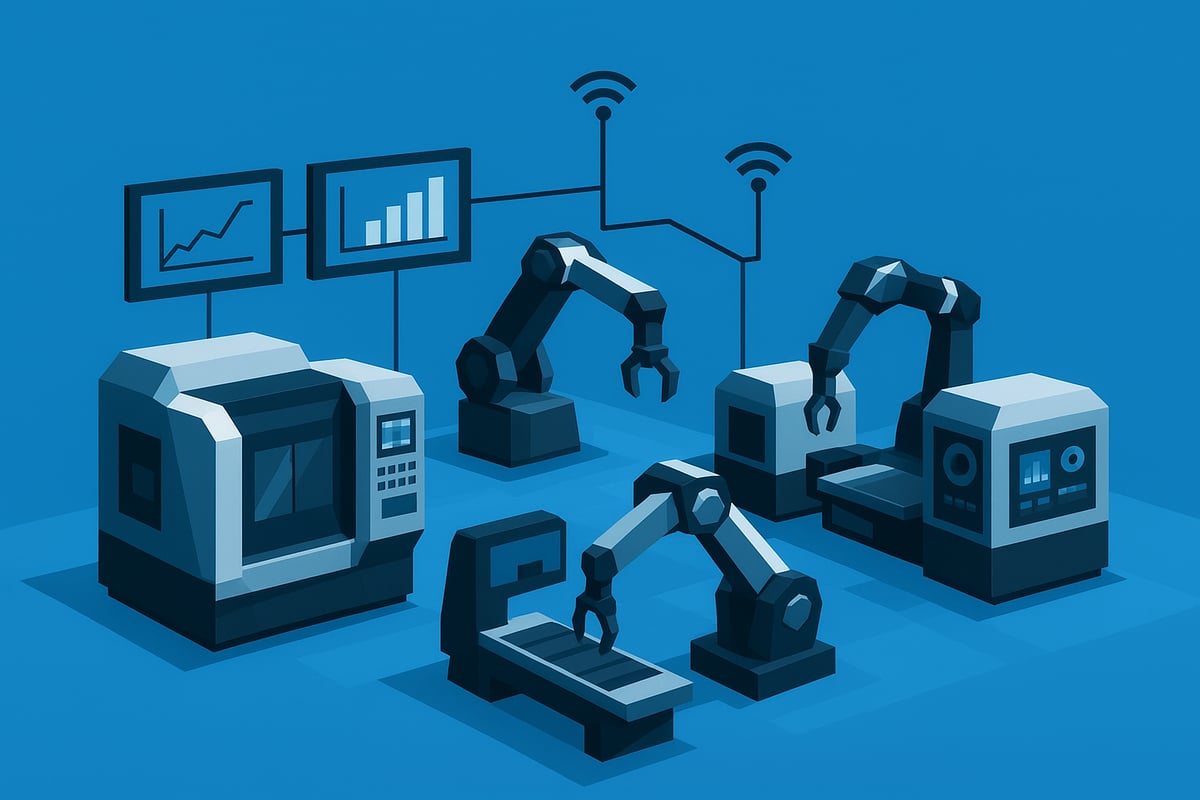
Modern machining and manufacturing begin with advanced software tools. CAD/CAM platforms integrate design and production, allowing seamless transitions from digital models to physical parts. Engineers use simulation software to test toolpaths and prevent spindle crashes before machines ever cut material.
Digital twins are changing the way factories operate. By creating virtual replicas of machines and processes, manufacturers can optimize setups, predict maintenance needs, and reduce downtime. For example, a digital twin can simulate production scenarios and reveal bottlenecks, helping teams refine workflows for maximum efficiency.
Adopting these tools not only boosts productivity but also enhances collaboration between engineering and production teams. For more insights and case studies on these advancements, visit Digital Transformation in Manufacturing.
Data-Driven Manufacturing and IIoT
Data collection is now central to machining and manufacturing excellence. Industrial Internet of Things (IIoT) sensors gather real-time data from machines, tracking variables like temperature, vibration, and tool wear. This information is sent to analytics platforms, which provide actionable insights for continuous improvement.
Manufacturers leverage this data to implement predictive maintenance. Instead of waiting for breakdowns, teams can schedule repairs before failures occur, minimizing costly downtime. Operators also use dashboards to monitor Overall Equipment Effectiveness (OEE), ensuring every asset is utilized efficiently.
In-process inspection data is now fed directly into engineering systems. By closing the feedback loop, manufacturers can rapidly adjust designs or machining parameters, raising quality standards across the board. This level of connectivity is setting new benchmarks for performance in machining and manufacturing.
Automation, Robotics, and AI in the Modern Shop
Automation is revolutionizing machining and manufacturing shops of all sizes. Collaborative robots, or cobots, work safely alongside humans to perform repetitive tasks such as machine tending and material handling. This frees skilled technicians to focus on complex operations and problem-solving.
Artificial intelligence (AI) is powering adaptive machining, where systems automatically adjust feeds, speeds, and tool paths based on live data. AI also handles scheduling and quality control, identifying trends and flagging anomalies faster than traditional methods.
Small and medium-sized enterprises are scaling automation using modular robotics and plug-and-play solutions. For example, a shop might deploy an AI-powered robotic cell for lights-out manufacturing, running unattended overnight. These innovations are making advanced machining and manufacturing accessible to more businesses than ever before.
Shop Management and ERP Solutions
Efficient shop management is the backbone of digitalized machining and manufacturing. Modern shop management software tracks orders, schedules jobs, and coordinates inventory in real time. This visibility allows managers to respond quickly to changing priorities and customer demands.
Enterprise Resource Planning (ERP) systems integrate with manufacturing equipment, providing end-to-end oversight from procurement to delivery. Successful shops use these tools to streamline communication, reduce paperwork, and eliminate manual data entry errors.
Case studies show that small manufacturers adopting advanced software have seen remarkable gains in productivity and customer satisfaction. By investing in digital tools and connected systems, businesses are building resilient operations ready to thrive in the evolving world of machining and manufacturing.
Quality Control, Measurement, and Metrology
Quality control is the backbone of successful machining and manufacturing. As parts become more complex and tolerances tighter, precise measurement and inspection are critical to meeting industry standards. Every shop, from high-volume production to custom prototyping, relies on robust metrology practices to ensure consistent results.
Principles of Measurement and Inspection
Understanding the fundamentals of metrology is essential for anyone involved in machining and manufacturing. Key terms include accuracy (how close a measurement is to the true value), precision (repeatability of measurements), uncertainty (the range within which the true value lies), and repeatability (the ability to get the same result consistently).
Inspection can occur in-process, where measurements are taken during machining and manufacturing, or post-process, after the part is completed. In-process inspection helps catch deviations early, minimizing scrap and rework. Post-process methods validate final part quality before delivery.
Traceability is a cornerstone of quality control. By documenting calibration histories and measurement records, manufacturers can demonstrate compliance with standards such as ISO and AS9100. Certifications ensure that all processes meet global requirements, building customer trust and supporting continuous improvement in machining and manufacturing.
Tools and Techniques for Ensuring Quality
A wide range of tools and techniques are used to maintain quality in machining and manufacturing. Snap gages, surface texture measurement systems, and precision bore gages allow for quick, reliable checks on critical dimensions. These tools are especially important in industries where surface finish and internal tolerances are vital, such as aerospace and medical device manufacturing.
Surface measurement systems analyze the texture of gears and bearings, revealing imperfections that could affect performance. Statistical process control (SPC) is another key technique, using real-time data to monitor production and identify trends. By applying SPC, shops can detect process drift early and make corrections before defects occur.
Real-time quality monitoring is gaining traction as machining and manufacturing evolve. Automated sensors, digital readouts, and connected measurement devices enable operators to track part quality throughout production, reducing errors and increasing throughput.
Integrating Quality Data with Manufacturing Operations
Integrating quality data directly with manufacturing systems transforms quality control from a reactive to a proactive discipline. Automated data collection ensures every measurement is captured and linked to specific parts and batches. This real-time feedback loop enables engineers to adjust processes quickly, improving outcomes and reducing waste in machining and manufacturing.
Platforms like Verisurf allow quality information to flow seamlessly between shop floor teams and engineering departments, increasing transparency and communication. Continuous improvement is driven by actionable insights, not just pass/fail reports.
The future of quality control is closely tied to sustainability and advanced analytics. As highlighted in Developments in Sustainable Machining Technologies, innovations in metrology and eco-friendly processes are helping manufacturers reduce environmental impact while raising quality standards. By integrating measurement, inspection, and data management, shops can meet the demands of modern machining and manufacturing.
Sustainability and the Future of Manufacturing
Sustainability is rapidly becoming a core pillar in machining and manufacturing as companies look to balance productivity with environmental responsibility. As the industry evolves, adopting green practices, innovative materials, and workforce development strategies is essential for long-term competitiveness.
Green Manufacturing Practices and Energy Efficiency
Green manufacturing practices are reshaping how machining and manufacturing facilities operate. Companies are investing in energy-efficient machinery and switching to water-based coolants to reduce their environmental footprint. Recycling scrap metals and deploying lean manufacturing methods help minimize waste and lower operational costs.
Government incentives are encouraging the adoption of sustainable technologies, making it more feasible for shops of all sizes to upgrade equipment and processes. According to Global Precision Machining Market Insights, sustainability is now a key growth driver, influencing purchasing decisions and market strategies.
By integrating smart energy management and sustainable workflows, machining and manufacturing businesses can achieve both regulatory compliance and improved profitability.
Evolving Materials and Circular Economy
Material selection is crucial for sustainable machining and manufacturing. The industry is seeing a surge in the use of recycled metals and advanced composites, which offer strength and durability while reducing raw material consumption. Engineers are increasingly designing products for disassembly, enabling easier recycling and supporting the circular economy.
Machining and manufacturing processes play a pivotal role in extending the lifecycle of materials. Shops are now tasked with creating components that are not only high-performing but also environmentally friendly. This shift aligns with global trends toward responsible production and consumption.
By focusing on material efficiency and recyclability, manufacturers help close the loop in the supply chain, turning waste into new opportunities.
Workforce Development and Skills for the Future
The future of machining and manufacturing depends on a skilled, adaptable workforce. As automation and digital tools become standard, upskilling machinists in robotics, data analytics, and advanced materials is critical. Partnerships with technical schools and robust apprenticeship programs are helping bridge the skills gap.
Attracting new talent remains a challenge, but highlighting the innovative and sustainable aspects of machining and manufacturing can inspire the next generation. Ongoing training ensures employees are prepared for new technologies and industry demands.
Investing in workforce development not only supports business growth but also secures the industry's long-term sustainability.
The Role of Expert Partners in Machining and Manufacturing Success
In today's rapidly evolving machining and manufacturing landscape, expert partners are essential for sustained success. As technology and client expectations advance, manufacturers need reliable support to stay competitive.
LTJ Industrial Services stands out as a trusted partner, offering comprehensive solutions in machining and manufacturing for industrial and commercial sectors. Their expertise spans CNC machining, welding, fabrication, hydraulics, and waterjet cutting, allowing clients to streamline operations and focus on core goals.
By collaborating with experienced partners like LTJ, companies in recycling, aggregate, and oil and gas benefit from improved uptime, responsive support, and tailored services designed to meet the demands of modern machining and manufacturing.
As we look ahead to the future of machining and manufacturing, it's clear that staying at the forefront of technology and best practices is essential for success. Whether you're exploring new automation strategies, focusing on sustainability, or aiming to boost efficiency, having the right partner makes all the difference. LTJ Industrial Services brings deep expertise in machining, welding, and metal fabrication to help your business meet its goals with confidence. If you’re ready to take the next step or want to discuss your specific project needs, I encourage you to Request a Quote today.