
As industries advance at a rapid pace in 2026, the demand for custom fabrication services is reaching new heights across manufacturing, construction, energy, and technology sectors. Businesses and project leaders face increasing pressure to deliver tailored solutions faster, with higher quality and sustainability.
This comprehensive guide is designed to give you a clear edge, providing the latest insights into custom fabrication services. You'll discover how new technologies, evolving trends, and proven best practices can directly impact your project outcomes and overall business success.
Explore a detailed industry overview, the full range of service types, technology trends, a step-by-step ordering process, provider selection criteria, cost drivers, and a forward-looking perspective on what’s next. By leveraging the actionable strategies in this guide, you'll be well-equipped to make informed decisions and achieve exceptional results with custom fabrication services in 2026.
The State of Custom Fabrication Services in 2026
The landscape of custom fabrication services in 2026 reflects a decade of significant transformation. Businesses have witnessed a shift from traditional processes to highly advanced, technology-driven operations. Over the past ten years, the industry has evolved to meet increasingly complex project demands, integrating digital tools, automation, and sustainability initiatives at every stage.
Industry Evolution and Growth
Custom fabrication services have expanded their reach, moving beyond basic metalwork to include advanced machining, assembly, and finishing. According to industry analysts, the global market for these services is forecasted to exceed $120 billion by the end of 2026, marking a steady annual growth rate of 6.5%. This surge is driven by a robust demand from sectors such as manufacturing, construction, energy, recycling, and technology.
Key Industries Fueling Demand
A closer look reveals that manufacturing remains the largest consumer of custom fabrication services, particularly for specialized machinery, enclosures, and production line components. The construction industry follows closely, requiring custom gates, barriers, and structural elements for both commercial and public infrastructure projects. The energy sector, including renewables and utilities, increasingly relies on tailored fabrication solutions for power generation and distribution assets. Recycling and technology industries also contribute to rising demand, as they seek custom solutions for material handling, processing, and smart infrastructure.
Table: Market Share by Industry (2026 Projection)
| Industry | Market Share (%) |
|---|---|
| Manufacturing | 38 |
| Construction | 27 |
| Energy | 14 |
| Recycling | 11 |
| Technology | 10 |
Evolving Customer Expectations
Today’s clients expect more from custom fabrication services. Faster turnaround times have become the norm, with digital quoting and rapid prototyping streamlining the pre-production phase. Customization requests are at an all-time high, as businesses seek unique, project-specific solutions rather than off-the-shelf products. Sustainability is another key expectation, with customers preferring providers that offer eco-friendly materials and energy-efficient processes.
Supply Chain Shifts and Reshoring
Global supply chain disruptions in recent years have prompted a trend toward reshoring and local sourcing. Many businesses now prioritize domestic custom fabrication services to reduce lead times, improve quality control, and mitigate geopolitical risks. This shift has encouraged providers to invest in advanced automation and digital management systems, enhancing their ability to deliver high-quality, custom solutions quickly and reliably.
Regulatory Changes and Compliance
The regulatory environment for custom fabrication services is also evolving. Stricter safety, environmental, and quality standards require providers to maintain comprehensive documentation and traceability. Compliance with local and international codes has become a competitive differentiator. For example, the fabrication of security barriers for critical infrastructure now involves rigorous testing and certification to meet new regulatory requirements.
Example: Surge in Security Gates and Barriers
A notable trend in 2026 is the increased demand for custom security gates and barriers in airports, military bases, and utility installations. These projects require a blend of advanced materials, precision engineering, and strict adherence to safety standards. Providers offering a wide range of custom fabrication and welding services have seen a sharp rise in requests for these specialized solutions.
Market Data and Service Diversification
Industry reports highlight a diversification of service offerings among leading providers. Companies that once specialized in a single process now deliver integrated solutions, from digital design to assembly and finishing. Competitor statistics reveal that over 70% of top firms have adopted at least one form of automation, and nearly half offer digital project management tools to enhance client communication.
Summary
In summary, custom fabrication services in 2026 are defined by growth, innovation, and responsiveness to evolving market needs. Businesses that adapt to new technologies, prioritize sustainability, and invest in compliance are positioned to lead in a rapidly changing environment.
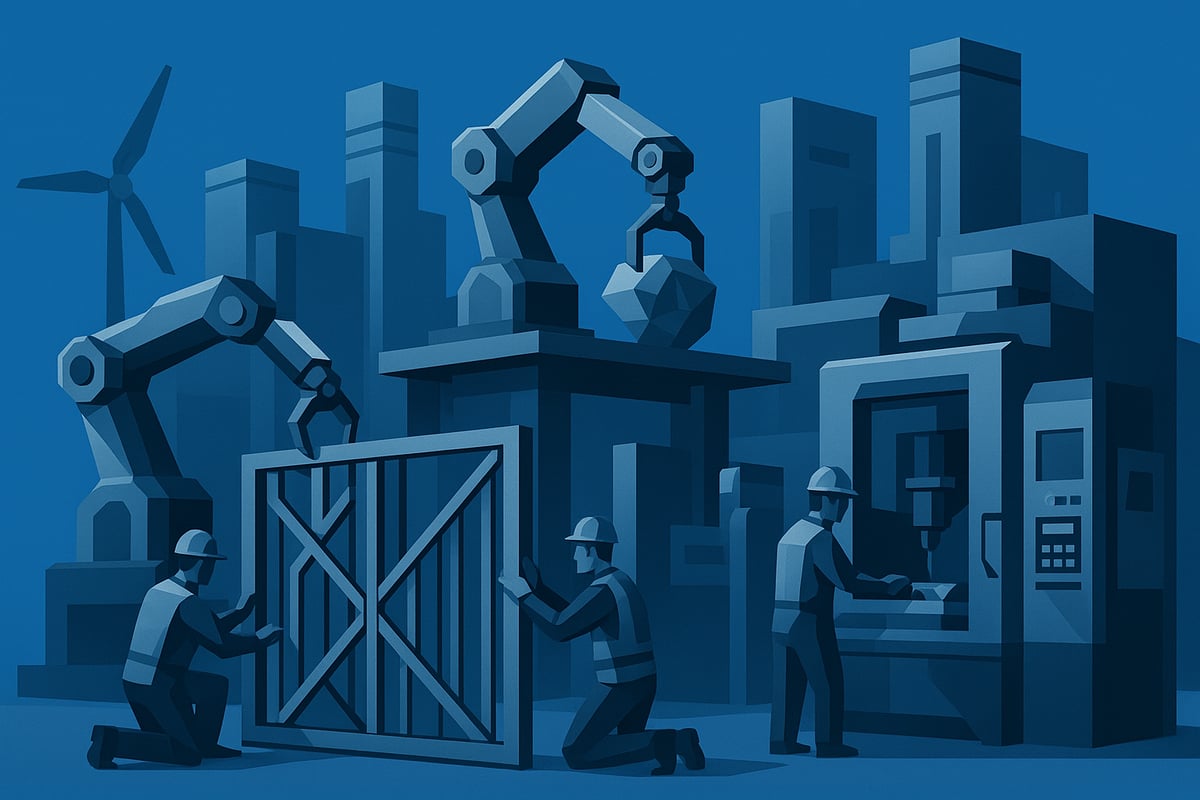
Types of Custom Fabrication Services Available
Custom fabrication services encompass a wide array of specialized solutions tailored to meet the unique demands of modern industries. As technology advances and project requirements become more complex, understanding the main categories of custom fabrication services helps businesses make informed decisions and achieve optimal project outcomes.
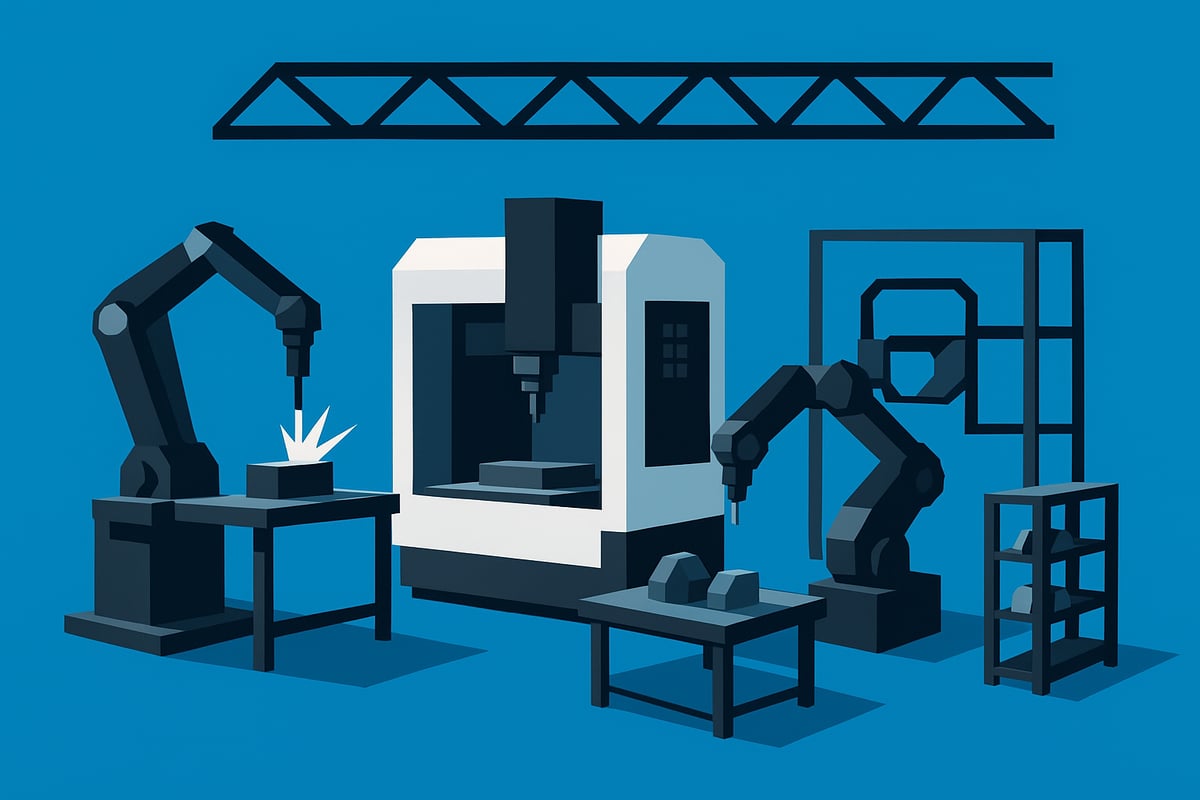
Metal Fabrication
Metal fabrication is at the core of many custom fabrication services. It involves cutting, bending, and assembling metals to create components for specific applications. Typical products include gates, fences, machinery parts, and secure enclosures.
For example, custom security barriers for airports and military bases demand precise fabrication and robust materials. Trends in this sector involve the adoption of advanced alloys and corrosion-resistant metals, ensuring longevity and safety. For detailed insights into these processes, explore Metal fabrication and welding services.
CNC Machining and Precision Cutting
CNC machining, waterjet, laser, and plasma cutting are integral to custom fabrication services that require high precision. These processes enable fabricators to create complex geometries and maintain tight tolerances.
A practical example is CNC machining for high-tolerance components in data centers, where reliability is paramount. By 2026, increased automation and robotic integration have become standard, boosting productivity and consistency in custom fabrication services.
Welding and Assembly
Welding and assembly are essential parts of custom fabrication services, combining individual components into finished products. Techniques such as robotic, TIG, and MIG welding allow for scalable production and strong, durable joints.
Robotic welding is now widely used for large-scale infrastructure projects, providing repeatable quality and efficiency. Integrating welding with other fabrication processes ensures structural integrity and supports the evolving needs of custom fabrication services.
Surface Preparation and Finishing
Surface preparation and finishing are critical for both the durability and appearance of fabricated products. Services include sandblasting, shot blasting, industrial coatings, and painting, all of which are vital in custom fabrication services.
A common application is industrial painting for weather-resistant outdoor installations. Recent trends highlight the use of eco-friendly coatings and automated finishing lines, reflecting the industry’s commitment to sustainability and quality in custom fabrication services.
Specialty Services and Emerging Offerings
Specialty services within custom fabrication services address advanced project requirements. These include custom hydraulic systems, modular assemblies, and rapid prototyping. The integration of smart sensors and IoT further enhances product functionality.
For instance, fabricating smart gates with integrated access control is now common in critical infrastructure. The demand for specialty fabrication is rising, particularly in renewable energy and recycling sectors, as businesses seek innovative, sustainable solutions through custom fabrication services.
Technology Trends Shaping Fabrication Services in 2026
The landscape of custom fabrication services is transforming rapidly as technology drives new possibilities in 2026. Companies are adopting cutting-edge tools and practices to meet evolving demands for precision, speed, and sustainability. Let us explore the top technology trends shaping the future of custom fabrication services.
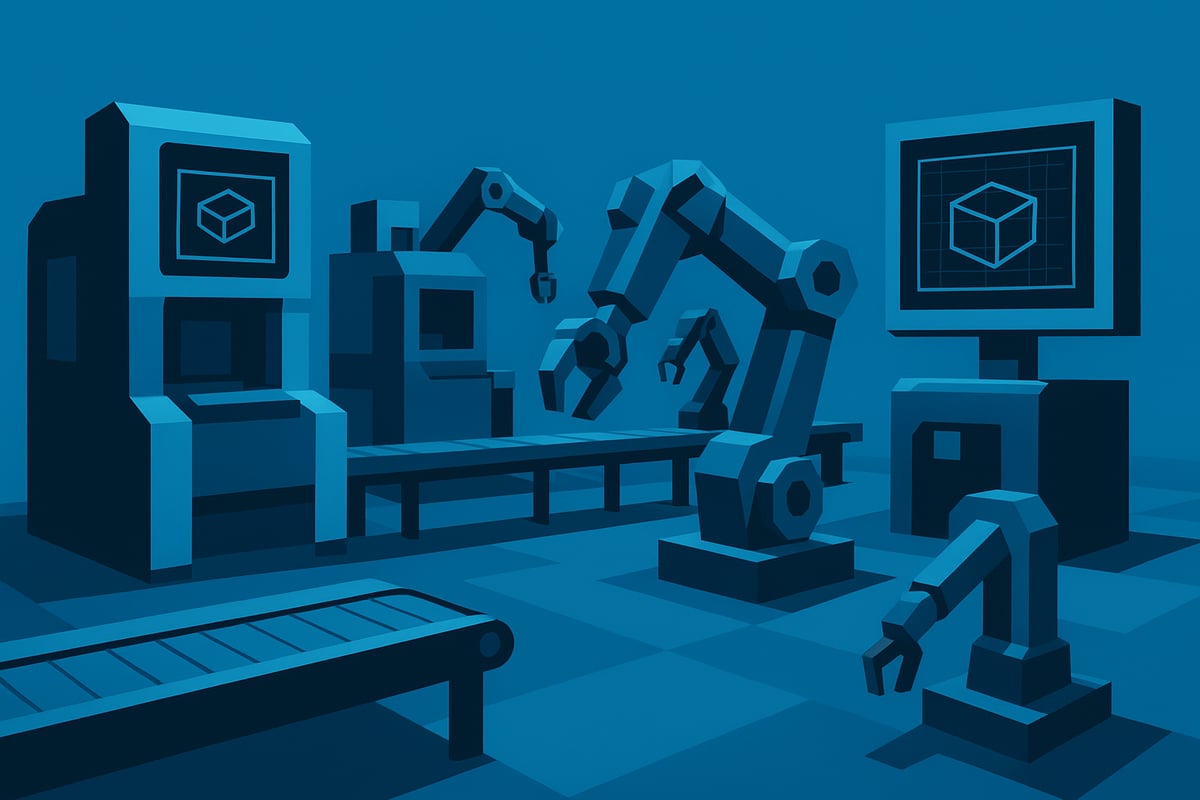
Automation and Robotics
Automation and robotics are revolutionizing custom fabrication services by introducing greater efficiency and consistency. Robotic welding, automated cutting, and advanced material handling systems now streamline production lines, reducing manual labor and increasing output quality.
Businesses leveraging automation enjoy faster turnaround and lower operational costs. For instance, fully automated fabrication lines can now produce high-volume components with minimal human intervention. This shift is helping companies address skilled labor shortages and deliver projects on tight schedules.
Industry events like the Automation Roadmap Event in Dallas showcase emerging solutions designed to further automate custom fabrication services, highlighting the focus on scalable, resilient manufacturing.
Digital Design and CAD/CAM Integration
Digital design sits at the core of modern custom fabrication services. Advanced CAD/CAM software enables teams to visualize projects before production begins, minimizing errors and reducing costly rework. Engineers can create detailed 3D models and digital twins, allowing stakeholders to review and approve designs quickly.
Simulation tools also support prototyping, ensuring every component meets exact standards. For example, custom gate designs can be modeled in 3D, giving clients a clear preview. The integration of digital tools in custom fabrication services accelerates project timelines and improves communication between all parties.
This evolution in design processes means that even complex geometries and intricate details are now achievable with remarkable accuracy.
Sustainable Fabrication Practices
Sustainability is becoming a central concern in custom fabrication services. Companies are adopting eco-friendly materials, implementing energy-efficient processes, and prioritizing waste reduction to comply with environmental regulations.
For example, many fabrication shops now use recycled metals in their projects, reducing raw material consumption and environmental impact. Energy-saving technologies are integrated into machinery, further promoting green operations within custom fabrication services.
Trends indicate a growing demand for eco-conscious solutions, with clients seeking partners who can deliver durable products while minimizing their carbon footprint. This focus on sustainability is reshaping the way custom fabrication services are delivered industry-wide.
Quality Control and Smart Manufacturing
Quality control has advanced significantly in custom fabrication services with the integration of smart manufacturing technologies. Real-time monitoring systems, IoT sensors, and data analytics ensure every step of fabrication meets stringent quality standards.
Traceability and digital documentation are increasingly required for compliance, particularly in regulated sectors. For example, smart sensors embedded in fabricated products can now provide predictive maintenance data, helping teams address issues before they escalate.
These advancements in quality assurance not only enhance reliability but also build trust with clients who rely on custom fabrication services for mission-critical applications.
Customization and On-Demand Production
The demand for tailored solutions is propelling custom fabrication services toward mass customization and on-demand manufacturing. Flexible production systems allow companies to respond quickly to unique project requirements without maintaining large inventories.
On-demand fabrication enables rapid response, especially for emergency repairs or infrastructure upgrades. For instance, custom barriers for utility facilities can be fabricated and installed in record time, ensuring minimal disruption.
This trend benefits clients by providing faster delivery and more precise outcomes, reinforcing the value of custom fabrication services in a competitive market.
Step-by-Step Guide to Ordering Custom Fabrication Services
Ordering custom fabrication services can seem complex, but a clear, structured process ensures successful project outcomes every time. By following these six essential steps, businesses, engineers, and project managers can reduce risk, control costs, and achieve high-quality results tailored to their needs.
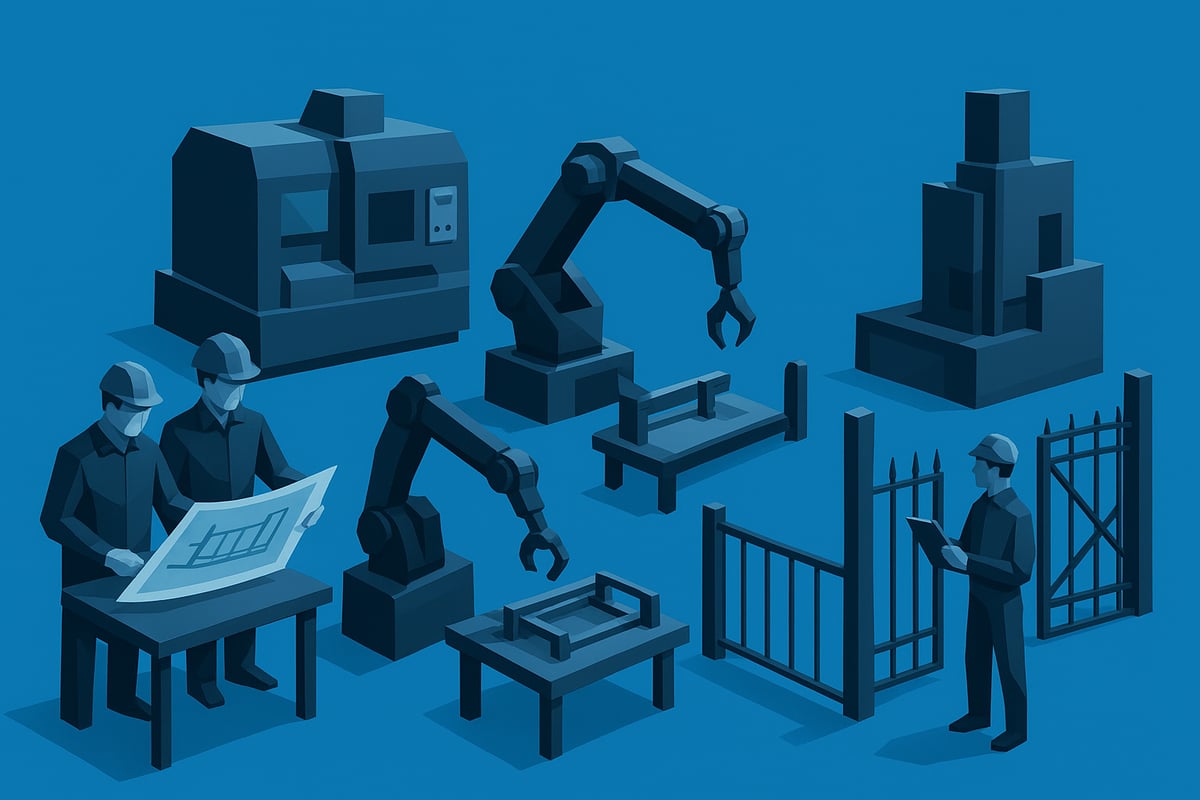
Step 1: Defining Project Requirements
The foundation of any successful project with custom fabrication services is a detailed understanding of what you need. Start by outlining your project's goals, technical specifications, and any industry or regulatory compliance requirements.
Collaborate closely with engineers, architects, and stakeholders to clarify expectations and performance criteria. For example, if you're sourcing custom security gates, determine load-bearing requirements, access controls, and environmental factors.
A comprehensive project brief prevents misunderstandings, scope creep, and delays later in the process. Clear documentation sets the stage for effective communication with your fabrication partner.
Step 2: Selecting Materials and Processes
Choosing the right materials and fabrication techniques is critical for cost, performance, and longevity. Evaluate metals, coatings, and processes based on project demands, environmental exposure, and budget.
Consult with your provider and consider using a fabrication materials selection guide to compare options like stainless steel versus aluminum for outdoor installations.
Balancing upfront costs with long-term durability helps you get the most value from custom fabrication services. Engage in open discussions about material grades, corrosion resistance, and finishing methods to ensure suitability for your application.
Step 3: Design and Prototyping
Once requirements and materials are set, move on to designing and prototyping. Work with CAD/CAM specialists to create precise digital drawings and 3D models. Modern custom fabrication services often use advanced software for visualization, simulation, and error reduction.
Prototyping, such as 3D printing or small-scale mockups, allows you to assess fit, function, and aesthetics before full-scale production. For instance, presenting a prototype gate for client approval ensures alignment with expectations and reduces costly revisions.
Iterative design reviews and prototype testing improve end results and foster strong collaboration between your team and the fabrication provider.
Step 4: Quoting and Budgeting
With a finalized design, request detailed quotes from multiple custom fabrication services providers. Ensure each quote breaks down material costs, labor, complexity, finishing, and estimated timelines.
A clear comparison helps you identify cost drivers and avoid hidden charges. For example, compare quotes for similar products, noting variations in finishing methods or lead times.
Use a table to organize and evaluate bids:
| Provider | Material | Labor Hours | Finishing | Timeline | Total Cost |
|---|---|---|---|---|---|
| Fabricator A | Stainless | 30 | Powder | 3 weeks | $15,000 |
| Fabricator B | Aluminum | 25 | Paint | 2 weeks | $12,500 |
Transparent quoting enables confident budgeting and supports informed decision-making.
Step 5: Production and Quality Assurance
Once you approve a quote, the fabrication process begins. Effective custom fabrication services will keep you informed throughout production, from cutting and welding to assembly and finishing.
Quality assurance is vital at every stage. Providers may use non-destructive testing, inspections, and documentation to verify weld integrity and dimensional accuracy. For critical infrastructure, these steps ensure the final product meets or exceeds industry standards.
Regular updates and quality control checkpoints help catch issues early, minimizing rework and ensuring timely delivery.
Step 6: Delivery, Installation, and Support
The final step involves coordinating logistics, delivery, and on-site installation. Reliable custom fabrication services include careful packaging, transportation, and, when needed, professional installation to minimize disruptions.
After installation, many providers offer maintenance support and warranty services. For example, scheduling post-installation checks for custom barriers at a utility facility ensures ongoing safety and performance.
Continuous support and clear communication during this phase build long-term trust and position your project for ongoing success.
How to Choose the Right Custom Fabrication Partner
Selecting the right partner for custom fabrication services is crucial for your project's success. The right choice impacts quality, timelines, and long-term value. Consider the following factors to make an informed, confident decision.
Key Criteria for Provider Selection
Begin by evaluating core qualifications. Look for providers with proven experience in custom fabrication services, relevant industry certifications, and a solid reputation.
Assess the range of services offered. Do they handle both shop and field work? Can they manage complex projects that require multiple fabrication techniques?
Check technical capabilities. Providers with up-to-date machinery, skilled staff, and a diverse project portfolio are more likely to deliver reliable results.
- Experience in your industry
- Certifications such as ISO or AWS
- Full-service fabrication capabilities
- Strong client references
Choosing a well-qualified partner sets the foundation for project success.
Assessing Technology and Innovation
Modern custom fabrication services rely on advanced technology for efficiency and precision. Investigate the provider’s investment in automation, digital tools, and sustainable practices.
Ask if they use robotics, CNC machining, or automated material handling. Shops that embrace innovation can handle intricate or large-scale projects with greater accuracy and speed.
For example, KUKA’s Mobile Robotics at LogiMAT 2026 showcased the latest in automated fabrication, highlighting the importance of cutting-edge solutions in today’s market.
A forward-thinking partner ensures your project benefits from the best available technology.
Communication and Project Management
Effective communication is vital when working with custom fabrication services. Choose a provider that values transparency, offers regular updates, and uses digital project management tools.
Look for real-time progress tracking, clear documentation, and dedicated points of contact. This streamlines collaboration and helps resolve issues quickly.
Providers who embrace digital platforms make it easier to share designs, approve changes, and monitor timelines.
Good communication reduces misunderstandings and keeps your project on track from start to finish.
Evaluating Cost vs. Value
Cost is always a factor, but the lowest bid is not always the best choice. Weigh upfront pricing against long-term durability, quality, and service.
Ask about value-added offerings, such as design consultation, extended warranties, or maintenance programs. These can improve the total return on investment for your custom fabrication services.
Use this comparison table to help evaluate providers:
| Factor | Low-Cost Provider | Value-Focused Provider |
|---|---|---|
| Upfront Price | Lower | Competitive |
| Material Quality | Basic | Premium/Optimized |
| Support/Warranty | Limited | Extended |
| Project Expertise | Generalist | Specialized |
Prioritize value over price for better long-term results.
Regional and Industry-Specific Expertise
Custom fabrication services often require knowledge of local codes, standards, and supply chains. Working with a provider who understands your region or industry can prevent costly delays and compliance issues.
Industry specialization matters. For example, fabricators familiar with oil and gas or recycling sectors will know the specific requirements and certifications needed for those environments.
Local providers may also offer faster response times and more flexible support, helping you adapt to project changes or urgent needs.
Selecting a partner with targeted expertise ensures your project meets all regulatory and operational demands.
Cost Drivers and Budgeting for Custom Fabrication Projects
Understanding the cost drivers behind custom fabrication services is essential for effective project planning in 2026. Businesses face a landscape where material prices, labor rates, project complexity, and finishing options all play significant roles in determining total expenses.
Major Cost Factors in Custom Fabrication Services
Several variables combine to influence the final price of custom fabrication services. These include:
| Cost Driver | Impact on Price | 2026 Trend |
|---|---|---|
| Materials | Bulk of project cost, varies by type | Fluctuations in steel, aluminum |
| Labor | Skilled labor in design and assembly | Increased automation |
| Complexity | Custom features, tight tolerances | More intricate designs |
| Volume | Small vs. large production runs | Demand for rapid, low-volume |
| Finishing | Coatings, painting, surface treatment | Eco-friendly processes |
Rising demand for sustainable materials and advanced coatings is shaping how companies approach custom fabrication services today. At the same time, larger projects may benefit from economies of scale, while unique, one-off builds typically command higher per-unit costs.
Technology’s Role in Pricing and Project Efficiency
Technology is reshaping the pricing landscape for custom fabrication services. Automation, digital design tools, and advanced CNC machining allow for greater precision and faster turnaround. These advancements can reduce labor costs and minimize errors, but they often require upfront investment.
For example, CNC machining job shop insights reveal how using state-of-the-art CNC equipment can streamline the production of complex parts, leading to more predictable costs and improved quality. Automated processes also make it possible to handle intricate designs that would be cost-prohibitive with manual methods.
Moreover, digital project management and quoting software enable real-time updates, transparent billing, and accurate forecasting, helping clients track expenses and avoid unexpected overruns.
Strategies for Budget Optimization and Negotiation
Effective budgeting for custom fabrication services relies on a proactive approach. Start by providing clear, detailed specifications to your provider. This minimizes the risk of scope changes and costly rework.
Consider these negotiation and budgeting tips:
- Request itemized quotes and compare multiple providers.
- Ask about value engineering options to balance performance and price.
- Factor in project contingencies for unforeseen changes.
- Clarify payment terms and delivery schedules upfront.
- Explore flexible production methods for urgent or small-batch needs.
Industry data for 2026 suggests that projects leveraging automation and precise digital workflows can see up to 20% cost savings compared to traditional, manual fabrication. However, initial investments in technology may offset these savings on smaller projects.
Best Practices for Managing Fabrication Budgets
To get the most value from custom fabrication services, prioritize transparency and communication at every stage. Review all quotes for hidden fees, ensure your provider offers detailed cost breakdowns, and establish clear milestones for billing.
Accurate project documentation and ongoing dialogue help prevent misunderstandings and keep budgets on track. By staying informed about current market rates and leveraging advanced fabrication methods, businesses can achieve high-quality results without overspending.
The Future of Custom Fabrication: What’s Next?
The future of custom fabrication services is being shaped by rapid advances in technology and shifting market dynamics. As we look toward 2026 and beyond, the industry is poised for transformative growth, driven by intelligent automation, sustainability, and evolving client demands.
AI and Automation Lead the Way
Artificial intelligence is revolutionizing custom fabrication services. AI-powered tools enable smarter design, predictive maintenance, and real-time quality control. Robotics play a crucial role in automating repetitive tasks and increasing throughput. At events such as the ISARC 2026 Conference Details, industry leaders will showcase breakthroughs in construction robotics, setting new benchmarks for efficiency and precision.
Sustainability and the Circular Economy
Sustainability is now central to custom fabrication services. Businesses prioritize eco-friendly materials, energy-efficient processes, and waste reduction. The circular economy model encourages reusing and recycling components, reducing environmental impact. This shift not only meets regulatory demands but also aligns with client expectations for responsible manufacturing.
Regulatory Landscape and Compliance
Future regulations will place greater emphasis on traceability, documentation, and environmental compliance. Custom fabrication services must adapt to stricter standards regarding emissions, material sourcing, and worker safety. Staying ahead of these changes helps businesses avoid costly delays and maintain a competitive edge.
On-Demand and Decentralized Manufacturing
On-demand and decentralized production models are gaining traction. With digital supply chains, clients can order custom components tailored to exact specifications, delivered rapidly and locally. This flexibility reduces inventory costs and shortens project timelines, making custom fabrication services more responsive to urgent needs.
Industry Consolidation and Innovation
The industry is likely to see increased consolidation as companies merge to expand capabilities and invest in new technologies. Innovations such as additive manufacturing, digital twins, and embedded IoT sensors will become standard features. Early adopters of AI-driven solutions, such as predictive maintenance in fabricated products, are already demonstrating measurable gains in reliability and cost savings.
Looking ahead to 2030, forecasts predict strong market growth for custom fabrication services and accelerated adoption of advanced technologies. Staying informed and adaptable will be key for businesses seeking to thrive in this evolving landscape.
As we've explored in this guide, staying ahead in 2026 means choosing a fabrication partner who understands your industry's needs, leverages the latest technology, and delivers quality every time. Whether you're planning a new project or looking to optimize existing operations, working with experts like LTJ Industrial Services can make all the difference. If you're ready to discuss your requirements or want personalized guidance, you can easily take the next step. Request a Quote and see how we can help your business achieve its goals with confidence.