
Across the world’s most demanding industries, the cnc machining job shop for heavy industry parts stands as the backbone of progress. These specialized facilities empower sectors like mining, oil and gas, and construction to operate at peak performance by delivering large, complex components built to exacting standards.
This expert guide reveals why CNC machining job shops are indispensable for manufacturing heavy industry parts. Explore the end-to-end processes, overcome unique challenges, and see what future trends are shaping the industry as we look ahead to 2026.
Precision, efficiency, and reliability are non-negotiable in heavy industry part production. Read on for a deep dive into CNC machining fundamentals, job shop workflow, material and technology choices, quality standards, industry applications, and the innovations redefining what’s possible.
Understanding CNC Machining for Heavy Industry Parts
CNC machining has transformed the way heavy industry parts are produced. Over the past few decades, the cnc machining job shop for heavy industry parts has shifted from manual processes to advanced, computer-controlled methods. This evolution has fueled greater precision, efficiency, and repeatability.
At the core of CNC machining are several vital components: robust CNC machines, powerful controllers, specialized software, and cutting-edge tooling. These work together to deliver results that meet the tight tolerances and complex requirements of heavy industry sectors. The cnc machining job shop for heavy industry parts excels at producing intricate, large-scale components that would be nearly impossible with traditional methods.
The Fundamentals of CNC Machining
CNC machining, or Computer Numerical Control machining, is a process where computers guide the movement of machine tools. This approach replaced manual milling and turning, allowing for much higher accuracy and consistency. In a cnc machining job shop for heavy industry parts, the ability to repeat complex cuts with minimal variation is crucial.
Essential elements include the CNC machine itself, which could be a mill, lathe, or boring machine. Controllers interpret digital instructions, while software like CAD and CAM programs generate precise tool paths. Specialized tooling, such as carbide inserts or coated drills, enables the machining of tough materials. The combination of these technologies ensures that complex, large-scale parts are manufactured to exact specifications.
Types of CNC Machines Used in Heavy Industry
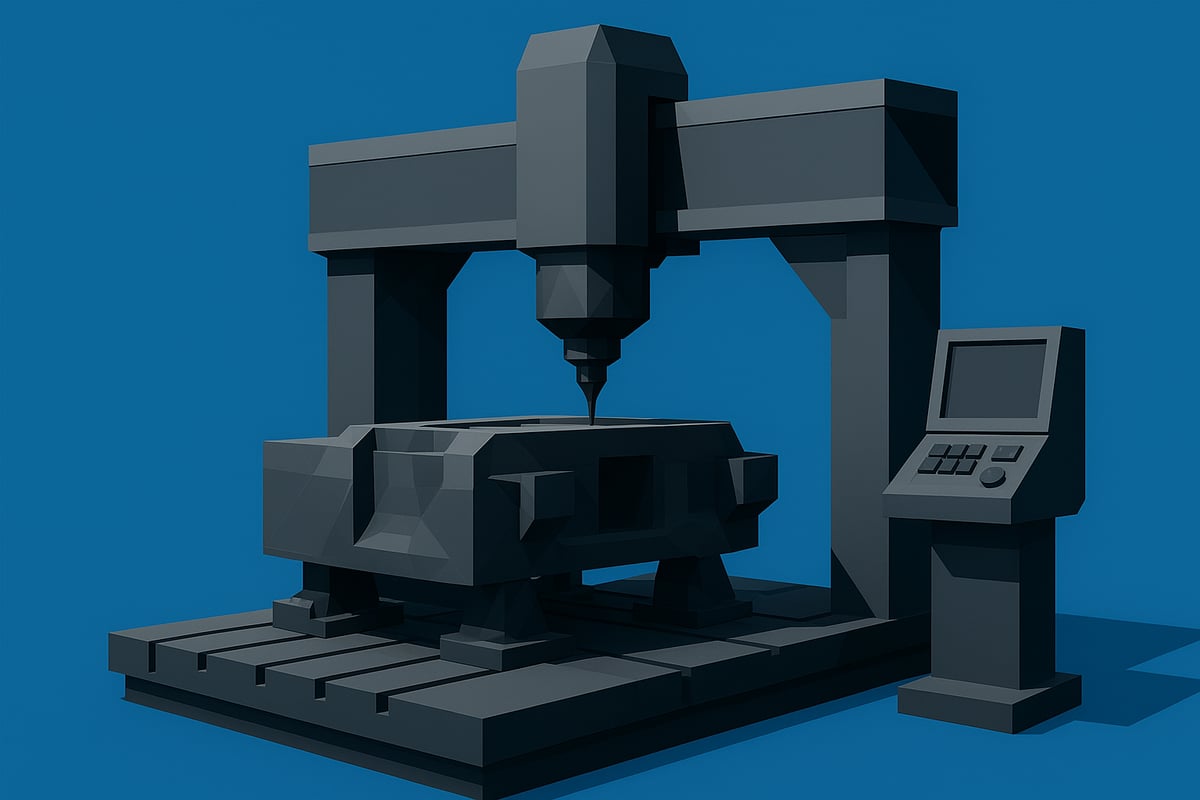
Heavy industry demands robust machinery capable of handling oversized and heavy components. Common machines in a cnc machining job shop for heavy industry parts include CNC milling machines, heavy-duty lathes, boring mills, and advanced multi-axis systems. Each type serves a unique purpose: mills for shaping, lathes for turning, and boring machines for enlarging holes with high precision.
For example, CNC gantry mills are ideal for machining massive mining equipment parts, while large horizontal lathes are used for oil and gas shafts. Multi-axis machines can handle complex geometries in a single setup, reducing processing time. To see a detailed breakdown of the machinery and capabilities, visit Manufacturing and Machining Capabilities.
| CNC Machine Type | Typical Use Case | Heavy Industry Application |
|---|---|---|
| Gantry Mill | Large, flat surfaces | Mining, construction |
| Heavy Lathe | Rotational parts | Oil & gas, turbines |
| Boring Mill | Enlarging holes in large castings | Power generation, aggregates |
| Multi-Axis Center | Complex, multi-surface machining | Aerospace, energy, mining |
Materials Commonly Machined for Heavy Industry
Selecting the right material is a key consideration in every cnc machining job shop for heavy industry parts. The most commonly machined materials include various grades of steel, stainless steel, cast iron, titanium, and high-performance alloys. These materials are chosen for their strength, wear resistance, and ability to withstand harsh environments.
Machining these tough materials presents its own set of challenges. Steel and titanium require durable tooling and precise process control. Superalloys, often used in energy and aerospace, demand advanced cutting techniques and careful temperature management. The right material choice ensures that finished parts meet demanding industry standards for reliability and performance.
Key Challenges in Machining Heavy Industry Parts
Machining large and heavy workpieces presents unique obstacles for any cnc machining job shop for heavy industry parts. First, handling and fixturing oversized components requires specialized equipment and careful planning. Tool wear is a constant concern due to the hardness of materials and long machining times.
Maintaining tight tolerances on big parts can be difficult, especially as heat builds up during cutting. Effective cooling and tool management are essential to prevent dimensional errors. Safety is always a top priority, as high-powered machines and heavy parts pose risks that must be controlled through rigorous protocols and operator training.
The Value of CNC Machining Job Shops
A cnc machining job shop for heavy industry parts offers unparalleled flexibility and expertise. These shops are equipped to handle a broad range of projects, from rapid prototyping to small and medium production runs. Their ability to quickly adapt to unique customer requirements makes them invaluable partners for heavy industry companies.
For many organizations, outsourcing to a specialized CNC job shop is more cost-effective than investing in in-house capabilities. Shops provide access to advanced machinery, skilled operators, and proven workflows. This approach shortens lead times and ensures that even the most challenging parts are delivered on schedule and to specification.
The CNC Machining Job Shop Workflow: Step-by-Step Guide
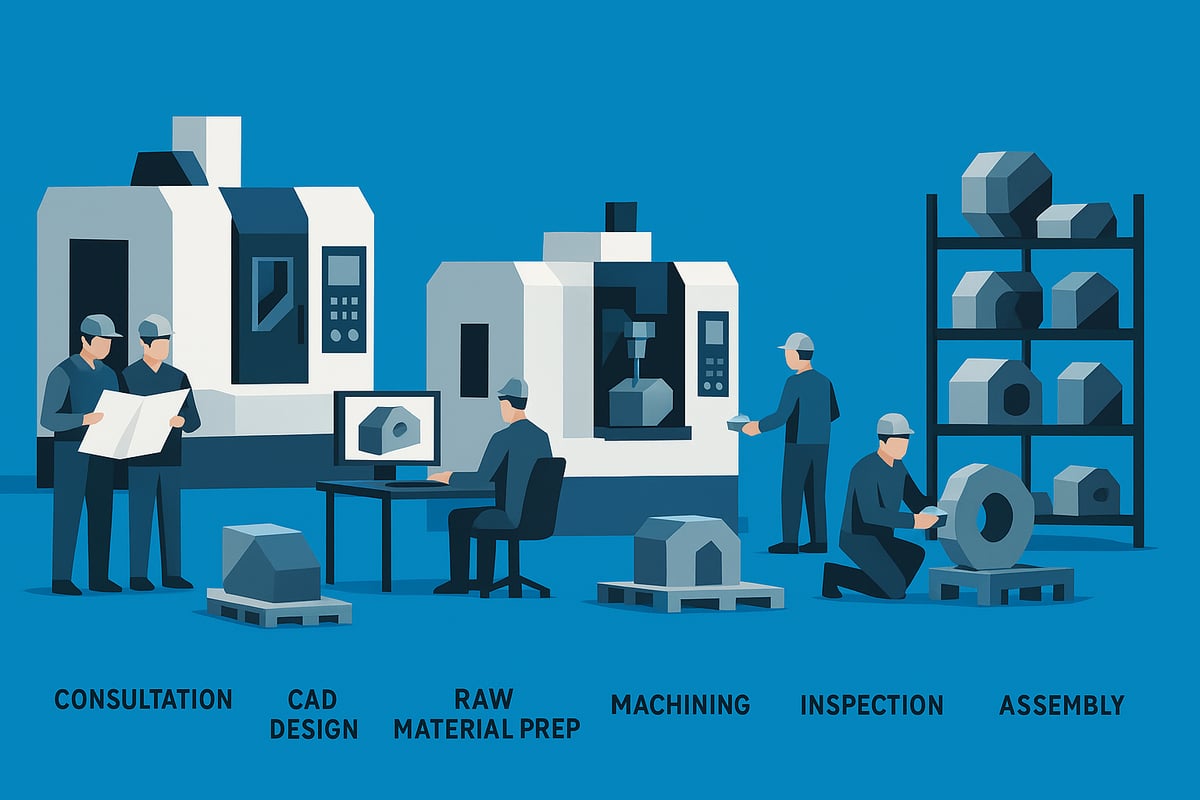
Navigating the workflow of a cnc machining job shop for heavy industry parts requires a blend of expertise, precision, and systematic coordination. Each stage is vital for ensuring that the final product not only meets technical specifications but also stands up to the rigorous demands of heavy industry environments. Let us break down the step-by-step process that defines leading job shops serving sectors such as mining, oil and gas, construction, and power generation.
Step 1: Project Consultation and Requirements Gathering
The workflow begins with a thorough consultation between the client and the cnc machining job shop for heavy industry parts. During this phase, engineers and project managers discuss the project scope, performance requirements, and intended application.
Clear documentation of specifications, tolerances, and preferred materials is essential. Open communication ensures that both parties understand the technical and logistical needs, reducing the likelihood of revisions or costly delays later.
A collaborative approach at this stage allows the job shop to propose tailored solutions, leveraging their experience in Industrial Manufacturing Solutions to meet demanding industry standards. This foundation sets the tone for the entire project.
Step 2: Design, Engineering, and Programming
Next, the cnc machining job shop for heavy industry parts transitions to the design and engineering phase. Here, skilled technicians use CAD software to model components based on client requirements.
The team reviews designs for manufacturability, ensuring features can be accurately machined and assembled. CAM programming is then performed, creating optimized toolpaths for efficiency and precision.
Simulations and digital twins allow the shop to verify machining strategies in a virtual environment, minimizing errors before production begins. This meticulous process is crucial for complex, large-scale parts.
Step 3: Material Procurement and Preparation
Material selection is a critical step for any cnc machining job shop for heavy industry parts. The shop sources certified raw materials, often steel, alloys, or specialty metals, from trusted suppliers.
Before machining, materials may undergo stress relief treatments or rough cutting to required sizes. Each batch is inspected for quality and accompanied by detailed documentation, ensuring traceability and compliance with industry standards.
Proper preparation at this stage prevents downstream issues, supports product integrity, and aligns with client expectations for durability and reliability.
Step 4: Machining and Production
The core of the cnc machining job shop for heavy industry parts workflow is the machining and production phase. Technicians set up and calibrate large CNC machines, ensuring fixturing is secure for heavy workpieces.
Multi-stage processes are often required to achieve complex geometries, with real-time monitoring systems tracking performance and quality. Operators adjust parameters as needed to maintain tight tolerances, even on oversized components.
This stage demands both technical skill and adaptability to address unexpected challenges and deliver consistent results.
Step 5: Quality Control and Inspection
Maintaining high standards is essential for every cnc machining job shop for heavy industry parts. Comprehensive inspections take place throughout the process, using coordinate measuring machines (CMMs), laser scanners, and precision gauges.
Both in-process and final inspections are conducted to verify dimensions, surface finish, and material properties. The shop adheres to ISO and sector-specific standards, documenting every measurement for full traceability.
This rigorous approach ensures that each part meets client and regulatory requirements before moving forward.
Step 6: Finishing, Assembly, and Delivery
The final step for a cnc machining job shop for heavy industry parts involves finishing, assembly, and logistics. Surface finishing operations such as deburring, coating, painting, or heat treatment enhance performance and longevity.
If required, the shop assembles multi-component systems, thoroughly testing fit and function. Heavy parts are then packaged securely for safe transport to the client site.
Reliable delivery and post-project support round out the workflow, cementing the job shop’s reputation for quality and customer satisfaction.
Advanced Technologies and Trends in CNC Machining for 2026
The landscape of cnc machining job shop for heavy industry parts is evolving quickly. As we approach 2026, new technologies are reshaping how job shops deliver precision, efficiency, and competitiveness. Let us explore the most impactful trends and their significance for heavy industry manufacturing.
Automation and Smart Manufacturing
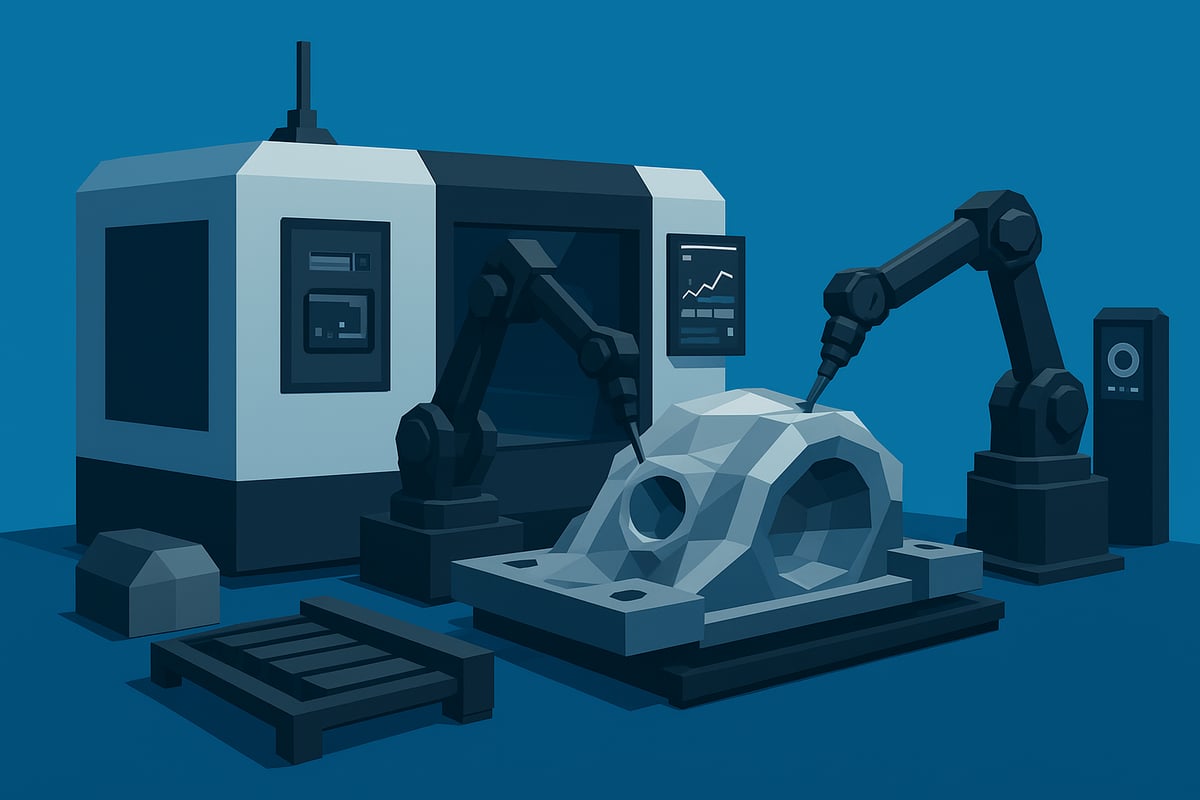
Automation is transforming the cnc machining job shop for heavy industry parts by integrating robotics, automated guided vehicles, and intelligent systems. These advancements handle heavy workpieces, streamline material flow, and reduce manual intervention.
Smart manufacturing leverages IoT sensors to collect real-time data, enabling predictive maintenance and minimizing unexpected downtime. Automated tool changers and lights-out machining maximize throughput.
Key benefits include:
- Consistent quality across large batches
- Faster setup and changeover times
- Enhanced worker safety and ergonomic conditions
By embracing automation, job shops can deliver reliable, cost-effective solutions for complex heavy industry projects.
Digital Twin and Simulation Technologies
Digital twin technology is now central to the cnc machining job shop for heavy industry parts. By creating a virtual replica of the machining process and part geometry, engineers can test and optimize workflows before any metal is cut.
Simulation tools help identify potential errors, reduce scrap, and shorten lead times. For example, digital twins allow for virtual machine setups, toolpath verification, and collision detection.
This leads to:
- Fewer costly mistakes on the shop floor
- Improved process planning
- Enhanced adaptability for custom projects
Heavy industry clients benefit from higher part accuracy and faster delivery.
High-Performance Materials and Tooling
The cnc machining job shop for heavy industry parts must adapt to advances in material science. New alloys, such as advanced steels, titanium blends, and superalloys, demand specialized tooling and techniques.
Cutting tools made from ceramics, polycrystalline diamond (PCD), and cubic boron nitride (CBN) extend tool life and withstand tough operating conditions. These innovations enable the machining of wear-resistant and heat-resistant parts required for mining, energy, and aerospace sectors.
Key impacts include:
- Reduced cycle times for challenging materials
- Longer intervals between tool changes
- Greater consistency in part quality
This focus on high-performance tooling ensures job shops stay competitive.
Sustainable and Green Machining Practices
Sustainability is increasingly vital for cnc machining job shop for heavy industry parts. Job shops are adopting energy-efficient machines, coolant recycling systems, and waste-minimizing methods to lower their environmental impact.
Compliance with environmental standards and customer expectations drives these efforts. Examples include:
- Using biodegradable coolants
- Implementing closed-loop recycling for metal chips
- Optimizing machine power consumption
These green practices not only reduce costs but also enhance a shop’s reputation among eco-conscious heavy industry clients.
Future Outlook: What to Expect by 2026
Looking ahead, the cnc machining job shop for heavy industry parts will see substantial growth and transformation. Sectors like renewable energy, electric vehicle infrastructure, and advanced mining will propel demand for precision-machined components.
Digitalization and workforce upskilling will be critical. Shops investing in automation, simulation, and sustainable practices will lead the market. For a deeper dive into upcoming trends, see this Emerging CNC Machining Trends 2025.
By 2026, expect more integrated, data-driven, and agile job shops ready to tackle the evolving needs of heavy industry.
Quality Standards, Certifications, and Compliance in Heavy Industry CNC Machining
Quality standards and certifications are the backbone of any cnc machining job shop for heavy industry parts. These benchmarks ensure every component meets strict requirements for safety, performance, and reliability. Compliance is not just a box to check—it is a commitment to excellence that sets leading job shops apart in the heavy industry sector.
Industry-Specific Standards and Certifications
For a cnc machining job shop for heavy industry parts, adherence to recognized standards is essential. The most common baseline is ISO 9001, which defines quality management systems for manufacturing. Many sectors require additional certifications, such as AS9100 for aerospace, API for oil and gas, and other sector-specific standards.
These certifications validate that a job shop consistently delivers high-quality, traceable results. They also ensure processes are documented and audited regularly. To understand the significance of ISO 9001 in machining, see this resource on ISO 9001 Certification for CNC Machining Companies. Meeting these requirements is a clear signal of reliability and professionalism.
Inspection, Testing, and Documentation
Inspection and testing play a critical role in every cnc machining job shop for heavy industry parts. Non-destructive testing (NDT), hardness checks, and dimensional verification are standard practices. These steps catch defects early and confirm that all specifications are met.
Each part is accompanied by detailed documentation. This includes material certificates, inspection records, and traceability logs. Proper documentation ensures compliance with client and regulatory requirements, and it supports accountability throughout the production process.
Risk Management and Safety Protocols
Handling oversized components and high-powered equipment brings unique risks to a cnc machining job shop for heavy industry parts. Strict safety protocols are necessary to protect both people and assets. Compliance with OSHA and industry-specific safety standards is mandatory.
Shops invest in regular training and certification for machinists. This ensures that everyone understands the hazards and best practices for working with heavy industry parts. Risk assessments and emergency procedures are reviewed and updated frequently.
Continuous Improvement and Auditing
Continuous improvement is a hallmark of a leading cnc machining job shop for heavy industry parts. Lean manufacturing and Six Sigma methodologies drive defect reduction and process efficiency. Regular internal and external audits identify opportunities for growth.
Customer feedback is actively sought and incorporated. Successful shops document changes and measure results, demonstrating a commitment to ongoing excellence. These practices not only improve quality but also build long-term trust with heavy industry clients.
Applications of CNC Machining Job Shops in Heavy Industry Sectors
CNC machining job shop for heavy industry parts delivers unmatched versatility and precision across multiple sectors. Modern job shops serve as critical partners for industries demanding robust, custom, and high-performance components. Let us explore how these specialized services power major heavy industry applications.
Mining and Aggregate Equipment
Within mining and aggregate operations, a cnc machining job shop for heavy industry parts is essential for producing rugged components that withstand abrasive environments.
- Crusher parts and wear plates
- Vibrating screens and conveyor rollers
- Dragline and shovel components
Machining these parts requires advanced equipment capable of handling oversized workpieces and hard alloys. Shops must deliver exceptional dimensional accuracy and surface finishes to ensure reliable operation in harsh mining conditions. The ability to manufacture both replacement and upgraded parts on demand keeps mining operations running efficiently.
Oil & Gas Industry Components
A cnc machining job shop for heavy industry parts plays a vital role in the oil and gas sector, delivering high-precision components needed for critical field operations.
- Drilling rig subassemblies
- High-pressure pumps and manifolds
- Corrosion-resistant valves and fittings
These parts often face extreme pressures, corrosive fluids, and demanding regulatory requirements. Rapid turnaround is essential, especially for repairs or urgent replacements that minimize costly downtime. Job shops provide the expertise to machine exotic alloys and maintain tight tolerances, ensuring safety and performance in challenging environments.
Power Generation and Renewable Energy
For power generation and renewable energy, a cnc machining job shop for heavy industry parts supports the fabrication of large-scale, high-value components.
- Turbine rotors and generator housings
- Wind tower flanges and hubs
- Custom hydroelectric and solar mounting solutions
Energy sector clients rely on job shops for both legacy and next-generation projects, from fossil fuel plants to wind farms. The ability to produce custom designs and adapt to evolving industry standards makes CNC machining indispensable for sustainable energy growth and infrastructure upgrades.
Construction and Heavy Machinery
The construction industry benefits greatly from a cnc machining job shop for heavy industry parts, especially when it comes to durable equipment and fast refurbishment.
- Loader and excavator arms
- Crane components and chassis parts
- Legacy machinery upgrades and custom assemblies
CNC job shops often integrate machining with additional fabrication services for heavy industry, providing end-to-end solutions for complex assemblies. This approach ensures equipment meets both performance and safety requirements, while enabling rapid response for urgent part replacements or modifications.
Choosing the Right CNC Machining Job Shop for Heavy Industry Needs
Selecting the ideal cnc machining job shop for heavy industry parts is a crucial decision that impacts project success, safety, and long-term value. With so many factors to weigh, an informed approach helps you match your requirements with a job shop’s true capabilities.
Evaluating Capabilities and Experience
Begin your search by assessing a shop’s technical expertise and track record with heavy industry work. Look for a cnc machining job shop for heavy industry parts that demonstrates experience with large-scale projects and complex geometries.
Evaluate:
- Range and size of CNC machines available
- Depth of industry-specific knowledge
- Portfolio of completed heavy industry components
Examine references and past projects to confirm the shop’s ability to meet demanding tolerances and material requirements. A proven shop reduces risk and ensures your parts are delivered to specification.
Technology, Capacity, and Turnaround Times
Advanced technology plays a central role in a cnc machining job shop for heavy industry parts. Assess whether the shop invests in multi-axis CNC equipment, automation, and digital monitoring systems to optimize productivity.
Capacity is equally important. Can the shop handle your largest parts or urgent orders? Rapid response capabilities, such as Emergency Mobile Industrial Welding, demonstrate flexibility and commitment to minimizing downtime.
Fast, reliable lead times support critical operations. Discuss capacity planning and ask about contingency services for emergency repairs or field machining.
Quality Assurance and Customer Support
Consistent quality and responsive support are non-negotiable when choosing a cnc machining job shop for heavy industry parts. Review the shop’s certifications, inspection processes, and quality management systems.
Consider:
- In-house inspection equipment (CMMs, laser scanners)
- Adherence to ISO and industry standards
- Detailed documentation for traceability
Strong customer support includes clear communication, design assistance, and post-delivery service. Select a partner who values your feedback and stands behind their work.
LTJ Industrial Services: Your Partner for Heavy Industry CNC Machining
LTJ Industrial Services stands out as a trusted cnc machining job shop for heavy industry parts across the Western United States. Their expertise spans mining, oil and gas, aggregate, and manufacturing sectors.
Key strengths:
- Full-service CNC machining, welding, and fabrication
- Shop and field services for large, complex components
- Rapid response for critical and emergency needs
LTJ’s commitment to quality, safety, and tailored solutions ensures your heavy industry projects are completed on time and to the highest standards. Reach out for a custom consultation and discover how LTJ can power your next project.
If you’re ready to elevate your operations with expertly machined parts tailored to your exact needs, let’s connect. [Request a Quote](https://www.ltjindustrial.com/contact_us/)