
Surface preparation represents the most critical factor in powder coating success, yet it remains the most overlooked step in many industrial finishing operations. Poor surface prep before powder coating accounts for up to 80% of all coating failures in the field, leading to premature corrosion, delamination, and costly rework. For manufacturers in the aggregate, recycling, and oil & gas sectors throughout the Western United States, understanding proper surface preparation protocols ensures equipment longevity and reduces total cost of ownership.
Understanding Surface Contamination Types
Every metal surface arriving for powder coating carries contaminants that will compromise adhesion if left unaddressed. These contaminants fall into distinct categories, each requiring specific removal methods.
Organic contaminants include oils, greases, cutting fluids, and fingerprints from handling. These substances create a barrier between the powder coating and the metal substrate, preventing proper molecular bonding. Even microscopic oil films invisible to the naked eye can cause coating failure.
Inorganic contaminants encompass mill scale, rust, oxides, and welding slag. Mill scale, the dark oxide layer formed during hot rolling of steel, appears tightly bonded but possesses different thermal expansion properties than the base metal. This mismatch causes the powder coating to fail prematurely under temperature cycling.
Chemical Contamination Challenges
Salt deposits, alkaline residues from previous cleaning operations, and acidic corrosion products present unique challenges. These water-soluble contaminants may seem removed after initial cleaning but can remain in pits, crevices, or beneath rust layers.
- Salt contamination from marine environments or road exposure
- Alkaline cleaner residues not thoroughly rinsed
- Acid pickling residues from previous surface treatments
- Embedded particulates from grinding or machining operations
The AMPP standards provide comprehensive guidance on identifying and addressing each contamination type, establishing industry benchmarks for acceptable cleanliness levels before coating application.
Alkaline Cleaning and Degreasing Methods
The first stage of surface prep before powder coating involves removing all organic contaminants through alkaline cleaning. This process uses pH-controlled solutions to saponify oils and emulsify greases, lifting them from the metal surface.
Spray washing systems offer the most efficient approach for high-volume operations. These automated systems apply heated alkaline solutions at controlled pressures, typically 15-40 PSI, ensuring consistent coverage across complex geometries. Solution temperatures between 140-180°F optimize cleaning effectiveness while preventing flash rusting on ferrous metals.
Immersion tank cleaning suits parts with deep recesses, blind holes, or intricate designs where spray coverage proves difficult. Immersion times range from 5-20 minutes depending on contamination severity and solution strength. Ultrasonic agitation enhances cleaning in tight spaces where fluid circulation remains limited.
Critical Rinsing Requirements
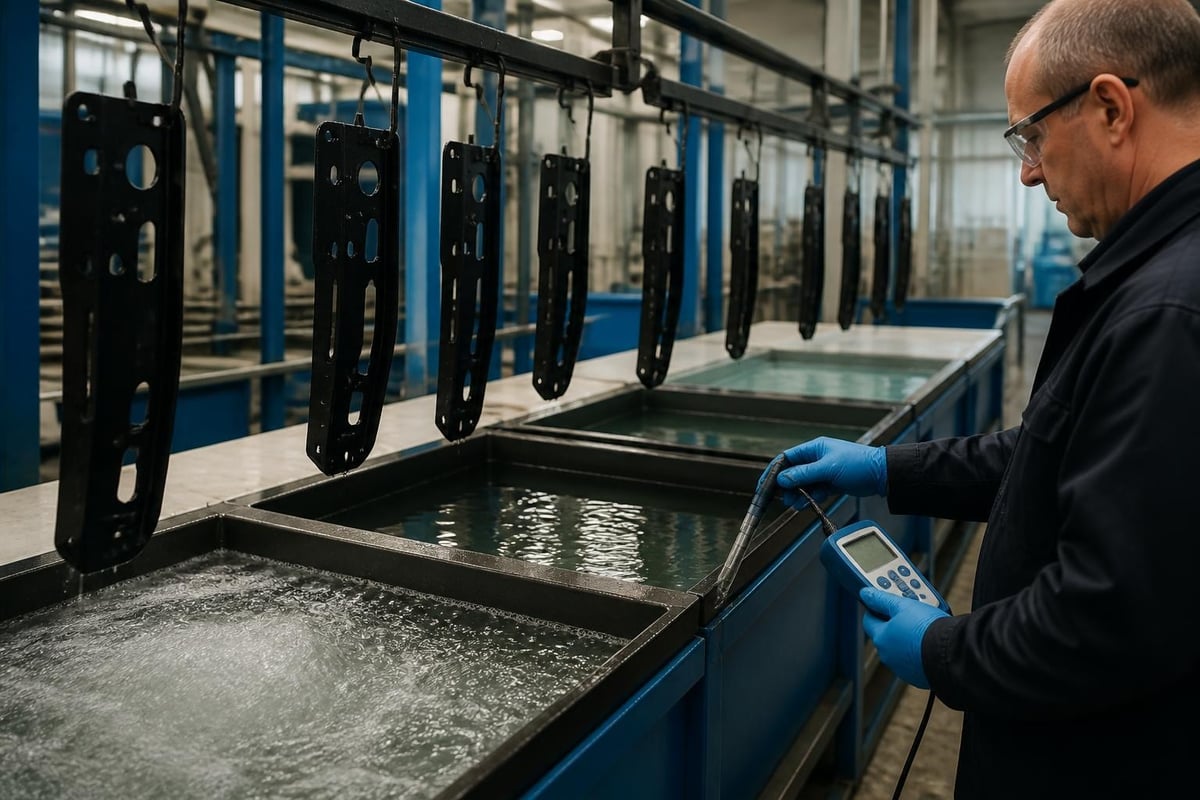
Incomplete rinsing represents a primary cause of coating adhesion failures. Alkaline residues left on the surface react with the powder coating during cure, creating weak interfacial bonds and potential disbondment sites.
| Rinse Stage | Water Quality | Temperature | Purpose |
|---|---|---|---|
| First Rinse | Tap Water | Ambient | Bulk chemical removal |
| Second Rinse | Filtered | Ambient | Residue elimination |
| Final Rinse | Deionized | 120-140°F | Contamination-free surface |
Multi-stage rinsing with conductivity monitoring ensures complete removal of alkaline cleaners. Many operations serving industrial equipment repair applications implement three-stage rinsing to meet stringent quality requirements.
Mechanical Surface Preparation Techniques
After chemical cleaning removes organic contaminants, mechanical methods create the surface profile necessary for optimal powder coating adhesion. The anchor pattern developed during this phase provides mechanical "teeth" that lock the coating to the substrate.
Abrasive Blasting Parameters
Abrasive blasting remains the gold standard for surface prep before powder coating in heavy industrial applications. The process removes mill scale, rust, and oxides while simultaneously creating a controlled roughness pattern.
Media selection directly impacts the resulting surface profile and cleanliness. Common blast media include:
- Aluminum oxide: Aggressive cutting action, creates 2-4 mil profiles, reusable
- Steel grit: Angular particles for deep anchor patterns, ideal for structural steel
- Glass bead: Produces satin finish with minimal profile, suited for aluminum
- Garnet: Natural mineral offering consistent profile without ferrous contamination
- Crushed steel shot: Rounds edges while cleaning, reduces stress risers
Blast pressure, nozzle distance, and impact angle require careful control to achieve target surface profiles without damaging thin-wall sections or precision-machined features common in heavy equipment repair components.
The ISO 8501 visual standards define cleanliness grades from Sa 1 (light blast cleaning) through Sa 3 (very thorough blast cleaning). Most powder coating specifications require Sa 2½ or Sa 3 cleanliness, ensuring near-white or white metal finishes.
Hand Tool and Power Tool Cleaning
When abrasive blasting proves impractical due to part size, location constraints, or limited contamination, hand and power tools provide alternative surface preparation methods. These techniques work effectively for touch-up areas, field repairs, and maintenance coating applications.
Wire brushing removes loose mill scale and rust but cannot eliminate tightly adhered contamination. Power wire brushes rotate at 3,000-6,000 RPM, generating surface profiles of 0.5-1.5 mils. This limited profile suits thin powder coating applications but may prove insufficient for heavy-duty industrial coatings.
Grinding and sanding operations remove weld spatter, sharp edges, and localized corrosion. These methods create directional patterns that require cross-grinding or sanding in multiple directions to prevent visible grain lines telegraphing through the finished coating.
Surface Profile Measurement and Verification
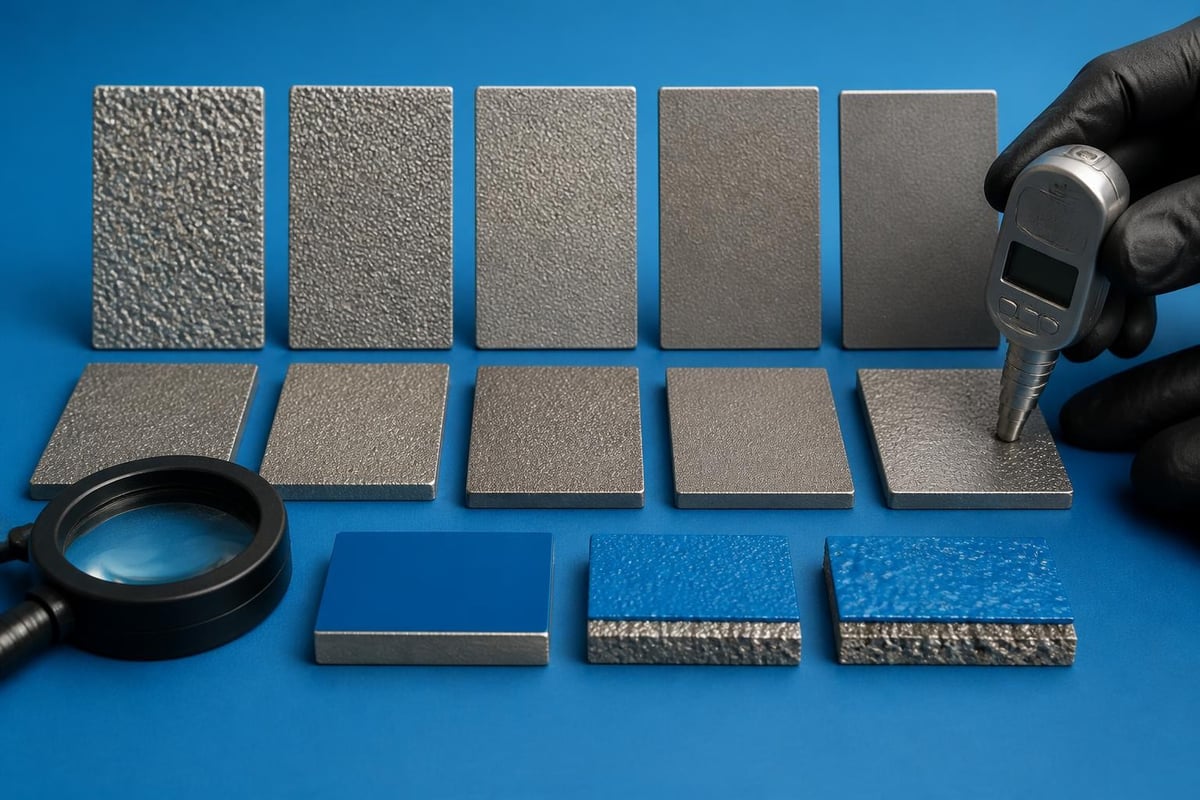
Quantifying the surface roughness created during mechanical preparation ensures consistency between batches and conformance to coating manufacturer specifications. Surface profile directly correlates with coating adhesion performance.
Replica tape provides field-portable profile measurement. The compressible foam tape compresses into the surface peaks and valleys, creating a permanent record. Technicians measure the compressed tape thickness using spring micrometers calibrated in 0.1-mil increments.
Digital profilometers offer electronic measurement with statistical analysis capabilities. These instruments use diamond stylus tips to trace surface irregularities, calculating average roughness (Ra), peak-to-valley height (Rz), and other profile parameters defined in ASME B46.1 standards.
Target Profile Ranges by Application
Different powder coating systems and service environments require specific surface profile ranges for optimal performance:
| Application Type | Target Profile | Measurement Method |
|---|---|---|
| Architectural aluminum | 0.5-1.5 mils | Testex tape or profilometer |
| General steel fabrication | 1.5-3.0 mils | Testex tape |
| Heavy industrial equipment | 2.5-4.0 mils | Testex tape or profilometer |
| Immersion service | 3.0-5.0 mils | Profilometer recommended |
Profile verification should occur before any coating application, as excessive profile increases coating consumption and may trap air during powder application, while insufficient profile leads to adhesion failure.
Pre-treatment Chemistry and Conversion Coating
Following mechanical cleaning and profiling, chemical pre-treatment systems provide additional corrosion protection and enhanced adhesion. These thin conversion coatings react with the metal surface, creating a chemically bonded crystalline layer.
Iron phosphate treatments represent the most common pre-treatment for ferrous metals undergoing powder coating. The process deposits a thin (50-200 mg/ft²) phosphate crystal layer that provides excellent paint adhesion and moderate corrosion resistance. Iron phosphate systems operate at near-ambient temperatures, reducing energy costs compared to zinc phosphate alternatives.
Zinc phosphate coatings offer superior corrosion protection for parts exposed to harsh environments. The heavier coating weight (150-500 mg/ft²) and larger crystal structure provide enhanced barrier properties but require heated processing tanks (160-180°F) and more complex chemistry control.
Chromate-Free Alternatives
Environmental regulations and worker safety concerns have driven development of chromate-free pre-treatment chemistries. These modern systems provide equivalent or superior performance without hexavalent chromium.
Zirconium-based pre-treatments deposit thin (5-25 mg/ft²) conversion layers through a simple immersion or spray process. The transparent coating preserves metal appearance while enhancing adhesion and corrosion resistance. These systems work across multiple substrates including steel, aluminum, and galvanized materials in a single process line.
Trivalent chromium processes use Cr(III) chemistry instead of the carcinogenic Cr(VI) compounds found in traditional chromate treatments. Performance matches or exceeds hexavalent chromium systems while eliminating the associated health and environmental risks.
The AMPP quality programs establish certification requirements for facilities performing chemical pre-treatment operations, ensuring consistent process control and documentation.
Special Considerations for Galvanized Steel
Galvanized steel requires unique surface prep before powder coating due to the zinc layer's smooth, non-porous nature. Standard cleaning and blasting protocols designed for bare steel prove ineffective on galvanized surfaces.
Surface Preparation Approaches
Chemical etching modifies the zinc surface to accept powder coating adhesion. Acidic etch solutions (typically phosphoric acid-based) microscopically roughen the zinc layer, creating anchor points for coating attachment. Etching times range from 30 seconds to 3 minutes depending on solution strength and temperature.
Light abrasive blasting using fine media (aluminum oxide 80-120 grit or glass bead) creates mechanical profile without removing excessive zinc. Blast pressure must remain low (20-40 PSI) to avoid zinc removal or base steel exposure. The ASTM D6386 standard provides detailed guidance on preparing galvanized surfaces for coating.
Weathering allows new galvanized surfaces to develop a zinc carbonate layer naturally over 6-12 months of atmospheric exposure. This weathered layer accepts powder coating more readily than fresh bright zinc, though few production schedules accommodate this passive approach.
Quality Control and Inspection Protocols
Systematic inspection and testing verify surface prep before powder coating meets established standards. Documentation of these verification steps proves essential for quality assurance and warranty protection.
Cleanliness Testing Methods
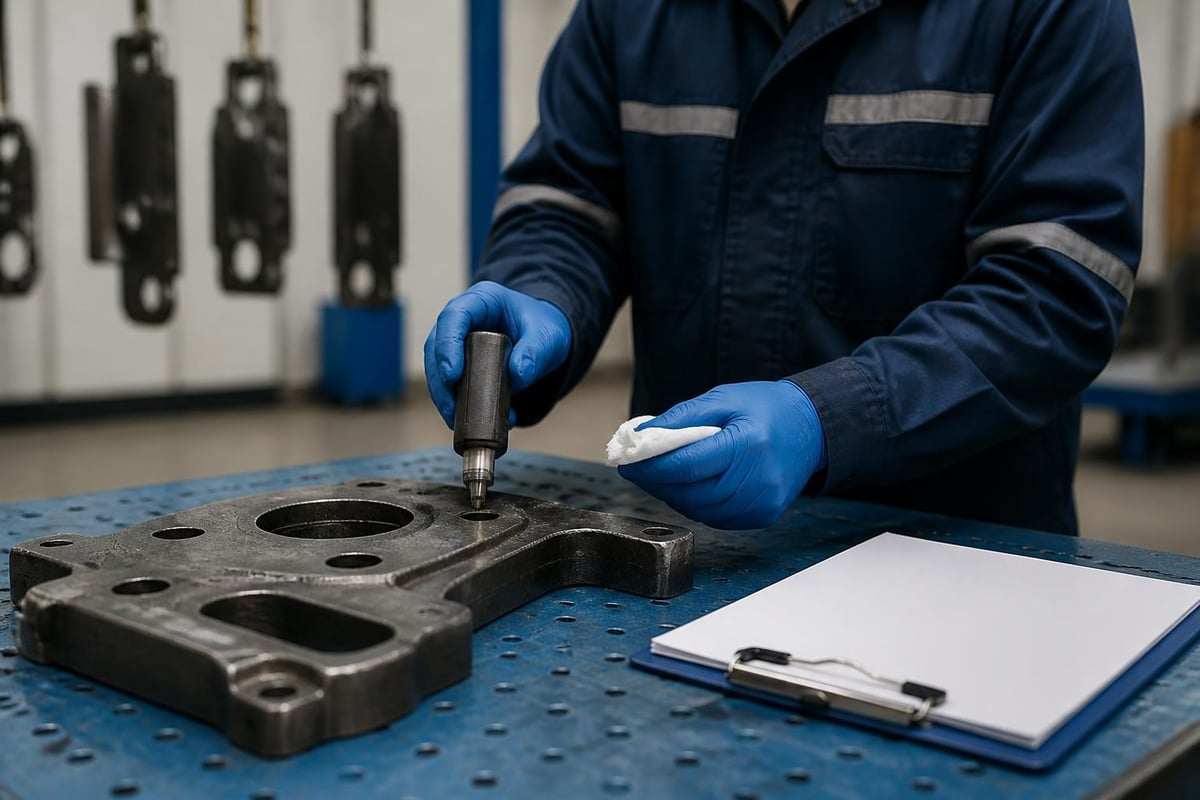
Water break test provides immediate visual verification of surface cleanliness. When water is sprayed on a properly cleaned surface, it forms a continuous film without breaking into droplets. Beading or breaking indicates remaining contamination requiring additional cleaning.
Tape adhesion test assesses mechanical adhesion of test powder coating samples. Cross-hatch or X-cut patterns through the coating to the substrate determine adhesion classification according to ASTM D3359 standards. Proper surface prep before powder coating consistently achieves 5B adhesion ratings.
Salt spray testing validates corrosion protection performance of the complete system. Prepared panels coated per production specifications undergo continuous salt fog exposure per ASTM B117, with evaluation at 500, 1000, or 2000-hour intervals depending on service requirements.
- Document blast media type, pressure, and nozzle distance
- Record surface profile measurements with location mapping
- Photograph representative areas showing cleanliness achieved
- Test and record pre-treatment bath chemistry parameters
- Perform adhesion testing on witness panels from each batch
- Maintain traceability linking parts to preparation documentation
Environmental and Disposal Considerations
Surface preparation generates waste streams requiring proper handling and disposal. Responsible management protects worker health, prevents environmental contamination, and ensures regulatory compliance.
Spent blast media containing removed contaminants (oils, heavy metals, rust) typically requires disposal as industrial waste. Media recycling systems extend useful life while reducing disposal volumes, though contamination levels eventually necessitate replacement.
Chemical wastes from cleaning and pre-treatment operations demand careful pH adjustment, heavy metal precipitation, and licensed disposal. Many facilities implement closed-loop rinse systems to minimize water consumption and wastewater generation.
Air quality management addresses dust from dry abrasive blasting and volatile organic compounds from chemical cleaners. Proper ventilation, filtration, and personal protective equipment protect workers while meeting OSHA and EPA requirements.
Field vs. Shop Surface Preparation
The controlled environment of shop-based surface prep before powder coating differs significantly from field preparation challenges faced during equipment maintenance and repair.
Shop Environment Advantages
Climate-controlled facilities maintain consistent temperature and humidity, preventing flash rusting between preparation and coating. Automated systems ensure process repeatability, while containment structures manage blast media and chemical wastes effectively.
Multi-stage process lines move parts through sequential cleaning, rinsing, pre-treatment, and drying operations without manual handling between stages. This automation reduces contamination from handling while improving throughput and consistency.
Field Preparation Constraints
On-site preparation for equipment that cannot be transported to shop facilities faces environmental variables, power limitations, and containment challenges. Field teams performing certified API 1104 pipeline welding often encounter these scenarios when coating welded joints.
Portable blast equipment using compressed air or centrifugal wheel systems adapts to field conditions but requires careful setup to prevent media contamination of surrounding areas. Containment tarps, vacuum recovery systems, and proper grounding prevent environmental release.
Solvent cleaning provides chemical degreasing when water-based systems prove impractical. Low-VOC solvents minimize environmental impact while achieving necessary cleanliness levels for coating adhesion.
Common Surface Preparation Failures and Prevention
Understanding typical failure modes enables process improvements that enhance coating performance and reduce rejection rates.
Flash rusting occurs when moisture contacts freshly cleaned ferrous metal before coating application. Prevention requires controlled humidity (below 50% RH), rapid throughput from cleaning to coating, and consideration of rust inhibitors in final rinse stages.
Incomplete contaminant removal leaves oils, salts, or chemical residues that interfere with coating adhesion. Enhanced inspection protocols, including black light examination for oil films and conductivity testing for ionic contamination, identify these invisible defects before coating application.
Over-blasting removes excessive base metal or creates profile depths exceeding coating system capabilities. This waste increases surface area requiring coating coverage while potentially damaging precision features. Proper operator training and process controls prevent this costly error.
| Defect Type | Root Cause | Prevention Method |
|---|---|---|
| Poor adhesion | Inadequate profile or cleanliness | Enhanced inspection and testing |
| Flash rust | Moisture exposure post-cleaning | Humidity control, rapid processing |
| Uneven coating | Inconsistent surface profile | Automated blasting, verified procedures |
| Premature failure | Contamination under coating | Multi-stage cleaning verification |
Process Documentation and Traceability
Comprehensive documentation of surface prep before powder coating creates quality records supporting warranty claims, customer specifications, and continuous improvement initiatives.
Process travelers accompany parts through each preparation stage, recording operator signatures, process parameters, and inspection results. These documents provide complete traceability from raw material receipt through final coating application.
Batch records compile quality data for groups of similar parts processed together. Statistical analysis of profile measurements, chemistry parameters, and adhesion test results identifies process trends requiring corrective action before defects occur.
Equipment calibration logs verify that measurement instruments, blast equipment pressure gauges, and chemistry controllers maintain accuracy over time. Regular calibration against NIST-traceable standards ensures measurement reliability and process control.
Digital documentation systems increasingly replace paper travelers, enabling real-time data collection, automated statistical analysis, and integration with enterprise quality management systems. These platforms improve data accessibility while reducing transcription errors inherent in manual record-keeping.
Proper surface prep before powder coating separates successful industrial finishing operations from those plagued by premature failures and customer complaints. The investment in comprehensive cleaning, profiling, and pre-treatment processes pays dividends through extended coating service life and reduced warranty costs. When your operation requires expert metal fabrication and finishing services backed by rigorous quality standards, LTJ Industrial Services delivers the expertise and equipment to ensure every coating application starts with properly prepared surfaces. Our team serves commercial and industrial clients throughout the Western United States with comprehensive welding, machining, and surface preparation capabilities designed to keep your critical equipment performing reliably.