Selecting the right welding and fabrication company can make or break your industrial operation. Whether you're managing a recycling facility, overseeing aggregate production, or maintaining oil and gas equipment across the Western United States, partnering with a skilled provider ensures your machinery stays operational, your custom projects meet specifications, and your downtime remains minimal. The industrial manufacturing landscape in 2026 demands more than basic welding services-it requires comprehensive solutions that combine precision machining, mobile field capabilities, and specialized expertise across multiple metallurgical processes.
What Defines a Modern Welding and Fabrication Company
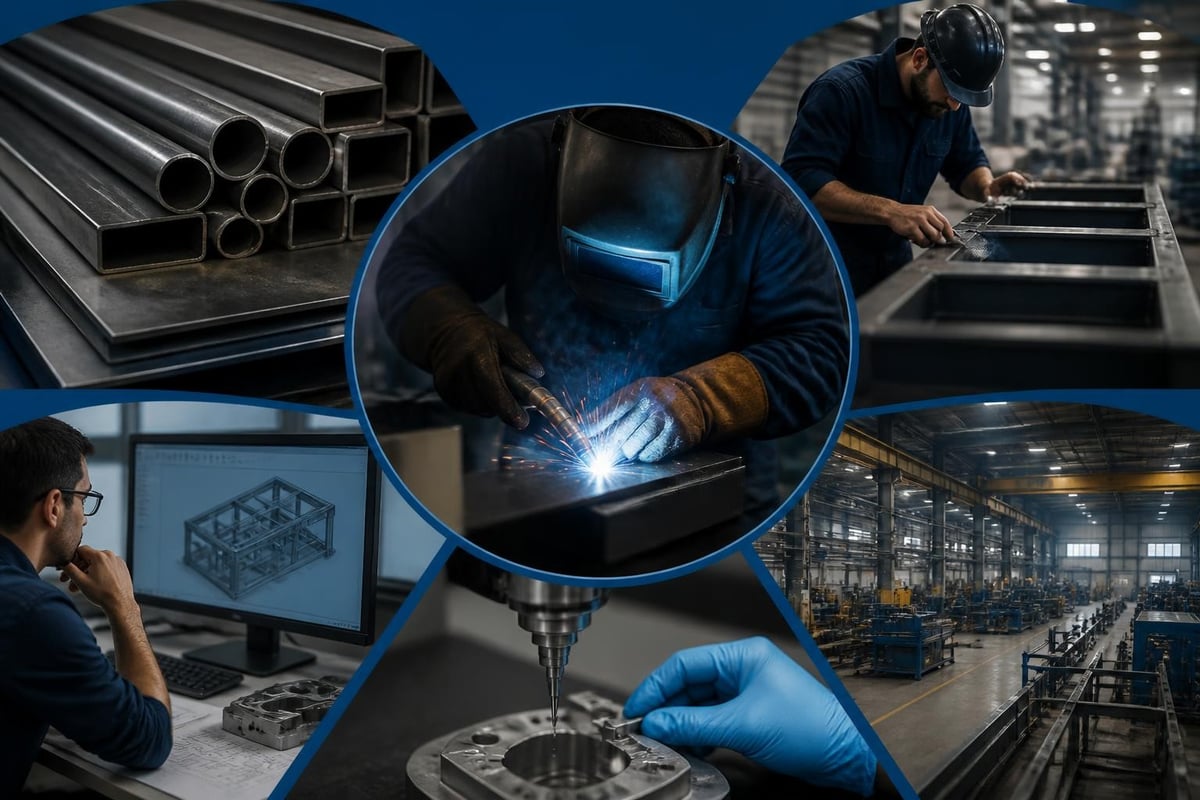
A professional welding and fabrication company today extends far beyond traditional shop-based metalwork. Modern providers integrate multiple disciplines under one roof, offering everything from custom metal fabrication to on-site emergency repairs. This comprehensive approach eliminates the coordination headaches of managing multiple contractors and ensures consistent quality across all project phases.
Core Service Categories
The most valuable partnerships come from companies offering integrated capabilities:
Shop-Based Services:
- Custom metal fabrication and structural steelwork
- Precision CNC machining and turning
- Hydraulic system fabrication and repair
- Assembly and testing of complex components
Field Services:
- Mobile welding units for on-site repairs
- Equipment breakdown response
- Installation and commissioning support
- Preventive maintenance programs
Specialized Capabilities:
- Water jetting for cleaning and surface preparation
- Metallurgical testing and quality assurance
- Engineering consultation and design support
- Reverse engineering for obsolete components
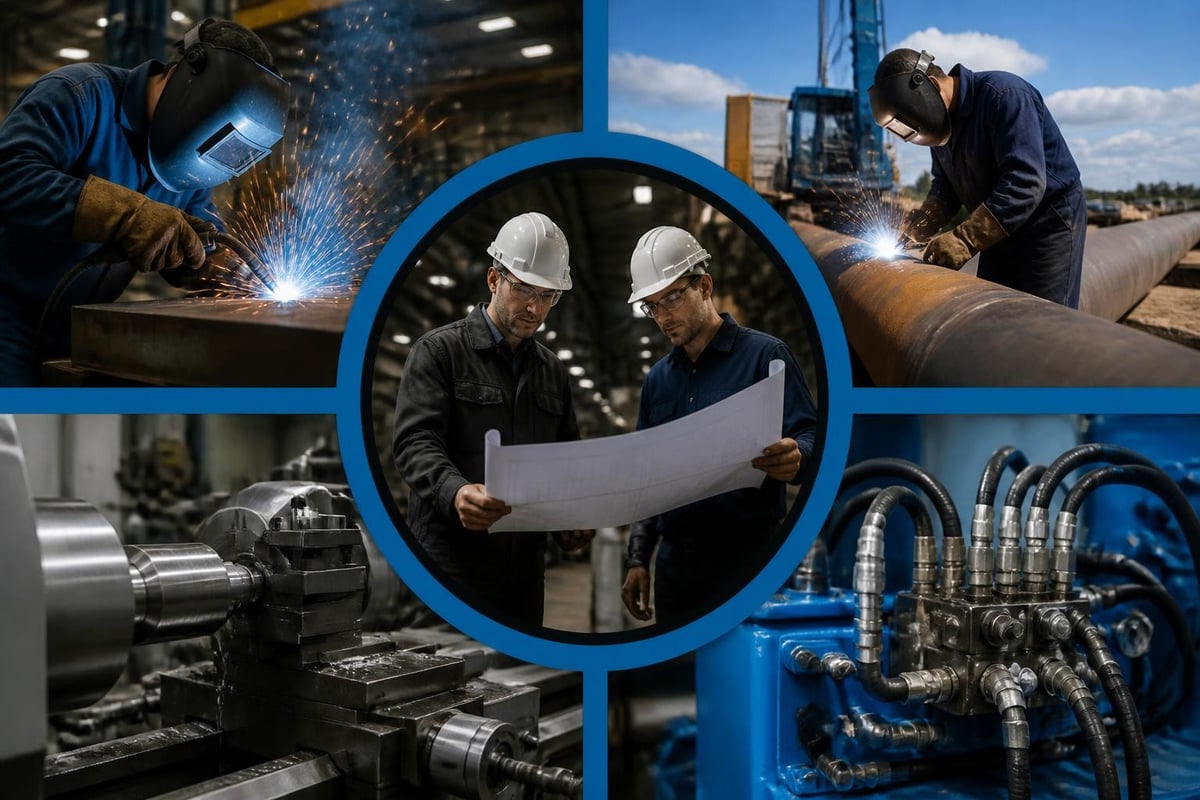
The distinction between average providers and exceptional ones often lies in their ability to deliver these services across multiple locations. Companies serving the recycling, aggregate, and oil and gas sectors throughout the Western United States must maintain consistent quality whether working in their facility or at your remote site.
Industry Applications and Sector Expertise
Different industrial sectors place unique demands on their welding and fabrication company partners. Understanding these specialized requirements separates competent providers from true industry experts.
Commercial and Industrial Manufacturing
Manufacturing operations require partners who understand production schedules, material specifications, and zero-tolerance quality standards. The best practices for the welding and fabrication industry emphasize continuous improvement, documentation, and adherence to industry standards. These principles become especially critical when fabricating components that integrate into larger assembly processes.
| Sector | Primary Needs | Critical Capabilities |
|---|---|---|
| Recycling | Conveyor systems, sorting equipment, heavy wear components | Abrasion-resistant materials, quick turnaround repairs |
| Aggregate | Crushers, screens, hoppers, chutes | High-strength structural welding, field installation |
| Oil & Gas | Pressure vessels, piping systems, drill equipment | Code-compliant welding, non-destructive testing |
| General Manufacturing | Custom tooling, production fixtures, equipment modifications | Precision machining, reverse engineering |
Equipment Refurbishment and Maintenance
Many industrial operations rely on industrial machinery refurbishment and maintenance to extend equipment lifespan and defer capital expenditures. A welding and fabrication company with refurbishment expertise can restore worn equipment to like-new condition at a fraction of replacement cost.
This capability proves especially valuable in 2026 as supply chain disruptions continue affecting equipment availability. Companies that can rebuild critical components in-house or through trusted partners maintain operational continuity while competitors face extended downtime waiting for new equipment.
Material Selection and Metallurgical Expertise
The materials your welding and fabrication company recommends directly impact project durability, cost-effectiveness, and long-term performance. Skilled welders understand not just how to join metals, but which alloys, grades, and treatments best suit specific applications.
Common Materials and Applications
Carbon Steel:
- Most economical option for general structural applications
- Available in various grades (A36, A572, etc.)
- Suitable for frames, supports, and non-corrosive environments
- Easily weldable with multiple processes
Stainless Steel:
- Corrosion resistance for food processing, chemical exposure
- Types 304, 316, and duplex grades serve different environments
- Requires specialized welding techniques and filler materials
- Higher initial cost offset by extended service life
Aluminum:
- Lightweight applications in transportation and aerospace
- Excellent corrosion resistance without coating
- Challenging to weld due to oxide layer and heat conductivity
- Requires TIG or specialized MIG processes
Exotic Alloys:
- Inconel, Hastelloy, and titanium for extreme conditions
- High-temperature or highly corrosive environments
- Specialized welding procedures and certifications required
- Typically reserved for critical applications
The trends and innovations shaping the future of welding include advanced material science applications that allow welding and fabrication companies to recommend newer alloys with superior performance characteristics at competitive pricing.
Quality Standards and Certifications
Working with a welding and fabrication company that maintains proper certifications protects your investment and ensures regulatory compliance. The American Welding Society provides comprehensive standards that govern everything from welder qualification to procedure specifications.
Essential Certifications and Standards
-
Welder Certifications: Individual welders should hold certifications for specific processes (SMAW, GMAW, GTAW, FCAW) and positions (flat, horizontal, vertical, overhead).
-
Procedure Qualifications: Welding Procedure Specifications (WPS) and Procedure Qualification Records (PQR) document approved methods for specific materials and applications.
-
Quality Management: ISO 9001 certification demonstrates systematic quality control and continuous improvement practices.
-
Industry-Specific Standards: ASME Section IX for pressure vessels, AWS D1.1 for structural steel, API standards for oil and gas applications.
-
Non-Destructive Testing: Radiographic (RT), ultrasonic (UT), magnetic particle (MT), and liquid penetrant (PT) testing capabilities verify weld integrity without destroying components.
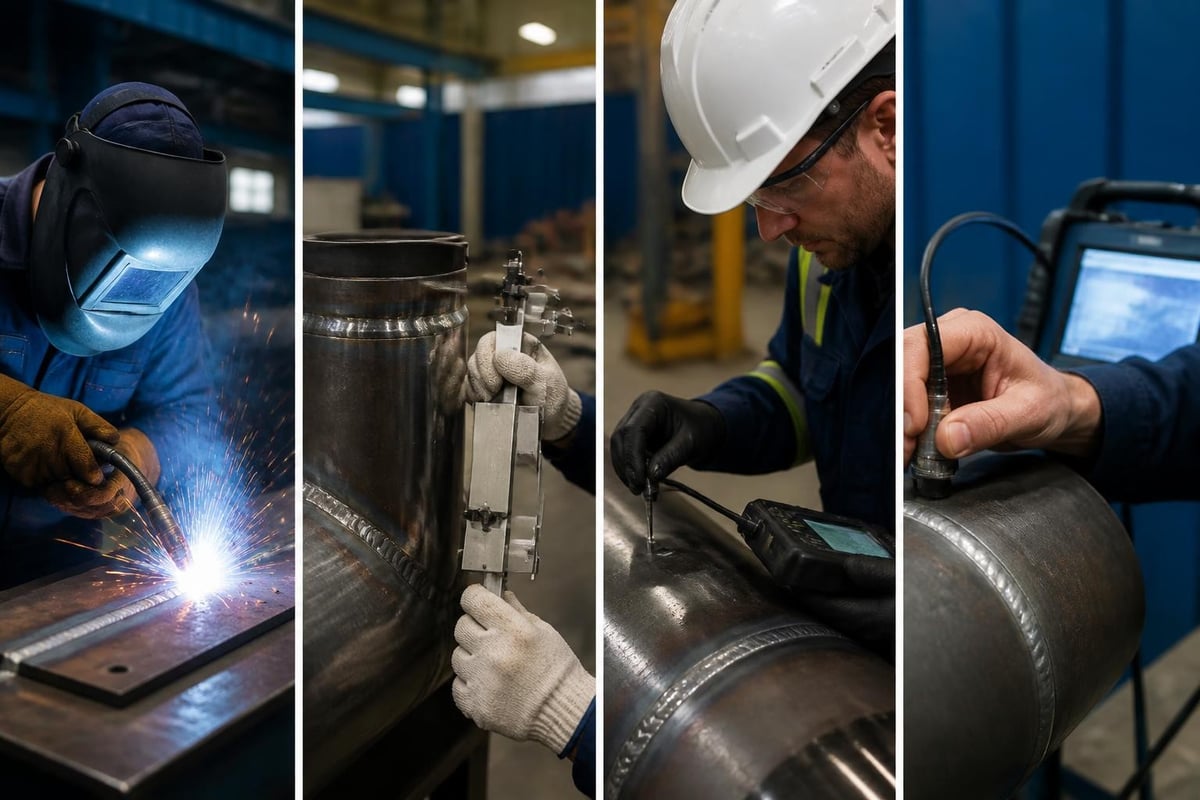
These certifications represent minimum thresholds for professional operations. The best welding and fabrication company partners exceed baseline requirements, pursuing additional certifications that demonstrate specialized expertise relevant to your industry.
Shop Capabilities versus Field Services
Understanding when to utilize shop fabrication versus field welding optimizes project costs and timelines. Each approach offers distinct advantages depending on project scope, location, and complexity.
Shop Fabrication Advantages
Controlled environment conditions allow for:
-
Precision Machining Integration: Direct access to mills, lathes, and CNC equipment enables tight tolerances that field work cannot achieve. Metal processing capabilities in a dedicated facility ensure dimensional accuracy.
-
Quality Control: Overhead cranes, positioning equipment, and proper ventilation create ideal welding conditions. Inspect work from all angles before delivery.
-
Efficiency: Multiple craftspeople work simultaneously on different project aspects, accelerating completion timelines significantly compared to sequential field work.
-
Testing Capabilities: Perform hydrostatic pressure tests, load testing, and comprehensive inspections before installation.
Field Service Strengths
On-site work becomes necessary when:
Size Constraints: Components too large to transport economically or safely require fabrication and assembly at the installation location.
Operational Continuity: Equipment that cannot be removed from service benefits from repairs performed during scheduled maintenance windows.
Installation Requirements: Final fit-up and connection to existing systems often demands field welding to accommodate as-built conditions.
Emergency Response: Equipment failures requiring immediate attention cannot wait for shop scheduling and transportation logistics.
The most versatile welding and fabrication company maintains robust capabilities in both environments, deploying the right resources to match your project requirements.
Project Planning and Execution
Successful fabrication projects begin long before the first arc strikes. A systematic approach to planning, communication, and execution separates smooth deliveries from problematic installations.
Initial Consultation and Engineering
The discovery phase establishes project parameters:
-
Requirements Gathering: Define functional specifications, operating environment, load conditions, and integration points with existing systems.
-
Material Selection: Balance performance requirements against budget constraints, considering initial costs, maintenance needs, and expected service life.
-
Design Development: Create detailed drawings that communicate intent to fabricators while allowing for constructability input from experienced welders and machinists.
-
Value Engineering: Identify opportunities to reduce costs without compromising performance through alternative materials, simplified designs, or manufacturing process optimization.
-
Timeline Development: Establish realistic schedules accounting for material procurement, shop workload, and installation coordination.
| Project Phase | Duration Range | Key Activities |
|---|---|---|
| Engineering & Design | 1-3 weeks | Drawings, calculations, approvals |
| Material Procurement | 2-6 weeks | Sourcing, delivery, inspection |
| Fabrication | 1-8 weeks | Cutting, welding, machining, assembly |
| Quality Assurance | Concurrent | Testing, inspection, documentation |
| Delivery & Installation | 1-2 weeks | Transport, field work, commissioning |
Fabrication and Quality Control
Once materials arrive, systematic fabrication processes ensure consistent results. Metal fabrication services incorporate multiple quality checkpoints throughout production rather than relying solely on final inspection.
Modern welding and fabrication companies increasingly adopt digital tools for quality management. As discussed in analysis of metal fabrication in 2026, technology integration streamlines documentation, improves traceability, and enhances communication between shop and field personnel.
Cost Considerations and Budget Planning
Transparent pricing requires understanding the factors that influence welding and fabrication company quotes. Breaking down cost components helps you evaluate proposals and identify opportunities for optimization.
Price-Influencing Factors
Labor Rates:
- Skill level required (apprentice, journeyman, master craftsman)
- Process complexity (basic MIG versus exotic material TIG)
- Shop work versus field deployment premiums
- Overtime or expedited schedule requirements
Material Costs:
- Base metal pricing (market-driven commodity rates)
- Filler materials, gases, and consumables
- Protective coatings and finishes
- Material handling and storage
Equipment and Overhead:
- Specialized tooling or fixture fabrication
- Crane time and material handling
- Testing and inspection services
- Engineering and design support
Project Complexity:
- Tight tolerances requiring multiple setups
- Difficult positions or access limitations
- Code compliance and documentation requirements
- Multi-location coordination
Smart procurement involves requesting detailed breakdowns rather than lump-sum quotes. This transparency allows you to make informed decisions about specification changes that might reduce costs without compromising essential performance.
Workforce Challenges and Solutions
The welding and fabrication industry faces significant workforce pressures in 2026. Understanding how your chosen welding and fabrication company addresses these challenges provides insight into their long-term viability and service consistency.
The Skilled Labor Shortage
Research examining where the welders are reveals persistent gaps between demand and available qualified personnel. Companies combating this shortage invest in:
- Apprenticeship Programs: Structured training that develops skills while providing productive labor
- Competitive Compensation: Benefits packages that attract and retain top talent
- Continuing Education: Certification courses and advanced training opportunities
- Technology Adoption: Automation and assisted welding systems that enhance productivity without replacing craftspeople
- Career Pathways: Clear advancement opportunities from entry-level to master craftsman and supervisory roles
A welding and fabrication company with low employee turnover typically delivers better quality and more consistent service than competitors constantly training new hires.
Technology Integration and Innovation
Advanced welding and fabrication companies leverage technology to improve quality, increase efficiency, and provide better customer service. The gap between technology leaders and laggards continues widening in 2026.
Modern Fabrication Technologies
Computer-Aided Design and Manufacturing:
- 3D modeling enables visualization before fabrication begins
- CNC plasma and laser cutting improve accuracy and reduce waste
- Automated nesting software optimizes material utilization
- Direct integration from design files to machine tools eliminates transcription errors
Welding Process Advancements:
- Digital welding systems provide real-time parameter monitoring and adjustment
- Pulsed MIG and advanced TIG technologies improve penetration and reduce distortion
- Collaborative robots assist with repetitive welds while human welders handle complex joints
- Remote monitoring enables quality oversight across multiple work locations
Quality Assurance Innovation:
- Digital radiography provides immediate inspection results
- Phased array ultrasonic testing detects subsurface defects with superior resolution
- 3D scanning verifies dimensional accuracy of completed assemblies
- Cloud-based documentation systems ensure traceability and accessibility
These capabilities transform how a welding and fabrication company operates, delivering faster turnarounds, better quality, and improved communication throughout project execution.
Safety Protocols and Environmental Responsibility
Professional welding and fabrication operations prioritize worker safety and environmental stewardship. These commitments protect employees while demonstrating the organizational discipline that translates to quality workmanship.
Comprehensive Safety Programs
Effective safety management includes:
-
Hazard Assessment: Identify risks specific to each project and implement appropriate controls before work begins.
-
Personal Protective Equipment: Provide and enforce use of appropriate respiratory protection, eye protection, protective clothing, and hearing conservation.
-
Ventilation Systems: Maintain adequate fume extraction in shop environments and portable ventilation for field work.
-
Equipment Maintenance: Regular inspection and calibration of welding machines, cutting equipment, and material handling devices.
-
Training and Certification: Ongoing safety education beyond initial OSHA requirements, including specific hazard recognition for unique materials and processes.
-
Incident Investigation: Root cause analysis of near-misses and accidents to prevent recurrence.
Environmental Considerations
Responsible operations manage:
- Waste Minimization: Material optimization and scrap recycling programs
- Emissions Control: Proper fume extraction and filtration systems
- Chemical Management: Safe handling and disposal of cutting fluids, solvents, and coatings
- Energy Efficiency: Equipment selection and operating practices that reduce power consumption
- Water Conservation: Closed-loop cooling systems and water recycling where applicable
Companies demonstrating strong safety records and environmental responsibility typically exhibit the same attention to detail in their fabrication work.
Selecting the Right Partner
Choosing a welding and fabrication company represents a strategic decision that affects project outcomes, total costs, and long-term operational capabilities. Systematic evaluation ensures you identify the best fit for your specific requirements.
Evaluation Criteria
Technical Capabilities:
- Range of welding processes and material expertise
- Machining and fabrication equipment capacity
- Field service coverage area and response times
- Engineering and design support availability
Quality Systems:
- Relevant certifications and accreditations
- Inspection and testing capabilities
- Documentation and traceability practices
- Quality metrics and performance history
Experience and References:
- Track record in your specific industry
- Similar project examples and case studies
- Client references and testimonials
- Years in business and financial stability
Communication and Responsiveness:
- Initial contact handling and proposal turnaround
- Project management approach and reporting frequency
- Problem-solving philosophy and escalation procedures
- Technology platforms for collaboration and updates
Value Proposition:
- Competitive pricing relative to scope and quality
- Value engineering suggestions demonstrating cost awareness
- Flexibility in scheduling and service delivery
- Long-term partnership potential versus transactional approach
The ideal welding and fabrication company balances technical excellence with responsive service and competitive pricing, creating partnerships that extend beyond individual projects.
Regional Considerations for Western United States Operations
Industrial operations across the Western United States face unique challenges that influence welding and fabrication company selection. Geography, climate, and industry concentrations create specific service requirements.
Distance and Logistics
The vast distances between facilities in states like Colorado, Wyoming, Utah, and New Mexico make local or regional partnerships valuable:
- Response Time: Proximity enables faster emergency response when equipment failures threaten production schedules
- Freight Costs: Shorter transportation distances reduce delivery costs for completed fabrications
- Site Familiarity: Regional providers understand local conditions, building codes, and industry practices
- Relationship Development: Face-to-face interactions build stronger partnerships than purely remote relationships
Climate and Environmental Factors
Western operations contend with:
- Altitude Effects: High-elevation locations affect welding parameters, requiring experienced operators who understand necessary adjustments
- Temperature Extremes: Field welding in sub-zero winter conditions or summer heat demands appropriate procedures and preheating protocols
- Arid Environments: Dust control becomes critical for welding quality and worker health
- Remote Locations: Self-sufficient field crews with comprehensive equipment and backup systems ensure project continuity
Industry Concentrations
The Western United States hosts significant concentrations of industries requiring specialized welding and fabrication expertise:
Energy Sector: Oil and gas operations throughout Wyoming, Colorado, and New Mexico demand code-compliant pressure vessel work and pipeline expertise.
Mining and Aggregates: Quarries and processing facilities need heavy-duty equipment capable of withstanding extreme abrasion and impact.
Agriculture: Large-scale farming and ranching operations require custom equipment modifications and repair capabilities.
Recreation and Tourism: Ski resorts and outdoor recreation facilities need specialized lifts, structures, and equipment maintenance.
A welding and fabrication company with deep regional roots understands these industry nuances and maintains relationships with complementary service providers for comprehensive project support.
Successful industrial operations depend on reliable partners who deliver quality metalwork, responsive service, and comprehensive capabilities across both shop and field environments. Whether you need emergency equipment repairs, custom fabrication projects, or ongoing maintenance support throughout the Western United States, choosing a partner with proven expertise in your specific industry ensures optimal outcomes. LTJ Industrial Services combines decades of welding, fabrication, and machining experience with a commitment to quality and customer service, supporting the recycling, aggregate, oil and gas, and manufacturing sectors from our Rifle, Colorado facility. LTJ Industrial Services stands ready to discuss your project requirements and demonstrate how our comprehensive capabilities can support your operational goals.