Selecting the right welding company can make or break your industrial operations. Whether you're managing a recycling facility, aggregate processing plant, or oil and gas operation, the quality of your welding services directly impacts equipment reliability, production uptime, and worker safety. In 2026, industrial sectors throughout the Western United States face increasing demands for precision fabrication, rapid field repairs, and custom metalworking solutions that keep operations running smoothly. Understanding what separates exceptional welding providers from average contractors helps you make informed decisions that protect your bottom line and maintain competitive advantages in demanding markets.
What Sets Professional Welding Companies Apart
Professional welding companies distinguish themselves through comprehensive certifications, advanced equipment capabilities, and proven track records across multiple industrial applications. The difference between basic welding services and professional-grade solutions becomes apparent when examining the complexity of modern industrial requirements.
Industry Certifications and Compliance Standards
Legitimate welding companies maintain current certifications that demonstrate their commitment to quality and safety. The American Welding Society (AWS) provides over 350 standards covering welding practices and procedures, including structural welding codes that engineers reference when designing fabrications.
Key certifications to verify:
- AWS Certified Welding Inspector (CWI) credentials
- ASME pressure vessel qualifications
- API 1104 pipeline welding certifications
- State-specific contractor licenses
- ISO quality management certifications
These credentials ensure your welding company follows established protocols that protect structural integrity and worker safety. Beyond basic certifications, top providers invest in continuous training programs that keep welders current with emerging technologies and evolving industry standards.
Equipment Capabilities and Technical Resources
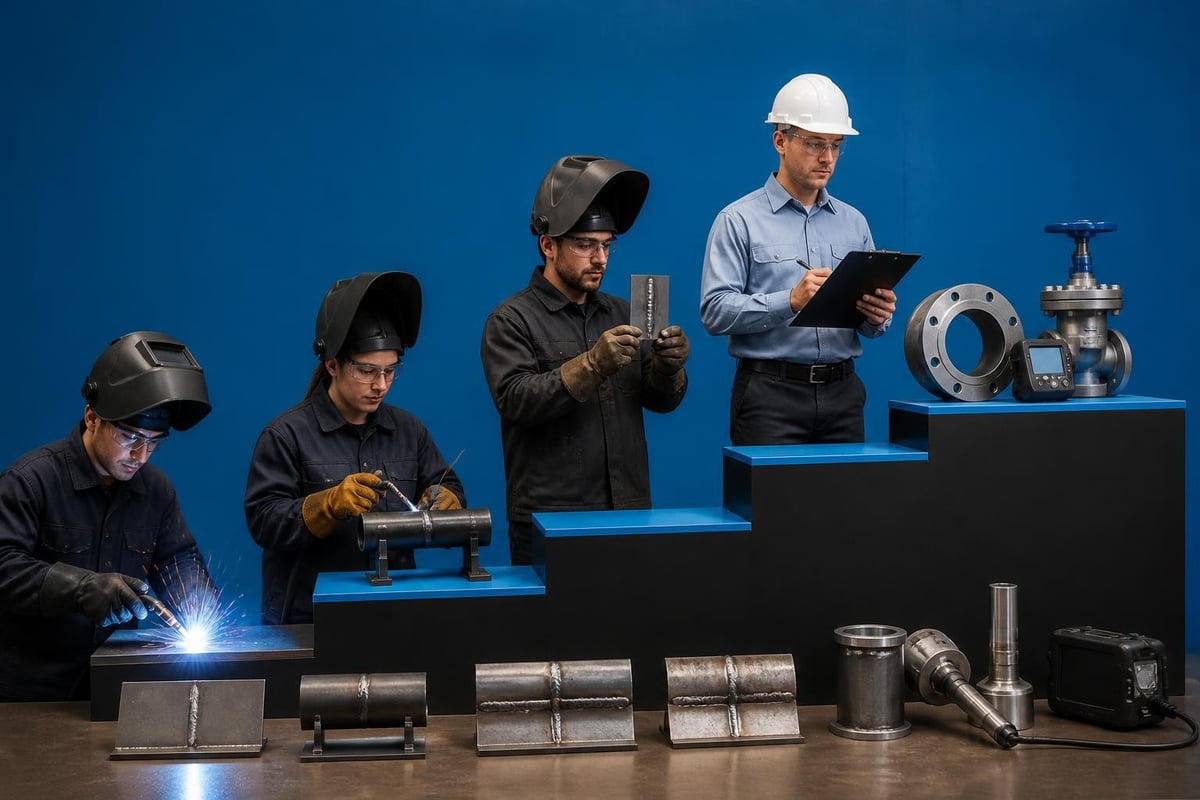
Modern industrial applications demand sophisticated equipment that goes beyond basic stick welders. A full-service welding company equips its team with multiple welding processes to handle diverse material requirements and job specifications.
| Welding Process | Primary Applications | Material Compatibility |
|---|---|---|
| SMAW (Stick) | Field repairs, structural steel | Carbon steel, stainless steel |
| GMAW (MIG) | Production fabrication, sheet metal | Aluminum, mild steel, stainless |
| GTAW (TIG) | Precision work, thin materials | Exotic alloys, aluminum, stainless |
| FCAW (Flux-Core) | Heavy structural, outdoor work | Carbon steel, low-alloy steel |
| Submerged Arc | Heavy plate, pressure vessels | Carbon steel, high-strength alloys |
The right equipment selection depends on material thickness, joint configuration, position requirements, and quality specifications. Companies serving recycling and aggregate industries frequently encounter worn components requiring specialized hard-facing techniques, while oil and gas applications demand pipeline-qualified welders using specific procedures.
Core Services Offered by Industrial Welding Companies
A comprehensive welding company provides integrated services that address the full spectrum of industrial metalworking needs. This multifaceted approach eliminates coordination headaches by consolidating fabrication, repair, and machining services under one provider.
Custom Metal Fabrication and Design
Custom fabrication transforms raw materials into finished components that meet exact specifications. This process begins with engineering consultations where fabricators review blueprints, assess material requirements, and identify potential manufacturing challenges before cutting the first piece of metal.
Fabrication capabilities typically include:
- Reading and interpreting technical drawings to ensure dimensional accuracy
- Material selection and procurement based on strength, corrosion resistance, and budget considerations
- Precision cutting using plasma, laser, or waterjet technologies for clean edges and minimal waste
- Forming and bending operations that shape metal without compromising structural properties
- Assembly and welding sequences that prevent distortion and maintain tolerances
- Quality inspection and testing to verify specifications before delivery
The fabrication process requires coordination between welders, machinists, and quality control personnel. Projects range from simple brackets and supports to complex pressure vessels and processing equipment that must withstand extreme operating conditions.
Field Welding and On-Site Repairs
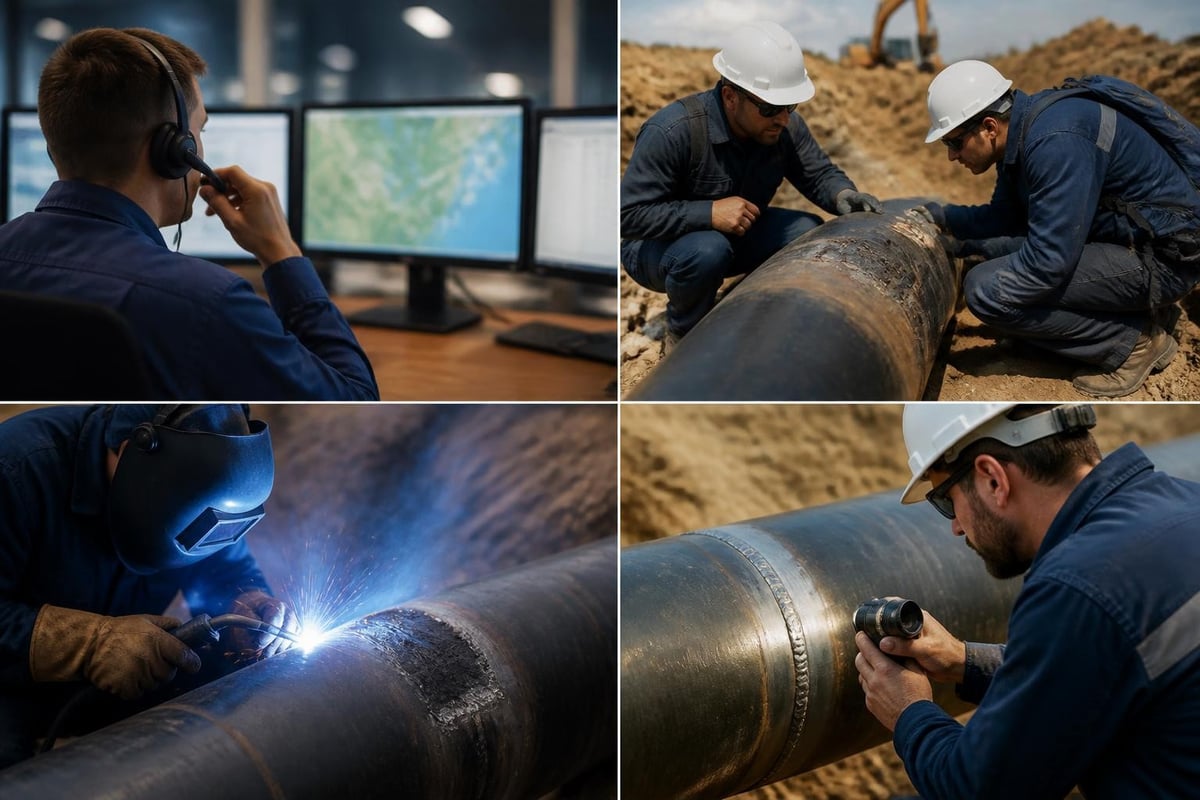
Production delays cost industrial operations thousands of dollars per hour, making rapid field response a critical service. A responsive welding company deploys certified welders to your location with mobile equipment capable of handling emergency repairs and routine maintenance.
Field services address challenges that cannot wait for shop repairs. Broken conveyor components, cracked structural supports, and damaged processing equipment require immediate attention to prevent extended downtime. OSHA outlines specific standards for welding, cutting, and brazing that field welders must follow to maintain safe work environments at industrial sites.
Field welding advantages:
- Eliminates transportation costs for large or installed components
- Reduces downtime by bringing services to your operation
- Allows repairs on equipment that cannot be shut down completely
- Provides flexibility for projects with changing scope requirements
Experienced field welders adapt to challenging positions, weather conditions, and limited access situations that would stop less qualified contractors. This adaptability proves invaluable when dealing with unexpected failures in remote locations or confined spaces.
Machining and Precision Component Manufacturing
Welding companies that integrate machining services offer complete solutions for complex projects requiring both joined assemblies and precision-machined features. CNC machining capabilities complement welding by providing accurate bore sizes, threaded connections, and tight-tolerance surfaces that welding alone cannot achieve.
Machining services include turning, milling, drilling, and grinding operations performed on raw stock or welded assemblies. A shaft repair might involve building up worn diameters with specialized welding wire, then machining the surface back to original specifications with tolerances measured in thousandths of an inch.
This integrated approach benefits industries like aggregate processing, where crusher components endure constant abrasion. Rather than replacing expensive parts, skilled technicians rebuild worn areas through hard-facing and precision machining, extending component life at a fraction of replacement costs.
Industry-Specific Applications and Solutions
Different industrial sectors present unique welding challenges that require specialized knowledge and proven methodologies. A versatile welding company develops expertise across multiple industries while maintaining the flexibility to address sector-specific requirements.
Recycling Industry Requirements
Recycling facilities process diverse materials that create demanding conditions for equipment. Shredders, balers, and sorting conveyors face constant impact, abrasion, and material buildup that leads to component wear and structural failures.
Welding solutions for recycling operations focus on:
- Wear-resistant overlays that extend component life in abrasive environments
- Structural reinforcements for equipment handling heavy impact loads
- Custom fabrication of sorting screens, chutes, and material handling systems
- Rapid repair turnaround to minimize processing interruptions
The key challenge involves selecting filler metals and welding procedures that bond dissimilar materials while maintaining properties like hardness and impact resistance. Recycling equipment often combines high-carbon wear plates with structural steel supports, requiring careful preheating and controlled cooling to prevent cracking.
Aggregate and Mining Applications
Aggregate processing plants crush, screen, and wash millions of tons of rock annually. This constant material flow wears crusher liners, conveyor components, and screen decks at predictable intervals, creating scheduled maintenance windows where welding companies must work efficiently.
| Component | Common Failure Mode | Repair Strategy |
|---|---|---|
| Crusher Jaws | Abrasive wear, cracking | Hard-facing with chromium carbide overlays |
| Conveyor Idlers | Bearing failures, shaft wear | Precision machining and bearing replacement |
| Screen Decks | Wire breakage, frame cracks | Structural repairs and wire replacement |
| Chute Liners | Through-wall wear | Plate replacement with AR steel |
AWS Welding Digest discusses strategies for welding professionals to enhance efficiency amid economic pressures, emphasizing workforce training and technology integration that directly benefit aggregate operations managing tight maintenance schedules.
Oil and Gas Sector Demands
Oil and gas operations require welding companies with pipeline qualifications, pressure vessel certifications, and proven reliability in critical applications. A single weld failure in production equipment or pipeline infrastructure can result in environmental disasters, regulatory penalties, and extended shutdowns.
Critical considerations include:
- Material traceability documentation for all components and filler metals
- Non-destructive testing requirements including radiography and ultrasonic inspection
- Procedure qualification records specific to materials, thicknesses, and positions
- Strict adherence to API, ASME, and DOT regulations governing pressure equipment
- Background checks and drug screening programs for personnel working on sensitive sites
The stakes in oil and gas applications demand welding companies that prioritize documentation, quality control, and regulatory compliance. This sector cannot accept shortcuts or approximations that might prove acceptable in less critical applications.
Evaluating and Selecting the Right Welding Company
Making informed selection decisions requires systematic evaluation of potential welding partners. The cheapest bid rarely delivers the best long-term value when considering quality, reliability, and total project costs.
Essential Questions to Ask Potential Providers
Direct questioning reveals capabilities and limitations that marketing materials often obscure. Schedule site visits to welding shops and ask pointed questions about equipment, personnel, and project experience.
Critical evaluation questions:
- What certifications do your welders maintain, and how often do they re-certify?
- Can you provide references from companies in our specific industry?
- What quality control procedures verify work before delivery or final inspection?
- How do you handle emergency field service requests outside normal business hours?
- What insurance coverage protects against property damage and work-related injuries?
- Do you maintain backup equipment to prevent project delays from equipment failures?
- What is your typical turnaround time for projects similar to our requirements?
Responses to these questions separate serious professionals from contractors operating at the margins of competence and compliance.
Quality Assurance and Testing Protocols
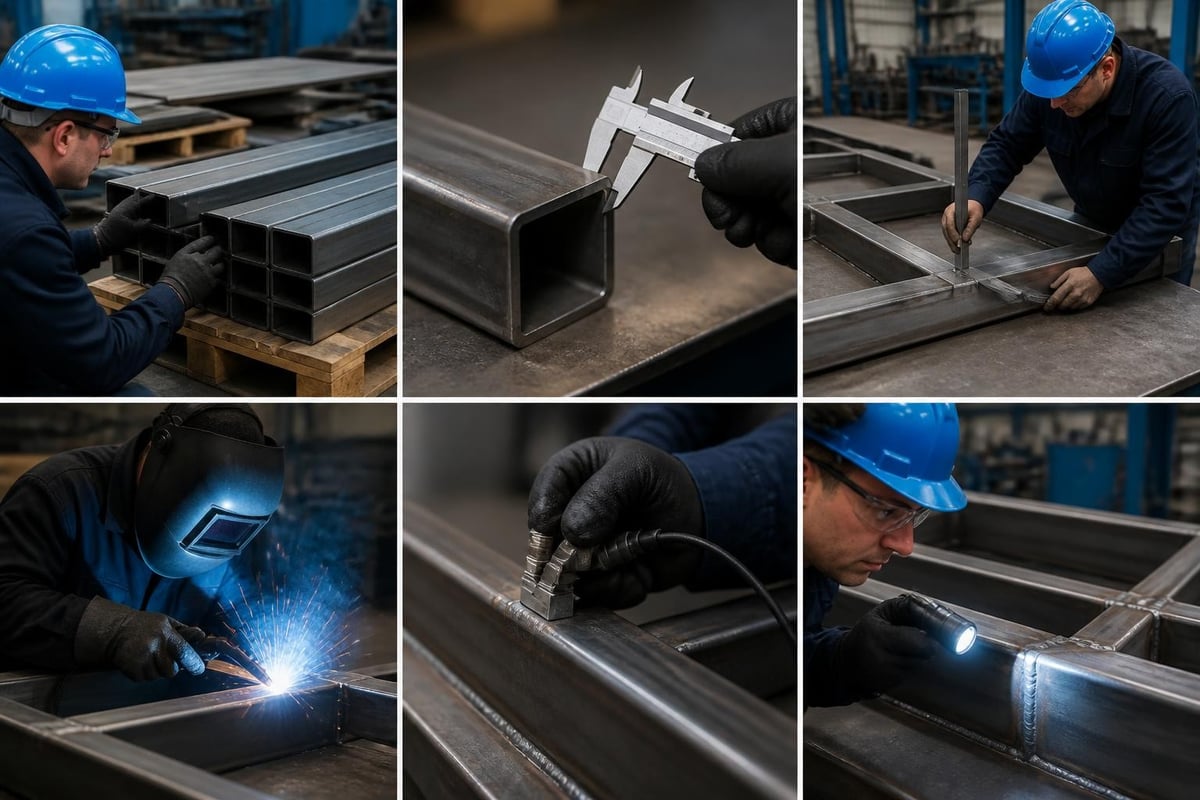
Reputable welding companies implement multi-stage quality programs that catch defects before they reach customers. Visual inspection represents the minimum acceptable standard, but critical applications demand more rigorous verification methods.
Quality protocols should include:
- Pre-weld inspection of materials, joint preparation, and fit-up accuracy
- In-process monitoring of welding parameters, sequence, and technique
- Post-weld visual examination for surface defects and dimensional compliance
- Non-destructive testing using appropriate methods for the application
- Documentation packages with material certifications, procedure references, and inspection reports
Understanding these quality measures helps you evaluate whether a welding company's standards align with your quality expectations and regulatory requirements.
Pricing Structures and Value Assessment
Welding company pricing varies based on project complexity, material costs, and urgency requirements. Understanding common pricing models helps you compare quotes fairly and identify unrealistic bids that signal potential problems.
Common pricing approaches:
- Time and materials billing for field repairs and projects with uncertain scope
- Fixed-price quotations for well-defined fabrication projects with detailed specifications
- Unit pricing for repetitive components manufactured in production quantities
- Retainer agreements providing priority service and predictable costs for ongoing maintenance
The lowest price often comes with hidden costs like rework, delays, and quality compromises. Value-focused evaluation considers total project costs including downtime, warranty coverage, and long-term component performance rather than just initial invoices.
Maintaining Productive Partnerships with Your Welding Company
Successful relationships between industrial clients and welding providers require clear communication, realistic expectations, and mutual respect for each party's expertise and constraints.
Communication and Project Planning
Detailed project specifications prevent misunderstandings that lead to costly rework. Provide complete information about operating conditions, material preferences, dimensional tolerances, and quality requirements when requesting quotes or initiating projects.
Early involvement of your welding company in design discussions often identifies manufacturing efficiencies that reduce costs without compromising functionality. Welders and fabricators offer practical insights about joint accessibility, welding position limitations, and material selection that engineers may overlook during initial design phases.
Regular progress updates keep both parties aligned on schedule expectations and allow early identification of potential issues. For field work, coordinate access, utilities, and safety requirements well before crews arrive to prevent delays and confusion.
Safety Compliance and Site Coordination
Industrial welding operations present inherent hazards including burns, fume exposure, fire risks, and electrical shock. Professional welding companies arrive prepared with appropriate personal protective equipment, but site coordination ensures comprehensive safety coverage.
Responsibilities typically divide as follows:
| Safety Element | Client Responsibility | Welding Company Responsibility |
|---|---|---|
| Hot work permits | Issue permits, verify fire watch | Comply with permit conditions |
| Confined space entry | Test atmosphere, provide ventilation | Use appropriate respiratory protection |
| Lock-out/tag-out | Verify equipment isolation | Follow established LOTO procedures |
| Fall protection | Provide anchorage points | Supply harnesses and lanyards |
| Electrical safety | Ensure adequate, safe power sources | Use properly maintained welding equipment |
Joint pre-job safety meetings address site-specific hazards and establish emergency procedures before work begins. This collaborative approach protects workers and prevents incidents that shut down operations and expose both parties to liability.
Performance Monitoring and Continuous Improvement
Track welding company performance using objective metrics that identify trends and improvement opportunities. Monitoring quality, schedule adherence, and responsiveness helps you provide constructive feedback that strengthens the partnership.
Key performance indicators might include:
- Percentage of work accepted without rework or defects
- Average response time for emergency service requests
- On-time completion rate for scheduled projects
- Accuracy of initial cost estimates compared to final invoices
- Compliance with safety protocols and incident rates
Regular performance reviews create opportunities to discuss successes, address concerns, and align on future priorities. The best welding company partnerships evolve into strategic relationships where both parties invest in each other's success.
For businesses seeking qualified welding professionals, resources like US welders directories help identify certified providers across different regions and specializations.
Advanced Technologies Shaping Modern Welding Services
The welding industry continues evolving with technologies that improve quality, efficiency, and capabilities. Forward-thinking welding companies invest in these advancements to deliver superior results and competitive advantages to their clients.
Automation and Robotic Welding Systems
Robotic welding systems excel at repetitive tasks requiring consistent quality and high production volumes. While not suitable for all applications, automation delivers significant benefits for fabrication projects involving identical components or long production runs.
Automated systems provide:
- Consistent weld quality with minimal variation between pieces
- Higher deposition rates than manual welding for many applications
- Reduced labor costs on high-volume production projects
- Improved workplace safety by removing welders from hazardous positions
- Better material utilization through optimized weld parameters
The limitations of robotic welding include high initial setup costs, inflexibility for one-off projects, and inability to adapt to field conditions. Most welding companies maintain both automated and manual capabilities to address the full range of client requirements.
Digital Welding and Process Monitoring
Modern welding equipment incorporates digital controls and real-time monitoring that optimize parameters and document weld quality. These systems track voltage, amperage, wire feed speed, and travel speed throughout each weld, creating permanent records that verify compliance with welding procedures.
Digital advantages extend beyond documentation. Advanced systems automatically adjust parameters to compensate for variables like changing joint gaps, material thickness transitions, and position changes. This adaptive capability produces more consistent results than purely manual techniques while reducing the skill level required for certain applications.
Data collection capabilities support continuous improvement initiatives by identifying parameter drift, equipment degradation, and operator technique variations before they compromise weld quality.
Inspection Technologies and Defect Detection
Non-destructive testing methods continue advancing with digital radiography, phased-array ultrasonics, and automated defect recognition systems. These technologies detect internal flaws that visual inspection misses while reducing inspection time and radiation exposure.
Research initiatives like the Adapt-WeldNet framework for welding defect detection demonstrate how machine learning and adaptive algorithms enhance safety and reliability in welding operations. While primarily developed for maritime applications, these detection technologies show promise across industrial sectors requiring high-reliability welds.
Investment in advanced inspection equipment signals a welding company's commitment to quality verification and willingness to embrace emerging technologies that benefit clients through improved defect detection and reduced failure risks.
Partnering with the right welding company transforms maintenance challenges into competitive advantages through reliable repairs, quality fabrication, and responsive field service. Understanding certification requirements, service capabilities, and industry-specific expertise helps you identify providers who deliver lasting value rather than just low initial quotes. For comprehensive welding, fabrication, and machining solutions serving recycling, aggregate, and oil and gas operations throughout the Western United States, LTJ Industrial Services combines certified expertise with responsive service that keeps your operations running at peak performance.