
The landscape of us manufacturing has undergone significant transformation over the past decade, positioning American industry for a resurgence that continues to build momentum in 2026. From advanced machining capabilities to specialized welding and fabrication services, domestic manufacturing has evolved to meet the demands of modern commerce while maintaining the precision and quality that define American-made products. As companies throughout the Western United States and beyond seek reliable partners for their industrial needs, understanding the current state of manufacturing and the specialized services that support it becomes essential for business success.
The Current State of US Manufacturing in 2026
American manufacturing has experienced remarkable growth, driven by reshoring initiatives, technological advancement, and increased demand for domestically produced goods. The sector now employs over 13 million workers nationwide, with specialized trades like welding, machining, and fabrication seeing particularly strong demand.
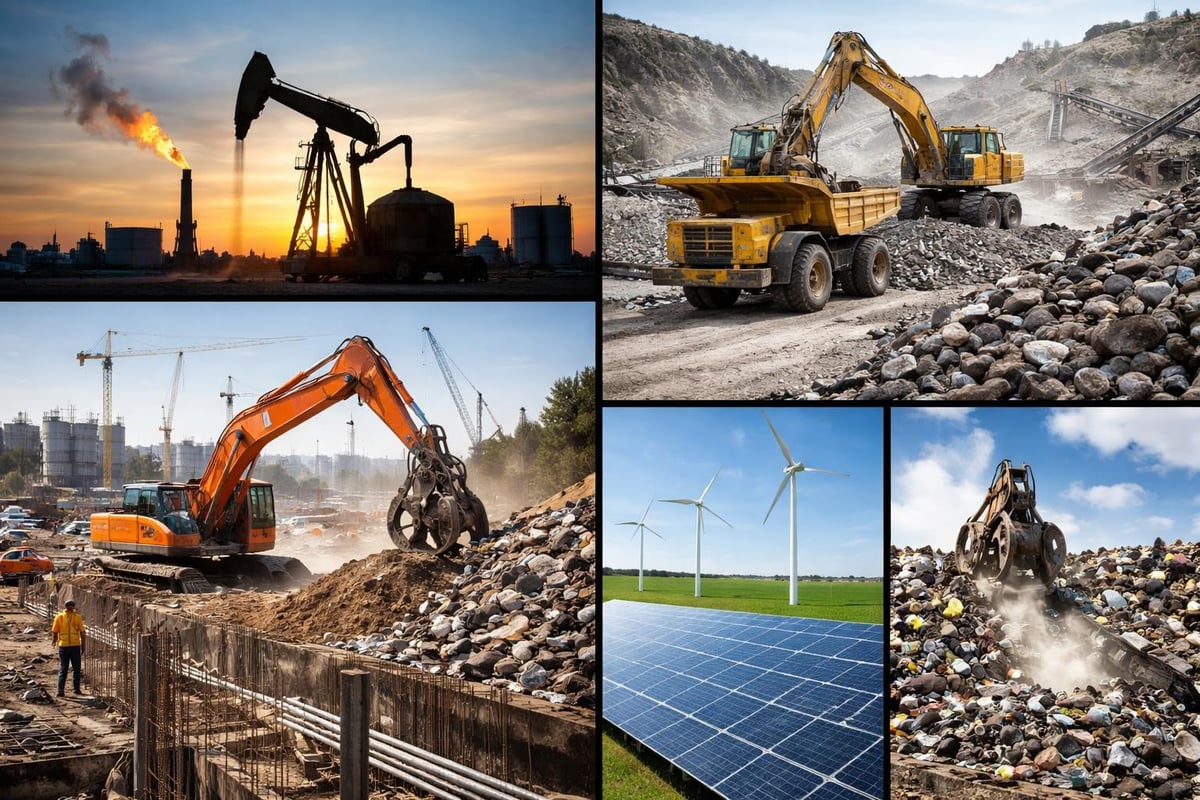
Key Industries Driving Manufacturing Growth
Several sectors have emerged as primary drivers of us manufacturing expansion:
- Oil and gas extraction and support services requiring specialized equipment fabrication
- Aggregate and mining operations demanding custom machinery maintenance
- Recycling and waste management industries needing robust processing equipment
- Construction and infrastructure projects utilizing fabricated metal components
- Renewable energy installations requiring precision-engineered components
The commercial and industrial sectors have particularly benefited from advanced manufacturing and machining capabilities that deliver both quality and efficiency. These industries require partners who understand the unique challenges of heavy industrial applications.
Regional Manufacturing Hubs
Manufacturing strength varies significantly across regions, with the Western United States demonstrating particular prowess in resource extraction, processing, and supporting industries. States like Colorado have become critical hubs for industrial services, offering proximity to major mining operations, energy production facilities, and transportation corridors.
The geographic distribution of manufacturing capabilities allows for responsive service delivery. Companies located in strategic regions can provide both shop-based fabrication and field services, ensuring minimal downtime for critical operations.
Critical Manufacturing Services Supporting Industrial Operations
Modern us manufacturing relies on specialized service providers who deliver precision work across multiple disciplines. These services form the backbone of industrial productivity, enabling companies to maintain equipment, fabricate custom components, and solve complex engineering challenges.
Metal Fabrication and Custom Welding
Metal fabrication remains one of the most essential manufacturing services, combining traditional craftsmanship with modern technology. Large-scale metal fabrication for construction projects requires expertise in materials science, structural engineering, and precision cutting and joining techniques.
Key fabrication capabilities include:
- Structural steel fabrication for buildings and industrial facilities
- Custom equipment frames and supports
- Process piping and pressure vessel fabrication
- Replacement parts for obsolete or damaged equipment
- Specialty alloy fabrication for corrosive environments
The welding processes supporting fabrication have advanced considerably, incorporating automated systems alongside traditional stick, MIG, and TIG welding techniques. Certified welders who understand metallurgy, heat treatment, and structural integrity requirements deliver welds that meet or exceed engineering specifications.
Precision Machining and CNC Operations
Computer numerical control (CNC) machining has revolutionized component manufacturing, allowing for tolerances measured in thousandths of an inch. Modern CNC machining job shops for heavy industry parts combine skilled machinists with advanced equipment to produce everything from simple bushings to complex multi-axis components.
| Machining Service | Typical Applications | Tolerance Range |
|---|---|---|
| CNC Milling | Flat surfaces, pockets, complex shapes | ±0.001" – ±0.005" |
| CNC Turning | Cylindrical parts, shafts, bushings | ±0.0005" – ±0.003" |
| Boring | Large diameter holes, bearing surfaces | ±0.001" – ±0.005" |
| Surface Grinding | Precision flat surfaces | ±0.0001" – ±0.001" |
The ability to reverse-engineer worn components and produce exact replacements has become particularly valuable as equipment ages and original manufacturers discontinue parts support.
Challenges Facing US Manufacturing Today
Despite growth and technological advancement, us manufacturing faces several persistent challenges that require innovative solutions and adaptable service providers.
Skilled Labor Shortage
The manufacturing skills gap continues to widen, with experienced welders, machinists, and fabricators in particularly high demand. Many companies struggle to find qualified personnel who combine technical knowledge with hands-on experience.
Addressing the workforce challenge requires:
- Apprenticeship programs connecting experienced tradespeople with new talent
- Competitive compensation packages that reflect skill value
- Investment in training and certification programs
- Partnerships with technical schools and community colleges
Companies that prioritize workforce development position themselves for long-term success, building teams capable of handling increasingly complex projects.
Supply Chain Resilience
Recent years have highlighted the importance of domestic supply chains and local manufacturing partnerships. Relying on distant suppliers or overseas fabrication introduces risks including extended lead times, quality control challenges, and transportation disruptions.
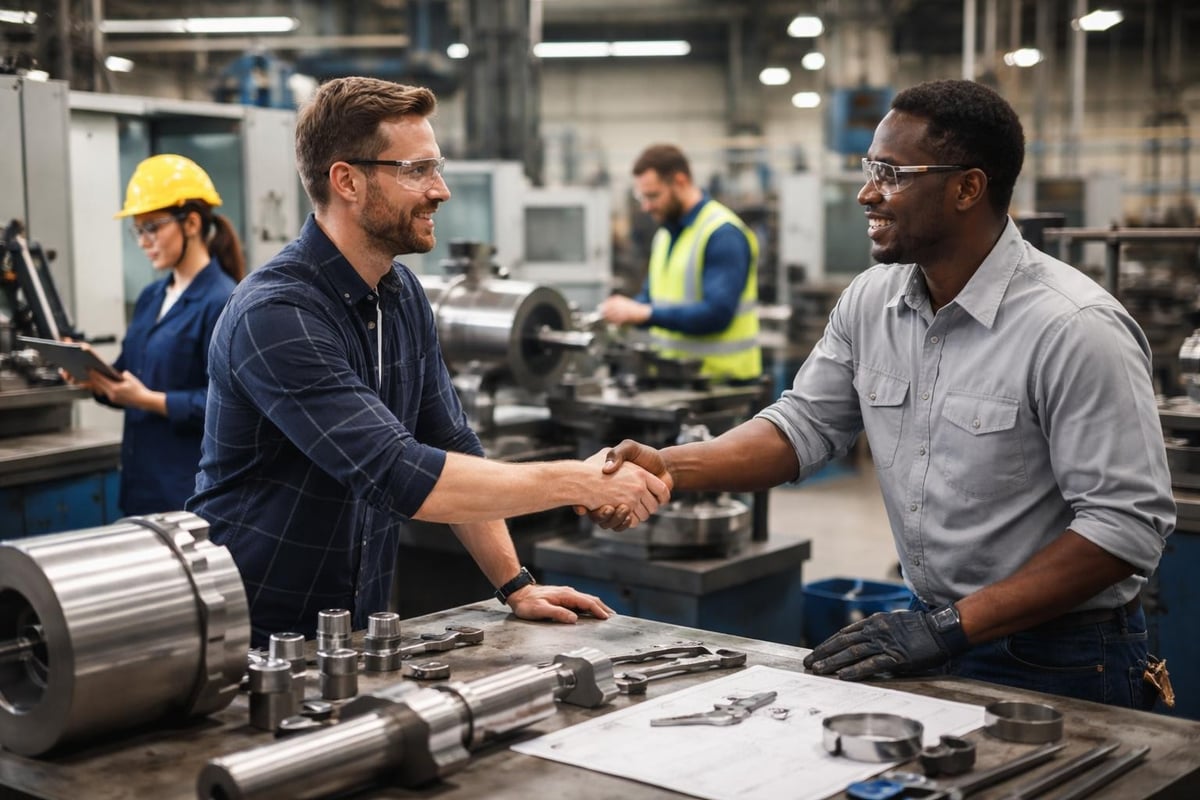
Smart manufacturers now diversify their supplier networks while prioritizing relationships with nearby service providers who can respond quickly to urgent needs. This approach proves particularly valuable for operations in remote locations or industries with minimal tolerance for downtime.
Equipment Maintenance and Longevity
Industrial equipment represents massive capital investment, making effective maintenance and refurbishment essential to profitability. Many facilities operate machinery decades old, requiring specialized knowledge for repair and modification.
Professional industrial machinery refurbishment and maintenance services extend equipment life, improve performance, and defer replacement costs. Field mechanics who can diagnose problems, fabricate solutions on-site, and perform repairs without extensive facility shutdowns deliver tremendous value.
Field Services: Bringing Manufacturing Capabilities to Your Location
While shop-based fabrication and machining provide controlled environments for precision work, field services have become equally important for modern industrial operations. The ability to bring welding, machining, and mechanical expertise directly to operational sites minimizes downtime and reduces transportation costs for large equipment.
On-Site Welding and Fabrication
Field welding services address repairs, modifications, and installations that cannot practically be performed in a shop environment. Whether repairing a cracked structural member on a processing plant, modifying conveyor systems without complete disassembly, or fabricating supports for new equipment installations, skilled field welders adapt to challenging conditions while maintaining quality standards.
Portable welding equipment now rivals shop capabilities, with inverter-based machines providing precise arc control and consistent performance across various processes. Mobile equipment allows welding businesses to tackle projects ranging from small repairs to major structural work without requiring facility shutdowns.
Portable Machining Solutions
Advances in portable machining technology enable field machinists to perform operations previously requiring equipment removal and transport to machine shops. Line boring equipment can resurface bearing housings on installed machinery. Portable mills can face flanges and machine mounting surfaces. Even cylindrical grinding can now be performed in place on certain applications.
Benefits of field machining include:
- Reduced equipment downtime and production losses
- Elimination of rigging and transportation costs
- Decreased risk of damage during equipment removal
- Faster project completion timelines
- Lower overall repair and maintenance costs
The combination of field and shop capabilities provides maximum flexibility, allowing service providers to recommend the most cost-effective approach for each unique situation.
Hydraulics and Specialized Industrial Systems
Hydraulic systems power countless industrial applications, from mobile equipment to stationary processing machinery. Understanding hydraulic theory, component selection, system design, and troubleshooting requires specialized expertise that complements traditional manufacturing skills.
Hydraulic System Design and Fabrication
Custom hydraulic systems require careful engineering to ensure adequate flow rates, pressure ratings, and filtration. Fabricating hydraulic manifolds, mounting brackets, and integrated control panels demands both machining precision and hydraulic knowledge.
| System Component | Design Consideration | Manufacturing Process |
|---|---|---|
| Manifolds | Flow paths, pressure drops | CNC drilling, milling |
| Cylinders | Bore size, stroke length | Turning, boring, honing |
| Mounting brackets | Load capacity, alignment | Fabrication, welding |
| Tubing assemblies | Routing, vibration isolation | Bending, flaring, fitting |
Professional hydraulic services combine component sourcing, system design, fabrication, installation, and maintenance into comprehensive solutions that maximize uptime and performance.
Water Jetting: Precision Cutting and Surface Preparation
Water jet technology has expanded beyond cutting applications to include surface preparation, concrete removal, and industrial cleaning. High-pressure water jetting provides environmentally friendly alternatives to chemical processes while achieving results impossible through conventional methods.
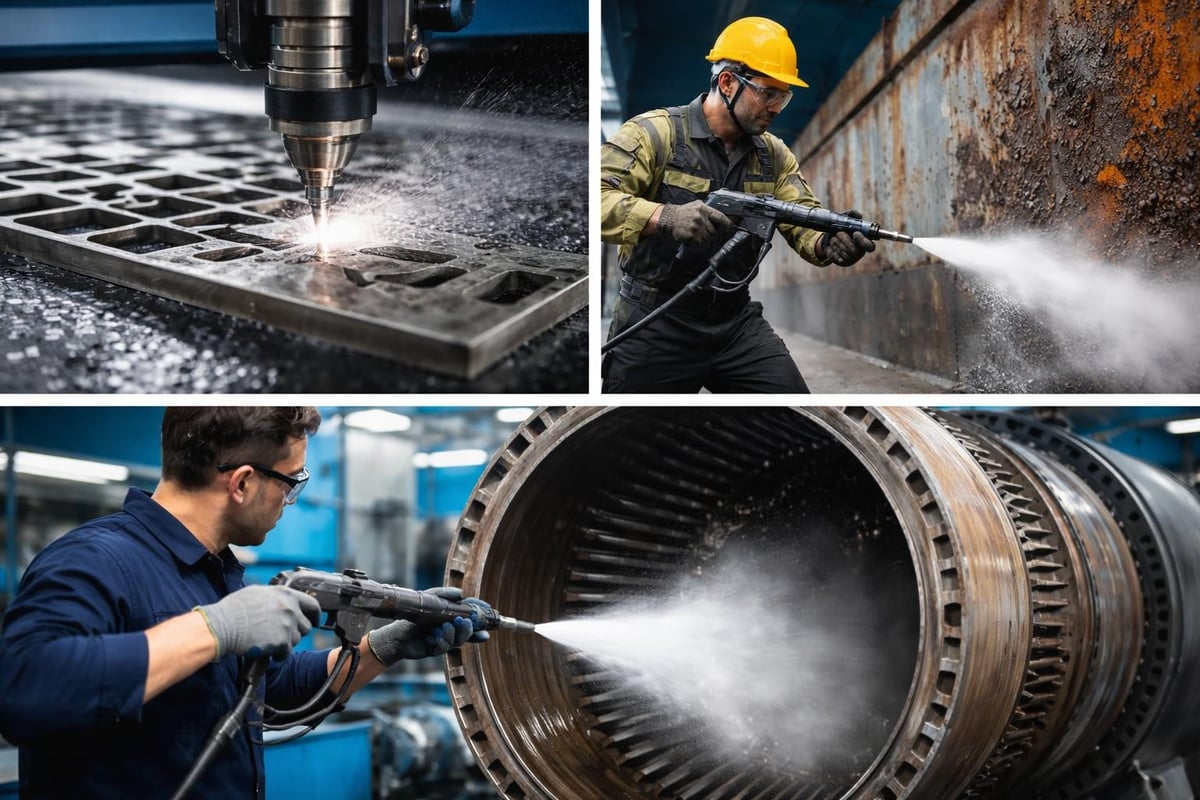
Ultra-high-pressure water jetting cuts through steel, concrete, and composite materials with minimal heat-affected zones, preserving material properties around cut edges. Lower pressure applications remove coatings, clean heat exchangers, and prepare surfaces for welding or coating without introducing contaminants.
Common water jetting applications:
- Cutting and piercing operations on thick materials
- Hydrodemolition for concrete repair and removal
- Heat exchanger and tube bundle cleaning
- Tank and vessel interior cleaning
- Coating and corrosion removal
- Pipe and conduit cleaning
The versatility of water jetting makes it valuable across industries, from oil and gas facilities to aggregate processing plants. Service providers with water jetting capabilities offer comprehensive solutions for diverse challenges.
Supporting Industries: The Manufacturing Ecosystem
Us manufacturing success depends on an ecosystem of supporting industries and service providers who enable primary manufacturers to focus on their core competencies. Even seemingly unrelated sectors play important roles in industrial operations.
Material handling represents one critical area where specialized suppliers contribute to manufacturing efficiency. For facilities managing raw materials, components, or finished goods, reliable material handling solutions prove essential. Companies like Pallet Company Pro support manufacturing operations by providing wooden and plastic pallets that facilitate storage and transportation throughout production processes.
Transportation, logistics, packaging, and warehousing similarly support manufacturing by ensuring materials reach facilities when needed and finished products reach customers efficiently. The integration of these supporting services with core manufacturing capabilities creates competitive advantages through reduced costs and improved responsiveness.
Quality Standards and Certifications in Manufacturing
Professional us manufacturing operations maintain rigorous quality standards, often certified through third-party organizations. These certifications provide customers confidence that work meets specified requirements and follows established best practices.
Common Manufacturing Certifications
- AWS (American Welding Society) certifications for welders and welding procedures
- ISO 9001 quality management system certification
- ASME pressure vessel and piping certifications
- API specifications for oil and gas industry equipment
- OSHA safety compliance and training certifications
Maintaining certifications requires ongoing investment in training, equipment, and quality control processes. Companies that prioritize certification demonstrate commitment to excellence and customer satisfaction.
Documentation and Traceability
Modern manufacturing demands comprehensive documentation tracking materials, processes, inspections, and testing. Traceability systems ensure that every component can be traced from raw material through fabrication, testing, and installation.
This documentation proves particularly important for industries with regulatory oversight or critical safety requirements. Proper records protect both manufacturers and customers, providing evidence of compliance and supporting troubleshooting should issues arise.
The Future of US Manufacturing: Trends and Opportunities
Looking forward, several trends will shape us manufacturing through the remainder of the decade and beyond. Understanding these developments helps businesses position themselves for success in an evolving industrial landscape.
Advanced Manufacturing Technologies
Additive manufacturing, robotics, and artificial intelligence continue advancing, though implementation in heavy industrial applications progresses more slowly than in consumer products. The reality for 2026 is that traditional skills remain essential, augmented by modern technologies rather than replaced by them.
Emerging technologies impacting manufacturing:
- Laser welding and cutting systems with improved precision
- Collaborative robots (cobots) assisting skilled workers
- Advanced sensors and predictive maintenance systems
- 3D scanning for reverse engineering and quality control
- Integrated ERP systems improving project management
Successful manufacturers balance technology adoption with core competency development, recognizing that machines enhance but don't replace skilled tradespeople.
Sustainability and Environmental Responsibility
Environmental considerations increasingly influence manufacturing decisions, from material selection to process efficiency. Water-based cutting, powder coating systems, and recyclable materials reduce environmental impact while often improving performance.
Companies that proactively address environmental concerns position themselves favorably with customers who face their own sustainability mandates. Demonstrating environmental responsibility through concrete practices rather than marketing claims builds credibility and trust.
Reshoring and Near-Shoring Initiatives
The movement of manufacturing back to North America or nearby countries continues gaining momentum. Companies recognize that cost savings from offshore production often disappear when accounting for quality issues, intellectual property risks, communication challenges, and supply chain vulnerabilities.
This trend creates opportunities for domestic manufacturers who deliver quality, responsiveness, and reliability. Industrial manufacturing companies that establish reputations for solving complex problems and meeting aggressive timelines position themselves to capture work previously sent overseas.
Selecting Manufacturing Partners: Key Considerations
Choosing the right manufacturing service provider significantly impacts project outcomes, costs, and timelines. Several factors deserve careful evaluation when establishing partnerships for fabrication, machining, welding, or field services.
Capabilities and Equipment
Verify that potential partners possess equipment, certifications, and expertise matching your requirements. A comprehensive service provider offers multiple complementary capabilities, reducing coordination complexity and improving accountability.
Experience in Relevant Industries
Manufacturing requirements vary significantly across industries. Partners with experience in your specific sector understand unique challenges, specifications, and expectations. Companies serving oil and gas operations, for example, recognize the criticality of uptime and the harsh environments equipment must withstand.
Response Time and Availability
For maintenance and repair work, response time directly impacts downtime costs. Partners offering emergency services, field capabilities, and flexible scheduling provide value beyond their technical work. The ability to mobilize quickly for urgent needs distinguishes exceptional service providers from average ones.
Quality Control and Testing
Understand how potential partners ensure quality, what testing equipment they maintain, and how they document work. Providers with comprehensive quality systems catch problems before they reach customers, saving time and money.
Geographic Proximity
While transportation expands service areas, proximity matters for field services, emergency response, and ongoing support. Regional partners understand local conditions, can mobilize quickly, and often provide more competitive pricing by reducing travel costs.
Maximizing Value from Manufacturing Services
Getting maximum value from manufacturing partnerships requires clear communication, realistic expectations, and collaborative problem-solving. The most successful projects result from genuine partnerships rather than transactional vendor relationships.
Detailed Specifications and Drawings
Provide complete, accurate specifications and drawings whenever possible. Ambiguity leads to assumptions, which lead to revisions, delays, and cost overruns. Investing time upfront defining requirements pays dividends throughout projects.
Early Involvement in Planning
Engaging manufacturing partners during design and planning phases leverages their practical experience. Experienced fabricators and machinists often identify opportunities for cost reduction, manufacturability improvements, or alternative approaches that better serve project goals.
Realistic Timeline Expectations
Quality work requires adequate time for engineering, material procurement, fabrication, and testing. Rushed schedules increase costs, compromise quality, and strain relationships. Planning ahead and providing reasonable timelines enable service providers to deliver optimal results.
Open Communication
Establish clear communication channels and maintain regular contact throughout projects. Addressing questions promptly, providing feedback, and discussing challenges openly prevents small issues from becoming major problems.
The strength of us manufacturing in 2026 reflects decades of adaptation, innovation, and commitment to quality that continues defining American industry. From advanced machining capabilities to specialized welding and field services, domestic manufacturers deliver the precision, reliability, and responsiveness that modern commerce demands. Whether you need custom fabrication, precision machining, hydraulic systems, or comprehensive field services, partnering with experienced professionals ensures your operations maintain the performance and uptime that drive business success. LTJ Industrial Services provides comprehensive manufacturing, welding, and machining solutions throughout the Western United States, delivering the expertise and responsiveness that keeps industrial operations running smoothly.