
The manufacturing landscape across the United States continues to evolve as industries demand higher precision, faster turnaround times, and more complex components. US machining stands at the forefront of this evolution, providing critical services that support commercial and industrial operations from coast to coast. From oil and gas facilities to recycling plants and aggregate operations, precision machining capabilities enable businesses to maintain operational excellence and meet increasingly stringent quality standards. Understanding the scope, capabilities, and strategic importance of domestic machining services helps decision-makers select the right partners for their manufacturing needs.
The Current State of US Machining Operations
American machining has undergone significant transformation over the past decade, driven by technological advancement and market demands. The integration of computer numerical control (CNC) technology, automation systems, and precision measurement tools has elevated capabilities across the sector.
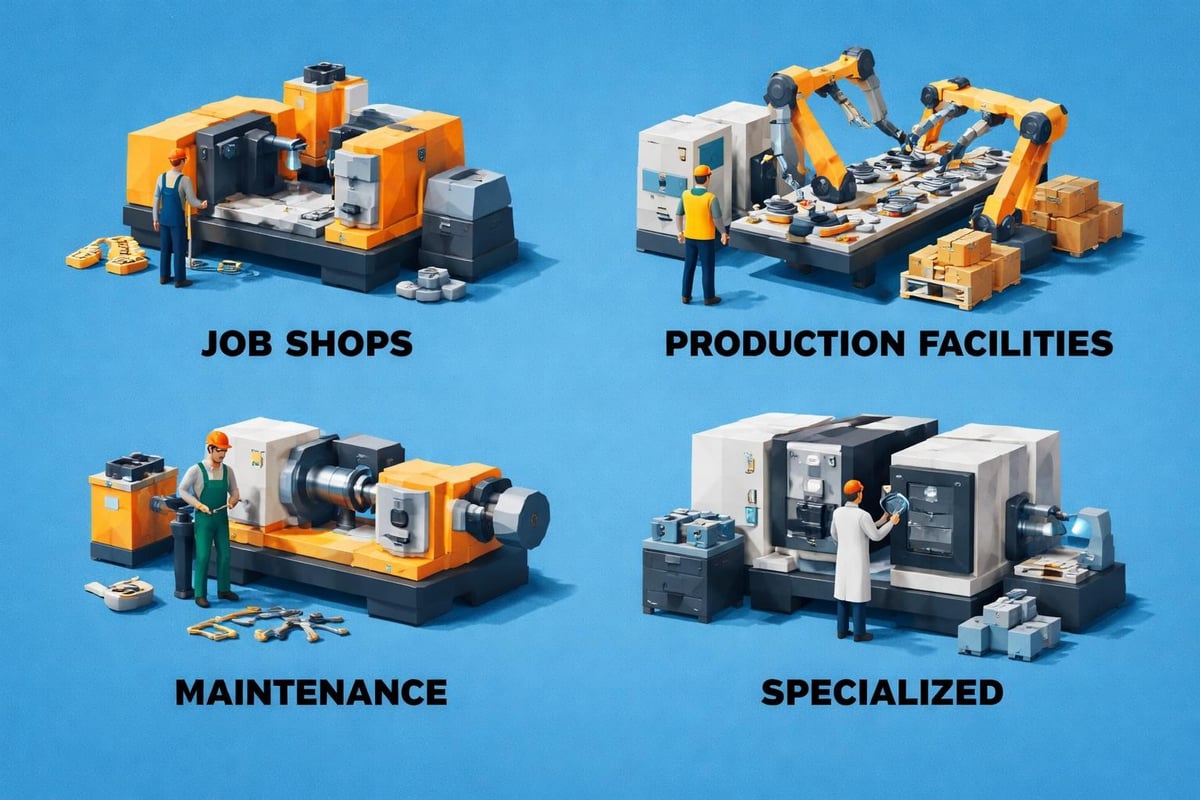
The domestic machining industry comprises several key segments:
- Job shops offering custom machining for diverse clients
- Production facilities focused on high-volume manufacturing
- Maintenance and repair operations supporting existing equipment
- Specialized providers serving niche industrial sectors
Regional concentrations of machining expertise have developed throughout the country, with the Western United States emerging as a critical hub for energy sector support. According to Industry Net’s analysis of top machining suppliers, the distribution of capabilities reflects both historical manufacturing centers and proximity to key industries requiring precision components.
Technology Adoption in American Facilities
Modern us machining operations leverage advanced technologies that were considered experimental just years ago. Multi-axis CNC machines now handle complex geometries that previously required multiple setups and manual intervention. Real-time monitoring systems track tool wear, dimensional accuracy, and production efficiency.
| Technology Category | Application | Industry Impact |
|---|---|---|
| 5-Axis CNC | Complex part geometries | Reduced setup time by 60-70% |
| Precision Measurement | Quality assurance | Tolerances to ±0.0001 inches |
| CAD/CAM Integration | Design to production | Faster prototype iterations |
| Tool Path Optimization | Efficiency improvement | 20-30% cycle time reduction |
The adoption rate varies significantly by facility size and specialization. Larger operations typically invest in cutting-edge equipment, while smaller shops focus on flexible, versatile machines that accommodate diverse project requirements.
Core Capabilities Defining US Machining Services
Precision machining encompasses a broad range of processes, each suited to specific materials, tolerances, and production volumes. Understanding these capabilities helps businesses identify appropriate solutions for their manufacturing challenges.
Turning and Milling Operations
Turning operations use rotating workpieces to create cylindrical parts, while milling employs rotating cutting tools against stationary materials. Both processes form the foundation of most machining work performed across industrial sectors.
Common turning applications include:
- Shafts and spindles for rotating equipment
- Bushings and sleeves for hydraulic systems
- Custom fasteners and threaded components
- Wear parts for aggregate processing machinery
Milling operations provide greater geometric flexibility, enabling the production of flat surfaces, slots, pockets, and complex three-dimensional forms. Modern machining centers combine both capabilities, switching between operations without removing the workpiece from the machine table.
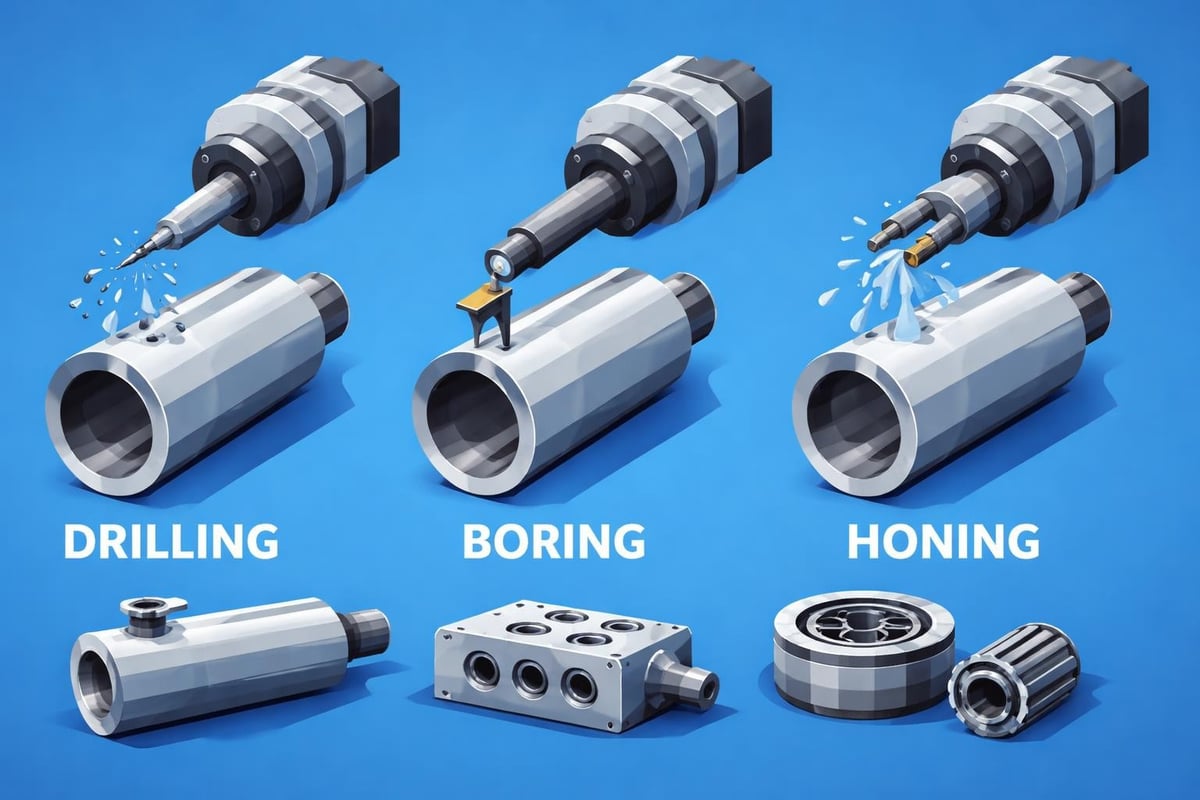
Drilling, Boring, and Honing
Hole-making represents a substantial portion of machining work in industrial applications. Precision drilling creates initial openings, while boring and honing refine dimensions and surface finishes to exact specifications.
The oil and gas sector relies heavily on these processes for valve bodies, manifold blocks, and hydraulic cylinders. Aggregate operations require precisely machined bearing bores in crusher components and conveyor assemblies. Research published in the International Journal of Machine Tools and Manufacture demonstrates how advanced boring techniques achieve remarkable accuracy in challenging materials.
Material Considerations in US Machining
Material selection significantly impacts machining approaches, tool requirements, and achievable tolerances. American fabrication and machining operations routinely work with diverse materials, each presenting unique challenges.
Ferrous Metals
Carbon steels, alloy steels, and stainless varieties constitute the majority of machined materials in industrial applications. Their abundance, cost-effectiveness, and well-understood properties make them ideal for structural components, wear parts, and pressure-containing equipment.
Machining considerations for ferrous materials:
- Tool selection based on material hardness and abrasiveness
- Cutting speeds optimized for heat management and tool life
- Coolant strategies to control chip formation and surface finish
- Work holding adequate for cutting forces and vibration control
Stainless steels demand particular attention due to work-hardening tendencies and heat retention during cutting. Specialized tooling and conservative parameters prevent premature tool failure and maintain dimensional accuracy.
Non-Ferrous and Specialty Alloys
Aluminum, brass, bronze, and exotic alloys serve applications requiring specific properties like corrosion resistance, electrical conductivity, or weight reduction. These materials generally machine more readily than ferrous metals but require different approaches.
| Material Type | Primary Benefits | Common Applications |
|---|---|---|
| Aluminum | Lightweight, corrosion resistant | Aerospace components, fluid handling |
| Brass/Bronze | Machinability, bearing properties | Bushings, valve components |
| Inconel | High-temperature strength | Oil & gas downhole equipment |
| Titanium | Strength-to-weight ratio | Performance applications |
The recycling industry frequently requires machining services for equipment handling various materials. Components must resist abrasion, impact, and sometimes corrosive conditions while maintaining precise tolerances for proper equipment function.
Quality Standards and Inspection Protocols
Quality assurance differentiates professional us machining operations from basic metal cutting services. Comprehensive inspection protocols verify dimensional accuracy, surface finish, and material integrity throughout production.
Measurement and Verification Methods
Coordinate measuring machines (CMMs) provide three-dimensional verification of complex geometries, recording actual dimensions against design specifications. Optical comparators magnify part profiles for visual inspection against templates. Surface roughness testers quantify finish quality in measurable terms.
Essential inspection tools in modern facilities:
- Micrometers and calipers for direct measurement
- Height gauges for vertical dimension verification
- Thread gauges for fastener and threaded hole inspection
- Hardness testers confirming material properties
Documentation accompanies precision work, providing traceability and verification that parts meet specified requirements. This documentation becomes critical when components serve safety-critical applications or regulated industries.
Industry Standards and Certifications
Various standards govern machining tolerances, surface finishes, and geometric dimensioning. ISO 2768 provides general tolerance specifications for linear and angular dimensions. ASME Y14.5 defines geometric dimensioning and tolerancing (GD&T) conventions widely used in American manufacturing.
According to Modern Machine Shop, adherence to these standards ensures consistent communication between designers, manufacturers, and quality inspectors. Facilities serving aerospace, medical, or energy sectors often maintain additional certifications demonstrating process control and quality management capabilities.
Custom Fabrication Integration
US machining services frequently integrate with broader fabrication capabilities, creating complete solutions rather than isolated components. This integration proves particularly valuable for industrial operations requiring both structural assemblies and precision machined elements.
Weldments Requiring Machined Features
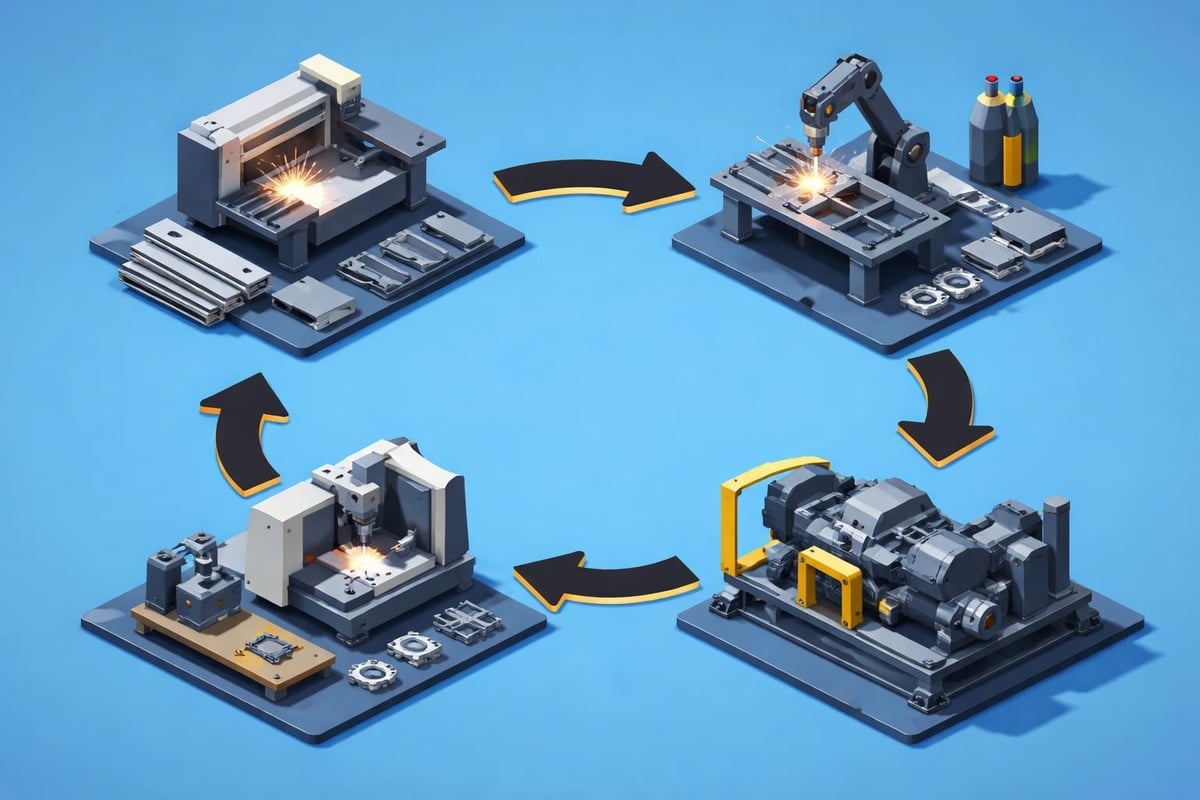
Large structural assemblies often incorporate machined surfaces, bores, or threaded holes that must align precisely with mating components. Welding introduces distortion and dimensional changes that machining operations correct in final processing stages.
The typical fabrication-to-machining workflow includes:
- Cutting raw materials to approximate dimensions
- Welding components into structural assemblies
- Stress-relieving heat treatment when required
- Machining critical surfaces and features to final specifications
- Final inspection and surface treatment
This integrated approach reduces lead times and ensures proper fit-up between components. Facilities offering both capabilities streamline communication and eliminate coordination challenges between separate vendors.
Field Service Capabilities
Industrial operations cannot always transport large equipment or assemblies to machining facilities. On-site machining services bring precision capabilities directly to the worksite, performing operations on installed equipment without disassembly or removal.
Portable line boring equipment machines bearing bores in frame structures. Flange facers restore sealing surfaces on piping systems. Rail-mounted mills traverse large beds and tables that cannot fit through shop doors. These field capabilities minimize downtime and reduce the logistical complexity of major repairs.
Regional Advantages of Western US Operations
The Western United States offers distinct advantages for industrial machining services, combining proximity to key industries with established manufacturing infrastructure. This geographic positioning benefits companies operating throughout the region.
Energy Sector Support
Oil and gas operations concentrated throughout Wyoming, Colorado, Utah, and New Mexico require rapid response machining support. Equipment failures in extraction, processing, or transportation systems demand quick turnaround repairs to minimize production losses.
Regional machining providers understand the specific requirements of energy sector equipment. They stock appropriate materials, maintain relevant expertise, and can mobilize quickly when urgent situations arise. This responsiveness translates directly to reduced downtime and improved operational efficiency.
Aggregate and Mining Applications
Quarries, crushing operations, and mining facilities subject equipment to extreme wear and impact loading. Replacement parts must match original specifications while potentially incorporating improvements based on failure analysis.
Critical machined components in aggregate operations:
- Crusher jaws and cone assemblies
- Screen shaft bearings and bushings
- Conveyor pulleys and drive components
- Wear plates and liner assemblies
The ability to reverse-engineer worn parts and produce improved replacements adds significant value. Experienced machinists identify design weaknesses and suggest modifications that extend service life without compromising equipment function.
Technological Trends Reshaping the Industry
The machining sector continues evolving as new technologies emerge and mature. Understanding these trends helps businesses anticipate capabilities and plan for future manufacturing needs.
Artificial Intelligence and Machine Learning
Predictive systems analyze machining parameters to optimize tool paths, detect tool wear before failure, and adjust processes in real-time. Recent research on DeepMachining demonstrates how AI systems predict machining errors during operations, enabling proactive corrections.
These technologies remain in early adoption stages but show promising potential for improving efficiency and reducing scrap rates. As systems mature and become more accessible, even smaller operations will benefit from intelligent process optimization.
Additive-Subtractive Hybrid Manufacturing
Combining additive manufacturing (3D printing) with traditional subtractive machining creates new possibilities for complex geometries and material optimization. Base shapes form through additive processes, then machining operations create precise surfaces and features where required.
| Manufacturing Approach | Strengths | Limitations |
|---|---|---|
| Traditional Machining | Precision, surface finish, material properties | Waste, setup time, geometric constraints |
| Additive Manufacturing | Complex geometries, material efficiency | Surface finish, dimensional accuracy |
| Hybrid Processing | Combined benefits, optimized workflows | Equipment cost, process complexity |
This hybrid approach particularly benefits prototype development and low-volume production where traditional manufacturing proves uneconomical. The technology continues advancing, with broader applications expected as equipment costs decrease and process knowledge expands.
Selecting the Right Machining Partner
Choosing appropriate machining services requires evaluating multiple factors beyond simple cost comparison. The right partnership delivers quality, reliability, and value throughout the business relationship.
Capability Assessment
Verify that potential partners possess equipment suitable for your specific requirements. Five-axis machining centers differ fundamentally from basic mills and lathes. Large bed capacity matters when working with substantial assemblies. Precision measurement equipment must match the tolerances your applications demand.
Key questions when evaluating machining capabilities:
- What is the maximum workpiece size the facility can accommodate?
- What tolerance levels can be consistently achieved and verified?
- Does the shop maintain relevant certifications for your industry?
- What materials and treatments does the facility routinely process?
- Are both shop and field service options available when needed?
Tour facilities when possible. Direct observation reveals equipment condition, shop organization, and operational practices that impact quality and delivery performance.
Experience in Relevant Industries
Generic machining skills transfer across applications, but industry-specific knowledge adds substantial value. Machinists familiar with oil and gas equipment understand pressure ratings, material specifications, and inspection requirements without extensive explanation. Experience with aggregate machinery means familiarity with wear patterns, appropriate clearances, and practical design considerations.
American Machinist regularly features case studies demonstrating how specialized knowledge improves outcomes in challenging applications. This expertise accelerates project timelines and reduces the risk of costly errors or rework.
Communication and Responsiveness
Manufacturing partnerships succeed through effective communication. Responsive providers acknowledge inquiries promptly, provide realistic timelines, and proactively communicate when circumstances change. They ask clarifying questions rather than making assumptions, ensuring complete understanding before beginning work.
Emergency situations test responsiveness particularly. Equipment failures rarely occur during convenient business hours. Providers offering after-hours contact and expedited service demonstrate commitment to supporting customer operations under all circumstances.
Cost Factors and Value Considerations
Machining costs reflect numerous variables including material, complexity, tolerances, quantity, and urgency. Understanding these factors helps businesses make informed decisions and evaluate quotes appropriately.
Direct Cost Components
Raw material represents the foundation cost element. Market prices for metals fluctuate based on global supply and demand. Material selection significantly impacts both raw cost and machining time, as harder or more exotic alloys require slower cutting speeds and more frequent tool changes.
Primary cost drivers in precision machining:
- Material type, grade, and current market pricing
- Machining time based on complexity and tolerances
- Tooling requirements and consumption rates
- Setup time for fixturing and programming
- Inspection and quality verification procedures
Programming time for CNC operations adds to project costs, particularly for complex geometries or first-time production runs. However, these programs save time on repeat orders, making them investments rather than pure expenses for ongoing production requirements.
Value Beyond Direct Costs
The lowest price quote rarely represents the best value. Scrap rates, rework requirements, delivery delays, and quality issues create hidden costs that dwarf initial savings from bargain providers.
Experienced machinists reduce scrap through proper process planning and careful execution. They identify potential problems before manufacturing begins, suggesting design modifications that improve manufacturability without compromising function. These value-added services justify premium pricing through superior outcomes and reduced total project costs.
Maintenance and Repair Machining Services
Not all machining work involves creating new components. Repair and refurbishment services extend equipment life and defer capital replacement costs.
Equipment Restoration
Worn shafts can be built up through welding processes, then machined back to original dimensions and surface finish. Damaged threads in castings or housings can be repaired through thread inserts or oversized fasteners. Seized or corroded assemblies benefit from precision machining that restores proper clearances without replacing entire assemblies.
The economic advantages prove substantial. Rebuilding a large shaft costs a fraction of purchasing new equipment. Restoring a worn housing preserves the substantial investment in the original component while achieving like-new performance specifications.
Reverse Engineering
Original equipment manufacturers sometimes discontinue parts for older machinery that remains productive and valuable. Reverse engineering recreates these components through careful measurement, material analysis, and replication of critical features.
Modern measurement technology simplifies this process. Laser scanning captures complete geometry, creating three-dimensional models that drive CNC programming. Chemical analysis identifies material specifications. The result perfectly matches original parts without access to engineering drawings or manufacturer support.
Precision manufacturing capabilities form the backbone of industrial operations throughout commercial and energy sectors. From custom fabrication to emergency repairs, quality machining services keep critical equipment operating reliably and efficiently. Whether your operation requires routine component production, complex assemblies, or urgent field service, partnering with experienced providers ensures access to the capabilities, expertise, and responsiveness your business demands. LTJ Industrial Services delivers comprehensive machining, welding, and fabrication solutions throughout the Western United States, supporting industrial operations with the precision and reliability that keeps your business moving forward.