
Manufacturing excellence depends on the ability to produce components that meet exacting specifications, perform reliably under demanding conditions, and integrate seamlessly into complex assemblies. For industries ranging from oil and gas to aggregate processing and recycling, the difference between operational success and costly downtime often comes down to component precision. When tolerances matter and quality cannot be compromised, precision machining services provide the technical expertise and advanced capabilities that modern industrial operations require.
Understanding Precision Machining Services
Precision machining services encompass a specialized subset of manufacturing operations focused on producing parts with extremely tight tolerances, superior surface finishes, and repeatable accuracy. Unlike conventional machining, which may accept variances of several thousandths of an inch, precision work routinely achieves tolerances within tenths of thousandths or even millionths of an inch.
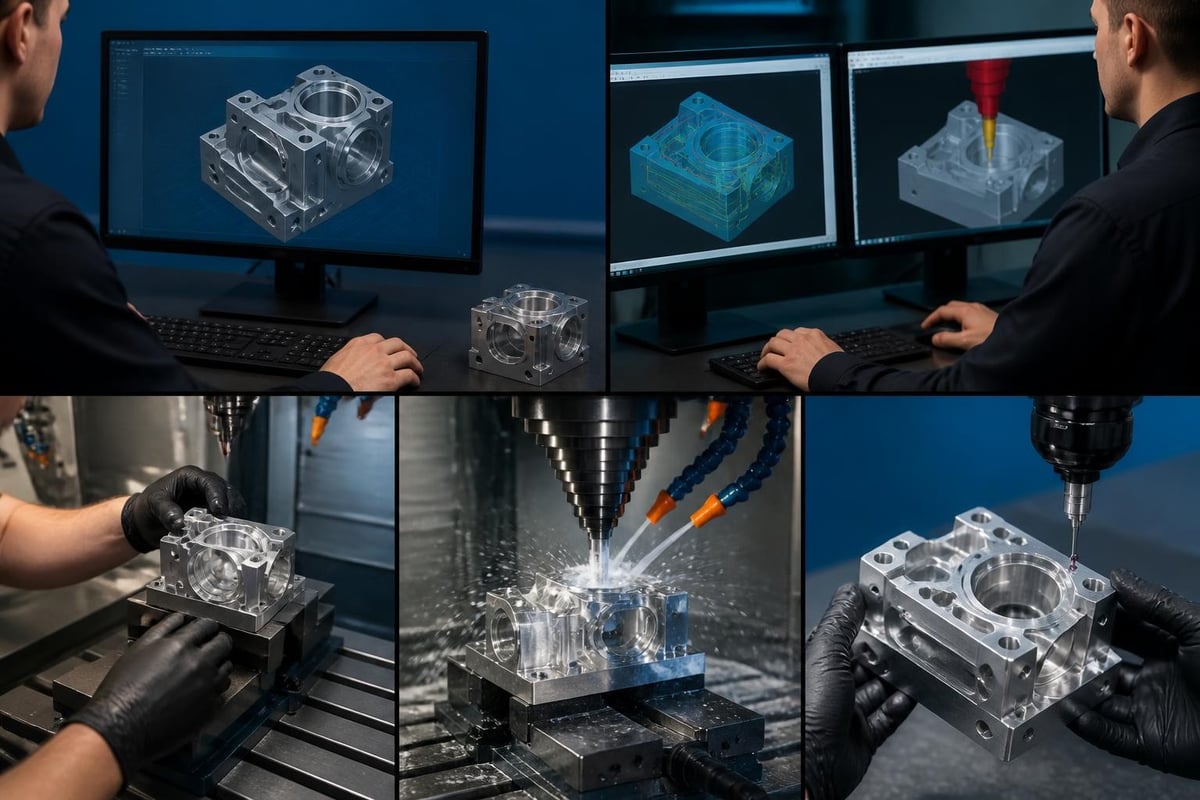
These services typically employ computer numerical control (CNC) technology, which automates tool paths and ensures consistent results across production runs. CNC mills, lathes, grinders, and electrical discharge machines (EDM) form the backbone of modern precision shops, enabling manufacturers to create complex geometries that would be impossible through manual machining.
Core Capabilities and Processes
The range of operations available through precision machining services extends far beyond basic drilling and cutting:
- CNC milling: Multi-axis machining centers remove material to create complex three-dimensional features
- CNC turning: Rotating workpieces allow cutting tools to produce cylindrical components with exceptional concentricity
- Grinding: Abrasive processes achieve ultra-fine surface finishes and hold tolerances to micron-level precision
- EDM (Electrical Discharge Machining): Electrical sparks erode conductive materials to create intricate features without mechanical tool contact
- Honing and lapping: Finishing operations that refine surface quality and dimensional accuracy
- Swiss-style screw machining: Specialized production of small-diameter, high-precision parts
Companies like LTJ Industrial Services integrate these precision capabilities with complementary services such as welding and fabrication, offering a comprehensive solution for complex industrial projects across the Western United States.
Material Considerations in Precision Work
Material selection profoundly impacts machining strategy, tool selection, and achievable tolerances. Precision machining services must adapt their approach based on the specific properties of each workpiece material.
Metals and Alloys
Different metals present unique challenges and opportunities in precision manufacturing:
| Material Category | Machinability Characteristics | Common Applications |
|---|---|---|
| Aluminum alloys | Excellent machinability, rapid material removal rates, tendency toward built-up edge | Aerospace components, heat sinks, lightweight structures |
| Steel (low-carbon) | Good machinability, predictable tool wear, requires coolant management | General mechanical components, brackets, shafts |
| Stainless steel | Work-hardening tendency, requires sharp tools and proper feeds/speeds | Food processing equipment, medical devices, corrosion-resistant parts |
| Tool steels | Abrasive, high hardness, demanding on cutting tools | Dies, molds, wear-resistant components |
| Titanium alloys | Poor thermal conductivity, reactive with cutting tools, high strength | Aerospace, medical implants, high-performance applications |
| Brass and bronze | Excellent machinability, low tool wear, ideal for precision work | Bearings, bushings, electrical connectors |
The Western United States industrial sectors served by companies such as LTJ Industrial Services frequently require precision components in materials that withstand harsh environments, including high-strength steels for oil and gas applications and wear-resistant alloys for aggregate processing equipment.
Non-Metallic Materials
While metals dominate precision machining, advanced plastics and composites play increasing roles in specialized applications. Materials like PEEK, Delrin, and PTFE offer unique properties including chemical resistance, electrical insulation, and reduced weight, though they require different cutting strategies than metals to prevent melting, deformation, or delamination.
Quality Control and Measurement Science
Precision means nothing without verification. The most sophisticated machining operations depend on rigorous quality control protocols that ensure every component meets specification.
Inspection Technologies
Modern precision shops employ multiple measurement technologies:
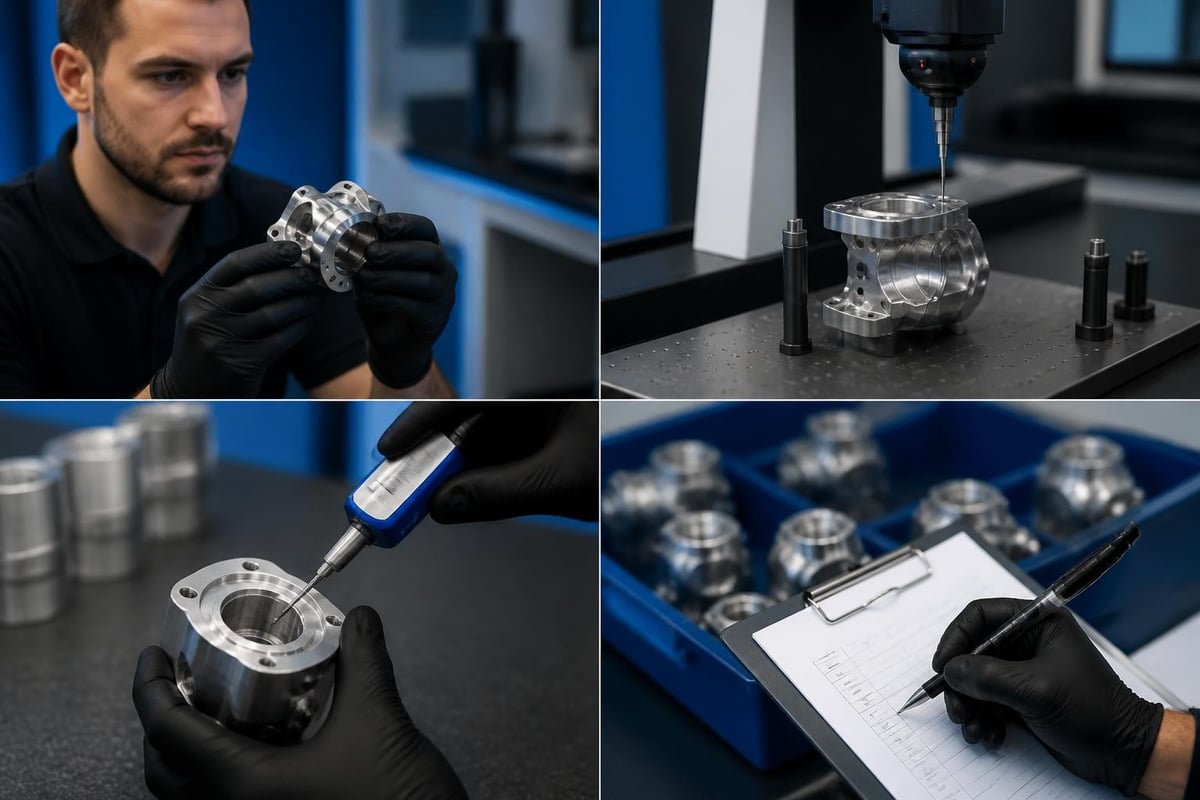
- Coordinate Measuring Machines (CMM): Computer-controlled probes map three-dimensional geometry with micron-level accuracy
- Optical comparators: Project magnified part profiles for visual inspection against master standards
- Laser micrometers: Non-contact measurement of diameter, width, and gap dimensions
- Surface roughness testers: Quantify finish quality in Ra, Rz, or other standardized metrics
- 3D scanning: Capture complete part geometry for comparison against CAD models
NASA's evolved structures guide provides comprehensive tolerancing and inspection guidance used in aerospace precision manufacturing, demonstrating how critical proper measurement practices are to mission-critical components.
The National Institute of Standards and Technology (NIST) maintains precision machining research facilities that establish measurement traceability standards, ensuring that dimensional claims can be verified against national reference standards.
Geometric Dimensioning and Tolerancing
GD&T represents a standardized language for communicating complex tolerance requirements. Rather than simple plus-minus dimensions, GD&T specifies how features must relate to one another, controlling characteristics like:
- Flatness and straightness of surfaces
- Perpendicularity and parallelism between features
- Concentricity and runout of rotating components
- Position tolerances for hole patterns and mating features
The ASME Y14 standards provide the definitive framework for GD&T implementation, enabling precision shops and their customers to communicate requirements unambiguously.
Applications Across Industrial Sectors
Precision machining services support virtually every manufacturing sector, but certain industries depend particularly heavily on these capabilities.
Oil and Gas Industry
Downhole tools, valve components, and drilling equipment demand exceptional precision and material toughness. Components must maintain dimensional stability under extreme pressures and temperatures while resisting corrosive environments. Oilfield maintenance operations frequently require custom-machined replacement parts that match or exceed OEM specifications.
Aggregate and Recycling
Processing equipment in these industries subjects components to continuous abrasive wear. Precision-machined wear plates, bushings, and shafts extend equipment life and reduce maintenance intervals. The ability to reverse-engineer and manufacture replacement parts for aging equipment provides significant cost advantages over purchasing entire assemblies.
Manufacturing and Assembly Operations
Production equipment requires precision components for alignment, motion control, and reliable operation. Custom fixtures, tooling, and specialized mechanical components enable manufacturers to optimize their processes. Companies offering integrated industrial services can coordinate precision machining with installation and maintenance support.
Hydraulic Systems
Hydraulic cylinders, valve bodies, and manifolds require precise internal geometries and surface finishes to prevent leakage and ensure proper function. Tight tolerances on bore diameters, concentricity, and surface roughness directly impact system performance and longevity. Facilities providing both hydraulic system repair and precision machining offer comprehensive solutions for hydraulic equipment owners.
Process Optimization and Advanced Manufacturing
Achieving optimal results in precision machining requires more than capable equipment. Process parameters must be carefully selected and continuously refined.
Cutting Parameters and Tool Selection
The relationship between cutting speed, feed rate, and depth of cut determines material removal efficiency, surface finish quality, and tool life. Recent research on parametric optimization demonstrates sophisticated multi-criteria decision techniques that balance competing objectives such as machining time, surface quality, tool wear, and energy consumption.
Key considerations include:
- Material hardness and microstructure: Harder materials require slower cutting speeds and more robust tool materials
- Part geometry and wall thickness: Thin sections demand careful fixturing and reduced cutting forces
- Required surface finish: Finer finishes necessitate slower feeds and specialized tooling
- Production volume: High-volume runs justify optimization investments that might not make sense for prototypes
Tooling and Insert Technology
Cutting tool technology has advanced dramatically in recent decades. Carbide inserts with advanced coatings (TiN, TiAlN, diamond-like carbon) extend tool life and enable higher cutting speeds. Ceramic and cubic boron nitride (CBN) tools machine hardened materials that once required grinding.
Tool geometry optimization-including rake angles, relief angles, and edge preparations-can dramatically improve performance in specific applications. Precision shops maintain extensive tooling inventories and technical knowledge to select optimal solutions for each job.
The Human Element: Skills and Expertise
Despite increasing automation, precision machining services remain fundamentally dependent on human expertise. The industry faces significant workforce challenges as experienced machinists retire and demand for precision work grows.
Essential Skills and Training
Competent precision machinists must master multiple disciplines:
- Blueprint reading and GD&T interpretation: Understanding engineering drawings and tolerance specifications
- CNC programming: Creating and optimizing toolpaths using G-code or CAM software
- Machining theory: Applying principles of cutting mechanics, heat generation, and material behavior
- Metrology and inspection: Properly using measurement equipment and interpreting results
- Problem-solving: Diagnosing issues and implementing corrective actions when parts fall out of specification
The SME white paper on precision machining talent addresses the critical need for building skilled workforces through apprenticeships, technical education, and continuous professional development.
Certification and Standards Compliance
Many precision applications require certification to industry-specific standards. ISO 9001 quality management systems provide a framework for consistent processes and continuous improvement. Industry-specific certifications (AS9100 for aerospace, ISO 13485 for medical devices) demonstrate capability to meet sector requirements.
Welding businesses that also offer precision machining benefit from comprehensive quality systems that span multiple manufacturing disciplines, ensuring integrated project execution.
Integration with Complementary Manufacturing Services
Precision machining rarely stands alone. Most industrial projects require coordination across multiple manufacturing processes.
Welding and Fabrication Integration
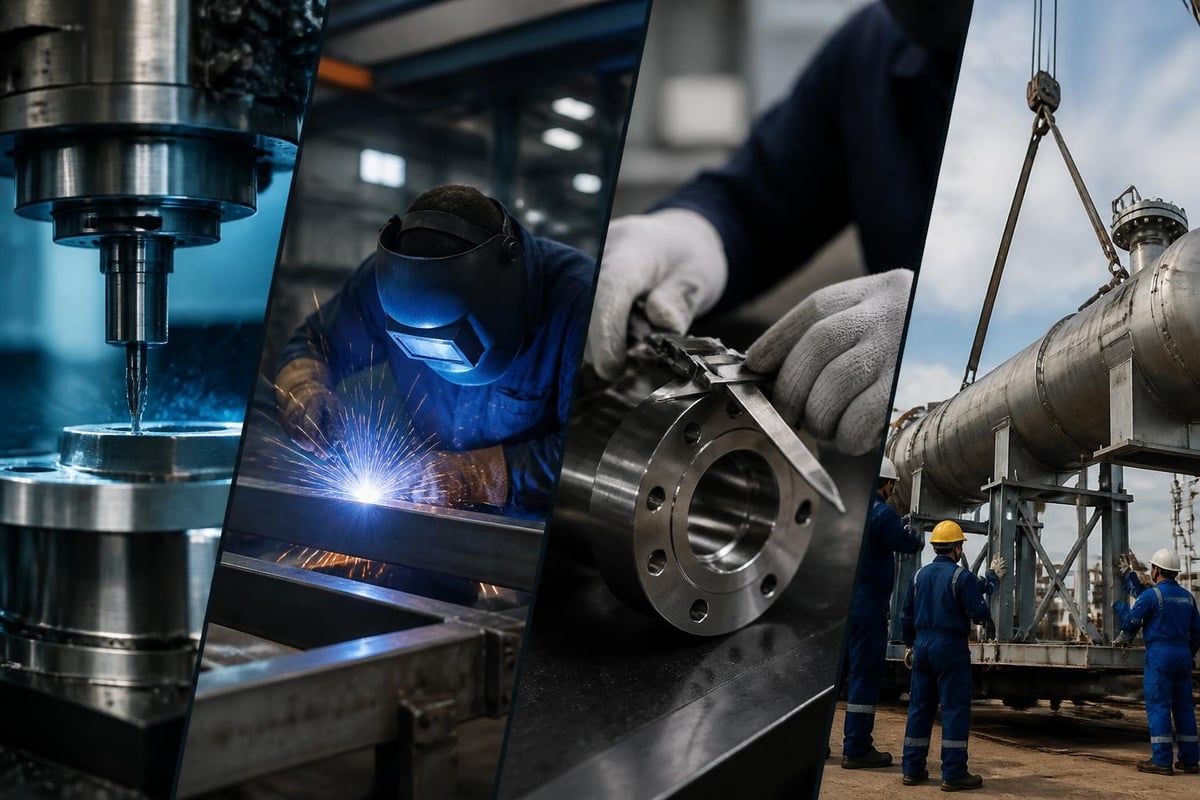
Complex assemblies often combine precision-machined components with welded structures. A metal fabrication process might start with structural steel welding, followed by precision machining of critical mounting surfaces, alignment features, or bearing bores.
This integration offers significant advantages:
- Reduced transportation and handling: Parts move seamlessly between processes without shipping delays
- Improved communication: Direct coordination between machinists and welders prevents misunderstandings
- Faster problem resolution: Issues discovered during machining can be addressed immediately
- Cost efficiency: Consolidated services eliminate markup and coordination overhead
Prototype Development
Prototype machining and fabrication services enable rapid iteration during product development. Precision capabilities allow engineers to test designs under realistic conditions before committing to production tooling.
Prototyping workflows typically progress through several stages:
| Stage | Characteristics | Typical Tolerance Range | Purpose |
|---|---|---|---|
| Concept model | Rough dimensions, basic functionality | ±0.030" – ±0.010" | Design visualization, feasibility assessment |
| Functional prototype | Accurate geometry, production-intent materials | ±0.010" – ±0.002" | Performance testing, design validation |
| Pre-production | Production processes, final specifications | ±0.002" – ±0.0005" | Manufacturing verification, quality validation |
Field Services and On-Site Machining
Industrial facilities often require precision work that cannot be performed in a shop environment. Portable machining equipment enables on-site services including:
- Line boring of bearing housings and frame alignment holes
- Flange facing to restore sealing surfaces
- Shaft repair and modification
- Emergency repairs to minimize downtime
Companies offering both shop and industrial field capabilities provide maximum flexibility for complex projects and urgent repair situations.
Technology Trends and Future Directions
Precision machining services continue to evolve as new technologies emerge and customer expectations advance.
Additive-Subtractive Hybrid Manufacturing
Combining 3D printing with precision machining offers unique advantages. Additive processes build complex geometries and internal features difficult or impossible to machine conventionally. Subsequent machining operations add precise surfaces, threads, and tolerances where needed. This hybrid approach reduces material waste while enabling innovative designs.
Automation and Lights-Out Manufacturing
Automated part loading systems, tool changers, and inspection probes enable unattended operation. Properly configured systems can run overnight and weekends, dramatically increasing productivity without proportional labor cost increases. However, automation requires significant capital investment and sophisticated process control.
Digital Integration and Industry 4.0
Modern precision shops increasingly adopt digital technologies:
- CAD/CAM integration: Seamless flow from engineering design to machining toolpaths
- Real-time monitoring: Sensors track tool wear, vibration, and process stability
- Predictive maintenance: Data analytics identify equipment issues before failures occur
- Digital twins: Virtual models predict machining outcomes and optimize parameters
These technologies improve efficiency, reduce scrap, and enable more sophisticated process control.
Cost Factors and Value Considerations
Understanding precision machining costs helps customers make informed decisions and optimize their manufacturing investments.
What Drives Pricing
Several factors influence the cost of precision machining services:
Material costs: Exotic alloys and large stock sizes increase raw material expenses. Material utilization efficiency affects overall project cost.
Complexity and tolerance requirements: Tighter tolerances require slower cutting speeds, additional setups, and more frequent inspection. Complex geometries demand sophisticated programming and extended machining time.
Production volume: Setup costs distribute across multiple parts in production runs, reducing per-part cost. Single prototypes bear full setup expenses.
Secondary operations: Heat treatment, plating, or special coatings add cost but may be necessary for performance.
Delivery urgency: Rush orders require schedule disruption and overtime labor, commanding premium pricing.
Value Beyond Price
The lowest quote rarely represents the best value. Considerations beyond initial cost include:
- Quality and reliability: Precision parts that meet specification the first time eliminate rework costs and delays
- Technical support: Experienced shops offer design recommendations that improve manufacturability
- Capacity and scalability: Providers with adequate capacity deliver on schedule even during demand surges
- Comprehensive capabilities: Integrated services reduce coordination burden and project risk
Industrial businesses benefit from establishing relationships with capable providers rather than chasing the lowest price for each individual job.
Selecting a Precision Machining Partner
Choosing the right precision machining services provider requires careful evaluation of capabilities, experience, and cultural fit.
Key Evaluation Criteria
When assessing potential partners, consider these factors:
- Equipment capability: Does the shop have machines capable of your part size, complexity, and tolerance requirements?
- Material experience: Has the provider successfully machined your specific materials?
- Industry knowledge: Do they understand your sector's unique requirements and standards?
- Quality systems: What certifications and quality processes ensure consistent results?
- Technical expertise: Can their team provide design feedback and process recommendations?
- Capacity and scalability: Will they accommodate your volume needs and potential growth?
- Geographic proximity: Can they provide on-site support or rapid delivery when needed?
- Complementary services: Do they offer welding, fabrication, or other services your projects require?
The Advantage of Regional Expertise
For industries operating in the Western United States, working with regional providers offers distinct benefits. Local shops understand regional industry needs, can provide rapid on-site response, and maintain direct communication without time-zone challenges.
A welding service company based in the region and offering precision machining provides comprehensive support for complex industrial projects while maintaining proximity for urgent needs.
Material Finishing and Surface Treatments
Precision machining often represents only part of the component manufacturing process. Surface treatments and finishes enhance performance, appearance, and durability.
Common Finishing Operations
Precision components may require additional processing after machining:
- Deburring and edge breaking: Remove sharp edges and burrs that affect assembly and safety
- Passivation: Chemical treatment of stainless steel creates corrosion-resistant surface layer
- Anodizing: Electrochemical process produces protective and decorative coating on aluminum
- Plating: Electroplating deposits metal coatings (chrome, nickel, zinc) for corrosion protection or wear resistance
- Powder coating: Durable paint finish applied electrostatically and cured at elevated temperature
- Grinding and polishing: Achieve ultra-smooth surfaces for sealing, aesthetic, or hygienic requirements
Facilities offering industrial painting services and industrial sandblasting alongside machining provide complete component preparation under one roof.
Precision machining services deliver the accuracy, quality, and reliability that modern industrial operations demand across sectors from oil and gas to aggregate processing and manufacturing. Success depends on selecting a partner with the right equipment, expertise, and commitment to excellence. Whether you need custom components for new equipment, replacement parts for critical machinery, or integrated manufacturing solutions combining precision machining with welding and fabrication, LTJ Industrial Services brings comprehensive capabilities and deep industrial experience to every project throughout the Western United States.