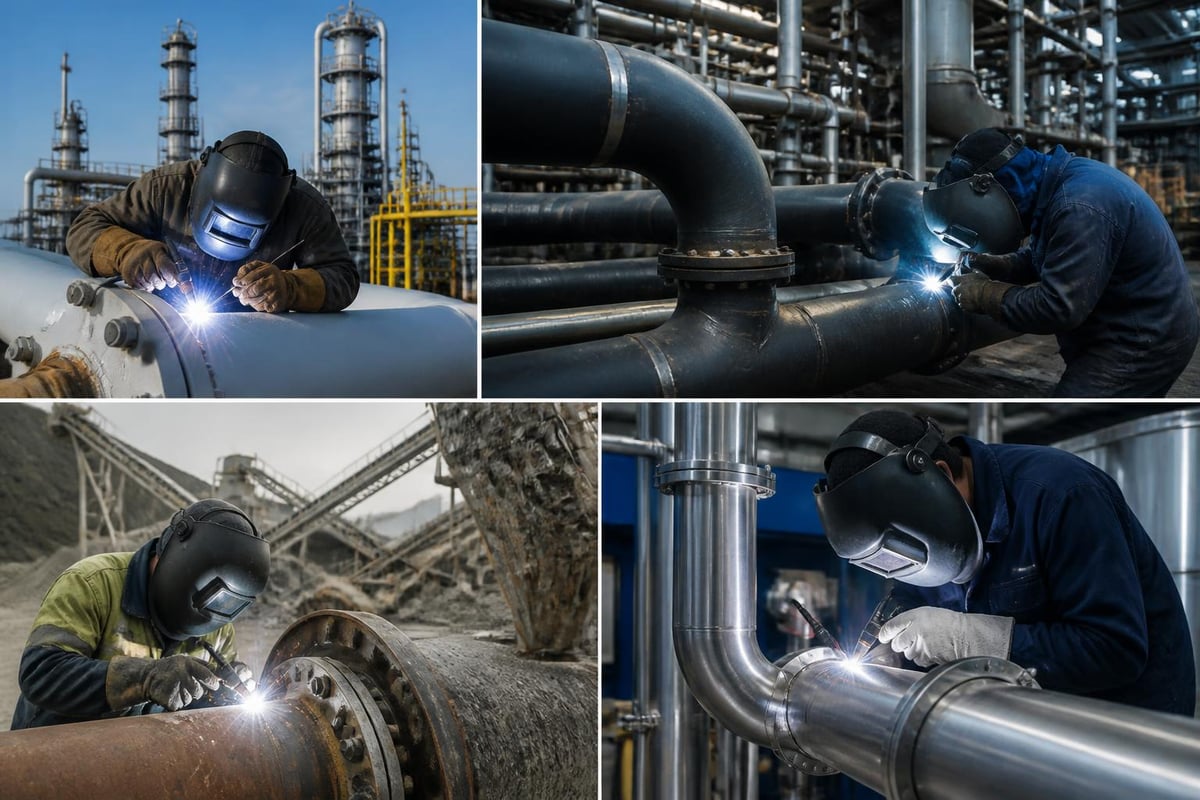
Finding reliable pipe welding near me requires understanding the specialized skills, certifications, and equipment necessary for quality industrial welding work. Whether you operate in oil and gas, aggregate processing, recycling, or other commercial manufacturing sectors, selecting the right welding provider impacts your project timelines, safety compliance, and operational efficiency. Professional pipe welding encompasses multiple techniques and applications, from small-diameter process piping to large-scale pipeline installations across diverse industrial environments.
Understanding Professional Pipe Welding Services
Professional pipe welding involves joining pipe sections or fittings using specialized welding techniques designed to create leak-proof, structurally sound connections. Pipe welding differs significantly from general welding because pipes often carry pressurized fluids, gases, or materials requiring complete penetration welds that meet strict industry standards.
Common Pipe Welding Applications
Industrial facilities throughout the Western United States rely on pipe welding for critical infrastructure:
- Process piping systems that transport chemicals, water, or petroleum products
- Hydraulic systems requiring high-pressure connections
- Steam and condensate lines in power generation facilities
- Gas distribution networks serving manufacturing operations
- Wastewater and drainage systems in commercial facilities
The complexity of each application determines the welding process, material selection, and certification requirements. Oil and gas operations, for instance, demand rigorous testing and documentation to ensure federal compliance with piping standards.
Key Pipe Welding Techniques and Methods
Shielded Metal Arc Welding (SMAW)
Often called stick welding, SMAW remains popular for field pipe welding because it requires minimal equipment and works effectively outdoors. Welders use consumable electrodes coated with flux to create the weld pool while shielding it from atmospheric contamination.
This method excels in:
- Repair work on existing pipeline systems
- Field installations where portability matters
- Thick-wall pipe applications
- Situations with limited access to power sources
Gas Tungsten Arc Welding (GTAW)
GTAW, or TIG welding, produces extremely high-quality root passes on pipe joints. The process uses a non-consumable tungsten electrode and separate filler material, offering precise control over the weld pool.
| Technique | Best Applications | Advantages | Considerations |
|---|---|---|---|
| SMAW (Stick) | Field work, repairs, thick walls | Portable, versatile, wind-resistant | Slower than other methods |
| GTAW (TIG) | Root passes, thin walls, stainless | Highest quality, precise control | Requires skilled operators |
| GMAW (MIG) | Fill passes, production work | Fast, efficient, consistent | Limited field portability |
| FCAW | Heavy fabrication, outdoor work | High deposition rates, wind-tolerant | Produces more spatter |
Gas Metal Arc Welding (GMAW)
MIG welding offers speed advantages for fill and cap passes after the root pass is complete. The continuous wire feed increases productivity while maintaining weld quality, making it ideal for shop-based pipe fabrication work.
Flux-Cored Arc Welding (FCAW)
FCAW combines advantages of stick and MIG welding, using tubular wire filled with flux. This method works well in outdoor conditions and produces high deposition rates for larger diameter pipe welding projects.
Safety Standards and Compliance Requirements
Industrial pipe welding demands strict adherence to safety protocols protecting both workers and facility operations. The OSHA guidelines for welding hazards establish baseline requirements for respiratory protection, fire prevention, and electrical safety.
Critical Safety Considerations
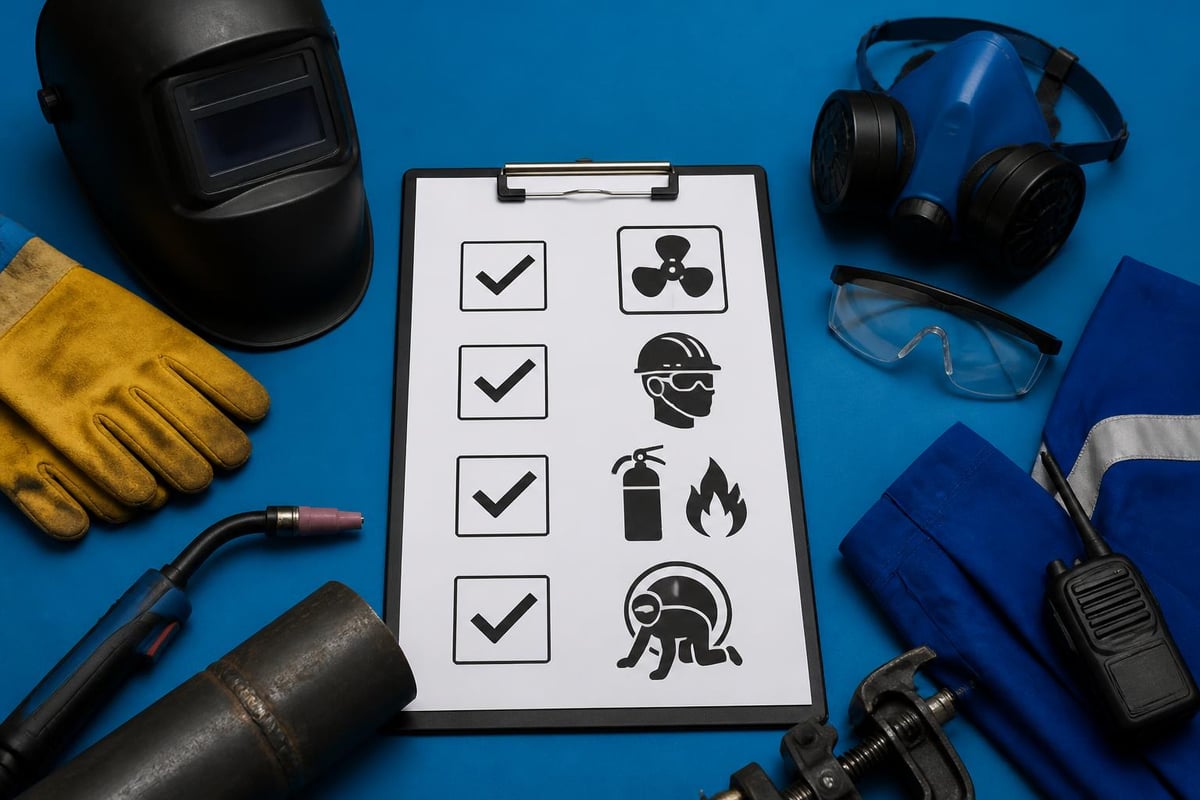
Proper safety practices begin before striking the first arc. Comprehensive planning addresses multiple risk factors:
- Confined space protocols when working inside vessels or underground
- Ventilation systems removing welding fumes and preventing toxic exposure
- Fire watch procedures during and after hot work operations
- Personal protective equipment including respirators, welding helmets, and flame-resistant clothing
- Electrical safety ensuring proper grounding and preventing shock hazards
Safety practices for carbon steel piping emphasize the importance of material-specific considerations when welding different pipe grades.
Pre-weld safety assessments identify hazards unique to each project location. Industrial facilities often contain flammable materials, confined spaces, or elevated work areas requiring specialized safety measures beyond standard welding precautions.
Material-Specific Requirements
Different pipe materials require unique safety approaches. Stainless steel welding produces hexavalent chromium requiring enhanced respiratory protection. Electric-resistance-welded low-carbon steel pipe used in chemical processing follows specific material standards affecting welding procedures.
Understanding pipe fabrication safety principles helps prevent common accidents during cutting, beveling, and alignment operations that precede welding.
Selecting a Qualified Pipe Welding Provider
Finding the right pipe welding near me involves evaluating multiple factors beyond geographic proximity. Quality welding requires certified professionals, appropriate equipment, and proven processes.
Welder Certification and Qualifications
Professional welders maintain certifications through organizations like the American Welding Society (AWS). These credentials verify competency in specific welding processes, positions, and materials.
Critical qualifications include:
- AWS Certified Welder credentials for applicable processes
- Pressure vessel welding certifications when required
- Pipe welding position certifications (2G, 5G, 6G)
- Material-specific qualifications (stainless, alloy, carbon steel)
- Current safety training documentation
Equipment and Facility Capabilities
Comprehensive welding providers offer both shop and field services, adapting to project requirements. Shop facilities enable controlled environments for complex fabrication, while field capabilities address on-site repairs and installations.
| Service Type | Capabilities | Ideal Applications |
|---|---|---|
| Shop Welding | Climate control, precision equipment, inspection tools | New fabrication, complex assemblies, critical welds |
| Field Welding | Portable equipment, adaptability, quick response | Repairs, installations, remote locations |
| Mobile Services | Equipment transportation, on-site setup | Emergency repairs, facility shutdowns, rural projects |
Modern welding operations incorporate advanced technologies including automated welding systems, digital weld procedure specifications, and non-destructive testing equipment ensuring quality control.
Quality Assurance and Inspection Processes
Non-Destructive Testing Methods
Professional pipe welding includes comprehensive inspection verifying weld integrity without damaging the finished work:
- Visual inspection identifying surface defects and dimensional compliance
- Radiographic testing revealing internal discontinuities through X-ray imaging
- Ultrasonic testing detecting subsurface flaws using sound waves
- Magnetic particle testing locating surface cracks in ferromagnetic materials
- Dye penetrant testing highlighting surface-breaking defects
Recent advancements in welding defect detection demonstrate how technology improves inspection accuracy and reliability, particularly in critical maritime and industrial applications.
Documentation and Traceability
Industrial pipe welding projects require detailed documentation tracking welders, procedures, materials, and inspection results. This paperwork ensures regulatory compliance and provides valuable records for future maintenance planning.
Essential documentation includes:
- Welding procedure specifications (WPS)
- Procedure qualification records (PQR)
- Welder performance qualifications (WPQ)
- Material test reports and certifications
- Non-destructive testing reports and interpretations
Industry-Specific Pipe Welding Requirements
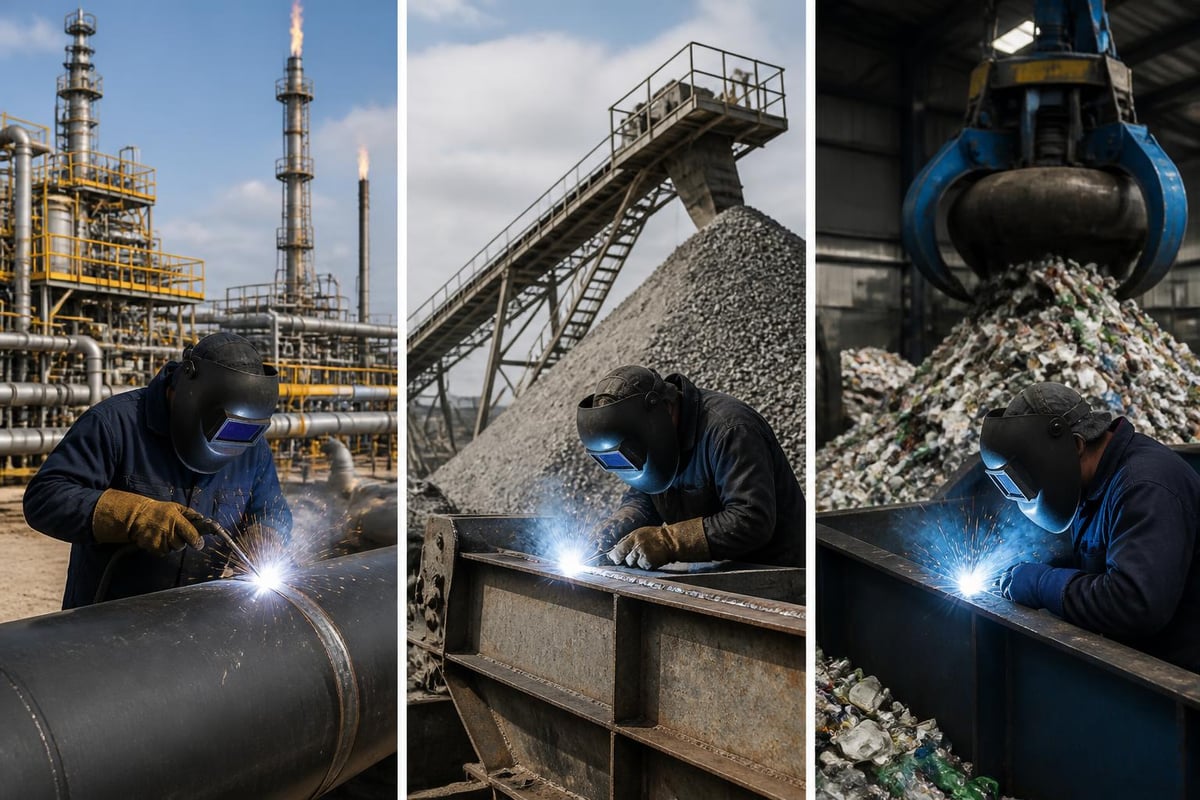
Oil and Gas Applications
Petroleum production and transportation demand the highest welding standards. Pipe systems carry flammable materials under extreme pressures and temperatures, requiring welders certified for API 1104 pipeline welding or ASME B31.3 process piping.
Oil and gas pipe welding considerations:
- High-pressure rating requirements
- Corrosion-resistant material specifications
- Extended service life expectations
- Remote location accessibility
- Environmental exposure factors
Aggregate and Mining Operations
Crushing, screening, and conveying equipment in aggregate facilities depends on reliable pipe systems for hydraulics, dust suppression, and material handling. These harsh environments demand welding that withstands abrasion, vibration, and heavy impact loads.
Recycling Facility Infrastructure
Recycling operations process diverse materials creating unique challenges for pipe systems. Welded piping must resist corrosive substances, handle material contamination, and maintain integrity despite frequent thermal cycling.
Evaluating Local Pipe Welding Services
Response Time and Service Area
When searching for pipe welding near me, consider the provider's service area coverage and emergency response capabilities. Equipment failures don't follow convenient schedules, making rapid response critical for minimizing downtime.
Geographic coverage throughout regions like the Western United States enables providers to support multi-site operations with consistent quality and familiar processes.
Project Portfolio and Experience
Review completed projects demonstrating relevant experience in your industry sector. Providers serving recycling, aggregate, and oil and gas industries understand the unique challenges each sector presents.
Key experience indicators:
- Similar project scope and complexity
- Familiarity with applicable codes and standards
- Industry-specific material knowledge
- Proven track record in comparable environments
- References from related industrial sectors
Comprehensive Service Offerings
Full-service fabrication providers offer advantages beyond basic welding. Integrated capabilities including machining, hydraulic services, and water jetting enable single-source solutions reducing coordination challenges and project timelines.
Cost Factors in Professional Pipe Welding
Understanding Pricing Structures
Pipe welding costs vary based on numerous factors including material type, pipe diameter, wall thickness, welding position, and accessibility. Field welding typically costs more than shop work due to setup requirements and environmental challenges.
| Cost Factor | Impact Level | Considerations |
|---|---|---|
| Material Type | High | Stainless and alloy cost more than carbon steel |
| Pipe Diameter | Medium | Larger diameter requires more welding time |
| Wall Thickness | High | Thick walls need multiple passes, more filler |
| Accessibility | High | Difficult positions increase labor time |
| Certification Requirements | Medium | Special certifications add documentation costs |
Value Beyond Initial Pricing
The lowest quote rarely delivers the best value. Quality welding prevents costly failures, minimizes downtime, and extends system service life. Consider total ownership costs including expected longevity, maintenance requirements, and failure risks.
Long-term value considerations:
- Warranty coverage and duration
- Expected service life of completed welds
- Maintenance accessibility and requirements
- Potential failure consequences and costs
- Provider responsiveness for future needs
Advanced Welding Technologies and Innovations
Modern pipe welding incorporates technological advances improving quality, efficiency, and safety. Automated welding systems produce consistent results on repetitive production work, while digital monitoring provides real-time quality control.
Orbital Welding Systems
Orbital welding automates pipe joining for small to medium diameter applications, particularly in stainless steel and high-purity systems. The mechanized torch rotates around stationary pipe, producing uniform welds with minimal heat input.
Laser Welding Applications
Laser technology enables precise, low-heat-input welding for thin-wall pipe and specialty materials. While not yet common in heavy industrial applications, laser welding continues expanding into new markets and materials.
Digital Weld Monitoring
Advanced welding equipment monitors current, voltage, wire feed speed, and other parameters in real-time. This data ensures compliance with welding procedures while creating permanent quality records.
Maintenance and Repair Considerations
Planned Maintenance Programs
Proactive pipe system inspection identifies potential failures before they cause costly shutdowns. Comprehensive maintenance includes visual examination, thickness testing, and leak detection on critical systems.
Regular inspection schedules vary by system criticality, operating conditions, and regulatory requirements. High-pressure systems carrying hazardous materials demand more frequent evaluation than low-risk applications.
Emergency Repair Capabilities
Equipment failures requiring immediate attention test a welding provider's capabilities and responsiveness. Emergency services should include:
- 24/7 availability for critical system failures
- Rapid mobilization of equipment and personnel
- Mobile welding capabilities reaching remote locations
- Temporary repair options restoring partial operation quickly
- Permanent solutions scheduled during planned shutdowns
Field welding expertise proves invaluable during emergency situations where shop fabrication isn't feasible. Mobile equipment and experienced field welders minimize downtime by addressing problems where they occur.
Regional Considerations for Western United States
Industrial operations across the Western United States face unique environmental challenges affecting pipe welding. High altitude locations impact welding parameters and equipment performance. Temperature extremes from desert heat to mountain cold require adapted procedures.
Regional factors influencing pipe welding:
- Altitude effects on arc stability and shielding gas performance
- Temperature variations affecting material properties and welding procedures
- Remote locations requiring self-sufficient field operations
- Environmental regulations specific to western states
- Seasonal access limitations in mountainous terrain
Service providers familiar with these regional challenges bring valuable experience adapting standard procedures to local conditions. Understanding how elevation, climate, and geography affect welding quality separates experienced regional providers from distant alternatives.
Building Long-Term Partnerships
Successful industrial operations benefit from ongoing relationships with skilled welding providers. Consistent service quality, familiar processes, and responsive support create value beyond individual projects.
Partnership advantages include:
- Familiarity with facility layouts and existing systems
- Streamlined approval and documentation processes
- Preferred scheduling during planned shutdowns
- Volume-based pricing considerations
- Integrated planning for facility expansions
When evaluating pipe welding near me, consider providers capable of supporting both immediate needs and long-term facility requirements. Comprehensive capabilities spanning welding, machining, fabrication, and hydraulic services enable coordinated solutions addressing complex industrial challenges.
Finding qualified pipe welding services ensures your industrial operations maintain safe, reliable infrastructure supporting production goals. Whether you need emergency repairs, planned maintenance, or custom fabrication, partnering with experienced professionals delivers quality results meeting industry standards. LTJ Industrial Services provides comprehensive welding, fabrication, and machining services throughout the Western United States, supporting commercial and industrial manufacturing sectors with responsive, high-quality solutions. Contact our team to discuss your pipe welding requirements and discover how our expertise can help your operation achieve its objectives.