
Manufacturing and industrial sectors rely heavily on specialized partners to maintain operations, meet production deadlines, and deliver quality products. Machining companies provide essential services that transform raw materials into precise components, refurbish existing equipment, and support businesses across diverse industries. Understanding what these companies offer, how they operate, and what sets exceptional providers apart is crucial for businesses seeking reliable manufacturing partnerships in 2026.
What Machining Companies Do and Why They Matter
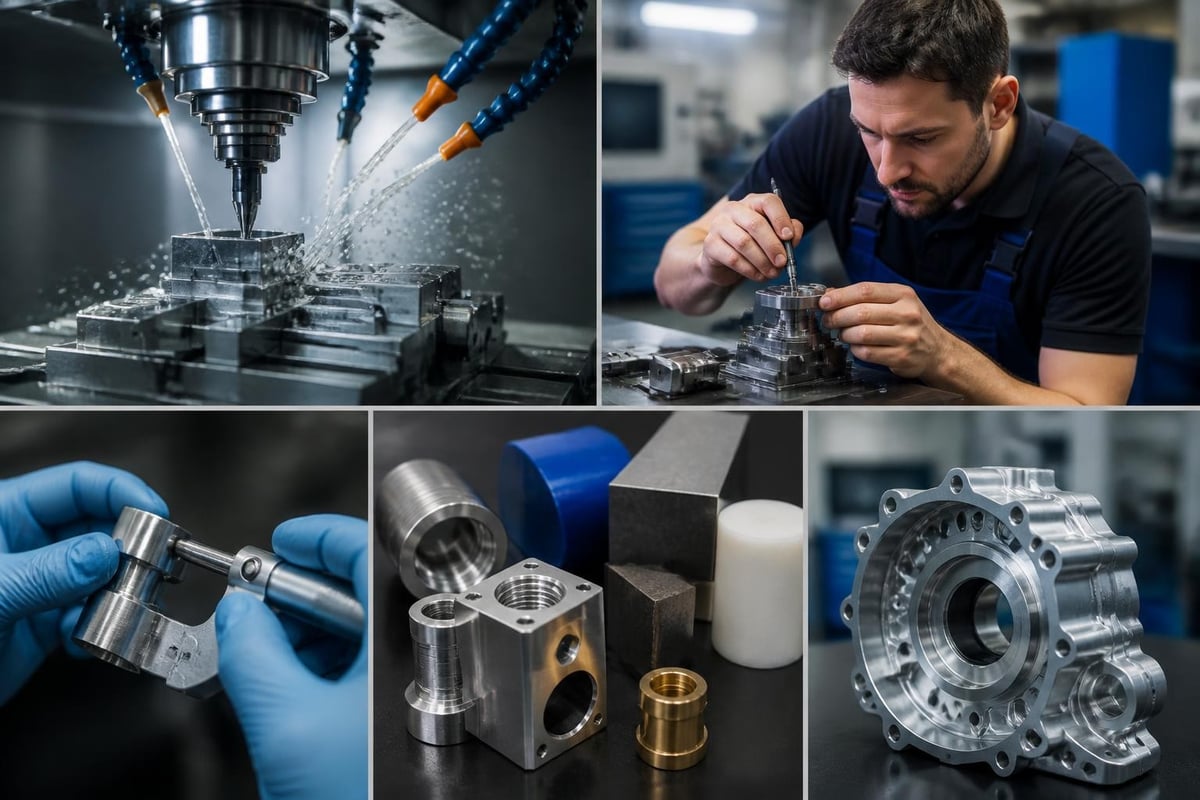
Machining companies specialize in removing material from workpieces to create specific shapes, dimensions, and surface finishes. These operations include milling, turning, drilling, grinding, and other subtractive manufacturing processes. Modern industrial machining services extend beyond basic material removal to encompass comprehensive solutions that support entire production workflows.
The value these companies deliver extends across multiple industrial sectors. In the oil and gas industry, precision machining ensures that drilling components maintain tight tolerances under extreme conditions. Aggregate and recycling operations depend on machined parts to keep heavy equipment operational. Manufacturing facilities require custom components that meet exact specifications for assembly lines and production equipment.
Core Capabilities That Define Industry Leaders
Top-tier machining companies offer a comprehensive range of services that address diverse manufacturing needs:
- CNC Machining: Computer numerical control systems deliver repeatable precision for complex geometries
- Manual Machining: Skilled machinists handle one-off projects and custom modifications
- Lathe Work: Cylindrical components produced with precision diameter and length specifications
- Milling Operations: Multi-axis capabilities for intricate surface features and contours
- Boring and Honing: Internal surface finishing for cylinders and precision holes
- Thread Cutting: Custom thread profiles for specialized fasteners and connections
The machining industry statistics for 2026 reveal substantial growth driven by aerospace, medical device manufacturing, and defense sectors. Companies that maintain diverse capabilities position themselves to serve multiple markets simultaneously, providing stability and breadth of experience.
Technology Integration Reshaping Modern Operations
Digital transformation continues to reshape how machining companies operate in 2026. Advanced software systems now connect design, programming, production, and quality control into seamless workflows. This integration reduces lead times, minimizes errors, and provides customers with real-time visibility into project status.
Computer-aided manufacturing (CAM) software translates engineering designs directly into machine instructions. This automation accelerates programming while reducing human error in toolpath generation. Simulation capabilities allow operators to identify potential collisions or inefficiencies before cutting the first chip.
| Technology Category | Business Impact | Implementation Consideration |
|---|---|---|
| CAD/CAM Integration | 30-40% faster programming | Software training requirements |
| IoT Monitoring | Real-time equipment status | Network infrastructure needs |
| Predictive Maintenance | 25% reduction in downtime | Sensor installation costs |
| Digital Twin Modeling | Virtual process optimization | Computing resource demands |
According to recent analysis of five machining trends to watch in 2025, AI-driven insights are becoming standard practice rather than experimental technology. Machining companies that embrace these tools gain competitive advantages in quality consistency, production speed, and cost optimization.
Equipment Investment and Capacity Planning
The machinery that machining companies operate represents significant capital investment. Multi-axis CNC mills can cost several hundred thousand dollars, while specialized equipment for aerospace or medical applications may exceed one million dollars. This investment level creates barriers to entry that protect established companies while requiring careful capacity planning.
Businesses evaluating potential partners should consider:
- Equipment age and maintenance history: Newer machines typically offer better precision and repeatability
- Spindle speeds and power ratings: Higher specifications enable faster cutting and harder materials
- Work envelope dimensions: Maximum part sizes the facility can accommodate
- Tooling inventory: Breadth of available cutting tools and workholding fixtures
- Inspection equipment: Coordinate measuring machines (CMMs) and quality verification capabilities
Reports on machine tool demand growth indicate continued investment despite economic uncertainties. Companies that maintain modern equipment fleets demonstrate commitment to quality and capacity to handle evolving customer requirements.
Material Expertise and Specialized Applications
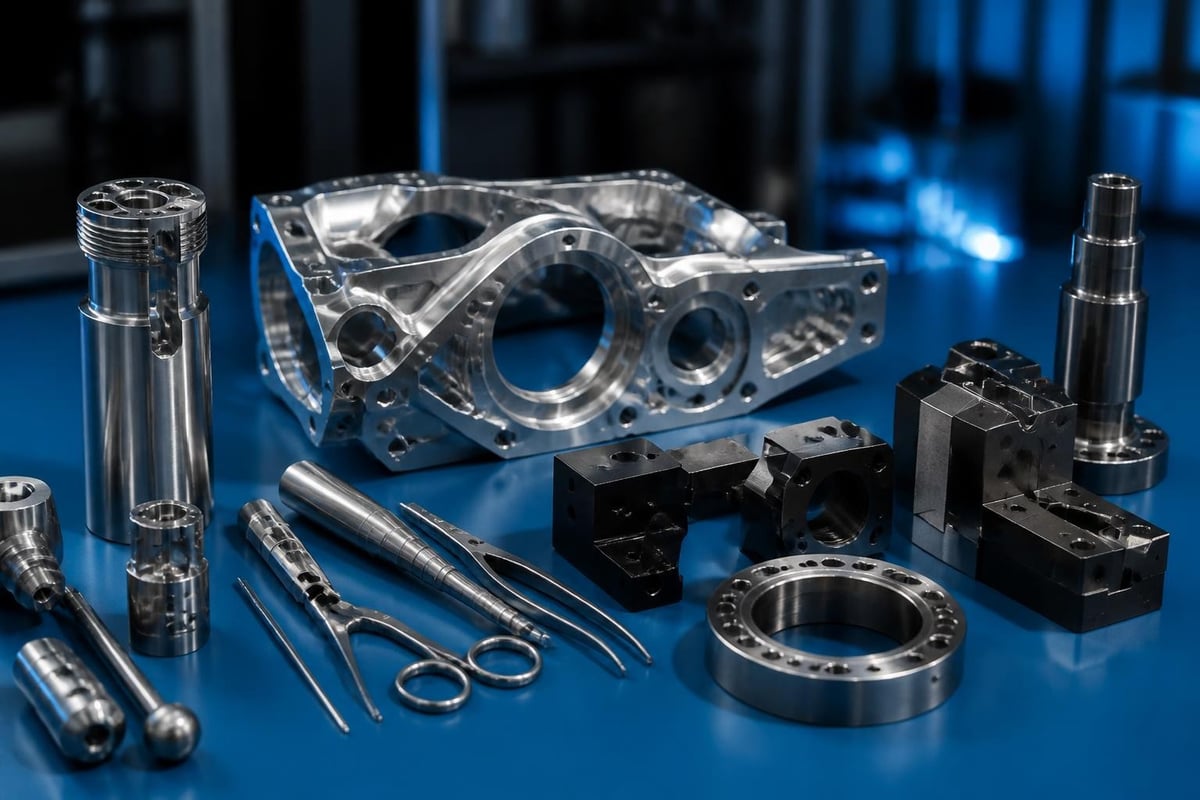
Different industries require machining companies to work with diverse materials, each presenting unique challenges. Aluminum alloys commonly used in aerospace applications machine readily but require careful chip management. Stainless steel grades prevalent in food processing and medical devices generate work hardening that demands specific tooling strategies. Exotic alloys like Inconel or titanium require specialized cutting tools and conservative parameters.
Metal fabrication and welding often work hand-in-hand with machining operations. Many comprehensive providers offer metal fabrication services alongside precision machining, creating one-stop solutions for complex projects. This integration eliminates coordination challenges between multiple vendors and streamlines project timelines.
Industry-Specific Requirements
Each sector places different demands on machining companies:
Oil and Gas: Components must withstand high pressures, corrosive environments, and extreme temperatures. Precision machining ensures proper sealing surfaces and dimensional stability under operational stress. Field service capabilities become essential when equipment failures occur at remote drilling sites or production facilities.
Recycling and Aggregate: Heavy equipment in these industries experiences severe wear from abrasive materials. Machining companies supporting these sectors must repair worn shafts, replace damaged bearing surfaces, and fabricate replacement parts when original components fail. Understanding the operational environment helps predict failure modes and design improvements.
Manufacturing: Production equipment requires precisely machined components that maintain tolerances over millions of cycles. Custom fixturing, specialized tooling, and replacement parts keep assembly lines operational. Quick turnaround on emergency repairs minimizes costly production downtime.
Quality Systems and Certification Standards
Professional machining companies implement comprehensive quality management systems that ensure consistent results. ISO 9001 certification demonstrates commitment to documented processes, continuous improvement, and customer satisfaction. More specialized certifications like AS9100 for aerospace or ISO 13485 for medical devices indicate capability to meet stringent industry requirements.
Inspection procedures form the backbone of quality assurance. First article inspection verifies that initial production meets all specifications before full production runs begin. In-process checks catch deviations early, preventing scrap and rework. Final inspection confirms that completed parts match drawing requirements across all critical dimensions.
| Quality Practice | Purpose | Typical Frequency |
|---|---|---|
| First Article Inspection | Verify setup accuracy | Every new setup or job |
| In-Process Monitoring | Catch process drift | Every 5-10 parts |
| Statistical Process Control | Predict quality trends | Continuous data collection |
| Final Inspection | Confirm specifications | 100% of critical features |
| Calibration Verification | Ensure measurement accuracy | Monthly or quarterly |
Understanding ISO standards in tooling helps machining companies communicate effectively with global supply chains and meet international quality expectations. These standardized designations eliminate ambiguity in tool selection and application parameters.
Selecting the Right Machining Partner
Choosing among machining companies requires evaluating multiple factors beyond price quotations. The lowest bid rarely delivers the best overall value when project complexity, timeline pressures, or quality requirements come into play.
Geographic Considerations and Service Models
Location impacts both shipping costs and service flexibility. Companies serving the Western United States understand regional industry concentrations and logistics networks. Proximity enables face-to-face consultations, prototype reviews, and rapid response to urgent needs.
Service models vary significantly across providers:
- Shop-only operations: Customers deliver parts to the facility
- Field service capabilities: Technicians travel to customer locations for on-site work
- Mobile machining units: Portable equipment brings precision capabilities to remote sites
- Emergency repair services: 24/7 availability for critical breakdowns
Businesses operating in remote locations or industries with unpredictable maintenance needs benefit from partners offering skilled welders and machinists who can deploy to field locations. This flexibility minimizes equipment downtime and transportation costs for large components.
Evaluating Technical Capabilities
Request specific information when assessing potential machining companies:
- Tolerance capabilities: What are the tightest tolerances achievable with current equipment?
- Material experience: Which alloys and grades has the shop successfully machined?
- Capacity availability: What are typical lead times for standard and rush projects?
- Quality documentation: What inspection reports and certifications accompany finished parts?
- Engineering support: Can the team suggest design improvements or alternative manufacturing methods?
Companies that invest in industrial machinery refurbishment and maintenance demonstrate broader mechanical understanding that extends beyond basic machining operations. This comprehensive knowledge helps identify root causes of component failures and develop solutions that prevent recurrence.
Emerging Technologies Transforming the Industry
Artificial intelligence applications are expanding rapidly within machining operations. Research into AI systems for online prediction of machining errors demonstrates how deep learning can anticipate process deviations before they produce defective parts. These predictive capabilities reduce scrap rates and improve first-pass yield.
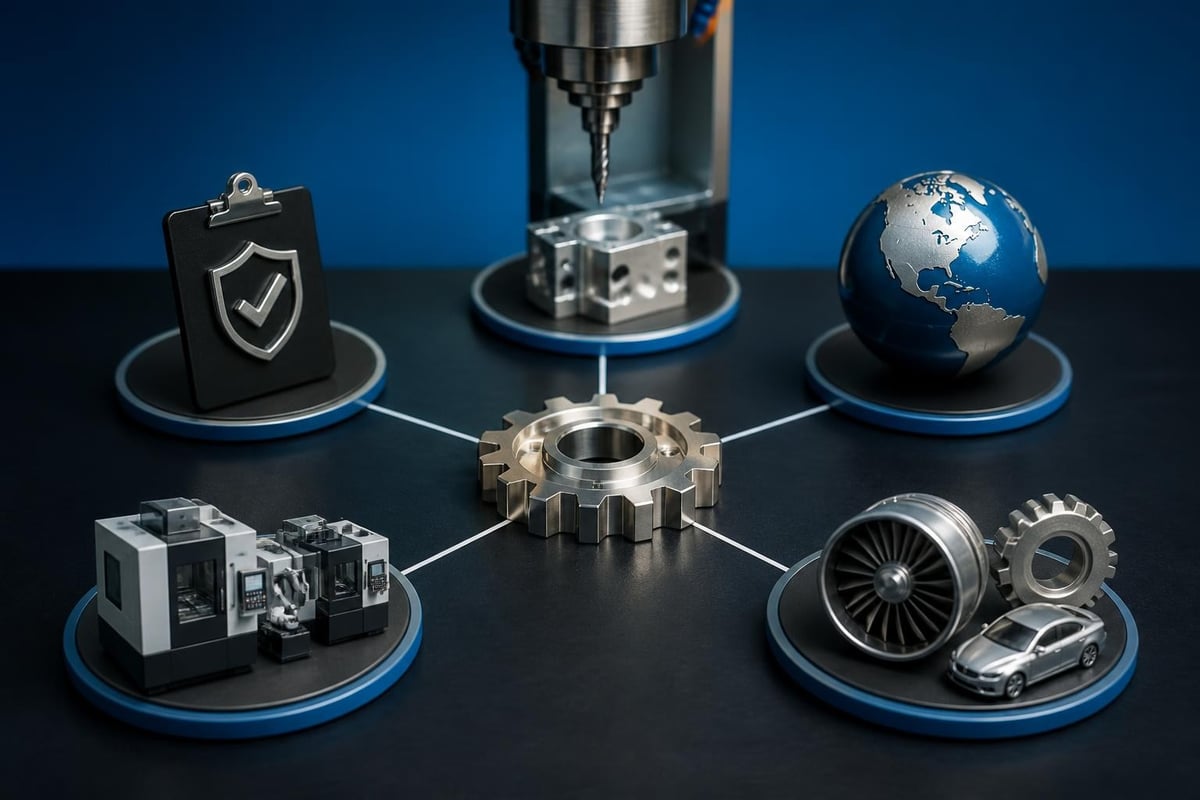
Additive manufacturing integration creates hybrid workflows where machining companies combine 3D printing with traditional subtractive processes. Near-net-shape printed components receive final machining to achieve critical tolerances and surface finishes. This approach reduces material waste while accelerating production of complex geometries.
Advanced materials continue pushing the boundaries of what machining companies can achieve. Innovations in high-precision and ultra-precision machining address challenges in temperature measurement, process design, and tooling strategies for difficult-to-machine materials. Companies that stay current with these developments maintain competitive advantages in demanding applications.
Automation and Workforce Development
The skilled trades face demographic challenges as experienced machinists approach retirement. Forward-thinking machining companies invest heavily in training programs, apprenticeships, and technology that helps less experienced operators produce quality work. Automated tool changers, probe-based inspection, and adaptive control systems reduce reliance on operator judgment for routine decisions.
Collaborative robots (cobots) are increasingly common in machine shops, handling repetitive tasks like part loading, deburring, and quality checks. This automation frees skilled machinists to focus on programming, troubleshooting, and complex setups that require human expertise and judgment.
Cost Structures and Value Considerations
Understanding how machining companies price their services helps businesses make informed procurement decisions. Hourly rates vary based on machine type, operator skill requirements, and market conditions. Three-axis CNC mills typically command lower rates than five-axis machines due to equipment costs and programming complexity.
Material costs represent straightforward pass-through expenses, though experienced shops may secure better pricing through established supplier relationships. Setup time becomes increasingly significant for small batch quantities, where programming, fixturing, and first article inspection constitute substantial portions of total project costs.
Smart buyers focus on total cost of ownership rather than piece price alone. A slightly higher machining quote may deliver superior value through:
- Tighter tolerances that eliminate secondary operations
- Better surface finishes that reduce assembly friction or wear
- Faster delivery that accelerates product launch schedules
- Engineering consultation that optimizes designs for manufacturability
- Reliable quality that eliminates inspection and rework costs
Data from machinery orders driven by automation growth shows continued investment in efficiency improvements across the industry. Companies that reinvest in technology pass those advantages to customers through better pricing and capabilities.
Integration with Complementary Services
The most valuable manufacturing partnerships extend beyond single-service relationships. Machining companies that offer comprehensive capabilities create efficiencies through coordinated project management and reduced vendor coordination.
Consider a typical industrial equipment repair scenario. A damaged hydraulic cylinder requires disassembly, inspection, machining of worn surfaces, welding of cracked housings, and reassembly with new seals. Providers offering integrated hydraulic repair services complete the entire workflow internally, maintaining quality control and minimizing turnaround time.
Project Management and Communication
Clear communication separates exceptional machining companies from mediocre providers. Detailed quotations specify exactly what's included, highlight any assumptions about drawing interpretations, and identify potential areas requiring clarification. Regular progress updates keep customers informed without requiring constant status inquiries.
Digital collaboration tools enable real-time information sharing. Cloud-based project management platforms provide visibility into:
- Current production status for active jobs
- Quality inspection results and dimensional reports
- Shipping notifications and tracking information
- Invoice details and payment processing
This transparency builds trust and allows customers to plan downstream operations with confidence in delivery schedules.
Future Outlook for the Machining Industry
The machining sector continues evolving to meet changing market demands. Reshoring initiatives bring manufacturing back to North America, creating opportunities for domestic machining companies to support local production. Sustainability pressures drive adoption of more efficient cutting strategies, recycling of cutting fluids, and optimization of material utilization.
Workforce development remains the industry's most critical challenge and opportunity. Companies that successfully attract younger workers through modern equipment, technology integration, and career development programs will dominate the next decade. The combination of traditional machining knowledge with digital skills creates powerful competitive advantages.
Supply chain resilience has become a priority following recent global disruptions. Businesses increasingly value machining companies that maintain domestic material sources, redundant equipment capabilities, and flexible capacity to accommodate demand fluctuations. Geographic diversity in supplier networks provides insurance against regional disruptions.
Building Long-Term Manufacturing Partnerships
The relationship between businesses and their machining companies should extend beyond transactional interactions. Strategic partnerships create mutual benefits through shared understanding, process improvements, and collaborative problem-solving.
Long-term relationships enable machining companies to invest in customer-specific tooling, fixtures, and programming that reduce costs and lead times for repeat orders. Familiarity with customer applications allows proactive suggestions for design improvements or alternative approaches that deliver better performance or manufacturability.
Regular business reviews provide forums for discussing upcoming projects, capacity planning, and continuous improvement opportunities. These conversations help machining companies align their equipment investments and capability development with customer roadmaps, ensuring they can support evolving requirements.
Successfully partnering with machining companies requires understanding their capabilities, evaluating their technical expertise, and selecting providers whose service models align with your operational needs. Whether you require precision components for new products, emergency repairs for critical equipment, or comprehensive manufacturing support across multiple disciplines, choosing the right partner directly impacts your business success. LTJ Industrial Services delivers integrated machining, welding, and fabrication solutions throughout the Western United States, combining shop precision with field service flexibility to keep your operations running smoothly.