The industrial US landscape continues to evolve as a powerhouse of manufacturing excellence, driving economic growth and technological innovation across diverse sectors. From the oil and gas fields of Colorado to aggregate operations throughout the Western United States, American industrial capabilities remain unmatched in their combination of precision, reliability, and adaptability. The commercial and industrial manufacturing sectors depend on specialized services that blend traditional craftsmanship with cutting-edge technology, creating solutions that keep critical operations running efficiently. Understanding the scope and capabilities of industrial US operations provides valuable insights for businesses seeking to optimize their manufacturing processes, maintain competitive advantages, and ensure long-term operational success.
The Foundation of Industrial US Manufacturing Capabilities
The strength of industrial US manufacturing rests on a comprehensive ecosystem of specialized services designed to support diverse operational needs. Metal fabrication, precision machining, and expert welding form the backbone of this infrastructure, enabling businesses across multiple sectors to maintain productivity and achieve their strategic objectives.
Modern industrial operations require partners who understand the complexities of commercial manufacturing environments. Manufacturing and machining services must address everything from routine maintenance to emergency repairs, often under challenging field conditions that demand both technical expertise and logistical flexibility.
Critical Service Components Across Industrial Sectors
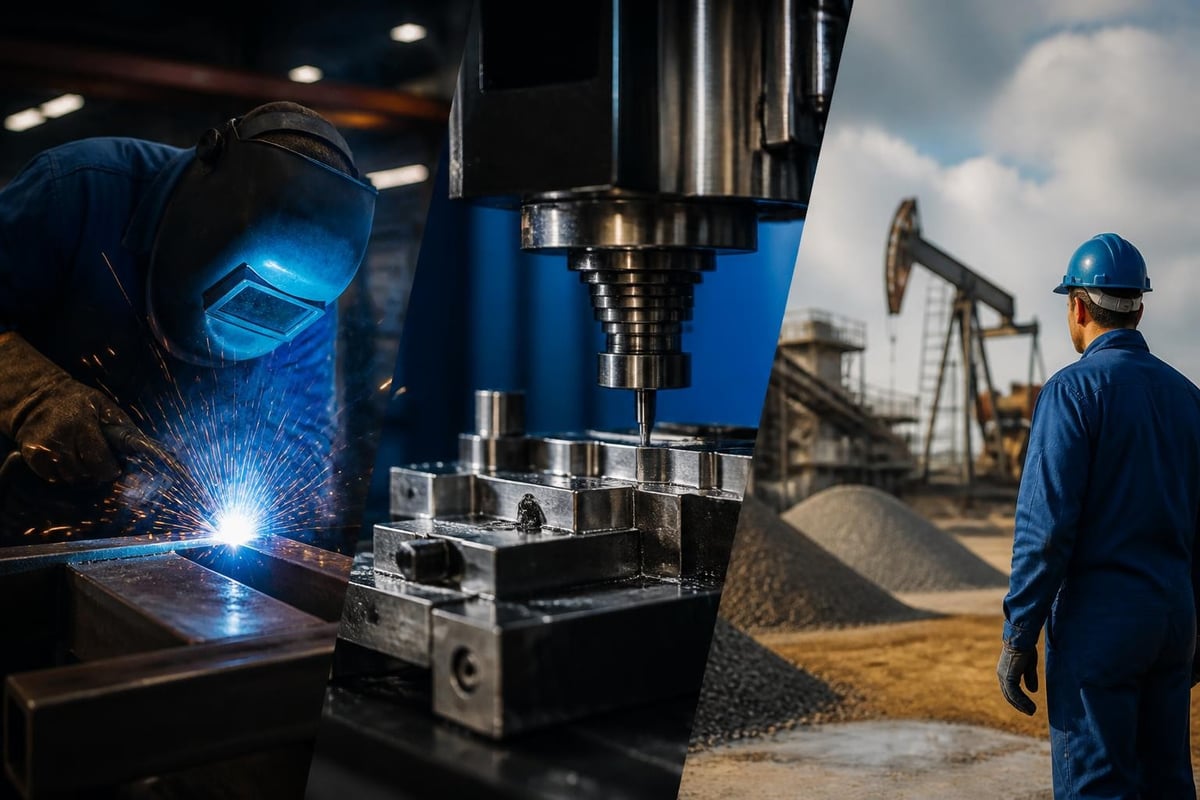
The industrial US framework encompasses several essential service categories that businesses rely on daily:
- Metal Fabrication: Custom manufacturing solutions for structural components, equipment modifications, and specialized assemblies
- Precision Machining: CNC operations, manual machining, and tight-tolerance work for replacement parts and custom components
- Professional Welding: TIG, MIG, stick welding, and specialty processes for both shop and field applications
- Hydraulic Services: System design, repair, and maintenance for mobile and stationary equipment
- Water Jetting: High-pressure cleaning and cutting services for industrial equipment and infrastructure
These capabilities support the defense-related technologies and industrial base that maintains American manufacturing competitiveness. When equipment failures threaten production schedules, responsive industrial US providers deliver solutions that minimize downtime and restore operations quickly.
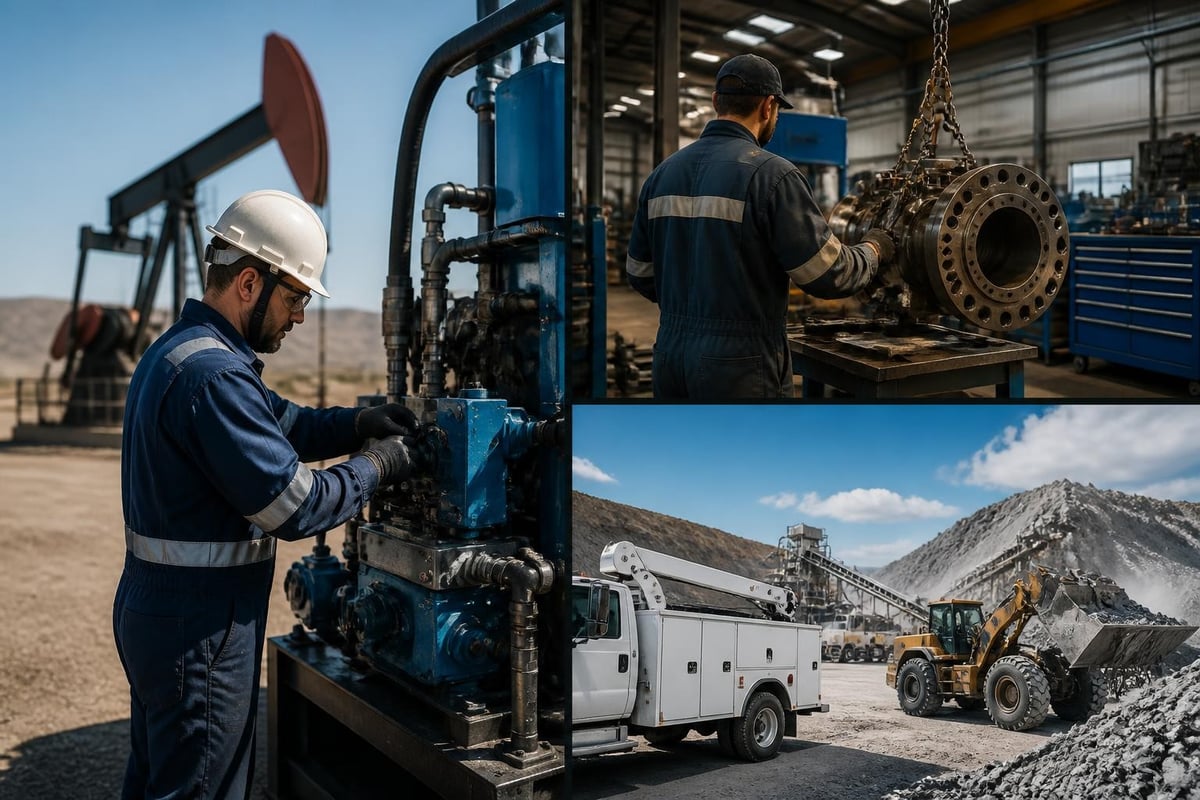
Field services distinguish exceptional industrial partners from basic machine shops. The ability to deploy skilled technicians directly to operational sites eliminates transportation costs, reduces equipment downtime, and provides immediate solutions when businesses need them most. This mobile capability proves especially valuable in remote locations common throughout Western industrial operations.
Regional Expertise in Western Industrial Operations
Geographic specialization shapes industrial US capabilities in meaningful ways. The Western United States presents unique challenges that demand particular expertise, from high-altitude operations to extreme temperature variations and remote site accessibility. Companies serving this region develop specialized knowledge that translates directly into better outcomes for their clients.
The oil and gas sector, recycling operations, and aggregate industries each bring distinct requirements to their industrial partners. Understanding these nuances separates competent service providers from exceptional ones who truly grasp the operational realities their clients face daily.
Industry-Specific Requirements and Solutions
| Industry Sector | Primary Needs | Critical Services | Timeline Requirements |
|---|---|---|---|
| Oil & Gas | Pressure vessel repair, pipeline fabrication | Custom welding, hydraulics | Emergency response capability |
| Recycling | Heavy equipment repair, conveyor systems | Field machining, fabrication | Minimal downtime tolerance |
| Aggregate | Crusher components, screening equipment | Wear part manufacturing, welding | Seasonal deadline sensitivity |
| Manufacturing | Production equipment maintenance | Precision machining, custom parts | Scheduled maintenance windows |
Companies like GSM Internacional demonstrate how specialized expertise in heavy machinery parts distribution complements comprehensive fabrication and machining services, creating a complete support network for industrial operations across different markets.
The industrial technologies supported by federal initiatives increasingly emphasize efficiency, sustainability, and innovation. Industrial US providers who stay current with these developments position their clients for long-term success while meeting evolving regulatory requirements.
Quality Standards and Compliance Framework
Professional industrial US operations maintain rigorous quality control standards that ensure consistent results across all service categories. Welding certifications, machining tolerances, and material specifications must meet or exceed industry standards to guarantee component reliability and operational safety.
Documentation and traceability become increasingly important as industrial operations face greater regulatory scrutiny. Comprehensive records of materials used, processes employed, and inspections completed protect businesses from liability while demonstrating commitment to excellence.
Safety protocols form a non-negotiable foundation for all industrial work. The Occupational Safety and Health Administration references provide essential guidance that responsible industrial US providers incorporate into their standard operating procedures, protecting both their workforce and their clients' facilities.
Training and continuous improvement programs ensure that technicians remain current with evolving techniques and technologies. The most capable industrial US partners invest consistently in workforce development, recognizing that skilled craftspeople represent their most valuable asset.
Technological Integration in Modern Industrial Services
Advanced manufacturing technologies have transformed industrial US capabilities over the past decade, enabling precision and efficiency that were impossible with traditional methods alone. Computer-controlled machining centers, automated welding systems, and digital inspection tools complement skilled craftsmanship to deliver superior results.
However, technology serves as an enhancement rather than a replacement for expertise. The judgment, problem-solving abilities, and adaptability of experienced technicians remain irreplaceable, particularly when addressing unique challenges or working under field conditions that don't conform to controlled shop environments.
Equipment and Capability Investments
Strategic equipment investments distinguish leading industrial US providers from their competitors. Modern fabrication shops maintain diverse capabilities that allow them to handle projects ranging from small custom components to large-scale metal fabrication for construction projects that demand significant capacity and coordination.
- CNC machining centers for precision work and repeatability
- Portable machining equipment for field operations
- Multiple welding processes and power sources
- Material handling systems for efficient workflow
- Quality control and inspection technology
The engineering decisions supported by comprehensive industry standards require access to current codes and specifications. Professional industrial US operations maintain updated reference libraries and ensure their processes align with applicable standards across multiple industries.
Water jetting technology exemplifies how specialized capabilities expand service offerings. High-pressure water systems clean industrial equipment, remove coatings, and perform cutting operations with minimal heat input, providing alternatives when traditional methods prove impractical.
Operational Efficiency Through Strategic Partnerships
Smart businesses recognize that reliable industrial US partners function as extensions of their own maintenance and engineering teams. This collaborative approach maximizes efficiency by leveraging specialized expertise exactly when needed without the overhead costs of maintaining all capabilities in-house.
The economics of partnership become especially compelling for mid-sized operations. Building and maintaining a complete fabrication and machining shop requires substantial capital investment, ongoing equipment maintenance, and continuous workforce development. Strategic outsourcing to established providers delivers access to these capabilities without the associated fixed costs.
Service Integration and Project Management
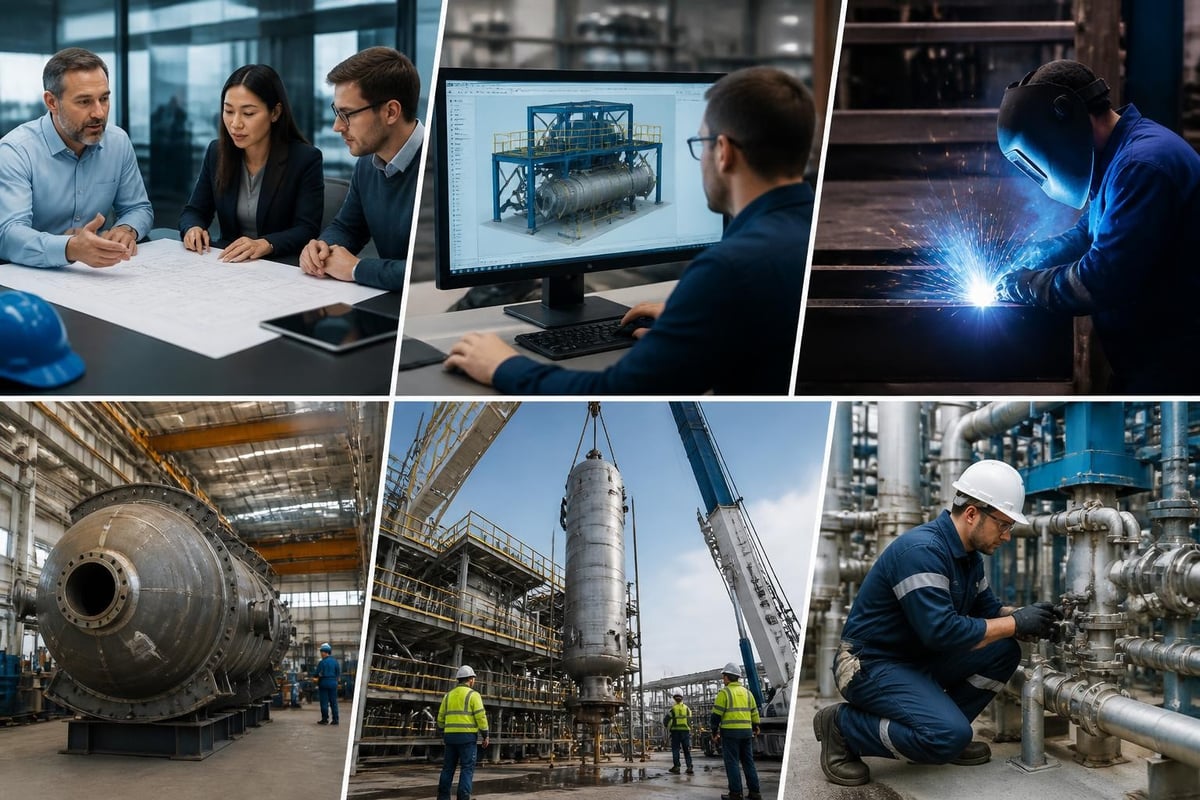
Comprehensive project management capabilities ensure that complex industrial projects proceed smoothly from concept through completion. Effective communication, realistic scheduling, and proactive problem-solving distinguish exceptional service providers from those who simply execute work orders.
| Project Phase | Key Activities | Success Factors |
|---|---|---|
| Planning | Requirements definition, feasibility analysis | Clear communication, technical expertise |
| Engineering | Design development, material selection | Industry knowledge, code compliance |
| Fabrication | Manufacturing, quality control | Skilled craftsmanship, process control |
| Installation | Field work, system integration | Safety focus, minimal disruption |
| Follow-up | Documentation, warranty support | Accountability, long-term relationship |
Custom fabrication capabilities prove particularly valuable when standard components don't meet specific operational requirements. The ability to design and manufacture unique solutions enables businesses to optimize their processes rather than compromising around available off-the-shelf options.
Emergency response capabilities provide insurance against the unexpected equipment failures that inevitably occur in industrial operations. Knowing that qualified technicians can respond quickly to critical situations allows businesses to operate with confidence, understanding that support stands ready when circumstances demand immediate action.
Economic Impact and Industry Trends
The industrial US manufacturing sector contributes substantially to regional economies throughout the Western United States, creating skilled employment opportunities and supporting business ecosystems that extend far beyond individual companies. Understanding current trends helps businesses make informed decisions about their operational strategies and partnership selections.
Greenhouse gas emissions from the industrial sector drive increasing focus on efficiency and sustainability initiatives. Forward-thinking industrial providers help their clients reduce environmental impacts while maintaining productivity, aligning business operations with evolving regulatory expectations and corporate responsibility goals.
Workforce development represents both a challenge and an opportunity across industrial US operations. The skilled trades face demographic transitions as experienced professionals retire while younger workers often pursue different career paths. Companies that invest in training programs and apprenticeships help ensure continuity of expertise while creating pathways for the next generation of industrial craftspeople.
Market Dynamics and Competitive Positioning
Resource availability influences industrial US capabilities significantly. Access to raw materials, specialty alloys, and replacement components affects project timelines and costs. Established providers maintain supplier relationships and inventory systems that minimize delays and ensure project continuity.
The comprehensive industrial information databases available through specialized industry resources help businesses identify qualified service providers and evaluate capabilities across different geographic regions. Due diligence in partner selection pays dividends through improved outcomes and reduced operational risks.
Geographic proximity matters when evaluating industrial US service providers. While some work can be performed remotely, many applications require on-site presence. Regional specialists understand local conditions, maintain shorter response times, and build relationships that translate into better service and priority access during peak demand periods.
Integration of Shop and Field Service Capabilities
The combination of comprehensive shop facilities with mobile field service capabilities creates a service model that addresses the full spectrum of industrial US needs. Complex fabrication and machining work proceeds efficiently in controlled shop environments, while field services bring expertise directly to operational sites when equipment cannot be transported or downtime must be minimized.
This integrated approach provides businesses with flexibility to choose the most appropriate service delivery method for each situation. Welding service companies that offer both options deliver greater value than those limited to a single service model.
Field Service Advantages and Applications
Field services excel in specific situations where shop-based work proves impractical or inefficient:
- Emergency repairs requiring immediate response to prevent extended downtime
- Large equipment or structures that cannot be easily transported
- Modifications to installed systems while maintaining partial operations
- Remote locations where transportation costs exceed mobilization expenses
- Time-sensitive projects where concurrent shop and field work accelerates completion
Mobile equipment capabilities continue expanding as technology enables increasingly sophisticated work in field environments. Portable machining systems can perform operations once possible only in fixed machine shops, while advanced welding equipment delivers quality comparable to controlled shop conditions.
The US manufacturing capabilities that support critical industries depend on this service flexibility. When production equipment fails, businesses need solutions immediately, not schedules that accommodate equipment transportation and shop availability.
Quality Assurance and Performance Standards
Consistent quality separates professional industrial US providers from businesses that merely claim expertise. Formal quality management systems, documented procedures, and systematic inspection protocols ensure that work meets specifications regardless of which technicians perform the tasks or where the work occurs.
Material certifications and traceability become critical in applications where component failure could create safety hazards or catastrophic operational consequences. Professional providers maintain complete documentation chains from raw material certification through final inspection, creating accountability and demonstrating commitment to excellence.
Third-party certifications validate capabilities and demonstrate adherence to recognized industry standards. Welding certifications, quality management system registrations, and professional memberships signal that providers meet objective competency thresholds rather than simply claiming expertise.
Continuous Improvement and Client Feedback
Leading industrial US operations implement structured feedback mechanisms that capture lessons learned and drive continuous improvement. Post-project reviews, client surveys, and internal audits identify opportunities to enhance processes, improve outcomes, and strengthen service delivery.
Responsive providers value client input and demonstrate willingness to adapt their approaches when feedback identifies areas for improvement. This collaborative mindset builds stronger partnerships and ensures that services continue meeting evolving needs as business conditions change.
The competitive industrial base assessments conducted at national levels recognize that manufacturing capability depends on networks of specialized providers working together. Individual company excellence contributes to broader industrial US competitiveness that benefits entire sectors.
Investment in capability development signals long-term commitment to the industrial manufacturing sectors. Providers who continuously upgrade equipment, expand expertise, and enhance capacity demonstrate the stability and forward thinking that businesses seek in strategic partners.
Specialized Services for Critical Applications
Certain industrial applications demand specialized expertise that goes beyond general fabrication and machining capabilities. Pressure vessel repair, exotic material welding, and precision tolerance machining require certifications, equipment, and experience that not all industrial US providers maintain.
Pressure vessel repair services exemplify this specialized domain. Code compliance, material requirements, and inspection protocols create complexity that demands specific knowledge and certification. Businesses operating pressure vessels must partner with qualified providers who understand these requirements completely.
Technical Expertise in Specialized Domains
The depth of expertise required for specialized industrial work develops through years of focused experience. Technicians must understand not only the mechanical processes involved but also the metallurgical considerations, code requirements, and inspection criteria that govern their work.
Hydraulic system expertise combines mechanical knowledge with fluid power principles. Designing, troubleshooting, and repairing hydraulic systems requires understanding how components interact within complete systems, not simply replacing individual parts when failures occur.
Custom machining for critical applications often involves materials that present unique challenges. Exotic alloys, hardened steels, and composite materials require different approaches than common materials, demanding both technical knowledge and practical experience to achieve successful outcomes.
The industrial US manufacturing landscape offers tremendous opportunities for businesses that partner with capable service providers who understand their unique needs and operational requirements. From routine maintenance to complex custom fabrication projects, the right industrial partner delivers solutions that keep operations running efficiently while supporting long-term strategic objectives. LTJ Industrial Services brings comprehensive shop and field capabilities to commercial and industrial clients throughout the Western United States, combining expert welding, precision machining, and custom fabrication services with the responsive service and technical expertise that today's demanding operations require.