Industrial powder coating has become the preferred finishing method for fabricated metal components across manufacturing, oil and gas, aggregate processing, and recycling sectors. This electrostatic application process delivers superior durability, chemical resistance, and environmental compliance compared to traditional liquid coatings. For companies operating heavy equipment and structural components in demanding conditions throughout the Western United States, understanding powder coating capabilities and quality standards ensures long-term asset protection and reduced maintenance costs.
Understanding the Industrial Powder Coating Process
Industrial powder coating relies on electrostatic principles to bond dry powder particles to metal surfaces before heat curing creates a durable finish. Unlike liquid paint systems, this method eliminates solvents and volatile organic compounds (VOCs), making it environmentally superior and compliant with increasingly strict air quality regulations.
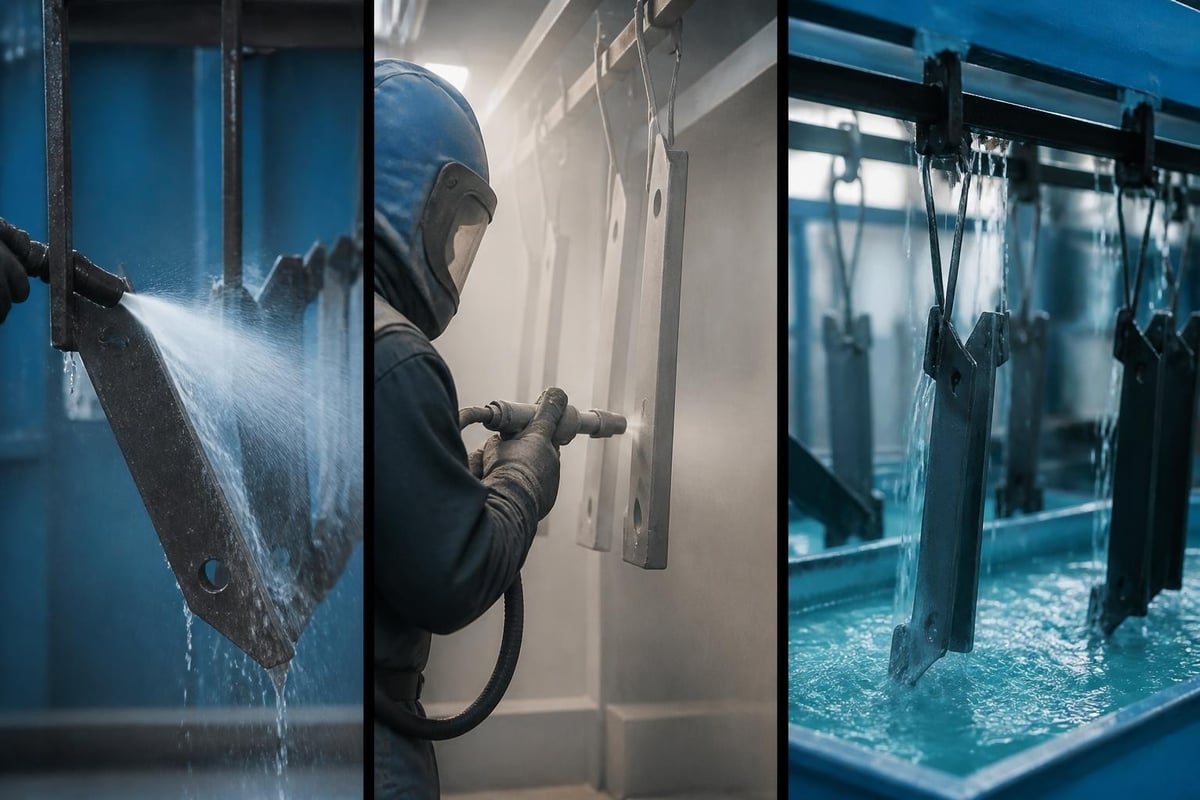
The process begins with thorough surface preparation. Metal fabrications must be completely free of oils, mill scale, rust, and contaminants. Surface preparation methods include abrasive blasting, chemical cleaning, or conversion coating treatments. The AMPP protective coatings learning center provides comprehensive guidance on surface preparation standards that ensure optimal adhesion and coating performance.
Surface Preparation Requirements
Proper surface preparation determines coating adhesion and longevity. For industrial applications, surface profiles typically range from 1.5 to 3.0 mils, creating mechanical anchor patterns that enhance powder adhesion.
Common surface preparation methods include:
- Abrasive blasting with steel grit, aluminum oxide, or garnet media
- Alkaline cleaning for removing oils and organic contaminants
- Iron phosphate or zinc phosphate conversion coatings
- Chromate-free pretreatment systems for enhanced corrosion resistance
After surface preparation, components enter the powder application booth. Electrostatic spray guns charge powder particles, which are attracted to grounded metal surfaces. This electrostatic attraction enables uniform coverage, including wrap-around on edges and recessed areas.
Application Methods and Equipment Considerations
Industrial facilities employ different application methods based on production volume, part geometry, and quality requirements. Electrostatic spray application remains the most versatile method, suitable for both batch processing and continuous production lines.
Application method selection depends on several factors:
- Part size, weight, and configuration complexity
- Production volume and throughput requirements
- Powder transfer efficiency and reclaim systems
- Quality standards and appearance specifications
Corona charging guns use high voltage to ionize air molecules, creating a cloud of charged ions that attach to powder particles. This method excels with complex geometries and deep recesses. Tribo charging guns generate charge through friction as powder particles pass through a Teflon barrel, producing more controlled film builds ideal for thin-film applications.
Automated systems with reciprocating guns and programmable motion control deliver consistent coverage for high-volume production. Manual application provides flexibility for large fabrications, prototype work, and repair operations. The types of powder coating systems vary significantly based on production environment and quality requirements.
Curing and Cross-Linking Chemistry
Heat curing transforms powder particles into a continuous film through chemical cross-linking. Curing temperatures typically range from 325°F to 425°F, with dwell times of 10 to 30 minutes depending on powder chemistry, film thickness, and substrate mass.
| Powder Type | Cure Temperature | Typical Applications | Key Benefits |
|---|---|---|---|
| Epoxy | 325°F – 375°F | Indoor equipment, chemical resistance | Excellent adhesion, chemical resistance |
| Polyester | 350°F – 400°F | Outdoor equipment, UV exposure | Weather resistance, color retention |
| Epoxy-Polyester Hybrid | 350°F – 400°F | General manufacturing | Balanced properties, cost-effective |
| Urethane | 325°F – 375°F | High-wear applications | Impact resistance, flexibility |
Conveyor ovens maintain precise temperature profiles throughout the curing cycle. Large fabrications may require batch ovens with sufficient interior dimensions and heating capacity. Temperature monitoring using surface probes or infrared sensors confirms proper cure across all part surfaces.
Quality Standards and Testing Protocols
Quality assurance in industrial powder coating involves multiple testing stages from incoming powder verification through final coating inspection. Standardized test methods ensure coating performance meets application requirements.
The ASTM D3451 guide for testing coating powders establishes laboratory methods for evaluating powder properties including particle size distribution, gel time, specific gravity, and contamination levels. These tests verify powder quality before application.
Film Performance Testing
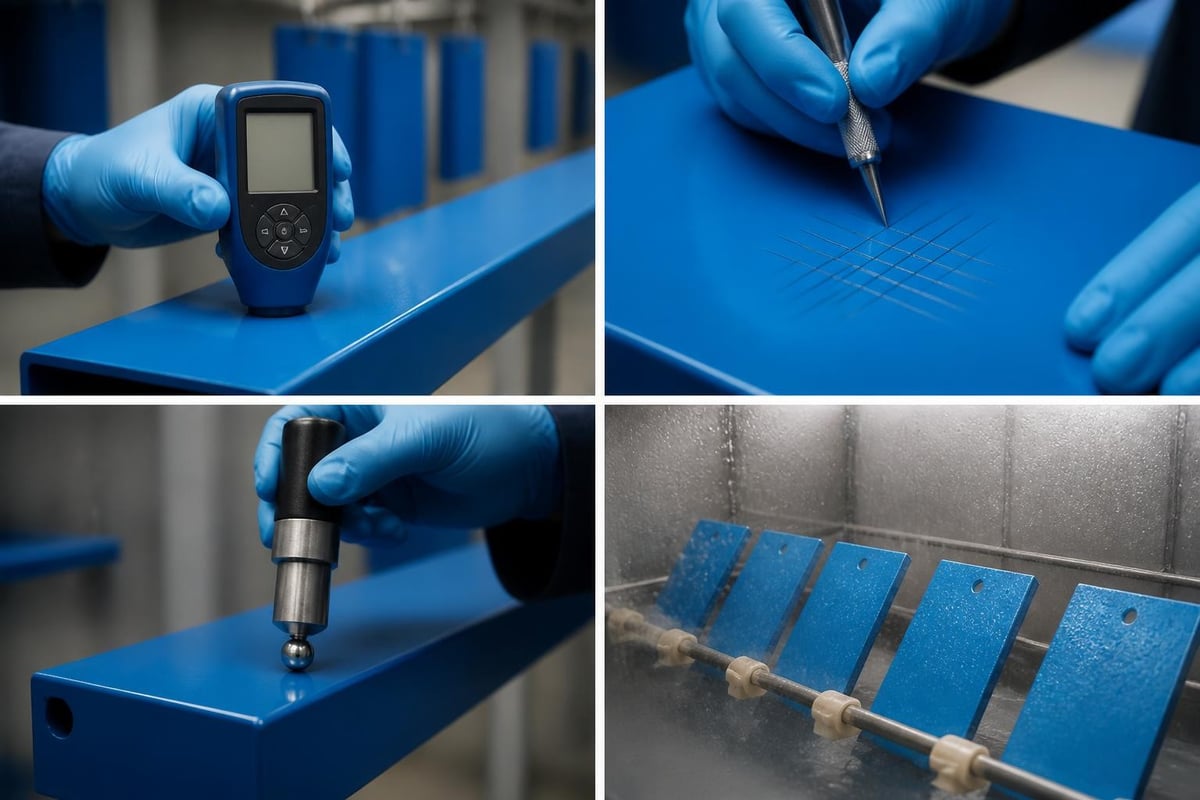
Applied coating quality requires verification of adhesion, thickness, flexibility, and impact resistance. Testing protocols depend on service environment and performance specifications.
Critical performance tests include:
- Dry Film Thickness (DFT): Measured using magnetic or eddy current gauges, typical industrial coatings range from 2.0 to 4.0 mils
- Adhesion Testing: Cross-hatch or pull-off tests verify coating bond strength to substrate
- Impact Resistance: Direct and reverse impact tests evaluate coating toughness and flexibility
- Salt Spray Exposure: ASTM B117 accelerated corrosion testing for marine and chemical environments
- Flexibility Testing: Mandrel bend tests verify coating elongation without cracking
Thickness uniformity becomes critical for corrosion protection. Industrial applications typically specify minimum DFT requirements with tolerance ranges. Areas with insufficient thickness create corrosion vulnerability, while excessive thickness may cause brittleness or cracking.
Architectural and Performance Specifications
Different service environments require specific powder coating performance levels. The architectural industry has established clear performance tiers that also guide industrial applications.
Architectural specifications defined by the American Architectural Manufacturers Association (AAMA) provide benchmarks for coating durability. The Architect’s Guide to Powder Coatings details AAMA 2603, 2604, and 2605 performance levels, which translate to industrial applications requiring specific durability characteristics.
AAMA Performance Tiers Applied to Industrial Equipment
| Specification | Typical Service Life | Key Tests | Industrial Applications |
|---|---|---|---|
| AAMA 2603 | Minimal exterior | Basic adhesion, humidity | Indoor manufacturing equipment |
| AAMA 2604 | Moderate exterior | Enhanced weathering, impact | Sheltered outdoor installations |
| AAMA 2605 | Superior exterior | Rigorous accelerated weathering | Exposed structures, coastal environments |
For oil and gas equipment, aggregate processing machinery, and recycling facility components, coating selection balances environmental exposure with mechanical wear requirements. Chemical resistance becomes paramount when equipment contacts process fluids, while UV stability matters less for enclosed or sheltered equipment.
Industrial painting services often integrate powder coating with complementary surface protection methods. Proper specification ensures coating systems match operational demands without over-engineering that increases costs unnecessarily.
Duplex Coating Systems for Enhanced Protection
Combining galvanizing or zinc-rich primers with powder topcoats creates duplex systems that deliver superior corrosion protection. This approach proves valuable for equipment operating in harsh chemical environments or marine atmospheres.
Hot-dip galvanizing provides sacrificial zinc protection, while the powder topcoat seals the zinc layer and adds color, UV resistance, and enhanced chemical barrier properties. The combined system extends service life significantly beyond either method alone.
Inspection and Quality Control for Duplex Systems
Duplex coating inspection requires specialized knowledge of both the metallic coating and organic topcoat. The inspection guidance for duplex coating systems addresses critical quality checkpoints including surface preparation of galvanized surfaces, coating adhesion verification, and proper cure confirmation.
Duplex system quality checkpoints:
- Galvanized surface profile and cleanliness before powder application
- White rust removal and chromate conversion coating application
- Powder adhesion testing specific to zinc substrates
- Holiday detection for coating continuity verification
- Edge coverage inspection on sharp corners and weld seams
The challenge with galvanized substrates involves ensuring powder adhesion to the relatively smooth zinc surface. Light abrasive profiling or chemical conversion coatings enhance mechanical and chemical bonding. Temperature control during curing prevents zinc outgassing that can create pinholes or blistering.
Environmental Impact and Sustainability
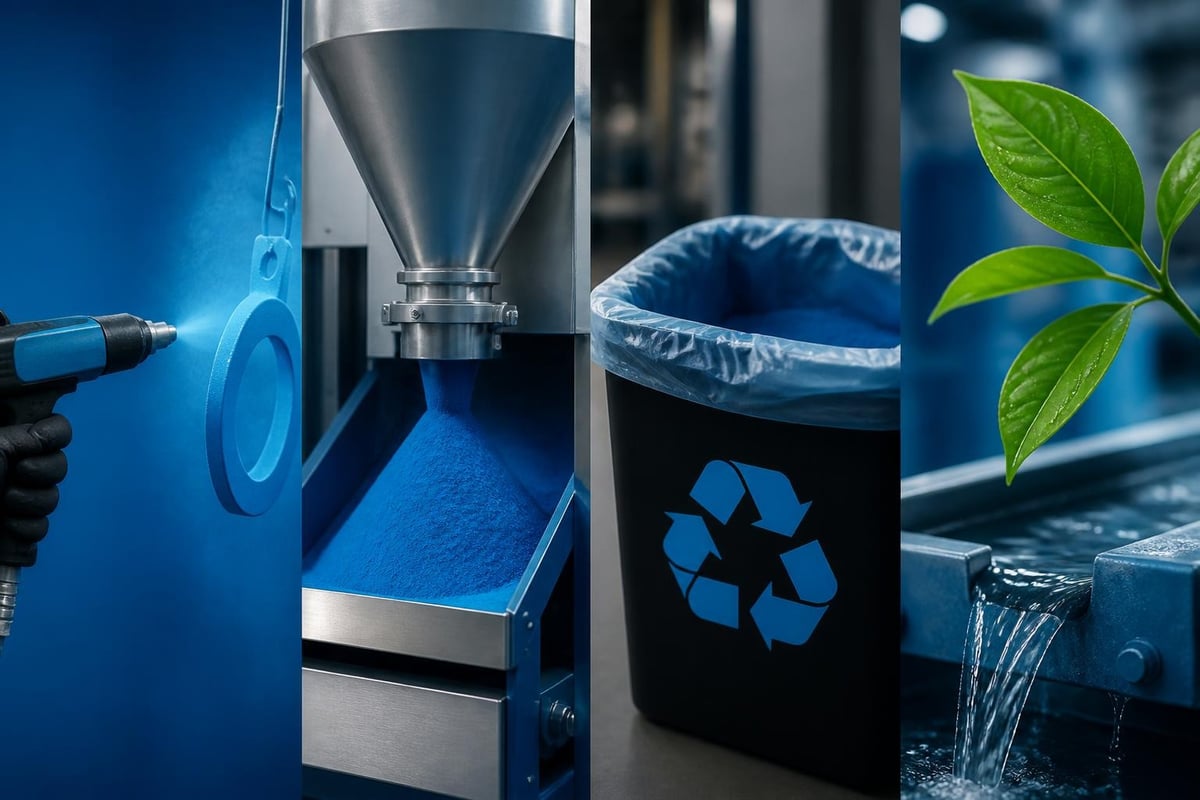
Industrial powder coating delivers measurable environmental advantages over liquid coating systems. Zero VOC emissions eliminate air quality concerns and simplify regulatory compliance. Transfer efficiency typically exceeds 60-70%, with overspray powder recovered and reused, minimizing waste.
Life cycle assessment (LCA) methodologies quantify environmental impacts across raw material extraction, manufacturing, application, service life, and disposal. The American Coatings Association Product Category Rules establish standardized frameworks for conducting LCAs and generating Environmental Product Declarations (EPDs) that enable informed coating selection.
Resource Efficiency and Waste Reduction
Powder coating operations generate minimal hazardous waste compared to solvent-based systems. Booth cleanup involves vacuuming dry powder rather than disposing of contaminated solvents. Curing ovens operate on natural gas or electricity without afterburner requirements for VOC control.
Powder reclaim systems capture overspray through cyclone separators or cartridge filters, returning unused powder to supply hoppers. Color changes require thorough booth cleaning, but reclaimed powder from single-color production runs maintains full performance properties.
Water consumption for powder coating remains minimal, limited to pretreatment stages. Modern pretreatment systems employ counterflow rinse cascades and closed-loop recycling that reduce fresh water consumption by 70-80% compared to older single-pass systems.
Application Challenges in Heavy Industrial Environments
Large fabrications present unique coating challenges. Weldments, structural assemblies, and equipment frames often exceed standard oven dimensions, requiring batch ovens with 12-foot or larger openings. Heat distribution in large ovens demands careful monitoring to ensure all surfaces reach cure temperature.
Metal fabrication processes create surface conditions that affect coating performance. Weld slag, spatter, and heat-affected zones require extra attention during surface preparation. Sharp edges and tight inside corners challenge uniform powder coverage.
Field Touch-Up and Repair Considerations
Industrial equipment frequently requires field repair after coating damage from installation, transportation, or service. Field-applied two-component epoxies or urethanes provide chemical compatibility with factory powder coatings, though color and gloss matching presents challenges.
Field repair best practices include:
- Abrasive removal of damaged coating and corrosion products
- Feathering coating edges to minimize profile differences
- Applying compatible primer systems to bare metal
- Multiple topcoat layers for film build equivalent to original coating
- Inspection documentation for warranty and quality records
For critical applications, some fabricators apply powder coating after initial field fabrication and installation work completes. This approach ensures complete coverage including field-welded connections and modifications made during installation.
Integration with Manufacturing Workflows
Efficient powder coating integration requires coordination between fabrication, sandblasting preparation, coating application, and final assembly. Production scheduling must account for coating cure times and quality inspection before components advance to subsequent operations.
Workflow optimization strategies:
- Batch similar components by size, powder color, and cure requirements
- Complete all welding and machining before coating to avoid post-coat damage
- Design masking fixtures for threaded holes, bearing surfaces, and critical dimensions
- Establish inspection hold points before coating obscures base metal
- Coordinate with assembly schedules to minimize coated part storage time
For commercial metal fabrication projects serving aggregate, recycling, and manufacturing sectors, coating capabilities influence design decisions. Designing for coating means specifying weld-through primers, planning drain holes for chemical pretreatment, and avoiding configurations that trap powder or prevent proper curing.
Color Selection and Aesthetic Considerations
While industrial powder coating prioritizes protection over appearance, color selection affects heat absorption, visibility, and equipment identification. Light colors reflect solar radiation, keeping equipment cooler in outdoor installations. High-visibility colors enhance safety in industrial facilities.
| Color Category | Solar Reflectance | Typical Applications | Maintenance Considerations |
|---|---|---|---|
| White/Light Gray | High (70-85%) | Outdoor equipment, hot climates | Shows dirt, requires more frequent cleaning |
| Safety Yellow/Orange | Medium (50-65%) | Mobile equipment, high-visibility needs | Excellent visibility, moderate heat gain |
| Dark Gray/Black | Low (15-30%) | Indoor equipment, aesthetic preference | Hides wear, higher heat absorption |
| Earth Tones | Medium (40-55%) | Architectural integration | Balanced visibility and dirt concealment |
Gloss level affects both appearance and cleanability. High-gloss finishes provide easier cleaning but show surface imperfections more readily. Low-gloss and textured finishes hide substrate irregularities while providing slip resistance on walkable surfaces.
Cost Analysis and Return on Investment
Industrial powder coating typically costs more per square foot than basic liquid coating systems but delivers superior longevity and lower lifecycle costs. Initial investment includes application equipment, curing ovens, and pretreatment systems, though outsourcing remains viable for lower-volume requirements.
Total cost considerations include:
- Material costs: powder, pretreatment chemicals, masking supplies
- Labor: surface preparation, application, inspection, and packaging
- Energy: oven fuel or electricity, compressed air, booth ventilation
- Maintenance: equipment servicing, filter replacement, booth cleaning
- Quality costs: testing, rework, warranty claims
The extended service life of powder coating reduces recoating frequency. Equipment operating in corrosive environments may achieve 12-15 years between recoating cycles with powder systems versus 5-7 years with conventional liquid coatings. This extended durability translates directly to reduced downtime and lower total ownership costs.
For businesses serving manufacturing industries across the Western United States, powder coating capabilities support customer requirements for durable, compliant finishing systems. Whether coating custom fabrications in-house or partnering with specialized coating providers, understanding quality standards and application best practices ensures optimal results.
Specialized Applications in Industrial Sectors
Different industries demand specific coating characteristics. Oil and gas equipment requires chemical resistance to hydrocarbons, hydrogen sulfide, and process fluids. Aggregate processing machinery needs abrasion resistance alongside corrosion protection. Recycling facility equipment faces combinations of moisture, chemicals, and mechanical wear.
Industry-specific coating requirements:
- Oil & Gas: Chemical resistance, temperature tolerance, cathodic disbondment resistance
- Aggregate Processing: Impact resistance, edge retention, fast color identification
- Recycling Operations: Chemical resistance to leachates, moisture exposure, mechanical durability
- Manufacturing Equipment: Heat resistance, chemical splash protection, cleanability
Custom fabrication projects benefit from early coating specification during design phases. Identifying coating requirements influences material selection, weld procedures, and dimensional tolerances. Some powder coating systems require specific cure temperatures that may affect heat-treated alloys or welded assemblies.
Working with experienced welding and fabrication providers who understand coating requirements ensures components arrive at the coating facility properly prepared. This coordination reduces rework, controls costs, and maintains project schedules.
Industrial powder coating delivers unmatched protection for metal fabrications operating in demanding commercial and manufacturing environments. Understanding process requirements, quality standards, and application best practices ensures coating systems meet performance expectations while controlling costs. Whether you need comprehensive fabrication services with integrated finishing capabilities or field repairs for operating equipment, LTJ Industrial Services provides expert welding, machining, and metal fabrication solutions throughout Colorado and the Western United States.