
The manufacturing landscape continues to evolve as industrial machine shops remain the backbone of American production capabilities. These facilities transform raw materials into precision components that power everything from oil and gas operations to aggregate processing and recycling infrastructure. With manufacturing technology orders reaching record highs in December 2025, the role of an industrial machine shop has never been more critical to supporting the commercial and industrial sectors across the Western United States.
Core Operations in Modern Machine Shops
An industrial machine shop serves as a comprehensive manufacturing hub where skilled technicians and advanced equipment work together to produce custom parts and components. These facilities typically house multiple machine types, each serving distinct purposes in the production process.
Essential Equipment and Capabilities
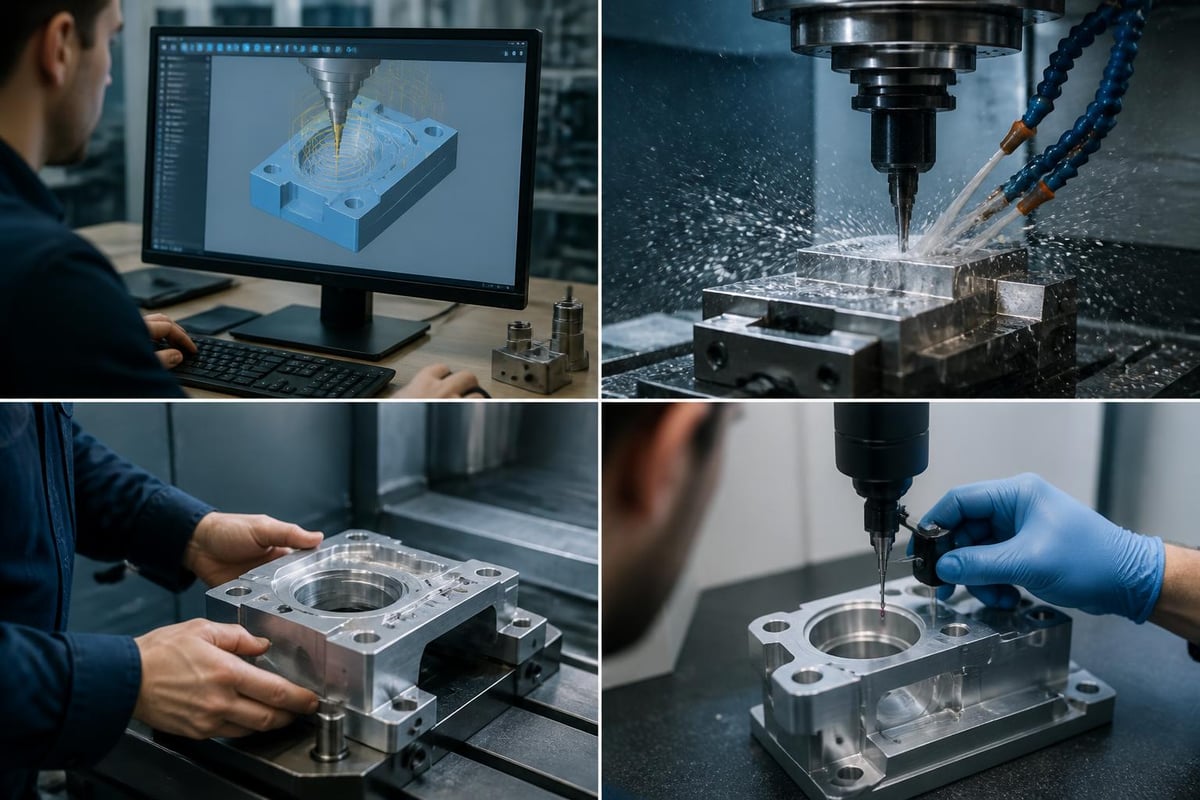
The foundation of any industrial machine shop includes a diverse array of machining equipment. CNC (Computer Numerical Control) machines represent the modern standard, offering precision and repeatability that manual operations cannot match. Mills, lathes, grinders, and drill presses form the core equipment roster, while specialized tools like water jet cutters and EDM (Electrical Discharge Machining) systems expand capabilities for complex projects.
Key equipment categories include:
- Turning operations: Lathes for cylindrical parts and rotational machining
- Milling operations: Multi-axis mills for complex geometries and surface finishing
- Grinding and finishing: Precision grinders for tight tolerances and surface quality
- Fabrication support: Welding stations, press brakes, and assembly areas
- Quality control: CMM (Coordinate Measuring Machines) and inspection equipment
The integration of computer-aided manufacturing (CAM) software has revolutionized how shops program and execute machining operations. Modern facilities leverage digital workflows that connect design files directly to machine controllers, reducing setup time and minimizing human error.
Material Handling and Specialization
Different industries require expertise with specific materials. An industrial machine shop serving oil and gas clients must excel at machining hardened steels and exotic alloys that withstand extreme pressures and temperatures. Aggregate operations need components from wear-resistant materials that endure constant abrasion. Recycling facilities require parts that resist corrosion and impact damage.
| Material Category | Common Applications | Machining Considerations |
|---|---|---|
| Carbon Steels | Structural components, shafts, brackets | Standard tooling, moderate speeds |
| Stainless Steels | Corrosion-resistant parts, food processing | Chip control, heat management |
| Aluminum Alloys | Lightweight components, heat exchangers | High speeds, coolant management |
| Tool Steels | Dies, punches, wear surfaces | Hardness variation, precision grinding |
| Exotic Alloys | Downhole tools, high-temperature applications | Specialized tooling, slow speeds |
Safety Standards and Compliance
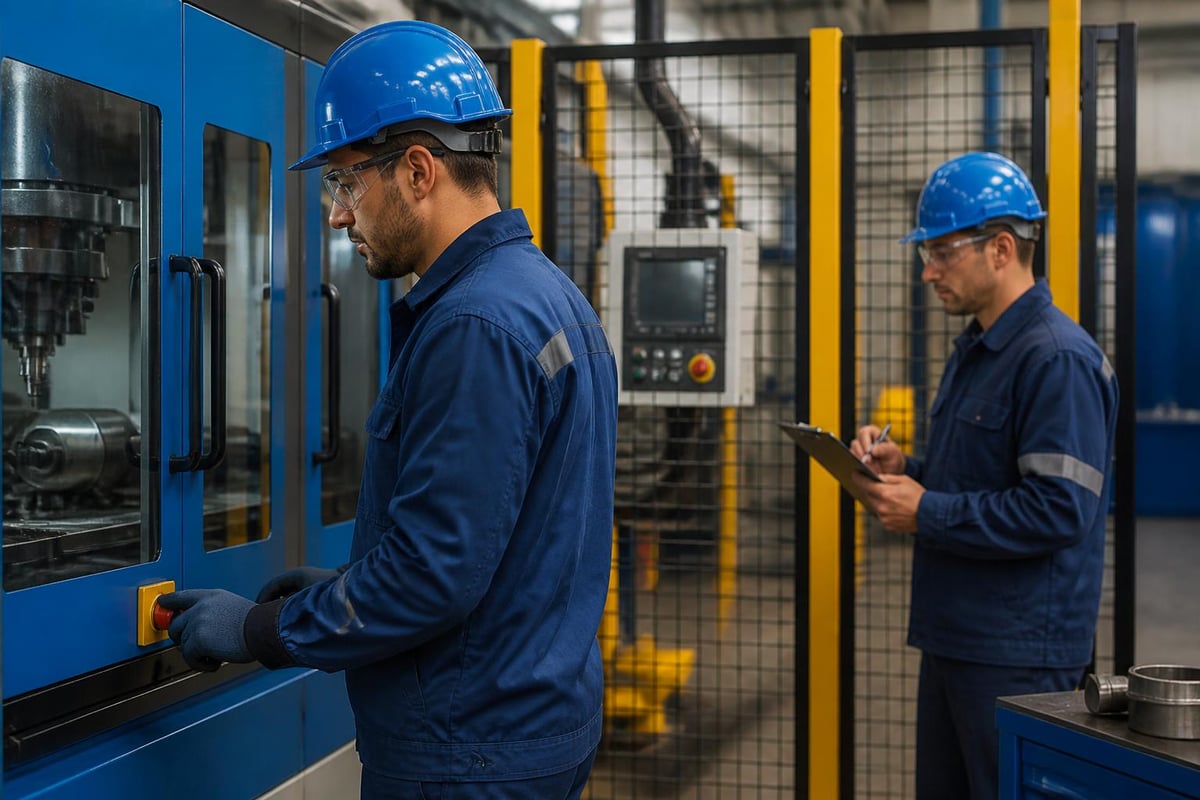
Operating an industrial machine shop requires strict adherence to safety protocols that protect workers and ensure regulatory compliance. OSHA’s machine guarding requirements establish fundamental safeguards that prevent machinery-related injuries.
Personal Protective Equipment Requirements
Machine shop environments present multiple hazards that necessitate comprehensive PPE programs. Eye protection stands as the most critical requirement, with safety glasses or face shields mandatory whenever machines are operating. Flying chips, coolant spray, and grinding sparks create constant risks to vision.
Standard PPE requirements include:
- Safety glasses with side shields (minimum requirement)
- Hearing protection in high-noise areas
- Steel-toed boots for foot protection
- Close-fitting clothing without loose sleeves or jewelry
- Respiratory protection when working with certain materials
Virginia Tech’s machine shop safety guidelines emphasize the importance of proper training before operating any equipment. Workers must demonstrate competence with each machine type and understand emergency shutdown procedures.
Machine-Specific Safety Protocols
Each machine type in an industrial machine shop presents unique hazards that require specific safety measures. Lathes demand particular attention to workpiece security and chuck key removal. Milling machines require proper vise clamping and tool holder inspection. Grinders create sparks and dust that need containment and ventilation.
The comprehensive safety guidelines from Harvard outline best practices for various machine operations. Regular equipment maintenance, guard verification, and safety audits create a culture where accidents become preventable rather than inevitable.
Quality Control and Precision Standards
Delivering components that meet customer specifications requires rigorous quality control throughout the manufacturing process. An industrial machine shop must maintain documented procedures that ensure consistency and traceability.
Inspection and Measurement Protocols
First-article inspection establishes the baseline for production runs. Before manufacturing multiple parts, shops verify that the initial piece meets all dimensional and surface finish requirements. This practice prevents costly errors that would affect entire batches.
Quality control checkpoints include:
- Incoming material verification and certification review
- In-process measurements at critical machining stages
- Final inspection with documented results
- Statistical process control for production runs
- Non-destructive testing when required by specifications
Coordinate measuring machines (CMMs) provide precision measurement capabilities that exceed manual methods. These systems capture three-dimensional data points that verify complex geometries and ensure parts meet tolerances often measured in thousandths of an inch.
Documentation and Traceability
Industries like oil and gas require complete material traceability from raw stock through finished components. Shops must maintain records that connect each part to its material certification, machining parameters, inspection results, and operator information.
Digital quality management systems have replaced paper-based records in many facilities. These platforms automatically generate inspection reports, track non-conformances, and provide real-time visibility into production status. The shift toward digital documentation improves accuracy while reducing administrative burden.
Industry Trends and Technology Adoption
The industrial machine shop sector continues evolving as new technologies reshape manufacturing capabilities. Record-setting spikes in machine tool orders demonstrate strong industry investment in advanced equipment.
Automation and Multi-Tasking Machines
Multi-tasking machines combine turning, milling, and sometimes grinding operations in a single setup. These systems reduce handling time, improve accuracy, and decrease overall cycle times. For an industrial machine shop focused on efficiency, multi-tasking machines represent significant competitive advantages.
Robotic loading systems extend automation beyond individual machines. Cells equipped with robots can operate lights-out, running production overnight without direct supervision. This capability maximizes equipment utilization and accelerates project completion.
| Technology | Primary Benefits | Implementation Considerations |
|---|---|---|
| Multi-Axis CNC | Complex geometries, reduced setups | Higher programming expertise required |
| Robotic Automation | Extended run times, labor optimization | Initial investment, part standardization |
| Adaptive Machining | Real-time compensation, improved quality | Sensor integration, software development |
| Additive Manufacturing | Rapid prototyping, complex internal features | Material limitations, post-processing needs |
Digital Integration and Industry 4.0
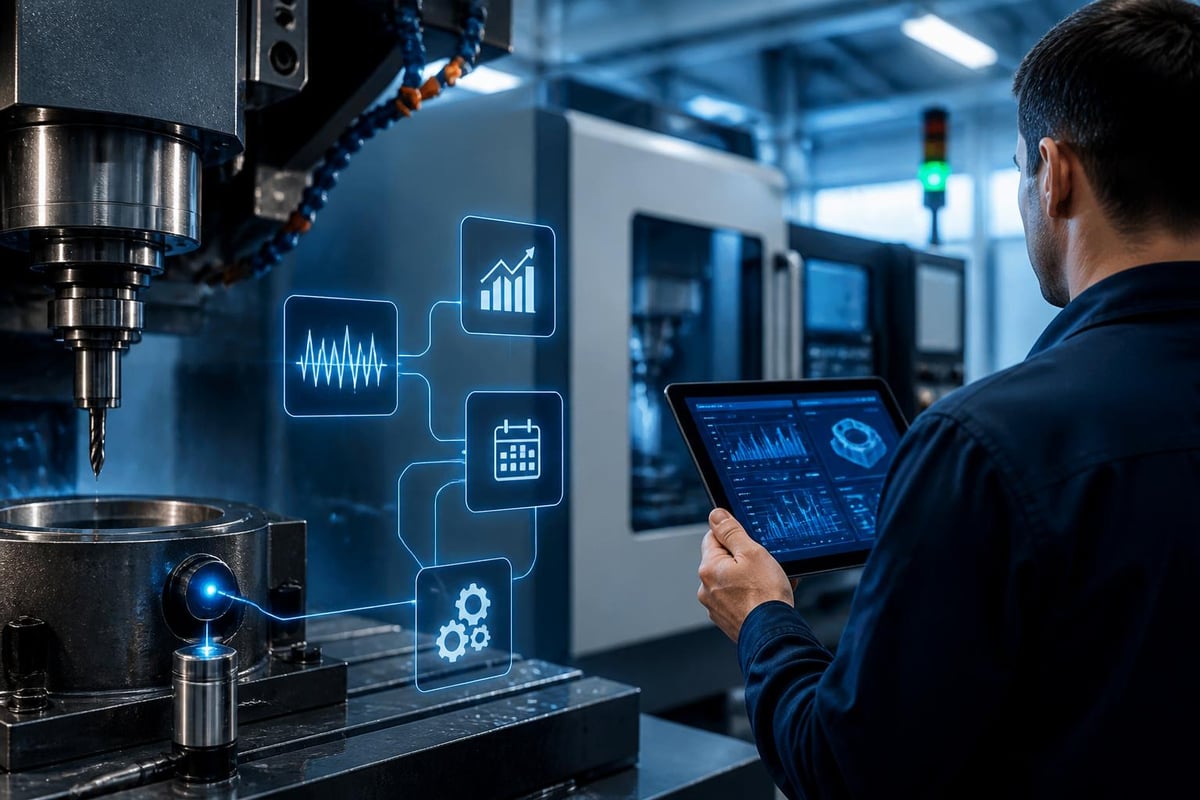
Smart manufacturing concepts connect machines, quality systems, and business software into integrated networks. Sensors monitor machine health, predicting maintenance needs before failures occur. Production data flows automatically into scheduling systems, optimizing workflow and resource allocation.
For shops serving industries like aggregate processing or recycling, predictive maintenance prevents unexpected downtime that could halt customer operations. Digital integration provides visibility that traditional manufacturing environments lack.
Custom Fabrication and Welding Integration
Many industrial machine shops expand capabilities beyond traditional machining to offer comprehensive manufacturing solutions. Integrating welding, fabrication, and machining services creates value for customers who need complete assemblies rather than individual components.
Complementary Manufacturing Services
Combining machining with welding fabrication enables shops to deliver turnkey solutions. A custom bracket might require machined mounting surfaces welded to fabricated structural elements. Hydraulic manifolds need precision-machined ports assembled into welded housings. This integration eliminates coordination between multiple vendors while ensuring compatible tolerances and assembly requirements.
Integrated service offerings include:
- Precision machining of component features
- Custom metal fabrication and forming
- Certified welding for structural and pressure applications
- Hydraulic system fabrication and testing
- On-site field services for installation and repair
Shops offering CNC machining services for heavy industry parts understand that customers often need more than isolated components. Complete assemblies reduce project timelines and simplify quality control.
Field Service Capabilities
Industrial operations frequently require on-site repairs and modifications that cannot wait for shop scheduling. An industrial machine shop with field service capabilities provides emergency response, installation support, and maintenance services at customer facilities.
Field machinists bring portable equipment to job sites, performing line boring, flange facing, and other precision work without disassembling major equipment. This capability minimizes downtime for operations where every hour of production matters.
Serving Specialized Industrial Sectors
Different industries present unique challenges that shape how an industrial machine shop operates. Oil and gas applications demand components that withstand extreme conditions. Aggregate operations need parts that endure constant wear. Recycling facilities require equipment that processes diverse materials under harsh conditions.
Oil and Gas Industry Requirements
Downhole tools, wellhead components, and processing equipment all require precision machining from specialized materials. An industrial machine shop serving this sector must understand API (American Petroleum Institute) specifications, material certifications, and testing requirements specific to petroleum applications.
Thread forms on pipe connections demand exact tolerances to ensure proper sealing under pressure. Surface finishes on valve components affect performance and longevity. These applications leave no room for approximation or guesswork.
Aggregate and Recycling Operations
Crushing equipment, conveyor systems, and material handling machinery require frequent replacement of wear components. Shops that understand these industries stock appropriate materials and maintain patterns or models for commonly needed parts.
The ability to reverse-engineer worn components and produce replacements quickly minimizes downtime for processing operations. This capability becomes especially valuable when original equipment manufacturers have long lead times or discontinued parts.
| Industry Sector | Common Component Needs | Critical Success Factors |
|---|---|---|
| Oil & Gas | Valve bodies, tool joints, adapter flanges | Material certification, thread accuracy |
| Aggregate | Crusher jaws, impact bars, conveyor rollers | Wear resistance, dimensional consistency |
| Recycling | Shredder hammers, screen plates, hydraulic cylinders | Rapid turnaround, cost effectiveness |
| Manufacturing | Custom fixtures, machine components, tooling | Precision, design collaboration |
Workforce Development and Skilled Labor
The success of any industrial machine shop depends on skilled machinists who combine technical knowledge with practical experience. Despite strong industry growth and investment, many shops face challenges recruiting and retaining qualified personnel.
Training and Certification Programs
Apprenticeship programs provide structured pathways for developing machinist skills. These programs combine classroom instruction with hands-on experience under supervision of journey-level machinists. Participants learn blueprint reading, precision measurement, machine operation, and quality control procedures.
Industry certifications validate machinist competencies and demonstrate professional development. Organizations like NIMS (National Institute for Metalworking Skills) offer standardized testing that verifies specific skill levels. Employers increasingly value these credentials as objective measures of capability.
Continuous Improvement Culture
Technology advancement requires ongoing training even for experienced machinists. New CNC controls, updated CAM software, and emerging materials demand learning that extends throughout careers. Shops that invest in employee development maintain competitive advantages through workforce expertise.
Cross-training programs build versatility by teaching machinists multiple machine types and processes. This flexibility improves scheduling efficiency and creates backup capabilities when specialists are unavailable.
Project Management and Customer Communication
Running an effective industrial machine shop requires more than technical capability. Project coordination, timeline management, and customer communication determine whether shops build lasting relationships or struggle with one-time transactions.
Quote Development and Engineering Support
Accurate quoting begins with thorough understanding of customer requirements. Reviewing drawings, discussing tolerance needs, and clarifying material specifications prevent misunderstandings that cause delays or disputes. Many projects benefit from engineering input during the quoting phase, identifying opportunities to optimize designs for manufacturability.
Effective quoting processes address:
- Material requirements and availability
- Machine capabilities and setup needs
- Quality control and inspection requirements
- Delivery timelines and scheduling constraints
- Special packaging or shipping considerations
Value engineering suggestions demonstrate expertise while potentially reducing customer costs. Recommending alternative materials, modified geometries, or different manufacturing approaches builds trust and positions shops as partners rather than vendors.
Progress Communication and Delivery
Regular updates during production keep customers informed and prevent surprises. Simple progress reports noting completion percentages, quality checkpoints passed, and expected delivery dates maintain positive relationships. Proactive communication about potential delays allows customers to adjust their schedules rather than discovering problems at the last minute.
Packaging and shipping require careful attention to prevent damage during transit. Large or heavy components need appropriate crating, while precision parts may require individual protection and orientation control. Understanding customer receiving capabilities ensures deliveries arrive ready for use.
Equipment Maintenance and Facility Management
Reliable equipment performance depends on comprehensive maintenance programs that prevent breakdowns and maintain accuracy. An industrial machine shop cannot deliver quality work from poorly maintained machines.
Preventive Maintenance Scheduling
Regular maintenance tasks include lubrication, alignment verification, coolant system service, and wear component replacement. Documented schedules ensure these activities occur consistently rather than waiting for problems to develop.
Critical maintenance activities include:
- Daily operator checks and basic cleaning
- Weekly lubrication and fluid level verification
- Monthly accuracy checks and calibration verification
- Quarterly deep cleaning and comprehensive inspection
- Annual rebuilds or major component replacement as needed
Precision equipment like grinders and CMMs requires climate-controlled environments to maintain accuracy. Temperature fluctuations cause dimensional changes in both machines and workpieces, affecting measurement and machining results.
Facility Organization and 5S Implementation
The 5S methodology (Sort, Set in Order, Shine, Standardize, Sustain) creates organized workspaces that improve efficiency and safety. Tool storage systems ensure quick access to necessary items while preventing loss or damage. Floor marking designates work zones, material storage areas, and traffic paths.
Clean facilities reflect professional operations and create safer working conditions. Coolant spills, metal chips, and grinding dust all present slip, trip, and respiratory hazards that proper housekeeping eliminates. Regular cleaning also allows earlier detection of leaks, wear, or other developing problems.
Modern manufacturing demands precision, reliability, and comprehensive capabilities that only well-equipped industrial machine shops can deliver. From specialized materials and complex geometries to integrated fabrication and field services, success requires expertise across multiple disciplines. Whether you need precision machining, custom welding, or complete fabrication solutions for oil and gas, aggregate, or recycling applications throughout the Western United States, LTJ Industrial Services combines advanced equipment with skilled craftsmen to deliver the quality and responsiveness your operations demand.