Finding qualified industrial contractors near me has become increasingly critical as manufacturing, oil and gas, aggregate, and recycling operations demand specialized expertise that general contractors cannot provide. The industrial contracting landscape in 2026 requires partners who understand complex machinery, intricate welding requirements, precision machining, and field service capabilities that keep operations running without costly downtime. Whether you're managing a processing facility in Colorado or overseeing equipment maintenance across the Western United States, selecting the right industrial contractor determines project success, worker safety, and long-term operational efficiency.
Understanding Industrial Contracting Services
Industrial contractors deliver specialized mechanical, welding, fabrication, and maintenance services distinct from commercial construction work. These professionals handle heavy equipment repair, custom metal fabrication, hydraulic system installation, precision machining, and emergency field services across demanding industrial environments.
The scope of industrial contractor services extends beyond standard construction projects to include process equipment maintenance, specialized welding for high-pressure applications, and machining operations requiring tight tolerances. Industrial contractors must navigate complex operational environments where downtime translates directly to revenue loss, making reliability and technical competence non-negotiable.
Key Service Categories
When searching for industrial contractors near me, businesses encounter several distinct service categories:
- Metal Fabrication: Custom steel structures, equipment frames, conveyor systems, and process piping
- Precision Machining: CNC milling, lathe work, surface grinding, and component manufacturing
- Welding Services: MIG, TIG, stick welding for carbon steel, stainless steel, aluminum, and exotic alloys
- Hydraulic Systems: Installation, repair, and maintenance of hydraulic power units and cylinders
- Field Mechanic Services: On-site equipment repair, preventive maintenance, and emergency breakdown response
- Water Jetting: High-pressure cleaning for equipment, tanks, and process systems
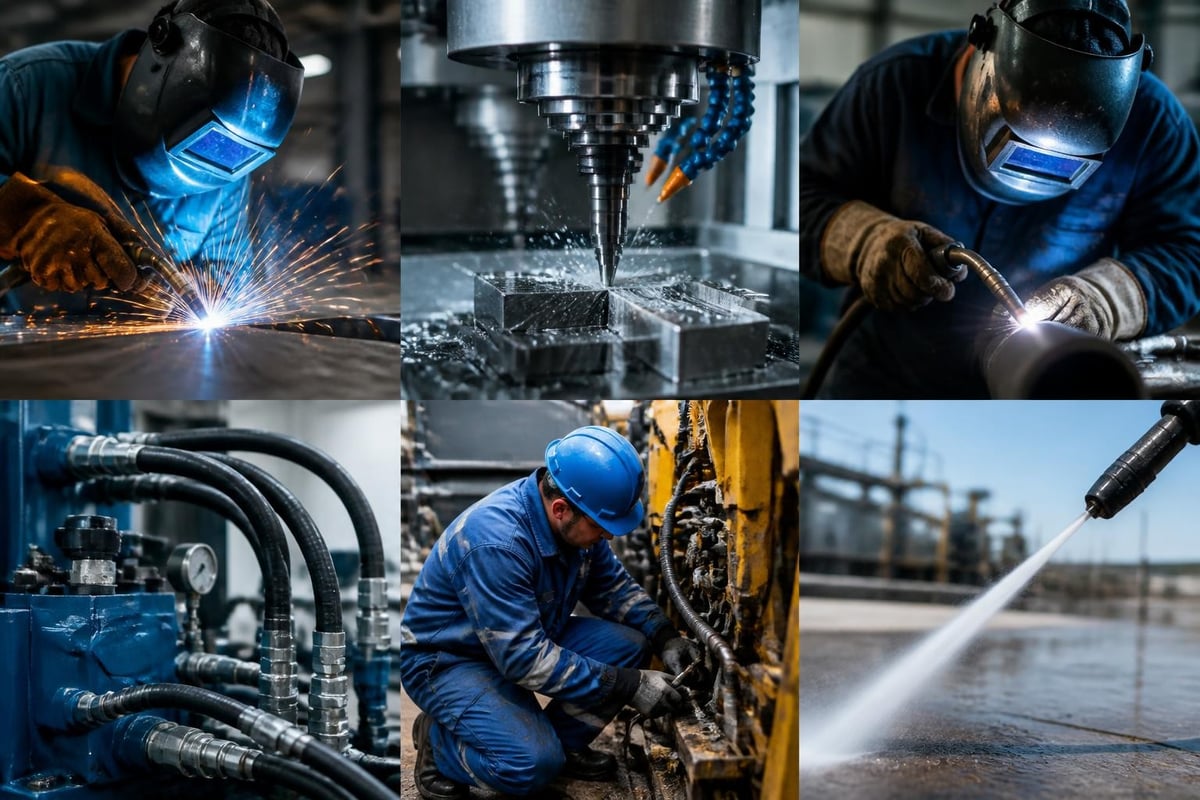
Each category requires specialized equipment, certifications, and experience that distinguish qualified industrial contractors from general service providers. The recycling industry demands expertise in conveyor systems and material handling equipment, while oil and gas operations require knowledge of pressure vessels and pipeline specifications.
Evaluating Safety Standards and Compliance
Safety compliance separates professional industrial contractors from those who cut corners. OSHA safety compliance standards establish minimum requirements that protect workers and facility operations from preventable incidents.
Contractors working in industrial environments must demonstrate comprehensive safety programs addressing hazard identification, fall protection, confined space entry, lockout/tagout procedures, and hot work permits. The contractor safety and health responsibilities extend beyond basic compliance to include active safety culture development and continuous improvement practices.
Critical Safety Elements
| Safety Component | Requirements | Verification Method |
|---|---|---|
| Insurance Coverage | General liability, workers' compensation, professional liability | Certificate of Insurance review |
| Safety Training | OSHA 10/30, confined space, fall protection, arc flash | Training certificates and records |
| Equipment Certification | Crane inspections, lift certifications, tool calibration | Current inspection documentation |
| Incident History | EMR rating, TRIR, DART rates | Safety performance metrics |
| Drug Testing Programs | Pre-employment, random, post-incident protocols | Written program documentation |
Understanding general contractor safety program requirements helps businesses evaluate whether potential contractors maintain adequate safety infrastructure. Aggregate operations present unique hazards including moving machinery, heavy equipment, and material handling risks that require specialized safety protocols.
Reputable contractors proactively share safety statistics and participate in industry safety initiatives. They conduct job hazard analyses before work begins and maintain daily safety briefings throughout project execution.
Technical Capabilities and Equipment Assessment
The equipment a contractor owns and operates directly indicates their capability to handle complex industrial work. Precision machining requires CNC mills, lathes, and inspection equipment that represents significant capital investment and technical expertise.
Welding capabilities extend beyond basic stick welding to include:
- Advanced processes: TIG welding for stainless steel and aluminum, MIG welding for production work
- Material expertise: Carbon steel, stainless steel, chrome-moly, Inconel, and other specialized alloys
- Position capabilities: Flat, horizontal, vertical, and overhead welding certifications
- Quality standards: ASME Section IX, AWS D1.1, API 1104 certifications
Field service capabilities determine whether contractors can respond to emergency breakdowns or must limit work to shop environments. Mobile welding trucks, portable machining equipment, and hydraulic service capabilities enable on-site repairs that minimize production interruptions.
Shop Facilities and Capacity
Evaluating shop facilities when searching for industrial contractors near me reveals capacity for complex fabrication projects:
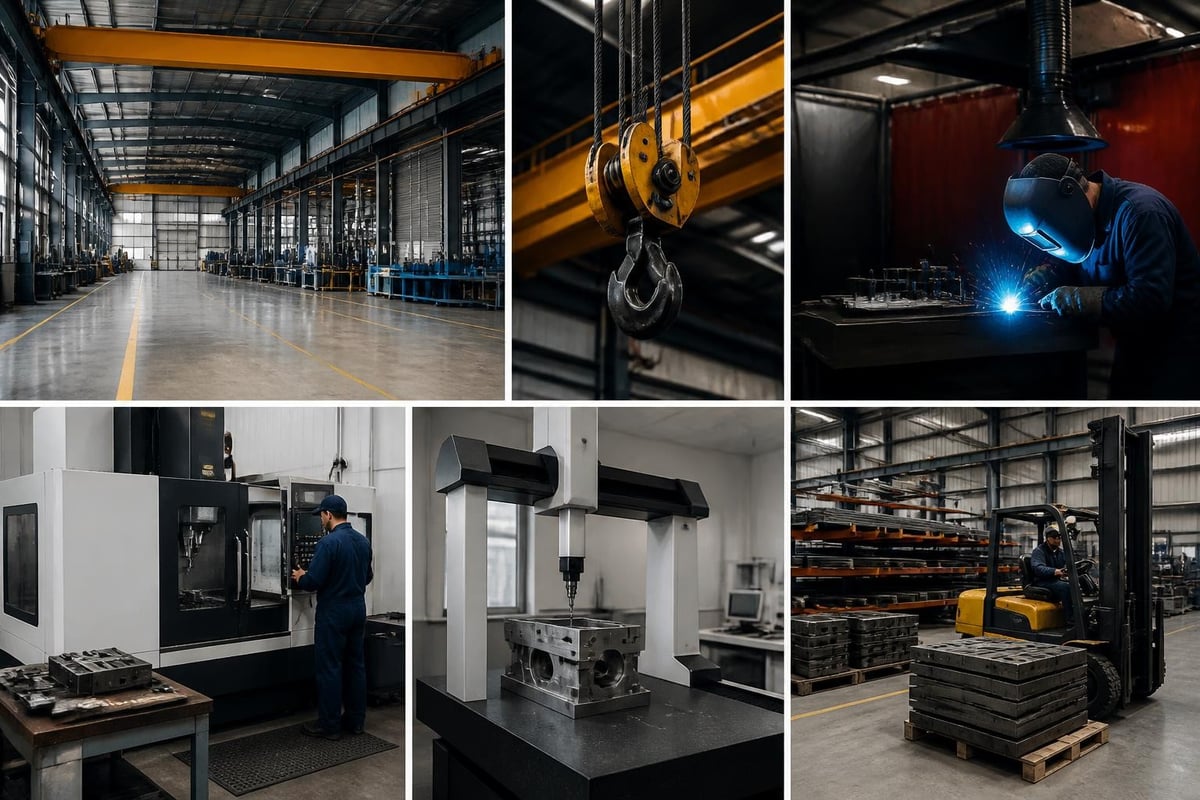
- Fabrication bay size: Determines maximum project dimensions and assembly capabilities
- Overhead crane capacity: Indicates ability to handle heavy components and assemblies
- Welding booth configuration: Shows dedication to quality control and proper ventilation
- Machining center capabilities: Reveals precision tolerances and production capacity
- Quality inspection equipment: CMM machines, ultrasonic testing, and dimensional verification tools
- Material storage: Proper steel storage and inventory management systems
The oil and gas sector demands contractors with pressure vessel experience and pipe welding certifications that meet stringent industry codes. Manufacturing operations benefit from contractors who understand production schedules and can coordinate work to minimize operational disruption.
Geographic Service Area and Response Times
Location matters significantly when selecting industrial contractors near me, especially for time-sensitive repairs and regular maintenance schedules. Contractors serving the Western United States must balance shop-based fabrication capabilities with field service responsiveness across vast geographic territories.
Response time considerations include:
- Emergency breakdown service availability (24/7 coverage versus business hours only)
- Travel time to facility locations across multiple states
- Regional presence enabling faster mobilization
- Local supplier relationships for expedited material procurement
- Understanding of regional codes and permit requirements
Companies operating multiple facilities across Colorado, Wyoming, Utah, and neighboring states require contractors capable of consistent service delivery regardless of location. The aggregate industry often operates in remote locations where contractor accessibility becomes a critical selection factor.
Industry-Specific Experience Requirements
Different industrial sectors present unique technical challenges requiring specialized contractor experience. Industry best practices evolve continuously, making relevant experience essential for quality outcomes.
Sector-Specific Expertise
| Industry Sector | Critical Requirements | Common Applications |
|---|---|---|
| Oil & Gas | API certifications, pressure vessel codes, pipeline welding | Wellhead equipment, processing facilities, storage tanks |
| Aggregate | Conveyor systems, wear-resistant materials, heavy fabrication | Crushers, screens, material handling equipment |
| Recycling | Material handling, hydraulic systems, high-cycle applications | Balers, shredders, conveyor modifications |
| Manufacturing | Production schedules, minimal downtime, precision tolerances | Equipment upgrades, preventive maintenance, custom tooling |
Contractors with demonstrated experience in specific sectors understand operational constraints, material specifications, and performance expectations that generalists miss. The recycling industry values contractors who recognize the abrasive environments and impact loading that equipment endures daily.
Manufacturing facilities benefit from contractors who schedule work during planned shutdowns and coordinate efficiently with production teams. Experience working within operational environments-not just shuttered facilities-demonstrates professionalism and operational awareness.
Verification and Qualification Processes
Thorough contractor qualification protects businesses from liability, quality issues, and project delays. Implementing systematic evaluation processes ensures industrial contractors near me meet minimum standards before engagement.
Documentation Requirements
Request and verify these critical documents during contractor evaluation:
- Business licenses: Current state and local operating licenses
- Insurance certificates: Adequate coverage limits with your company listed as additional insured
- Safety records: Three-year incident history, EMR ratings, and safety program documentation
- Welding certifications: AWS, ASME, or API certifications for welders and welding procedures
- References: Contact information for similar projects completed within the past two years
- Quality certifications: ISO 9001, AS9100, or industry-specific quality standards
The Construction Industry Institute best practices emphasize pre-qualification systems that objectively evaluate contractors before project award. This approach reduces risk and improves project outcomes across industrial applications.
Financial stability verification ensures contractors maintain adequate resources for project completion. Request bank references, bonding capacity letters, and financial statements for larger projects requiring extended timelines.
Cost Structure and Value Considerations
Understanding industrial contractor pricing models helps businesses evaluate proposals fairly and avoid low-bid contractors who compromise quality or safety. Cost structures vary significantly based on service type, project complexity, and urgency.
Shop-based fabrication typically prices by labor hours plus materials with markup percentages covering overhead and profit. Field service work commands premium rates reflecting travel time, equipment mobilization, and operational environment challenges.
Emergency breakdown service carries higher hourly rates compensating contractors for 24/7 availability and rapid response capabilities. Businesses must weigh these costs against production losses from extended downtime when equipment failures occur.
Value Beyond Price
Price represents only one component of contractor value. Consider these factors when evaluating proposals:
- Quality reputation: Long-term reliability versus rework costs
- Safety performance: Avoiding incident-related project delays and liability
- Response time: Minimizing production interruptions during breakdowns
- Technical expertise: Getting solutions right the first time
- Communication: Proactive updates and transparent problem-solving
- Warranty coverage: Standing behind completed work
The oil and gas industry particularly values contractors who understand regulatory requirements and avoid costly compliance failures. Manufacturing operations benefit from contractors who deliver predictable schedules enabling effective production planning.

Ongoing Partnership Development
Successful businesses cultivate long-term relationships with reliable industrial contractors near me rather than constantly soliciting new providers. These partnerships deliver operational advantages including:
- Institutional knowledge about specific equipment and facility requirements
- Faster response times from contractors familiar with site layouts and access procedures
- Preventive maintenance planning that anticipates failures before they occur
- Inventory support for commonly needed parts and materials
- Priority scheduling during high-demand periods
Regular performance reviews maintain contractor accountability while identifying improvement opportunities. Establish clear metrics measuring quality, safety, responsiveness, and cost-effectiveness to guide these evaluations.
Communication and Coordination
Effective contractor relationships require structured communication channels and defined escalation procedures. Designate primary contacts on both sides, establish regular planning meetings for scheduled work, and create emergency contact protocols for urgent situations.
Manufacturing environments benefit from contractors who participate in production planning meetings and coordinate shutdowns efficiently. The aggregate sector values contractors who understand seasonal demand fluctuations and can scale resources accordingly.
Documentation standards ensure both parties maintain clear records of work performed, materials used, and warranty coverage. Digital work order systems, photographic documentation, and detailed invoices support equipment history tracking and future maintenance planning.
Technology Integration and Modern Capabilities
Industrial contractors in 2026 increasingly leverage technology for improved service delivery, quality documentation, and customer communication. Advanced capabilities distinguish forward-thinking contractors from those relying on outdated methods.
Modern welding documentation includes digital weld logs with GPS coordinates, timestamps, and procedure references enabling complete traceability. Machining operations utilize CAD/CAM integration for precision part production from customer-provided drawings.
Field service technology enables:
- Real-time work order updates accessible to facility managers
- Digital inspection reports with photographic documentation
- Equipment history tracking across multiple service events
- Predictive maintenance analytics identifying failure patterns
- Remote troubleshooting capabilities reducing unnecessary site visits
The recycling industry benefits from contractors using vibration analysis and thermal imaging to identify developing equipment problems before failures occur. Oil and gas operations value contractors maintaining digital certification databases ensuring all work meets regulatory documentation requirements.
Regional Considerations for Western United States
Industrial operations across Colorado, Wyoming, Utah, and surrounding states face unique challenges requiring contractor understanding of high-altitude conditions, extreme temperature variations, and remote location logistics.
Elevation affects welding parameters, requiring contractors to adjust procedures for proper fusion and penetration at altitude. Temperature extremes demand material selection knowledge preventing cold-weather brittleness and thermal expansion issues.
Remote locations throughout the Western United States create logistical challenges for material procurement and equipment mobilization. Contractors serving these areas maintain extensive inventory, portable equipment capabilities, and relationships with regional suppliers enabling effective service delivery.
Environmental regulations vary across states and jurisdictions, requiring contractors familiar with permitting processes, waste disposal requirements, and compliance documentation specific to each location. The aggregate industry particularly benefits from contractors understanding mine safety regulations and operational permitting.
Weather patterns including spring runoff, summer heat, winter storms, and rapid weather changes require flexible scheduling and preparedness for environmental conditions affecting outdoor work. Manufacturing facilities operating year-round need contractors capable of working in all conditions while maintaining quality standards.
Selecting qualified industrial contractors near me requires systematic evaluation of safety performance, technical capabilities, industry experience, and service responsiveness that align with your operational requirements. The right contractor partnership delivers reliable equipment performance, minimized downtime, and operational excellence supporting long-term business success. When your facility needs comprehensive welding, fabrication, machining, or field service expertise backed by decades of experience serving the Western United States, LTJ Industrial Services provides the specialized capabilities and responsive service that keep industrial operations running efficiently.