When your excavator breaks down mid-project or your mining equipment develops a critical hydraulic leak, finding qualified "heavy equipment repair near me" becomes an urgent priority. The difference between a same-day repair and days of downtime can cost thousands of dollars in lost productivity, making your choice of repair provider one of the most important operational decisions you'll make. For businesses operating in the aggregate, recycling, oil and gas, and manufacturing sectors throughout the Western United States, understanding what to look for in a heavy equipment repair service ensures you're back in operation quickly and reliably.
Understanding Heavy Equipment Repair Services
Heavy equipment repair encompasses a broad spectrum of specialized services designed to keep industrial machinery operating at peak performance. The complexity of modern equipment requires repair facilities with comprehensive capabilities across multiple disciplines.
Shop vs. Field Repair Services
The location where repairs occur significantly impacts both cost and downtime. Shop-based repairs provide controlled environments with full access to specialized tools, precision measuring equipment, and comprehensive fabrication capabilities. This setting works ideally for complete rebuilds, major overhauls, and repairs requiring machining or extensive welding.
Field repair services bring expertise directly to your job site, eliminating transportation costs and delays. When searching for "heavy equipment repair near me," prioritize providers offering both options. Mobile repair units equipped with welding equipment, hydraulic testing tools, and diagnostic technology can handle everything from emergency breakdowns to scheduled maintenance calls.
Key considerations for field vs. shop repairs:
- Equipment transportability and size constraints
- Severity and complexity of the failure
- Available downtime windows in your operation
- Cost comparison including transportation and crane services
- Environmental conditions affecting repair quality
Critical Capabilities in Heavy Equipment Repair
Not all repair shops possess equal expertise. The most reliable providers demonstrate competency across multiple technical disciplines that modern equipment demands.
Welding and Fabrication Expertise
Structural repairs on heavy equipment require certified welders experienced with high-strength alloys and thick materials. Bucket reconstruction, frame repairs, and boom reinforcement demand precise welding techniques that maintain structural integrity under extreme operational stresses. Custom fabrication capabilities allow repair shops to manufacture replacement components when OEM parts face long lead times or prove prohibitively expensive.

Precision Machining Services
Worn bearings, damaged shafts, and out-of-spec hydraulic components require precision machining to restore equipment to operational tolerances. An industrial machine shop near me with CNC capabilities, manual lathes, and milling equipment can machine replacement parts, repair damaged components, and perform emergency modifications. This capability dramatically reduces downtime compared to waiting for replacement parts.
| Service Type | Typical Applications | Advantage |
|---|---|---|
| CNC Machining | Hydraulic cylinders, bushings, shafts | Precision tolerances, repeatability |
| Manual Lathe Work | Custom adapters, emergency repairs | Flexibility, quick turnaround |
| Milling Operations | Mounting surfaces, gear components | Complex geometries, tight specs |
| Boring Services | Cylinder repairs, bearing housings | Restores original specifications |
Hydraulic System Repair
Hydraulic failures account for a significant percentage of heavy equipment breakdowns. Comprehensive repair services include cylinder rebuilding, pump and motor repair, hose assembly, and complete system diagnostics. Providers equipped with hydraulic test stands can verify repairs under actual operating pressures before equipment returns to service.
Selecting the Right Heavy Equipment Repair Provider
Your choice of repair partner directly impacts equipment reliability, operational uptime, and long-term maintenance costs. Several factors distinguish exceptional providers from average shops.
Industry Specialization and Experience
Equipment used in aggregate processing faces different challenges than machinery in oil and gas operations. The best approach when searching "heavy equipment repair near me" focuses on providers with demonstrated experience in your specific industry. Recycling equipment encounters abrasive materials and contamination issues, while mining equipment operates in extreme conditions requiring specialized knowledge.
Consider these experience indicators:
- Years serving your specific industry sector
- Portfolio of similar equipment repairs
- Understanding of operational constraints and timelines
- Knowledge of industry-specific compliance requirements
- Relationships with OEM parts suppliers
Geographic Service Area and Response Time
Equipment downtime costs escalate quickly, making rapid response capability essential. Evaluate potential repair providers based on their proximity to your operations and their emergency response protocols. Shops offering 24/7 emergency services with mobile repair units minimize production losses during critical failures.
Response time considerations include:
- Distance from your operational sites
- Availability of emergency after-hours service
- Fleet size of mobile service vehicles
- Geographic coverage area throughout your region
- Average response time for emergency calls
Comprehensive Service Capabilities
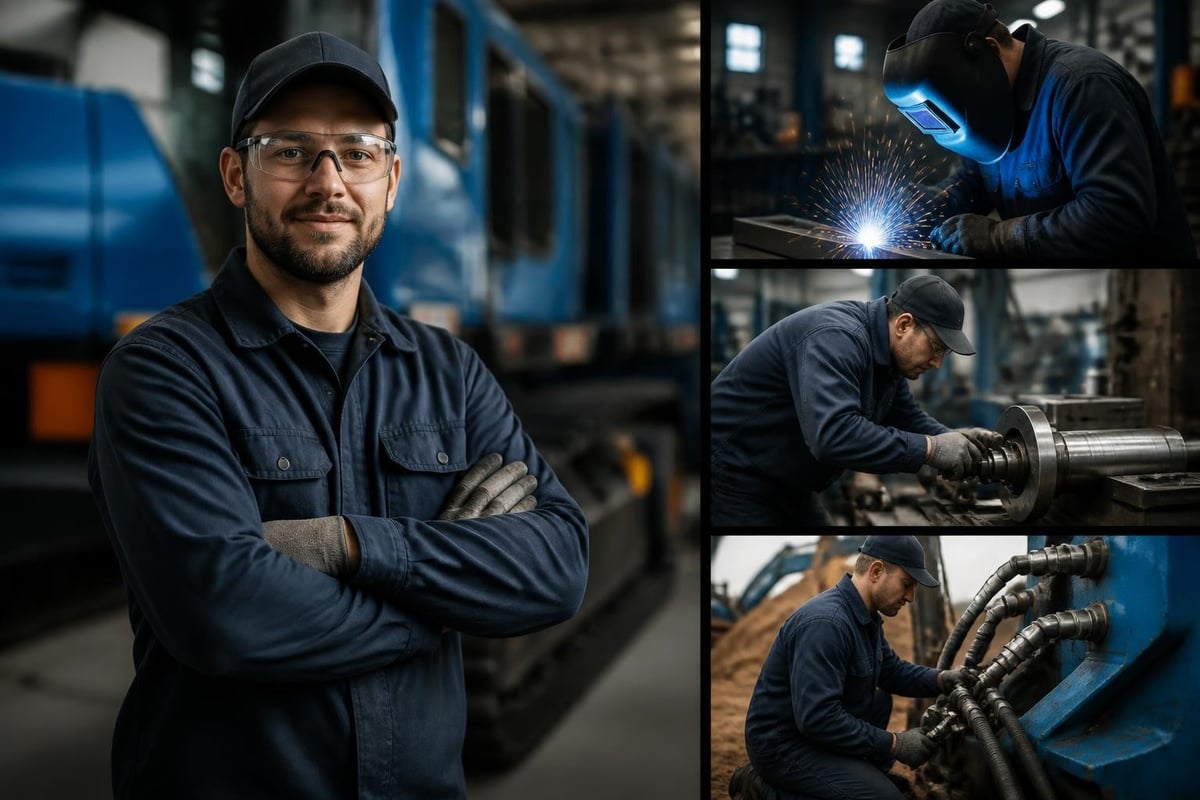
Single-source providers offering integrated services streamline repairs and reduce coordination complexity. When one company handles welding, machining, fabrication, and hydraulic repairs, you eliminate the delays and miscommunication that occur when coordinating multiple vendors.
Preventive Maintenance vs. Emergency Repairs
Understanding heavy equipment maintenance best practices helps minimize emergency repair situations while extending equipment life. Effective maintenance programs balance scheduled services with operational demands.
Developing Maintenance Partnerships
Progressive repair providers offer scheduled maintenance programs that catch problems before they cause failures. These partnerships include regular inspections, fluid analysis, wear component replacement, and predictive maintenance services. Implementing preventive maintenance on heavy equipment reduces unexpected breakdowns by identifying issues during scheduled service windows.
Structured maintenance programs provide:
- Reduced emergency repair costs
- Extended equipment service life
- Improved operational reliability
- Better budget predictability
- Comprehensive service records
Cost-Benefit Analysis of Proactive Service
The financial case for preventive maintenance becomes clear when comparing costs. Emergency repairs typically cost two to three times more than scheduled maintenance due to overtime labor, expedited parts, and production losses. Equipment maintenance software and programs help track maintenance history, schedule services, and document repairs for warranty and resale purposes.
| Maintenance Approach | Average Annual Cost | Downtime Impact | Equipment Longevity |
|---|---|---|---|
| Reactive (run-to-failure) | High variable costs | Unpredictable, severe | Reduced 30-40% |
| Scheduled preventive | Moderate consistent costs | Minimal, planned | Standard lifespan |
| Predictive maintenance | Moderate-high costs | Very minimal | Extended 20-30% |
Evaluating Repair Quality and Warranties
Quality repairs require more than technical expertise. Reputable providers stand behind their work with comprehensive warranties and quality assurance processes.
Quality Certifications and Standards
Professional certifications indicate commitment to industry standards. Look for AWS certified welders, ASE certifications for mechanics, and quality management system certifications. These credentials demonstrate technical competency and adherence to recognized best practices.
Warranty Terms and Service Guarantees
Comprehensive warranties protect your investment in repairs. Standard warranty terms should cover both parts and labor for reasonable periods based on repair type. Hydraulic cylinder rebuilds typically carry 90-day to one-year warranties, while structural welding repairs should include lifetime guarantees on workmanship.
Warranty evaluation criteria:
- Coverage period for parts and labor
- Exclusions and limitations
- Process for warranty claims
- Availability of temporary equipment during warranty work
- Track record of honoring warranty commitments
Technology Integration in Modern Repairs
Contemporary heavy equipment incorporates sophisticated electronic controls, sensors, and monitoring systems requiring diagnostic expertise beyond traditional mechanical skills.
Diagnostic Capabilities
Advanced diagnostic equipment reads fault codes, monitors sensor data, and performs system tests to pinpoint failures accurately. This technology eliminates guesswork and prevents unnecessary component replacement. When evaluating "heavy equipment repair near me" options, confirm providers invest in current diagnostic tools compatible with your equipment brands.
Documentation and Record-Keeping
Digital service records provide valuable maintenance history, facilitate warranty claims, and support resale value. Quality repair providers document all services with photographs, parts lists, and detailed repair procedures. This documentation proves essential for insurance claims, compliance audits, and operational analysis.

Parts Sourcing and Supply Chain Management
Component availability directly affects repair timelines. Experienced repair providers maintain relationships with multiple suppliers ensuring access to parts when needed.
OEM vs. Aftermarket Components
The parts debate balances cost, quality, and availability. OEM parts guarantee fitment and performance but often carry premium prices and longer lead times. Quality aftermarket components offer cost savings and faster availability while maintaining acceptable performance standards. Proper maintenance practices include selecting appropriate parts based on application criticality and operational demands.
Parts selection considerations:
- Application criticality and safety implications
- Cost differential and budget constraints
- Availability and lead time requirements
- Warranty implications of aftermarket usage
- Long-term reliability expectations
Emergency Parts Procurement
Equipment failures don't follow business hours. Repair providers with extensive parts networks and emergency procurement capabilities minimize downtime during critical failures. This includes relationships with parts suppliers across regions, overnight shipping arrangements, and inventory of common wear components.
Specialized Repair Services for Industrial Applications
Different industries present unique repair challenges requiring specialized knowledge and capabilities.
Aggregate and Recycling Equipment
Conveyor systems, crushers, screens, and processing equipment encounter abrasive materials causing accelerated wear. Repairs frequently involve hard-facing applications, liner replacement, and structural reinforcement. Understanding maintenance scheduling best practices specific to aggregate operations helps providers anticipate failure points and recommend preventive measures.
Oil and Gas Equipment
Pumping units, compressors, and wellhead equipment operate under extreme pressures and temperatures. Repairs require knowledge of specialized materials, pressure vessel codes, and industry safety standards. Field repair capabilities prove essential given remote operational locations.
Manufacturing and Processing Machinery
Production equipment repairs demand minimal downtime to maintain manufacturing schedules. Providers offering expedited services, temporary equipment, or creative repair solutions that allow continued operation during repairs provide significant value.
Building Long-Term Repair Partnerships
The most successful operational strategies view equipment repair providers as strategic partners rather than transactional vendors.
Communication and Responsiveness
Open communication channels ensure problems get addressed quickly. Look for providers offering direct access to service managers, technical staff, and ownership. Responsive communication during repairs keeps you informed about progress, complications, and timeline adjustments.
Continuous Improvement and Feedback
Quality providers welcome feedback and continuously improve processes. Regular performance reviews covering response times, repair quality, cost management, and customer service drive improvements benefiting both parties.
Progressive partnerships include:
- Quarterly performance reviews and metrics analysis
- Joint planning for scheduled maintenance and overhauls
- Collaborative cost reduction initiatives
- Training on proper equipment operation and care
- Technology updates and capability expansion discussions
Regional Considerations for Western United States Operations
Operating across the Western United States presents unique challenges affecting equipment repair service selection.
Climate and Environmental Factors
Equipment operating in high desert environments faces different challenges than coastal or mountain operations. Temperature extremes, dust, altitude, and UV exposure all impact equipment longevity and repair requirements. Providers familiar with regional conditions recommend appropriate preventive measures and understand environment-specific failure modes.
Logistics and Mobilization
The vast geography of the Western United States makes field service capabilities essential. Evaluate providers based on their ability to mobilize equipment and personnel to remote locations efficiently. Understanding equipment maintenance requirements helps coordinate field services that maximize repair efficiency while minimizing mobilization costs.
Regulatory Compliance
Environmental regulations, safety requirements, and industry-specific compliance standards vary by state and locality. Repair providers must understand applicable regulations affecting repair procedures, waste disposal, and documentation requirements.
Cost Management Strategies
Equipment repair expenses represent significant operational costs requiring careful management and strategic planning.
Budgeting for Repairs and Maintenance
Effective budgeting balances preventive maintenance investment with reserve funds for unexpected repairs. Industry benchmarks suggest allocating 3-7% of equipment value annually for maintenance and repairs, with percentages increasing as equipment ages.
Total Cost of Ownership Analysis
Repair decisions should consider total ownership costs rather than individual repair expenses. Sometimes equipment reaches a point where continued repairs prove less economical than replacement. Quality repair providers offer honest assessments helping you make informed decisions about repair versus replacement.
Total cost factors include:
- Cumulative repair costs over equipment life
- Downtime and lost productivity expenses
- Fuel efficiency and operational costs
- Safety and reliability considerations
- Resale or trade-in value implications
Safety Considerations in Equipment Repair
Safety must remain paramount throughout repair processes, protecting both repair personnel and equipment operators.
Workplace Safety Standards
Reputable repair facilities maintain comprehensive safety programs including proper equipment lockout/tagout procedures, confined space protocols, and personal protective equipment requirements. OSHA compliance demonstrates commitment to worker safety and professional operations.
Post-Repair Testing and Verification
Thorough testing before returning equipment to service prevents accidents and repeat failures. Proper cutting edge maintenance and inspection protocols extend to all repaired components. Quality providers perform comprehensive function tests, pressure tests for hydraulic systems, and load tests for structural repairs.
Finding reliable heavy equipment repair services requires evaluating capabilities, experience, and service commitment to ensure minimal downtime and maximum equipment reliability. When your operations demand comprehensive welding, fabrication, machining, and field repair services throughout the Western United States, LTJ Industrial Services delivers the expertise and responsiveness needed to keep your equipment operating at peak performance across aggregate, recycling, oil and gas, and manufacturing applications.