Manufacturing operations across the Western United States face increasingly complex challenges that demand tailored solutions. Off-the-shelf components rarely address the unique requirements of sectors like oil and gas, recycling, and aggregate processing. Custom industrial services provide businesses with the specialized fabrication, welding, and machining capabilities necessary to maintain operational efficiency while meeting strict industry specifications. This comprehensive approach to manufacturing enables companies to solve problems that standard products simply cannot address.
Understanding Custom Industrial Manufacturing
Custom industrial manufacturing represents a specialized approach to creating components, systems, and equipment designed for specific operational requirements. Unlike mass production, this methodology focuses on developing solutions that precisely match the technical specifications, environmental conditions, and performance standards unique to each application.
The scope of custom industrial components extends across multiple disciplines. Metal fabrication forms the foundation, transforming raw materials into structural elements and assemblies. Precision machining ensures components meet exacting tolerances, while specialized welding techniques create durable joints capable of withstanding extreme conditions.
Key Characteristics of Custom Solutions
- Engineered specifications tailored to unique operational parameters
- Material selection based on environmental exposure and stress factors
- Integration capabilities with existing equipment and systems
- Scalability from prototype development to full production runs
- Quality assurance protocols exceeding standard manufacturing requirements
Industries throughout the commercial and industrial sectors depend on these specialized services. Oil and gas operations require components that withstand high pressures and corrosive substances. Recycling facilities need robust equipment capable of processing diverse materials. Aggregate producers demand machinery that endures constant abrasion and impact.
The Manufacturing Process for Custom Industrial Projects
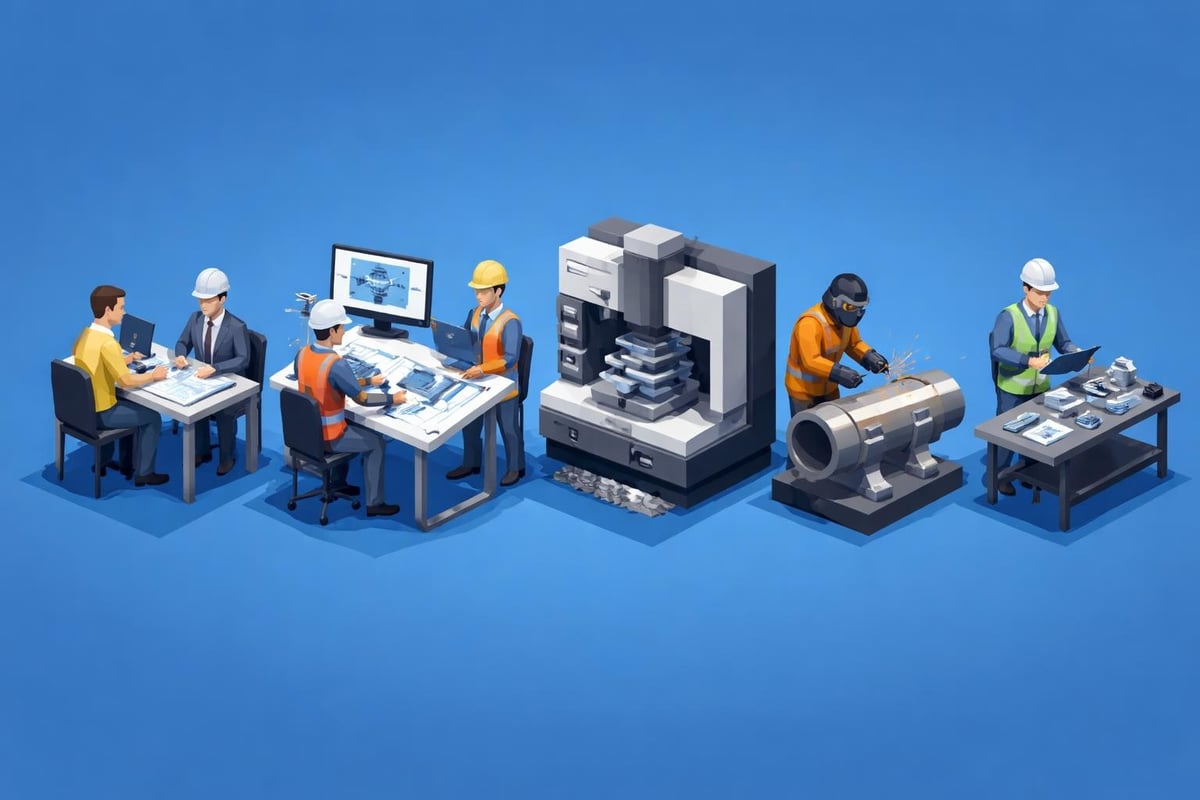
Successful custom industrial manufacturing begins with thorough client consultation. Understanding operational challenges, performance requirements, and budget constraints establishes the foundation for effective solutions. This initial phase identifies critical specifications that will guide every subsequent decision.
Design and Engineering Phase
Engineering teams translate operational requirements into detailed technical drawings and specifications. This stage incorporates:
- Material analysis to determine optimal alloys, grades, and treatments
- Structural calculations ensuring components meet load and stress requirements
- Compatibility assessments with existing equipment and infrastructure
- Cost optimization balancing performance requirements with budget parameters
- Timeline development establishing realistic production schedules
Advanced CAD software enables precise modeling before fabrication begins. These digital representations allow for design validation, interference checking, and client approval without consuming materials or shop time.
The transition from design to production requires careful planning. Manufacturing and machining operations demand proper tooling, equipment setup, and material procurement. Lead times for specialized metals or components must align with project deadlines.
Fabrication and Assembly
Once designs receive approval, fabrication teams transform raw materials into finished components. Metal cutting, forming, and shaping operations create individual parts according to specifications. Precision becomes paramount as tolerances directly impact final assembly and performance.
| Manufacturing Method | Typical Tolerance | Best Applications | Production Volume |
|---|---|---|---|
| CNC Machining | ±0.001" – ±0.005" | Complex geometries, tight fits | Low to medium |
| [Welding Fabrication | ±1/16" – ±1/8" | Structural assemblies, large components | Low to high |
| Water Jet Cutting | ±0.005" – ±0.010" | Intricate patterns, diverse materials | Low to medium |
| Manual Fabrication | ±1/16" – ±1/4" | Custom one-offs, field modifications | Very low |
Welding operations join components into assemblies. Different welding processes suit specific applications-MIG welding offers versatility and speed, TIG welding provides precision for critical joints, and stick welding excels in field conditions. Certified welders ensure joints meet or exceed code requirements for strength and durability.
Quality Control and Testing Standards
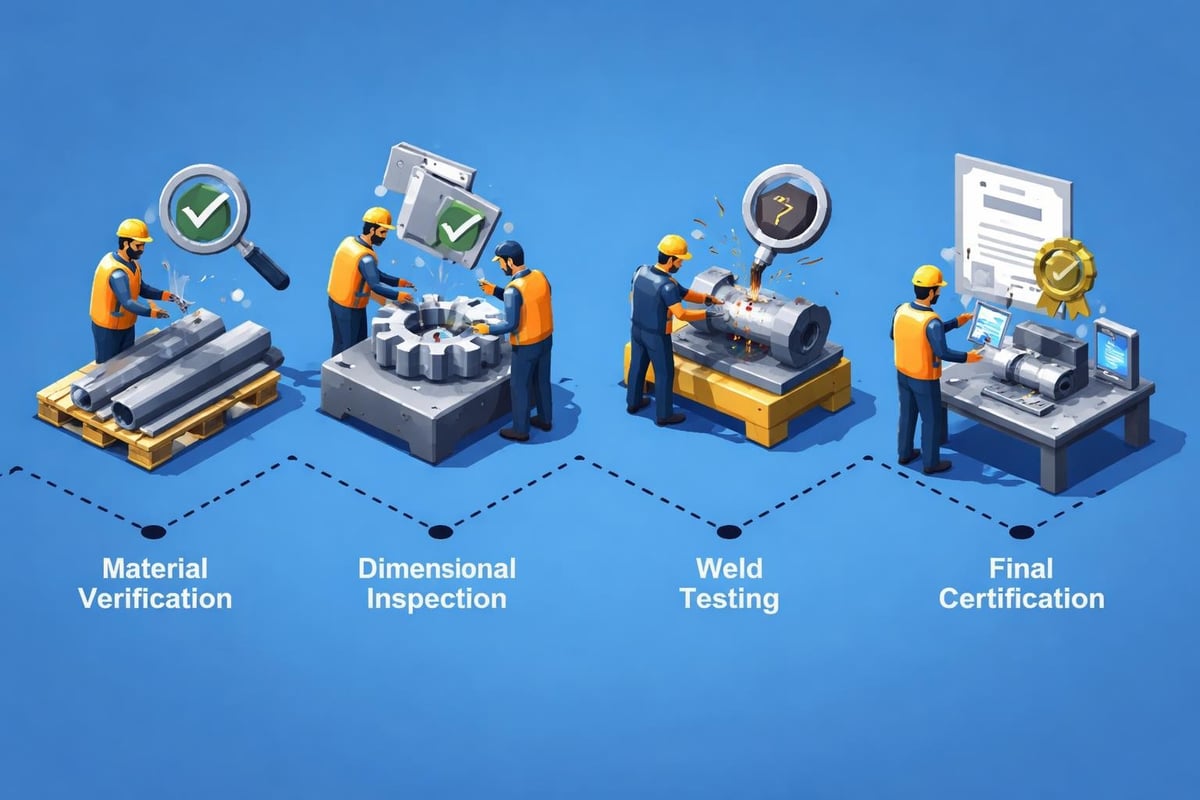
Custom industrial projects demand rigorous quality assurance throughout production. Unlike standardized manufacturing where defects affect individual units, custom work failures can compromise entire operations or create safety hazards. Quality control begins with incoming material inspection and continues through final testing.
Inspection Methodologies
Visual inspection identifies surface defects, weld quality, and finishing issues. Trained inspectors examine every critical joint and surface, documenting findings against specification requirements. This foundational step catches obvious issues before they progress through production.
Dimensional verification confirms components meet tolerance requirements. Precision measuring tools validate critical dimensions, ensuring proper fit and function during assembly. CMM (Coordinate Measuring Machine) technology provides detailed three-dimensional verification for complex geometries.
Non-destructive testing reveals internal defects without damaging components. Radiographic inspection, ultrasonic testing, and magnetic particle inspection detect cracks, voids, or inclusions that could compromise structural integrity. These methods prove essential for pressure vessels, structural components, and safety-critical applications.
Documentation accompanies every custom industrial project. Material certifications, test results, inspection reports, and compliance documentation provide traceability and verify quality standards. This documentation becomes crucial for warranty claims, regulatory compliance, and future maintenance.
Industry Applications and Market Trends
The custom manufacturing market continues expanding, projected to reach $1,350.2 billion by 2031. This growth reflects increasing demand for specialized solutions across diverse sectors. Companies recognize that custom industrial approaches deliver competitive advantages through optimized performance and extended equipment lifecycles.
Oil and Gas Sector Requirements
Oil and gas operations present unique challenges requiring specialized custom industrial solutions. Extreme temperatures, corrosive environments, and high-pressure systems demand components engineered for specific conditions. Downhole tools, processing equipment, and pipeline infrastructure require materials and fabrication techniques exceeding standard specifications.
Field services become critical when equipment failures occur in remote locations. Mobile welding and machining capabilities enable on-site repairs, minimizing downtime and avoiding costly equipment transportation. Hydraulic system expertise addresses the complex fluid power systems prevalent throughout oil and gas operations.
Recycling and Aggregate Industries
Recycling facilities process materials ranging from paper to metals, each requiring different handling systems. Custom conveyors, sorting equipment, and processing machinery must withstand abrasive materials and continuous operation. Wear-resistant materials and replaceable components extend equipment life while maintaining productivity.
Aggregate processing similarly demands robust equipment. Crushers, screens, and conveyor systems encounter constant impact and abrasion from rock and minerals. Custom industrial fabrication creates reinforced structures and wear components that survive these harsh conditions while maintaining operational efficiency.
Common custom solutions for these sectors include:
- Heavy-duty conveyor systems with replaceable wear surfaces
- Custom chutes and hoppers optimized for material flow
- Screening equipment designed for specific material sizes
- Crusher components fabricated from high-hardness alloys
- Structural reinforcements extending equipment service life
Technological Advancements in Custom Industrial Manufacturing
Modern custom industrial manufacturing incorporates technologies that enhance precision, efficiency, and capabilities. Manufacturing methods continue evolving, with traditional techniques complemented by advanced processes that expand solution possibilities.
CNC Machining Capabilities
Computer numerical control revolutionized precision manufacturing. Multi-axis CNC machines produce complex geometries with repeatability impossible through manual methods. Five-axis machining centers create intricate features in single setups, reducing handling and improving accuracy.
Modern machining centers integrate with CAD/CAM software, translating digital designs directly into machine programs. This integration minimizes programming time and reduces errors from manual data entry. Automatic tool changers and pallet systems enable lights-out manufacturing, maximizing equipment utilization.
Advanced Welding Technologies
Welding technology advances continue improving joint quality and productivity. Pulsed MIG welding provides better control over heat input, reducing distortion in thin materials. Orbital welding systems create consistent, high-quality welds in pipe and tube applications where repeatability proves critical.
Robotic welding brings automation to custom industrial projects requiring multiple identical assemblies. While true custom work often involves unique pieces, many projects include repeated elements where robotic precision adds value. Programming flexibility allows robots to handle variations while maintaining consistency.
| Technology | Primary Benefit | Implementation Complexity | ROI Timeline |
|---|---|---|---|
| 5-Axis CNC | Complex geometries | High | 18-36 months |
| Robotic Welding | Consistency & speed | Medium-High | 12-24 months |
| Water Jet Cutting | Material versatility | Medium | 12-18 months |
| Plasma Cutting | Speed on thick metals | Low-Medium | 6-12 months |
Cost Considerations and Value Engineering
Custom industrial projects require careful cost analysis balancing performance requirements against budget constraints. Understanding cost drivers enables better decision-making during design and production phases. Material selection represents one of the largest variables-exotic alloys cost significantly more than common steel grades but may prove essential for specific applications.
Material Selection Strategy
Choosing appropriate materials demands understanding both immediate costs and lifecycle value. A more expensive corrosion-resistant alloy might cost double initially but eliminate premature replacement, saving money over equipment life. Similarly, wear-resistant materials justify higher prices through extended component longevity.
Value engineering identifies cost reduction opportunities without compromising performance. This systematic approach examines every design element, questioning whether specifications truly require premium materials or if standard alternatives would suffice. Sometimes minor design modifications enable use of less expensive materials while maintaining functionality.
Production efficiency impacts overall project costs. Complex geometries requiring extensive machining time drive costs higher than simpler designs. When feasible, designing for manufacturability reduces production hours while achieving required performance. This might involve using weldments instead of machined parts or selecting standard material sizes that minimize waste.

Project Management and Timeline Optimization
Successful custom industrial projects require effective coordination across design, procurement, production, and delivery phases. Timeline management begins with realistic scheduling based on actual shop capacity and material availability. Overpromising delivery dates creates problems throughout the production chain.
Critical Path Planning
Identifying project bottlenecks allows proactive management. Long-lead materials must be ordered immediately, while design finalization can continue. Machining operations requiring specialized tooling need early planning to ensure tool availability when production begins. Welding procedures for unusual materials may require development and testing before production welding starts.
- Design freeze establishing when specifications become final
- Material procurement ordering metals and components with appropriate lead times
- Tooling preparation creating fixtures, jigs, and specialized equipment
- Production scheduling allocating shop resources and equipment time
- Quality inspection planning verification steps throughout manufacturing
- Delivery coordination arranging transportation and installation support
Communication maintains project momentum. Regular updates inform clients of progress, address emerging issues, and manage expectations. When problems arise-material delays, design changes, or unexpected complications-early communication enables collaborative problem-solving rather than last-minute scrambling.
Field Services and On-Site Solutions
Many custom industrial applications require field services beyond shop manufacturing. Equipment breakdowns don't wait for convenient timing, and transporting massive components to fabrication facilities proves impractical or impossible. Mobile capabilities extend custom industrial services directly to client locations throughout the Western United States.
Mobile Welding and Machining
Portable welding equipment enables repairs at mine sites, processing plants, and remote installations. Certified welders perform structural repairs, equipment modifications, and emergency fixes without dismantling and transporting equipment. This on-site capability dramatically reduces downtime compared to shop-based repairs.
Portable machining addresses situations where components cannot be removed from assemblies. Line boring equipment machines bearing housings on installed equipment. Portable mills and lathes handle smaller repairs and modifications. These capabilities prove invaluable when equipment removal would require extensive disassembly or operational shutdown.
Hydraulic services complement fabrication and machining capabilities. Hydraulic systems power critical equipment throughout industrial operations. Mobile hydraulic specialists diagnose system problems, repair or replace components, and optimize performance. Custom hose assemblies, cylinder rebuilds, and pump repairs keep operations running smoothly.
Partnership Approaches and Client Collaboration
Effective custom industrial relationships extend beyond transactional vendor-customer interactions. True partnerships involve collaborative problem-solving where manufacturing expertise combines with client operational knowledge. This approach yields solutions addressing root causes rather than symptoms.
Understanding client operations enables better solution development. Site visits reveal operational contexts that specifications alone cannot convey. Observing how equipment functions, the environment it operates within, and the stresses it encounters informs design decisions. This firsthand knowledge often identifies improvement opportunities beyond the immediate project scope.
Ongoing relationships build institutional knowledge benefiting both parties. Manufacturers understand client preferences, operational constraints, and performance priorities. Clients develop confidence in manufacturing capabilities and responsiveness. This familiarity streamlines future projects through established communication channels and mutual understanding.
Flexibility differentiates exceptional custom industrial partners from basic fabrication shops. Accommodating rush projects, working within budget constraints, and adapting to changing requirements demonstrates commitment to client success. While some requests prove impossible, creative problem-solving often finds alternative approaches achieving desired outcomes.
Regulatory Compliance and Industry Standards
Custom industrial manufacturing operates within regulatory frameworks ensuring safety, quality, and environmental responsibility. Compliance requirements vary by industry and application, but fundamental principles apply across sectors. Understanding these standards protects manufacturers and clients from liability while ensuring public safety.
Welding Code Compliance
American Welding Society (AWS) standards govern welding procedures, welder qualifications, and inspection requirements. Structural steel fabrication follows AWS D1.1, while pressure vessels require AWS D1.1 or ASME Section IX compliance. Custom industrial projects must identify applicable codes during design phases, as requirements significantly impact production methods and costs.
Welder certification verifies individual skills and qualifications. Certified welders pass practical tests demonstrating proficiency in specific processes, positions, and materials. These certifications require periodic renewal to maintain validity. Documentation proving welder qualifications becomes part of project records.
Material traceability ensures components meet specified grades and properties. Mill test reports document chemical composition and mechanical properties of metals. This documentation proves critical for pressure vessels, structural applications, and any equipment where material properties affect safety or performance.
| Standard/Code | Application Area | Certification Required | Documentation Level |
|---|---|---|---|
| AWS D1.1 | Structural steel welding | Yes | Moderate |
| ASME Section IX | Pressure vessel welding | Yes | Extensive |
| API 1104 | Pipeline welding | Yes | Extensive |
| ISO 3834 | Quality requirements for fusion welding | System certification | Comprehensive |
Future Outlook for Custom Industrial Services
Looking toward the remainder of 2026 and beyond, custom manufacturing trends indicate continued growth and technological evolution. Automation expands into areas previously requiring manual expertise, though human skill remains essential for truly custom work. Artificial intelligence assists design optimization and process planning without replacing engineering judgment.
Sustainability considerations increasingly influence material selection and manufacturing processes. Energy-efficient production methods reduce environmental impact while lowering operational costs. Material recycling and waste minimization align with both environmental responsibility and economic efficiency. Customers increasingly value partners demonstrating environmental stewardship alongside technical capabilities.
Advanced materials continue entering industrial applications. High-performance alloys, composites, and treated metals offer enhanced properties for demanding applications. Staying current with material innovations enables custom industrial manufacturers to recommend optimal solutions as new options become available.
The relationship between custom manufacturing and emerging technologies like 3D printing creates hybrid approaches. Additive manufacturing produces complex geometries impossible through traditional methods, while conventional fabrication and machining deliver cost-effective solutions for other applications. Forward-thinking manufacturers integrate multiple technologies, selecting optimal methods for each project aspect.
Supply chain resilience gained importance following recent global disruptions. Custom industrial manufacturers provide alternatives to overseas suppliers and long lead times. Domestic production capabilities reduce dependency on international supply chains while supporting local economies. This trend particularly benefits sectors requiring rapid response and close collaboration.
Custom industrial manufacturing delivers specialized solutions that off-the-shelf products cannot match, enabling businesses across oil and gas, recycling, and aggregate sectors to optimize operations and overcome unique challenges. When your operation demands precision fabrication, expert welding, or complex machining services, partnering with experienced professionals ensures quality results and minimized downtime. LTJ Industrial Services brings comprehensive shop and field capabilities to commercial and industrial clients throughout the Western United States, delivering the custom industrial solutions your operation requires to maintain peak performance.