When industrial operations require precision-machined components, the search for "cnc machining near me" becomes more than a simple query-it represents a critical business decision that impacts production timelines, quality standards, and operational budgets. For commercial and industrial manufacturing sectors throughout the Western United States, including oil & gas, recycling, and aggregate industries, proximity to reliable CNC machining services can determine project success or costly delays.
Understanding Modern CNC Machining Capabilities
CNC (Computer Numerical Control) machining has evolved dramatically in recent years, transforming from basic automated cutting to sophisticated precision manufacturing systems. These advanced machines translate digital designs into physical components with tolerances measured in thousandths of an inch, creating everything from simple brackets to complex hydraulic components.
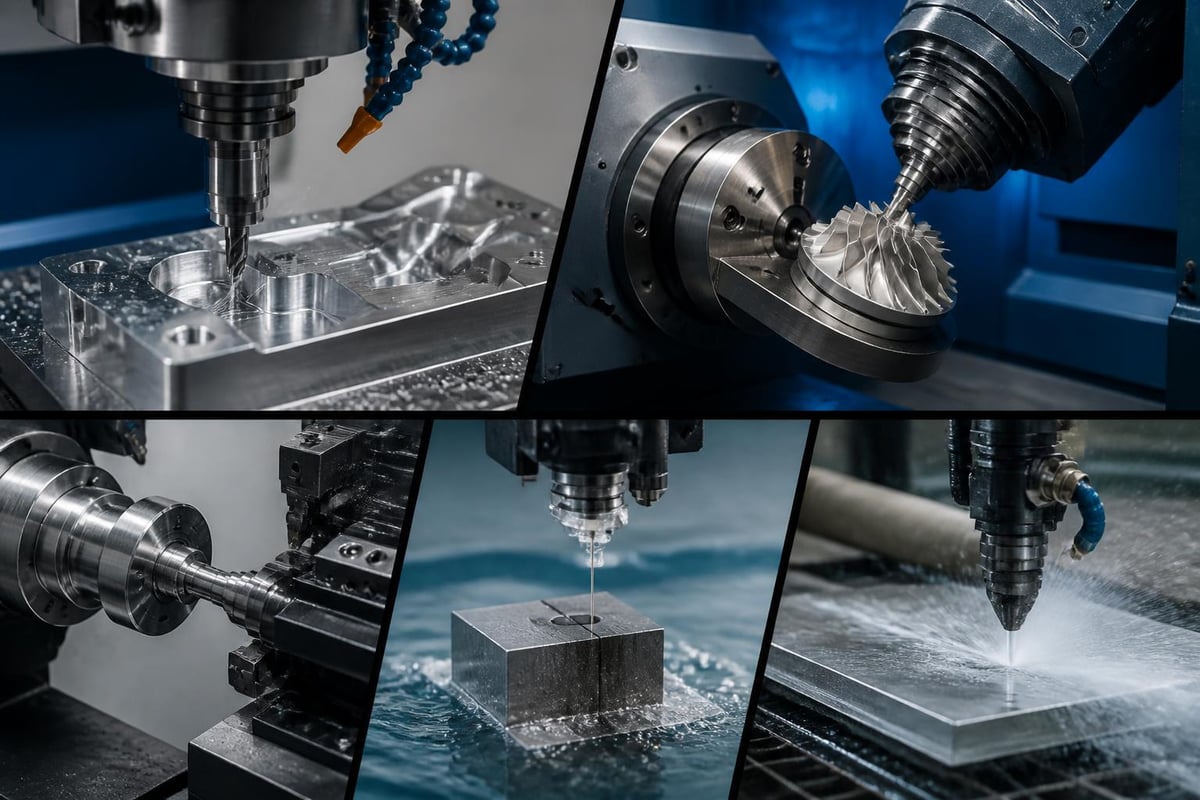
The technology behind CNC machining involves multiple processes working in concert. Milling operations remove material using rotating cutting tools, while turning operations rotate the workpiece against stationary cutting tools. Drilling, boring, and threading capabilities add versatility, enabling comprehensive part production from a single setup.
Modern facilities now incorporate AI integration and lights-out production capabilities, allowing machines to operate continuously with minimal human intervention. This advancement significantly reduces lead times and production costs while maintaining exceptional quality standards.
Key CNC Machining Processes
Different manufacturing challenges require different machining approaches:
- 3-axis machining: Standard operations for straightforward parts with flat or simple contoured surfaces
- 4-axis and 5-axis machining: Complex geometries requiring simultaneous movement across multiple planes
- Swiss-style turning: High-precision cylindrical components with tight tolerances
- Wire EDM: Intricate cuts in hardened materials using electrical discharge
- Waterjet cutting: Non-thermal cutting for heat-sensitive materials
Evaluating Local CNC Machining Partners
The decision to search for cnc machining near me reflects practical business considerations beyond simple convenience. Geographic proximity offers tangible advantages including faster communication, reduced shipping times, easier quality inspections, and the ability to collaborate on complex projects in person.
| Evaluation Criteria | Why It Matters | Questions to Ask |
|---|---|---|
| Equipment Capability | Determines part complexity and precision levels | What axis configurations are available? What tolerances can you hold? |
| Material Experience | Affects quality and efficiency | Do you regularly machine our required materials? |
| Industry Expertise | Ensures understanding of specific requirements | Have you worked with oil & gas/aggregate/recycling sectors? |
| Turnaround Time | Impacts production schedules | What are typical lead times for prototype vs. production runs? |
| Quality Systems | Guarantees consistent standards | What certifications and inspection equipment do you maintain? |
When evaluating machining partners, certifications and quality standards provide objective evidence of capabilities. ISO 9001 certification demonstrates commitment to quality management systems, while industry-specific certifications may be required for certain applications, particularly in oil & gas operations.
Geographic Considerations for Western Industrial Operations
Industrial operations throughout the Western United States face unique logistical challenges. Remote job sites in Colorado, Wyoming, Utah, and surrounding states require machining partners who understand the demands of these environments.
Local CNC machining services offer critical advantages for field operations. When equipment fails at a remote aggregate processing facility or oil field location, waiting days for replacement parts from distant suppliers isn't viable. Regional machining capabilities enable rapid response times that keep operations running.
The trends in CNC machining for 2026 highlight increasing emphasis on flexibility and responsiveness, qualities that local partnerships naturally support.
Material Selection and Machining Requirements
Different industrial applications demand specific material properties, and not all CNC machining facilities possess equal expertise across the full material spectrum. Understanding material-machining relationships helps identify the right local partner.
Common Industrial Materials and Applications
Steel alloys dominate industrial manufacturing for good reason. Mild steel offers excellent machinability and weldability for structural components, while alloy steels provide enhanced strength for high-stress applications. Stainless steel grades resist corrosion in harsh environments common to recycling and aggregate processing operations.
Aluminum alloys deliver exceptional strength-to-weight ratios, making them ideal for components where weight reduction matters. The material's excellent thermal conductivity benefits hydraulic system components, while its corrosion resistance suits outdoor applications.
Exotic alloys including Inconel, titanium, and specialty steels serve extreme-duty applications. Oil & gas operations frequently require these materials for downhole tools and high-temperature components. Finding cnc machining near me with exotic material expertise becomes crucial for these specialized needs.
Plastic and composite materials increasingly appear in industrial applications where chemical resistance or electrical insulation properties matter. Modern CNC facilities equipped for these materials expand design possibilities beyond traditional metal components.
Custom Fabrication Integration
CNC machining rarely exists in isolation-most industrial projects require integrated manufacturing solutions combining multiple processes. The ability to source machining, welding, and fabrication from a single local partner streamlines project management and improves outcome quality.
Combining Machining with Welding Services
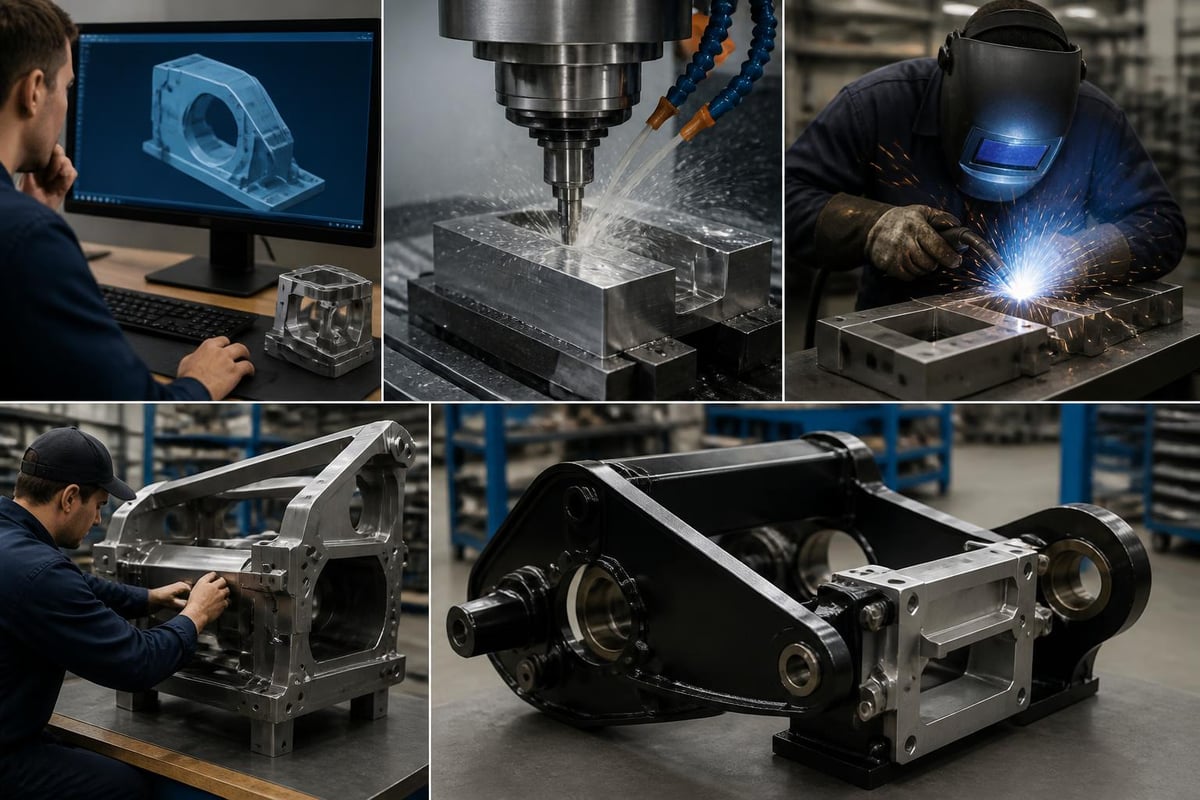
Complex industrial components often require precision-machined elements welded into larger assemblies. Hydraulic manifolds exemplify this integration-CNC-machined blocks with precise port locations and internal passages joined to welded mounting brackets and valve bodies.
When searching for cnc machining near me, consider facilities offering comprehensive capabilities:
- Initial machining of base components to exact specifications
- Custom welding of machined parts into assemblies
- Post-weld machining to restore precision surfaces affected by welding heat
- Hydraulic testing to verify assembly integrity
- Surface finishing including painting or coating as required
This integrated approach eliminates coordination challenges between multiple vendors while reducing transportation costs and lead times.
Quality Assurance and Inspection Capabilities
Precision machining means nothing without verification systems ensuring specifications are met. Modern quality assurance combines traditional measurement techniques with advanced technology creating comprehensive inspection protocols.
Coordinate Measuring Machines (CMM) provide non-contact inspection of complex geometries, generating detailed reports comparing machined parts against CAD models. Surface finish measurement equipment quantifies texture and smoothness critical for sealing surfaces and bearing journals.
Visual inspection remains relevant despite technological advances. Experienced machinists identify potential issues that automated systems might miss, catching problems before they become costly failures.
The CNC machining industry trends for 2026 emphasize automation in quality control, with in-process monitoring systems detecting deviations in real-time rather than discovering issues after completion.
Documentation and Traceability
Industrial applications, particularly in oil & gas sectors, require comprehensive documentation proving components meet specifications. Quality machining partners maintain detailed records including:
- Material certifications and mill test reports
- Inspection reports with actual measurements
- Process documentation showing machining parameters
- Calibration records for measuring equipment
- Operator qualifications and training records
This documentation supports regulatory compliance while providing traceability if questions arise about component performance.
Field Service and On-Site Machining
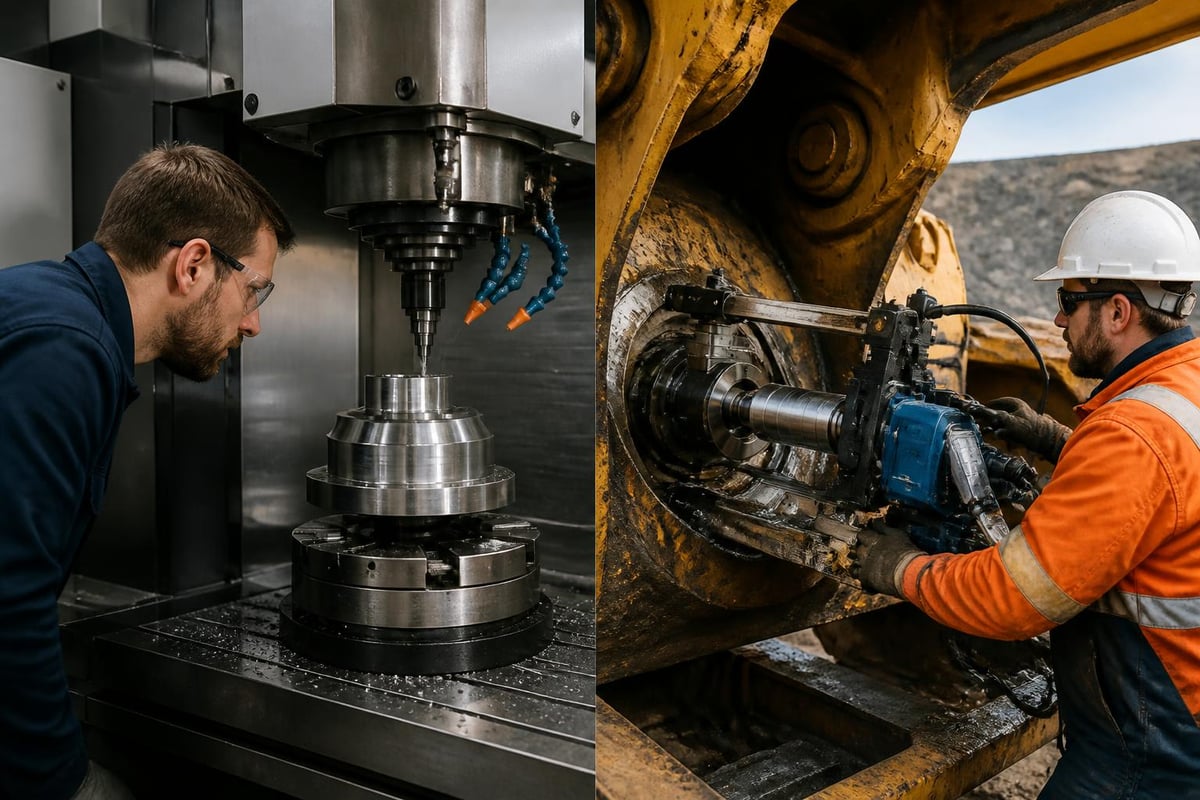
While shop-based CNC machining handles most manufacturing needs, certain situations require bringing machining capabilities to the worksite. Large equipment repairs, emergency breakdowns, and remote location challenges sometimes make field machining the only practical solution.
Portable machining equipment has evolved significantly, enabling precision operations previously possible only in controlled shop environments. Line boring equipment repairs bearing housings on crushers and processing equipment without disassembly. Portable milling machines restore critical mounting surfaces on structural components.
| Situation | Shop Machining | Field Machining |
|---|---|---|
| Large components (over 10,000 lbs) | Requires significant handling equipment | Machines in place, no transportation |
| Emergency repairs | Transit time delays return to service | Immediate response possible |
| Remote locations | Multiple shipping cycles | Single mobilization |
| Installed equipment | Complete disassembly required | Machine without removal |
When evaluating options for cnc machining near me, ask whether field service capabilities exist for situations where bringing equipment to the shop isn't feasible.
Cost Considerations and Value Assessment
Price represents only one element of total project cost. The cheapest quoted price rarely delivers the best value when factors like quality, lead time, and reliability enter the equation.
Understanding Pricing Structures
CNC machining costs reflect multiple factors:
- Setup time: Programming and tooling configuration for each unique part
- Machine time: Actual cutting operations charged at hourly rates
- Material costs: Raw stock with markups covering handling and inventory
- Tooling: Cutting tools that wear and require replacement
- Finishing operations: Deburring, cleaning, and surface treatments
- Quality inspection: Measurement and documentation time
Prototype quantities carry higher per-piece costs because setup time distributes across fewer parts. Production runs benefit from economies of scale as setup costs amortize across larger quantities.
Geographic proximity affects total costs beyond machining rates. Shipping charges, rush freight fees, and the hidden costs of delayed delivery all factor into true project expenses. Local cnc machining near me options often prove more economical than distant suppliers despite comparable hourly rates.
Technology Adoption and Equipment Investment
The machining industry continues rapid technological advancement, with six key trends for 2026 reshaping capabilities and expectations. Facilities investing in current technology deliver better results than those relying on outdated equipment.
Automation and Smart Manufacturing
Modern CNC facilities increasingly incorporate automation beyond the machines themselves. Robotic loading systems enable lights-out production, running unattended during nights and weekends. Tool management systems automatically track tool wear and schedule replacements before quality issues emerge.
Digital connectivity links machines to central monitoring systems, providing real-time production status and alerting operators to potential problems. This interconnectedness enables predictive maintenance, preventing unexpected breakdowns that disrupt schedules.
The five trends impacting CNC machining in 2026 include sustainability initiatives that reduce waste and energy consumption while improving efficiency. Forward-thinking facilities adopting these practices deliver environmental benefits alongside operational improvements.
Building Long-Term Partnerships
The ideal relationship with CNC machining providers extends beyond transactional vendor interactions toward genuine partnerships supporting business objectives. When searching for cnc machining near me, consider long-term relationship potential rather than focusing exclusively on immediate project needs.
Effective partnerships develop through consistent communication and mutual understanding. Share production forecasts allowing machining partners to anticipate capacity requirements. Discuss design challenges early in development cycles when machining expertise can influence outcomes most effectively.
Continuous improvement characterizes strong partnerships. Regular reviews of quality metrics, delivery performance, and cost trends identify opportunities for optimization. Collaborative problem-solving addresses recurring issues systematically rather than applying temporary fixes.
Communication and Project Management
Clear communication prevents misunderstandings that compromise project outcomes. Establish expectations regarding:
- Drawing interpretation: Ensure critical dimensions and tolerances are clearly identified
- Material specifications: Confirm exact grades and heat treatment requirements
- Delivery schedules: Define realistic timelines with built-in contingencies
- Quality requirements: Specify inspection criteria and documentation needs
- Change procedures: Establish protocols for handling design modifications
Modern project management often leverages digital collaboration tools. Cloud-based file sharing enables real-time access to current drawings and specifications. Digital communication creates documented records preventing "he said, she said" disputes about requirements.
Industry-Specific Applications
Different industrial sectors present unique machining challenges requiring specialized knowledge and capabilities. Understanding these distinctions helps identify machining partners with relevant experience.
Oil & Gas Industry Requirements
Oil field equipment operates under extreme conditions demanding exceptional reliability. Downhole tools endure high pressures, temperatures, and corrosive environments while maintaining precise tolerances. Valve components require leak-tight sealing surfaces machined to exacting specifications.
Material selection often involves exotic alloys specifically engineered for these harsh environments. Machining facilities serving oil & gas sectors maintain expertise with Inconel, duplex stainless steels, and other specialty materials uncommon in general manufacturing.
Aggregate and Recycling Sector Needs
Crushing and processing equipment subjects components to severe abrasive wear and impact loading. Replacement parts must match OEM specifications precisely to maintain equipment geometry and performance.
Wear plates, liner segments, and impact surfaces require precise machining combined with hardness specifications resisting abrasion. Local machining partners familiar with these applications understand material selection balancing machinability with service life.
Manufacturing and Processing Equipment
Custom machinery and specialized processing equipment often require one-off components unavailable from standard suppliers. CNC machining capabilities enable creation of unique parts supporting equipment modifications and custom machine builds.
When production equipment breaks down, rapid parts replacement becomes critical. The ability to reverse-engineer broken components and produce replacements quickly minimizes downtime costs that dwarf machining expenses.
Emerging Technologies and Future Capabilities
The machining industry continues evolving with technologies expanding what's possible. Understanding these developments helps identify progressive partners positioned for future challenges.
Hybrid manufacturing combines additive and subtractive processes, 3D printing near-net shapes then CNC machining critical surfaces to final dimensions. This approach reduces material waste while enabling geometries impossible through conventional machining alone.
AI-driven process optimization analyzes cutting parameters in real-time, automatically adjusting feeds and speeds for optimal efficiency and tool life. These systems learn from each part produced, continuously improving performance.
Advanced materials including carbon fiber composites and ceramic matrix materials present new machining challenges. Facilities investing in specialized tooling and techniques for these materials position themselves for emerging applications.
Finding reliable cnc machining near me requires evaluating capabilities, experience, and partnership potential beyond simple geographic proximity. The right local machining partner becomes an extension of your operation, supporting production needs with responsive service and quality results. LTJ Industrial Services delivers comprehensive machining, welding, and fabrication solutions throughout the Western United States, combining shop precision with field service flexibility to keep industrial operations running efficiently. Whether you need emergency repairs, custom component fabrication, or ongoing production support for oil & gas, aggregate, or recycling operations, our Rifle, CO facility stands ready to deliver the expertise and responsiveness your projects demand.