The American Welding Society AWS D1.1 structural welding code serves as the foundational standard for steel welding in construction and industrial fabrication across the United States. Since its initial publication, this code has evolved into the most widely recognized specification governing structural steel welding, establishing critical requirements for design, qualification, workmanship, and inspection. For fabricators, contractors, and engineers working in commercial and industrial manufacturing, understanding and implementing AWS D1.1 requirements is essential for delivering compliant, safe, and high-quality welded structures. The 2025 edition continues to refine and expand provisions that affect everything from welder certification to nondestructive testing protocols.
Understanding the Scope of AWS D1.1
The American Welding Society AWS D1.1 structural welding code applies specifically to the welding of carbon and low-alloy structural steels used in buildings, bridges, tanks, and general steel structures. This specification covers both statically and cyclically loaded structures, establishing comprehensive requirements that span the entire welding process.
The code addresses five primary areas that fabrication teams must master:
- Qualification requirements for welding procedures and welders
- Design criteria for welded connections and joints
- Fabrication tolerances and workmanship standards
- Inspection methods and acceptance criteria
- Stud welding provisions for structural applications
Unlike prescriptive specifications that simply dictate methods, AWS D1.1 provides performance-based requirements that allow fabricators to demonstrate compliance through testing and qualification. This flexibility enables innovative approaches while maintaining rigorous quality standards.
Industry Applications and Jurisdictional Authority
The structural welding code from the American Welding Society finds application across diverse sectors including commercial construction, industrial facilities, pipeline supports, material handling equipment, and heavy manufacturing infrastructure. Many building codes and government agencies adopt AWS D1.1 by reference, making compliance a legal requirement rather than a voluntary best practice.
Federal agencies frequently incorporate specific editions of the American Welding Society AWS D1.1 into procurement specifications and design standards. The NIST Standards Incorporated by Reference database tracks these adoptions, demonstrating the code's regulatory significance across military, civilian, and infrastructure projects.
Prequalified Welding Procedures
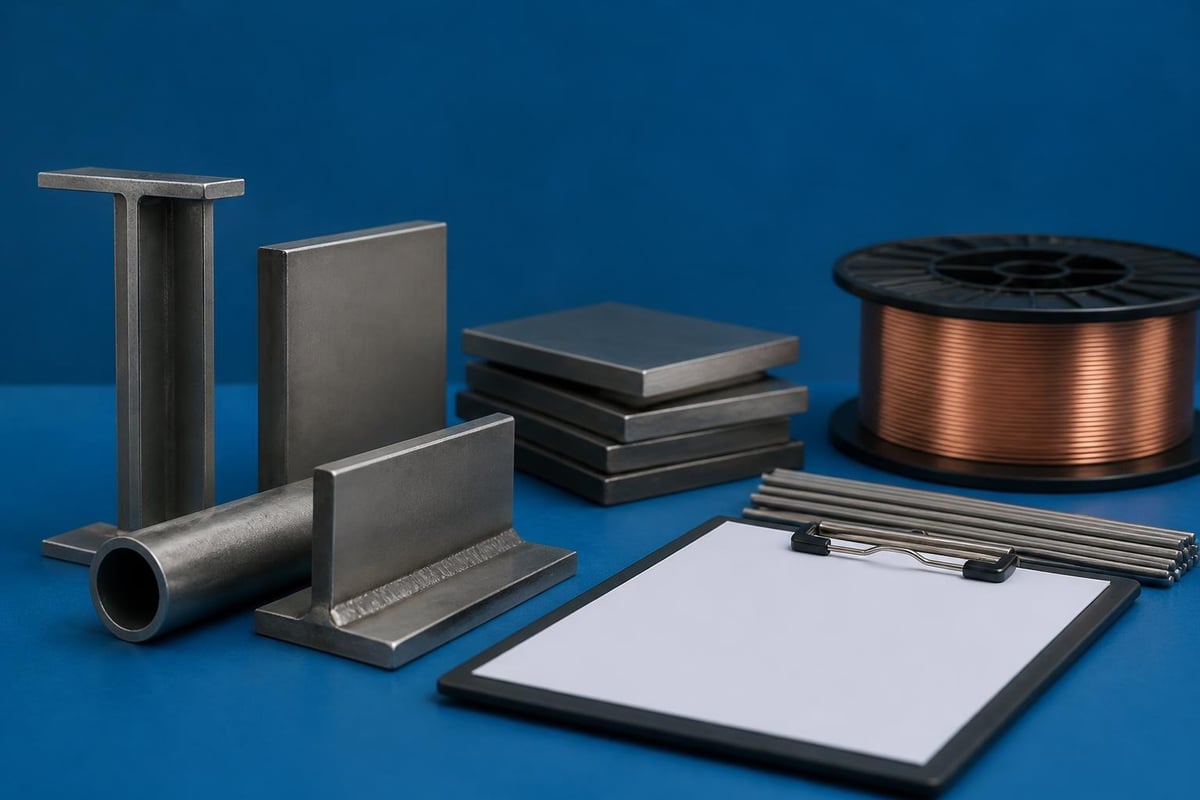
One of the most valuable provisions within the American Welding Society AWS D1.1 is the prequalified welding procedure specification (WPS) option. This pathway allows fabricators to develop welding procedures without performing qualification testing, provided all requirements in Clause 3 are strictly followed.
Requirements for Prequalification
Prequalified WPS development demands meticulous attention to prescribed parameters:
| Parameter Category | Key Requirements |
|---|---|
| Base Metals | Limited to Groups I through IV carbon steels |
| Joint Configurations | Must match details in Figure 3.3 and Table 3.7 |
| Welding Processes | SMAW, SAW, GMAW, FCAW, GTAW (specific modes) |
| Filler Metals | F-number classifications from Table 3.1 |
| Thickness Limits | Maximum and minimum per process and position |
| Preheat/Interpass | Minimum temperatures from Table 3.2 |
The restrictions ensure that only well-established process combinations with proven reliability qualify without testing. For projects involving exotic materials, unusual joint geometries, or special service conditions, full qualification testing becomes mandatory.
Essential Variables and Documentation
Even prequalified procedures require thorough documentation. Essential variables-those parameters that, when changed beyond specified limits, require requalification-must be carefully recorded. These include welding current ranges, travel speed limits, heat input controls, and shielding gas compositions.
Companies like LTJ Industrial Services maintain libraries of prequalified WPS documents that have been validated through years of successful fabrication, providing immediate deployment capability for common structural steel configurations while maintaining full traceability.
Welder and Welding Operator Qualification
The American Welding Society AWS D1.1 establishes rigorous qualification requirements for welders and welding operators to ensure that individuals possess the skills necessary to produce code-compliant welds. Qualification testing evaluates both the welder's ability and the acceptability of the resulting weld quality.
Performance Testing Requirements
Welder qualification under AWS D1.1 involves depositing test welds under supervised conditions that simulate actual production requirements. The test variables determine the scope of qualification:
- Base metal thickness qualified (ranges based on test coupon thickness)
- Welding process (separate qualification for each process)
- Filler metal classification (F-number groupings)
- Welding position (flat, horizontal, vertical, overhead)
- Weld type (groove or fillet)
Test assemblies undergo visual examination and, for groove welds, destructive testing including bend tests and macroetch examination. Acceptance criteria ensure the welder can consistently produce sound welds with proper fusion, acceptable profile, and minimal discontinuities.
Qualification Period and Continuity
Welder qualifications remain valid indefinitely provided the welder works within the qualified variables and maintains continuity. However, if a welder does not weld with a specific process for six months or more, requalification becomes necessary. This requirement ensures skill maintenance and current competency.
Documentation of welder qualifications must be maintained and made available for contract review. Qualification test records (WQTRs) serve as proof of competency and define the precise scope of each welder's authorized work.
Workmanship and Acceptance Criteria
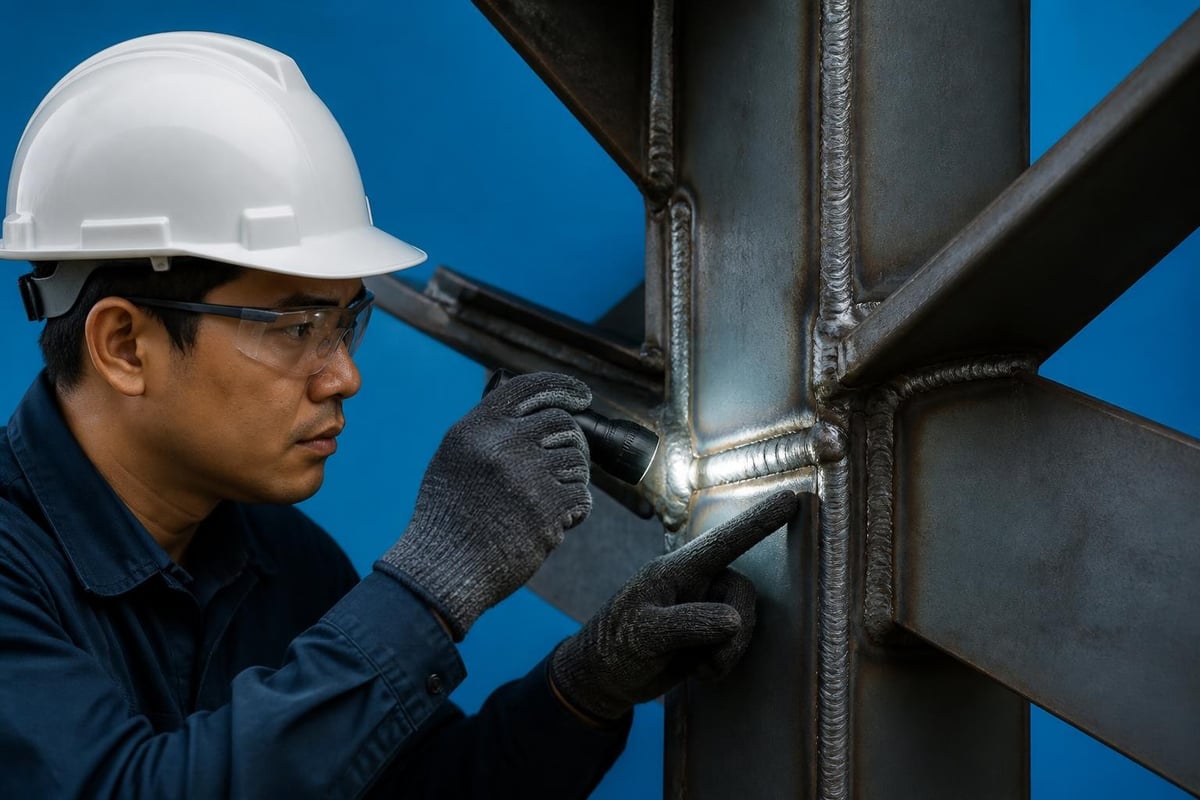
The American Welding Society AWS D1.1 provides detailed acceptance criteria for weld quality that distinguish between statically loaded and dynamically loaded structures. Understanding these distinctions is critical for proper inspection and acceptance decisions.
Visual Inspection Standards
Visual examination serves as the primary inspection method, with specific limits for common weld discontinuities:
For Statically Loaded Structures:
- Undercut depth not exceeding 1/32 inch
- No cracks permitted (zero tolerance)
- Weld profile within specified convexity and concavity limits
- Complete fusion required at all weld interfaces
For Dynamically Loaded (Cyclically Loaded) Structures:
- More restrictive undercut limits (often no undercut permitted in tension zones)
- Prohibited discontinuities include cracks, incomplete fusion, and certain porosity patterns
- Enhanced surface finish requirements to minimize stress concentration
The code provides extensive guidance on weld profiles, reinforcement dimensions, and the measurement methods inspectors must use to verify compliance.
Nondestructive Testing Requirements
Beyond visual inspection, the American Welding Society AWS D1.1 specifies when and how nondestructive testing (NDT) methods must be applied. Ultrasonic testing (UT), radiographic testing (RT), and magnetic particle testing (MT) supplement visual examination for critical applications.
Testing frequency and acceptance criteria vary based on:
- Structural importance (primary versus secondary members)
- Loading conditions (static, cyclic, seismic)
- Joint type and accessibility (complete joint penetration groove welds versus fillets)
- Contract specifications (owner requirements beyond code minimums)
Fabricators must understand not only how to perform these tests but also how to interpret results against the acceptance standards in Clause 6. Research on fillet weld strength and assessment methods provides additional context for understanding the engineering rationale behind these criteria.
Distortion Control and Dimensional Tolerance
Welding-induced distortion represents one of the most challenging aspects of structural steel fabrication. The American Welding Society AWS D1.1 addresses dimensional tolerances but leaves distortion prevention to fabricator expertise and engineering judgment.
Thermal Management Strategies
Managing heat input and controlling thermal cycles are fundamental to minimizing distortion:
- Sequence planning to balance shrinkage forces
- Fixture design that constrains movement without creating residual stress
- Preheat management that reduces thermal gradients
- Peening and thermal tensioning for specific applications
The TWI technical guidance on distortion control offers advanced strategies that complement AWS D1.1 requirements, helping fabricators meet dimensional tolerances while maintaining weld quality.
Tolerance Requirements
AWS D1.1 Table 5.1 specifies dimensional tolerances for fabricated assemblies, including straightness, alignment, and fit-up dimensions. These tolerances ensure proper structural performance while acknowledging practical fabrication limitations.
| Dimension Type | Typical Tolerance |
|---|---|
| Member straightness | L/960 (where L = length) |
| Flange-to-web alignment | ±1/4 inch for built-up members |
| Joint fit-up root opening | ±1/16 inch from WPS specification |
| Weld size (fillet) | +1/8, -1/16 inch from specified size |
Meeting these tolerances requires careful planning, skilled fabrication, and sometimes post-weld straightening operations that must be performed without damaging the base metal or introducing unacceptable stress concentrations.
Special Considerations for Tubular Structures
Hollow structural sections (HSS) and tubular connections present unique challenges addressed in specific provisions of the American Welding Society AWS D1.1. These connections are common in industrial facilities, material handling systems, and architectural structures.
Prequalified Tubular Joints
The code provides prequalified joint details for HSS connections, but with limitations that fabricators must understand. The Steel Tube Institute's technical guidance on AWS D1.1 tubular connections explains critical considerations including:
- Wall thickness ratios between branch and chord members
- Angle limitations for branch-to-chord connections
- Effective length calculations for overlapping connections
- Reinforcement requirements for highly loaded joints
Many complex tubular connections fall outside prequalified parameters, requiring either full procedure qualification testing or engineering analysis to verify structural adequacy.
Hydraulic Structure Applications
When the American Welding Society AWS D1.1 is applied to hydraulic steel structures such as penstocks, gates, and pressure piping, additional considerations emerge. The U.S. Army Corps of Engineers guidance on AWS D1.1 for hydraulic structures clarifies supplementary requirements for these critical applications, including enhanced NDT and special toughness verification.
Safety and Hot Work Controls
While the American Welding Society AWS D1.1 primarily addresses technical welding requirements, safe execution of welding operations is inseparable from code compliance. Proper safety protocols protect personnel and facilities while enabling quality work.
Fire Prevention During Welding Operations
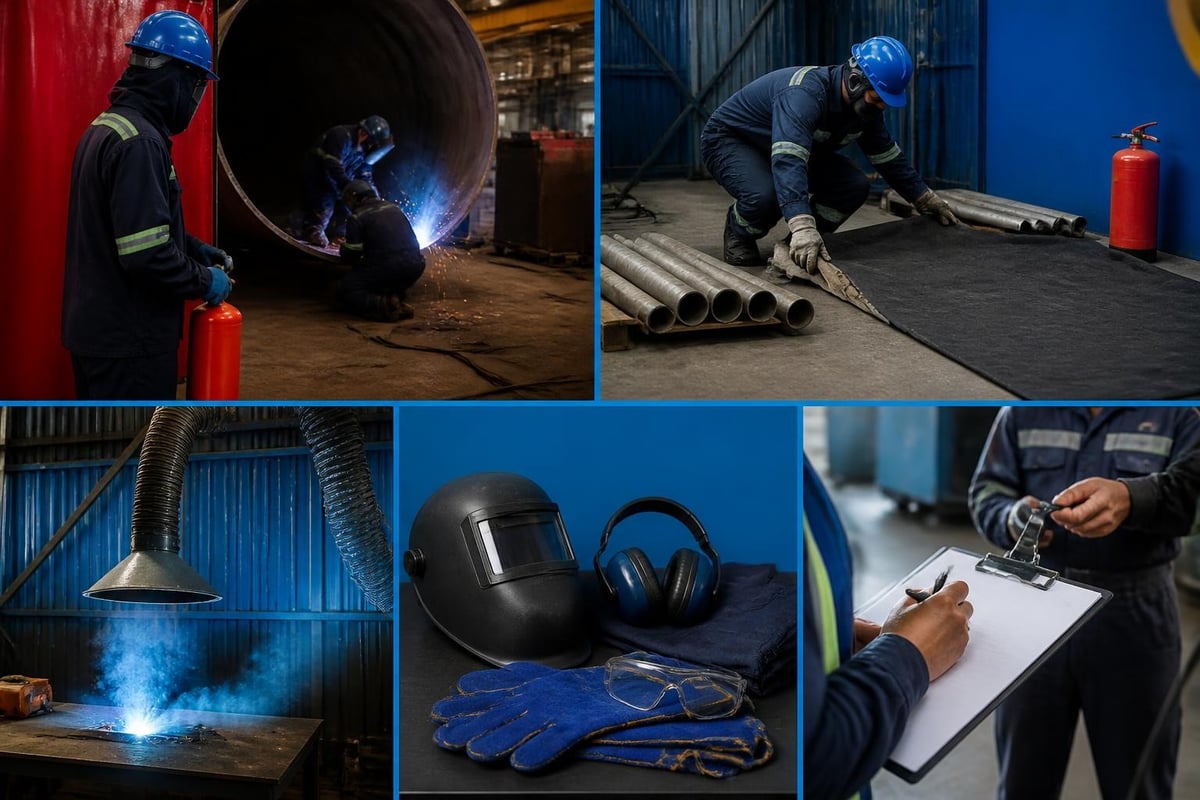
Welding and cutting operations create obvious fire hazards that demand systematic controls. The NIST guidance on fire prevention during welding and hot work establishes best practices that should accompany any AWS D1.1 project:
- Designated fire watch personnel during and after operations
- Clearance of combustible materials within 35 feet
- Availability of firefighting equipment at the work location
- Hot work permit systems for facility operations
- Post-operation inspection procedures
These measures complement the technical requirements of AWS D1.1, ensuring that pursuit of weld quality does not compromise overall project safety.
Ventilation and Fume Control
Adequate ventilation protects welders from hazardous fumes and maintains visibility for proper weld execution. General area ventilation, local exhaust systems, or respiratory protection may be necessary depending on base metals, coatings, confined space conditions, and welding processes employed.
Implementing AWS D1.1 in Your Operation
Successfully implementing the American Welding Society AWS D1.1 requires more than simply reading the code. It demands organizational commitment, training investment, and systematic quality management.
Building a Compliance Framework
Effective AWS D1.1 compliance begins with establishing clear responsibilities and documentation systems:
- Designate a Welding Engineer or Responsible Individual to interpret code requirements and develop WPS documents
- Implement document control for WPS, WQTRs, and procedure qualification records (PQRs)
- Establish inspection protocols with qualified inspectors who understand acceptance criteria
- Create fabrication travelers that clearly communicate WPS requirements to production welders
- Maintain qualification records with expiration tracking and renewal scheduling
This framework ensures that code requirements translate into consistent shop floor practices rather than existing only in the quality manual.
Training and Continuous Improvement
The 2025 edition of the American Welding Society AWS D1.1 incorporates revisions based on research, field experience, and industry feedback. Staying current requires ongoing education for engineers, inspectors, and welders.
Regular training sessions, code review meetings, and participation in professional organizations help teams understand not just what the code requires, but why those requirements exist. This deeper understanding enables better decision-making when unusual situations arise.
Contract Specifications and Code Editions
One frequently misunderstood aspect of the American Welding Society AWS D1.1 involves which edition applies to a given project. Unless contract documents specify otherwise, the edition in effect at the time of contract award governs the work.
Managing Multiple Code Editions
Fabrication shops often work under multiple AWS D1.1 editions simultaneously, as different projects specify different code years. This reality demands careful project segregation and clear communication:
- Label WPS documents with the applicable code edition
- Train inspectors on differences between editions affecting current projects
- Maintain separate qualification records when procedures differ between editions
- Review contract specifications carefully to identify which edition applies
The differences between editions may seem minor but can affect critical requirements such as preheat temperatures, acceptance criteria, or qualification variables.
Supplementary Requirements
Many contracts specify AWS D1.1 plus supplementary requirements that exceed code minimums. These additions might include:
- Enhanced NDT coverage beyond code minimums
- Additional mechanical testing of production welds
- Tighter dimensional tolerances
- Specialized environmental controls during welding
- Documentation requirements beyond standard WPS/WQTR formats
Understanding these supplementary requirements early in the bidding process prevents costly surprises during fabrication and inspection.
Quality Documentation and Traceability
The American Welding Society AWS D1.1 emphasizes documented evidence of qualification and compliance. This documentation serves multiple purposes: demonstrating code compliance to inspectors and owners, providing legal protection if disputes arise, and creating knowledge repositories for future projects.
Essential Quality Records
A complete AWS D1.1 quality file includes:
| Document Type | Purpose | Retention Requirement |
|---|---|---|
| Welding Procedure Specifications | Define approved welding parameters | Project duration + archives |
| Procedure Qualification Records | Evidence of WPS testing (if not prequalified) | Indefinite |
| Welder Qualification Test Records | Proof of welder competency | Duration of employment + archives |
| Production Weld Records | As-built documentation of actual welds | Per contract requirements |
| Inspection Reports | NDT and visual examination results | Project duration + warranty period |
Modern fabricators increasingly use digital quality management systems to organize these records, enabling rapid retrieval and analysis while reducing physical storage requirements.
Traceability Through the Fabrication Process
Effective traceability connects material certifications, WPS documents, welder qualifications, and inspection results to specific welds on specific assemblies. This connection enables:
- Rapid response to inspection findings requiring rework
- Root cause analysis when quality issues emerge
- Performance trending to identify training needs or process improvements
- Warranty support when field issues require investigation years after fabrication
Bar coding, heat number tracking, and weld maps create the links necessary for comprehensive traceability throughout complex fabrication projects.
Mastering the American Welding Society AWS D1.1 structural welding code requires technical knowledge, systematic quality processes, and ongoing commitment to excellence. As the definitive standard for structural steel welding, AWS D1.1 compliance ensures safety, reliability, and performance across diverse industrial applications. Whether you're fabricating structural components for commercial construction, industrial equipment for aggregate processing, or specialized assemblies for oil and gas operations, partnering with a qualified fabricator makes all the difference. LTJ Industrial Services brings deep AWS D1.1 expertise and certified welding capabilities to projects throughout the Western United States, delivering compliant, high-quality fabrication that meets the most demanding specifications while keeping your projects on schedule.