
In 2026, the demand for dependable gas welders continues to rise as industrial and commercial projects require equipment that can deliver consistent results under pressure. Making the right choice is crucial for productivity, safety, and cost efficiency on every jobsite. This article reviews the top 7 gas welders known for their unmatched performance, advanced efficiency, and value for professionals and businesses alike. You will discover the essential criteria for selecting a welder, a detailed breakdown of each model’s features and benefits, and guidance on matching solutions to your unique needs. Let’s explore the innovations shaping the future of gas welders this year.
What to Look for in a Gas Welder for 2026
When choosing gas welders for 2026, professionals and businesses must evaluate a range of factors that directly impact productivity, efficiency, and project success. The right equipment not only enhances welding quality but also ensures long-term reliability and cost-effectiveness. Below are the most important considerations to guide your selection process.
Power Output and Fuel Efficiency
Power output is the backbone of any gas welders selection. Matching the amperage and duty cycle to your project requirements is crucial for consistent weld quality. High-output models deliver better penetration on thick materials, while lower-output units may suit lighter fabrication tasks.
Fuel efficiency is equally important, as gas consumption directly affects operational costs. Modern gas welders often feature advanced engine designs that reduce fuel use without sacrificing power. Some models integrate automatic idle or load-sensing technology, resulting in measurable savings over time.
For example, units equipped with fuel-saving engines can lower annual fuel expenses by up to 15%. Optimizing output and fuel efficiency leads to improved productivity and reduced downtime, ensuring your gas welders keep projects on track.
Versatility and Welding Processes Supported
Versatility is a defining feature of top-performing gas welders. Multi-process machines capable of MIG, TIG, and Stick welding let users switch between techniques without additional equipment. This adaptability is vital for handling diverse materials such as steel, aluminum, and stainless steel on a single jobsite.
Being able to change welding modes streamlines workflow and boosts jobsite flexibility. Professionals report that multi-process gas welders simplify complex tasks, reduce setup time, and accommodate a wider range of applications. With the right unit, you can confidently tackle repairs, fabrication, and structural work without compromise.
Durability, Portability, and Build Quality
For industrial and commercial environments, durability is non-negotiable. The best gas welders feature rugged steel frames, reinforced corners, and weather-resistant coatings to withstand demanding conditions. Portability is also a key factor; look for models with wheels, handles, or compact footprints to simplify transport between job sites.
Real-world users value equipment that endures harsh environments and maintains performance over time. Comprehensive warranties and robust manufacturer support further ensure peace of mind. For ongoing maintenance and repairs, partnering with specialists in gas welder services and repairs can maximize uptime and extend the life of your investment.
Advanced Features and User Experience
Modern gas welders increasingly incorporate advanced features designed to improve user experience and safety. Digital controls, remote start and stop, and smart diagnostics make operation intuitive for welders of all skill levels. These innovations reduce setup time and allow for precise adjustments on the fly.
Safety is paramount, with leading machines offering overload protection and automatic shutdown functions. Integration with shop management systems and digital monitoring tools helps streamline workflow. User reviews consistently highlight that intuitive interfaces and reliable safety features in gas welders make daily operation more efficient and less stressful.
Top 7 Gas Welders for Reliable Performance in 2026
Choosing the right gas welders can be a game changer for industrial and commercial operations in 2026. The following list highlights the top-performing machines that combine reliability, versatility, and value for professionals. Each model was selected based on power output, durability, technology, and user feedback. Let’s explore the features and benefits that make these gas welders stand out from the competition.
Miller Trailblazer 330 Welder/Generator w/ Excel Power #907831001
The Miller Trailblazer 330 Welder/Generator with Excel Power is a premium solution for demanding professionals seeking top-tier gas welders. With a robust 330A welding output, this model is engineered for heavy-duty use in industrial, pipeline, and field settings.
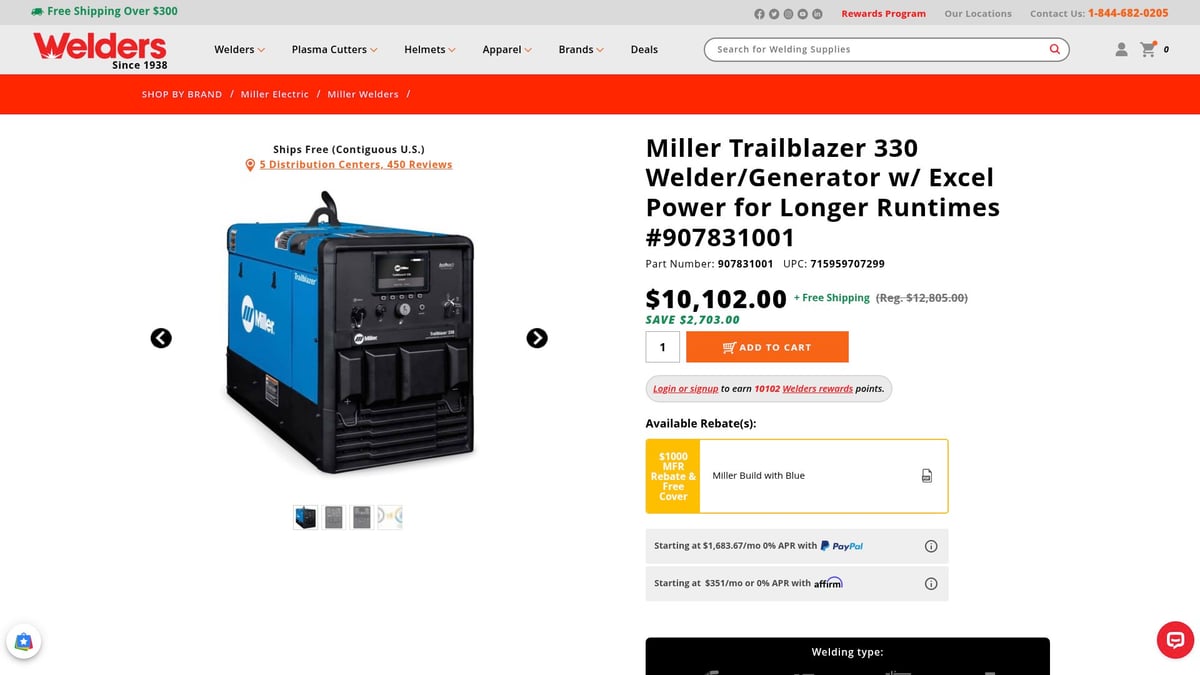
One of the standout features is its Excel Power technology, which enables simultaneous welding and auxiliary power without sacrificing performance. This results in reduced downtime and greater jobsite efficiency. The engine is designed for fuel efficiency, leading to substantial operational cost savings over time.
Key Features:
- 330A max output
- Multi-process support: MIG, Stick, TIG
- Advanced Excel Power for dual operation
- Remote start capability
- Ultra-quiet, low-emission operation
Pros:
- Exceptional power for large-scale projects
- Reliable performance in extreme environments
- Comprehensive digital controls
- Long-term manufacturer support
Cons:
- Higher price point may be prohibitive for small businesses
- Heavier and less portable than entry-level gas welders
Ideal Use Cases:
- Pipeline construction and repair
- Industrial fabrication shops
- Remote field operations requiring auxiliary power
The Miller Trailblazer 330 is the preferred choice for professionals who demand both power and efficiency from their gas welders.
Lincoln Electric Eagle 10,000 Plus Engine Driven Welder/Generator #K2343-4
The Lincoln Electric Eagle 10,000 Plus is a versatile engine-driven welder and generator, ideal for those who need reliable gas welders for both welding and auxiliary power. With a 225A DC output and a 10,500-watt generator, this model is suited for construction, maintenance, and agricultural projects.
Powered by a rugged Kohler engine, the Eagle 10,000 Plus is renowned for its low maintenance requirements and dependable operation. Its portable design makes it easy to move between job sites, while the simplified control panel ensures quick setup and operation.
Key Features:
- 225A welding output
- 10,500-watt generator capacity
- Kohler engine for long-term reliability
- Portable chassis with easy-access controls
Pros:
- Dual-purpose for welding and powering tools
- Trusted Lincoln Electric brand
- Durable in challenging work environments
Cons:
- Fewer advanced digital features compared to premium gas welders
- Limited to DC welding processes
Ideal Use Cases:
- Construction sites needing both welding and tool operation
- Farm and ranch repair work
- Maintenance teams requiring portable power
The Lincoln Electric Eagle 10,000 Plus stands out among gas welders for its combination of power, reliability, and versatility, making it a smart investment for businesses with diverse needs.
Miller Bobcat 265 Engine-Driven Welder – w/ Remote Start/Stop #907826
The Miller Bobcat 265 is a compact yet powerful addition to the world of gas welders. Designed with remote start/stop technology, it enhances safety and convenience for users in the field and shop environments.
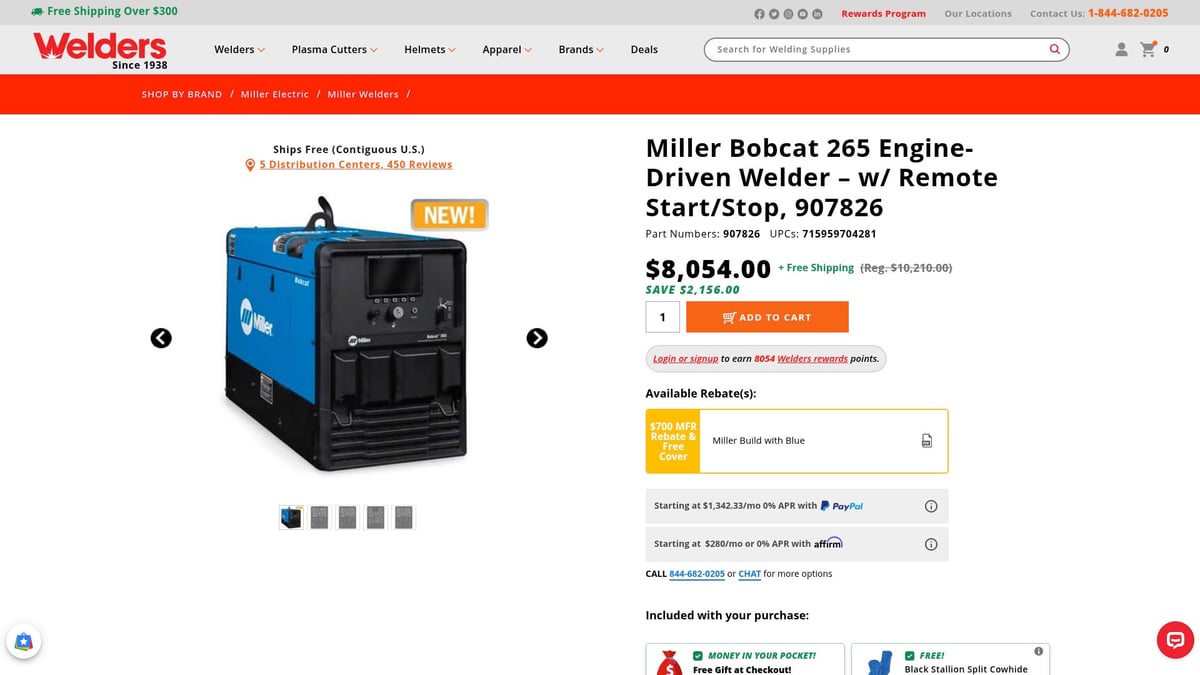
Delivering a 265A output with a fuel-efficient Kohler engine, this welder supports multi-process applications including MIG, TIG, and Stick. Its compact footprint and quiet operation make it a favorite among contractors and repair professionals.
Key Features:
- 265A welding output
- Multi-process capability: MIG, TIG, Stick
- Remote start/stop for user safety
- Compact, rugged design
Pros:
- Easy to transport and operate
- Excellent manufacturer support
- Quiet performance in busy environments
Cons:
- Not as powerful as the Trailblazer 330
- Premium pricing for advanced features
Ideal Use Cases:
- Mobile field repairs
- Fabrication shops with space constraints
- Contractors needing flexible, reliable gas welders
The Miller Bobcat 265 is engineered for professionals who value mobility and efficiency in their gas welders without compromising performance.
ESAB Rebel EMP 235ic Multi-Process Welder
The ESAB Rebel EMP 235ic is a multi-process marvel among gas welders, offering MIG, TIG, and Stick capabilities in a highly portable package. With a 235A output and dual voltage support, it’s ideal for shop and field work on a wide range of materials.
One of the most impressive features is the Smart MIG technology, which automatically adjusts arc characteristics for optimal weld quality. Users report exceptional arc stability and ease of use, making this model suitable for both beginners and seasoned professionals.
Key Features:
- 235A output, dual voltage input
- MIG, TIG, Stick welding support
- Smart MIG for automatic arc adjustments
- Lightweight, portable design
Pros:
- Versatile for various metals including aluminum and stainless steel
- User-friendly interface for fast setup
- Excellent arc stability and control
Cons:
- Lower maximum output than heavy-duty gas welders
- Not designed for the most extreme industrial applications
Ideal Use Cases:
- Workshops with diverse welding needs
- Mobile welders and light industrial use
- Projects requiring frequent material changes
The ESAB Rebel EMP 235ic brings flexibility and smart technology to the forefront of gas welders, delivering consistent results across multiple processes.
Hobart Champion Elite 225 Engine Driven Welder
The Hobart Champion Elite 225 is a robust, cost-effective choice for those seeking reliable gas welders that double as powerful generators. With a 225A DC output and an 11,000-watt generator, it’s built for both welding and heavy-duty tool operation.
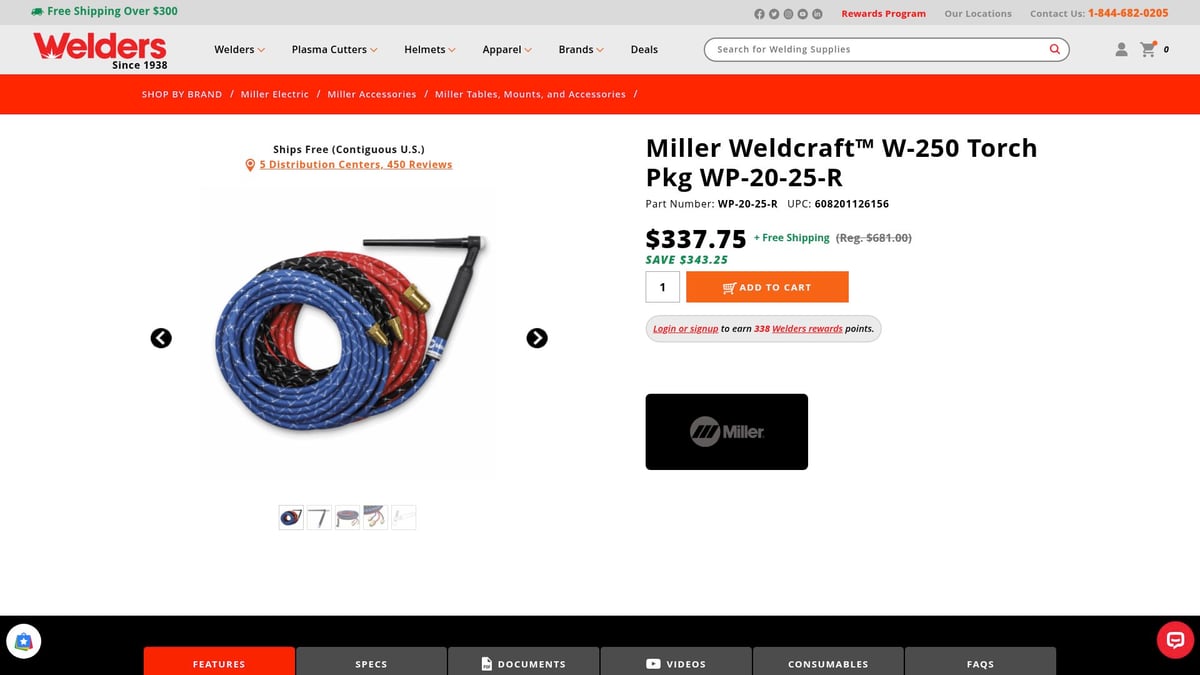
A simple control interface and a durable frame make this welder a favorite among agricultural and light industrial users. The Kohler engine ensures years of trouble-free service, even in demanding conditions.
Key Features:
- 225A DC welding output
- 11,000-watt generator for jobsite tools
- Kohler engine for robust performance
- Rugged frame for tough environments
Pros:
- Affordable entry into high-performance gas welders
- Dual-purpose for welding and power generation
- Minimal maintenance requirements
Cons:
- Basic controls, lacks advanced digital features
- Limited to DC welding
Ideal Use Cases:
- Farm and ranch operations
- Light industrial fabrication
- Job sites needing backup power
The Hobart Champion Elite 225 stands out for its blend of affordability, reliability, and dual-purpose utility among gas welders.
Miller Bobcat 265 Battery Charge with Remote Start/Stop #907826002
For professionals who rely on service trucks and field repairs, the Miller Bobcat 265 Battery Charge with Remote Start/Stop brings a unique edge to gas welders. Not only does it deliver a 265A welding output, but it also features integrated battery charging for added utility on the jobsite.
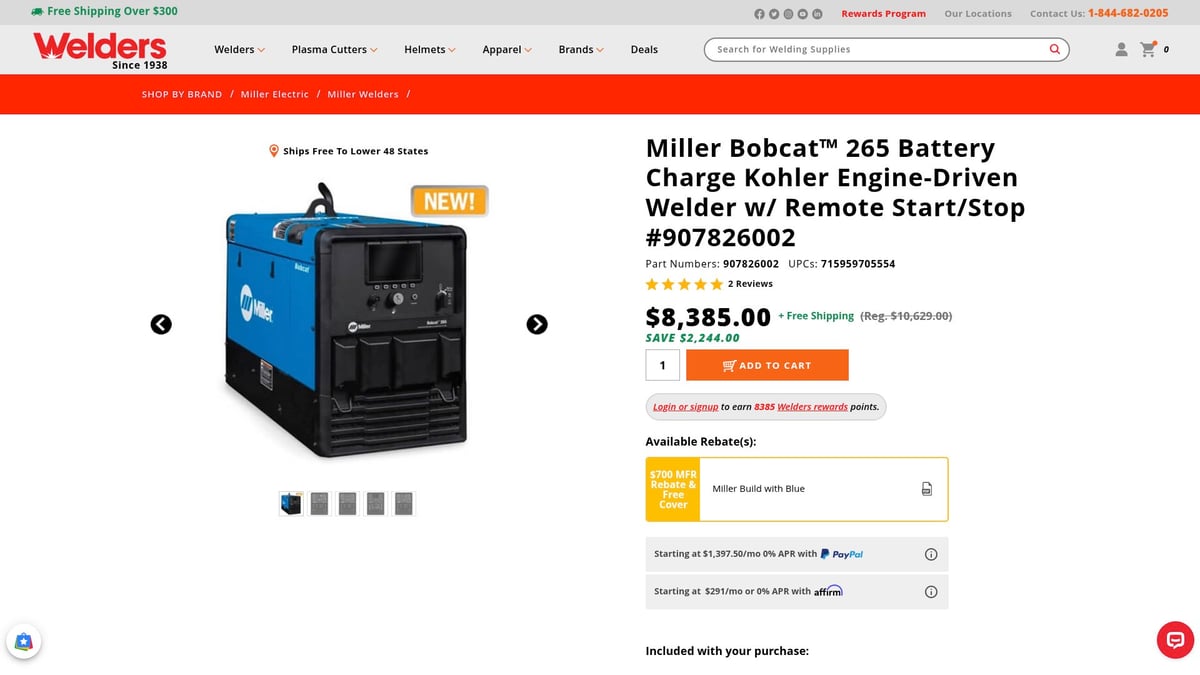
This model is built for efficiency, with multi-process compatibility and robust support from Miller. The remote start/stop feature is a standout, providing safety and operational convenience in field environments.
Key Features:
- 265A welding output
- Integrated battery charging capability
- Remote start/stop for enhanced safety
- Multi-process support: MIG, TIG, Stick
Pros:
- Dual functionality for welding and battery charging
- Reliable performance in demanding conditions
- Strong manufacturer support
Cons:
- Premium price tag
- Heavier than some portable gas welders
Ideal Use Cases:
- Service trucks and field repair operations
- Industrial maintenance teams
- Environments requiring both welding and battery support
The Miller Bobcat 265 Battery Charge model is the go-to for professionals who need comprehensive solutions from their gas welders.
LTJ Industrial Services: Custom Welding Solutions
LTJ Industrial Services is not a product manufacturer, but it is a trusted partner for businesses needing custom solutions beyond standard gas welders. Serving the Western United States, LTJ specializes in shop and field welding, machining, and fabrication, catering to commercial, industrial, recycling, aggregate, and oil and gas sectors.
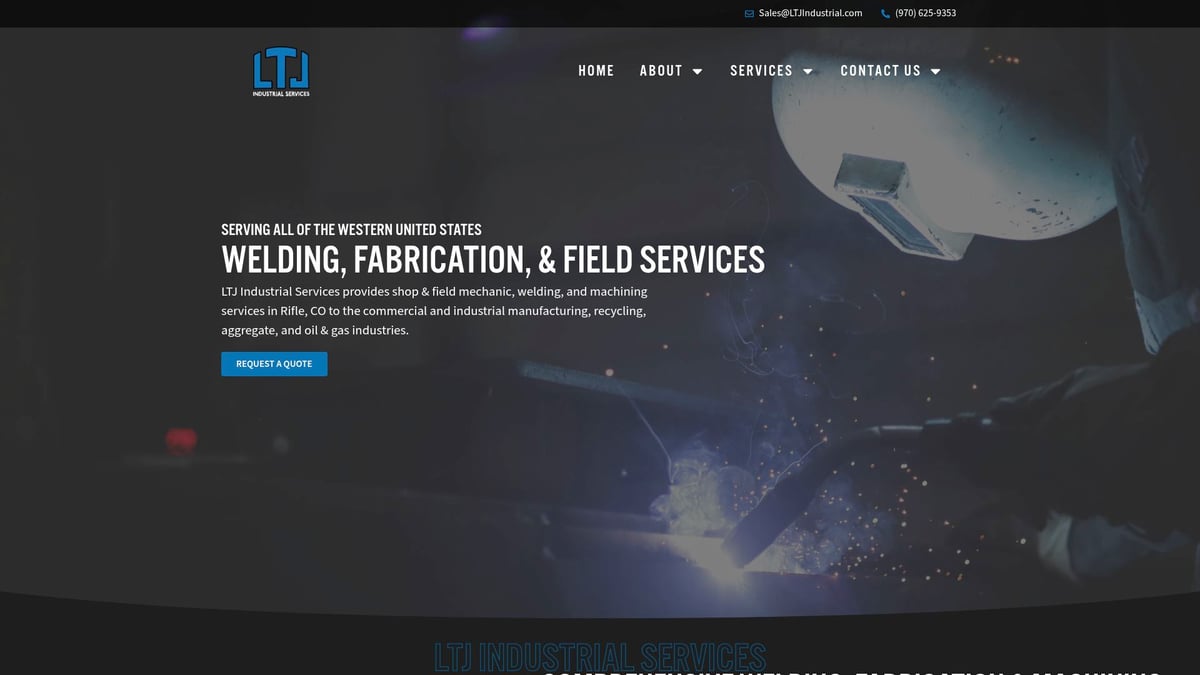
Their team brings deep expertise to every project, offering full-service capabilities from welding and metal fabrication to advanced machining and hydraulics. For organizations facing complex challenges or requiring rapid response, LTJ provides field and shop services tailored to specific needs.
Key Services:
- Shop and field welding
- Custom metal fabrication
- Machining and hydraulic solutions
- Water jetting and rapid repair
Pros:
- Experienced professionals for complex projects
- Fast response and tailored service packages
- One-stop industrial partner for all welding and fabrication needs
Cons:
- Not a physical gas welder product
- Service-based, so availability depends on project scope
Ideal Use Cases:
- Businesses needing specialized repairs or custom fabrication
- Industrial clients requiring ongoing maintenance support
- Projects that demand a flexible, expert-driven approach
When your operation needs more than off-the-shelf gas welders, LTJ Industrial Services is equipped to deliver innovative, reliable solutions for every welding and fabrication challenge.
Comparing the Top Gas Welders: Which Is Right for You?
Selecting the right gas welders for your business requires more than just reviewing technical specs. It is essential to balance performance, value, and industry application. In this section, we break down these factors, making your decision process clear and actionable.
Performance and Application Comparison
Performance is at the core when comparing gas welders. Models like the Miller Trailblazer 330 provide 330A output and excel in industrial and pipeline settings. The Lincoln Eagle 10,000 Plus offers a balance of welding strength and auxiliary power, suitable for construction and maintenance. For field repairs or mobile jobs, the ESAB Rebel EMP 235ic stands out for portability and true multi-process support.
| Model | Max Output | Processes Supported | Fuel Efficiency | Best Use Case |
|---|---|---|---|---|
| Miller Trailblazer 330 | 330A | MIG, TIG, Stick | High | Industrial, Pipeline |
| Lincoln Eagle 10,000 Plus | 225A | Stick, TIG | Moderate | Construction, Farm |
| ESAB Rebel EMP 235ic | 235A | MIG, TIG, Stick | High | Mobile, Workshop |
Heavy-duty applications demand higher output and efficiency, while light-duty jobs may benefit from portability. User reviews highlight that multi-process gas welders improve flexibility and productivity across diverse projects.
Price vs. Value Analysis
Comparing prices and overall value is crucial for businesses investing in gas welders. The Miller Trailblazer 330, at $10,102, delivers top-tier performance and advanced features, often with rebates. In contrast, the Hobart Champion Elite 225 provides reliable output at $3,299, making it a budget-friendly option for lighter tasks.
| Model | Price | Rebate | Warranty | Value-Added Features |
|---|---|---|---|---|
| Miller Trailblazer 330 | $10,102 | $1,000 | Extended | Excel Power, Remote Start |
| Lincoln Eagle 10,000 Plus | $4,699 | N/A | Standard | High Power Generator |
| Hobart Champion Elite 225 | $3,299 | N/A | Standard | Dual-Purpose Use |
Fuel-saving technology and multi-process capabilities often offset higher upfront costs with operational savings. When budgeting for gas welders, consider total cost of ownership, warranty, and support to maximize long-term reliability.
Choosing Based on Industry Needs
Different industries have unique requirements for gas welders. Construction and manufacturing often require high-output, durable units like the Trailblazer 330. Agriculture and service sectors benefit from portable models with generator capabilities, such as the Lincoln Eagle 10,000 Plus.
For field welding, multi-process support ensures flexibility on changing job sites. Shop-based applications may prioritize advanced controls and efficiency. Businesses scaling operations should consider partnering with Skilled industrial welders to ensure access to expertise and reliable service, supporting growth and operational excellence.
Maintenance Tips for Maximizing Gas Welder Reliability
Proper maintenance is the backbone of reliable gas welders. To ensure peak performance and extend equipment lifespan, professionals must follow a structured upkeep routine. Below are essential strategies for maximizing reliability and safety.
Routine Maintenance and Inspection
Routine maintenance is the foundation for keeping gas welders functioning efficiently. Begin each workday with a visual inspection, checking fuel lines, air filters, and engine oil levels. Look for signs of wear such as frayed cables or loose connections.
Follow a maintenance schedule based on manufacturer guidelines. This often includes:
- Changing engine oil after a set number of operating hours
- Inspecting and replacing air and fuel filters regularly
- Checking spark plugs for buildup or damage
- Tightening bolts and fasteners to prevent vibration issues
Document each inspection to catch patterns of recurring problems. Consistent care not only reduces costly downtime but also ensures gas welders deliver consistent weld quality.
Troubleshooting Common Issues
Even well-maintained gas welders can encounter occasional issues. Common problems include engine starting failures, irregular arc performance, or unexpected shutdowns. Diagnose faults using onboard digital controls or smart diagnostic systems when available.
If the welder displays error codes, consult the user manual for recommended solutions. For persistent issues, verify fuel quality and inspect wiring for corrosion. Keeping a toolkit with spare parts—like fuses, hoses, and connectors—can minimize repair delays.
When advanced troubleshooting is required, contact manufacturer support or certified technicians. Addressing small problems quickly prevents larger failures and keeps gas welders operating smoothly.
Safety and Storage Best Practices
Safety is paramount when working with gas welders. Always wear appropriate personal protective equipment, including gloves, eye protection, and flame-resistant clothing. Operate welders in well-ventilated areas to prevent fume buildup.
Before storing equipment, clean all surfaces and disconnect the fuel supply. Store gas welders in a dry, secure location to avoid corrosion or accidental damage. Regularly check fire extinguishers and safety signage in storage areas.
For a comprehensive overview of safe operation and maintenance, consult Safe Welding Practices, which outlines essential precautions and inspection routines. Following these guidelines reduces the risk of workplace accidents and extends equipment service life.
Whether you’re planning for major industrial projects or simply looking to boost your team’s efficiency with the right tools, choosing the best gas welder is essential for reliable results in 2026. We’ve covered the top models, key features, and how each one fits various jobsite needs, but sometimes you need a solution that goes beyond the equipment itself. If you’re ready to discuss custom welding, fabrication, or machining services tailored to your business, let’s connect. You can take the next step and Request a Quote—we’re here to help your operations run smoothly and achieve your goals.