
The world of fabrication is changing at lightning speed. For fabrication specialists, the coming years will bring fresh opportunities and new challenges as technology, client demands, and global markets evolve.
This guide is designed to help fabrication specialists not just keep up, but get ahead. You’ll find actionable strategies, expert insights, and future-focused trends tailored for the modern fabrication landscape.
We’ll explore what’s next in fabrication, the essential skills you’ll need, proven business growth tactics, the latest in technology adoption, and industry best practices. Ready to secure your success in 2026 and beyond? Let’s get started.
Understanding the Fabrication Landscape in 2026
The landscape for fabrication specialists is shifting rapidly as 2026 approaches. Staying informed about market trends, evolving client demands, regulatory updates, and emerging risks is essential for long-term success. This section explores the key forces shaping the industry and what you need to know to stay ahead.
Key Industry Trends and Projections
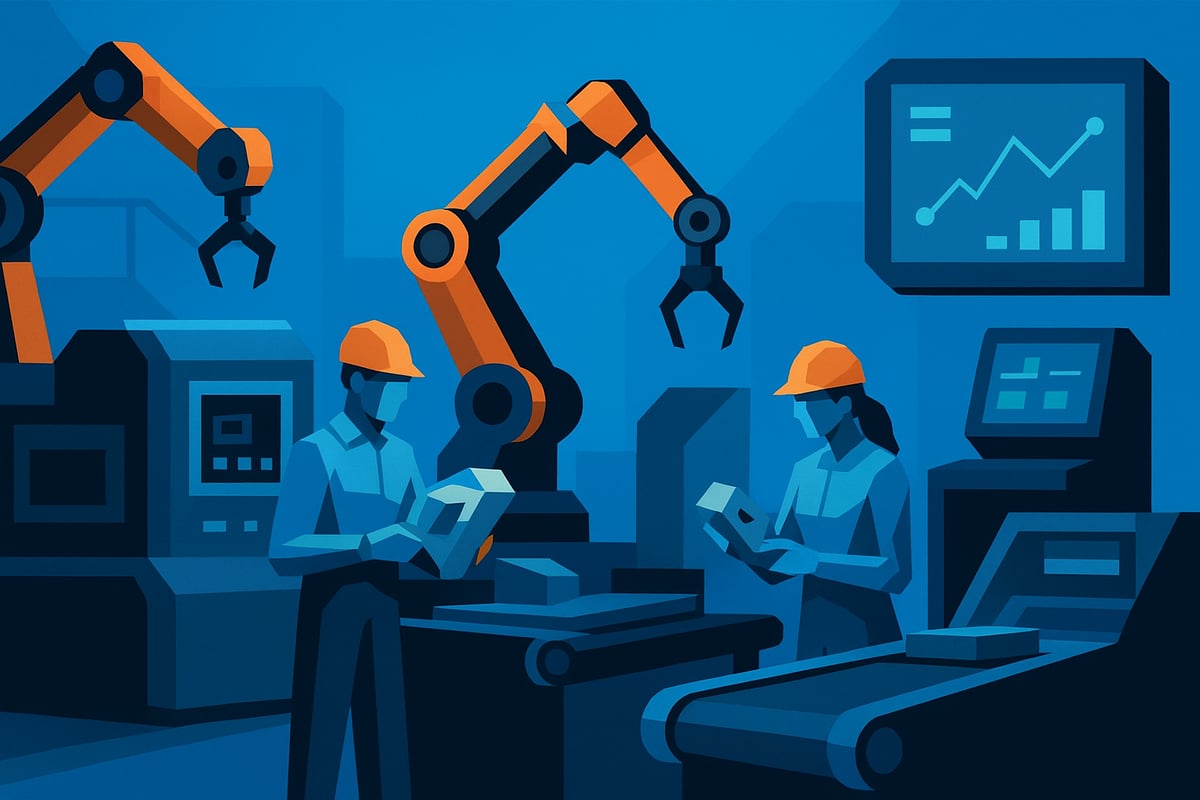
Fabrication specialists will see significant global market growth through 2026. Analysts forecast a compound annual growth rate (CAGR) of 7% for custom fabrication services, fueled by demand for sustainability, automation, and advanced customization.
Key drivers include:
- Sustainability initiatives and green manufacturing
- Increased automation and robotics integration
- Growing need for tailored, client-specific solutions
Regional hotspots such as the US, Asia-Pacific, and Europe are leading the charge, with each region investing in digital transformation and supply chain resilience.
Supply chain dynamics are also shifting, with greater emphasis on local sourcing and digital supply networks. For an in-depth look at future trends and strategies for fabrication specialists, see the Commercial Fabrication Guide for 2026.
Evolving Client Expectations
Clients are raising the bar for fabrication specialists. The demand for faster turnaround times and higher precision is increasing, as companies compete to deliver top-tier products.
Sustainability now plays a central role. Clients expect the use of recyclable and environmentally friendly materials in every project.
Digital integration is another growing expectation. Many manufacturers require full digital traceability, using platforms that streamline project management and enable real-time updates.
As a result, fabrication specialists must adapt by adopting digital tools, prioritizing eco-friendly materials, and building processes that meet these higher standards.
Regulatory and Compliance Changes
Regulatory landscapes are evolving just as quickly as the market. Fabrication specialists face new safety and environmental standards, both in the United States and internationally.
Key regulatory bodies include OSHA and the EPA, with recent updates impacting workplace safety and emissions. For example, new welding fume exposure limits introduced in 2025 require shops to invest in updated ventilation and monitoring systems.
Staying compliant means tracking changes, training employees on new protocols, and adopting robust documentation practices. Proactive compliance strategies can help fabrication specialists avoid costly penalties and maintain client trust.
Opportunities and Threats
The future holds both new opportunities and emerging threats for fabrication specialists. Diversification into new markets—such as renewable energy or custom prototyping—offers promising growth paths.
However, increased automation and globalization bring competitive pressures. Labor shortages, cyber threats, and raw material price volatility present ongoing risks.
Industry analysts recommend regular risk assessments and flexible business models. By identifying opportunities early and mitigating threats, fabrication specialists can position themselves for sustainable growth in 2026.
Essential Skills and Training for Fabrication Specialists
Staying ahead in the fabrication industry means mastering both technical and soft skills. As 2026 approaches, fabrication specialists must adapt quickly, pursue relevant certifications, and focus on workforce development to remain competitive.

Core Technical Skills for 2026
The future demands a new level of technical expertise from fabrication specialists. Advanced welding techniques such as robotic, laser, and hybrid welding are becoming industry standards. Precision machining and CNC programming skills are in high demand, as automated systems and tight tolerances define modern fabrication.
- Mastery of CAD/CAM software for efficient design and production
- Ability to work with advanced alloys, composites, and lightweight materials
- Familiarity with multi-process welding, which has seen a 15% rise in demand
Fabrication specialists with these core competencies are better equipped to tackle custom projects and meet client expectations.
Soft Skills and Leadership
Technical prowess alone does not guarantee success. Fabrication specialists must also excel in communication and teamwork, especially when collaborating in cross-functional teams. Strong problem-solving abilities and adaptability help professionals navigate daily challenges.
- Effective project management is crucial for meeting deadlines
- Team-based fabrication projects have proven to improve delivery times
- Leadership and mentoring foster a positive workplace culture
These soft skills allow fabrication specialists to work efficiently, drive innovation, and support continuous improvement.
Continuous Learning and Certification
Ongoing education is vital for fabrication specialists who want to stay relevant. Industry-recognized credentials, such as AWS, NIMS, and ASME certifications, validate technical expertise and support career growth. Many shops now require annual skills updates to keep pace with evolving materials and methods.
Online courses and micro-credentials offer accessible ways to upskill. Programs like the AISC Fabricator Training Program Award showcase the value of structured, award-winning training. Continuous learning ensures fabrication specialists remain competitive and ready for new challenges.
Attracting and Retaining Top Talent
Building a skilled workforce is a top priority for fabrication specialists. Workforce development strategies such as mentorship, internships, and partnerships with technical schools are essential. Emphasizing diversity and inclusion creates a dynamic environment for growth.
- Internship programs have reduced turnover by 25%
- Mentorship fosters skills transfer and employee satisfaction
- Collaboration with schools and apprenticeships secures future talent
By investing in people, fabrication specialists ensure long-term success and adaptability in a changing industry.
Technology Integration: Future-Proofing Your Fabrication Process
Embracing technology is non-negotiable for fabrication specialists aiming to stay ahead in 2026. Integrating automation, digital tools, and green innovations will define the next generation of industry leaders.
Automation and Robotics in Fabrication
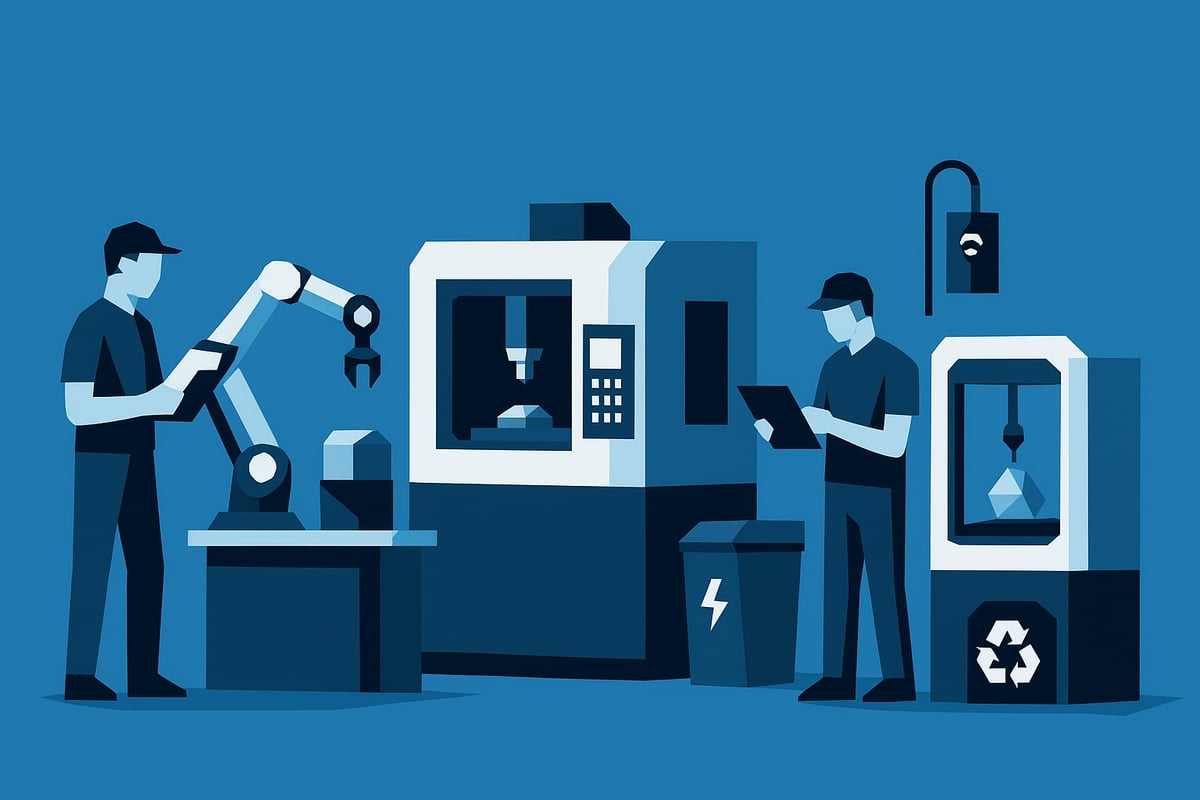
Automation is transforming the way fabrication specialists approach daily operations. Collaborative robots, also known as cobots, work alongside human teams to boost productivity, ensure consistency, and enhance workplace safety.
Common automation solutions include:
- Automated welding cells for repetitive, high-precision tasks
- Material handling robots to streamline logistics
- Robotic inspection systems for real-time quality assurance
By adopting these technologies, shops have increased output by 30 percent. This shift allows fabrication specialists to focus on complex, value-added work and adapt quickly to changing project demands.
Digital Transformation and Smart Manufacturing
Digitalization is the backbone of future-ready fabrication specialists. Smart manufacturing leverages IoT devices, sensors, and real-time monitoring to optimize every stage of production.
Key elements include:
- Predictive maintenance powered by data analytics
- Integrated project management platforms
- Digital twins for process simulation
According to Manufacturing Trends in 2026, these advancements are reducing downtime by 20 percent and enabling more agile decision-making. Fabrication specialists who embrace digital tools position themselves for sustained growth and resilience.
Additive Manufacturing and New Materials
Additive manufacturing is unlocking new possibilities for fabrication specialists, especially in prototyping and custom parts. 3D metal printing is now widely used for both rapid prototyping and full-scale production.
Innovations in materials are also shaping the industry:
- Advanced alloys for strength and durability
- Composites for lightweight applications
- Titanium 3D printing in aerospace components
These advancements allow fabrication specialists to deliver highly customized solutions that meet demanding client requirements, opening doors to new markets and applications.
Cybersecurity and Data Protection
As fabrication specialists adopt more connected technologies, cybersecurity becomes a critical concern. Protecting digital assets, proprietary designs, and client information is essential.
Best practices for security include:
- Regular system updates and vulnerability assessments
- Employee training on data protection protocols
- Compliance with regulations such as CMMC and GDPR
Implementing robust cybersecurity measures helps fabrication specialists safeguard their operations against cyber threats, ensuring business continuity and client trust.
Sustainability Technologies and Green Fabrication
Sustainability is at the forefront for fabrication specialists as clients increasingly demand eco-friendly solutions. Energy-efficient equipment and recycling initiatives are now standard in leading shops.
Key approaches:
- Closed-loop manufacturing processes to minimize waste
- Use of recyclable and sustainable materials
- Providing documentation of environmental practices
Recent data shows that 40 percent of clients now require sustainability documentation from their fabrication specialists. By prioritizing green technologies, specialists not only meet regulatory requirements but also enhance their competitive advantage.
Business Strategies for Growth and Competitiveness
To secure a future-ready position, fabrication specialists must adopt innovative business strategies that go beyond technical expertise. Growth and competitiveness in 2026 will hinge on strategic planning, market awareness, and operational agility.
Market Positioning and Brand Differentiation
Standing out in a crowded market is essential for fabrication specialists. Identify what makes your services unique, such as rapid prototyping, complex assemblies, or sustainability practices. Specializing in a niche—like renewable energy components or precision medical devices—can boost revenues and establish leadership.
Building a strong brand reputation for reliability and quality also attracts premium projects. Study Case Studies of Fabrication Projects to see how others have leveraged innovation and specialization for market advantage.
Client Acquisition and Retention
For fabrication specialists, attracting and retaining clients requires a proactive approach. Leverage digital marketing, showcase your portfolio online, and ask satisfied customers for referrals. Partnerships with contractors and manufacturers can expand your reach.
Exceptional customer service is a powerful differentiator. Implement CRM systems to track client interactions and follow up on completed projects. These steps help increase repeat business rates and foster long-term relationships.
Pricing Strategies and Cost Optimization
Choosing the right pricing model is vital for profitability. Consider value-based pricing to reflect the expertise and added value that fabrication specialists deliver, rather than relying solely on cost-plus models.
Streamline operations using lean manufacturing principles. This reduces overhead, shortens lead times, and improves margins. Data-driven cost reviews help pinpoint inefficiencies and unlock savings, allowing you to remain competitive without sacrificing quality.
Strategic Partnerships and Networking
Strategic alliances open new doors for fabrication specialists. Collaborate with material suppliers, technology vendors, and other fabrication shops to share resources and expertise. Joint ventures can unlock new regional markets or service lines.
Participate in industry trade shows and local business networks to build relationships and increase visibility. Networking provides access to new opportunities, industry trends, and potential clients, fueling growth and resilience.
Financial Planning and Risk Management
Sound financial management ensures stability for fabrication specialists. Monitor cash flow closely, invest wisely in new equipment, and maintain adequate insurance coverage. Scenario planning helps prepare for supply chain disruptions or market shifts.
Review recent volatility lessons from 2023 and 2024 to improve your risk management strategies. Being proactive about financial planning allows you to navigate uncertainties and capitalize on emerging opportunities.
Best Practices and Industry Insights from Leading Fabrication Specialists
Case Studies of Successful Fabrication Projects
Fabrication specialists consistently push boundaries, finding solutions for complex client needs. Take the renewable energy sector, where custom fabrication for wind turbine components demanded precision, unique material handling, and creative welding techniques. These projects highlight the value of adaptive teams and advanced shop capabilities.
One key to success is leveraging in-house expertise and external resources. By partnering with providers offering Custom Metal Fabrication Services, specialists can access state-of-the-art equipment, quick prototyping, and tailored solutions for unique projects.
- Custom energy infrastructure for remote sites
- Precision assemblies for medical equipment
- Large-scale art installations with unique finishes
These examples showcase how fabrication specialists deliver results where standard solutions fall short.
Quality Assurance and Process Improvement
Quality is the foundation of every successful fabrication project. Leading fabrication specialists implement ISO 9001 standards and embrace lean manufacturing to drive consistent results. By focusing on process mapping, root cause analysis, and Kaizen events, teams reduce rework and maintain high client satisfaction.
Data-driven improvement is essential. Shops track key metrics like defect rates and cycle times, using dashboards to monitor progress. Regular quality audits and staff training keep everyone aligned on best practices.
- ISO 9001 certification for process control
- Lean tools to eliminate waste
- Continuous improvement meetings
With these strategies, fabrication specialists achieve measurable gains in quality and efficiency.
Safety Culture and Workforce Wellbeing
Top fabrication specialists know that safety is more than compliance, it is a core value. Building a proactive safety program includes daily briefings, regular hazard assessments, and transparent reporting. Ergonomic workstations and mental health resources further protect teams from both physical and psychological risks.
A zero-accident year is possible with the right incentives and accountability. Recognizing safe behaviors, providing ongoing training, and encouraging peer-to-peer support creates a culture where everyone looks out for one another.
- Daily safety huddles
- Ergonomic tool investments
- Mental health support initiatives
By prioritizing wellbeing, fabrication specialists retain talent and strengthen their reputation.
Learning from Industry Leaders
Continuous learning sets high-performing fabrication specialists apart. Interviews with top managers reveal a commitment to mentorship, benchmarking, and staying ahead of industry trends. Peer networking and attending trade events help teams discover new tools and methodologies.
Staying informed is easier with curated resources. For ongoing updates and insights, fabrication specialists turn to Fabrication Industry Blog Articles to track the latest developments and best practices.
- Benchmarking against industry leaders
- Participating in professional associations
- Regular skills assessments
Learning from the best ensures fabrication specialists remain competitive and ready for the future.
Partnering with Comprehensive Fabrication Service Providers
In today’s competitive market, fabrication specialists face increasing pressure to deliver quality, speed, and innovation. Partnering with comprehensive fabrication service providers is a strategic move that helps address these challenges. By choosing a partner with broad capabilities, fabrication specialists can streamline workflows, minimize project risks, and maintain a competitive edge.
The Value of Full-Spectrum Industrial Services
Comprehensive service providers offer a one-stop solution for fabrication specialists seeking welding, machining, and custom fabrication under a single roof. This integrated approach simplifies project management, reduces communication gaps, and ensures accountability from start to finish.
With all services centralized, fabrication specialists benefit from improved coordination, faster decision-making, and consistent quality across every phase. For example, projects requiring both machining and welding can move seamlessly between departments, reducing delays and costly errors. Integrated teams also foster creative problem-solving, which is vital for complex or custom builds.
Shop and Field Service Flexibility
The ability to deliver both shop and field services is a major advantage for fabrication specialists working on diverse or time-sensitive projects. In-shop capabilities allow for controlled, high-precision work, while on-site services address urgent repairs or installations without disrupting operations.
Field service teams are equipped to handle emergencies, infrastructure upgrades, and remote project demands. This flexibility means fabrication specialists can respond rapidly to client needs, whether the job requires a controlled environment or immediate action in the field. The result is minimized downtime and greater client satisfaction throughout the project lifecycle.
Skilled Professionals and Custom Solutions
Access to experienced welders, machinists, and fabricators is essential for fabrication specialists who need reliable, high-quality outcomes. Comprehensive providers invest in skilled professionals capable of tackling unique challenges and delivering custom-engineered solutions.
These experts can adapt to evolving project requirements, from intricate hydraulic systems to large-scale industrial assemblies. Their knowledge and versatility help fabrication specialists remain agile, even as client expectations or industry standards shift. Investing in ongoing training and certification ensures that teams stay ahead of technological advances and fabrication trends.
LTJ Industrial Services: Your Partner for Welding, Fabrication & Machining Success
LTJ Industrial Services exemplifies the benefits of working with a comprehensive partner. They offer a full range of services—welding, fabrication, machining, hydraulics, and water jetting—tailored to the needs of both commercial and industrial clients across the Western United States.
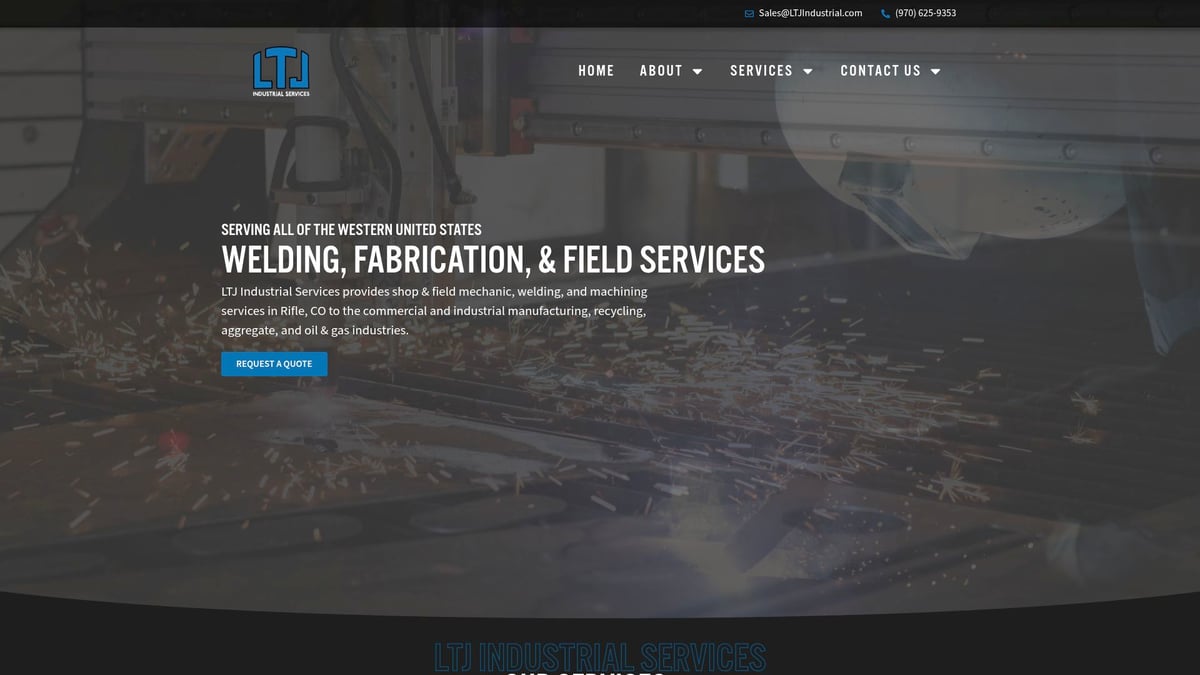
Their shop and field capabilities give fabrication specialists unmatched flexibility to meet demanding project requirements. LTJ’s commitment to quality, efficiency, and problem-solving allows clients to focus on their core business while trusting that every fabrication challenge will be handled expertly. When fabrication specialists need a partner who delivers on all fronts, LTJ Industrial Services stands out as a proven leader.
With the fabrication industry evolving so quickly, staying ahead means having the right partners and resources by your side. We’ve explored the latest trends, essential skills, and strategies to help you thrive in 2026 and beyond. If you’re looking to turn these insights into real results for your business, LTJ Industrial Services offers the expertise and flexibility you need—from advanced welding and machining to custom solutions tailored for your toughest challenges. Ready to take the next step toward your goals Let’s start the conversation—Request a Quote and see how we can help you succeed.