
The intersection of manufacturing and welding represents one of the most critical partnerships in modern industrial production. As businesses across the commercial and industrial sectors demand increasingly sophisticated metal fabrication solutions, understanding how these two disciplines complement each other has become essential for operational success. From the oil and gas fields to aggregate processing facilities, the synergy between manufacturing processes and welding techniques determines product quality, structural integrity, and project timelines throughout the Western United States and beyond.
The Foundational Role of Welding in Modern Manufacturing
Manufacturing operations rely heavily on welding to create structural connections that meet rigorous engineering specifications. The relationship between these two fields extends far beyond simple metal joining. Manufacturing and welding work together to transform raw materials into finished products that serve critical infrastructure needs.
Primary Welding Methods in Manufacturing Environments
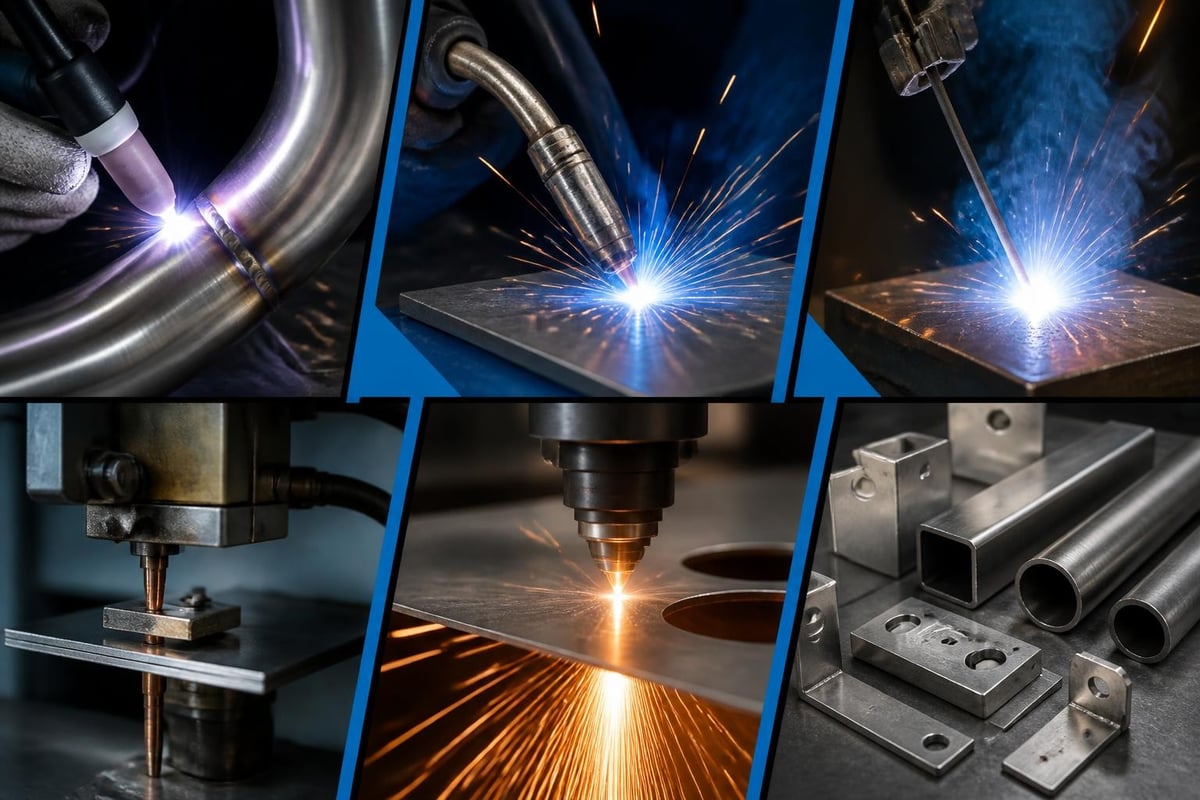
Different manufacturing applications require specific welding approaches. The most common techniques include:
- MIG/MAG Welding: Ideal for high-volume production environments where speed and consistency matter
- TIG Welding: Provides precision for specialized applications requiring clean, controlled welds
- Stick Welding: Remains essential for field work and outdoor manufacturing applications
- Flux-Cored Arc Welding: Delivers deep penetration for thick materials in heavy manufacturing
The American Welding Society (AWS) sets industry-wide best practices that guide manufacturing facilities in implementing proper welding procedures. These standards ensure consistency across diverse production environments.
Material Considerations in Manufacturing and Welding
Material selection directly impacts welding approach and manufacturing outcomes. Steel alloys, stainless steel, aluminum, and specialty metals each present unique challenges that require adapted techniques.
| Material Type | Primary Welding Method | Key Consideration | Typical Applications |
|---|---|---|---|
| Carbon Steel | MIG, Stick | Heat control | Structural fabrication |
| Stainless Steel | TIG, MIG | Contamination prevention | Food processing equipment |
| Aluminum | TIG, MIG | Oxide layer management | Aerospace components |
| High-Strength Alloys | TIG, Specialized | Preheating requirements | Oil and gas infrastructure |
Understanding these material-specific requirements helps manufacturing companies deliver consistent quality across varied project types.
Quality Control Systems for Manufacturing and Welding Operations
Quality assurance represents a non-negotiable component of manufacturing and welding integration. Businesses serving critical industries cannot afford weld failures or manufacturing defects that compromise safety or performance.
Inspection Protocols and Testing Methods
Comprehensive quality control incorporates multiple inspection layers:
- Visual Inspection: Initial assessment of weld appearance and surface conditions
- Non-Destructive Testing (NDT): Ultrasonic, radiographic, and magnetic particle testing
- Destructive Testing: Tensile and bend tests for procedure qualification
- Dimensional Verification: Ensuring manufactured components meet specifications
- Documentation Review: Confirming compliance with welding procedure specifications
The National Institute of Standards and Technology (NIST) provides frameworks for implementing robust quality management systems in manufacturing environments. These systems integrate seamlessly with welding quality requirements.
Certification and Welder Qualification
Manufacturing and welding quality depends heavily on workforce competency. Certified welders undergo rigorous testing to demonstrate proficiency in specific processes, positions, and materials.
Welder qualification requirements vary by industry sector. Oil and gas applications typically demand more stringent certifications than general fabrication work. Maintaining current certifications ensures manufacturing operations meet customer expectations and regulatory requirements.
Safety Standards Governing Manufacturing and Welding
Worker safety remains paramount in any manufacturing and welding environment. The hazards associated with high temperatures, electrical systems, and confined spaces require comprehensive safety protocols.
OSHA Compliance Requirements
The Occupational Safety and Health Administration (OSHA) provides guidelines specifically addressing welding, cutting, and brazing operations. Manufacturing facilities must implement these standards to protect workers and maintain regulatory compliance.
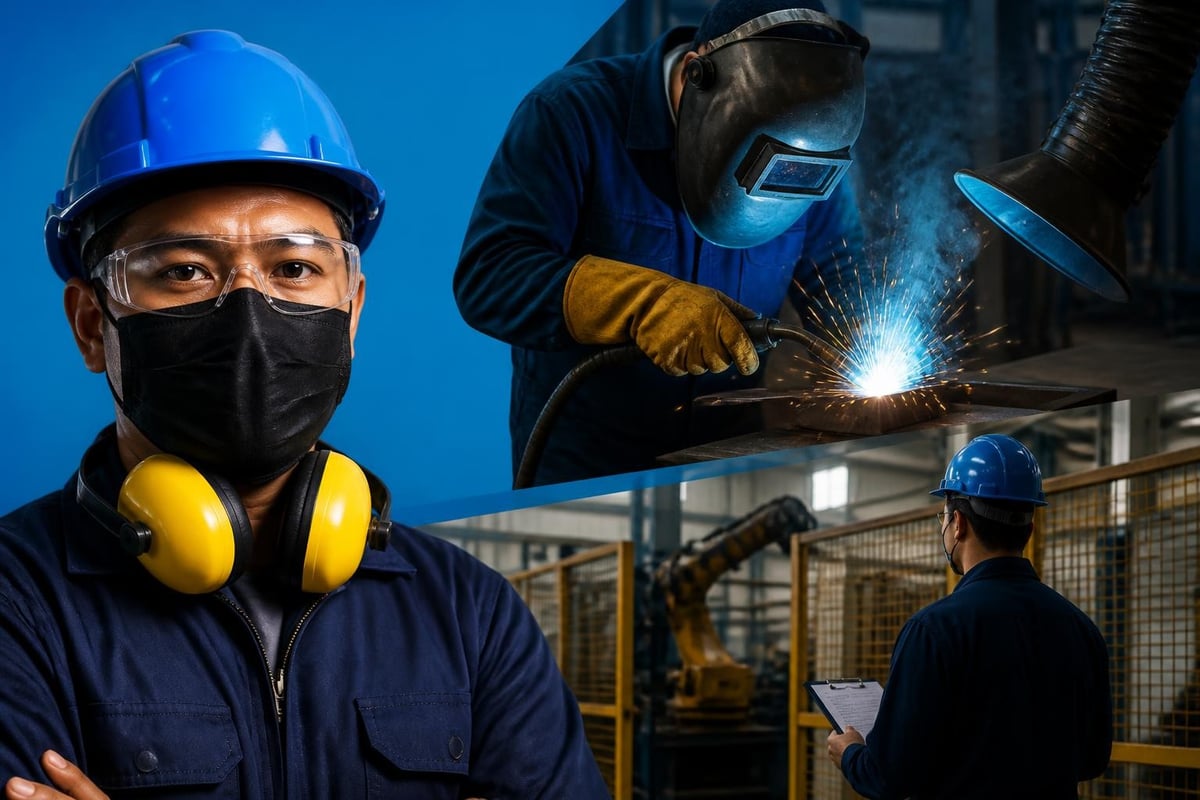
Critical safety considerations include:
- Personal Protective Equipment (PPE): Helmets, gloves, protective clothing, and respiratory protection
- Ventilation Systems: Adequate air movement to control fumes and gases
- Fire Prevention: Hot work permits and fire watch procedures
- Electrical Safety: Proper grounding and equipment maintenance
- Confined Space Protocols: Entry procedures and atmospheric monitoring
Environmental Controls in Manufacturing and Welding Facilities
Beyond worker safety, environmental compliance affects manufacturing and welding operations. Proper ventilation systems capture welding fumes before they escape into the atmosphere. Water jetting and other machining processes require waste management systems that prevent contamination.
Recycling and aggregate industries face unique environmental challenges when integrating manufacturing and welding processes. Equipment used in these sectors often operates in dusty or contaminated environments, requiring specialized welding approaches that account for surface preparation and environmental conditions.
Technological Advancement in Manufacturing and Welding
The manufacturing and welding landscape continues evolving through technological innovation. Automation, robotics, and data analytics transform how companies approach metal fabrication projects.
Robotic Welding Integration
Automated welding systems deliver consistent results in high-volume manufacturing environments. Robotic welders excel at repetitive tasks, freeing skilled welders to focus on complex custom work that requires human judgment.
Benefits of robotic welding in manufacturing include:
- Consistent weld quality across production runs
- Increased throughput for standardized components
- Reduced labor costs for high-volume applications
- Improved worker safety through reduced exposure to hazards
However, custom fabrication and field work still demand human expertise. The metal manufacturing industry requires flexibility that only experienced welders can provide.
Digital Quality Monitoring Systems
Advanced manufacturing and welding operations increasingly incorporate real-time quality monitoring. Sensors track critical parameters such as voltage, amperage, travel speed, and heat input. Recent research into deep learning-based online quality prediction systems demonstrates how artificial intelligence can identify potential defects before they occur.
| Technology | Application | Benefits | Implementation Complexity |
|---|---|---|---|
| Vision Systems | Weld tracking | Precision positioning | Medium |
| Sensor Arrays | Parameter monitoring | Real-time quality data | Low |
| AI Prediction | Defect prevention | Proactive quality control | High |
| Digital Twins | Process optimization | Virtual testing | High |
These technologies complement rather than replace skilled welders and machinists. The human element remains essential for interpreting data and making critical decisions.
Process Integration Strategies
Successful manufacturing and welding operations require seamless process integration. From initial design through final inspection, every step must align to deliver quality outcomes.
Workflow Optimization in Fabrication Shops
Efficient manufacturing and welding workflows minimize material handling, reduce setup times, and maximize equipment utilization. Strategic facility layout positions welding stations near material storage and machining centers to streamline production flow.
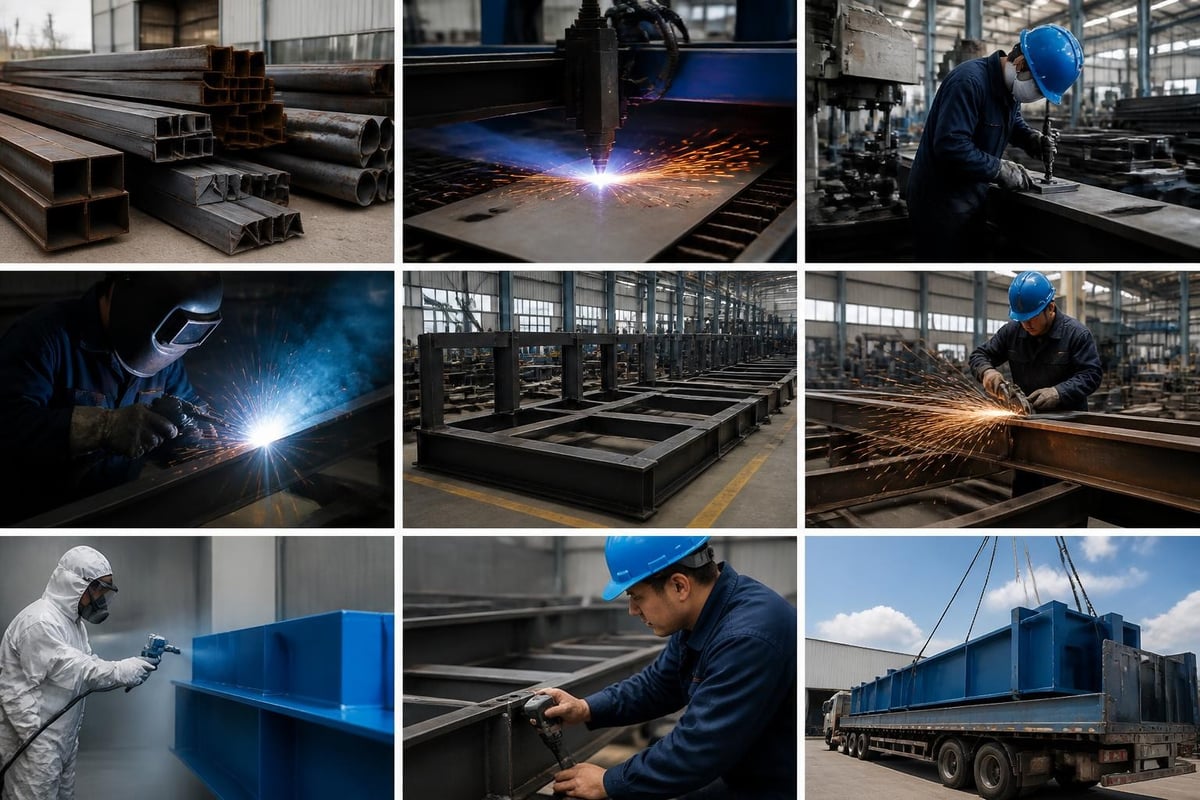
Key workflow elements include:
- Material Receiving and Inspection: Verify incoming materials meet specifications
- Cutting and Preparation: Machining, plasma cutting, or water jetting to prepare components
- Fit-Up and Tacking: Position and temporarily secure components
- Welding Operations: Execute qualified welding procedures
- Post-Weld Treatment: Heat treatment, grinding, or finishing as required
- Final Inspection: Comprehensive quality verification
Field Service Capabilities
Not all manufacturing and welding work occurs in controlled shop environments. Many commercial and industrial operations require field services where technicians bring welding and machining capabilities directly to customer sites.
Field work presents unique challenges including weather exposure, limited access to specialized equipment, and variable working conditions. Mobile welding units equipped with generators, portable machining tools, and hydraulic systems enable on-site repairs and modifications without costly equipment disassembly or transportation.
Industry-Specific Manufacturing and Welding Applications
Different industries impose distinct requirements on manufacturing and welding processes. Understanding these sector-specific needs helps service providers deliver targeted solutions.
Oil and Gas Infrastructure
The oil and gas industry demands manufacturing and welding services that withstand extreme pressures, corrosive environments, and rigorous safety standards. Pipeline welding, pressure vessel fabrication, and processing equipment repair require specialized procedures and certified welders.
High-strength materials and thick-section welding characterize much oil and gas work. Preheating, controlled cooling, and post-weld heat treatment become standard requirements rather than exceptions.
Aggregate and Recycling Equipment
Aggregate processing and recycling operations subject equipment to continuous abrasion, impact, and stress. Manufacturing and welding for these industries must prioritize wear resistance and structural durability.
Custom fabrication often involves hardfacing applications where wear-resistant materials are deposited onto base metals to extend component life. The AWS provides welding handbooks that detail specialized processes for demanding applications.
Commercial Manufacturing Support
Commercial manufacturing facilities require maintenance partners capable of addressing diverse challenges. From conveyor system repairs to custom machine guards, manufacturing and welding services must adapt to varied applications.
Quick turnaround times often drive commercial manufacturing support work. Having comprehensive shop capabilities combined with mobile field services ensures minimal production downtime when equipment failures occur.
Material Handling and Preparation
Proper material preparation determines weld quality in any manufacturing environment. Surface contamination, improper fit-up, or inadequate cleaning compromise structural integrity regardless of welder skill level.
Surface Preparation Techniques
Manufacturing and welding success begins with clean base materials. Different cleaning methods suit specific situations:
- Mechanical Cleaning: Grinding, wire brushing, or abrasive blasting
- Chemical Cleaning: Solvents and degreasers for oil removal
- Thermal Cleaning: Preheating to remove moisture
- Water Jetting: High-pressure cleaning for heavy contamination
Water jetting technology particularly benefits manufacturing environments dealing with heavily contaminated equipment. This method removes rust, paint, and scale without introducing chemical residues that could affect weld quality.
Fit-Up and Fixturing
Accurate component positioning prevents welding defects and reduces rework. Custom fixtures and jigs hold parts in proper alignment during tack welding and final welding operations.
Sophisticated manufacturing and welding shops invest in adjustable fixtures that accommodate various project sizes and configurations. This flexibility allows efficient transitions between different production runs without extensive setup changes.
Maintenance and Equipment Lifecycle Management
Manufacturing and welding equipment represents significant capital investment. Proper maintenance extends equipment life and ensures consistent performance.
Preventive Maintenance Programs
Systematic maintenance prevents unexpected equipment failures that disrupt manufacturing schedules. Regular inspection intervals address:
- Welding Power Sources: Electrical connections, cooling systems, and wire feed mechanisms
- Cutting Equipment: Consumable condition, gas delivery systems, and torch assemblies
- Machining Centers: Lubrication, alignment, and tooling verification
- Hydraulic Systems: Fluid levels, seal condition, and pressure calibration
- Safety Systems: Ventilation effectiveness and emergency shutdown functionality
Detailed maintenance records support equipment reliability analysis and help predict component replacement needs before failures occur.
Hydraulics Integration in Manufacturing Systems
Many manufacturing and welding applications incorporate hydraulic systems for material handling, clamping, and positioning. Hydraulic presses, lift tables, and rotary positioners enable efficient handling of heavy fabrications that would otherwise require excessive manual labor.
Hydraulic system maintenance demands specialized expertise. Contaminated fluid, worn seals, or improperly adjusted relief valves create safety hazards and compromise manufacturing precision. Integrating hydraulic service capabilities with welding and machining expertise provides comprehensive facility support.
Workforce Development and Training
The manufacturing and welding industry faces ongoing workforce challenges. As experienced professionals retire, companies must develop new talent while maintaining quality standards.
Apprenticeship and Skill Development
Effective training programs combine classroom instruction with hands-on practice. Apprentices learn metallurgy fundamentals, blueprint reading, and welding theory before progressing to practical welding exercises under supervision.
Manufacturing and welding training should reflect actual working conditions. Exposure to field work challenges, confined space procedures, and customer interaction prepares new welders for real-world demands beyond technical skill development.
Continuing Education and Advancement
Technology evolution requires ongoing education even for experienced professionals. New welding processes, updated safety standards, and emerging materials demand continuous learning.
Professional organizations provide resources supporting workforce development. The Institution of Mechanical Engineers offers connections to educational organizations and technical resources that help manufacturing and welding professionals stay current with industry developments.
Project Management in Manufacturing and Welding
Complex fabrication projects require coordination across multiple disciplines. Effective project management ensures manufacturing and welding operations deliver on schedule and within budget.
Scope Definition and Estimation
Accurate project scoping begins with thorough communication between customers and service providers. Understanding end-use requirements, operating conditions, and performance expectations shapes material selection, welding procedures, and quality verification approaches.
Detailed estimates account for material costs, labor hours, equipment usage, and contingencies for unexpected challenges. Manufacturing and welding projects frequently encounter field conditions that differ from initial assessments, requiring adaptive problem-solving.
Quality Documentation and Traceability
Industries such as oil and gas require comprehensive documentation proving manufacturing and welding work meets specifications. Welding procedure specifications (WPS), procedure qualification records (PQR), and welder performance qualifications establish traceability from design through execution.
Material certifications verify chemical composition and mechanical properties. Non-destructive testing reports confirm weld integrity. Final dimensional inspections demonstrate manufactured components meet tolerance requirements. This documentation package provides customers with confidence their projects satisfy applicable codes and standards.
Manufacturing and welding integration demands technical expertise, quality commitment, and operational flexibility to meet diverse industrial challenges. Companies serving commercial and industrial sectors must balance specialized capabilities with responsive customer service. Whether your operation requires custom metal fabrication, field welding services, precision machining, or hydraulic system support, LTJ Industrial Services delivers comprehensive solutions throughout the Western United States. Contact our Rifle, CO team to discuss how our manufacturing and welding expertise can support your next project.