
The fabrication process stands as the backbone of modern industrial manufacturing, transforming raw materials into precision-engineered components that power industries across the Western United States. From oil and gas operations to aggregate processing and recycling facilities, understanding how metal fabrication works enables businesses to make informed decisions about their manufacturing needs. This comprehensive guide explores every stage of the fabrication process, providing insights that help commercial and industrial operations optimize their production workflows and achieve superior results.
Understanding the Core Fabrication Process
The fabrication process encompasses a series of coordinated steps that convert raw metal stock into finished products. This transformation requires careful planning, skilled execution, and quality control at every stage. Industrial facilities rely on fabrication businesses to deliver components that meet exact specifications while maintaining structural integrity and dimensional accuracy.
Initial Design and Engineering
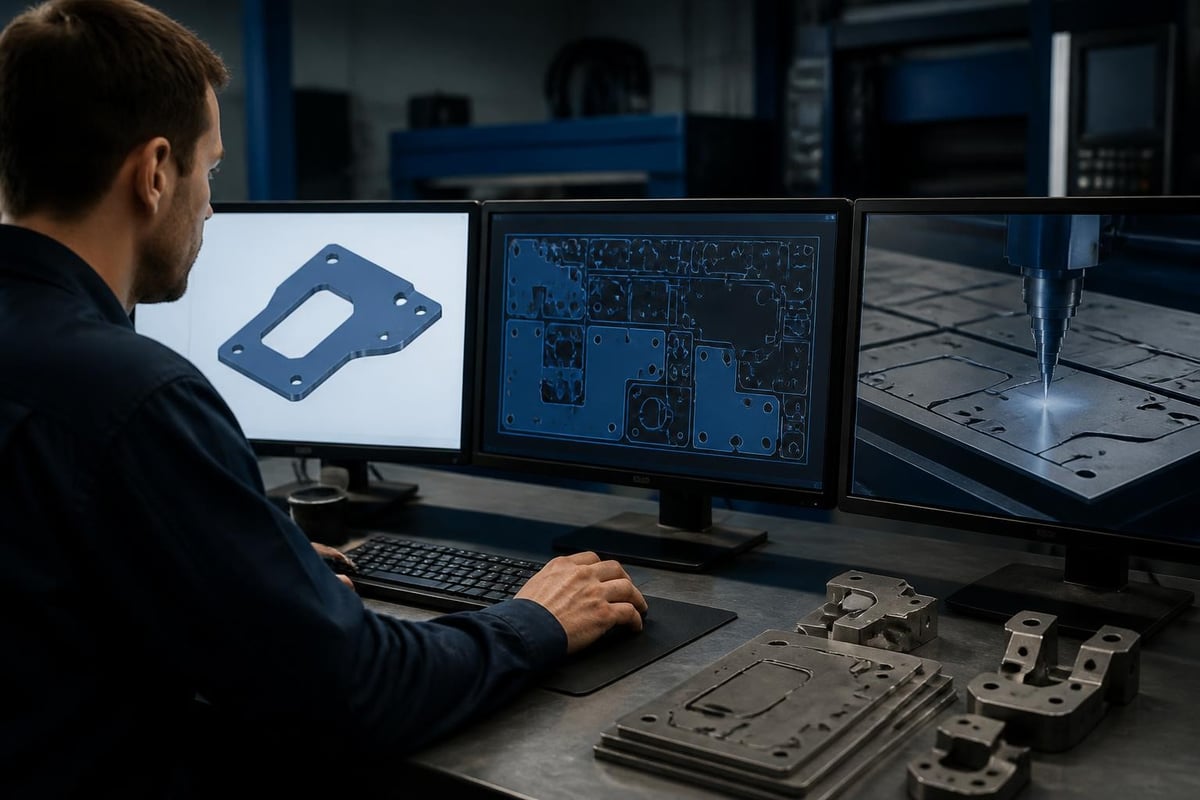
Every successful fabrication process begins with detailed engineering drawings and specifications. Design teams create CAD models that define dimensions, tolerances, material requirements, and assembly procedures. These digital blueprints serve as the roadmap for all subsequent operations.
Key design considerations include:
- Material selection based on strength requirements and environmental conditions
- Tolerance specifications for critical dimensions
- Welding procedures and joint configurations
- Surface finish requirements
- Assembly sequence and fixturing needs
Engineers collaborate with fabricators to ensure designs are manufacturable, cost-effective, and meet performance criteria. This planning phase prevents costly errors and reduces material waste throughout the fabrication process.
Material Preparation and Cutting Operations
The fabrication process advances to material preparation once designs are finalized. Raw metal arrives in standard forms including plates, sheets, bars, tubes, and structural shapes. Fabricators must verify material certifications, inspect for defects, and organize inventory for efficient workflow.
Cutting Technologies in Modern Fabrication
Precision cutting represents the first physical transformation in the fabrication process. Multiple technologies serve different applications and material types:
| Cutting Method | Best Applications | Typical Tolerances | Material Thickness Range |
|---|---|---|---|
| Plasma Cutting | Carbon steel, stainless steel | ±0.030" – 0.060" | 1/8" – 2" |
| Oxy-Fuel Cutting | Thick carbon steel | ±0.060" – 0.125" | 1/4" – 12" |
| Waterjet Cutting | All metals, no heat affected zone | ±0.005" – 0.010" | 1/16" – 6" |
| Laser Cutting | Thin to medium metals | ±0.003" – 0.005" | 1/32" – 1" |
| Shearing | Straight cuts in sheet metal | ±0.015" – 0.030" | 1/16" – 1/2" |
Water fabrication techniques using waterjet technology offer unique advantages for materials sensitive to heat distortion. This cold-cutting method preserves material properties while achieving tight tolerances essential for precision assemblies.
Material Handling and Organization
Efficient fabrication processes implement robust material tracking systems. Each piece receives identification marking that links it to specific jobs, ensuring traceability throughout production. Proper storage prevents contamination, corrosion, and damage that could compromise final product quality.
Forming and Bending Operations
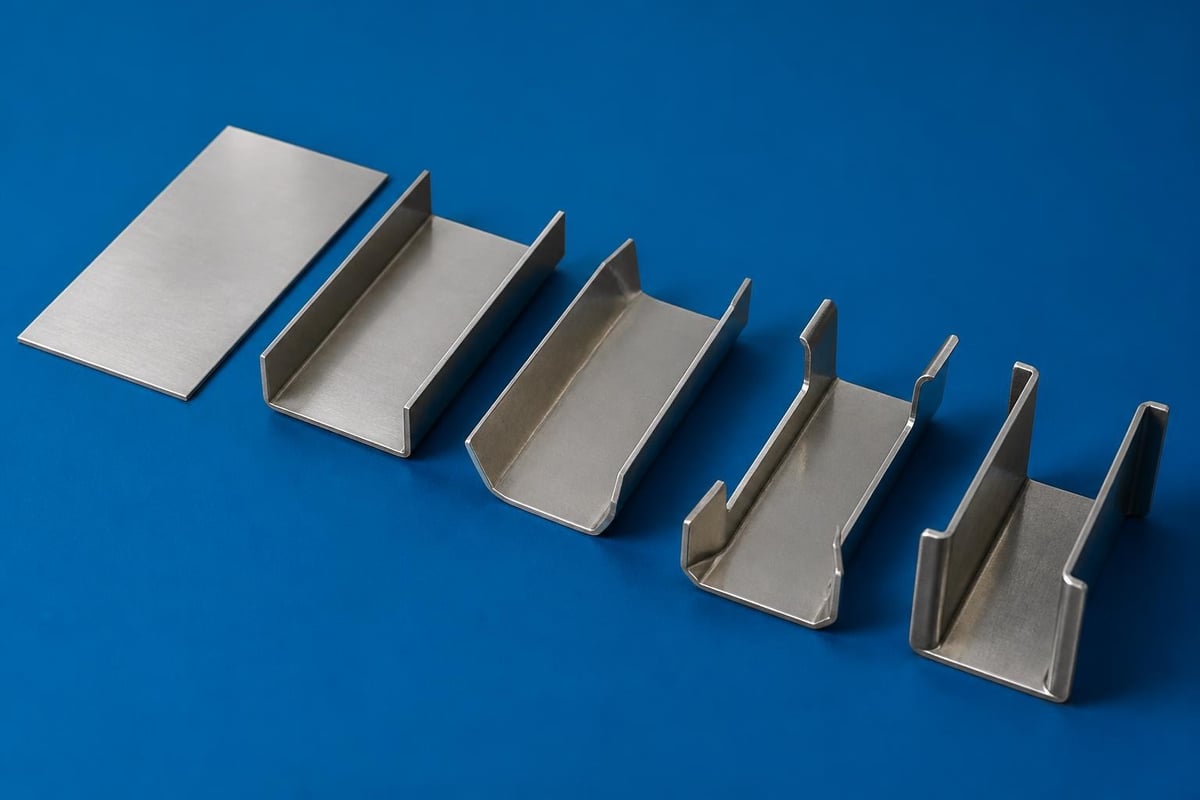
After cutting, many components require forming to achieve their final geometry. The fabrication process employs various methods to reshape metal without removing material.
Common forming techniques include:
- Press Brake Forming – Creates precise bends in sheet metal using dies and punches
- Roll Forming – Produces curves and cylinders through progressive bending
- Stamping – Forms complex shapes in single operations using custom dies
- Tube Bending – Shapes pipes and tubing for structural and hydraulic applications
- Stretching and Shrinking – Adjusts material dimensions for custom fits
Each forming method affects material properties differently. The fabrication process must account for springback, minimum bend radius, and work hardening characteristics specific to each alloy.
Quality Considerations in Forming
Experienced fabricators monitor several quality factors during forming operations. Material thickness changes, surface finish preservation, and dimensional accuracy all require careful attention. Advanced facilities use CNC press brakes with automatic angle correction to maintain consistency across production runs.
Machining Integration in the Fabrication Process
The fabrication process frequently incorporates machining operations to achieve features impossible through cutting and forming alone. Custom machine services provide precision holes, threaded connections, bearing surfaces, and intricate contours.
Essential Machining Operations
Milling, turning, drilling, and boring operations complement primary fabrication techniques. CNC machining centers execute complex toolpaths with repeatability measured in thousandths of inches. This precision ensures proper fit and function in critical assemblies.
Machining capabilities essential to fabrication:
- Precision hole placement for bolt patterns and mounting interfaces
- Thread cutting for fastener connections
- Surface milling to achieve flatness specifications
- Counterboring and countersinking for flush hardware installation
- Groove cutting for seal retention
Modern fabrication processes integrate machining seamlessly with welding and assembly. Components move efficiently between departments, maintaining tight production schedules while preserving quality standards.
Welding and Joining Procedures
Welding transforms individual components into unified structures during the fabrication process. Commercial metal fabrication relies heavily on various welding techniques, each suited to specific materials, positions, and structural requirements.
Primary Welding Methods
The selection of welding processes depends on material type, thickness, joint design, and service environment. Qualified US welders possess certifications demonstrating proficiency in multiple techniques:
| Welding Process | Primary Applications | Advantages | Limitations |
|---|---|---|---|
| SMAW (Stick) | Field repairs, thick sections | Versatile, portable | Lower deposition rate |
| GMAW (MIG) | High-volume production | Fast, clean | Requires shielding gas |
| GTAW (TIG) | Thin materials, critical welds | Precise, high quality | Slower process |
| FCAW | Structural steel, outdoor work | Good penetration | More spatter |
| SAW | Heavy fabrication | High deposition | Limited positions |
Quality welding procedures ensure structural integrity throughout the fabrication process. Welders follow documented procedure specifications (WPS) that define parameters for each joint configuration. These specifications control heat input, travel speed, filler material, and shielding gas composition.
Weld Quality and Inspection
The fabrication process implements multiple inspection stages to verify weld quality. Visual examination checks for surface defects, proper bead profile, and complete fusion. Non-destructive testing methods including radiography, ultrasonic examination, and magnetic particle inspection reveal internal discontinuities.
Certified weld inspectors review documentation and test results, ensuring every joint meets code requirements. This quality assurance protects end users and maintains fabricator reputation for reliability.
Assembly and Fit-Up Procedures
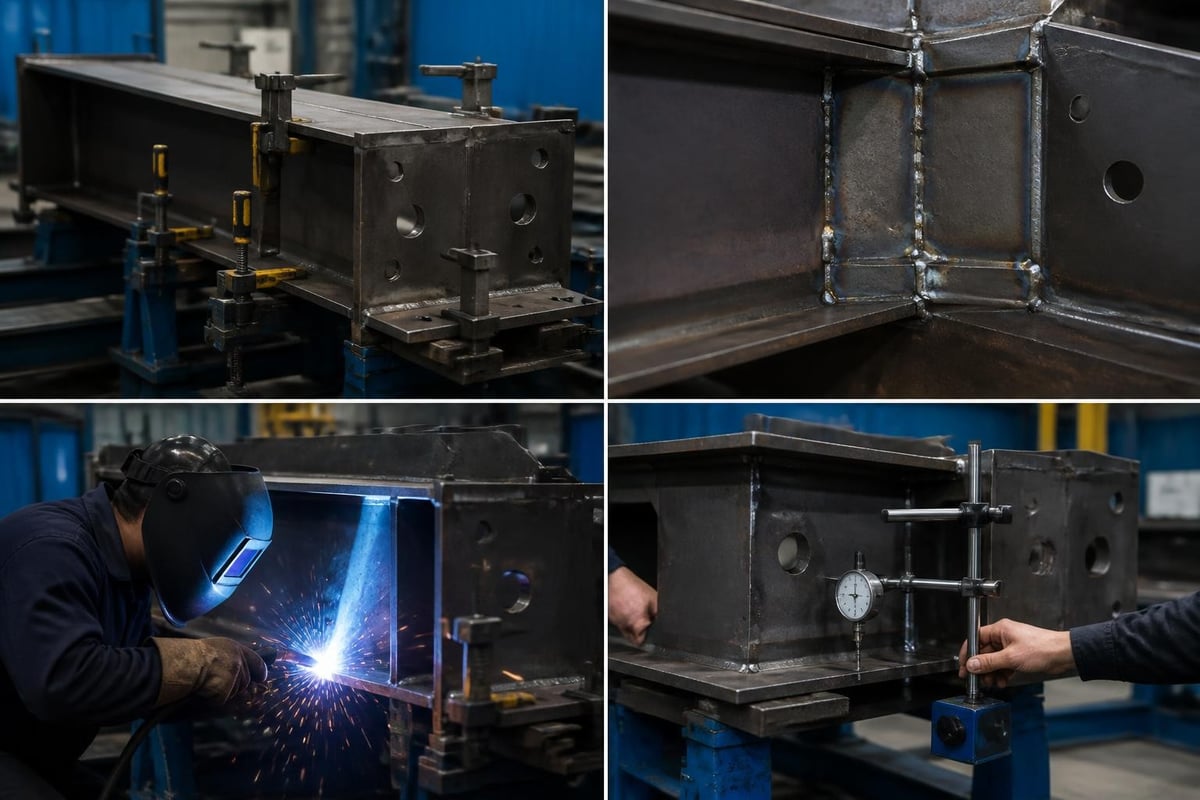
Complex fabrications require careful assembly sequencing to maintain accuracy and prevent distortion. The fabrication process uses fixtures, jigs, and strong-backs to hold components in proper alignment during welding.
Assembly best practices:
- Tack weld critical locations before full welding sequences
- Balance heat input to minimize distortion
- Use back-step welding techniques on long seams
- Employ thermal stress relieving when specifications require
- Verify dimensions at multiple checkpoints during assembly
Experienced fabricators anticipate how welding heat affects large structures. Strategic sequencing and fixturing prevent warping that could render assemblies unusable.
Surface Preparation and Finishing
The fabrication process continues with surface treatment to prepare components for their service environment. Proper finishing extends service life and enhances appearance.
Cleaning and Preparation Methods
- Grinding and Sanding – Removes weld spatter, smooths transitions, prepares surfaces for coating
- Abrasive Blasting – Cleans scale, rust, and mill scale to create anchor profile
- Chemical Cleaning – Removes oils, greases, and contaminants
- Pickling and Passivation – Treats stainless steel to restore corrosion resistance
Each cleaning method serves specific purposes within the fabrication process. Selection depends on base material, subsequent coating requirements, and cleanliness specifications.
Protective Coatings and Finishes
Industrial fabrications often require protective coatings to resist corrosion, chemicals, or abrasion. Common finishes include:
- Powder coating for durable, attractive surfaces
- Wet paint systems including primers and topcoats
- Galvanizing for superior corrosion protection
- Anodizing on aluminum components
- Plating operations for specific applications
The fabrication process schedules coating operations to prevent damage during handling and shipping. Proper masking protects machined surfaces and threaded connections from coating buildup.
Quality Control Throughout the Fabrication Process
Comprehensive quality management ensures fabrications meet all specifications. The fabrication process implements inspection at raw material receipt, during production, and before shipment.
Dimensional Verification
Precision measurement tools verify critical dimensions throughout fabrication. Calipers, micrometers, height gauges, and coordinate measuring machines (CMM) provide objective data confirming conformance to drawings.
Inspection frequency depends on:
- Tolerance requirements and criticality
- Process capability and historical performance
- Customer specifications and industry standards
- Complexity and value of the fabrication
Documentation accompanies each fabrication, providing traceability and proof of compliance. This paperwork becomes essential for regulated industries requiring comprehensive quality records.
Material Traceability and Certification
A manufacturing company maintains material test reports (MTRs) documenting the chemical composition and mechanical properties of all metals used in fabrication. These certificates trace materials from mill to final product, ensuring specifications are met.
Heat numbers stamped on materials allow verification at any production stage. This traceability proves critical when fabrications serve high-consequence applications in oil and gas, pressure vessel, or structural markets.
Packaging and Delivery Considerations
The final stages of the fabrication process protect finished components during transportation and storage. Proper packaging prevents damage that could compromise quality achieved through careful production.
Protection Methods
- Crating and boxing for delicate or precision components
- Banding and strapping to secure loads safely
- Desiccants and VCI papers to prevent corrosion
- Foam padding and corner protectors for finished surfaces
- Custom fixtures for odd-shaped fabrications
Fabricators coordinate with logistics providers to ensure safe delivery. Large or heavy fabrications may require specialized transportation equipment and route planning.
Advanced Fabrication Process Technologies
Modern fabrication operations increasingly adopt automation and digital technologies. These innovations enhance the fabrication process by improving speed, consistency, and capability.
Emerging technologies include:
- Robotic welding systems for high-volume, repetitive tasks
- 3D laser scanning for reverse engineering and quality verification
- Augmented reality for assembly guidance and training
- Digital twins for process simulation and optimization
- Automated material handling and inventory management
While technology advances, skilled craftspeople remain essential to the fabrication process. Complex custom work requires judgment, experience, and adaptability that only human expertise provides.
Environmental and Safety Considerations
Responsible fabrication processes prioritize worker safety and environmental stewardship. Proper ventilation controls welding fumes and grinding dust. Personal protective equipment shields workers from hazards. Waste management programs recycle scrap metal and properly dispose of consumables.
Safety protocols built into the fabrication process protect personnel while maintaining productivity. Regular training ensures workers understand hazards and follow established procedures. This commitment to safety creates sustainable operations that benefit employees, communities, and customers.
Mastering the fabrication process requires expertise across multiple disciplines, from engineering and cutting through welding, machining, and quality control. Understanding these interconnected stages helps businesses make informed decisions about their manufacturing needs. Whether your operation requires precision components, structural assemblies, or complex custom fabrications, partnering with experienced professionals ensures successful outcomes. LTJ Industrial Services brings comprehensive capabilities in metal fabrication, welding, and machining to commercial and industrial clients throughout the Western United States, delivering the quality and reliability your projects demand.